Presented by Ayush Koul (19103083)
Gravimetric Analysis
Aircraft Materials - ASC4251
Content
Introduction
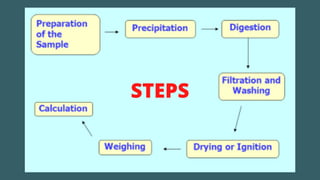
Steps Involved In Gravimetric Analysis
Types of Gravimetric Analysis
Examples
Advantages / Disadvantages
Introduction


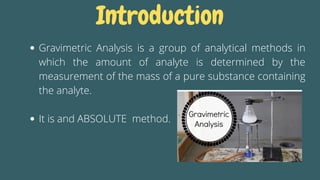
Gravimetric Analysis is a group of analytical methods in
which the amount of analyte is determined by the
measurement of the mass of a pure substance containing
the analyte.
It is and ABSOLUTE method.
Steps Involved In Analysis
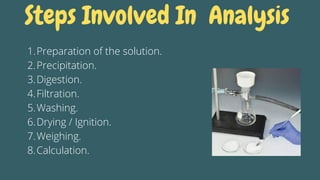
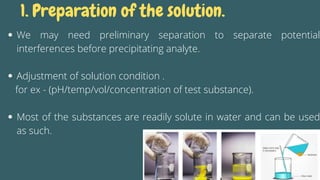
Preparation of the solution.
Precipitation.
Digestion.
Filtration.
Washing.
Drying / Ignition.
Weighing.
Calculation.


1.
2.
3.
4.
5.
6.
7.
8.
STEPS
We may need preliminary separation to separate potential
interferences before precipitating analyte.
Adjustment of solution condition .
Most of the substances are readily solute in water and can be used
as such.
for ex - (pH/temp/vol/concentration of test substance).
Preparation of the solution.
1.
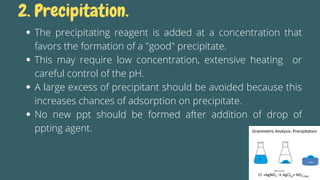
The precipitating reagent is added at a concentration that
favors the formation of a "good" precipitate.
This may require low concentration, extensive heating or
careful control of the pH.
A large excess of precipitant should be avoided because this
increases chances of adsorption on precipitate.
No new ppt should be formed after addition of drop of
ppting agent.
2. Precipitation.
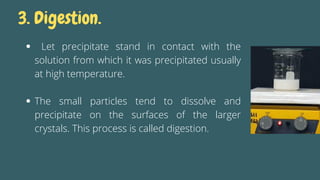
Let precipitate stand in contact with the
solution from which it was precipitated usually
at high temperature.
The small particles tend to dissolve and
precipitate on the surfaces of the larger
crystals. This process is called digestion.
3. Digestion.
4. Filtration.
Precipitate is separated from it's mother solution.
Filtration medium used are:-
i ) Filter papers
ii) Filter pulps
iii) Filter mats
iv) Crucible fitted with porous plate (Sintered glass filters)
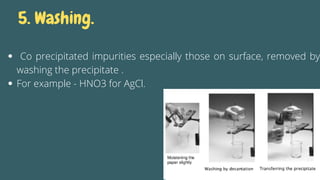
5. Washing.
Co precipitated impurities especially those on surface, removed by
washing the precipitate .
For example - HNO3 for AgCl.
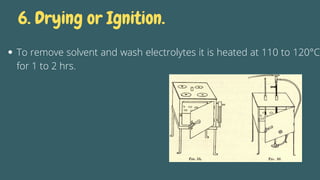
6. Drying or Ignition.
To remove solvent and wash electrolytes it is heated at 110 to 120°C
for 1 to 2 hrs.
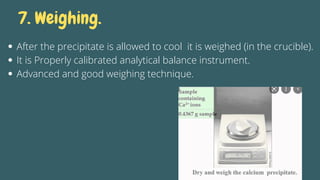
7. Weighing.
After the precipitate is allowed to cool it is weighed (in the crucible).
It is Properly calibrated analytical balance instrument.
Advanced and good weighing technique.
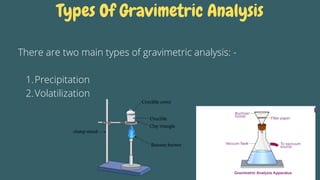
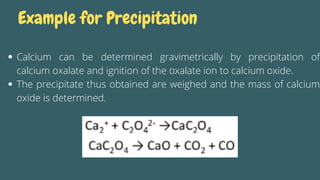
Types Of Gravimetric Analysis
Precipitation
Volatilization
There are two main types of gravimetric analysis: -
1.
2.
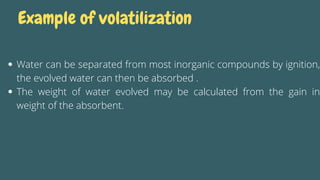
Calcium can be determined gravimetrically by precipitation of
calcium oxalate and ignition of the oxalate ion to calcium oxide.
The precipitate thus obtained are weighed and the mass of calcium
oxide is determined.
Example for Precipitation
Example of volatilization
Water can be separated from most inorganic compounds by ignition,
the evolved water can then be absorbed .
The weight of water evolved may be calculated from the gain in
weight of the absorbent.
Advantages And Disadvantages
Advantages -
Accurate and precise.
Gravimetric analysis is potentially more accurate and more precise
than volumetric analysis.
Possible sources of errors can be checked.
Gravimetric analysis avoids problems with temperature
fluctuations, calibration errors, and other problems associated with
volumetric analysis.
1.
Advantages And Disadvantages
Proper lab technique is critical.
Time consuming.
Coprecipitation is a major drawback.
2. Disadvantages: -
Thank You

Gravimetric Analysis

  • 1.
    Presented by AyushKoul (19103083) Gravimetric Analysis Aircraft Materials - ASC4251
  • 2.
    Content Introduction Steps Involved InGravimetric Analysis Types of Gravimetric Analysis Examples Advantages / Disadvantages
  • 3.
    Introduction Gravimetric Analysis isa group of analytical methods in which the amount of analyte is determined by the measurement of the mass of a pure substance containing the analyte. It is and ABSOLUTE method.
  • 4.
    Steps Involved InAnalysis Preparation of the solution. Precipitation. Digestion. Filtration. Washing. Drying / Ignition. Weighing. Calculation. 1. 2. 3. 4. 5. 6. 7. 8.
  • 5.
  • 6.
    We may needpreliminary separation to separate potential interferences before precipitating analyte. Adjustment of solution condition . Most of the substances are readily solute in water and can be used as such. for ex - (pH/temp/vol/concentration of test substance). Preparation of the solution. 1.
  • 7.
    The precipitating reagentis added at a concentration that favors the formation of a "good" precipitate. This may require low concentration, extensive heating or careful control of the pH. A large excess of precipitant should be avoided because this increases chances of adsorption on precipitate. No new ppt should be formed after addition of drop of ppting agent. 2. Precipitation.
  • 8.
    Let precipitate standin contact with the solution from which it was precipitated usually at high temperature. The small particles tend to dissolve and precipitate on the surfaces of the larger crystals. This process is called digestion. 3. Digestion.
  • 9.
    4. Filtration. Precipitate isseparated from it's mother solution. Filtration medium used are:- i ) Filter papers ii) Filter pulps iii) Filter mats iv) Crucible fitted with porous plate (Sintered glass filters)
  • 10.
    5. Washing. Co precipitatedimpurities especially those on surface, removed by washing the precipitate . For example - HNO3 for AgCl.
  • 11.
    6. Drying orIgnition. To remove solvent and wash electrolytes it is heated at 110 to 120°C for 1 to 2 hrs.
  • 12.
    7. Weighing. After theprecipitate is allowed to cool it is weighed (in the crucible). It is Properly calibrated analytical balance instrument. Advanced and good weighing technique.
  • 13.
    Types Of GravimetricAnalysis Precipitation Volatilization There are two main types of gravimetric analysis: - 1. 2.
  • 14.
    Calcium can bedetermined gravimetrically by precipitation of calcium oxalate and ignition of the oxalate ion to calcium oxide. The precipitate thus obtained are weighed and the mass of calcium oxide is determined. Example for Precipitation
  • 15.
    Example of volatilization Watercan be separated from most inorganic compounds by ignition, the evolved water can then be absorbed . The weight of water evolved may be calculated from the gain in weight of the absorbent.
  • 16.
    Advantages And Disadvantages Advantages- Accurate and precise. Gravimetric analysis is potentially more accurate and more precise than volumetric analysis. Possible sources of errors can be checked. Gravimetric analysis avoids problems with temperature fluctuations, calibration errors, and other problems associated with volumetric analysis. 1.
  • 17.
    Advantages And Disadvantages Properlab technique is critical. Time consuming. Coprecipitation is a major drawback. 2. Disadvantages: -
  • 18.