Kirchhoff's laws describe the relationship between voltage and current in electrical circuits. Kirchhoff's voltage law states that the total voltage supplied by the source must equal the total voltage used by all loads in a series circuit. Kirchhoff's current law states that in a series circuit, the total current is the same at any point, while in a parallel circuit the total current splits among the branches. The document provides examples applying Kirchhoff's laws to calculate voltages and currents in different circuit configurations.
In this document
Powered by AI
Introduction to Kirchhoff's Laws, foundational principles for circuit analysis.
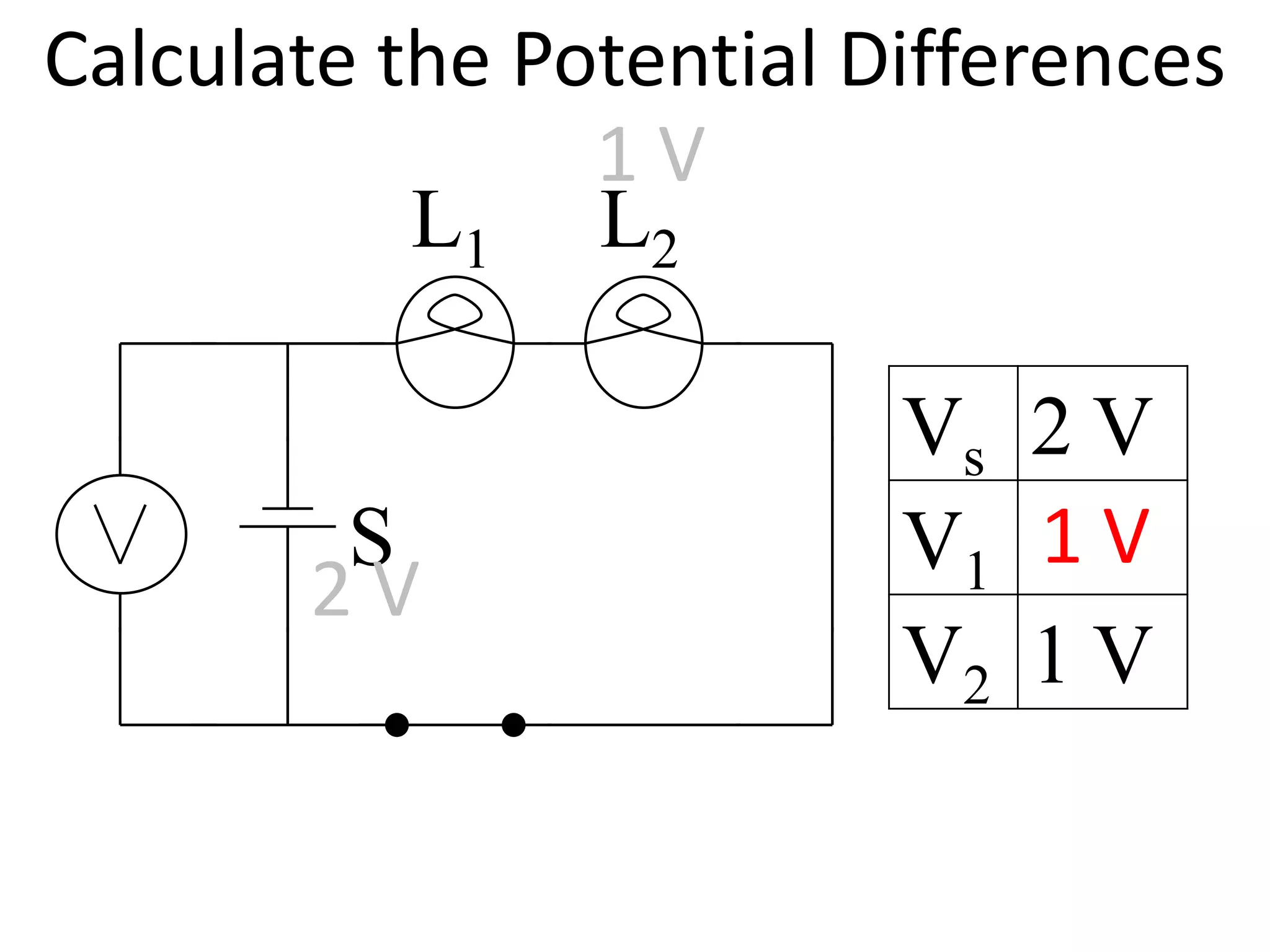
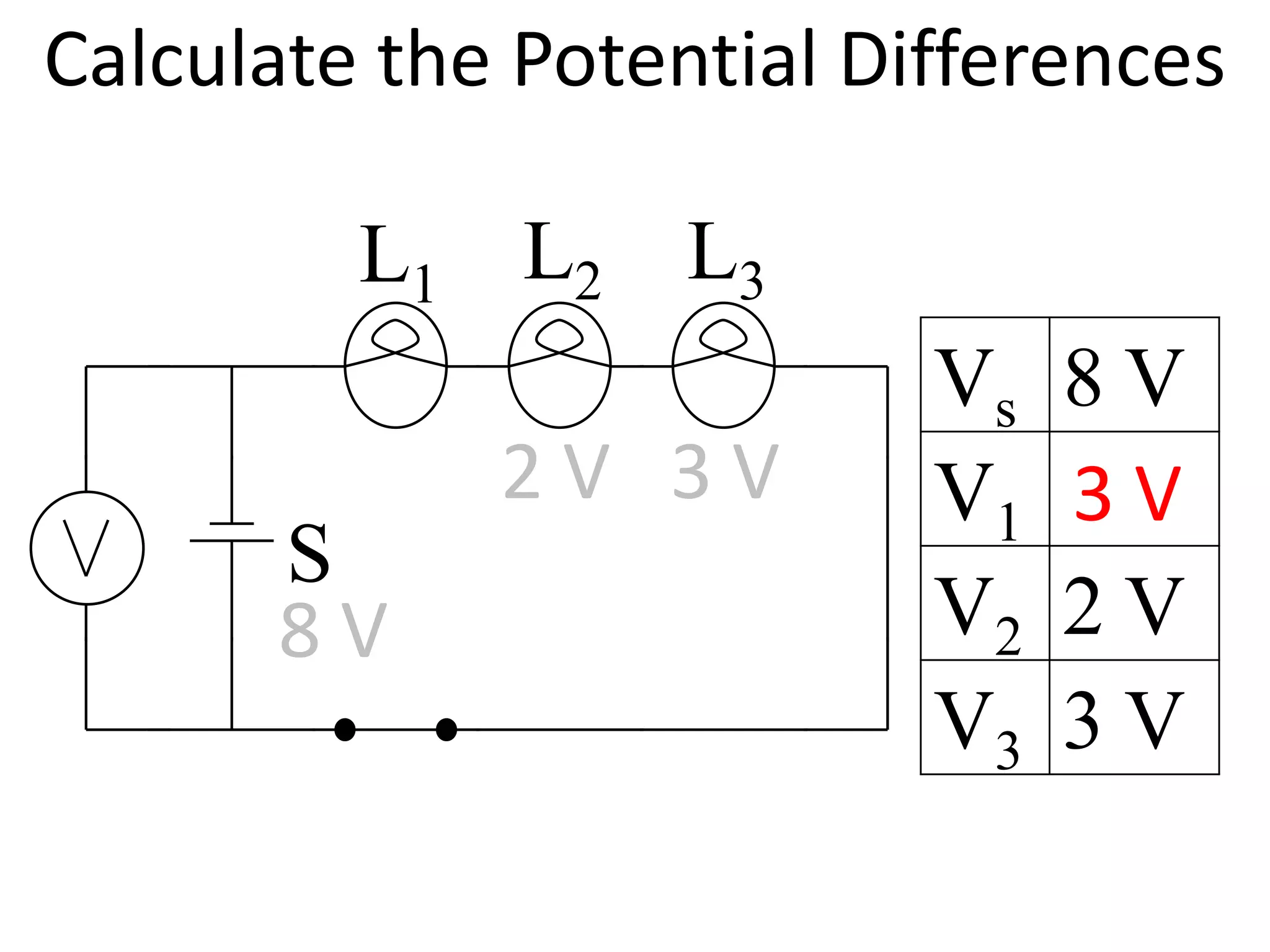
Kirchhoff’s Voltage Law states total voltage in a series circuit equals voltage drop across loads.
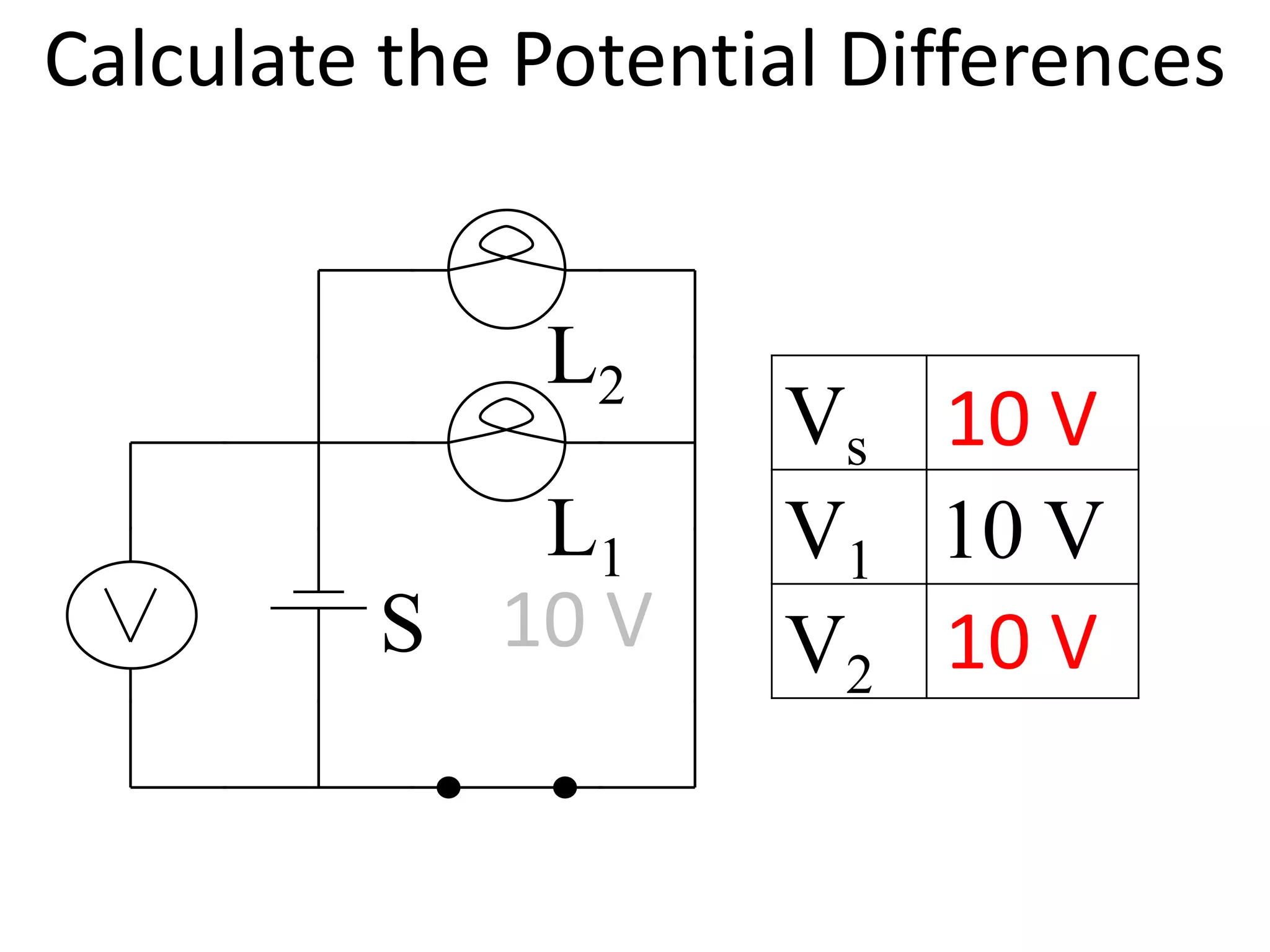
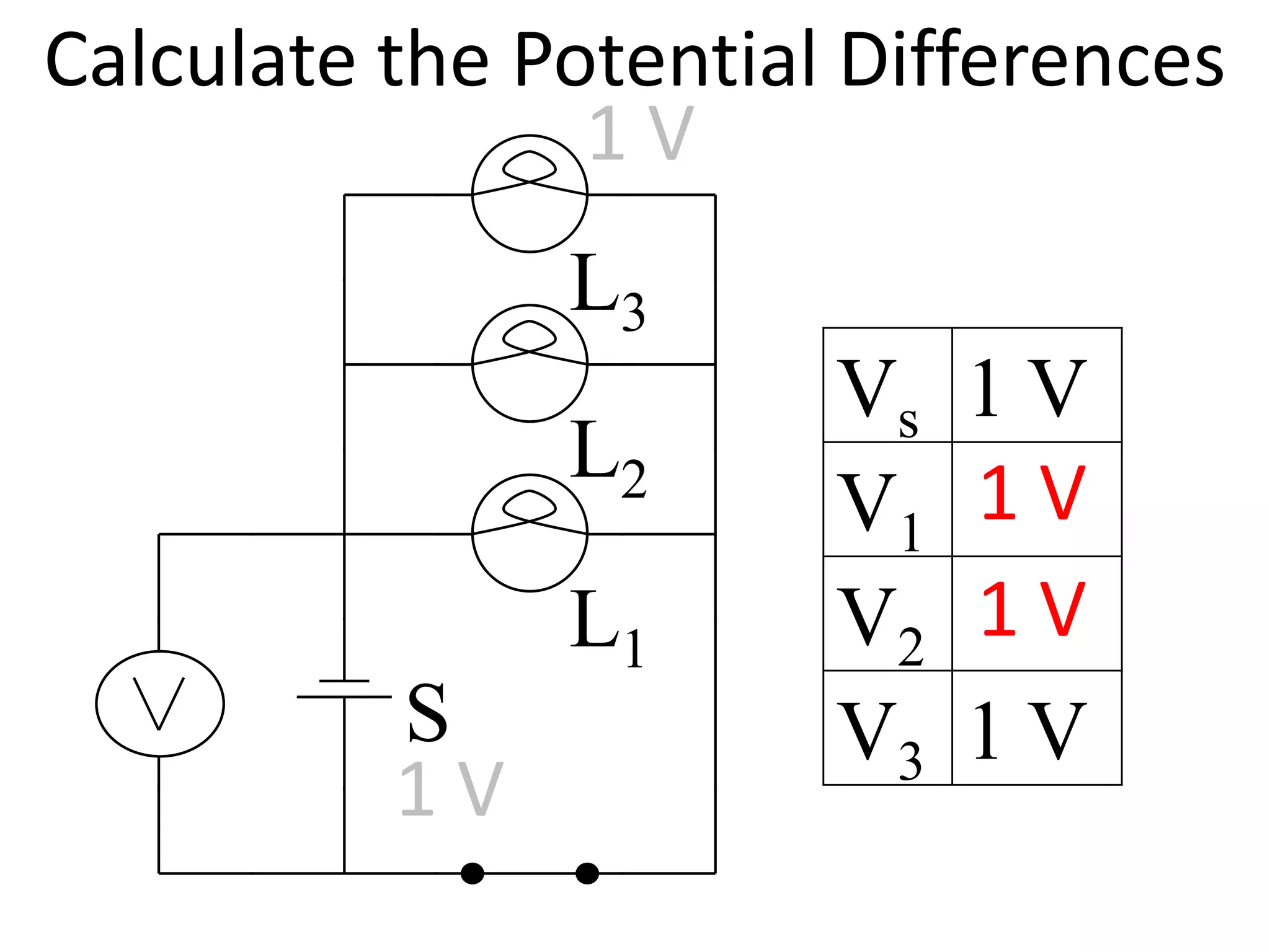
In parallel circuits, total voltage equals voltage across each branch if loads are identical.
Examples of calculating potential differences with voltages at various loads and total source voltage.
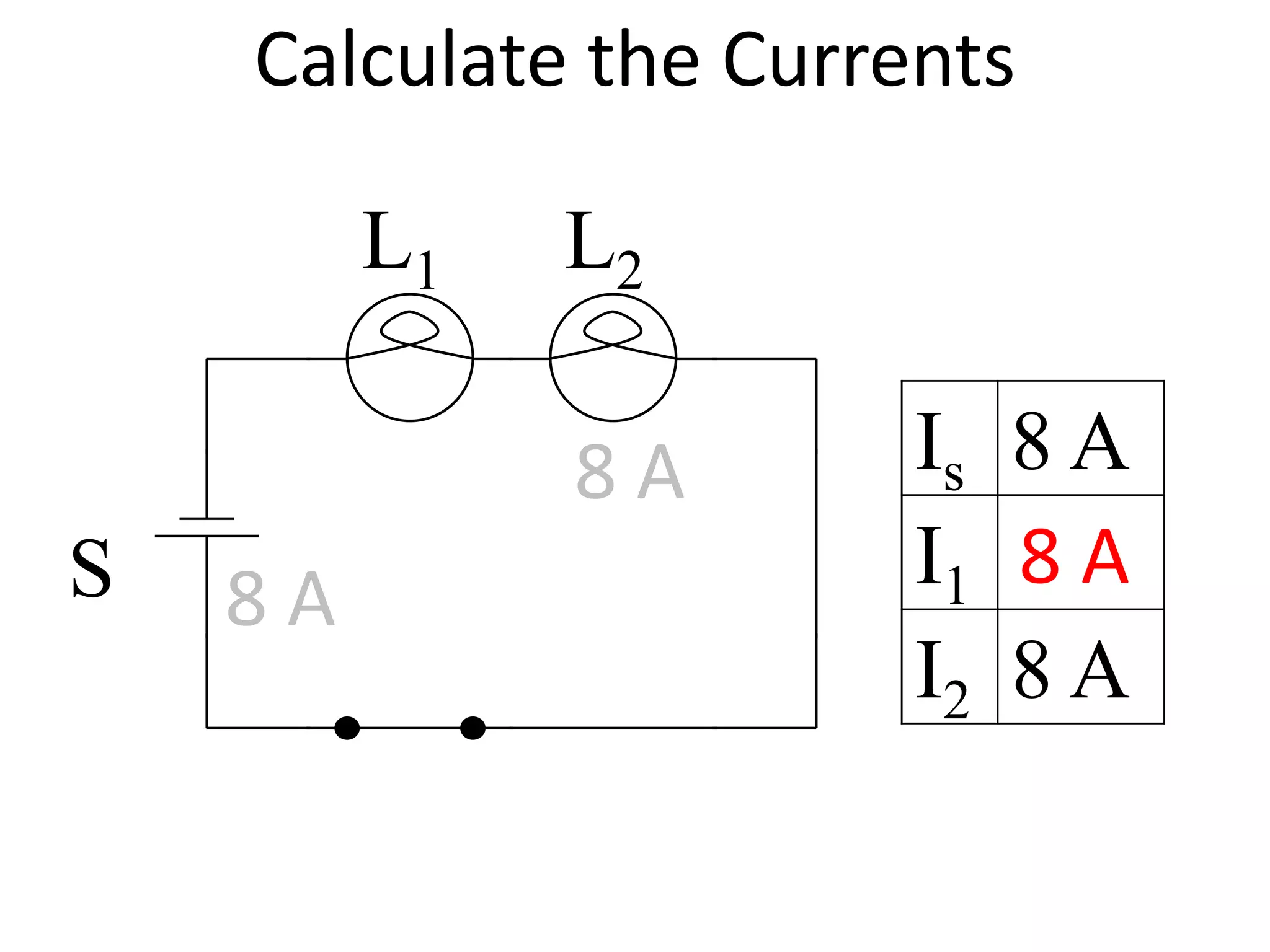
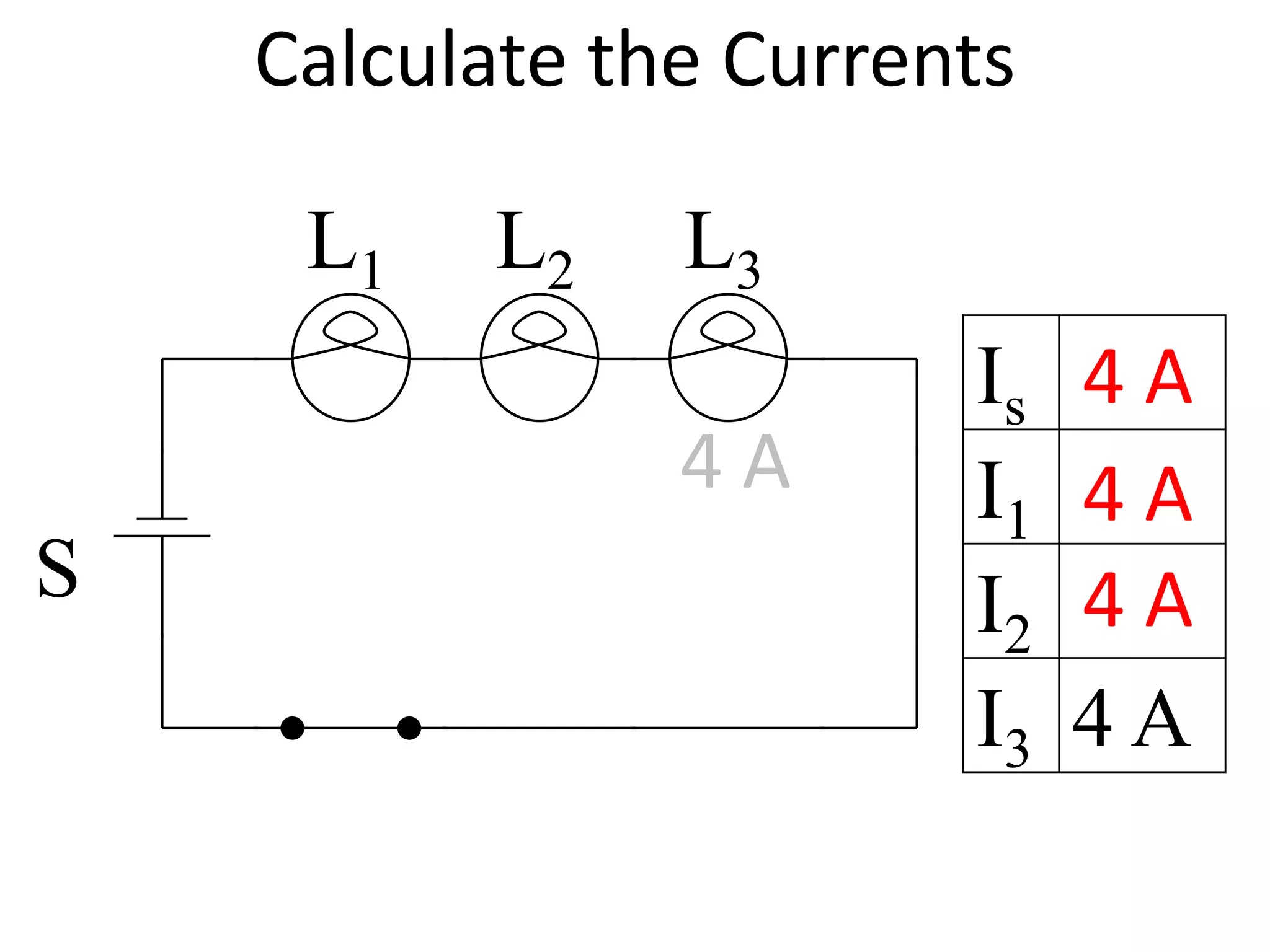
Kirchhoff’s Current Law states total current in a series circuit is consistent at all points.
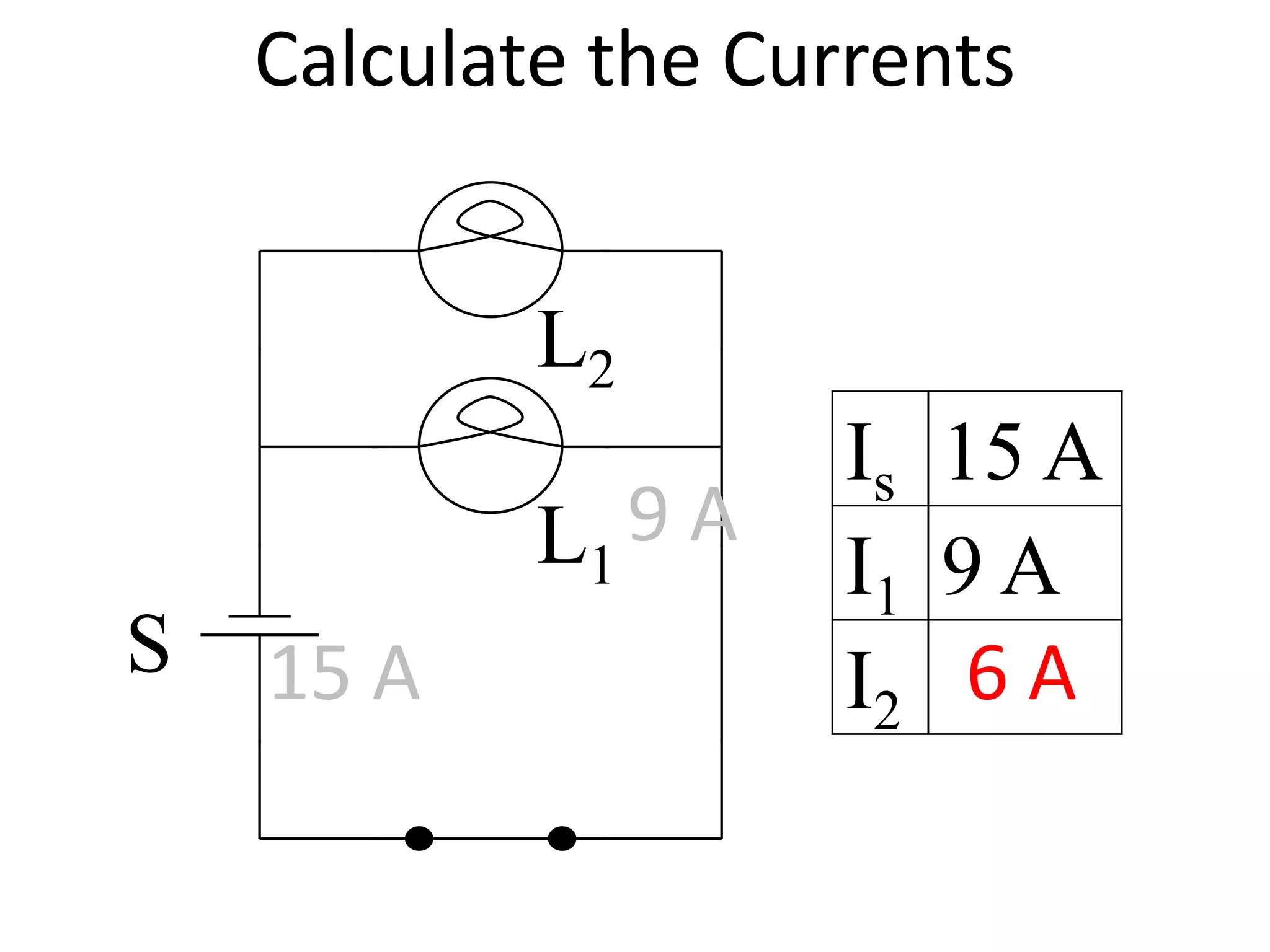
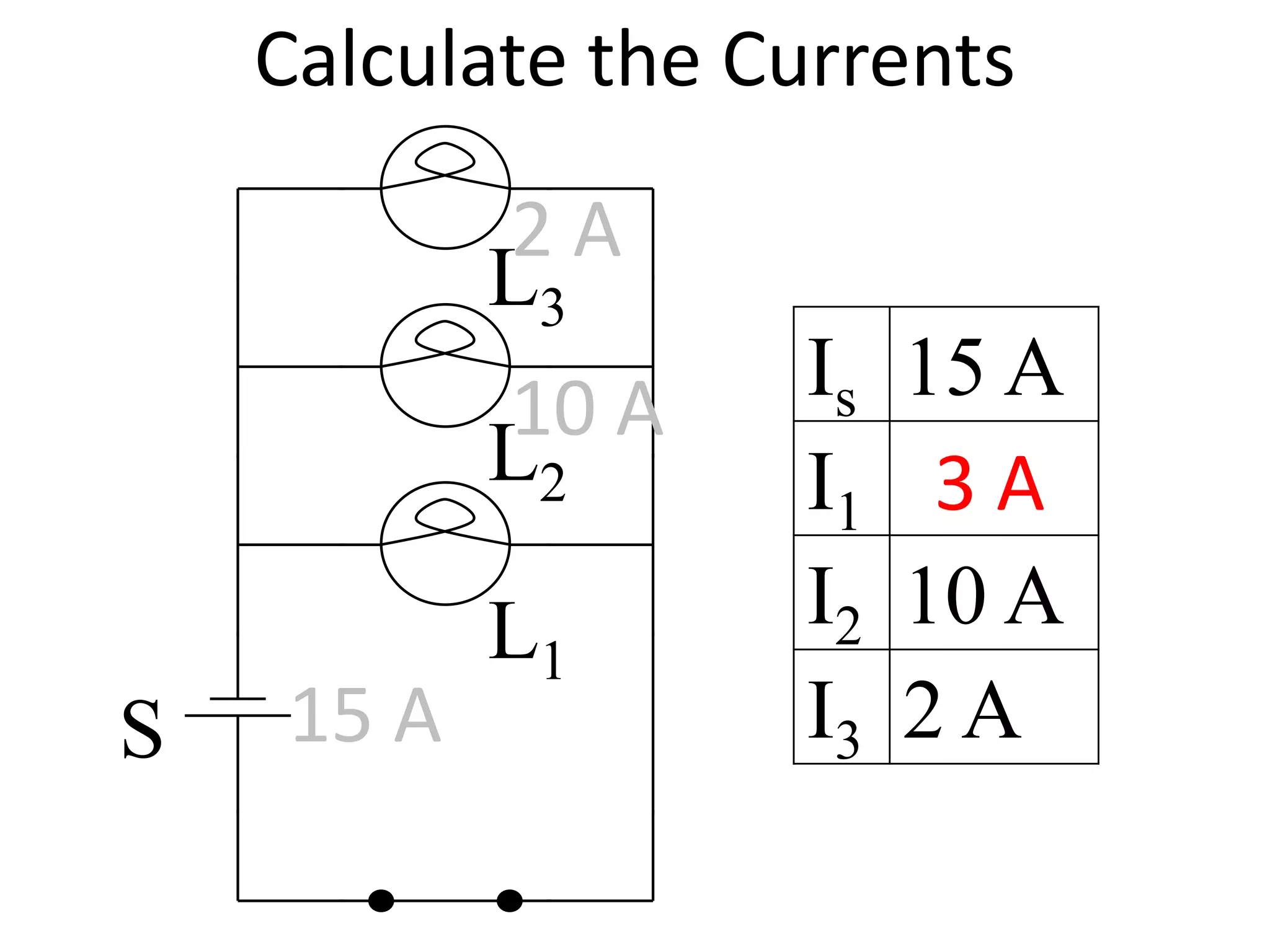
In parallel circuits, total current is divided among branches, expressed with equations for analysis.
Examples of calculating currents in circuits, illustrating principles of Kirchhoff’s Current Law.
Kirchhoff’s Law
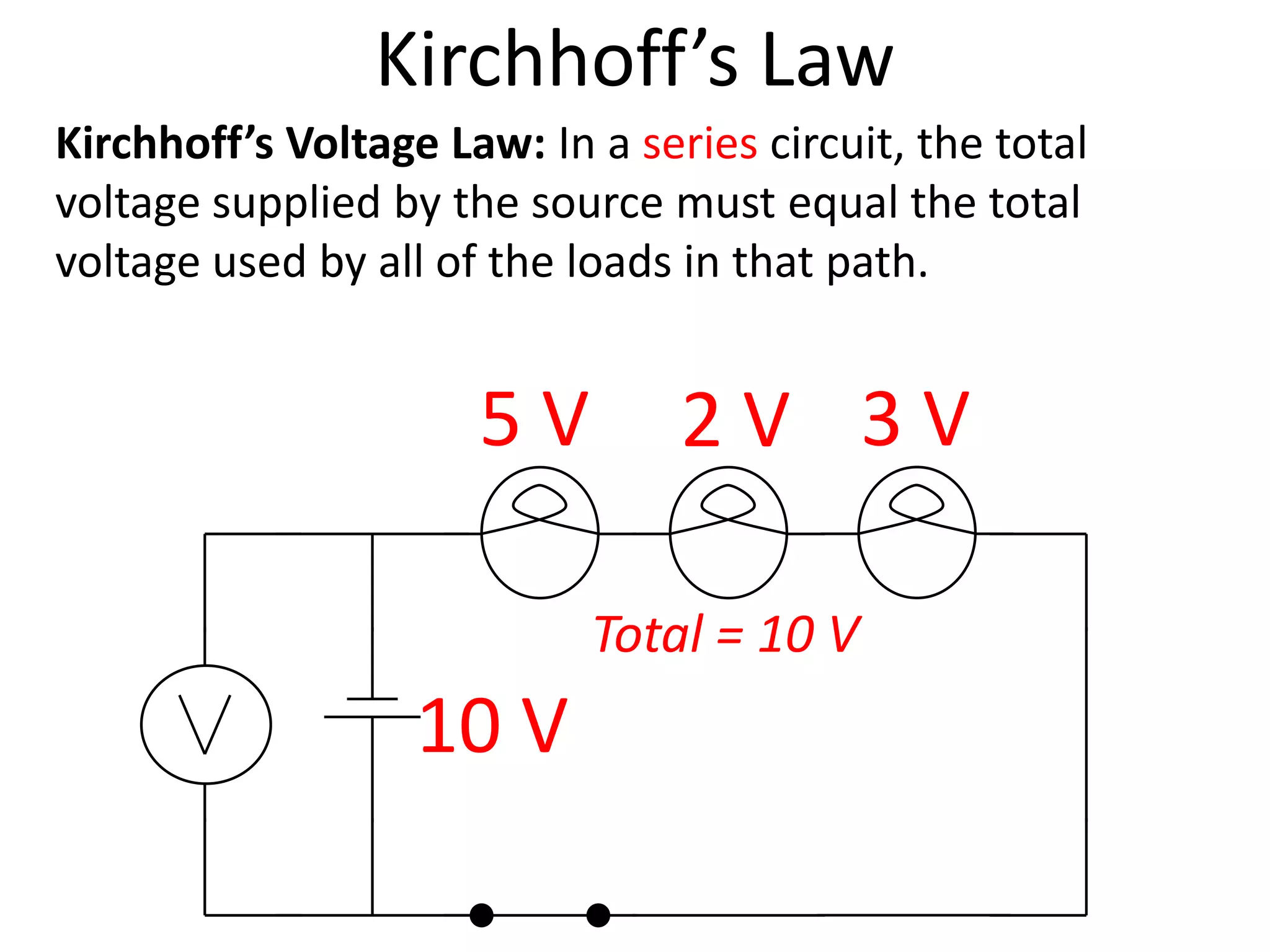
Kirchhoff’s VoltageLaw: In a series circuit, the total
voltage supplied by the source must equal the total
voltage used by all of the loads in that path.
5V 2V 3V
Total = 10 V
10 V
3.
Kirchhoff’s Law
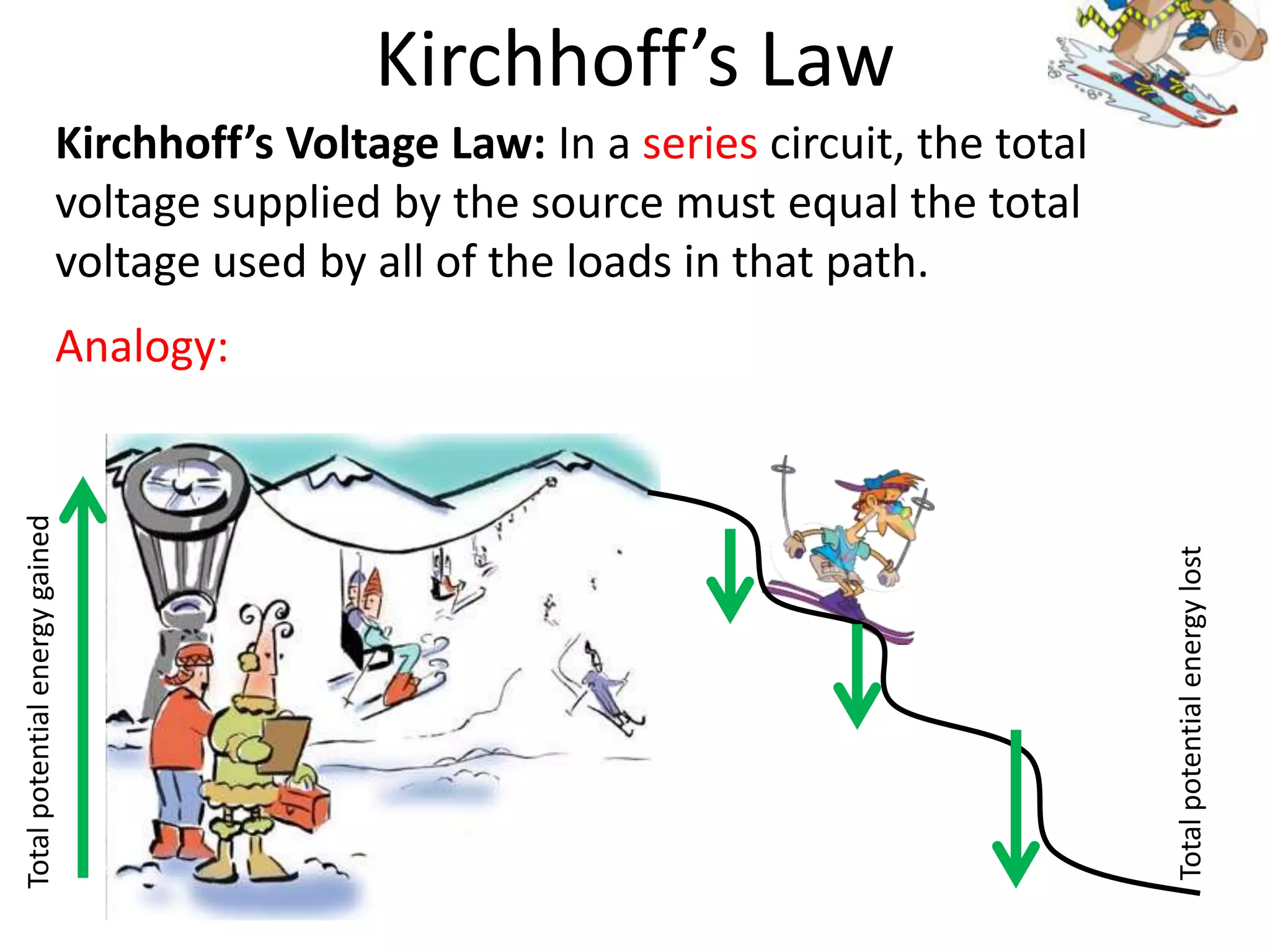
Kirchhoff’s Voltage Law: In a series circuit, the total
voltage supplied by the source must equal the total
voltage used by all of the loads in that path.
Analogy:
Total potential energy gained
Total potential energy lost
4.
Kirchhoff’s Law
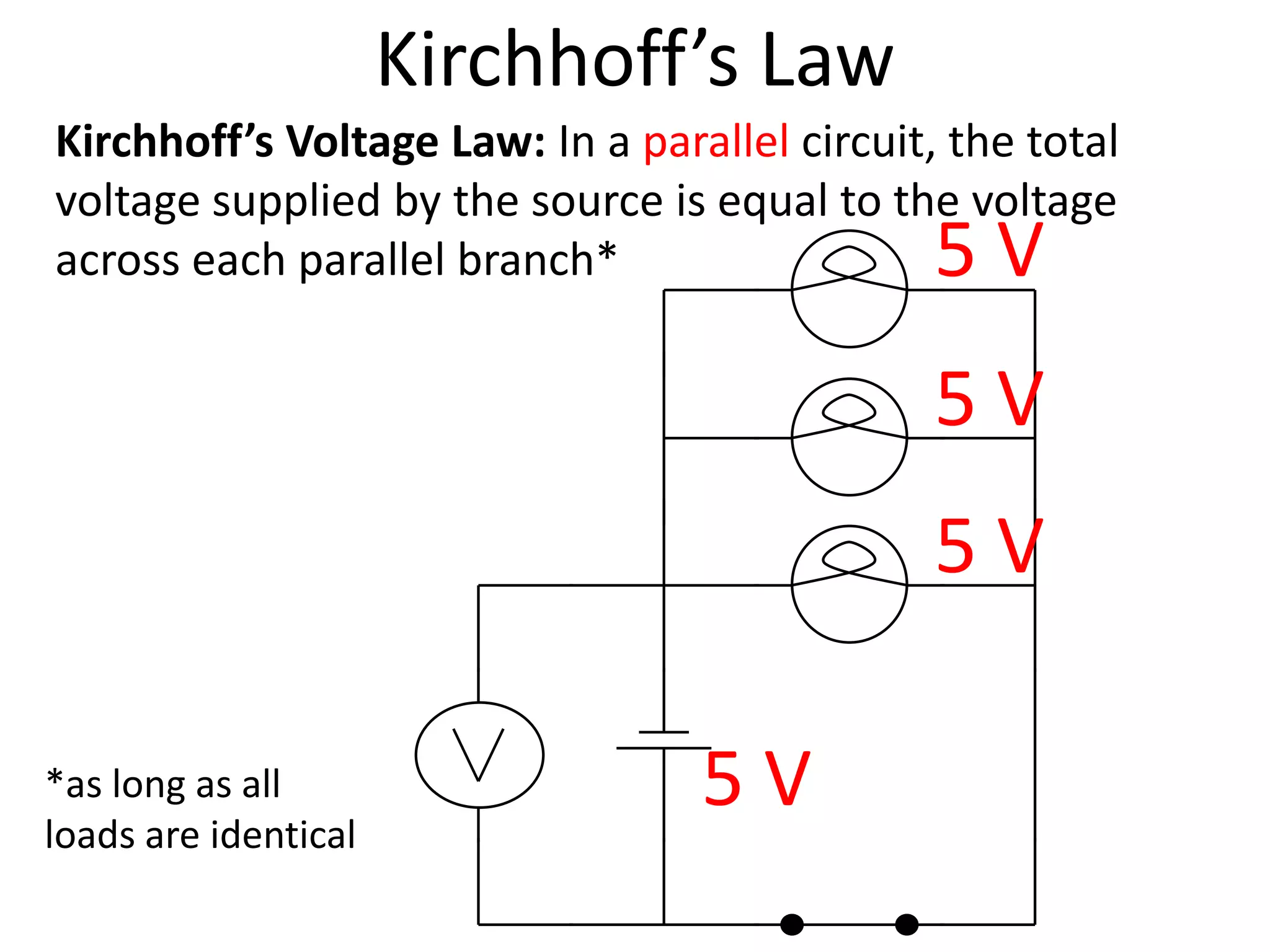
Kirchhoff’s VoltageLaw: In a parallel circuit, the total
voltage supplied by the source is equal to the voltage
across each parallel branch* 5V
5V
5V
*as long as all 5V
loads are identical
5.
Kirchhoff’s Law
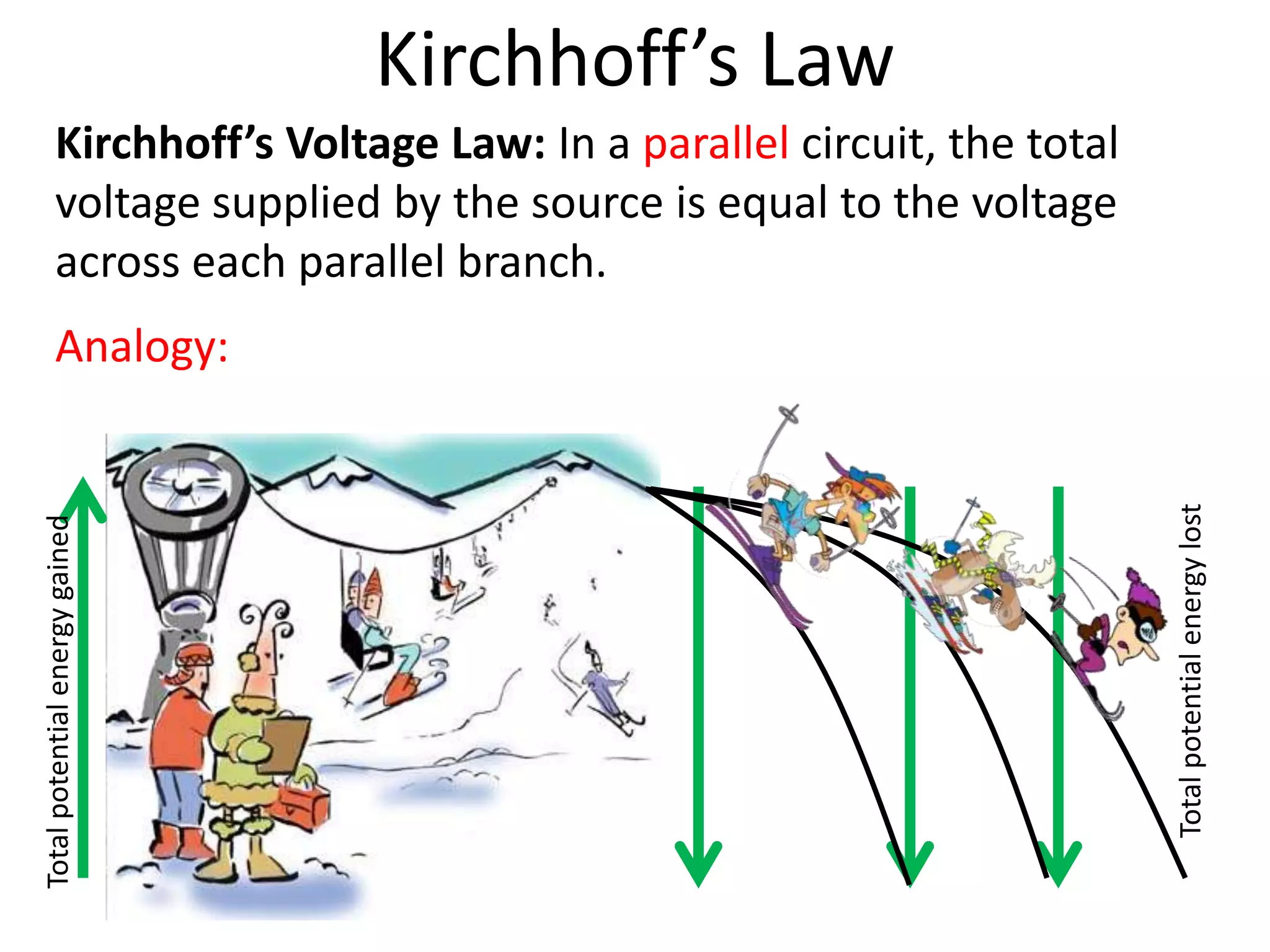
Kirchhoff’s Voltage Law: In a parallel circuit, the total
voltage supplied by the source is equal to the voltage
across each parallel branch.
Analogy:
Total potential energy lost
Total potential energy gained
Kirchhoff’s Law
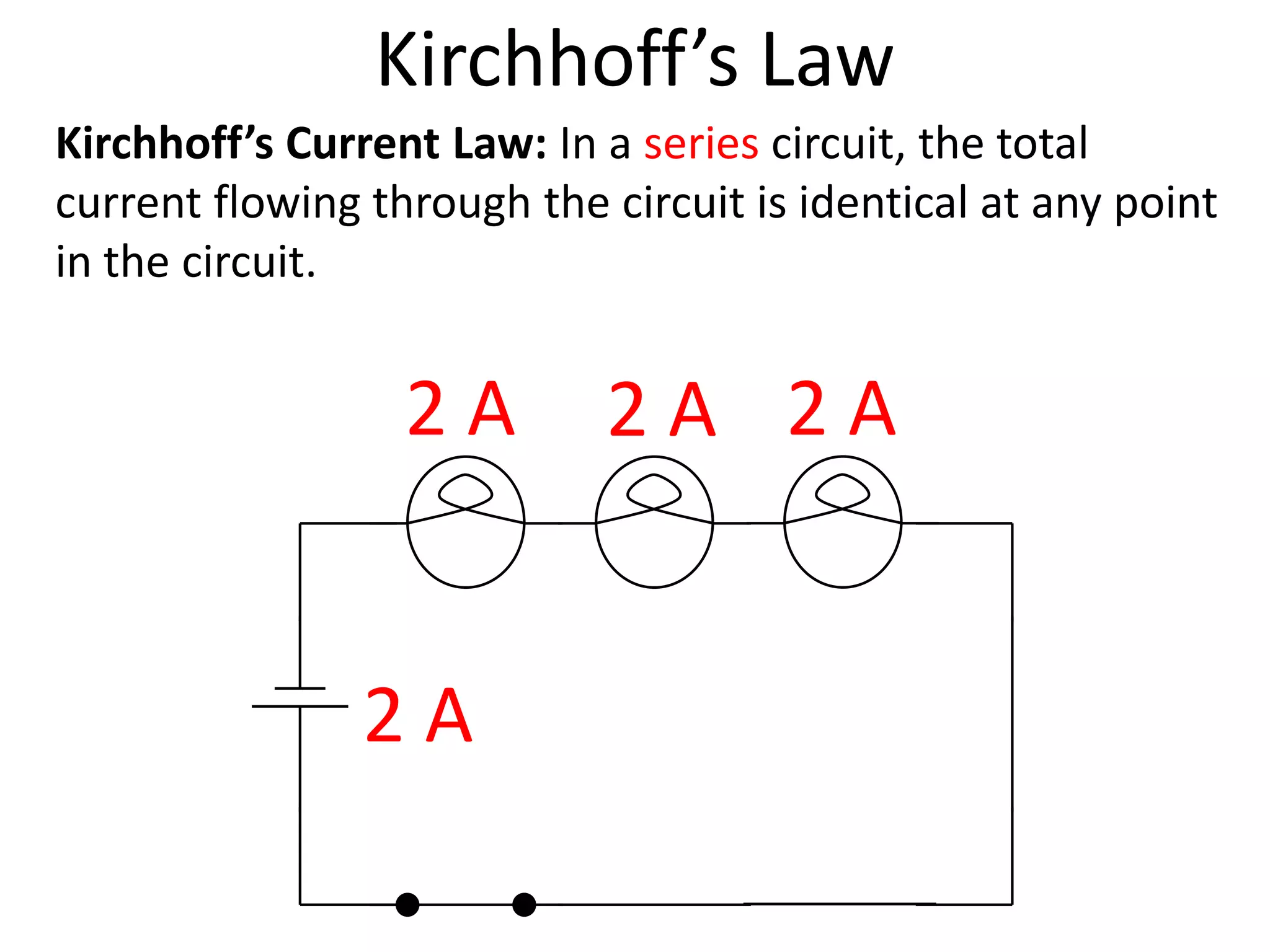
Kirchhoff’s CurrentLaw: In a series circuit, the total
current flowing through the circuit is identical at any point
in the circuit.
2A 2A 2A
2A
11.
Kirchhoff’s Law
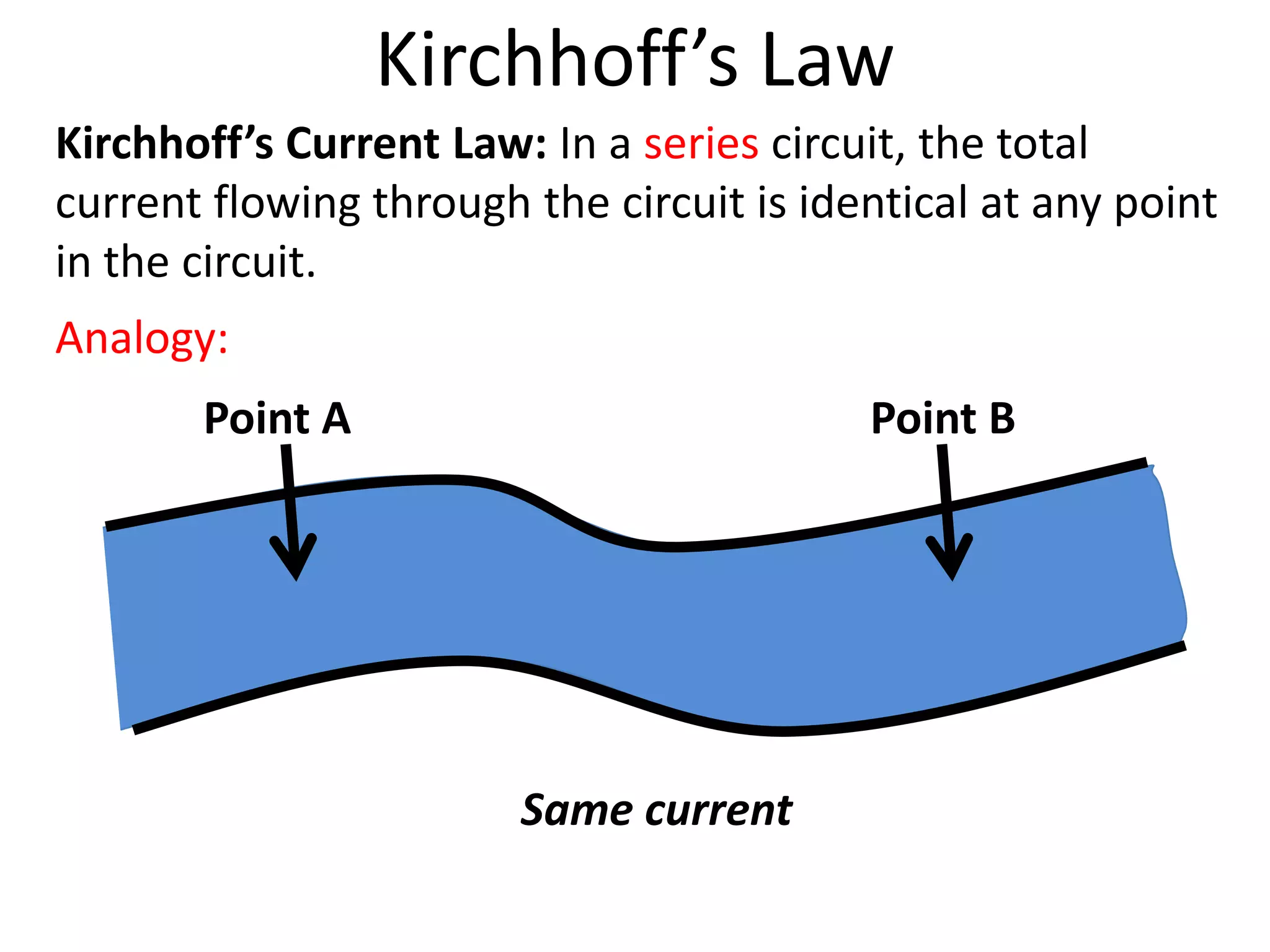
Kirchhoff’s CurrentLaw: In a series circuit, the total
current flowing through the circuit is identical at any point
in the circuit.
Analogy:
Point A Point B
Same current
12.
Kirchhoff’s Law
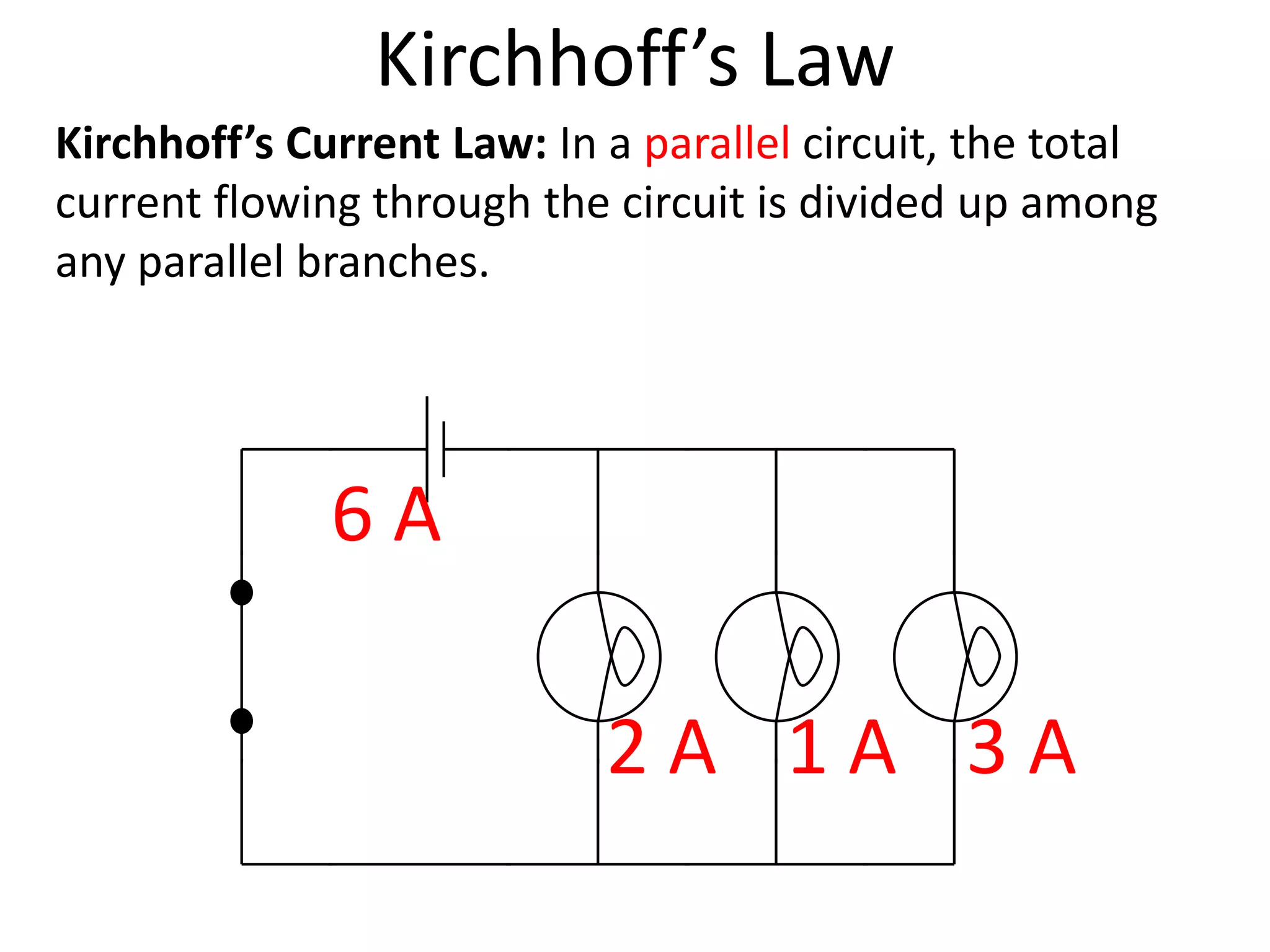
Kirchhoff’s CurrentLaw: In a parallel circuit, the total
current flowing through the circuit is divided up among
any parallel branches.
6A
2A 1A 3A
13.
Kirchhoff’s Law
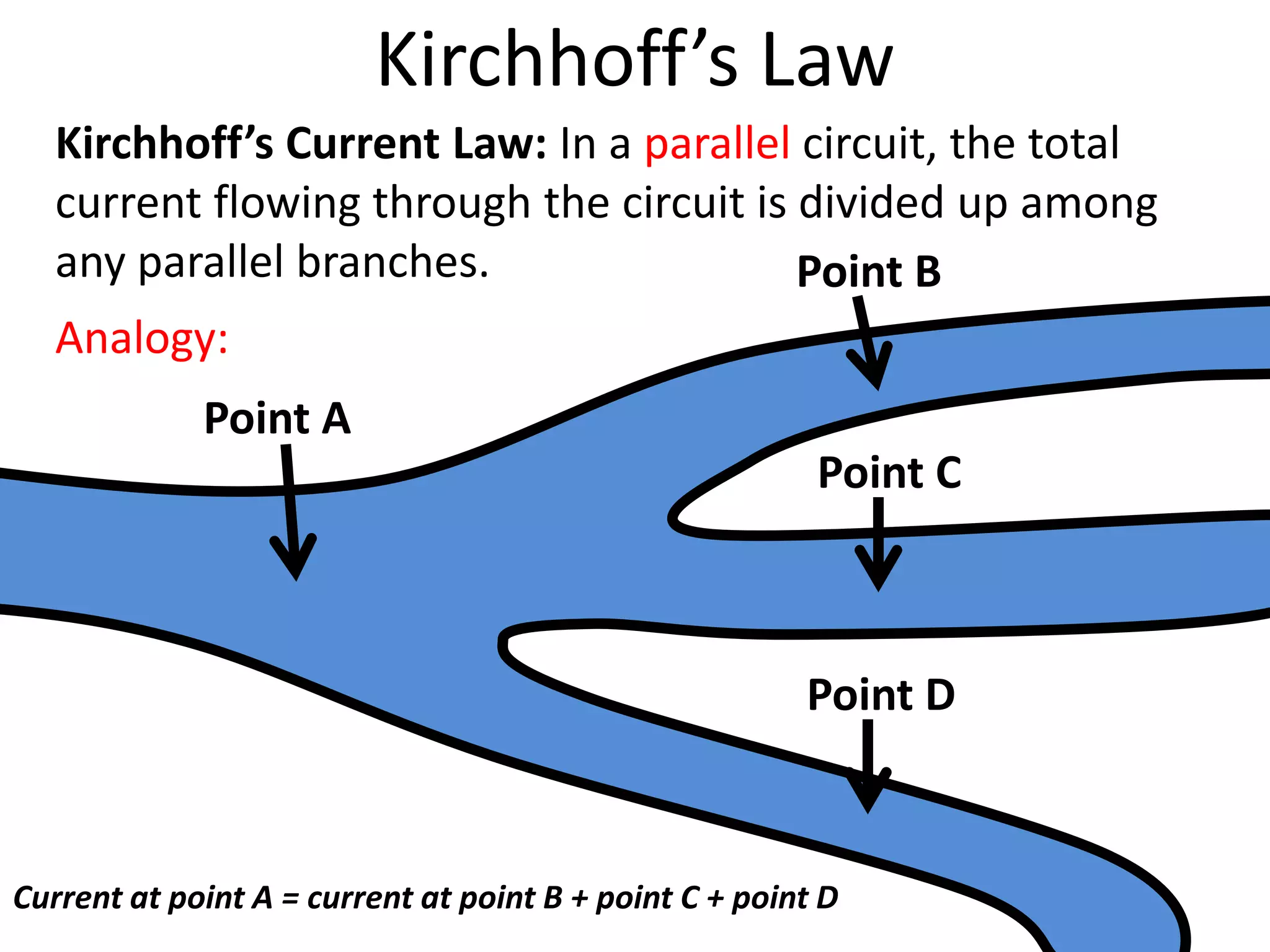
Kirchhoff’s Current Law: In a parallel circuit, the total
current flowing through the circuit is divided up among
any parallel branches. Point B
Analogy:
Point A
Point C
Point D
Current at point A = current at point B + point C + point D