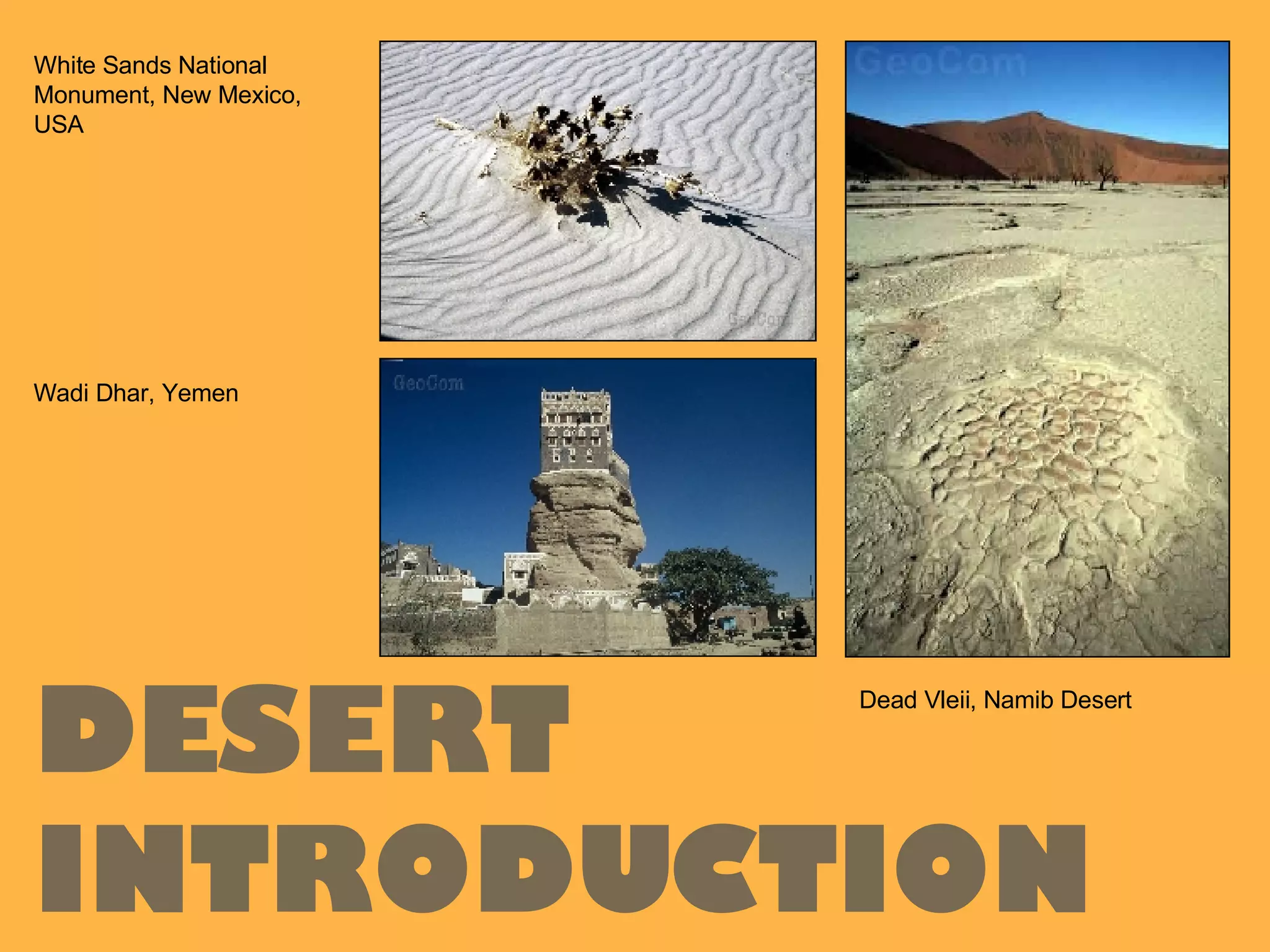
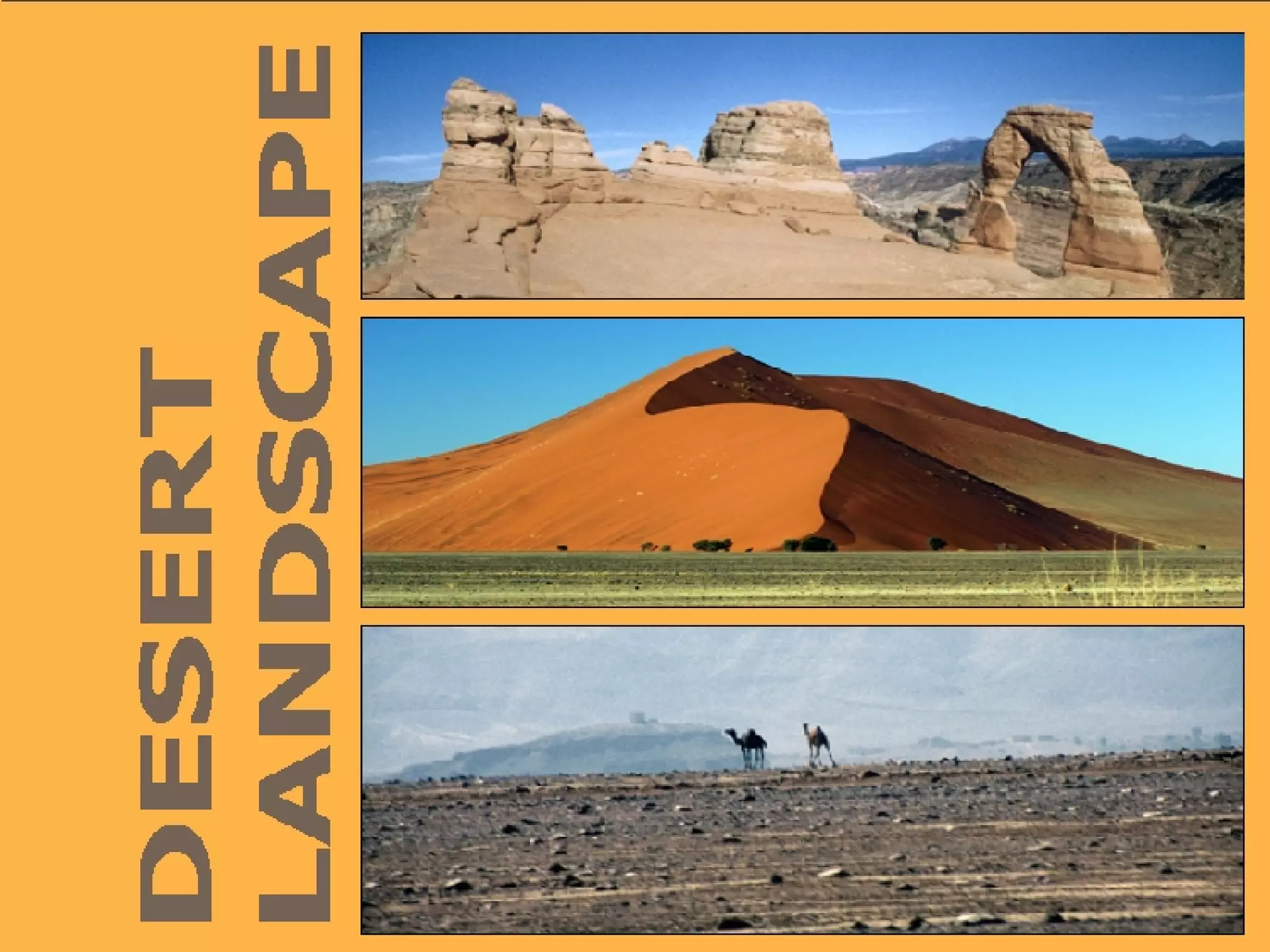
White Sands National Monument, New Mexico, USA Wadi Dhar, Yemen Dead Vleii, Namib Desert DESERT INTRODUCTION
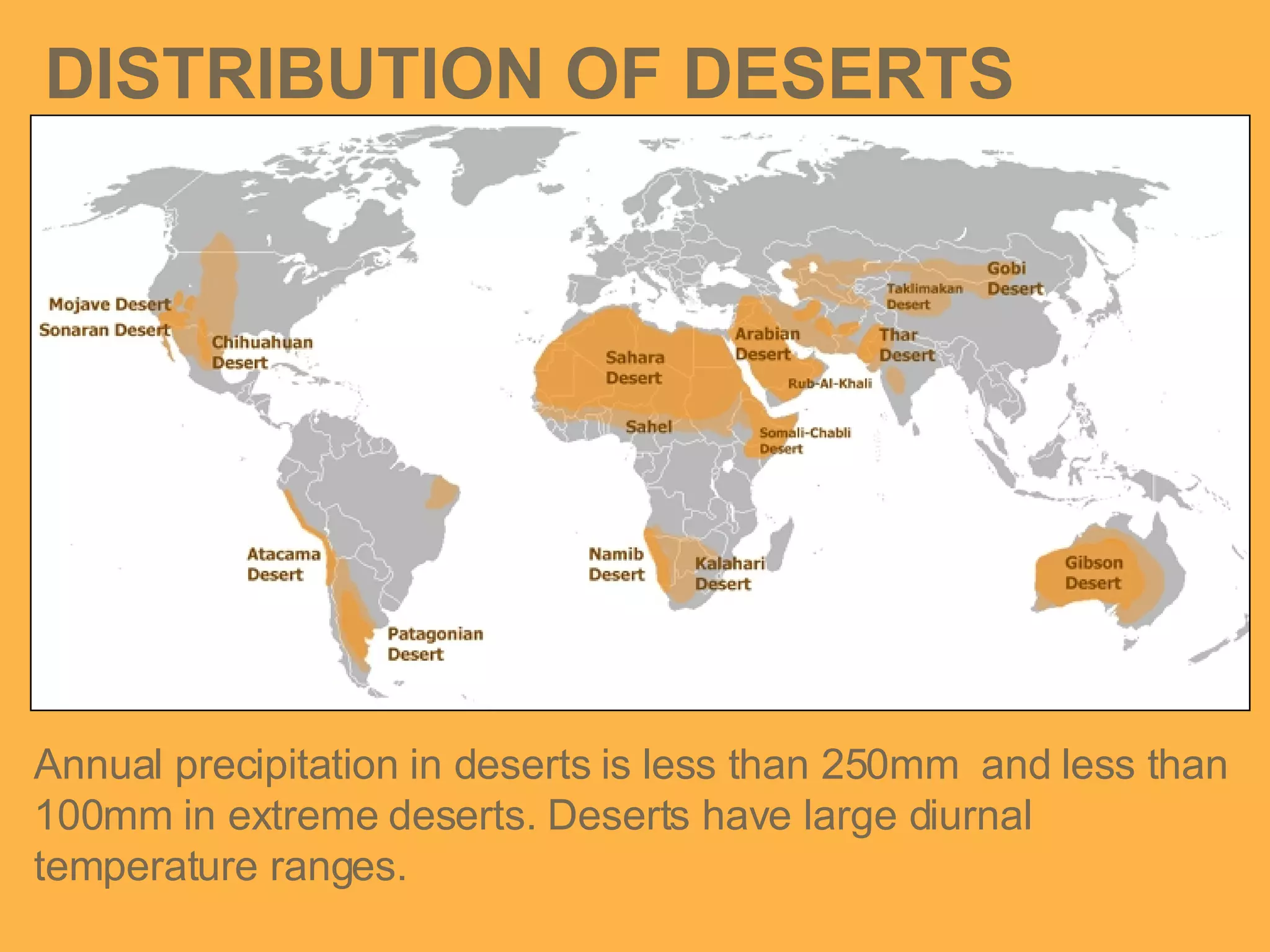
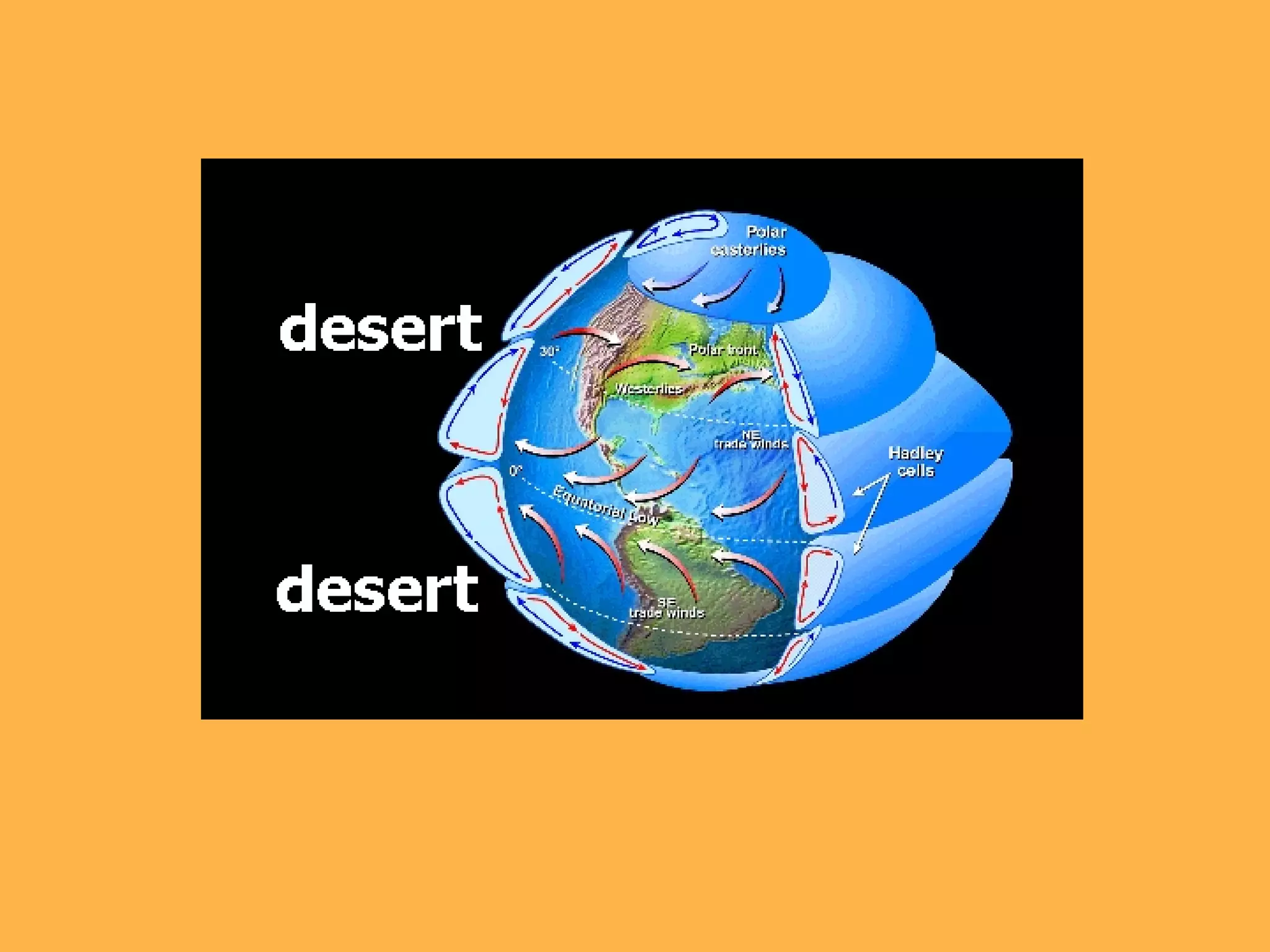
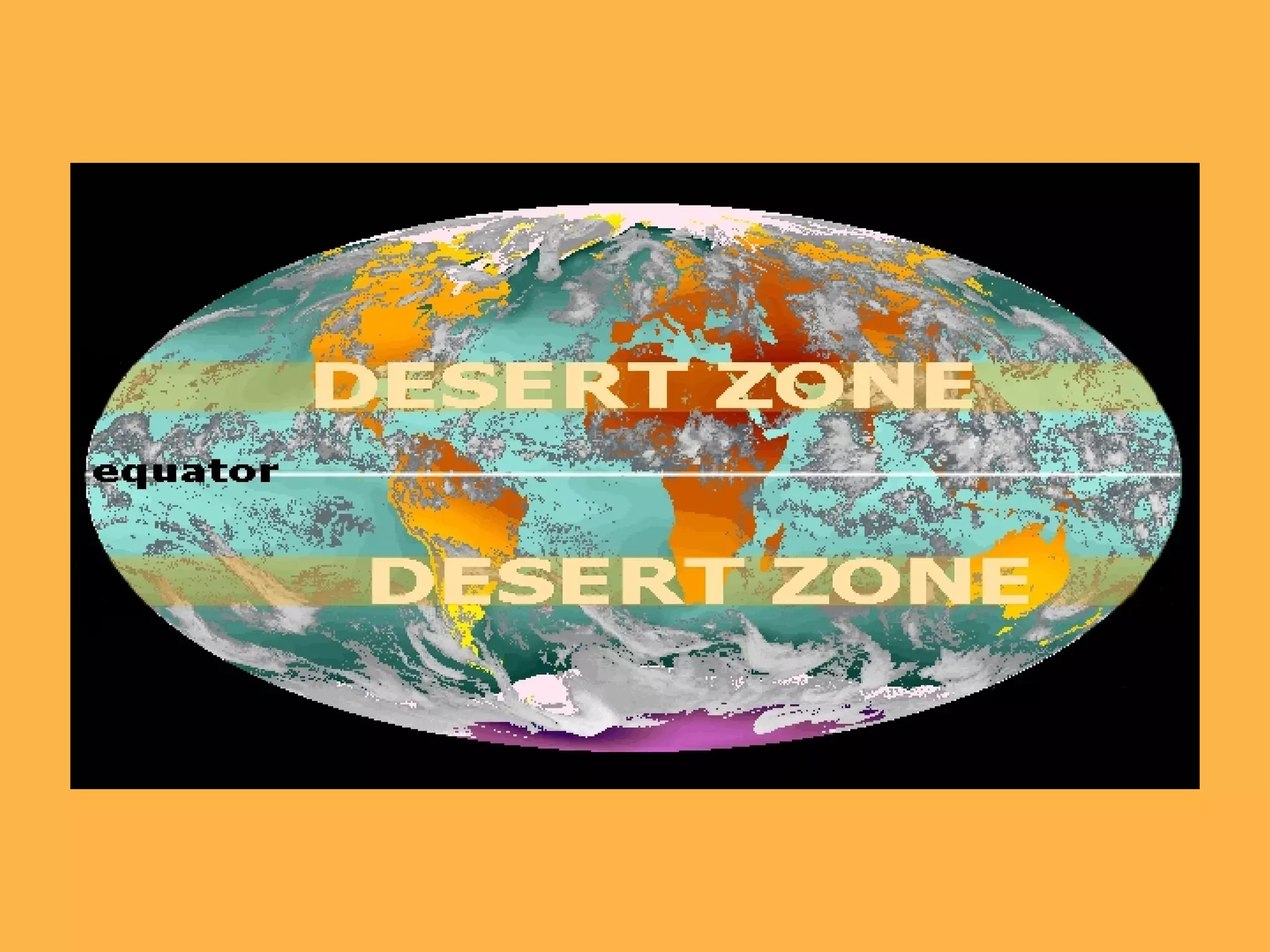
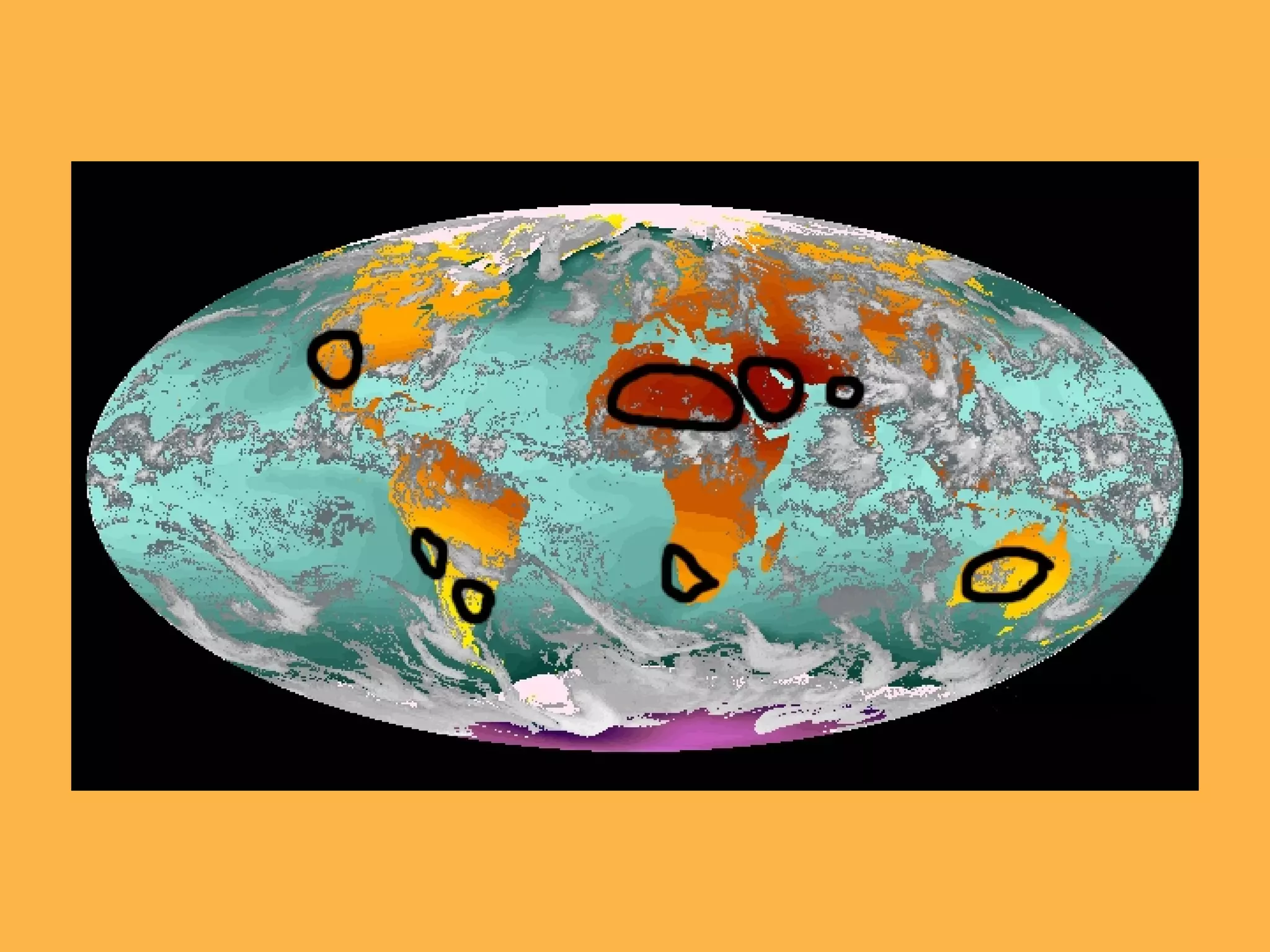
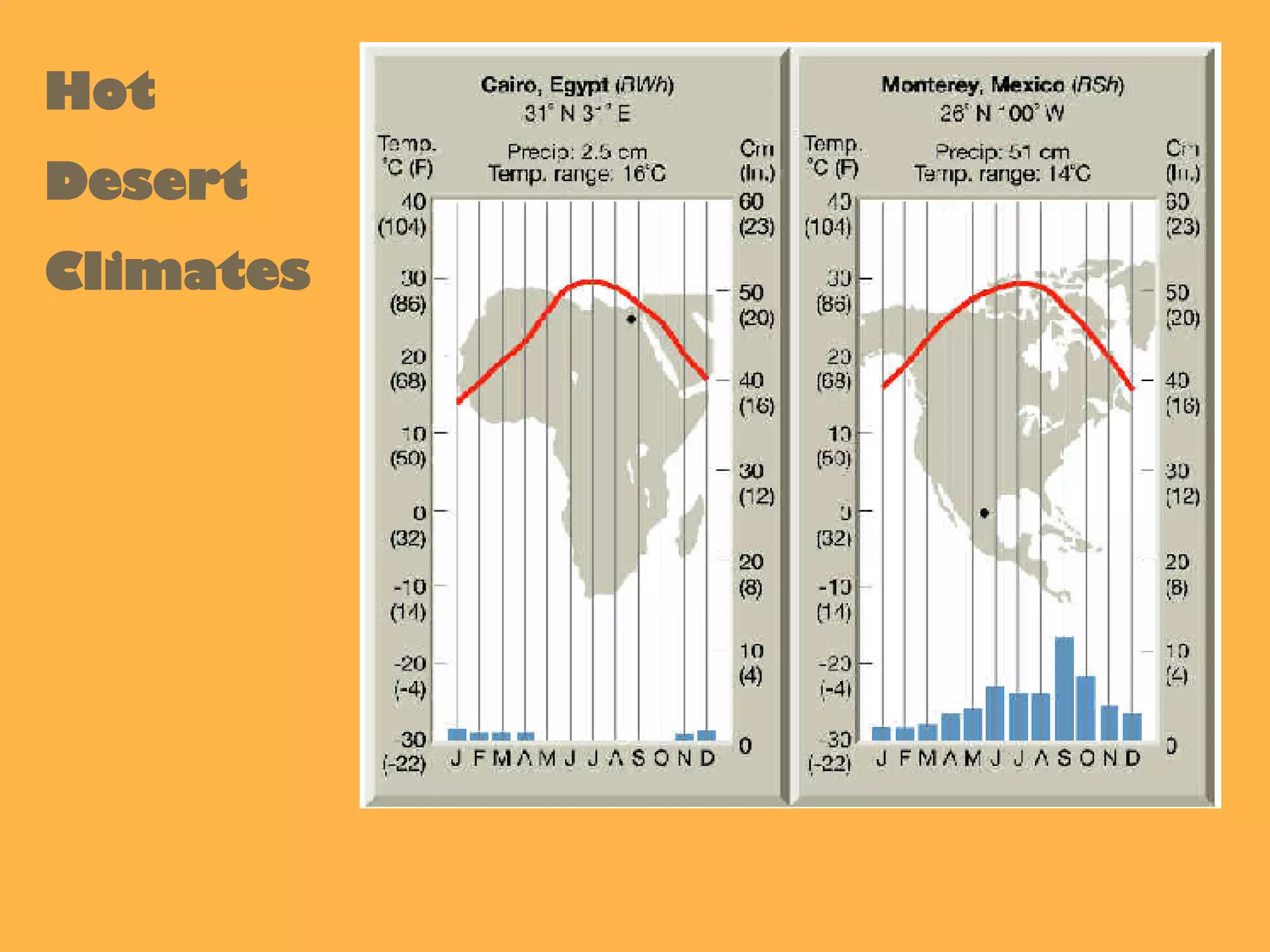
DISTRIBUTION OF DESERTS Annual precipitation in deserts is less than 250mm  and less than 100mm in extreme deserts. Deserts have large diurnal temperature ranges.


Hot Desert Climates
 
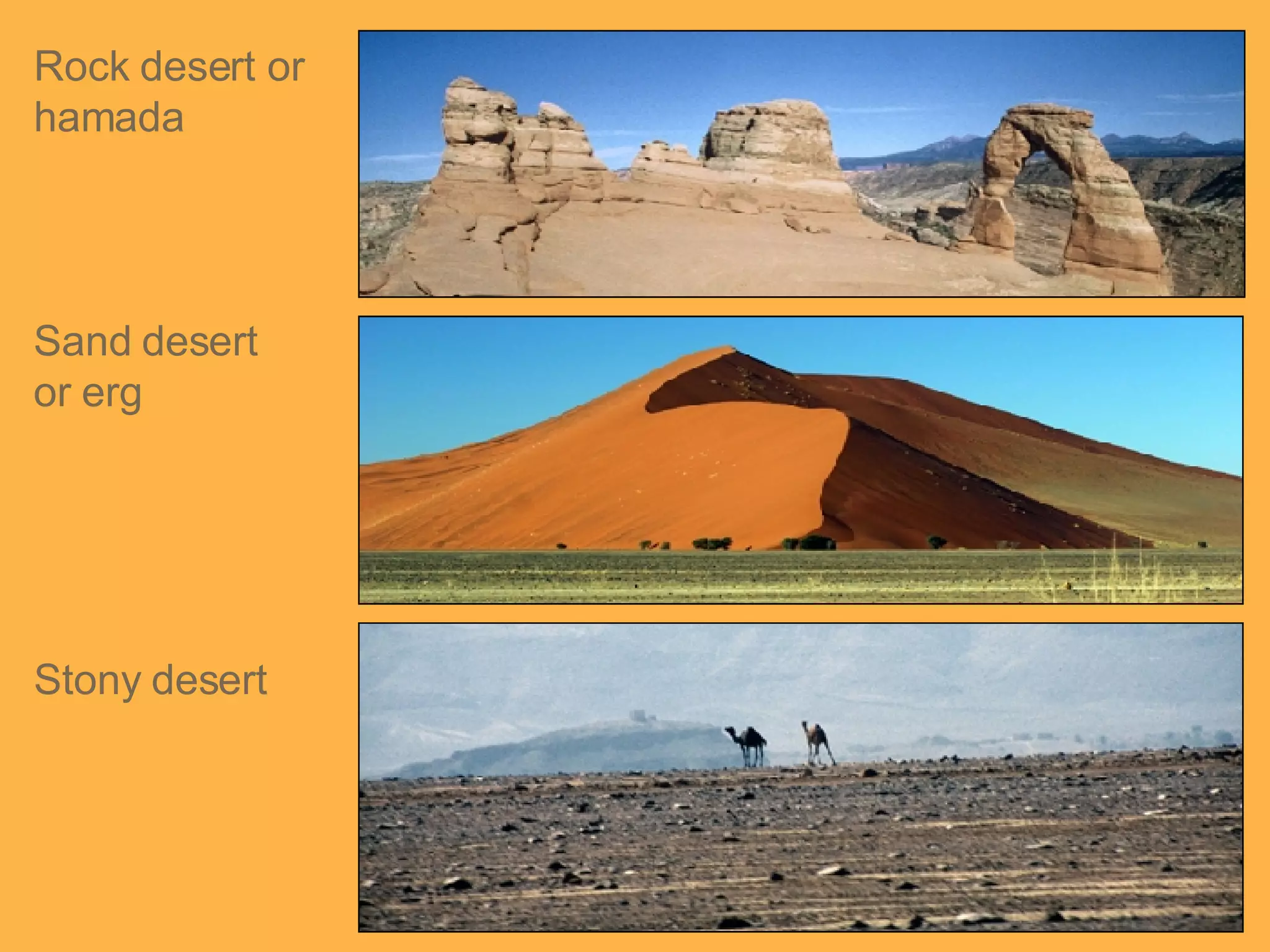
Rock desert or hamada Sand desert or erg Stony desert
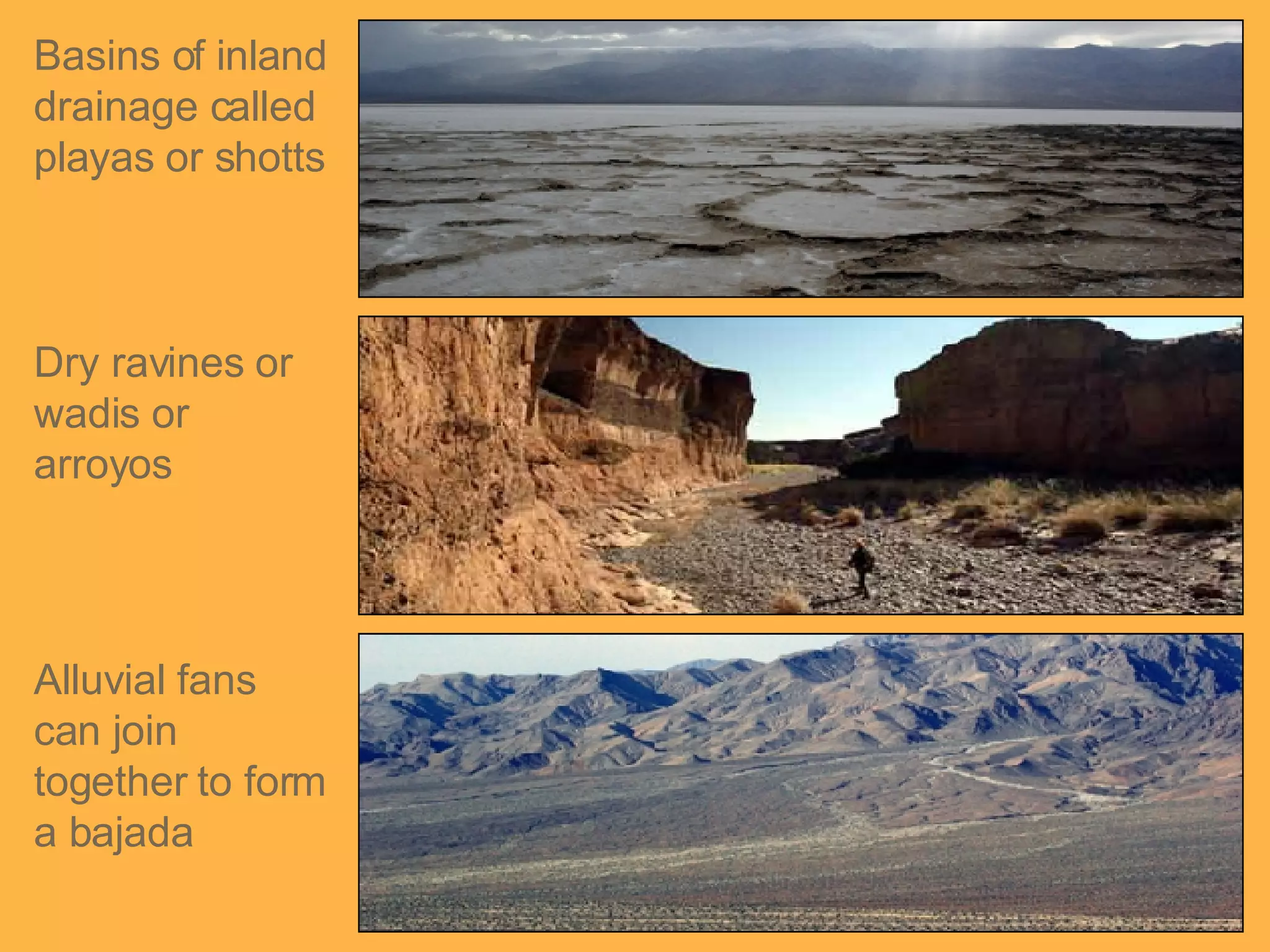
Basins of inland drainage called playas or shotts Dry ravines or wadis or arroyos Alluvial fans can join together to form a bajada
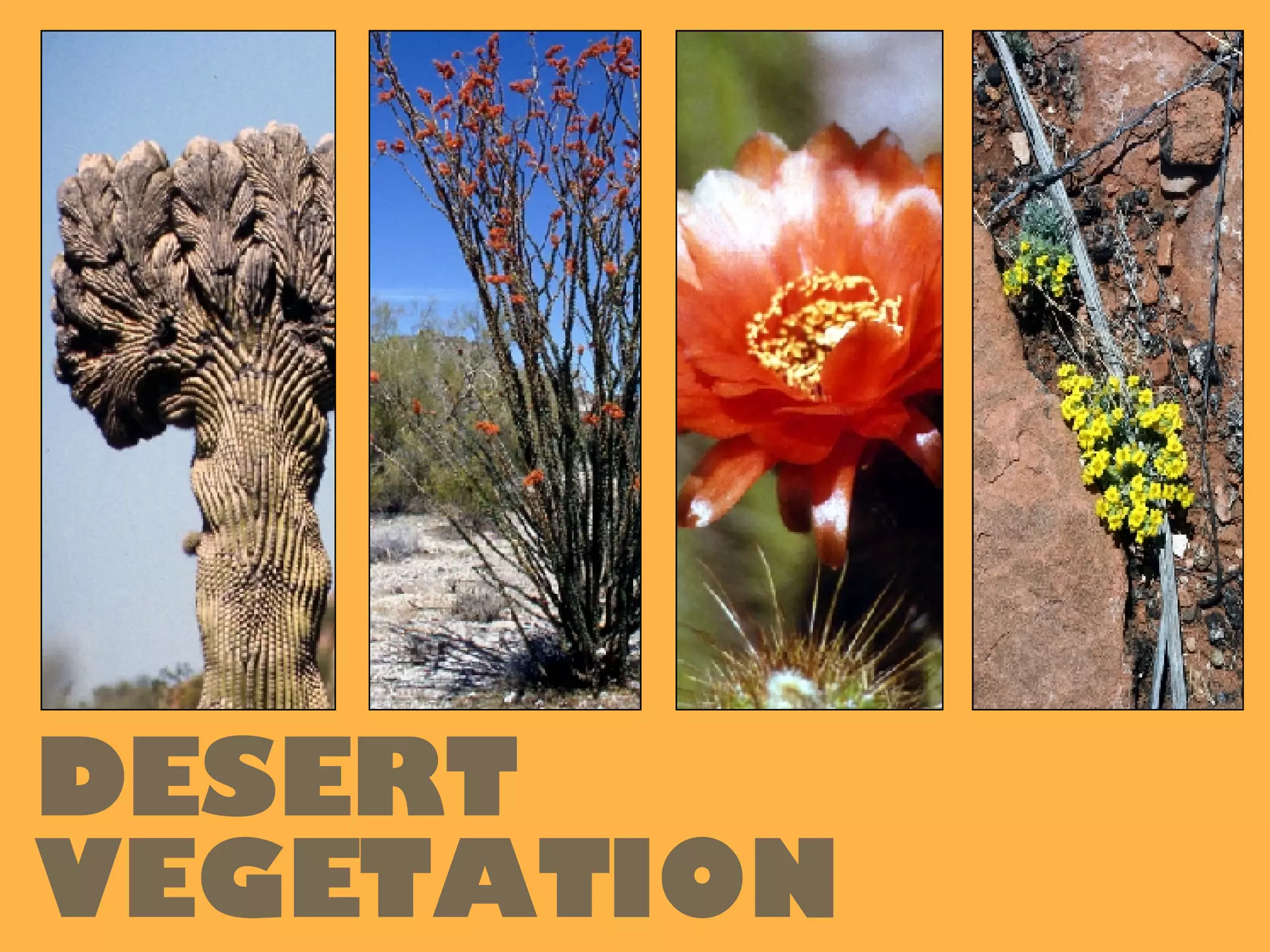
DESERT VEGETATION
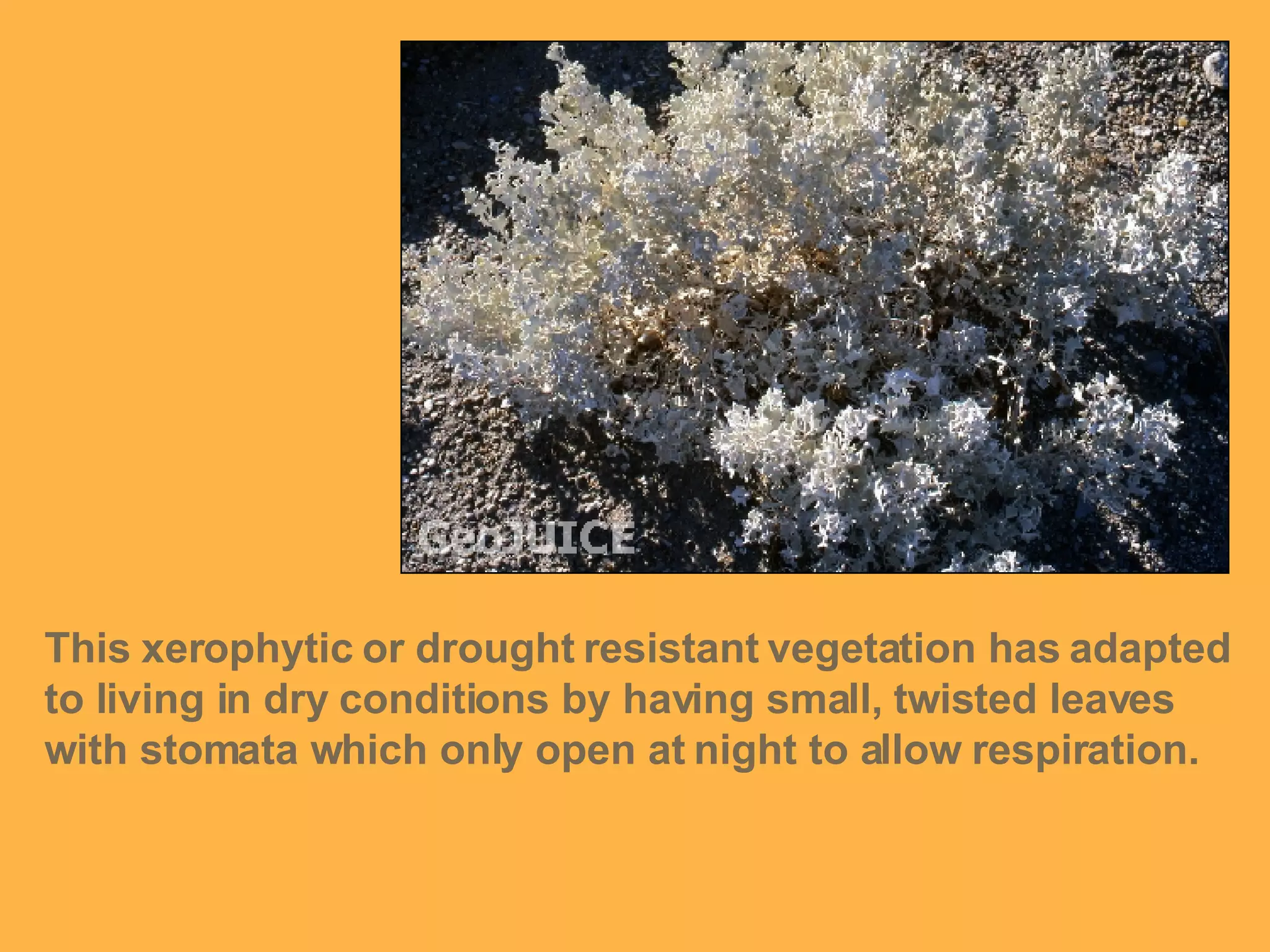
This xerophytic or drought resistant vegetation has adapted to living in dry conditions by having small, twisted leaves with stomata which only open at night to allow respiration.
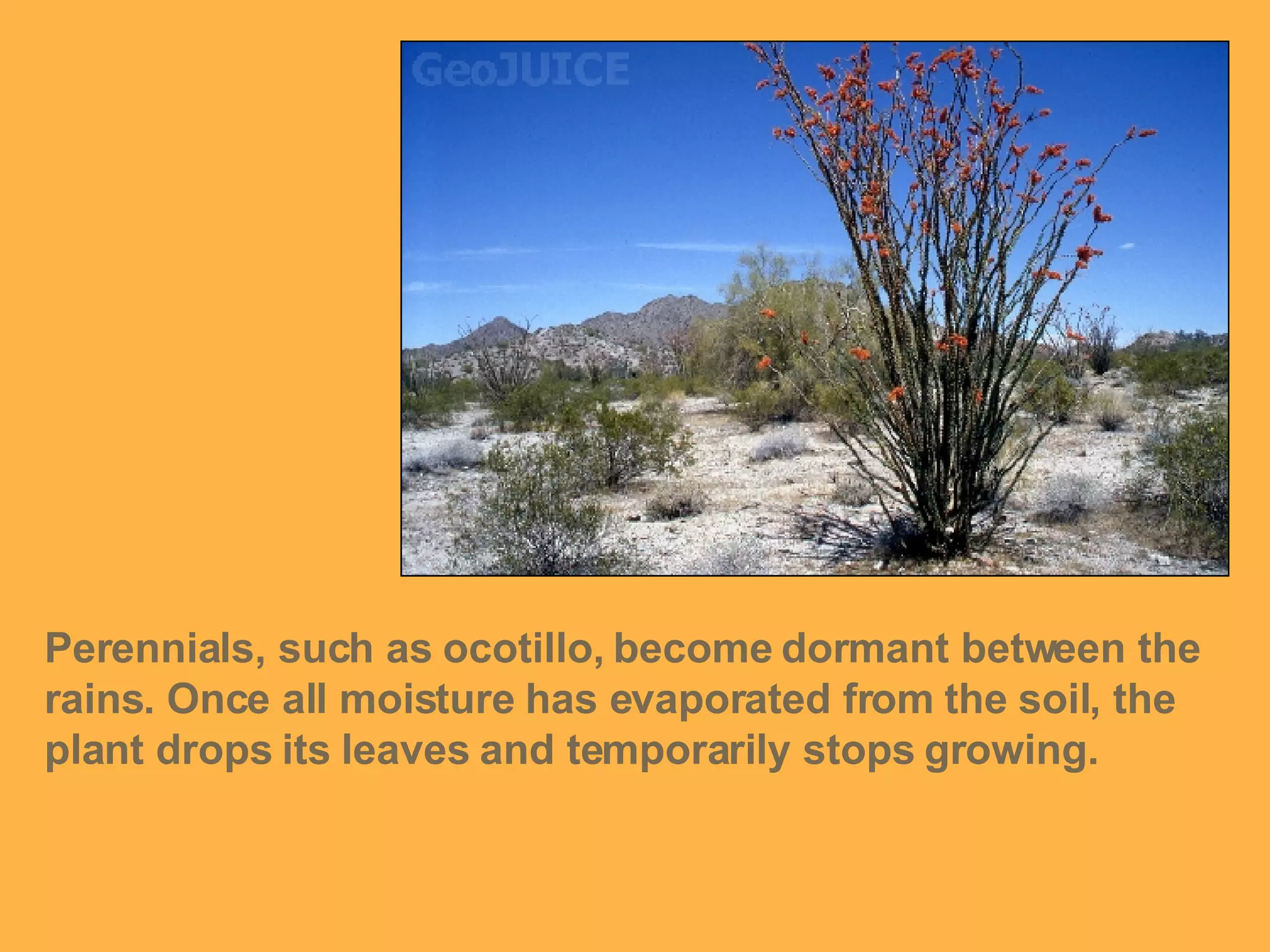
Perennials, such as ocotillo, become dormant between the rains. Once all moisture has evaporated from the soil, the plant drops its leaves and temporarily stops growing.
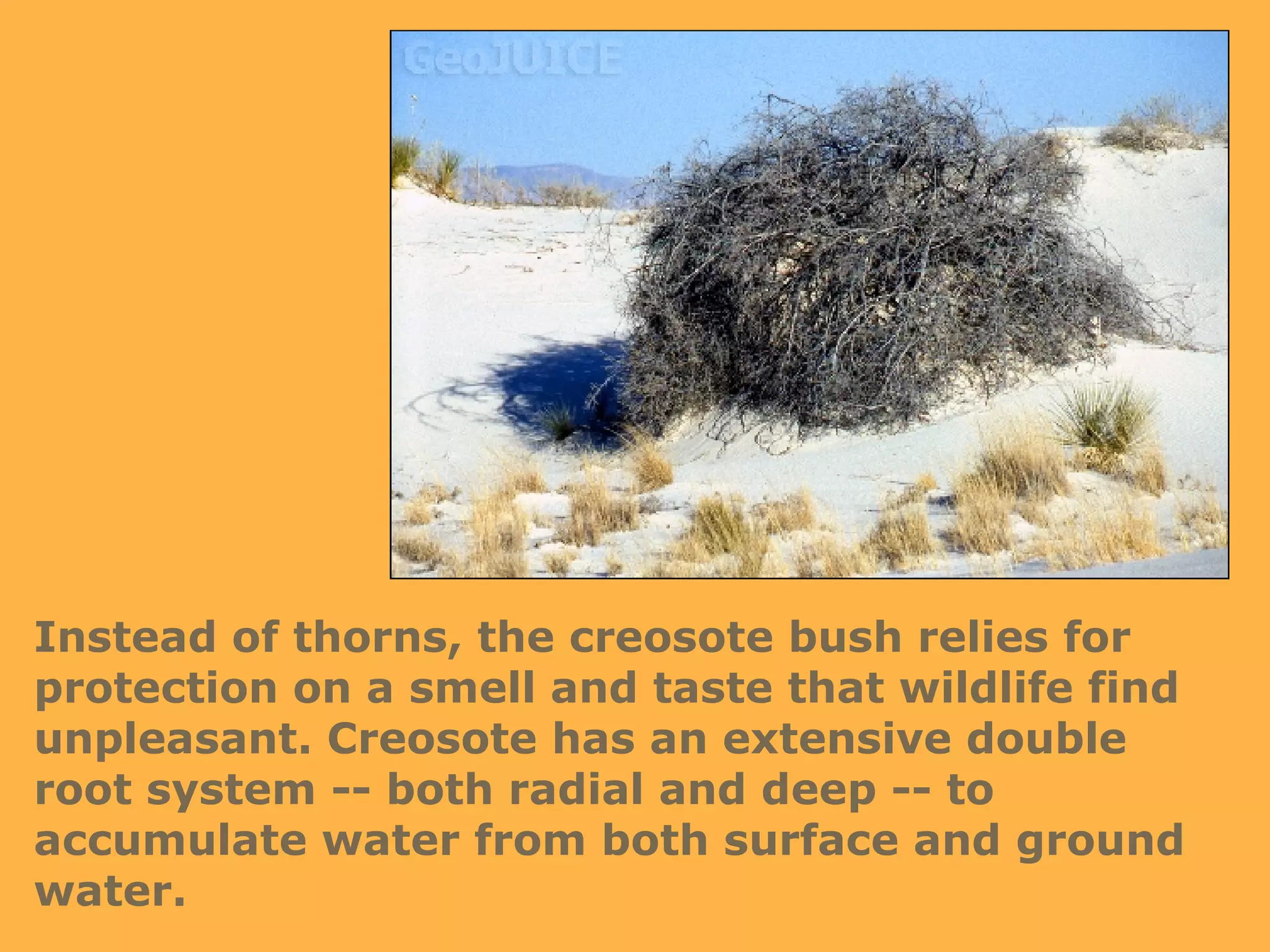
Instead of thorns, the creosote bush relies for protection on a smell and taste that wildlife find unpleasant. Creosote has an extensive double root system -- both radial and deep -- to accumulate water from both surface and ground water.
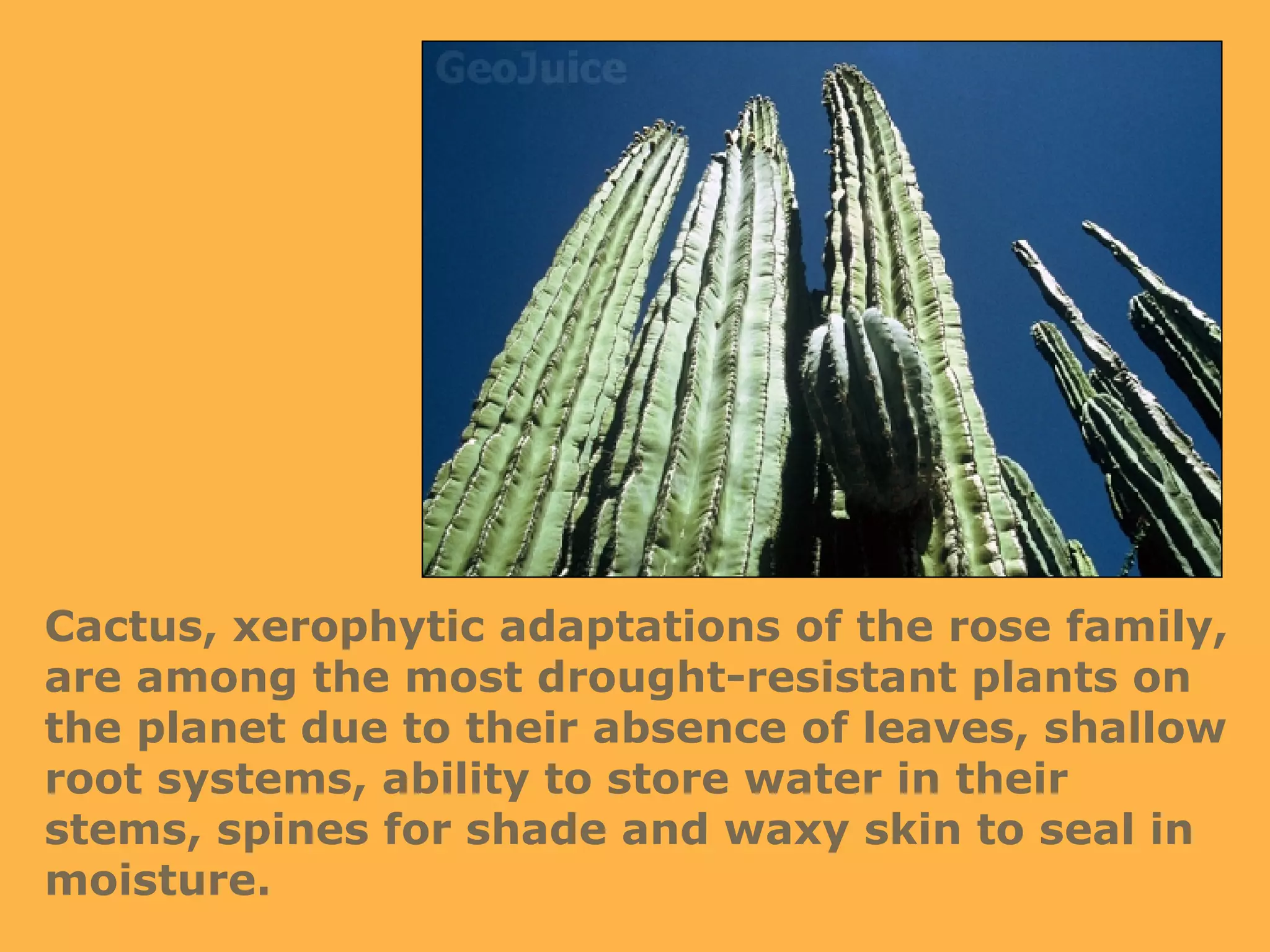
Cactus, xerophytic adaptations of the rose family, are among the most drought-resistant plants on the planet due to their absence of leaves, shallow root systems, ability to store water in their stems, spines for shade and waxy skin to seal in moisture.
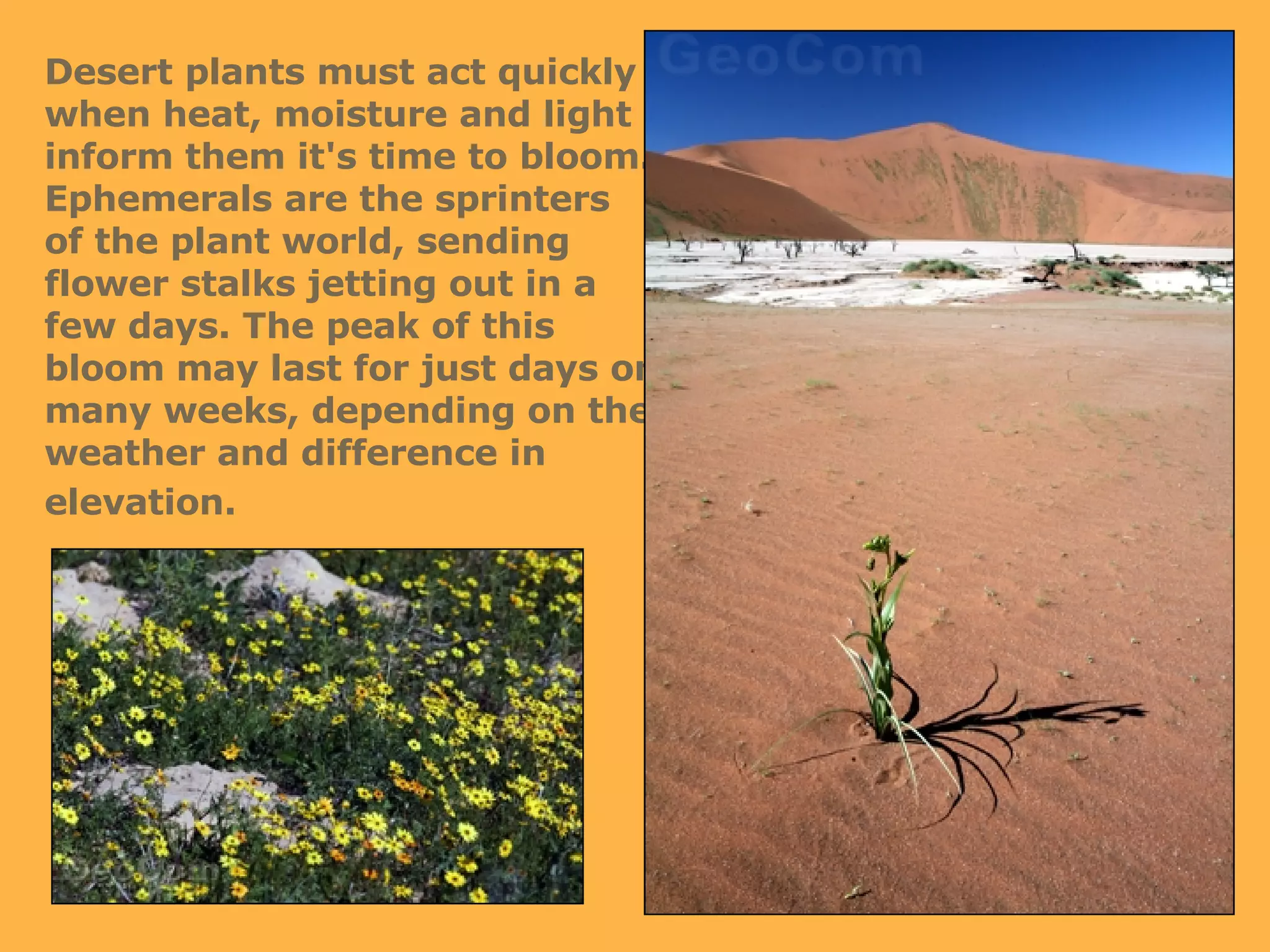
Desert plants must act quickly when heat, moisture and light inform them it's time to bloom. Ephemerals are the sprinters of the plant world, sending flower stalks jetting out in a few days. The peak of this bloom may last for just days or many weeks, depending on the weather and difference in elevation.
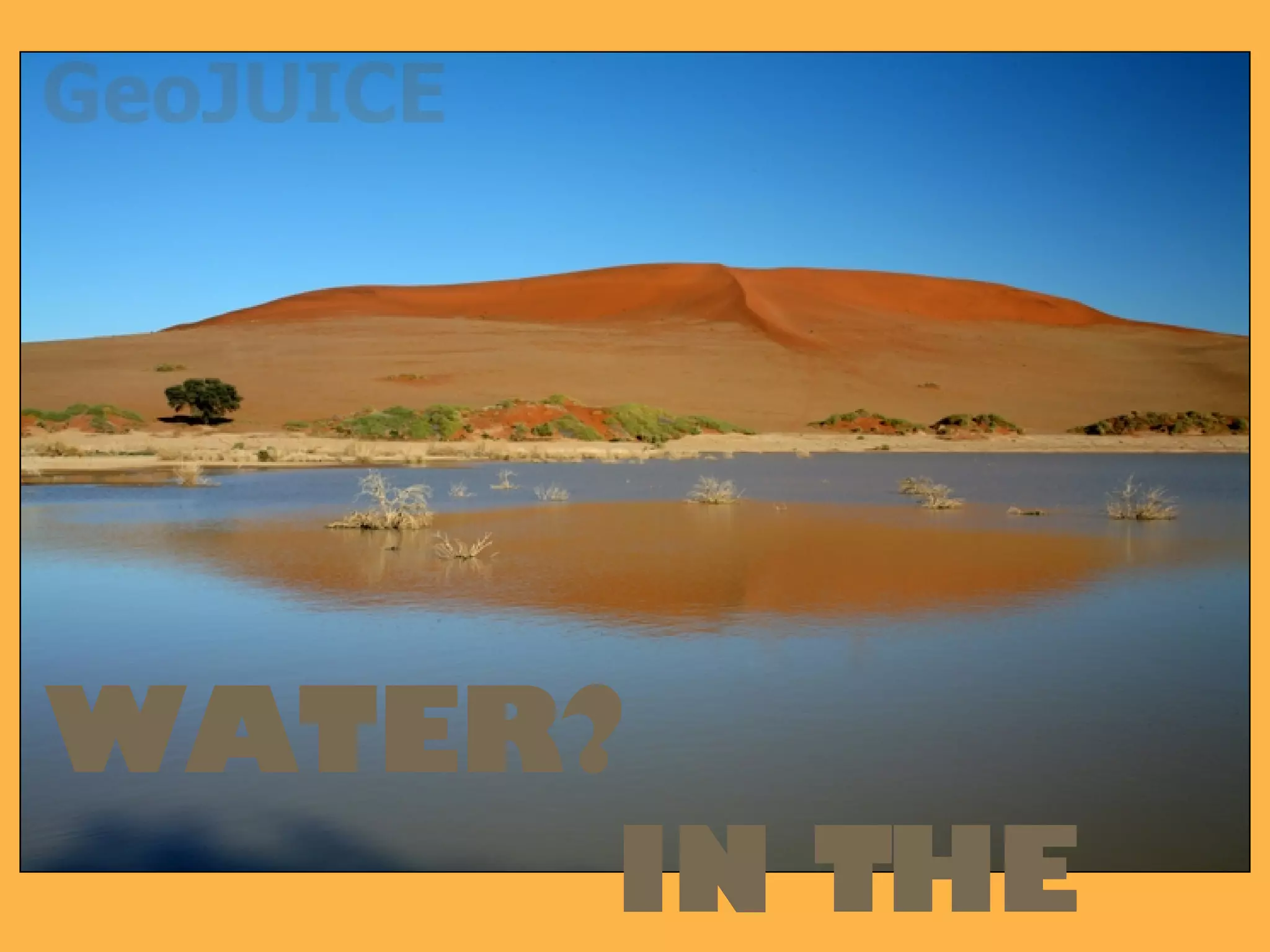
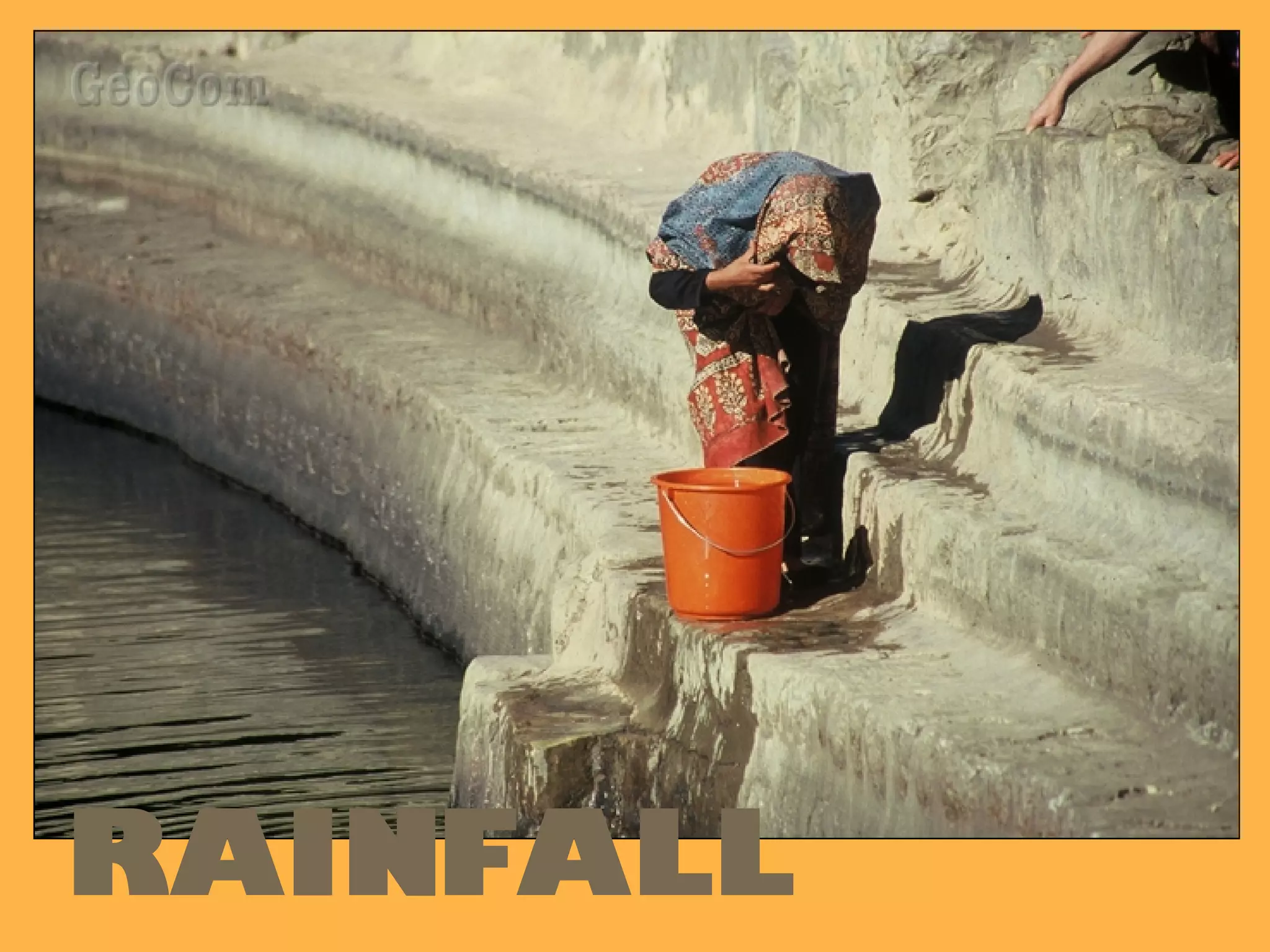
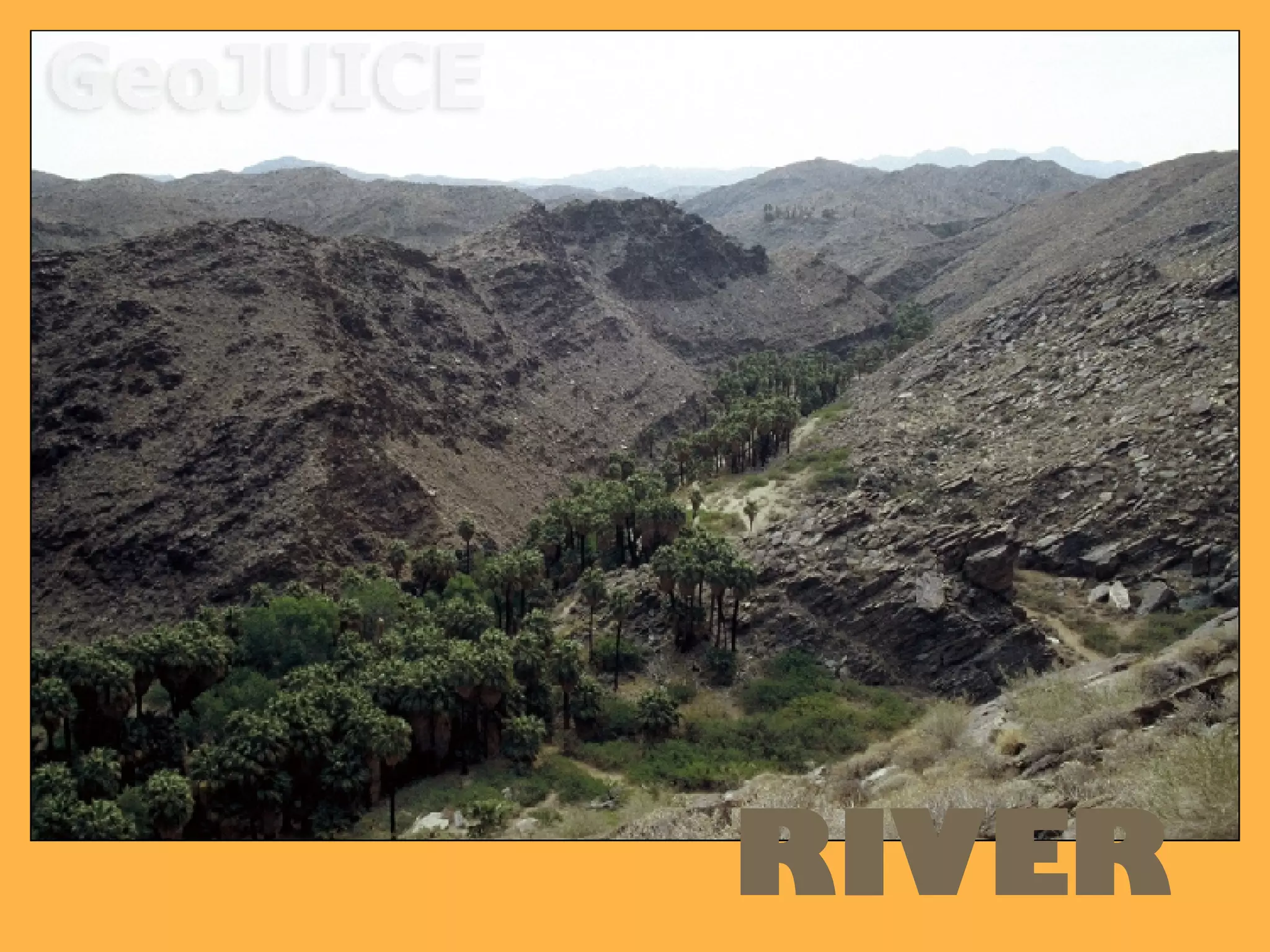
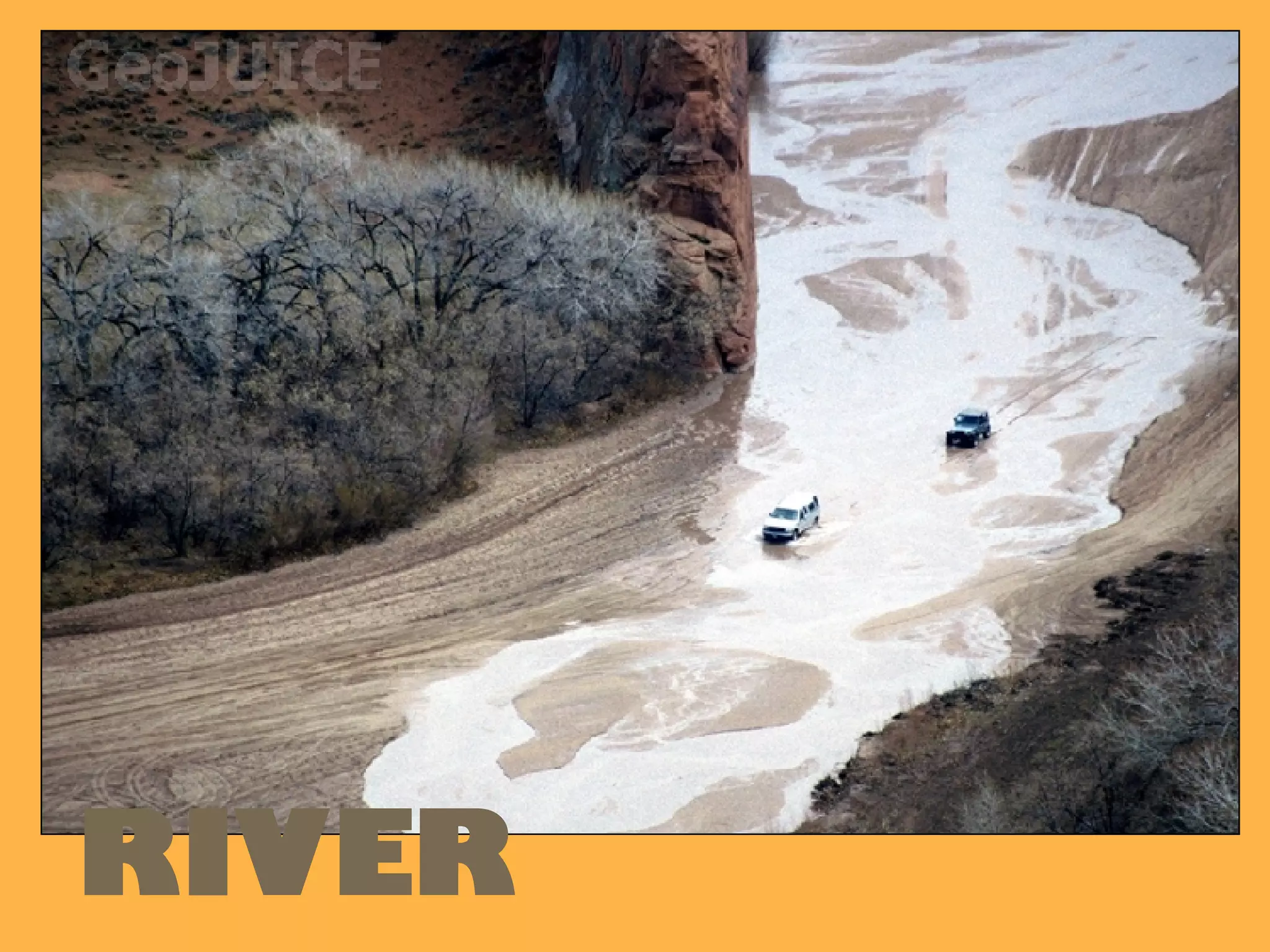
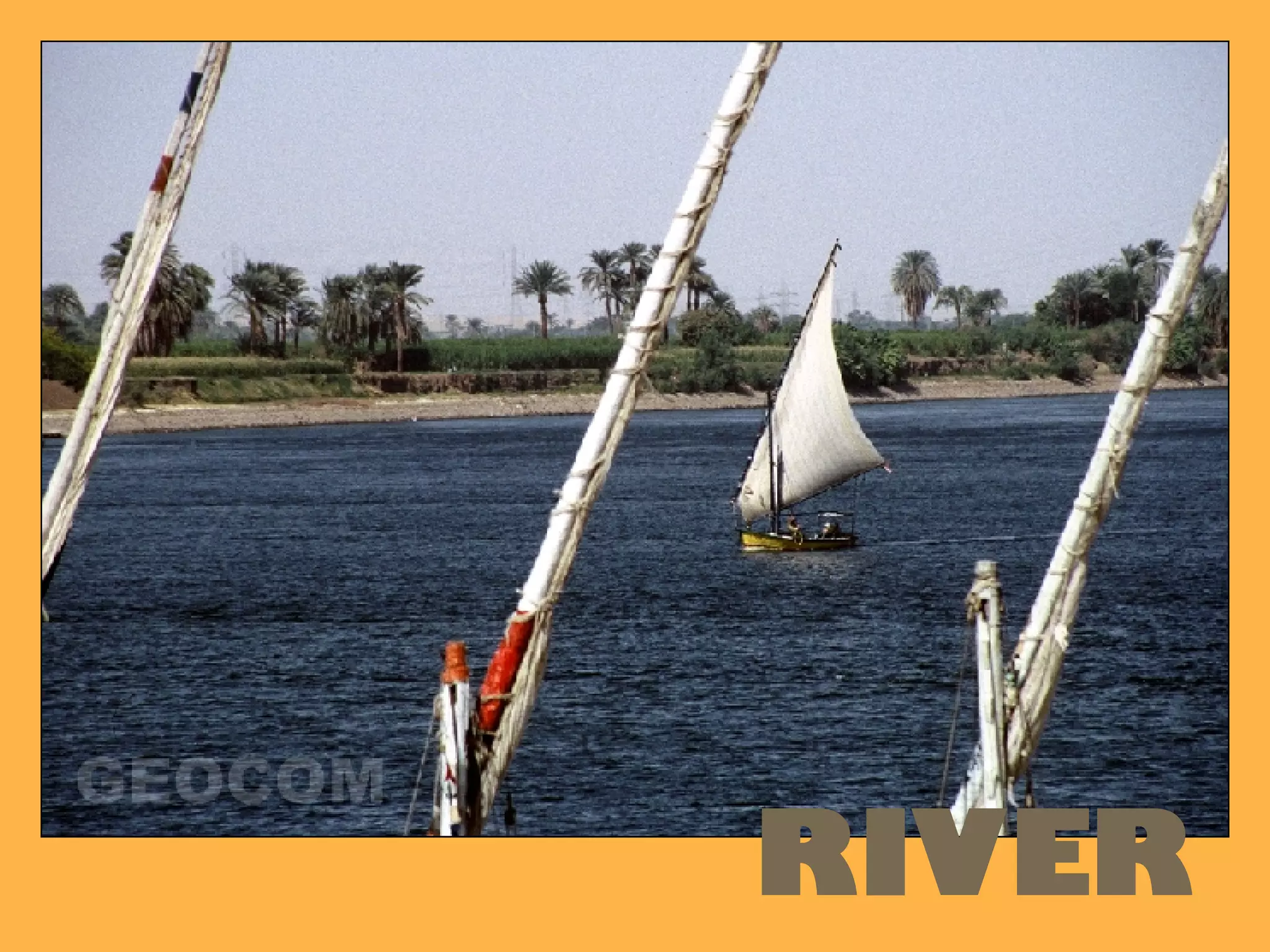
WATER?  IN THE DESERT?
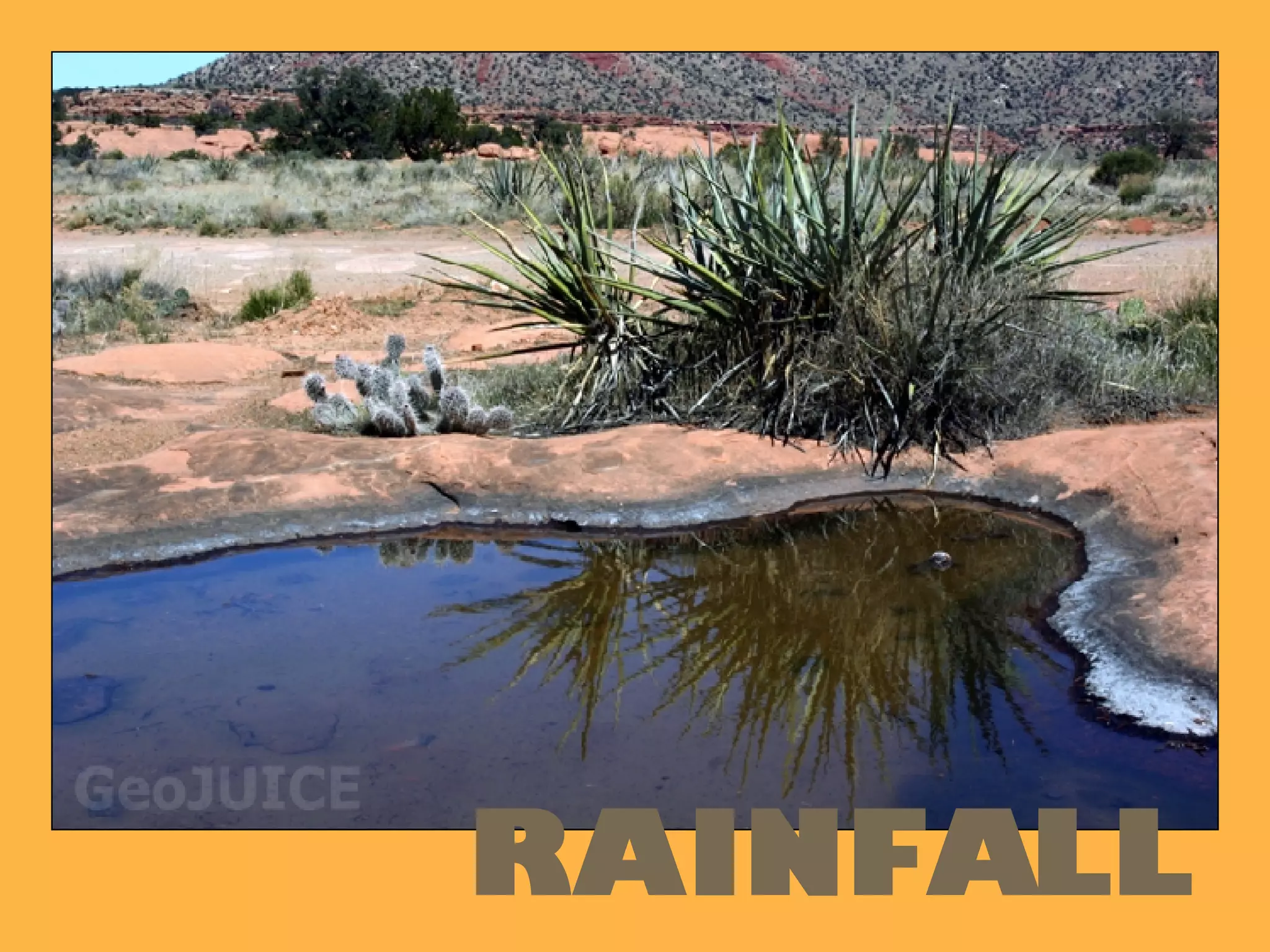
RAINFALL
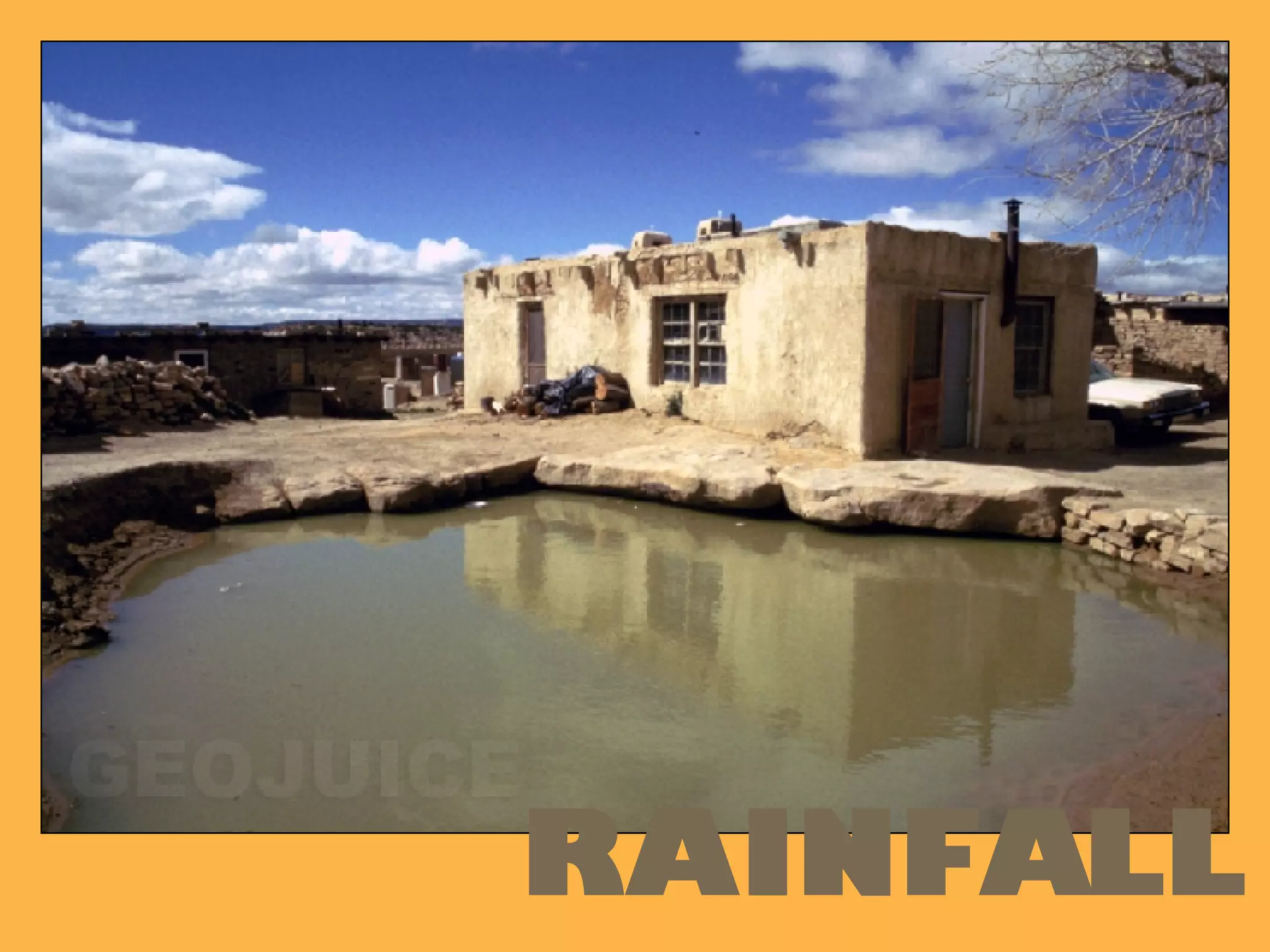
RAINFALL
RAINFALL
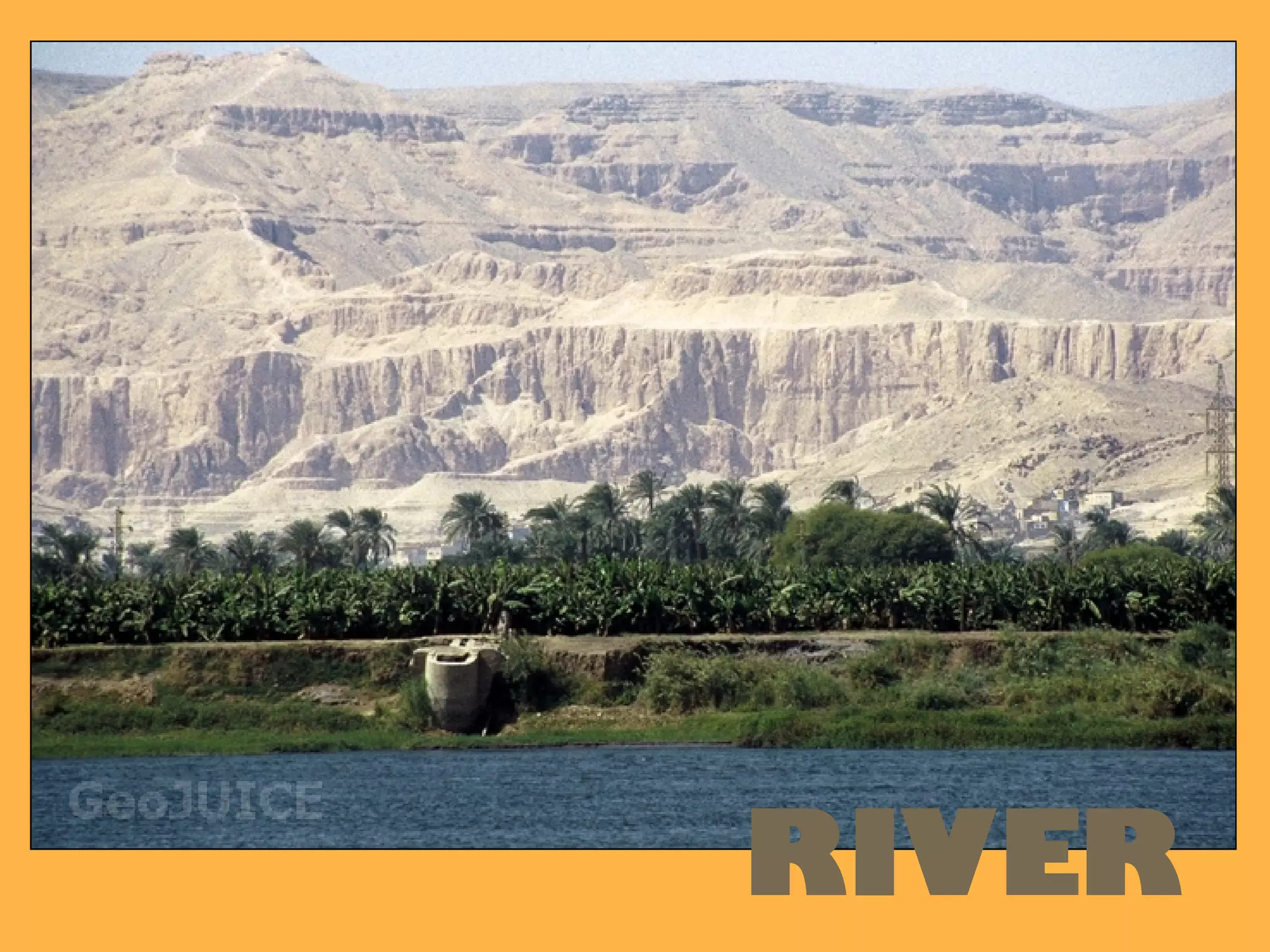
RIVER
RIVER
RIVER
RIVER
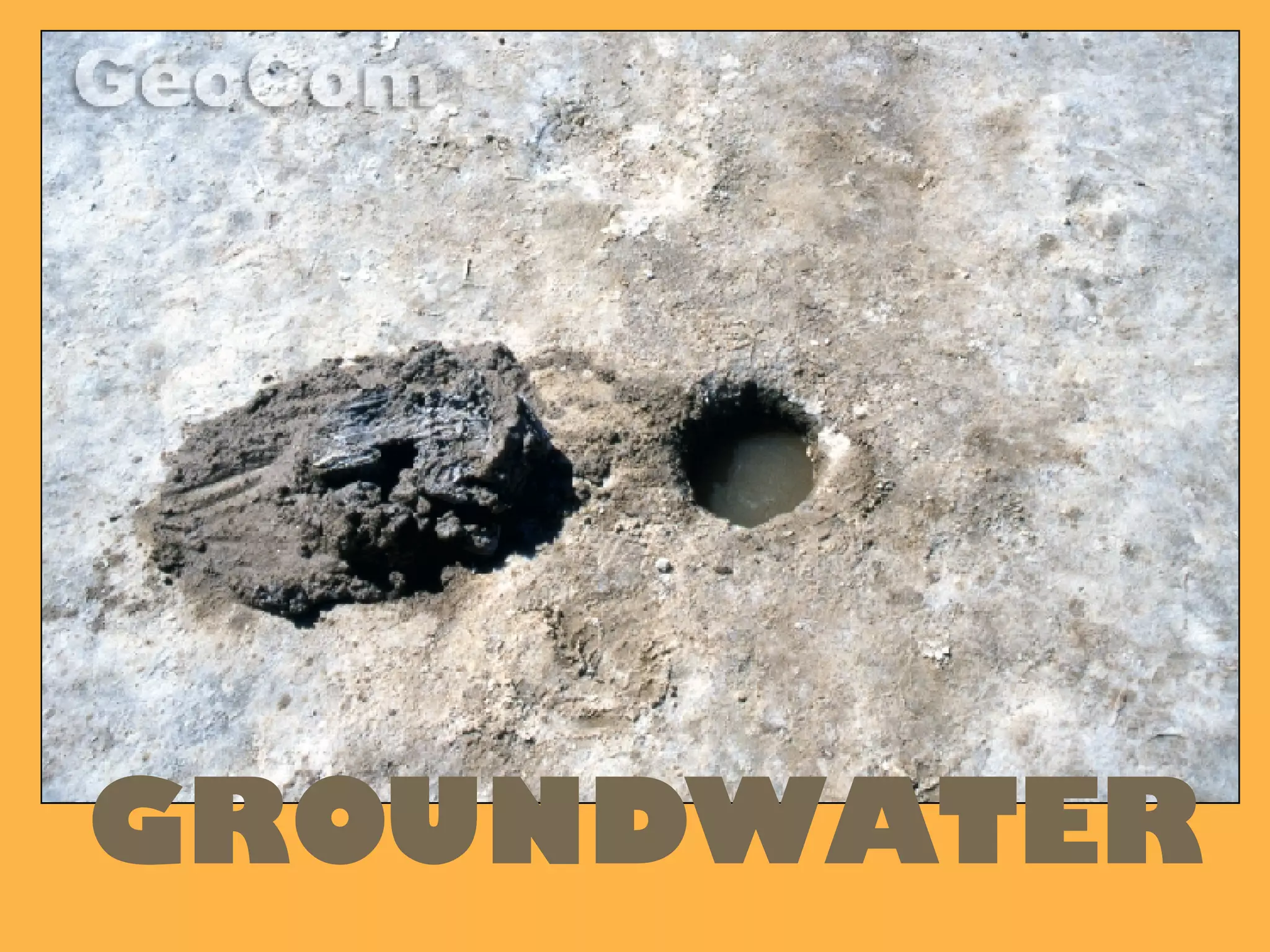
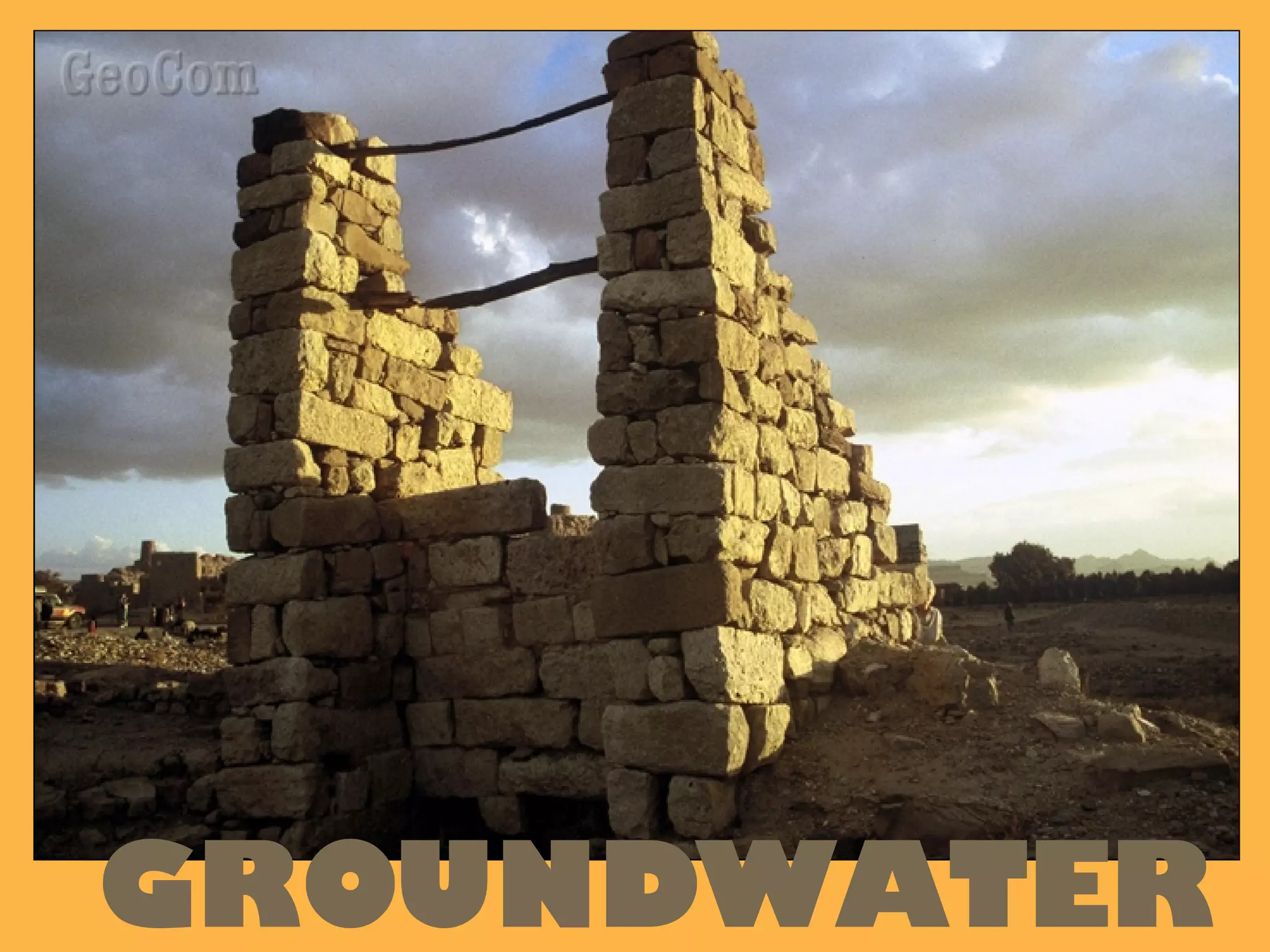
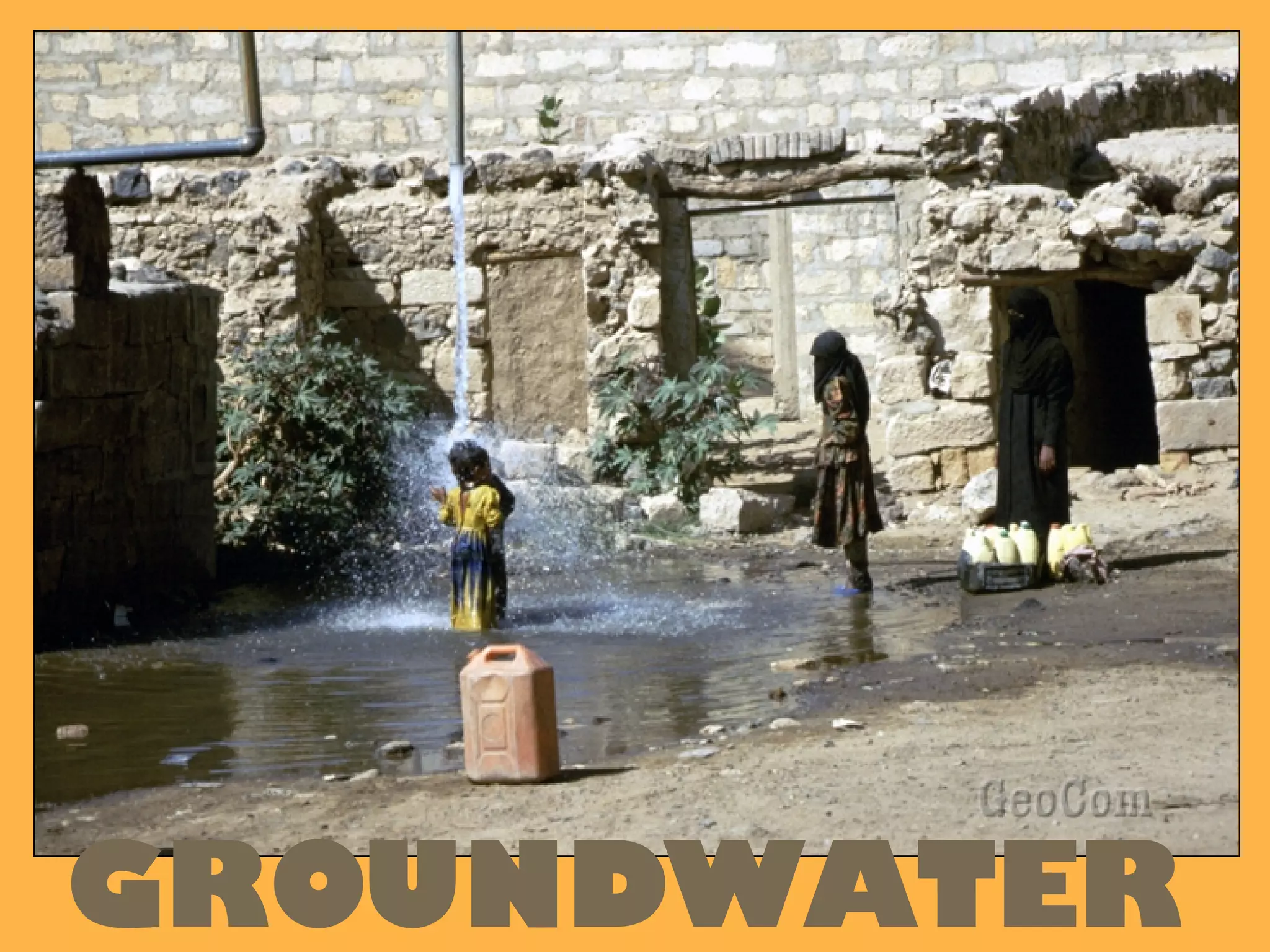
GROUNDWATER
GROUNDWATER
GROUNDWATER
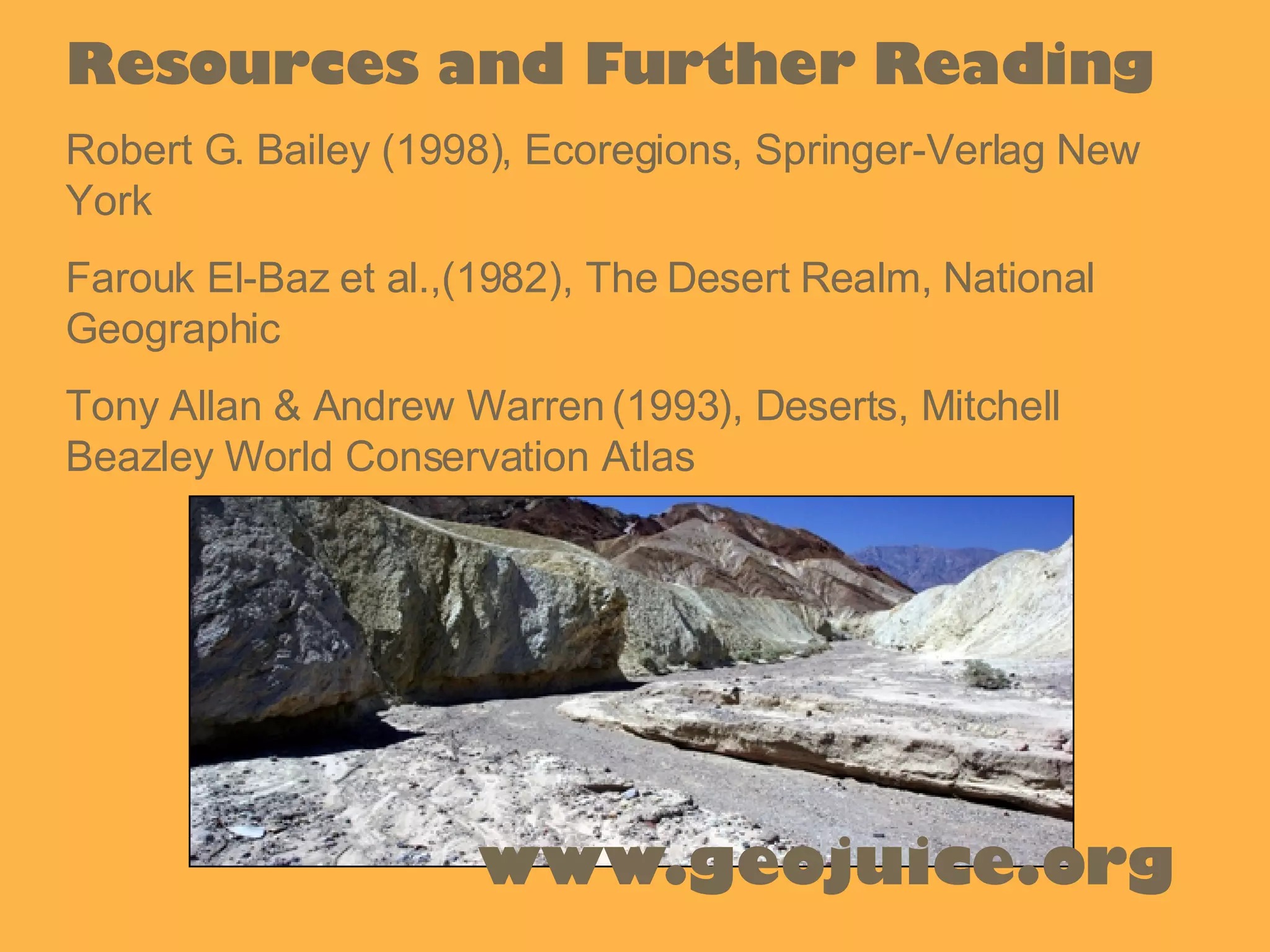
Resources and Further Reading Robert G. Bailey (1998), Ecoregions, Springer-Verlag New York Farouk El-Baz et al.,(1982), The Desert Realm, National Geographic Tony Allan & Andrew Warren (1993), Deserts, Mitchell Beazley World Conservation Atlas www.geojuice.org

Desert Introduction

  • 1.
    White Sands NationalMonument, New Mexico, USA Wadi Dhar, Yemen Dead Vleii, Namib Desert DESERT INTRODUCTION
  • 2.
    DISTRIBUTION OF DESERTSAnnual precipitation in deserts is less than 250mm and less than 100mm in extreme deserts. Deserts have large diurnal temperature ranges.
  • 3.
  • 4.
  • 5.
  • 6.
  • 7.
  • 8.
  • 9.
  • 10.
    Rock desert orhamada Sand desert or erg Stony desert
  • 11.
    Basins of inlanddrainage called playas or shotts Dry ravines or wadis or arroyos Alluvial fans can join together to form a bajada
  • 12.
  • 13.
    This xerophytic ordrought resistant vegetation has adapted to living in dry conditions by having small, twisted leaves with stomata which only open at night to allow respiration.
  • 14.
    Perennials, such asocotillo, become dormant between the rains. Once all moisture has evaporated from the soil, the plant drops its leaves and temporarily stops growing.
  • 15.
    Instead of thorns,the creosote bush relies for protection on a smell and taste that wildlife find unpleasant. Creosote has an extensive double root system -- both radial and deep -- to accumulate water from both surface and ground water.
  • 16.
    Cactus, xerophytic adaptationsof the rose family, are among the most drought-resistant plants on the planet due to their absence of leaves, shallow root systems, ability to store water in their stems, spines for shade and waxy skin to seal in moisture.
  • 17.
    Desert plants mustact quickly when heat, moisture and light inform them it's time to bloom. Ephemerals are the sprinters of the plant world, sending flower stalks jetting out in a few days. The peak of this bloom may last for just days or many weeks, depending on the weather and difference in elevation.
  • 18.
    WATER? INTHE DESERT?
  • 19.
  • 20.
  • 21.
  • 22.
  • 23.
  • 24.
  • 25.
  • 26.
  • 27.
  • 28.
  • 29.
    Resources and FurtherReading Robert G. Bailey (1998), Ecoregions, Springer-Verlag New York Farouk El-Baz et al.,(1982), The Desert Realm, National Geographic Tony Allan & Andrew Warren (1993), Deserts, Mitchell Beazley World Conservation Atlas www.geojuice.org