José María Lorca Lorente
2ºESO A
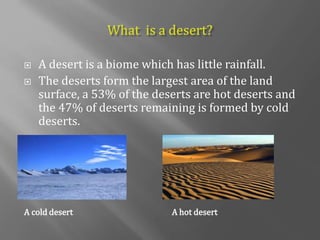
 A desert is a biome which has little rainfall.
 The deserts form the largest area of the land
surface, a 53% of the deserts are hot deserts and
the 47% of deserts remaining is formed by cold
deserts.
A cold desert A hot desert
 A cold desert is a desert which temperature
usually are under 0 C, moisture in the air and the
wind is strong,that means life is really difficult.
 The living things which lives in these places are
adapted
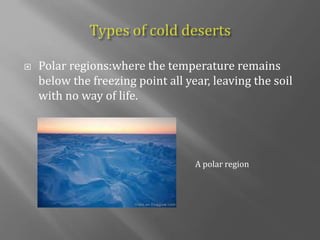
 Polar regions:where the temperature remains
below the freezing point all year, leaving the soil
with no way of life.
A polar region
 North pole:Artic,It belongs to the Artic Ocean and
areas from the north of Europe, Asia and North
America.
 South pole:Antartic.They are the coldest places in
the world.
 In the Arctic, many animals are living on land and
in Antarctica, wildlife lives entirely in the ocean.
 We can find in cold deserts animals like polar fox,
lemming brown or Siberian reindeer, polar wolf
humpback whale….
 All are adapted to the climate with a large fur or
fat that helps keep heat and energy.
A polar wolf a polar bear
A polar fox A siberian lemming
 Lifestyle are simple, poor and sometimes non-
existent.
 Terrestrial algae, lichens, fungi, moss, antartic
grass , arctic flower and liver carnation.
 In the less extreme places appear some
herbaceous.
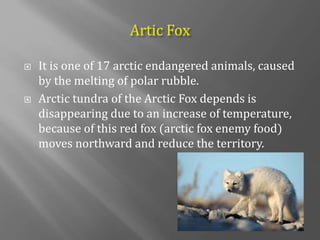
 It is one of 17 arctic endangered animals, caused
by the melting of polar rubble.
 Arctic tundra of the Arctic Fox depends is
disappearing due to an increase of temperature,
because of this red fox (arctic fox enemy food)
moves northward and reduce the territory.
 In the polar areas, summer and winter lasts six
months.
 Polar deserts have lower annual precipitation
250 ml.
 The soil remains frozen.The most of the soil are
bedrock or gravel plains.
 Only water is in liquid state in areas rising from 0
C
 The aurora borealis is a phenomenon that
appears in the night sky in polar areas.It is visible
from September to March.Aurora comes from the
Roman goddess of dawn and northern boreal
meaning.
 Taklamakan desert (enter and never leave) is a
paradigm of a cold desert.Due to its proximity to
the cold air mass from Siberia in winter may be -
ºC.In 2008 It was covered with a layer of snow of
4 cm and a temperature of -26 ° C.
 It is a cold desert that stretches from northern
China to southern Mongolia, occupies almost a
million Km2 .
 Fauna: Real eagle, wild camel, gray wolf.
 Flora: The Tahana or cimarrona onion, acacia,
artemisia, all dwarfed, deformed and stunted.
 It is some of the species threatened not only by
the lost of their habitat, but also by the hunters
because of the value of his skin.
 Lives in the Gobi Desert.
Cold  deserts

Cold deserts

  • 1.
    José María LorcaLorente 2ºESO A
  • 2.
     A desertis a biome which has little rainfall.  The deserts form the largest area of the land surface, a 53% of the deserts are hot deserts and the 47% of deserts remaining is formed by cold deserts. A cold desert A hot desert
  • 3.
     A colddesert is a desert which temperature usually are under 0 C, moisture in the air and the wind is strong,that means life is really difficult.  The living things which lives in these places are adapted
  • 4.
     Polar regions:wherethe temperature remains below the freezing point all year, leaving the soil with no way of life. A polar region
  • 5.
     North pole:Artic,Itbelongs to the Artic Ocean and areas from the north of Europe, Asia and North America.  South pole:Antartic.They are the coldest places in the world.
  • 6.
     In theArctic, many animals are living on land and in Antarctica, wildlife lives entirely in the ocean.  We can find in cold deserts animals like polar fox, lemming brown or Siberian reindeer, polar wolf humpback whale….  All are adapted to the climate with a large fur or fat that helps keep heat and energy.
  • 7.
    A polar wolfa polar bear A polar fox A siberian lemming
  • 8.
     Lifestyle aresimple, poor and sometimes non- existent.  Terrestrial algae, lichens, fungi, moss, antartic grass , arctic flower and liver carnation.  In the less extreme places appear some herbaceous.
  • 9.
     It isone of 17 arctic endangered animals, caused by the melting of polar rubble.  Arctic tundra of the Arctic Fox depends is disappearing due to an increase of temperature, because of this red fox (arctic fox enemy food) moves northward and reduce the territory.
  • 10.
     In thepolar areas, summer and winter lasts six months.  Polar deserts have lower annual precipitation 250 ml.  The soil remains frozen.The most of the soil are bedrock or gravel plains.  Only water is in liquid state in areas rising from 0 C
  • 11.
     The auroraborealis is a phenomenon that appears in the night sky in polar areas.It is visible from September to March.Aurora comes from the Roman goddess of dawn and northern boreal meaning.
  • 12.
     Taklamakan desert(enter and never leave) is a paradigm of a cold desert.Due to its proximity to the cold air mass from Siberia in winter may be - ºC.In 2008 It was covered with a layer of snow of 4 cm and a temperature of -26 ° C.
  • 13.
     It isa cold desert that stretches from northern China to southern Mongolia, occupies almost a million Km2 .  Fauna: Real eagle, wild camel, gray wolf.  Flora: The Tahana or cimarrona onion, acacia, artemisia, all dwarfed, deformed and stunted.
  • 14.
     It issome of the species threatened not only by the lost of their habitat, but also by the hunters because of the value of his skin.  Lives in the Gobi Desert.