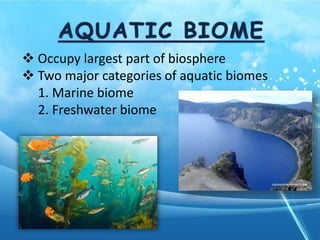
 Occupy largest part of biosphere
 Two major categories of aquatic biomes
1. Marine biome
2. Freshwater biome
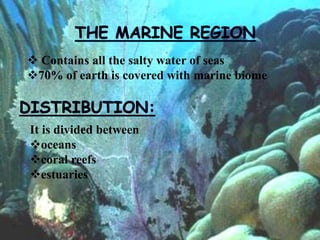
 Contains all the salty water of seas
70% of earth is covered with marine biome
It is divided between
oceans
coral reefs
estuaries
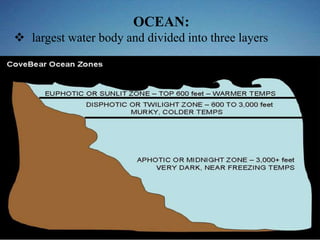
OCEAN:
 largest water body and divided into three layers
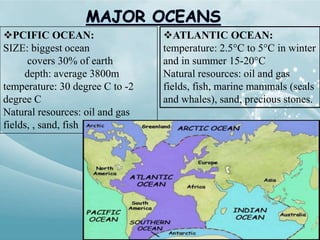
ATLANTIC OCEAN:
temperature: 2.5°C to 5°C in winter
and in summer 15-20°C
Natural resources: oil and gas
fields, fish, marine mammals (seals
and whales), sand, precious stones.
PCIFIC OCEAN:
SIZE: biggest ocean
covers 30% of earth
depth: average 3800m
temperature: 30 degree C to -2
degree C
Natural resources: oil and gas
fields, , sand, fish
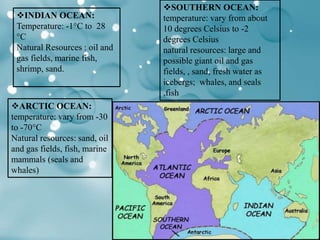
ARCTIC OCEAN:
temperature: vary from -30
to -70°C
Natural resources: sand, oil
and gas fields, fish, marine
mammals (seals and
whales)
INDIAN OCEAN:
Temperature: -1°C to 28
°C
Natural Resources : oil and
gas fields, marine fish,
shrimp, sand.
SOUTHERN OCEAN:
temperature: vary from about
10 degrees Celsius to -2
degrees Celsius
natural resources: large and
possible giant oil and gas
fields, , sand, fresh water as
icebergs; whales, and seals
,fish
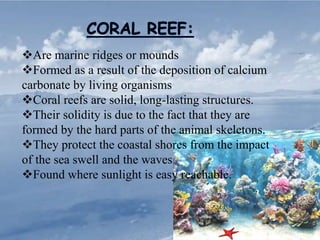
Are marine ridges or mounds
Formed as a result of the deposition of calcium
carbonate by living organisms
Coral reefs are solid, long-lasting structures.
Their solidity is due to the fact that they are
formed by the hard parts of the animal skeletons.
They protect the coastal shores from the impact
of the sea swell and the waves
Found where sunlight is easy reachable.
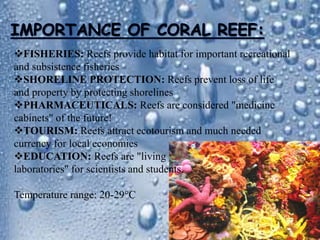
FISHERIES: Reefs provide habitat for important recreational
and subsistence fisheries
SHORELINE PROTECTION: Reefs prevent loss of life
and property by protecting shorelines
PHARMACEUTICALS: Reefs are considered "medicine
cabinets" of the future!
TOURISM: Reefs attract ecotourism and much needed
currency for local economies
EDUCATION: Reefs are "living
laboratories" for scientists and students.
Temperature range: 20-29°C
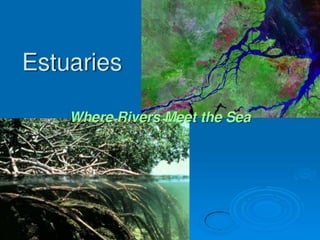
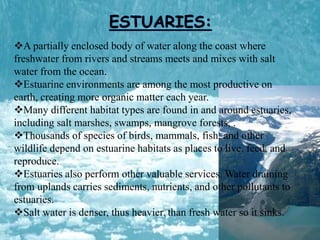
A partially enclosed body of water along the coast where
freshwater from rivers and streams meets and mixes with salt
water from the ocean.
Estuarine environments are among the most productive on
earth, creating more organic matter each year.
Many different habitat types are found in and around estuaries,
including salt marshes, swamps, mangrove forests, .
Thousands of species of birds, mammals, fish, and other
wildlife depend on estuarine habitats as places to live, feed, and
reproduce.
Estuaries also perform other valuable services. Water draining
from uplands carries sediments, nutrients, and other pollutants to
estuaries.
Salt water is denser, thus heavier, than fresh water so it sinks.
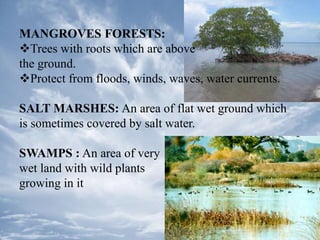
MANGROVES FORESTS:
Trees with roots which are above
the ground.
Protect from floods, winds, waves, water currents.
SALT MARSHES: An area of flat wet ground which
is sometimes covered by salt water.
SWAMPS : An area of very
wet land with wild plants
growing in it
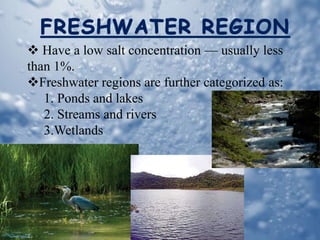
 Have a low salt concentration — usually less
than 1%.
Freshwater regions are further categorized as:
1. Ponds and lakes
2. Streams and rivers
3.Wetlands
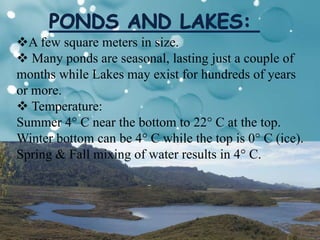
A few square meters in size.
 Many ponds are seasonal, lasting just a couple of
months while Lakes may exist for hundreds of years
or more.
 Temperature:
Summer 4° C near the bottom to 22° C at the top.
Winter bottom can be 4° C while the top is 0° C (ice).
Spring & Fall mixing of water results in 4° C.
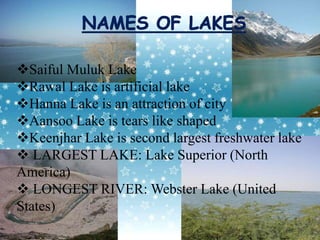
Saiful Muluk Lake
Rawal Lake is artificial lake
Hanna Lake is an attraction of city
Aansoo Lake is tears like shaped
Keenjhar Lake is second largest freshwater lake
 LARGEST LAKE: Lake Superior (North
America)
 LONGEST RIVER: Webster Lake (United
States)
 Bodies of flowing water moving in one direction
 The temperature is cooler at the source than it is at
the mouth
 Freshwater fish is found
 Denser species diversity at middle, at lower part less
light and less oxygen.
LONGEST RIVER : River Nile
BIGGEST RIVER (according to amount of
water): the Amazon
RIVER OF PAKISTAN:
River Indus: longest river of Pakistan
River Ravi: smallest of all tributaries of Indus
River Sutlej: major, longest also known as Red
River
River Chenab: two words “Chen” means moon
and “ab” means water. Healthiest river
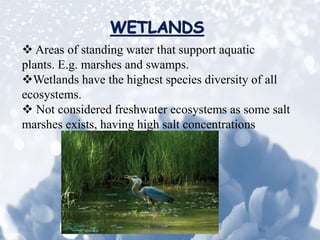
 Areas of standing water that support aquatic
plants. E.g. marshes and swamps.
Wetlands have the highest species diversity of all
ecosystems.
 Not considered freshwater ecosystems as some salt
marshes exists, having high salt concentrations
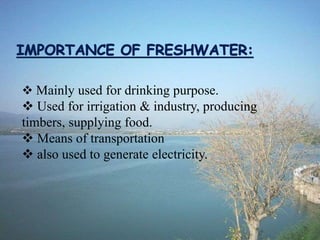
 Mainly used for drinking purpose.
 Used for irrigation & industry, producing
timbers, supplying food.
 Means of transportation
 also used to generate electricity.

Aquatic biomes

  • 2.
     Occupy largestpart of biosphere  Two major categories of aquatic biomes 1. Marine biome 2. Freshwater biome
  • 4.
     Contains allthe salty water of seas 70% of earth is covered with marine biome It is divided between oceans coral reefs estuaries
  • 5.
    OCEAN:  largest waterbody and divided into three layers
  • 6.
    ATLANTIC OCEAN: temperature: 2.5°Cto 5°C in winter and in summer 15-20°C Natural resources: oil and gas fields, fish, marine mammals (seals and whales), sand, precious stones. PCIFIC OCEAN: SIZE: biggest ocean covers 30% of earth depth: average 3800m temperature: 30 degree C to -2 degree C Natural resources: oil and gas fields, , sand, fish
  • 7.
    ARCTIC OCEAN: temperature: varyfrom -30 to -70°C Natural resources: sand, oil and gas fields, fish, marine mammals (seals and whales) INDIAN OCEAN: Temperature: -1°C to 28 °C Natural Resources : oil and gas fields, marine fish, shrimp, sand. SOUTHERN OCEAN: temperature: vary from about 10 degrees Celsius to -2 degrees Celsius natural resources: large and possible giant oil and gas fields, , sand, fresh water as icebergs; whales, and seals ,fish
  • 8.
    Are marine ridgesor mounds Formed as a result of the deposition of calcium carbonate by living organisms Coral reefs are solid, long-lasting structures. Their solidity is due to the fact that they are formed by the hard parts of the animal skeletons. They protect the coastal shores from the impact of the sea swell and the waves Found where sunlight is easy reachable.
  • 9.
    FISHERIES: Reefs providehabitat for important recreational and subsistence fisheries SHORELINE PROTECTION: Reefs prevent loss of life and property by protecting shorelines PHARMACEUTICALS: Reefs are considered "medicine cabinets" of the future! TOURISM: Reefs attract ecotourism and much needed currency for local economies EDUCATION: Reefs are "living laboratories" for scientists and students. Temperature range: 20-29°C
  • 11.
    A partially enclosedbody of water along the coast where freshwater from rivers and streams meets and mixes with salt water from the ocean. Estuarine environments are among the most productive on earth, creating more organic matter each year. Many different habitat types are found in and around estuaries, including salt marshes, swamps, mangrove forests, . Thousands of species of birds, mammals, fish, and other wildlife depend on estuarine habitats as places to live, feed, and reproduce. Estuaries also perform other valuable services. Water draining from uplands carries sediments, nutrients, and other pollutants to estuaries. Salt water is denser, thus heavier, than fresh water so it sinks.
  • 12.
    MANGROVES FORESTS: Trees withroots which are above the ground. Protect from floods, winds, waves, water currents. SALT MARSHES: An area of flat wet ground which is sometimes covered by salt water. SWAMPS : An area of very wet land with wild plants growing in it
  • 14.
     Have alow salt concentration — usually less than 1%. Freshwater regions are further categorized as: 1. Ponds and lakes 2. Streams and rivers 3.Wetlands
  • 15.
    A few squaremeters in size.  Many ponds are seasonal, lasting just a couple of months while Lakes may exist for hundreds of years or more.  Temperature: Summer 4° C near the bottom to 22° C at the top. Winter bottom can be 4° C while the top is 0° C (ice). Spring & Fall mixing of water results in 4° C.
  • 16.
    Saiful Muluk Lake RawalLake is artificial lake Hanna Lake is an attraction of city Aansoo Lake is tears like shaped Keenjhar Lake is second largest freshwater lake  LARGEST LAKE: Lake Superior (North America)  LONGEST RIVER: Webster Lake (United States)
  • 17.
     Bodies offlowing water moving in one direction  The temperature is cooler at the source than it is at the mouth  Freshwater fish is found  Denser species diversity at middle, at lower part less light and less oxygen.
  • 18.
    LONGEST RIVER :River Nile BIGGEST RIVER (according to amount of water): the Amazon RIVER OF PAKISTAN: River Indus: longest river of Pakistan River Ravi: smallest of all tributaries of Indus River Sutlej: major, longest also known as Red River River Chenab: two words “Chen” means moon and “ab” means water. Healthiest river
  • 19.
     Areas ofstanding water that support aquatic plants. E.g. marshes and swamps. Wetlands have the highest species diversity of all ecosystems.  Not considered freshwater ecosystems as some salt marshes exists, having high salt concentrations
  • 20.
     Mainly usedfor drinking purpose.  Used for irrigation & industry, producing timbers, supplying food.  Means of transportation  also used to generate electricity.