By: Cristina Rocio Orrantia Ronquillo.
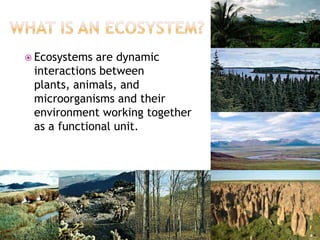
 Ecosystems are dynamic
 interactions between
 plants, animals, and
 microorganisms and their
 environment working together
 as a functional unit.
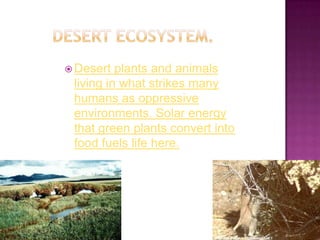
 Desert  plants and animals
 living in what strikes many
 humans as oppressive
 environments. Solar energy
 that green plants convert into
 food fuels life here.
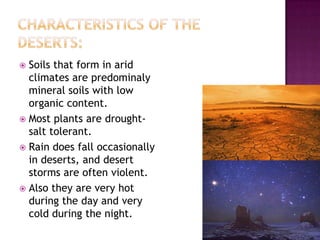
 Soils that form in arid
  climates are predominaly
  mineral soils with low
  organic content.
 Most plants are drought-
  salt tolerant.
 Rain does fall occasionally
  in deserts, and desert
  storms are often violent.
 Also they are very hot
  during the day and very
  cold during the night.
 Mojave   Aster
 Cactus
 Soaptree  Yucca
 Brittle Bush
 Jumping Choll
 Palo Verde
 Triangle-leaf Bursage
 Ocotillo
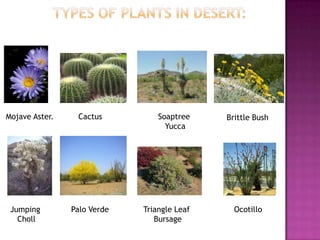
Mojave Aster.    Cactus          Soaptree    Brittle Bush
                                   Yucca


 Jumping        Palo Verde   Triangle Leaf     Ocotillo
   Choll                        Bursage
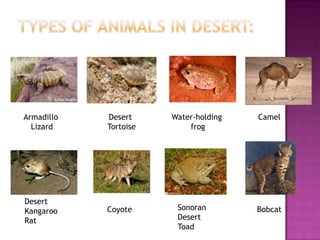
 Armadillo Lizard
 Desert Tortoise
 Water-holding frog
 Camel
 Desert Kangaroo Rat
 Coyote
 Sonoran desert toad
 Bobcat
Armadillo   Desert     Water-holding   Camel
  Lizard    Tortoise       frog


Desert
Kangaroo    Coyote      Sonoran        Bobcat
Rat                     Desert
                        Toad
 Cold
 Hot and Dry
 Semiarid
 Coastal
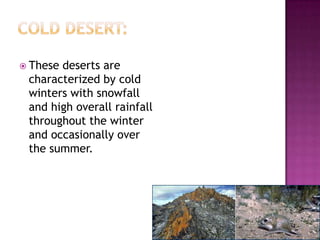
 Thesedeserts are
 characterized by cold
 winters with snowfall
 and high overall rainfall
 throughout the winter
 and occasionally over
 the summer.
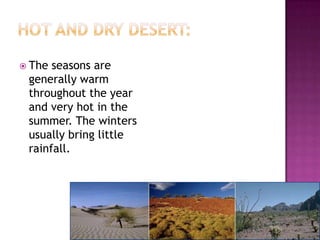
 The seasons are
 generally warm
 throughout the year
 and very hot in the
 summer. The winters
 usually bring little
 rainfall.
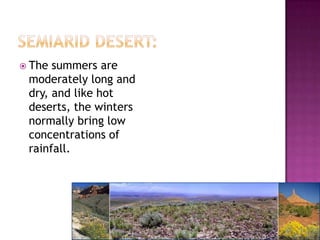
 The summers are
 moderately long and
 dry, and like hot
 deserts, the winters
 normally bring low
 concentrations of
 rainfall.
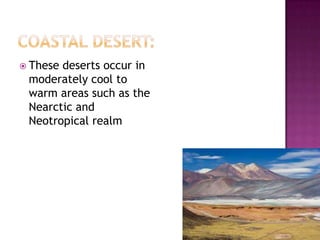
 Thesedeserts occur in
 moderately cool to
 warm areas such as the
 Nearctic and
 Neotropical realm

Desert ecosystem ecology

  • 1.
    By: Cristina RocioOrrantia Ronquillo.
  • 2.
     Ecosystems aredynamic interactions between plants, animals, and microorganisms and their environment working together as a functional unit.
  • 3.
     Desert plants and animals living in what strikes many humans as oppressive environments. Solar energy that green plants convert into food fuels life here.
  • 4.
     Soils thatform in arid climates are predominaly mineral soils with low organic content.  Most plants are drought- salt tolerant.  Rain does fall occasionally in deserts, and desert storms are often violent.  Also they are very hot during the day and very cold during the night.
  • 5.
     Mojave Aster  Cactus  Soaptree Yucca  Brittle Bush  Jumping Choll  Palo Verde  Triangle-leaf Bursage  Ocotillo
  • 6.
    Mojave Aster. Cactus Soaptree Brittle Bush Yucca Jumping Palo Verde Triangle Leaf Ocotillo Choll Bursage
  • 7.
     Armadillo Lizard Desert Tortoise  Water-holding frog  Camel  Desert Kangaroo Rat  Coyote  Sonoran desert toad  Bobcat
  • 8.
    Armadillo Desert Water-holding Camel Lizard Tortoise frog Desert Kangaroo Coyote Sonoran Bobcat Rat Desert Toad
  • 10.
     Cold  Hotand Dry  Semiarid  Coastal
  • 11.
     Thesedeserts are characterized by cold winters with snowfall and high overall rainfall throughout the winter and occasionally over the summer.
  • 12.
     The seasonsare generally warm throughout the year and very hot in the summer. The winters usually bring little rainfall.
  • 13.
     The summersare moderately long and dry, and like hot deserts, the winters normally bring low concentrations of rainfall.
  • 14.
     Thesedeserts occurin moderately cool to warm areas such as the Nearctic and Neotropical realm