Micro grid
Self sustainable power
Small scale power supply network
Consist of distributed energy resource(DER)
Low voltage distribution
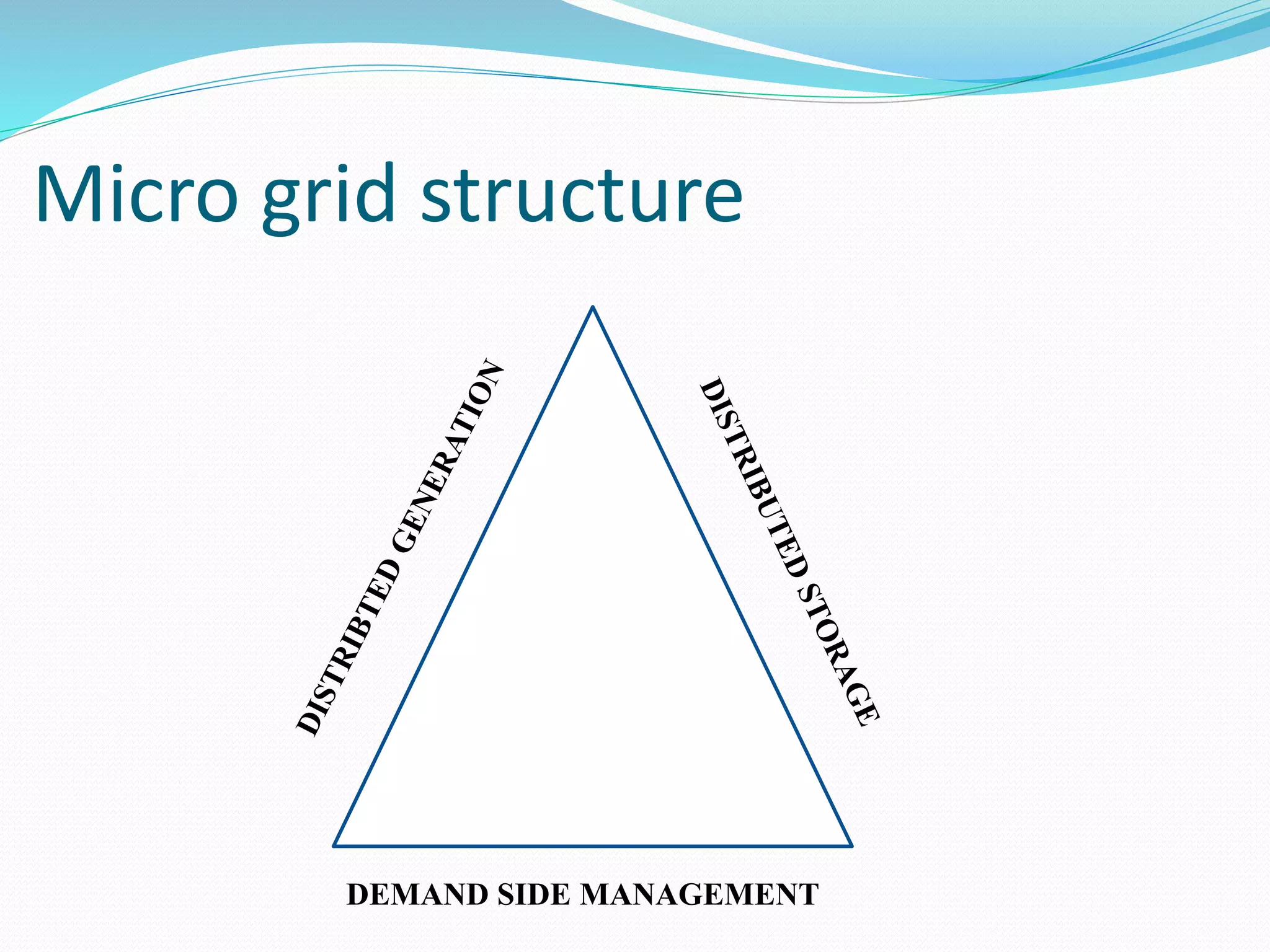
Micro grid structure
DEMAND SIDE MANAGEMENT
Parts of micro grid
Distributed energy resource(DER)
Load
Storage system
Controller
point of Common coupling
Load &Point of common coupling
Critical load: uninterrupted power supply
Non-critical load(controllable):load can be
disconnected or shed accordingly.
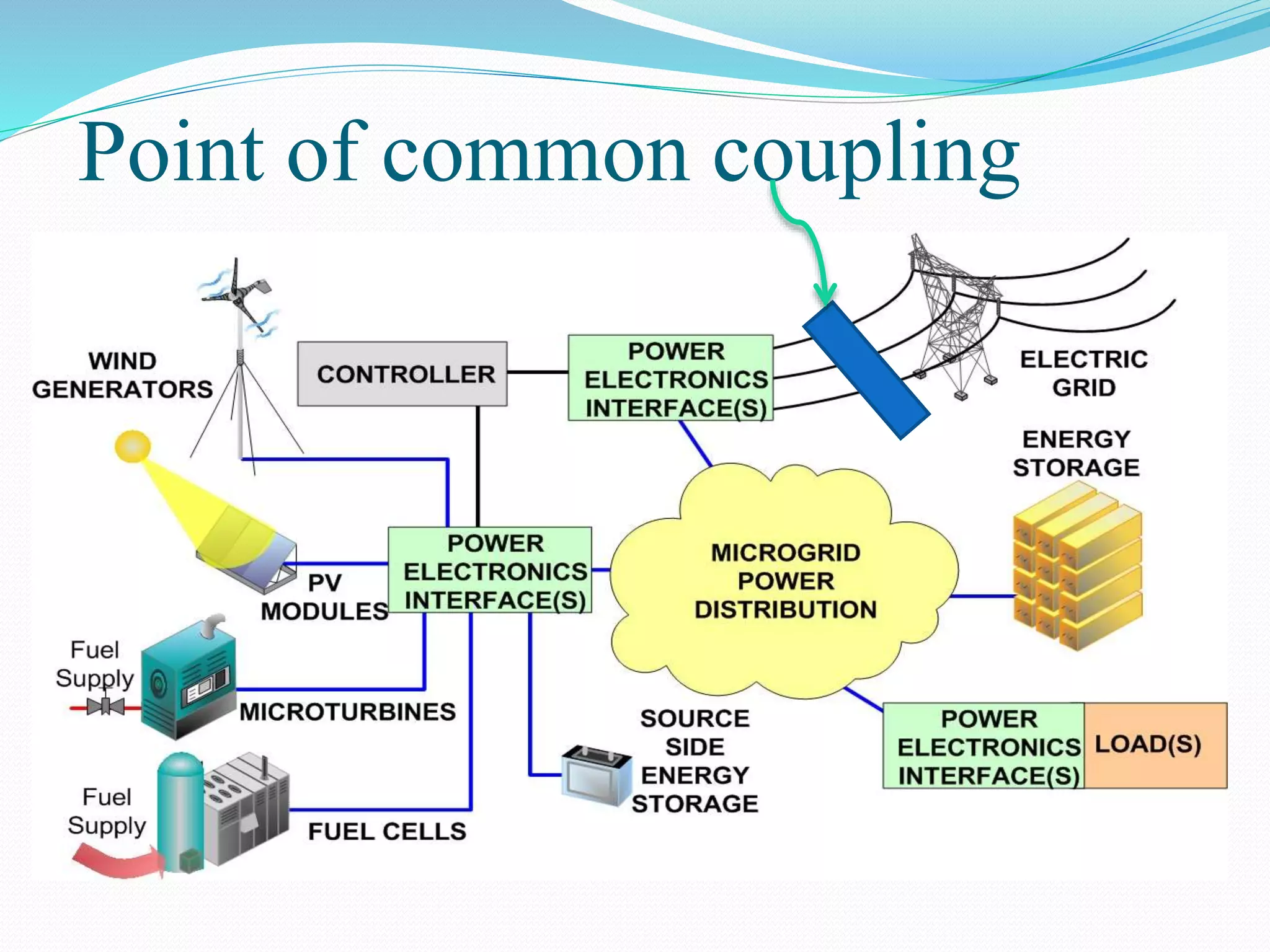
Point of common coupling: point in the electric circuit
where a micro grid is connected to a main grid
Point of common coupling
Micro grid operation mode
Grid connected mode
 Connected through point of common coupling
 Bi-directional power flow
 Economic benefit by supplying excess power to main grid
 Reduce the fuel cost using the power from main grid during
low(night) load
Island mode
 Isolated from main grid
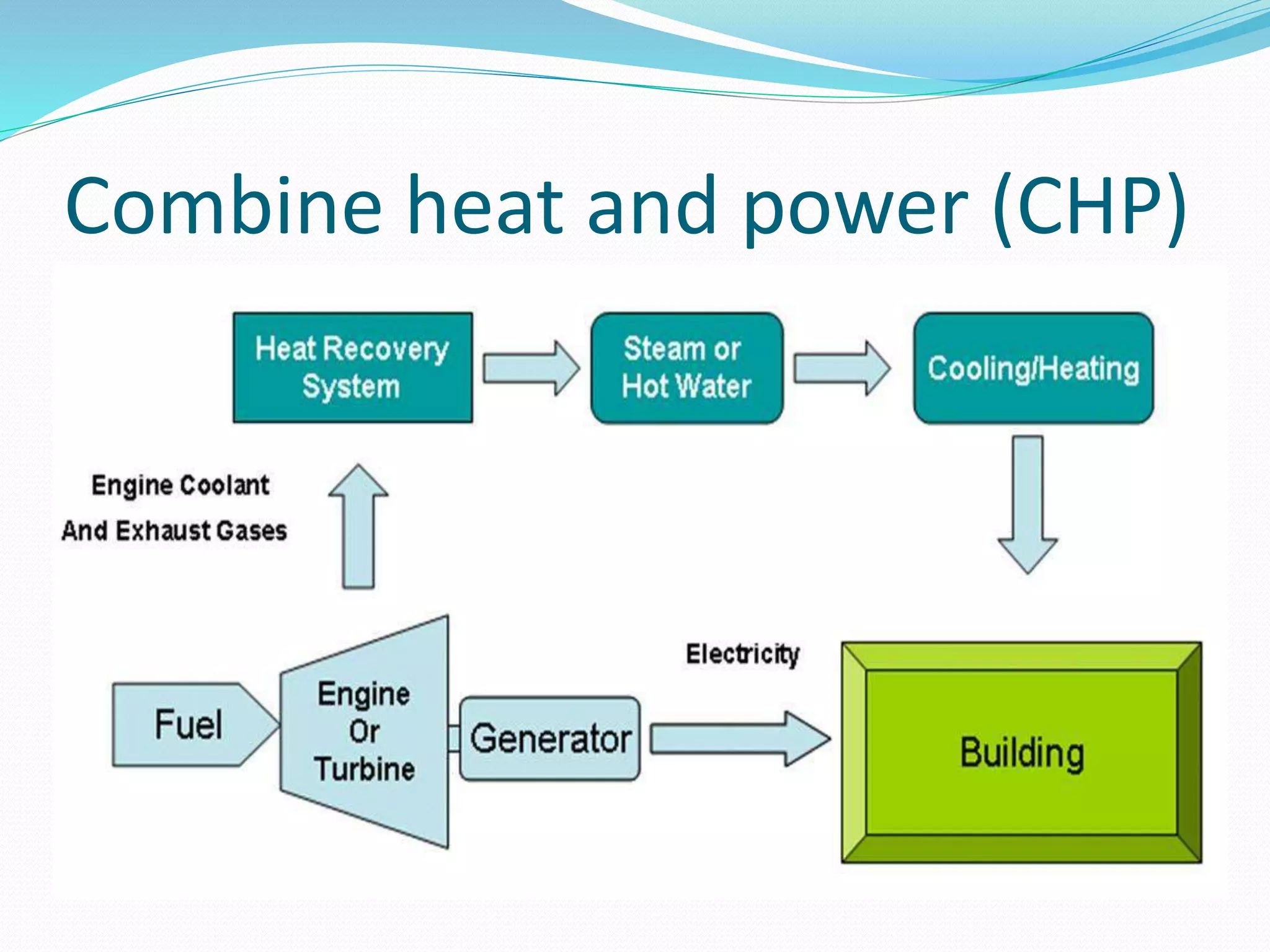
Combined Heat and Power (CHP)
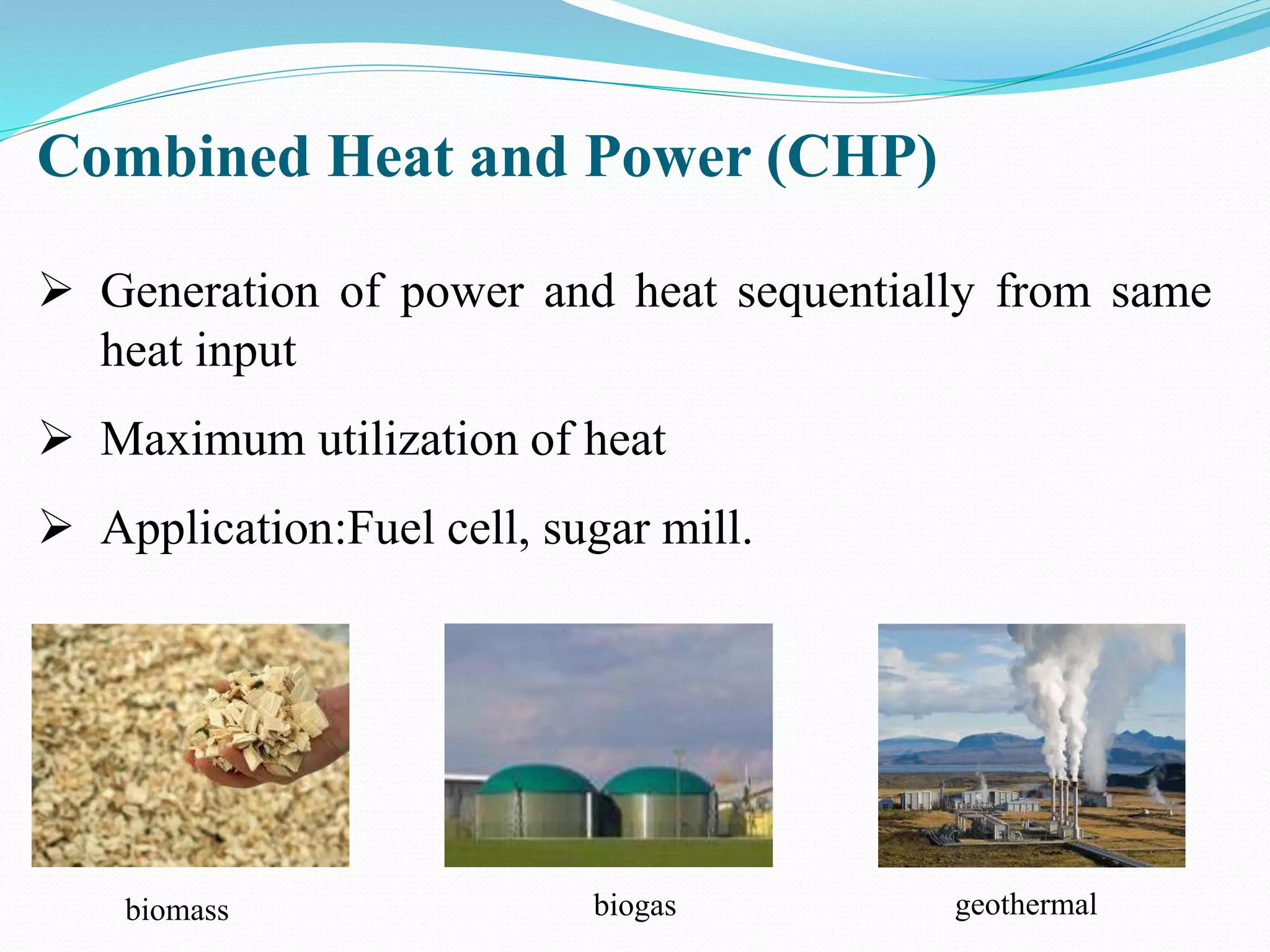
 Generation of power and heat sequentially from same
heat input
 Maximum utilization of heat
 Application:Fuel cell, sugar mill.
geothermalbiogasbiomass
Combine heat and power (CHP)
Features of CHP
Protection against rising fuel prices
 More efficient than separate generation of electricity
and heat.
Lower operating cost- higher efficiency translates to
reduced fuel consumption.
Very efficient technology.
Need of micro grid
Economical aspect
 Transmission loss
 Running cost
Environmental aspect
 Large land space
 Emission due to conventional generator
 Climate change
Micro grid features
Better power quality
High reliability
Utilize more renewable energy sources
Less emission (Environmental friendly)
Low installation cost
Less land space
Micro grid advantage
Ability to separate from main grid during disturbance
Reduce the emission
Reduce electricity cost
Micro grid challenges
Maintenance and space required for battery bank
Synchronization with main grid
Uncertainty of wind and PV system
Protection of micro grid
References
Review of Microgrid Technology by Hartono BS,
Budiyanto and Rudy Setiabudy Faculty of
Engineering. Universitas Indonesia Depok 16424.
Microgrid Economic Optimal Operation of the
Combined Heat and Power System with Renewable
Energy by W. Gu, Member, IEEE, Z. Wu, and X.
Yuan.

Concept of Microgrid and CHP system

  • 2.
    Micro grid Self sustainablepower Small scale power supply network Consist of distributed energy resource(DER) Low voltage distribution
  • 3.
  • 4.
    Parts of microgrid Distributed energy resource(DER) Load Storage system Controller point of Common coupling
  • 5.
    Load &Point ofcommon coupling Critical load: uninterrupted power supply Non-critical load(controllable):load can be disconnected or shed accordingly. Point of common coupling: point in the electric circuit where a micro grid is connected to a main grid
  • 6.
  • 7.
    Micro grid operationmode Grid connected mode  Connected through point of common coupling  Bi-directional power flow  Economic benefit by supplying excess power to main grid  Reduce the fuel cost using the power from main grid during low(night) load Island mode  Isolated from main grid
  • 8.
    Combined Heat andPower (CHP)  Generation of power and heat sequentially from same heat input  Maximum utilization of heat  Application:Fuel cell, sugar mill. geothermalbiogasbiomass
  • 9.
    Combine heat andpower (CHP)
  • 10.
    Features of CHP Protectionagainst rising fuel prices  More efficient than separate generation of electricity and heat. Lower operating cost- higher efficiency translates to reduced fuel consumption. Very efficient technology.
  • 11.
    Need of microgrid Economical aspect  Transmission loss  Running cost Environmental aspect  Large land space  Emission due to conventional generator  Climate change
  • 12.
    Micro grid features Betterpower quality High reliability Utilize more renewable energy sources Less emission (Environmental friendly) Low installation cost Less land space
  • 13.
    Micro grid advantage Abilityto separate from main grid during disturbance Reduce the emission Reduce electricity cost
  • 14.
    Micro grid challenges Maintenanceand space required for battery bank Synchronization with main grid Uncertainty of wind and PV system Protection of micro grid
  • 15.
    References Review of MicrogridTechnology by Hartono BS, Budiyanto and Rudy Setiabudy Faculty of Engineering. Universitas Indonesia Depok 16424. Microgrid Economic Optimal Operation of the Combined Heat and Power System with Renewable Energy by W. Gu, Member, IEEE, Z. Wu, and X. Yuan.