Technical seminar on
3D IC Technology
Under guidance by
Mr. R. Gopi Reddy
submitted by…
P.Naresh
107Q1A0417
What is 3D IC Technology?
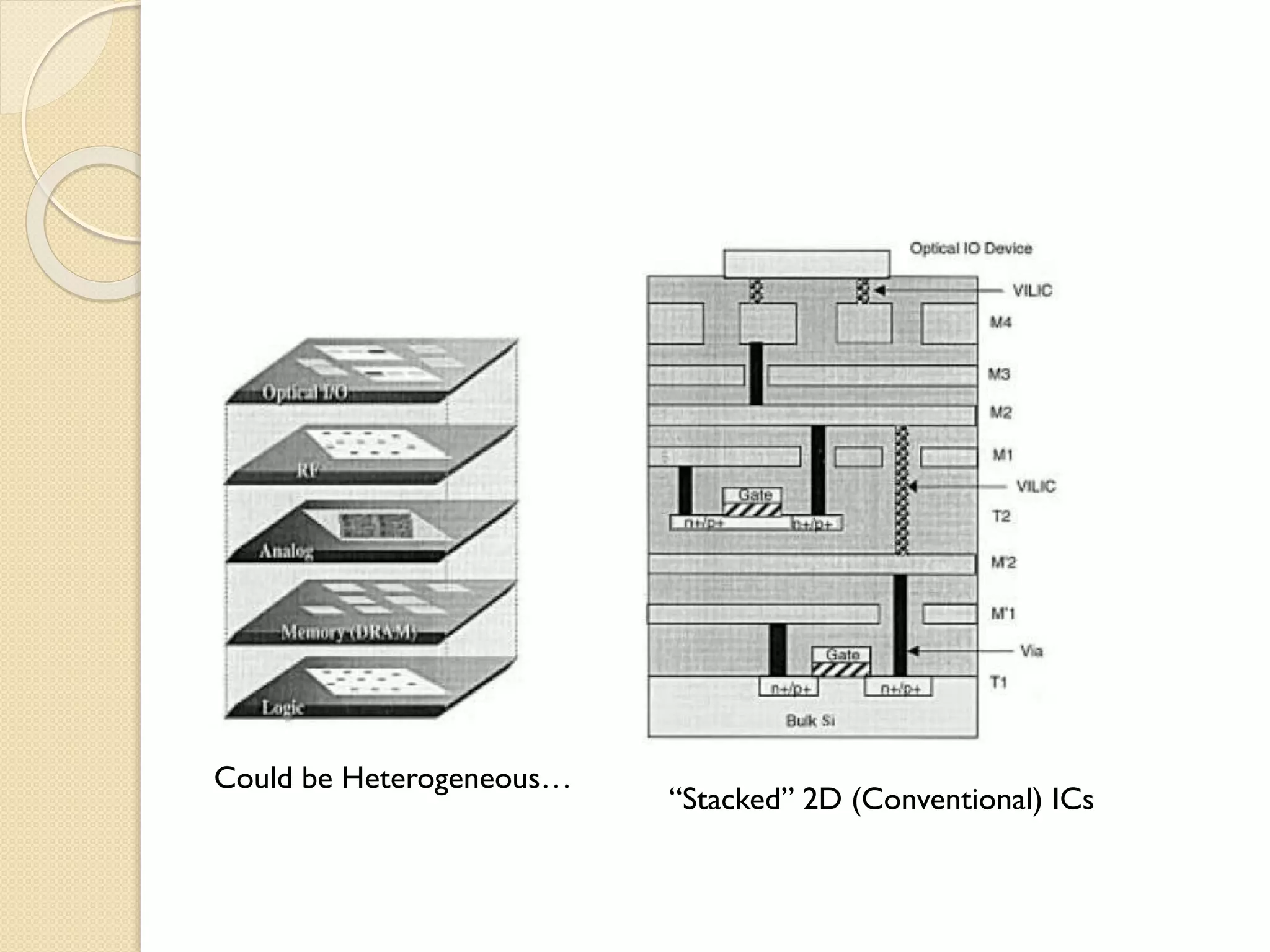
 In electronics, a three-dimensional
integrated circuit (3D IC) is a chip in
which two or more layers of active
electronic components are integrated
both vertically and horizontally into a
single circuit.
 The chip was manufactured with two dies
using face-to-face stacking, which allowed
a dense via structure.
Could be Heterogeneous…
“Stacked” 2D (Conventional) ICs
Performance Characteristics:
 Timing.
 Energy.
 With shorter interconnects in 3D ICs,
both switching energy and cycle time are
expected to be reduced.
Timing:
 In current technologies, timing is
interconnect driven.
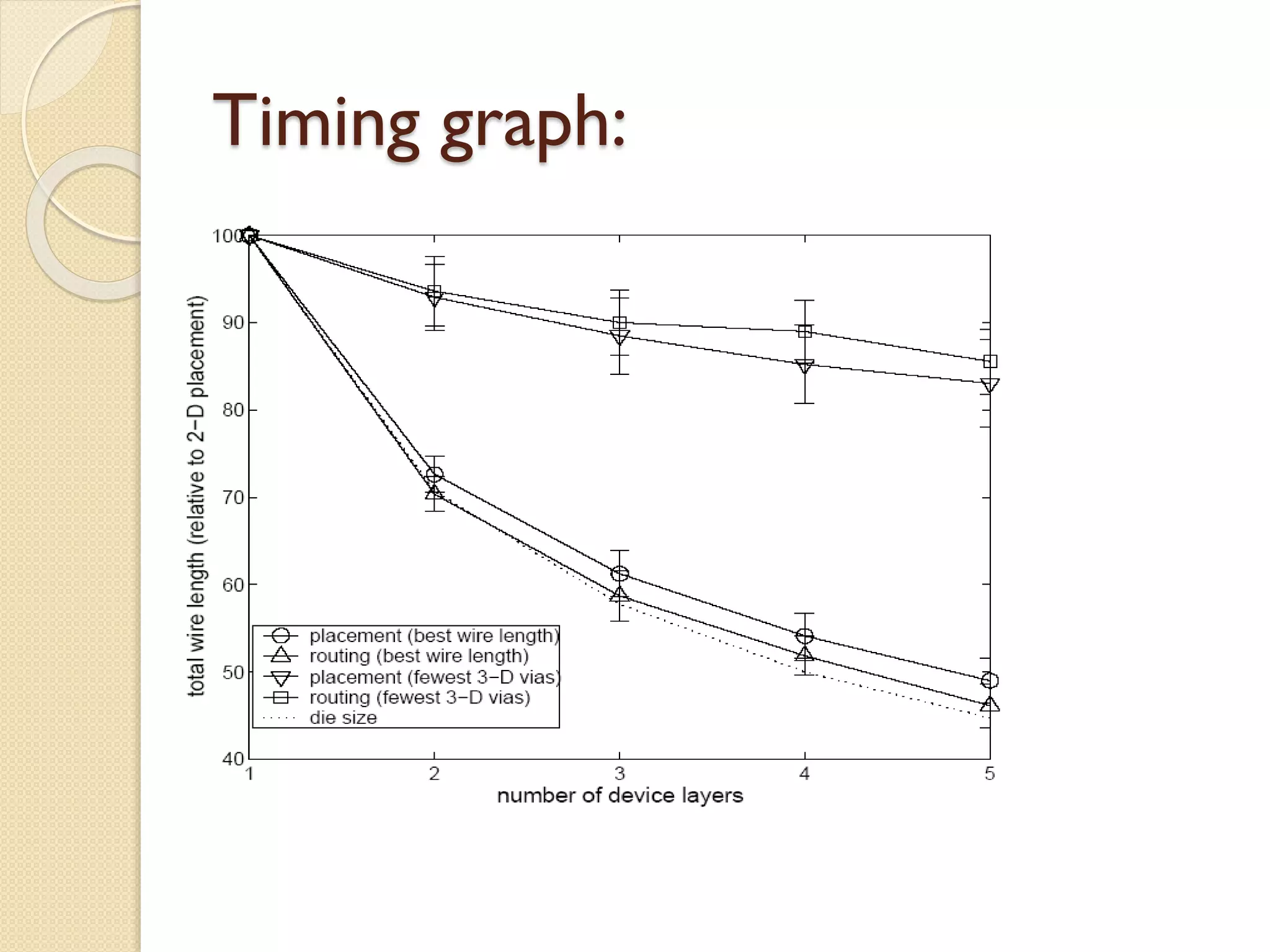
 Reducing interconnect length in designs
can dramatically reduce RC delays and
increase chip performance
 The graph below shows the results of a
reduction in wire length due to 3D
routing
 Discussed more in detail later in the
slides
Timing graph:
Energy performance:
 Wire length reduction has an impact on
the cycle time and the energy dissipation
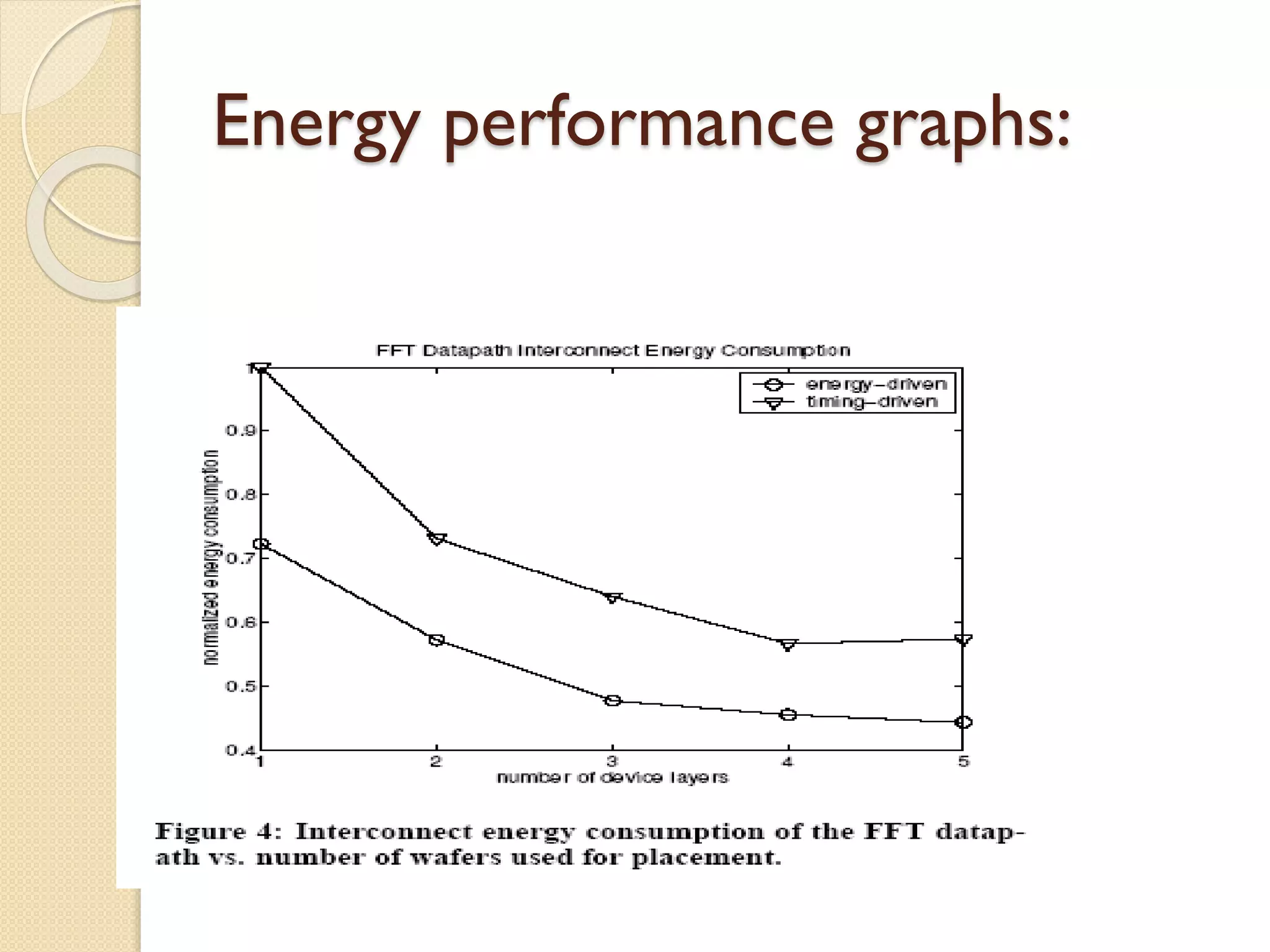
 Energy dissipation decreases with the
number of layers used in the design
 Following graphs are based on the 3D
tool described later in the presentation
Energy performance graphs:
Comparison of 3D and 2D IC’S:
 with higher speed and smaller footprint
than the ones designed by the traditional
2D IC design technologies.
 The length of global wires can be reduced
by as much as 50%.
 limited clock frequency can be increased.
 limited area and power can be reduced
Image for 3D and 2D IC’S
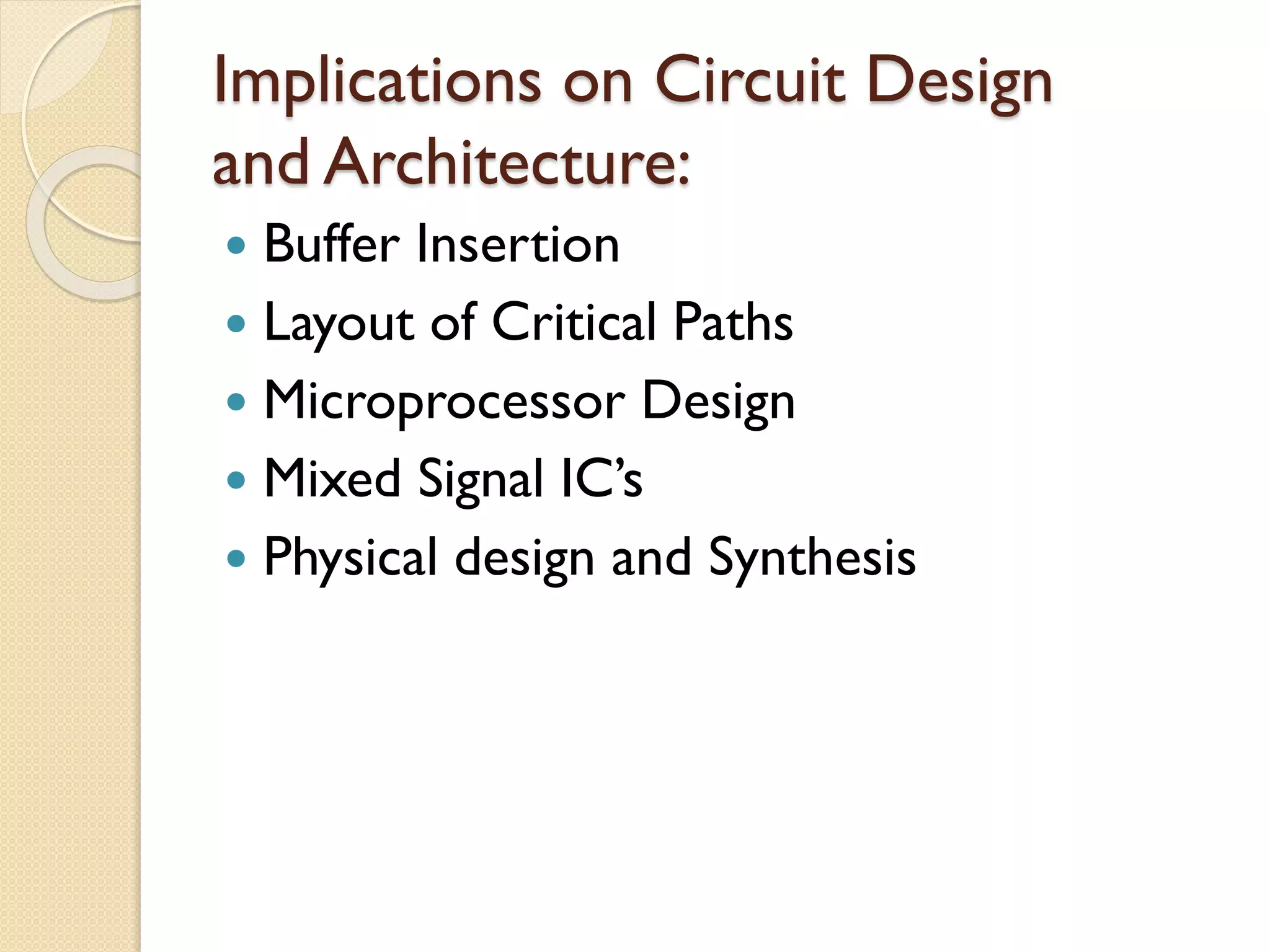
Implications on Circuit Design
and Architecture:
 Buffer Insertion
 Layout of Critical Paths
 Microprocessor Design
 Mixed Signal IC’s
 Physical design and Synthesis
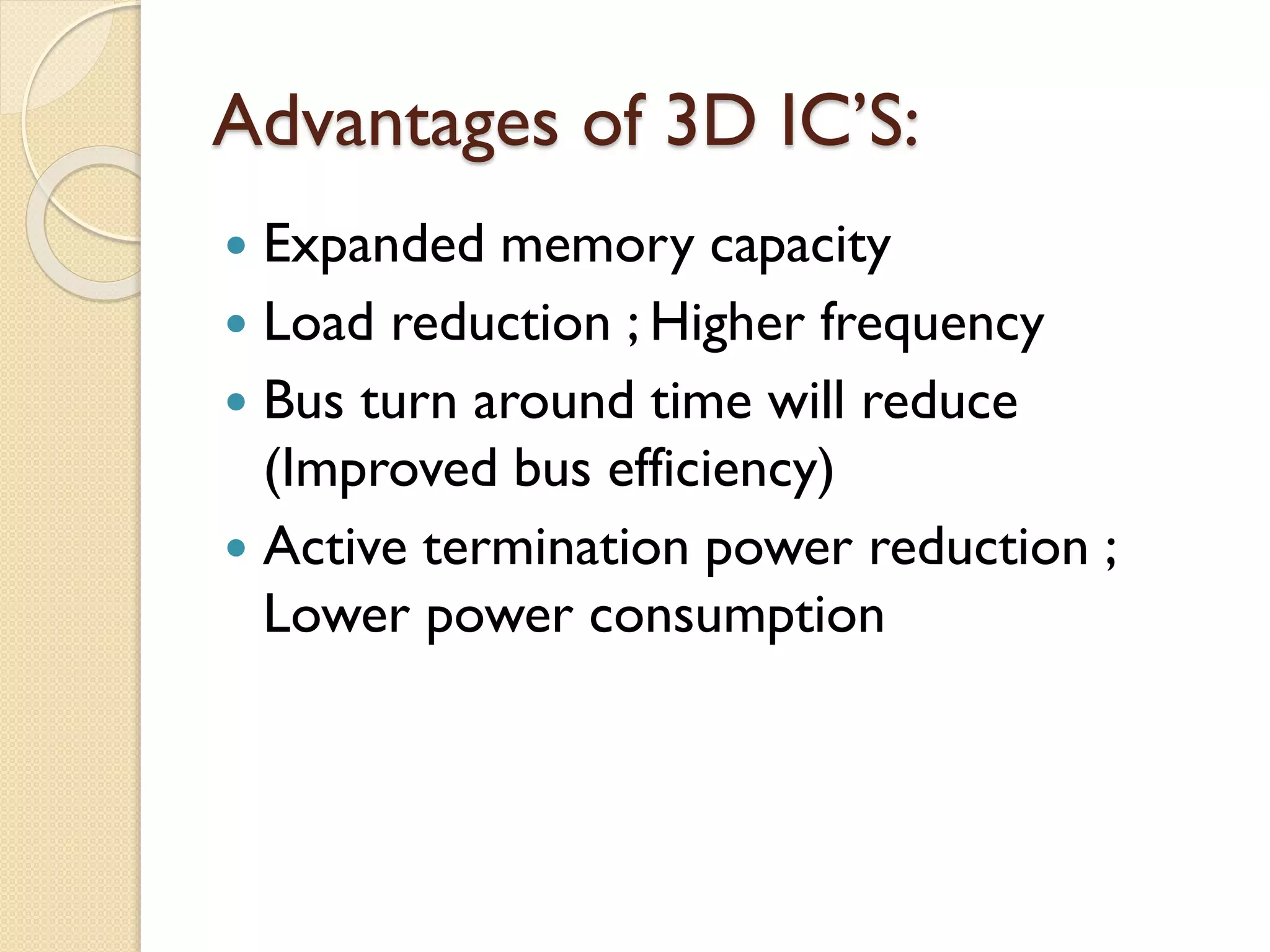
Advantages of 3D IC’S:
 Expanded memory capacity
 Load reduction ; Higher frequency
 Bus turn around time will reduce
(Improved bus efficiency)
 Active termination power reduction ;
Lower power consumption
Disadvantages:
 Higher cost Drill holes/Fill plug by
metal/Put bumps
 Thinning
 Handling/Align
 2 types of die (Master and Slave)
Applications:
 physical limitations for classic 2D
electronics
 addressing all important issues, such as
wafer processing
 applications of mixed signal designs.
Challenges:
 Heat
 Design complexity
 Testing
 Lack of standards
 Heterogeneous integration supply chain
3D IC'S Technology

3D IC'S Technology

  • 1.
    Technical seminar on 3DIC Technology Under guidance by Mr. R. Gopi Reddy submitted by… P.Naresh 107Q1A0417
  • 2.
    What is 3DIC Technology?  In electronics, a three-dimensional integrated circuit (3D IC) is a chip in which two or more layers of active electronic components are integrated both vertically and horizontally into a single circuit.  The chip was manufactured with two dies using face-to-face stacking, which allowed a dense via structure.
  • 3.
  • 4.
    Performance Characteristics:  Timing. Energy.  With shorter interconnects in 3D ICs, both switching energy and cycle time are expected to be reduced.
  • 5.
    Timing:  In currenttechnologies, timing is interconnect driven.  Reducing interconnect length in designs can dramatically reduce RC delays and increase chip performance  The graph below shows the results of a reduction in wire length due to 3D routing  Discussed more in detail later in the slides
  • 6.
  • 7.
    Energy performance:  Wirelength reduction has an impact on the cycle time and the energy dissipation  Energy dissipation decreases with the number of layers used in the design  Following graphs are based on the 3D tool described later in the presentation
  • 8.
  • 9.
    Comparison of 3Dand 2D IC’S:  with higher speed and smaller footprint than the ones designed by the traditional 2D IC design technologies.  The length of global wires can be reduced by as much as 50%.  limited clock frequency can be increased.  limited area and power can be reduced
  • 10.
    Image for 3Dand 2D IC’S
  • 11.
    Implications on CircuitDesign and Architecture:  Buffer Insertion  Layout of Critical Paths  Microprocessor Design  Mixed Signal IC’s  Physical design and Synthesis
  • 12.
    Advantages of 3DIC’S:  Expanded memory capacity  Load reduction ; Higher frequency  Bus turn around time will reduce (Improved bus efficiency)  Active termination power reduction ; Lower power consumption
  • 13.
    Disadvantages:  Higher costDrill holes/Fill plug by metal/Put bumps  Thinning  Handling/Align  2 types of die (Master and Slave)
  • 14.
    Applications:  physical limitationsfor classic 2D electronics  addressing all important issues, such as wafer processing  applications of mixed signal designs.
  • 15.
    Challenges:  Heat  Designcomplexity  Testing  Lack of standards  Heterogeneous integration supply chain