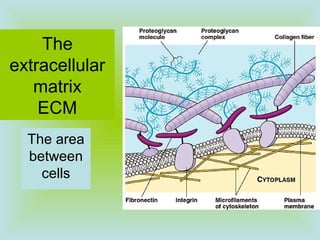
The
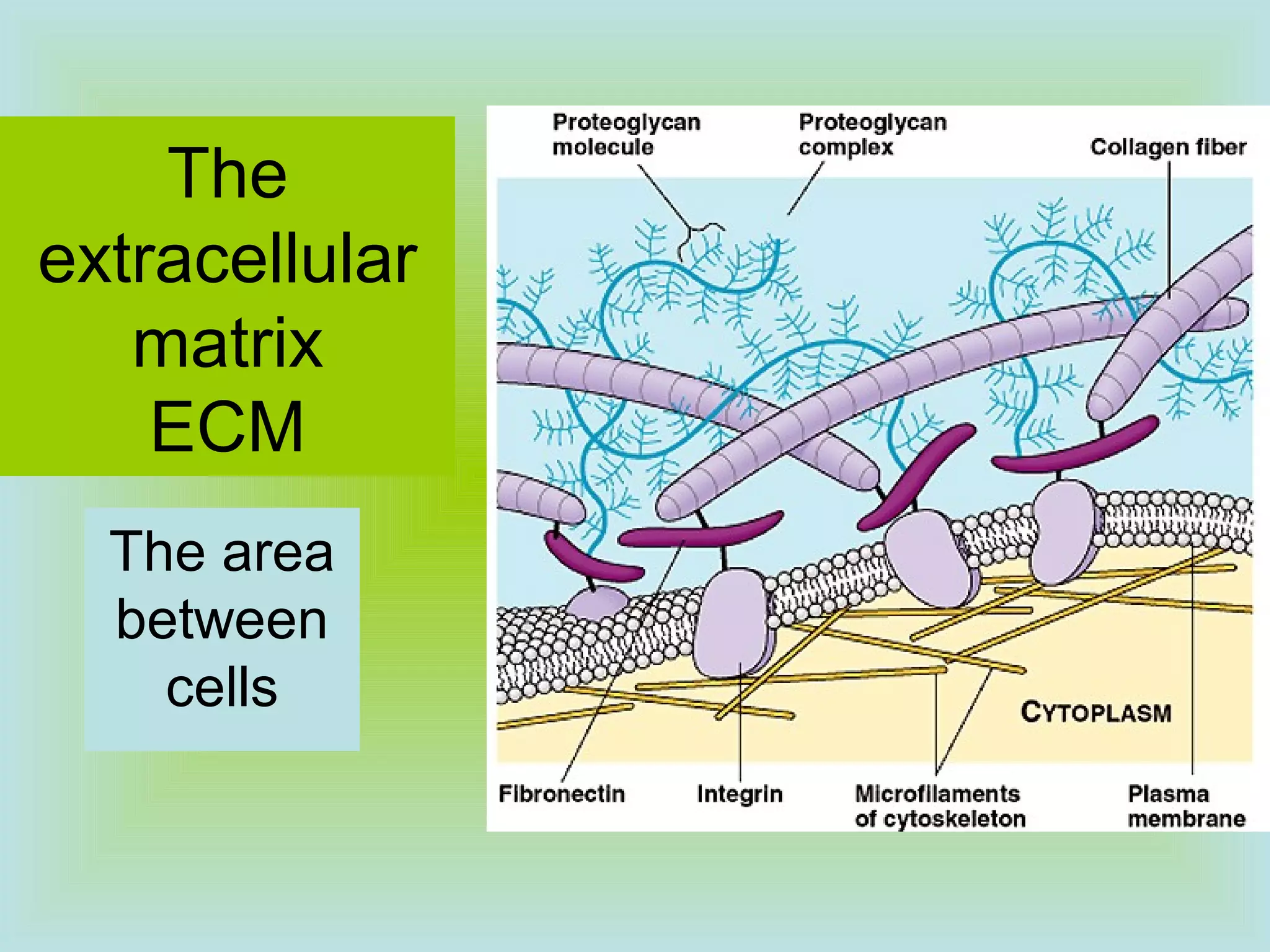
extracellular
matrix
ECM
The area
between
cells
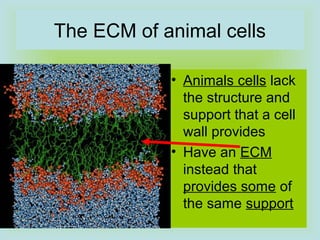
The ECM of animal cells
• Animals cells lack
the structure and
support that a cell
wall provides
• Have an ECM
instead that
provides some of
the same support
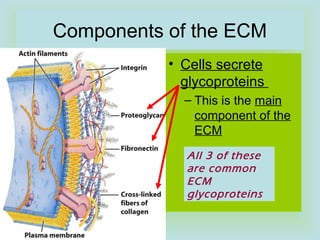
Components of the ECM
• Cells secrete
glycoproteins
– This is the main
component of the
ECM
All 3 of these
are common
ECM
glycoproteins
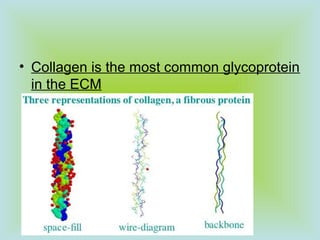
• Collagen is the most common glycoprotein
in the ECM
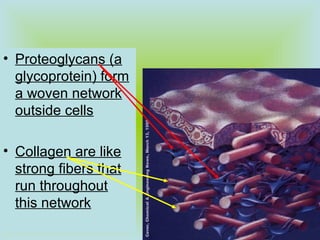
• Proteoglycans (a
glycoprotein) form
a woven network
outside cells
• Collagen are like
strong fibers that
run throughout
this network
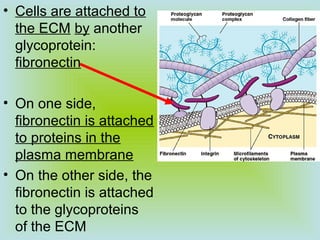
• Cells are attached to
the ECM by another
glycoprotein:
fibronectin
• On one side,
fibronectin is attached
to proteins in the
plasma membrane
• On the other side, the
fibronectin is attached
to the glycoproteins
of the ECM
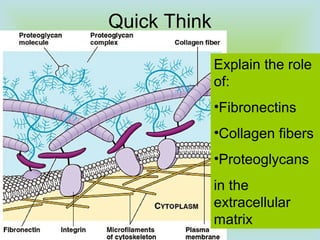
Quick Think
Explain the role
of:
•Fibronectins
•Collagen fibers
•Proteoglycans
in the
extracellular
matrix
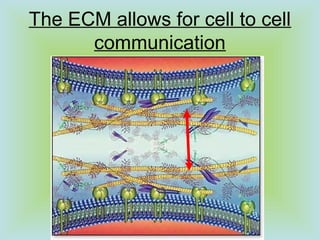
The ECM allows for cell to cell
communication
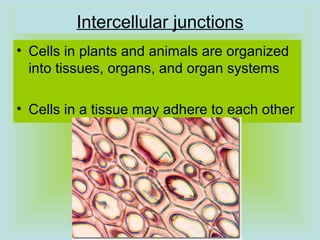
Intercellular junctions
• Cells in plants and animals are organized
into tissues, organs, and organ systems
• Cells in a tissue may adhere to each other
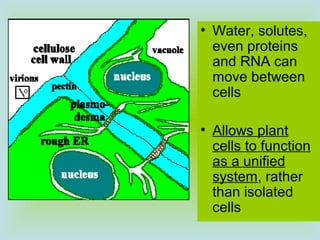
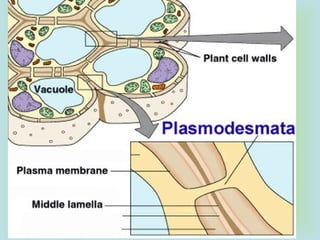
The Plasmodesmata of plants
• Cells walls of plants
are perforated with
small channels called
plasmodesmata
• Cytosol passes
through the channel,
thereby connecting
the two cells
• Water, solutes,
even proteins
and RNA can
move between
cells
• Allows plant
cells to function
as a unified
system, rather
than isolated
cells
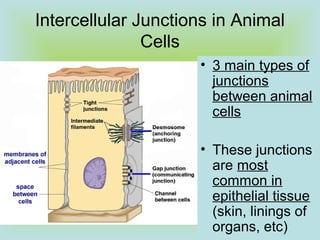
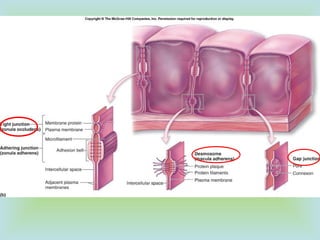
Intercellular Junctions in Animal
Cells
• 3 main types of
junctions
between animal
cells
• These junctions
are most
common in
epithelial tissue
(skin, linings of
organs, etc)
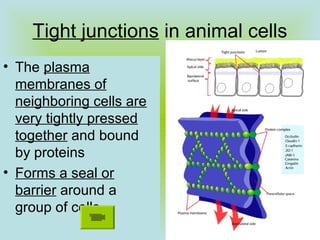
Tight junctions in animal cells
• The plasma
membranes of
neighboring cells are
very tightly pressed
together and bound
by proteins
• Forms a seal or
barrier around a
group of cells
Desmosomes or anchoring
junctions in animal cells
• Like rivets that
fasten cells
together in strong
sheets
• Keratin filaments
anchor these
attachments in
the cytoplasm
Gap junctions (or communicating
junctions) in animal cells
• Similar to
plasmodesmata in plant
cells
• Provides a channel
between cells that
cytosol can travel
through
• Allows for cell to cell
communication
– Important in cardiac
tissue and embryonic
tissue
Quick Think:
Summarize the role and location of each of the 3
types of intercellular junctions

AP Bio Ch. 7 part 2 The extracellular matrix

  • 1.
  • 2.
    The ECM ofanimal cells • Animals cells lack the structure and support that a cell wall provides • Have an ECM instead that provides some of the same support
  • 3.
    Components of theECM • Cells secrete glycoproteins – This is the main component of the ECM All 3 of these are common ECM glycoproteins
  • 4.
    • Collagen isthe most common glycoprotein in the ECM
  • 5.
    • Proteoglycans (a glycoprotein)form a woven network outside cells • Collagen are like strong fibers that run throughout this network
  • 6.
    • Cells areattached to the ECM by another glycoprotein: fibronectin • On one side, fibronectin is attached to proteins in the plasma membrane • On the other side, the fibronectin is attached to the glycoproteins of the ECM
  • 7.
    Quick Think Explain therole of: •Fibronectins •Collagen fibers •Proteoglycans in the extracellular matrix
  • 8.
    The ECM allowsfor cell to cell communication
  • 9.
    Intercellular junctions • Cellsin plants and animals are organized into tissues, organs, and organ systems • Cells in a tissue may adhere to each other
  • 10.
    The Plasmodesmata ofplants • Cells walls of plants are perforated with small channels called plasmodesmata • Cytosol passes through the channel, thereby connecting the two cells
  • 11.
    • Water, solutes, evenproteins and RNA can move between cells • Allows plant cells to function as a unified system, rather than isolated cells
  • 13.
    Intercellular Junctions inAnimal Cells • 3 main types of junctions between animal cells • These junctions are most common in epithelial tissue (skin, linings of organs, etc)
  • 15.
    Tight junctions inanimal cells • The plasma membranes of neighboring cells are very tightly pressed together and bound by proteins • Forms a seal or barrier around a group of cells
  • 16.
    Desmosomes or anchoring junctionsin animal cells • Like rivets that fasten cells together in strong sheets • Keratin filaments anchor these attachments in the cytoplasm
  • 17.
    Gap junctions (orcommunicating junctions) in animal cells • Similar to plasmodesmata in plant cells • Provides a channel between cells that cytosol can travel through • Allows for cell to cell communication – Important in cardiac tissue and embryonic tissue
  • 18.
    Quick Think: Summarize therole and location of each of the 3 types of intercellular junctions