CELL BIOLOGY
PEROXISOMES
ANN
DHUN SHAH
DARSHINEE
DOBARIYA
TABLE OF CONTENT:
1) Introduction to Peroxisomes.
2) Structure.
3) Formation.
4) Functions.
5)pH
6)Inside the Peroxisome
7)Disorders
PEROXISOMES
A small organelle present in cytoplasm which contains reducing
enzymes.
It is a major Oxygen utilizing organelle.
STRUCTURE
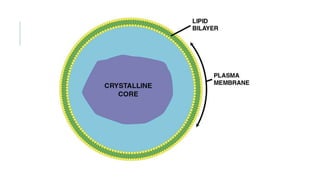
These are single membrane bound organelles that contain
enzymes.
They are generally small about 0.1 to 1 micrometer in diameter.
Human cells may contain up to 100 peroxisomes depending
upon the cell.
FORMATION OF PEROXISOMES
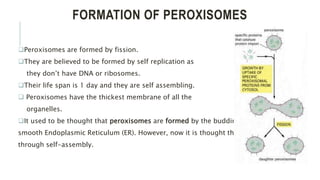
Peroxisomes are formed by fission.
They are believed to be formed by self replication as
they don’t have DNA or ribosomes.
Their life span is 1 day and they are self assembling.
 Peroxisomes have the thickest membrane of all the
organelles.
It used to be thought that peroxisomes are formed by the budding of
smooth Endoplasmic Reticulum (ER). However, now it is thought that they form
through self-assembly.
FUNCTIONS OF PEROXISOMES
Peroxisome is the name because they all produce
hydrogen peroxide.
It contains a variety of enzymes which help in
different biochemical processes.
The enzymes oxidize certain molecules like fatty
acids and amino acids which leads to production of
H2O2.
FUNCTIONS OF PEROXISOMES
Synthesis of phospholipid, cholesterol and bile
acids.
Helps in detoxifying alcohol and other harmful
substances in liver through oxidation.
Peroxisomes are mostly found in liver and
kidneys because they have to carry out a lot of
detoxification. (CATALASE)
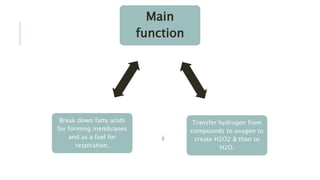
Main
function
Transfer hydrogen from
compounds to oxygen to
create H2O2 & then to
H2O.
Break down fatty acids
for forming membranes
and as a fuel for
respiration.
PH OF THE PEROXISOME
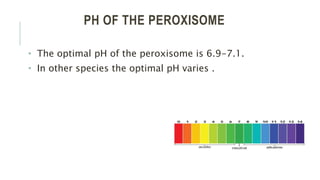
• The optimal pH of the peroxisome is 6.9-7.1.
• In other species the optimal pH varies .
ENZYMES IN PEROXISOME
Urate oxidase is mainly localized in the liver, where it
forms a large electron-dense Para crystalline core in
many peroxisome. It produces allantoin.
Urate oxidase is found in nearly all organisms,
from bacteria to mammals but is inactive in humans and
several other great apes, having been lost in
early primate evolution.
This means that instead of producing allantoin as the
end product of purine oxidation, the pathway ends with
uric acid. This leads to humans having much higher and
more highly variable levels of urate in the blood than
most other mammals.
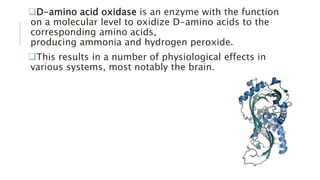
D-amino acid oxidase is an enzyme with the function
on a molecular level to oxidize D-amino acids to the
corresponding amino acids,
producing ammonia and hydrogen peroxide.
This results in a number of physiological effects in
various systems, most notably the brain.
INSIDE THE PEROXISOME
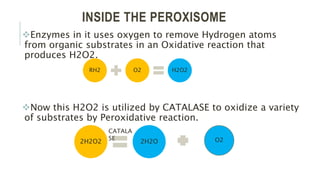
Enzymes in it uses oxygen to remove Hydrogen atoms
from organic substrates in an Oxidative reaction that
produces H2O2.
Now this H2O2 is utilized by CATALASE to oxidize a variety
of substrates by Peroxidative reaction.
RH2 O2 H2O2
2H2O2 2H2O O2
CATALA
SE
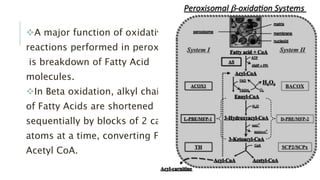
A major function of oxidative
reactions performed in peroxisome
is breakdown of Fatty Acid
molecules.
In Beta oxidation, alkyl chains
of Fatty Acids are shortened
sequentially by blocks of 2 carbon
atoms at a time, converting FA to
Acetyl CoA.
An essential biosynthetic function of animal peroxisomes
is to catalyze first reaction in the form of plasmalogens,
which are most abundant class of phospholipids in myelin.
Deficiency in plasmalogens causes profound abnormalities
in myelination of nerve cells, which is one reason why many
peroxisomal disorders lead to neurological disease.
PEROXISOME DISORDERS
This disorders are as a result of abnormal functions
of enzymes in the peroxisome and that include:
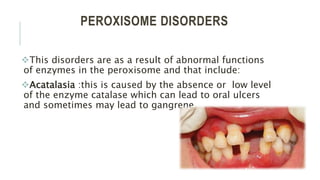
Acatalasia :this is caused by the absence or low level
of the enzyme catalase which can lead to oral ulcers
and sometimes may lead to gangrene
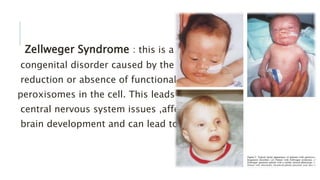
Zellweger Syndrome : this is a
congenital disorder caused by the
reduction or absence of functional
peroxisomes in the cell. This leads to
central nervous system issues ,affects
brain development and can lead to death.
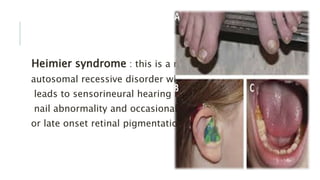
Heimier syndrome : this is a rare
autosomal recessive disorder which
leads to sensorineural hearing loss,
nail abnormality and occasional
or late onset retinal pigmentation.
Peroxisomes
Peroxisomes

Peroxisomes

  • 1.
  • 2.
    TABLE OF CONTENT: 1)Introduction to Peroxisomes. 2) Structure. 3) Formation. 4) Functions. 5)pH 6)Inside the Peroxisome 7)Disorders
  • 3.
    PEROXISOMES A small organellepresent in cytoplasm which contains reducing enzymes. It is a major Oxygen utilizing organelle. STRUCTURE These are single membrane bound organelles that contain enzymes. They are generally small about 0.1 to 1 micrometer in diameter. Human cells may contain up to 100 peroxisomes depending upon the cell.
  • 5.
    FORMATION OF PEROXISOMES Peroxisomesare formed by fission. They are believed to be formed by self replication as they don’t have DNA or ribosomes. Their life span is 1 day and they are self assembling.  Peroxisomes have the thickest membrane of all the organelles. It used to be thought that peroxisomes are formed by the budding of smooth Endoplasmic Reticulum (ER). However, now it is thought that they form through self-assembly.
  • 6.
    FUNCTIONS OF PEROXISOMES Peroxisomeis the name because they all produce hydrogen peroxide. It contains a variety of enzymes which help in different biochemical processes. The enzymes oxidize certain molecules like fatty acids and amino acids which leads to production of H2O2.
  • 7.
    FUNCTIONS OF PEROXISOMES Synthesisof phospholipid, cholesterol and bile acids. Helps in detoxifying alcohol and other harmful substances in liver through oxidation. Peroxisomes are mostly found in liver and kidneys because they have to carry out a lot of detoxification. (CATALASE)
  • 8.
    Main function Transfer hydrogen from compoundsto oxygen to create H2O2 & then to H2O. Break down fatty acids for forming membranes and as a fuel for respiration.
  • 9.
    PH OF THEPEROXISOME • The optimal pH of the peroxisome is 6.9-7.1. • In other species the optimal pH varies .
  • 10.
    ENZYMES IN PEROXISOME Urateoxidase is mainly localized in the liver, where it forms a large electron-dense Para crystalline core in many peroxisome. It produces allantoin. Urate oxidase is found in nearly all organisms, from bacteria to mammals but is inactive in humans and several other great apes, having been lost in early primate evolution. This means that instead of producing allantoin as the end product of purine oxidation, the pathway ends with uric acid. This leads to humans having much higher and more highly variable levels of urate in the blood than most other mammals.
  • 11.
    D-amino acid oxidaseis an enzyme with the function on a molecular level to oxidize D-amino acids to the corresponding amino acids, producing ammonia and hydrogen peroxide. This results in a number of physiological effects in various systems, most notably the brain.
  • 12.
    INSIDE THE PEROXISOME Enzymesin it uses oxygen to remove Hydrogen atoms from organic substrates in an Oxidative reaction that produces H2O2. Now this H2O2 is utilized by CATALASE to oxidize a variety of substrates by Peroxidative reaction. RH2 O2 H2O2 2H2O2 2H2O O2 CATALA SE
  • 13.
    A major functionof oxidative reactions performed in peroxisome is breakdown of Fatty Acid molecules. In Beta oxidation, alkyl chains of Fatty Acids are shortened sequentially by blocks of 2 carbon atoms at a time, converting FA to Acetyl CoA.
  • 14.
    An essential biosyntheticfunction of animal peroxisomes is to catalyze first reaction in the form of plasmalogens, which are most abundant class of phospholipids in myelin. Deficiency in plasmalogens causes profound abnormalities in myelination of nerve cells, which is one reason why many peroxisomal disorders lead to neurological disease.
  • 15.
    PEROXISOME DISORDERS This disordersare as a result of abnormal functions of enzymes in the peroxisome and that include: Acatalasia :this is caused by the absence or low level of the enzyme catalase which can lead to oral ulcers and sometimes may lead to gangrene
  • 16.
    Zellweger Syndrome :this is a congenital disorder caused by the reduction or absence of functional peroxisomes in the cell. This leads to central nervous system issues ,affects brain development and can lead to death.
  • 17.
    Heimier syndrome :this is a rare autosomal recessive disorder which leads to sensorineural hearing loss, nail abnormality and occasional or late onset retinal pigmentation.