Prof.Dr.G.Sundaramurthy’s unit Dr.K.Senthamizh selvan
 
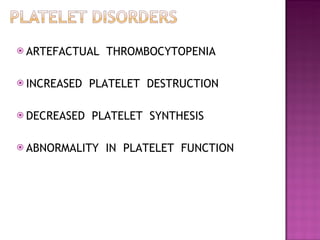
ARTEFACTUAL  THROMBOCYTOPENIA INCREASED  PLATELET  DESTRUCTION  DECREASED  PLATELET  SYNTHESIS  ABNORMALITY  IN  PLATELET  FUNCTION
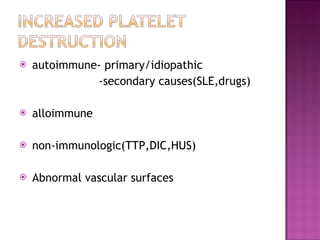
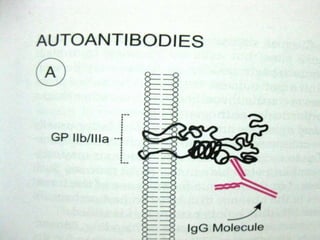
autoimmune- primary/idiopathic -secondary causes(SLE,drugs) alloimmune non-immunologic(TTP,DIC,HUS) Abnormal vascular surfaces
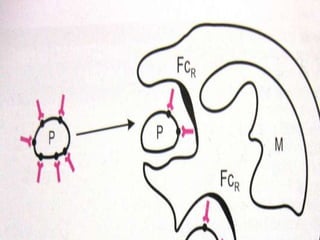
---- treatment options  STEROIDS  :  -reduces Ab production  -increases marrow platelet production  -reduces intramedullary platelet destruction -reduces splenic sequestration  -down regulates macrophage Fc R
 
 
SPLENECTOMY  :  removes primary destruction site of platelets  reduces antibody production  IV Ig: - blocks Fc R in macrophages ,B cells - improves cell survival by modulating growth factors  ANTI –D immunoglobulin :  - coats RBCs of Rh +ve patients ,causes Fc R mediated destruction in spleen  - hence spares platelets - efficacy is low after splenectomy
DANAZOL:   - down regulates Fc R on phagocytic cells  RITUXIMAB: - anti CD 20 antibody –causing selective B cell depletion in vivo -mechanism- apoptosis ADCC complement mediated  VINCA ALKALOIDS: - inhibition of microtuble dependant events required for monocytes/macrophages
 
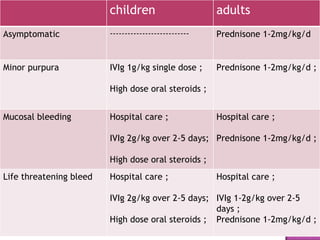
children adults Asymptomatic  --------------------------- Prednisone 1-2mg/kg/d Minor purpura IVIg 1g/kg single dose ; High dose oral steroids ; Prednisone 1-2mg/kg/d ; Mucosal bleeding  Hospital care ; IVIg 2g/kg over 2-5 days; High dose oral steroids ; Hospital care ; Prednisone 1-2mg/kg/d ; Life threatening bleed  Hospital care ; IVIg 2g/kg over 2-5 days; High dose oral steroids ; Hospital care ; IVIg 1-2g/kg over 2-5 days ; Prednisone 1-2mg/kg/d ;
if refractory to steroid course and splenectomy  options  : long term IV Ig pulse methylprednisolone  anti D immunoglobulin  danazol vinca alkaloids IFN  α rituximab
ROMIPLASTIM: - an Fc peptide  fusion protein -acts on TPO- R  - pathways similar to endogenous TPO - given as S.C.inj - used  in chronic ITP ELTROMBOPAG : - TPO- R  agonist  - oral route - used in chronic and refractory ITP  -acquired amegakaryocytic TP
gestational thrombocytopenia is a close mimicker ITP is difficult to manage in pregnancy anti platelet Ab – cross placenta ,causing TP in  fetus  treatment options : IVIg low dose steroids  splenectomy mode of termination is determined by obstetric indications.
LEVEL :1 evidence quinidine,quinine,rifampicin,sulfonamides,danazol,methyldopa,acetaminophen,digoxin LEVEL:2 evidence goldsalts,procainamide,carbamazepine, thiazides ,ranitidine,chlorpropamide
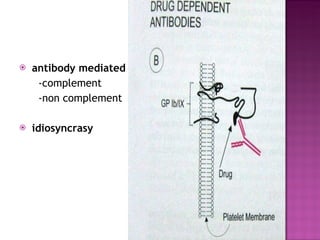
antibody mediated  -complement -non complement  idiosyncrasy
TREATMENT OPTIONS: withdrawal of offending drug  IV Ig plasmapheresis steroids --- recovery within 1 wk  exception :gold salts induced tp which  takes several months for recovery ---dimercaprol can be tried
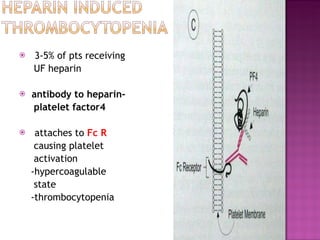
3-5% of pts receiving  UF heparin antibody to heparin- platelet factor4 attaches to  Fc R  causing platelet  activation  -hypercoagulable  state  -thrombocytopenia
TYPE :1 -occurs within 2 days  -non immune mechanism -direct effect of heparin on platelets  - count normalises even if treatment  continued  TYPE :2 -occurs within 4-10 days  -immune mechanism -life threatening thrombotic events  -we actually mean this as HIT in clinical  practice.
MANAGEMENT OF HIT: stop UF and LMW heparin start - direct thrombin inhibitors :  ARGATROBAN, LEPIRUDIN - factor 10a inhibitors - DANAPAROID only these drugs are FDA  approved for HIT they are given for 2 weeks
platelet count may normalise but thrombotic tendency may persist . hence continued with warfarin for 3-6 months  warfarin induced protein C and S deficiency aggravates thrombotic potential  -----start warfarin later  avoid heparin products in future for atleast 6 months.
SLE:  -TP in SLE  correlates with disease activity -auto antibodies in SLE  can bind  GP1b9/2b/3a  - treatment guidelines same as that of ITP Thymoma,myasthenia,CLL,hodgkin’s disease INFECTIONS : HIV,IMN,CMV,Hep B and C H.pylori,varicella ------ to treat the primary cause
platelets can express some epitopes due to polymorphism of gene for PL GPs no natural antibodies occurs  1)neonatal alloimmune thrombocytopenia. 2)post transfusion purpura. Treatment options: -  self limiting - steroids  - plasmapheresis - IV Ig
ADAMTS13 --- cleaves  VWF  when it is conformationally unfolded  defect in ADAMTS13 ---causes TTP 1)TP 2)Microangiopathic hemolysis  3)Renal failure  acquired TTP hereditary TTP
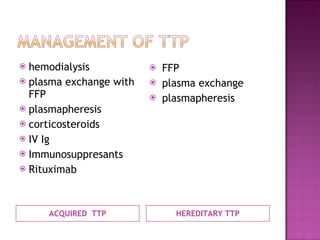
ACQUIRED  TTP HEREDITARY TTP hemodialysis plasma exchange with FFP  plasmapheresis  corticosteroids  IV Ig  Immunosuppresants Rituximab  FFP plasma exchange plasmapheresis
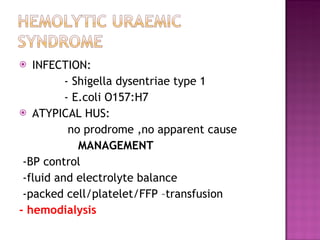
INFECTION:  - Shigella dysentriae type 1 - E.coli O157:H7 ATYPICAL HUS:  no prodrome ,no apparent cause MANAGEMENT  -BP control -fluid and electrolyte balance  -packed cell/platelet/FFP –transfusion - hemodialysis
 
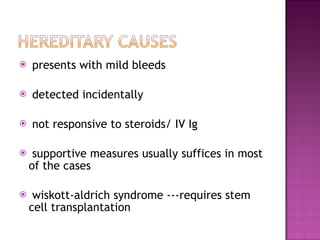
presents with mild bleeds detected incidentally  not responsive to steroids/ IV Ig supportive measures usually suffices in most of the cases  wiskott-aldrich syndrome ---requires stem cell transplantation
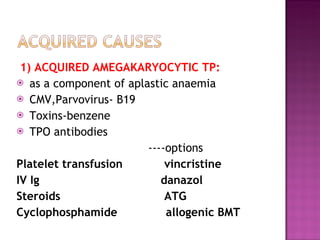
1) ACQUIRED AMEGAKARYOCYTIC TP: as a component of aplastic anaemia  CMV,Parvovirus- B19 Toxins-benzene TPO antibodies  ----options Platelet transfusion  vincristine IV Ig  danazol Steroids  ATG Cyclophosphamide  allogenic BMT
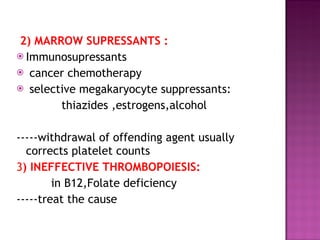
2) MARROW SUPRESSANTS : Immunosupressants cancer chemotherapy selective megakaryocyte suppressants: thiazides ,estrogens,alcohol -----withdrawal of offending agent usually corrects platelet counts 3 ) INEFFECTIVE THROMBOPOIESIS: in B12,Folate deficiency -----treat the cause
 
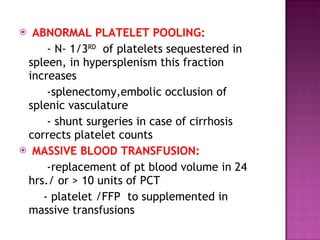
ABNORMAL PLATELET POOLING:  - N- 1/3 RD   of platelets sequestered in spleen, in hypersplenism this fraction increases -splenectomy,embolic occlusion of splenic vasculature  - shunt surgeries in case of cirrhosis corrects platelet counts  MASSIVE BLOOD TRANSFUSION: -replacement of pt blood volume in 24 hrs./ or > 10 units of PCT - platelet /FFP  to supplemented in massive transfusions
 
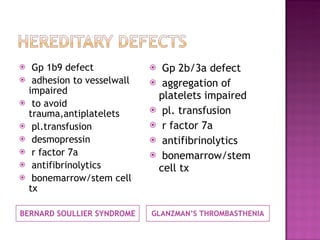
BERNARD SOULLIER SYNDROME GLANZMAN’S THROMBASTHENIA Gp 1b9 defect adhesion to vesselwall impaired to avoid trauma,antiplatelets pl.transfusion desmopressin r factor 7a antifibrinolytics bonemarrow/stem cell  tx Gp 2b/3a defect aggregation of platelets impaired  pl. transfusion r factor 7a antifibrinolytics bonemarrow/stem cell tx
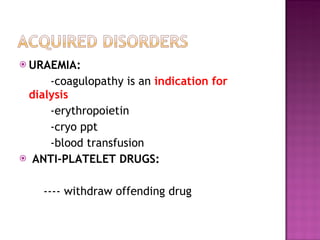
URAEMIA:  -coagulopathy is an  indication for dialysis -erythropoietin  -cryo ppt -blood transfusion ANTI-PLATELET DRUGS: ---- withdraw offending drug
 
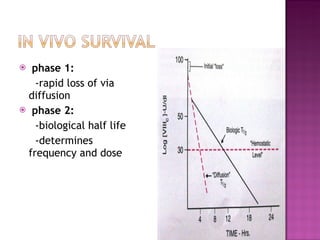
-----principles  HEMOSTATIC LEVELS:  - lowest plasma conc. Of a given coagulation factor required for normal hemostasis IN VIVO RECOVERY: - after infusion of factors –loss from intra vascular space. - adsorption of coagulation factors by platelets and various vascular surfaces
phase 1: -rapid loss of via diffusion phase 2: -biological half life -determines frequency and dose
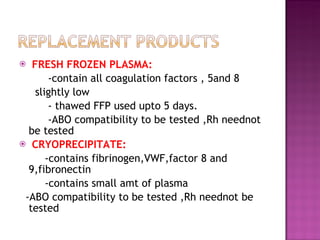
FRESH FROZEN PLASMA: -contain all coagulation factors , 5and 8  slightly low  - thawed FFP used upto 5 days. -ABO compatibility to be tested ,Rh neednot be tested  CRYOPRECIPITATE: -contains fibrinogen,VWF,factor 8 and 9,fibronectin -contains small amt of plasma -ABO compatibility to be tested ,Rh neednot be tested
PLATELETS: -pooled random donors----upto 8 units can be pooled from different patients -apherised platelet----from single donor - lifespan after pooling -4 hrs ,unless properly stored. - in emergencies ABO incompatibility can be compromised except for mild reactions .
PURIFIED CONC. COAGULATION FACTORS: RECOMBINANT FACTORS  PORCINE FACTORS  PROTHROMBIN COMPLEX CONCENTRATES: -  contains factor 2,7,9,10,protein c,s, -  high thrombogenic potential
vasopressin analogues  releases VWF,factor 8 and 9 from vascular endothelial cells also releases endothelium derived plasminogen activators ---causes fibrinolysis so antifibrinolytics like  EACA  to be combined repeated dosing causes depletion of sources of VWF. used carefully in SHT,CCF.
 
to avoid trauma, isometric exercises  to avoid anti-platelets to avoid IM injections  caution regarding infections via blood products HIV,HEP B,C,prions,CMV. therapy is complicated by development of inhibitors to clotting factors. difficulty in treating these conditions.
inherited factor 8 deficiency depending on factor levels- -severe <1% -moderate 1-5% -mild 6-30% mainstay of treatment to maintain hemostatic levels dose required=(target levels-baseline levels)×body wt.in kg χ 0.5
----replacement therapy mild bleeds,uncomplicated hemarthroses,superficial hematomas:  initial ---30-50% maintenance --- 15-25% for 2-3 d large hematomas,bleed into muscle: >50% for 1 wk oropharyngealspaces, retroperitoneum,CNS bleeds :  50-100% for 7-10 days surgical prophylaxis  : 100% for 7-10 days  dental procedures  : 50-100% for 3 days
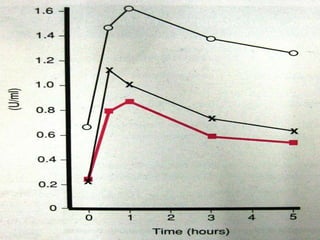
Other measures ….. DDAVP  : -0.3 µg/kg infused over 20 min  -nasal spray 150µg in each nostril -2to3 fold rise in factor 8,with peak  at 30-60 min Tranexamic acid  : 25 mg/kg qid  EACA  :  loading dose -200 mg/kg maintenance-100mg/kg every 6 hr.
inherited deficiency of factor 9 less frequent and less severe than hemophilia A during replacement factor 9 has low in vitro survival , 30-50% dose required =(target levels-baseline lines) χ body wt.in kg  therapy is complicated by inhibitor formation  DDAVP, EACA,tranexamic acid
VWF stabilises factor 8, assists in platelet aggegation VWD – types 1- partial defect 2-qualitative defect 3-severe quantitative defect platelet type(pseudo) VWD-  defect in platelet  GP 1b causing abnormal binding with VWD
TYPE I : DDAVP (infusion/spray) TYPE 2 A/B: DDAVP+VWF containing factor 8 conc. TYPE 2 M/N and TYPE 3:  -  VWF containing factor 8 conc. -  prophylaxis is required only in TYPE3 -  replacement of factor 8 wont suffice as its half life is very low in the absence of VWF
VWF REPLACEMENT: 50-80% -In major trauma,surgery,CNS bleeds 30-50%-minor surgery,dental procedures  peri partum bleeds type 3 VWD patients develop antibodies against VWF  NON –REPLACEMENT THERAPY: estrogen ,OCP EACA Tranexamic acid
 
HEMORRHAGIC  DISEASE OF NEW BORN: - vitamin k 0.5 to 10 mg im to babies  -prophylactic administration of vit k to mothers before delivery MALABSORPTION OF VITAMIN K/ DRUGS: -vitamin k 10mg im vit,  - coagulopathy reverts in 12-24 hrs. if not so there is a coexistent liver disease or DIC
Thrombocytopenia Decreased synthesis of coagulation factors Increased fibrinolysis ----options are  Inj. Vitamin k fresh frozen plasma  prothrombin complex concentrates recombinant factor 7a cryoprecipitate
presents as coagulopathy in acute DIC and  Thrombotic complications in chronic DIC  -----management of DIC  stabilise the patient treatment of the primary cause platelet transfusion if <20,000/cumm fresh frozen plasma packed cell transfusion low molecular wt. heparin,antithrombin in chronic DIC cryoppt .in hypofibrinogenemia.
Recombinant activated protein C  – drotecogin alfa  , inhibits activated factor 5 and 8. tissue factor pathway inhibitor recombinant -activated factor 7 antiselectin antibodies  – blocks platelet adhesion IL 10 inhibitors  (IL 10 s involved in coagulation cascade) MAPK inhibitors  (mitogen activated protein kinase involved in intracellular signalling  in  inflammation.
many patients develop allo-antibodies  against clotting factors . these antibodies acts as inhibitors of coagulation  common in hemophilia and very rare in other coagulation disorders present in 5-10% of all hemophiliacs 20% of severe hemophilia A 3-5% of hemophilia B
HIGH RISK GROUP:  severe deficiency of factor 8,9 family history of inhibitors african descents mutations in factor 8 and factor 9 gene --- there is a negative correlation with  HLA CW5
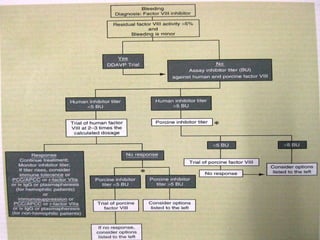
Plasma from normal individuals and pts are  mixed in 1:1 ratio----aPTT  is prolonged in presence of inhibitors  BETHESDA  ASSAY : detects specificity of inhibitors and its titre one  BETHESDA UNIT (BU)  is the amount of antibody that neutralises 50% of factor 8 or 9 in normal plasma after2 hr of incubation at 37’c  NIJMEGEN ASSAY :here pH of the system is controlled  on 2 hrs of incubation
high dose of clotting factors recombinant factor 7a –which bypasses factor 8 step prothrombin complex concentrates  IMMUNE TOLERANCE INDUCTION:  -based on daily infusion of the missing factor in small amounts until inhibitors disappears. -it may take 1 yr.  RITUXIMAB  GENE THERAPY LIVER TRANSPLANTATION
 
 
osler-weber –rendu syndrome screen for a-v malformations at cerebrum,pulmonary vessels,liver in case of recurrent epistaxis – laser therapy,arterial embolisation pulmonary AVMs –embolotherapy GI AVMs –endoscopic electrocautery -laser cerebral AVMs –steriotactic surgery - radiosurgery - embolotherapy
EHLER-DANLOS SYNDROME MARFAN SYNDROME OSTEOGENESIS IMPERFECTA PSEUDOXANTHOMA ELASTICUM  ----To avoid contact sports,isometric exercises,antiplatelets ----to undergo regular screening
pt can present with purpura,hematuria,hemoptysis etc options : - steroids - plasmapheresis - immunosuppresants
 
 
Whether treatment should be withdrawn abruptly or gradually withdrawn (&quot;tailed off&quot;) is still debatable. Theoretically, the &quot; rebound hypercoagulability &quot;  which results from sudden discontinuation might predispose to rebound thrombosis. Some clinicians tail off long term treatment over several weeks but withdrawal for short term treatment can be done suddenly.
In life threatening hemorrhage: -  give inj.vit K-5-10 mg slow iv -  FFP,cryo In minor bleeds-epistaxis,hematuria: -give inj.vit 0.5-2mg iv In asymptomatic individuals  INR : 3-6 reduce dose of OAC, repeat INR after  2 days INR: >6 oral vit K 2.5-5 mg INR: >18 warrants admission and reversal
---- PROTAMINE SULFATE protamine binds heparin to form a stable ion pair ,which is broken down by RES DOSE: 1mg iv for every 100 IU of heparin administered in large doses ,protamine itself has some anticoagulant effect
-- complications from thrombolytic therapy occur when patients receive higher dose per kg body wt. --In that case  stop thrombolytic therapy EACA :  - 4-5g infusion in 1 hr----1g/hr  infusion over 8 hr. - has intrinsic thrombogenic  potential FFP/CRYOPPT. APROTININ –banned by FDA.
 

CME: Bleeding Disorders - Management

  • 1.
  • 2.
  • 3.
    ARTEFACTUAL THROMBOCYTOPENIAINCREASED PLATELET DESTRUCTION DECREASED PLATELET SYNTHESIS ABNORMALITY IN PLATELET FUNCTION
  • 4.
    autoimmune- primary/idiopathic -secondarycauses(SLE,drugs) alloimmune non-immunologic(TTP,DIC,HUS) Abnormal vascular surfaces
  • 5.
    ---- treatment options STEROIDS : -reduces Ab production -increases marrow platelet production -reduces intramedullary platelet destruction -reduces splenic sequestration -down regulates macrophage Fc R
  • 6.
  • 7.
  • 8.
    SPLENECTOMY : removes primary destruction site of platelets reduces antibody production IV Ig: - blocks Fc R in macrophages ,B cells - improves cell survival by modulating growth factors ANTI –D immunoglobulin : - coats RBCs of Rh +ve patients ,causes Fc R mediated destruction in spleen - hence spares platelets - efficacy is low after splenectomy
  • 9.
    DANAZOL: - down regulates Fc R on phagocytic cells RITUXIMAB: - anti CD 20 antibody –causing selective B cell depletion in vivo -mechanism- apoptosis ADCC complement mediated VINCA ALKALOIDS: - inhibition of microtuble dependant events required for monocytes/macrophages
  • 10.
  • 11.
    children adults Asymptomatic --------------------------- Prednisone 1-2mg/kg/d Minor purpura IVIg 1g/kg single dose ; High dose oral steroids ; Prednisone 1-2mg/kg/d ; Mucosal bleeding Hospital care ; IVIg 2g/kg over 2-5 days; High dose oral steroids ; Hospital care ; Prednisone 1-2mg/kg/d ; Life threatening bleed Hospital care ; IVIg 2g/kg over 2-5 days; High dose oral steroids ; Hospital care ; IVIg 1-2g/kg over 2-5 days ; Prednisone 1-2mg/kg/d ;
  • 12.
    if refractory tosteroid course and splenectomy options : long term IV Ig pulse methylprednisolone anti D immunoglobulin danazol vinca alkaloids IFN α rituximab
  • 13.
    ROMIPLASTIM: - anFc peptide fusion protein -acts on TPO- R - pathways similar to endogenous TPO - given as S.C.inj - used in chronic ITP ELTROMBOPAG : - TPO- R agonist - oral route - used in chronic and refractory ITP -acquired amegakaryocytic TP
  • 14.
    gestational thrombocytopenia isa close mimicker ITP is difficult to manage in pregnancy anti platelet Ab – cross placenta ,causing TP in fetus treatment options : IVIg low dose steroids splenectomy mode of termination is determined by obstetric indications.
  • 15.
    LEVEL :1 evidencequinidine,quinine,rifampicin,sulfonamides,danazol,methyldopa,acetaminophen,digoxin LEVEL:2 evidence goldsalts,procainamide,carbamazepine, thiazides ,ranitidine,chlorpropamide
  • 16.
    antibody mediated -complement -non complement idiosyncrasy
  • 17.
    TREATMENT OPTIONS: withdrawalof offending drug IV Ig plasmapheresis steroids --- recovery within 1 wk exception :gold salts induced tp which takes several months for recovery ---dimercaprol can be tried
  • 18.
    3-5% of ptsreceiving UF heparin antibody to heparin- platelet factor4 attaches to Fc R causing platelet activation -hypercoagulable state -thrombocytopenia
  • 19.
    TYPE :1 -occurswithin 2 days -non immune mechanism -direct effect of heparin on platelets - count normalises even if treatment continued TYPE :2 -occurs within 4-10 days -immune mechanism -life threatening thrombotic events -we actually mean this as HIT in clinical practice.
  • 20.
    MANAGEMENT OF HIT:stop UF and LMW heparin start - direct thrombin inhibitors : ARGATROBAN, LEPIRUDIN - factor 10a inhibitors - DANAPAROID only these drugs are FDA approved for HIT they are given for 2 weeks
  • 21.
    platelet count maynormalise but thrombotic tendency may persist . hence continued with warfarin for 3-6 months warfarin induced protein C and S deficiency aggravates thrombotic potential -----start warfarin later avoid heparin products in future for atleast 6 months.
  • 22.
    SLE: -TPin SLE correlates with disease activity -auto antibodies in SLE can bind GP1b9/2b/3a - treatment guidelines same as that of ITP Thymoma,myasthenia,CLL,hodgkin’s disease INFECTIONS : HIV,IMN,CMV,Hep B and C H.pylori,varicella ------ to treat the primary cause
  • 23.
    platelets can expresssome epitopes due to polymorphism of gene for PL GPs no natural antibodies occurs 1)neonatal alloimmune thrombocytopenia. 2)post transfusion purpura. Treatment options: - self limiting - steroids - plasmapheresis - IV Ig
  • 24.
    ADAMTS13 --- cleaves VWF when it is conformationally unfolded defect in ADAMTS13 ---causes TTP 1)TP 2)Microangiopathic hemolysis 3)Renal failure acquired TTP hereditary TTP
  • 25.
    ACQUIRED TTPHEREDITARY TTP hemodialysis plasma exchange with FFP plasmapheresis corticosteroids IV Ig Immunosuppresants Rituximab FFP plasma exchange plasmapheresis
  • 26.
    INFECTION: -Shigella dysentriae type 1 - E.coli O157:H7 ATYPICAL HUS: no prodrome ,no apparent cause MANAGEMENT -BP control -fluid and electrolyte balance -packed cell/platelet/FFP –transfusion - hemodialysis
  • 27.
  • 28.
    presents with mildbleeds detected incidentally not responsive to steroids/ IV Ig supportive measures usually suffices in most of the cases wiskott-aldrich syndrome ---requires stem cell transplantation
  • 29.
    1) ACQUIRED AMEGAKARYOCYTICTP: as a component of aplastic anaemia CMV,Parvovirus- B19 Toxins-benzene TPO antibodies ----options Platelet transfusion vincristine IV Ig danazol Steroids ATG Cyclophosphamide allogenic BMT
  • 30.
    2) MARROW SUPRESSANTS: Immunosupressants cancer chemotherapy selective megakaryocyte suppressants: thiazides ,estrogens,alcohol -----withdrawal of offending agent usually corrects platelet counts 3 ) INEFFECTIVE THROMBOPOIESIS: in B12,Folate deficiency -----treat the cause
  • 31.
  • 32.
    ABNORMAL PLATELET POOLING: - N- 1/3 RD of platelets sequestered in spleen, in hypersplenism this fraction increases -splenectomy,embolic occlusion of splenic vasculature - shunt surgeries in case of cirrhosis corrects platelet counts MASSIVE BLOOD TRANSFUSION: -replacement of pt blood volume in 24 hrs./ or > 10 units of PCT - platelet /FFP to supplemented in massive transfusions
  • 33.
  • 34.
    BERNARD SOULLIER SYNDROMEGLANZMAN’S THROMBASTHENIA Gp 1b9 defect adhesion to vesselwall impaired to avoid trauma,antiplatelets pl.transfusion desmopressin r factor 7a antifibrinolytics bonemarrow/stem cell tx Gp 2b/3a defect aggregation of platelets impaired pl. transfusion r factor 7a antifibrinolytics bonemarrow/stem cell tx
  • 35.
    URAEMIA: -coagulopathyis an indication for dialysis -erythropoietin -cryo ppt -blood transfusion ANTI-PLATELET DRUGS: ---- withdraw offending drug
  • 36.
  • 37.
    -----principles HEMOSTATICLEVELS: - lowest plasma conc. Of a given coagulation factor required for normal hemostasis IN VIVO RECOVERY: - after infusion of factors –loss from intra vascular space. - adsorption of coagulation factors by platelets and various vascular surfaces
  • 38.
    phase 1: -rapidloss of via diffusion phase 2: -biological half life -determines frequency and dose
  • 39.
    FRESH FROZEN PLASMA:-contain all coagulation factors , 5and 8 slightly low - thawed FFP used upto 5 days. -ABO compatibility to be tested ,Rh neednot be tested CRYOPRECIPITATE: -contains fibrinogen,VWF,factor 8 and 9,fibronectin -contains small amt of plasma -ABO compatibility to be tested ,Rh neednot be tested
  • 40.
    PLATELETS: -pooled randomdonors----upto 8 units can be pooled from different patients -apherised platelet----from single donor - lifespan after pooling -4 hrs ,unless properly stored. - in emergencies ABO incompatibility can be compromised except for mild reactions .
  • 41.
    PURIFIED CONC. COAGULATIONFACTORS: RECOMBINANT FACTORS PORCINE FACTORS PROTHROMBIN COMPLEX CONCENTRATES: - contains factor 2,7,9,10,protein c,s, - high thrombogenic potential
  • 42.
    vasopressin analogues releases VWF,factor 8 and 9 from vascular endothelial cells also releases endothelium derived plasminogen activators ---causes fibrinolysis so antifibrinolytics like EACA to be combined repeated dosing causes depletion of sources of VWF. used carefully in SHT,CCF.
  • 43.
  • 44.
    to avoid trauma,isometric exercises to avoid anti-platelets to avoid IM injections caution regarding infections via blood products HIV,HEP B,C,prions,CMV. therapy is complicated by development of inhibitors to clotting factors. difficulty in treating these conditions.
  • 45.
    inherited factor 8deficiency depending on factor levels- -severe <1% -moderate 1-5% -mild 6-30% mainstay of treatment to maintain hemostatic levels dose required=(target levels-baseline levels)×body wt.in kg χ 0.5
  • 46.
    ----replacement therapy mildbleeds,uncomplicated hemarthroses,superficial hematomas: initial ---30-50% maintenance --- 15-25% for 2-3 d large hematomas,bleed into muscle: >50% for 1 wk oropharyngealspaces, retroperitoneum,CNS bleeds : 50-100% for 7-10 days surgical prophylaxis : 100% for 7-10 days dental procedures : 50-100% for 3 days
  • 47.
    Other measures …..DDAVP : -0.3 µg/kg infused over 20 min -nasal spray 150µg in each nostril -2to3 fold rise in factor 8,with peak at 30-60 min Tranexamic acid : 25 mg/kg qid EACA : loading dose -200 mg/kg maintenance-100mg/kg every 6 hr.
  • 48.
    inherited deficiency offactor 9 less frequent and less severe than hemophilia A during replacement factor 9 has low in vitro survival , 30-50% dose required =(target levels-baseline lines) χ body wt.in kg therapy is complicated by inhibitor formation DDAVP, EACA,tranexamic acid
  • 49.
    VWF stabilises factor8, assists in platelet aggegation VWD – types 1- partial defect 2-qualitative defect 3-severe quantitative defect platelet type(pseudo) VWD- defect in platelet GP 1b causing abnormal binding with VWD
  • 50.
    TYPE I :DDAVP (infusion/spray) TYPE 2 A/B: DDAVP+VWF containing factor 8 conc. TYPE 2 M/N and TYPE 3: - VWF containing factor 8 conc. - prophylaxis is required only in TYPE3 - replacement of factor 8 wont suffice as its half life is very low in the absence of VWF
  • 51.
    VWF REPLACEMENT: 50-80%-In major trauma,surgery,CNS bleeds 30-50%-minor surgery,dental procedures peri partum bleeds type 3 VWD patients develop antibodies against VWF NON –REPLACEMENT THERAPY: estrogen ,OCP EACA Tranexamic acid
  • 52.
  • 53.
    HEMORRHAGIC DISEASEOF NEW BORN: - vitamin k 0.5 to 10 mg im to babies -prophylactic administration of vit k to mothers before delivery MALABSORPTION OF VITAMIN K/ DRUGS: -vitamin k 10mg im vit, - coagulopathy reverts in 12-24 hrs. if not so there is a coexistent liver disease or DIC
  • 54.
    Thrombocytopenia Decreased synthesisof coagulation factors Increased fibrinolysis ----options are Inj. Vitamin k fresh frozen plasma prothrombin complex concentrates recombinant factor 7a cryoprecipitate
  • 55.
    presents as coagulopathyin acute DIC and Thrombotic complications in chronic DIC -----management of DIC stabilise the patient treatment of the primary cause platelet transfusion if <20,000/cumm fresh frozen plasma packed cell transfusion low molecular wt. heparin,antithrombin in chronic DIC cryoppt .in hypofibrinogenemia.
  • 56.
    Recombinant activated proteinC – drotecogin alfa , inhibits activated factor 5 and 8. tissue factor pathway inhibitor recombinant -activated factor 7 antiselectin antibodies – blocks platelet adhesion IL 10 inhibitors (IL 10 s involved in coagulation cascade) MAPK inhibitors (mitogen activated protein kinase involved in intracellular signalling in inflammation.
  • 57.
    many patients developallo-antibodies against clotting factors . these antibodies acts as inhibitors of coagulation common in hemophilia and very rare in other coagulation disorders present in 5-10% of all hemophiliacs 20% of severe hemophilia A 3-5% of hemophilia B
  • 58.
    HIGH RISK GROUP: severe deficiency of factor 8,9 family history of inhibitors african descents mutations in factor 8 and factor 9 gene --- there is a negative correlation with HLA CW5
  • 59.
    Plasma from normalindividuals and pts are mixed in 1:1 ratio----aPTT is prolonged in presence of inhibitors BETHESDA ASSAY : detects specificity of inhibitors and its titre one BETHESDA UNIT (BU) is the amount of antibody that neutralises 50% of factor 8 or 9 in normal plasma after2 hr of incubation at 37’c NIJMEGEN ASSAY :here pH of the system is controlled on 2 hrs of incubation
  • 60.
    high dose ofclotting factors recombinant factor 7a –which bypasses factor 8 step prothrombin complex concentrates IMMUNE TOLERANCE INDUCTION: -based on daily infusion of the missing factor in small amounts until inhibitors disappears. -it may take 1 yr. RITUXIMAB GENE THERAPY LIVER TRANSPLANTATION
  • 61.
  • 62.
  • 63.
    osler-weber –rendu syndromescreen for a-v malformations at cerebrum,pulmonary vessels,liver in case of recurrent epistaxis – laser therapy,arterial embolisation pulmonary AVMs –embolotherapy GI AVMs –endoscopic electrocautery -laser cerebral AVMs –steriotactic surgery - radiosurgery - embolotherapy
  • 64.
    EHLER-DANLOS SYNDROME MARFANSYNDROME OSTEOGENESIS IMPERFECTA PSEUDOXANTHOMA ELASTICUM ----To avoid contact sports,isometric exercises,antiplatelets ----to undergo regular screening
  • 65.
    pt can presentwith purpura,hematuria,hemoptysis etc options : - steroids - plasmapheresis - immunosuppresants
  • 66.
  • 67.
  • 68.
    Whether treatment shouldbe withdrawn abruptly or gradually withdrawn (&quot;tailed off&quot;) is still debatable. Theoretically, the &quot; rebound hypercoagulability &quot; which results from sudden discontinuation might predispose to rebound thrombosis. Some clinicians tail off long term treatment over several weeks but withdrawal for short term treatment can be done suddenly.
  • 69.
    In life threateninghemorrhage: - give inj.vit K-5-10 mg slow iv - FFP,cryo In minor bleeds-epistaxis,hematuria: -give inj.vit 0.5-2mg iv In asymptomatic individuals INR : 3-6 reduce dose of OAC, repeat INR after 2 days INR: >6 oral vit K 2.5-5 mg INR: >18 warrants admission and reversal
  • 70.
    ---- PROTAMINE SULFATEprotamine binds heparin to form a stable ion pair ,which is broken down by RES DOSE: 1mg iv for every 100 IU of heparin administered in large doses ,protamine itself has some anticoagulant effect
  • 71.
    -- complications fromthrombolytic therapy occur when patients receive higher dose per kg body wt. --In that case stop thrombolytic therapy EACA : - 4-5g infusion in 1 hr----1g/hr infusion over 8 hr. - has intrinsic thrombogenic potential FFP/CRYOPPT. APROTININ –banned by FDA.
  • 72.