Course Title: Research Methodology 
Qualitative & 
Quantitative 
Course Code : AIS 601 
BY 
DR.SHAZIA ZAMIR
Contents 
Introduction 
The Nature of Research 
The Characteristics of Research 
Need for Research in Education
Sources of Acquiring knowledge 
Human beings depend on several sources of acquiring 
knowledge as follows: 
Personal experience 
Tradition 
For example, in matters of food, dress, communications, 
religion, home remedies for minor ailments etc 
Experts and authorities 
Eg a teacher, a parent , the boss , an expert or consultant etc 
Logic 
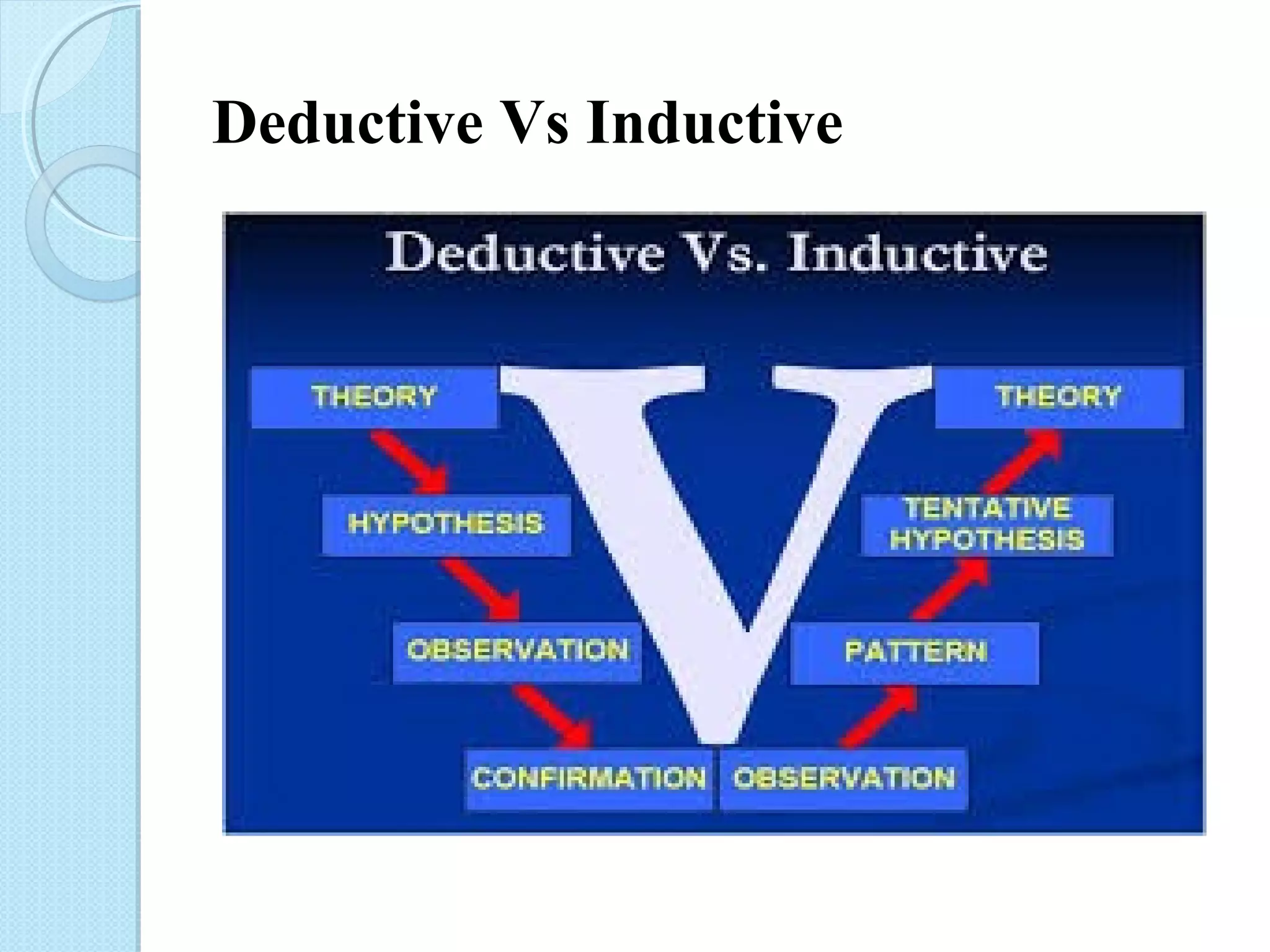
Inductive(general conclusion on specific facts 
gathered through direct observation) 
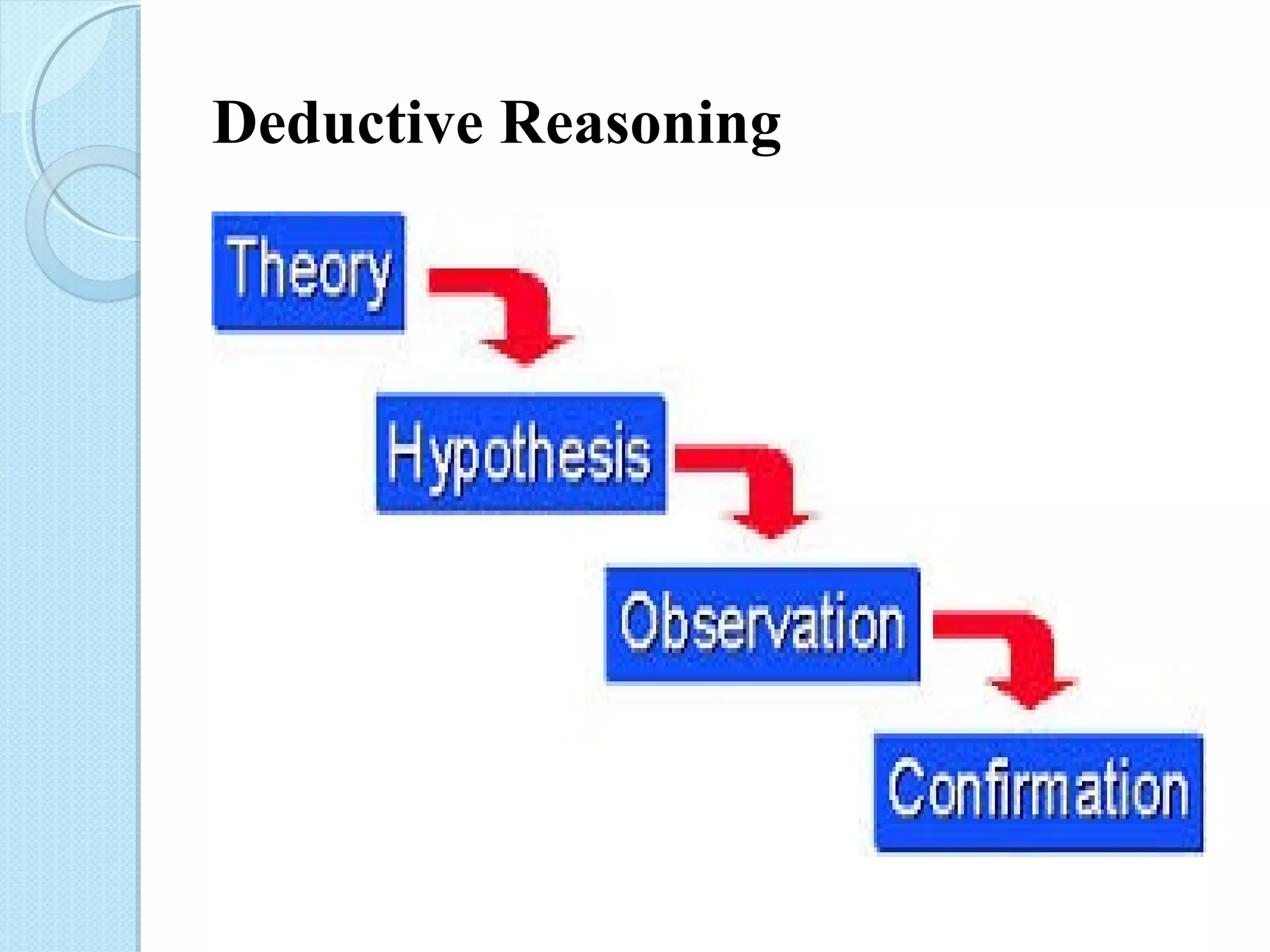
 Deductive(derived from theory which provides 
evidence which supports, expands or contradicts the 
theory) 
The scientific method
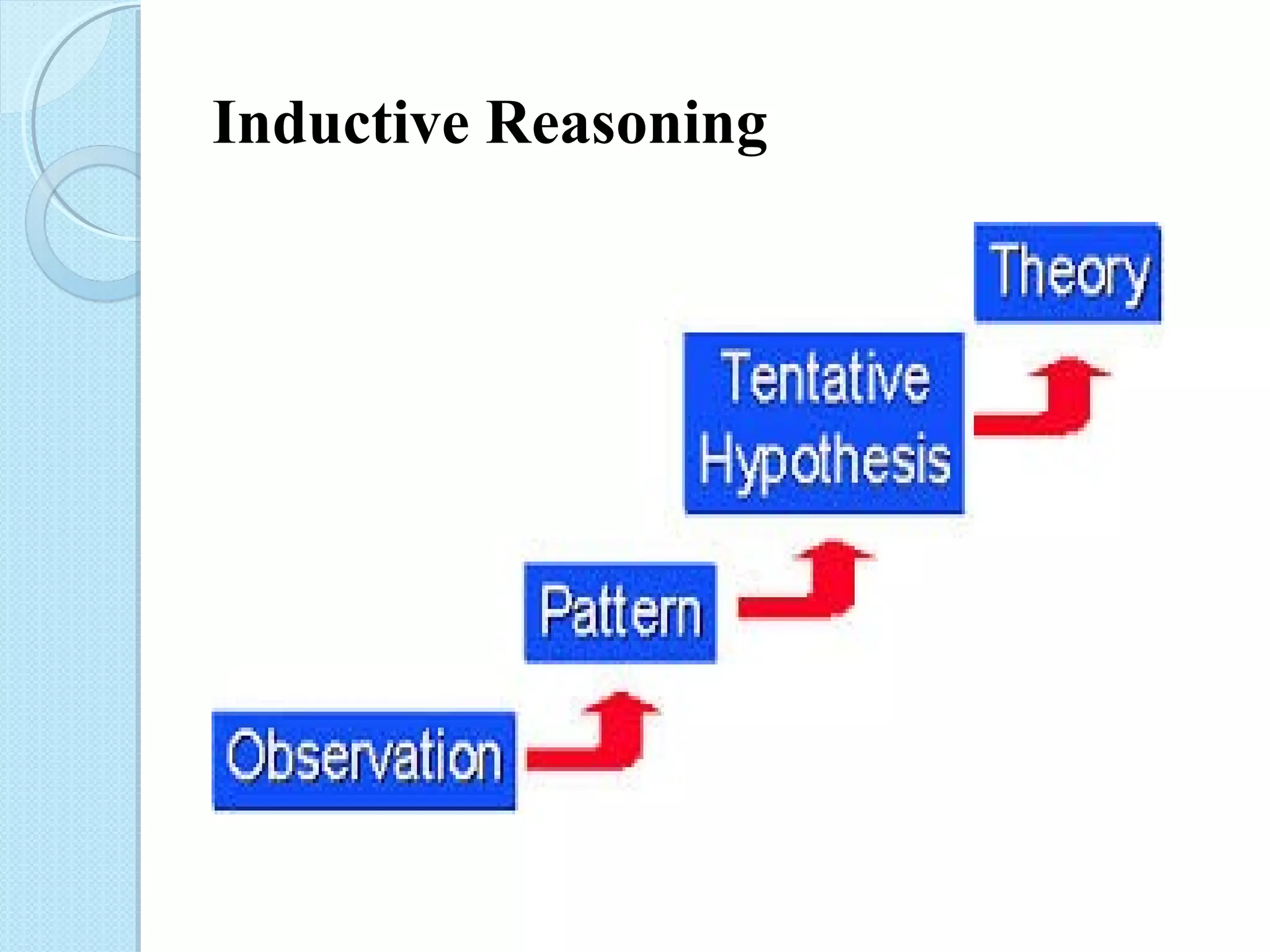
Inductive Reasoning
Deductive Reasoning
Deductive Vs Inductive
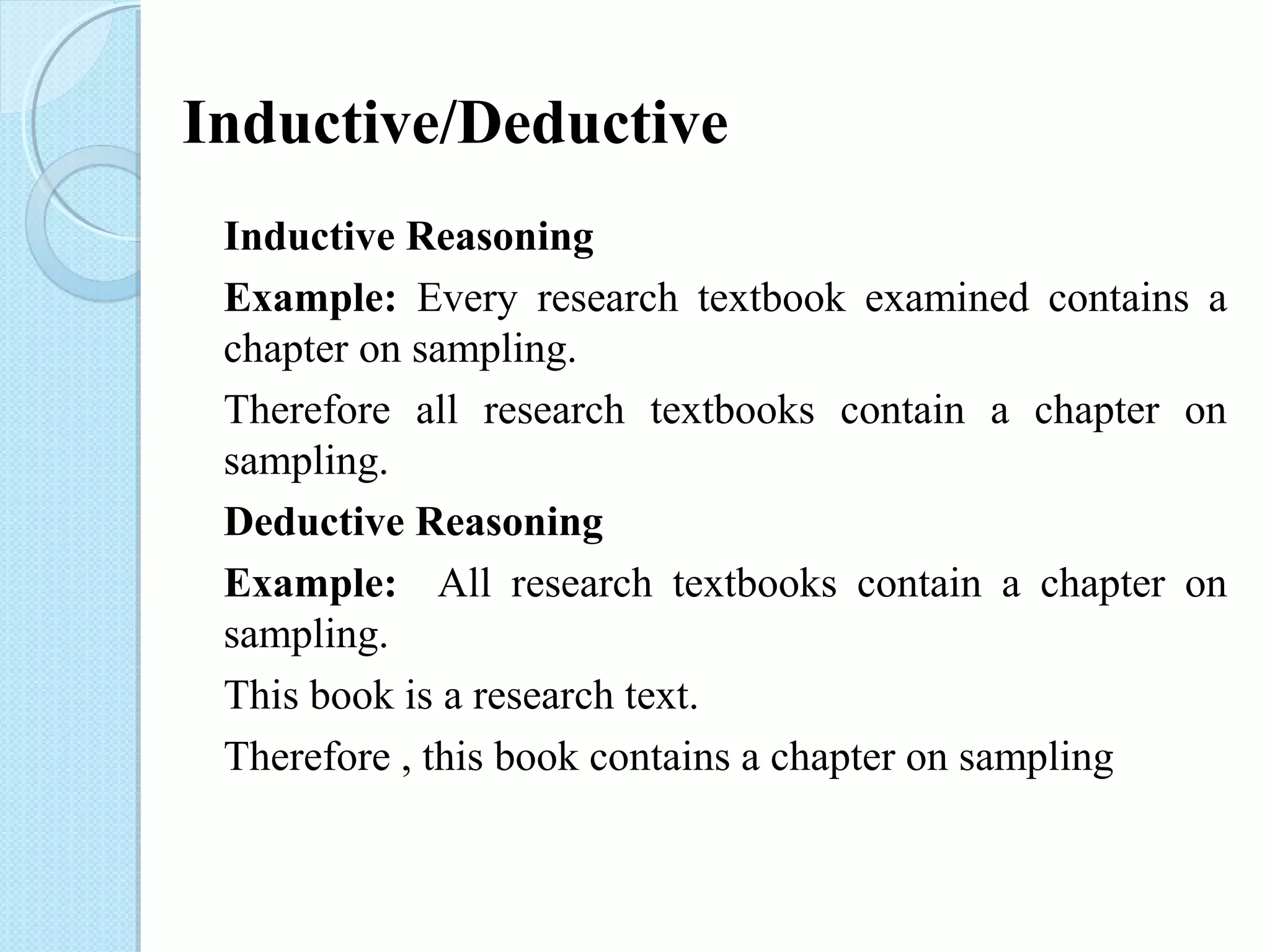
Inductive/Deductive 
Inductive Reasoning 
Example: Every research textbook examined contains a 
chapter on sampling. 
Therefore all research textbooks contain a chapter on 
sampling. 
Deductive Reasoning 
Example: All research textbooks contain a chapter on 
sampling. 
This book is a research text. 
Therefore , this book contains a chapter on sampling
The Scientific Method 
The goal of the scientific method is to explain, 
predict, and/or control phenomena. 
This involves the acquisition of knowledge and 
the development and testing of theory 
The use of the scientific method is more efficient 
and reliable than any other source of knowledge. 
Five steps in the scientific method 
Recognition and definition of the problem 
Formulation of hypotheses 
Collection of data 
Analysis of data 
Stating conclusions
The Nature of Research 
 Research can mean ‘re-search’ implying that the 
subject matter is already known but, for one reason or 
another, needs to be studied again. 
Research is an intellectual activity and it is 
considered as the application of scientific method in 
solving the problems.it is a systematic, formal and 
intensive process of carrying on the scientific method 
of analysis. 
Cook has defined research as"Research is an honest, 
exhaustive, intelligent searching for facts and their 
meanings for implications with reference to given 
problem.
The Nature of Research 
 Best and Kahn agreed that research is the 
systematic and objective analysis and recording 
of controlled observations that may lead to the 
development of generalizations, principles or 
theories, resulting in prediction and possibly, 
ultimate control of events. 
According to Gay “Research is the formal, 
systematic application of the scientific method 
to the study of problems”
Characteristics of Research 
Research is Systematic, purposive and objective 
Research Report is Precise (multiple interpretation is not 
encouraged 
Research is Testable/Measurable 
Research is Verifiable 
Research is analytical & critical ( going deeper into the 
depth of the idea) 
Patient and unhurried activity 
Research demands a clear statement of the problem. 
Research seeks direction through appropriate hypotheses 
Research deals with the main problem through sub 
problems. 
-----------------
Educational Research 
The application of the scientific method to study 
educational problems 
The goal is to explain, predict, and/or control 
educational phenomena. 
Generally, educational research is defined as 
research that investigates the behavior of students, 
teachers, administrators, parents and other 
members of the community who interact with 
educational institutions. The word behavior is 
taken broadly to mean such phenomena as learning, 
attitudes, aptitudes, abilities, interests, practices, 
processes, emotions and so forth.
Educational Research 
Educational Research is the systematic application of 
scientific method for solving educational problem. 
Travers thinks, ―Educational Research is the activity for 
developing science of behavior in educational situations. It 
allows the educator to achieve his goals effectively. 
According to Whitney, ―Educational Research aims at 
finding out solution of educational problems by using 
scientific method. 
Thus, Educational Research is to solve educational 
problem in systematic and scientific manner, it is to 
understand, explain, predict and control human behavior.
Need for Research In Education 
Education is a social science and mostly 
concerned with human behavior and human 
behavior is not so simple so needs research in 
education. Within the realm of educational 
planning, many things are always changing: the 
structure of the education system, curriculum and 
textbooks, modes of teaching, methods of teacher 
training, the amount and type of provisions to 
schools such as science laboratories, textbooks, 
furniture, classroom supplies, and so on.
Class Activity 
Do students in poorer school buildings have lower 
achievement scores than those in better buildings? 
Identify an issue in your place of work or 
surrounding that has been bugging you which you 
want to investigate. 
Why do you need to divide the main problem into 
sub-problems or research questions?
Steps for Educational Research 
Steps for conducting educational research 
◦ Selection of a problem 
◦ Use of specific research procedures to design and 
collect data 
◦ Analysis of data 
◦ Statement of conclusions based on the results of the 
data analyses
Difficulties Conducting Educational 
Research 
 Involves human beings and the complexities 
associated with them 
 Difficulties generalizing from specific studies 
 Problems when imposing sufficient controls to 
conduct research in educational settings 
 Complications when observing in educational settings 
 Indirect measurement of the variables being studied 
 -------------------------------
Characteristics of Educational Research 
It is highly purposeful. 
It deals with educational problems regarding students and 
teachers as well. 
It is precise, objective, scientific and systematic process of 
investigation. 
It attempts to organize data quantitatively and 
qualitatively to arrive at statistical inferences. 
 It discovers new facts in new perspective. i. e. It 
generates new knowledge. 
It is based on some philosophic/rational theory. 
 It depends on the researchers ability, creativity and 
experience for its interpretation and conclusions.
Characteristics of Educational Research 
It needs interdisciplinary approach for solving 
educational problem. 
It demands subjective interpretation 
It uses classrooms, schools, colleges department 
of education as the laboratory for conducting 
researches. 
-------------------
Scope of Educational Research 
Educational research changes with the gradual development occurs 
with respect to knowledge and technology, so educational research 
needs to extend its horizon. It involves 
- Individuals (Student, teachers, educational managers, parents.) 
- Institutions (Schools, colleges, research – institutes) 
Other factors (curriculum, A.V Aids, academic achievement etc) 
It discovers facts and relationship in order to make educational 
process more effective. 
It includes process like investigation, planning (design) collecting 
data, processing of data, their analysis, interpretation and drawing 
inferences/conclusions. 
It covers areas from formal education and non-formal education as 
well. 
----------------------------------------------

(Research Methodology)

  • 1.
    Course Title: ResearchMethodology Qualitative & Quantitative Course Code : AIS 601 BY DR.SHAZIA ZAMIR
  • 2.
    Contents Introduction TheNature of Research The Characteristics of Research Need for Research in Education
  • 3.
    Sources of Acquiringknowledge Human beings depend on several sources of acquiring knowledge as follows: Personal experience Tradition For example, in matters of food, dress, communications, religion, home remedies for minor ailments etc Experts and authorities Eg a teacher, a parent , the boss , an expert or consultant etc Logic Inductive(general conclusion on specific facts gathered through direct observation)  Deductive(derived from theory which provides evidence which supports, expands or contradicts the theory) The scientific method
  • 4.
  • 5.
  • 6.
  • 7.
    Inductive/Deductive Inductive Reasoning Example: Every research textbook examined contains a chapter on sampling. Therefore all research textbooks contain a chapter on sampling. Deductive Reasoning Example: All research textbooks contain a chapter on sampling. This book is a research text. Therefore , this book contains a chapter on sampling
  • 8.
    The Scientific Method The goal of the scientific method is to explain, predict, and/or control phenomena. This involves the acquisition of knowledge and the development and testing of theory The use of the scientific method is more efficient and reliable than any other source of knowledge. Five steps in the scientific method Recognition and definition of the problem Formulation of hypotheses Collection of data Analysis of data Stating conclusions
  • 9.
    The Nature ofResearch  Research can mean ‘re-search’ implying that the subject matter is already known but, for one reason or another, needs to be studied again. Research is an intellectual activity and it is considered as the application of scientific method in solving the problems.it is a systematic, formal and intensive process of carrying on the scientific method of analysis. Cook has defined research as"Research is an honest, exhaustive, intelligent searching for facts and their meanings for implications with reference to given problem.
  • 10.
    The Nature ofResearch  Best and Kahn agreed that research is the systematic and objective analysis and recording of controlled observations that may lead to the development of generalizations, principles or theories, resulting in prediction and possibly, ultimate control of events. According to Gay “Research is the formal, systematic application of the scientific method to the study of problems”
  • 11.
    Characteristics of Research Research is Systematic, purposive and objective Research Report is Precise (multiple interpretation is not encouraged Research is Testable/Measurable Research is Verifiable Research is analytical & critical ( going deeper into the depth of the idea) Patient and unhurried activity Research demands a clear statement of the problem. Research seeks direction through appropriate hypotheses Research deals with the main problem through sub problems. -----------------
  • 12.
    Educational Research Theapplication of the scientific method to study educational problems The goal is to explain, predict, and/or control educational phenomena. Generally, educational research is defined as research that investigates the behavior of students, teachers, administrators, parents and other members of the community who interact with educational institutions. The word behavior is taken broadly to mean such phenomena as learning, attitudes, aptitudes, abilities, interests, practices, processes, emotions and so forth.
  • 13.
    Educational Research EducationalResearch is the systematic application of scientific method for solving educational problem. Travers thinks, ―Educational Research is the activity for developing science of behavior in educational situations. It allows the educator to achieve his goals effectively. According to Whitney, ―Educational Research aims at finding out solution of educational problems by using scientific method. Thus, Educational Research is to solve educational problem in systematic and scientific manner, it is to understand, explain, predict and control human behavior.
  • 14.
    Need for ResearchIn Education Education is a social science and mostly concerned with human behavior and human behavior is not so simple so needs research in education. Within the realm of educational planning, many things are always changing: the structure of the education system, curriculum and textbooks, modes of teaching, methods of teacher training, the amount and type of provisions to schools such as science laboratories, textbooks, furniture, classroom supplies, and so on.
  • 15.
    Class Activity Dostudents in poorer school buildings have lower achievement scores than those in better buildings? Identify an issue in your place of work or surrounding that has been bugging you which you want to investigate. Why do you need to divide the main problem into sub-problems or research questions?
  • 16.
    Steps for EducationalResearch Steps for conducting educational research ◦ Selection of a problem ◦ Use of specific research procedures to design and collect data ◦ Analysis of data ◦ Statement of conclusions based on the results of the data analyses
  • 17.
    Difficulties Conducting Educational Research  Involves human beings and the complexities associated with them  Difficulties generalizing from specific studies  Problems when imposing sufficient controls to conduct research in educational settings  Complications when observing in educational settings  Indirect measurement of the variables being studied  -------------------------------
  • 18.
    Characteristics of EducationalResearch It is highly purposeful. It deals with educational problems regarding students and teachers as well. It is precise, objective, scientific and systematic process of investigation. It attempts to organize data quantitatively and qualitatively to arrive at statistical inferences.  It discovers new facts in new perspective. i. e. It generates new knowledge. It is based on some philosophic/rational theory.  It depends on the researchers ability, creativity and experience for its interpretation and conclusions.
  • 19.
    Characteristics of EducationalResearch It needs interdisciplinary approach for solving educational problem. It demands subjective interpretation It uses classrooms, schools, colleges department of education as the laboratory for conducting researches. -------------------
  • 20.
    Scope of EducationalResearch Educational research changes with the gradual development occurs with respect to knowledge and technology, so educational research needs to extend its horizon. It involves - Individuals (Student, teachers, educational managers, parents.) - Institutions (Schools, colleges, research – institutes) Other factors (curriculum, A.V Aids, academic achievement etc) It discovers facts and relationship in order to make educational process more effective. It includes process like investigation, planning (design) collecting data, processing of data, their analysis, interpretation and drawing inferences/conclusions. It covers areas from formal education and non-formal education as well. ----------------------------------------------