Research Methodology By  Fahad Mahmood
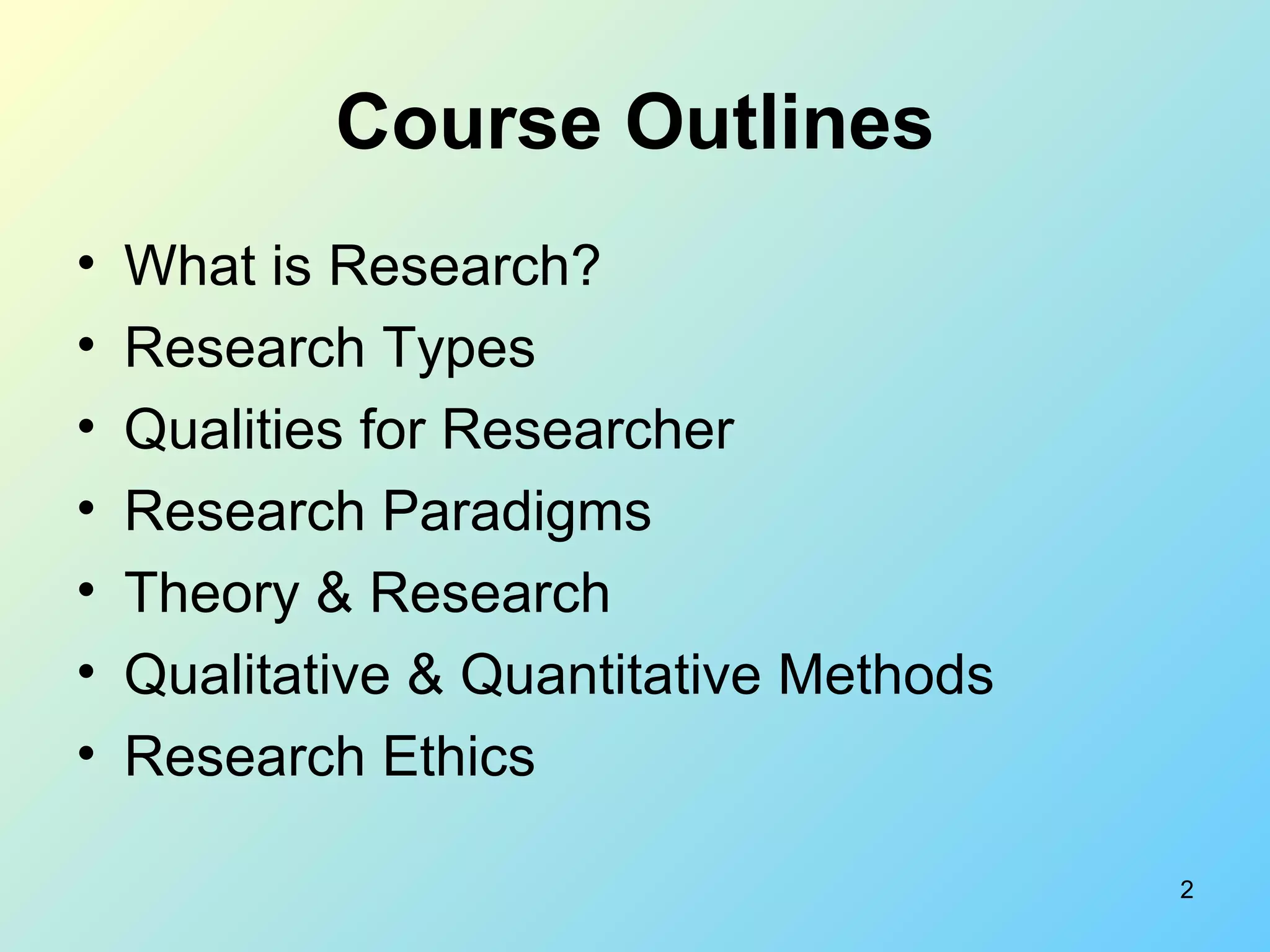
Course Outlines What is Research? Research Types Qualities for Researcher Research Paradigms Theory & Research  Qualitative & Quantitative Methods Research Ethics
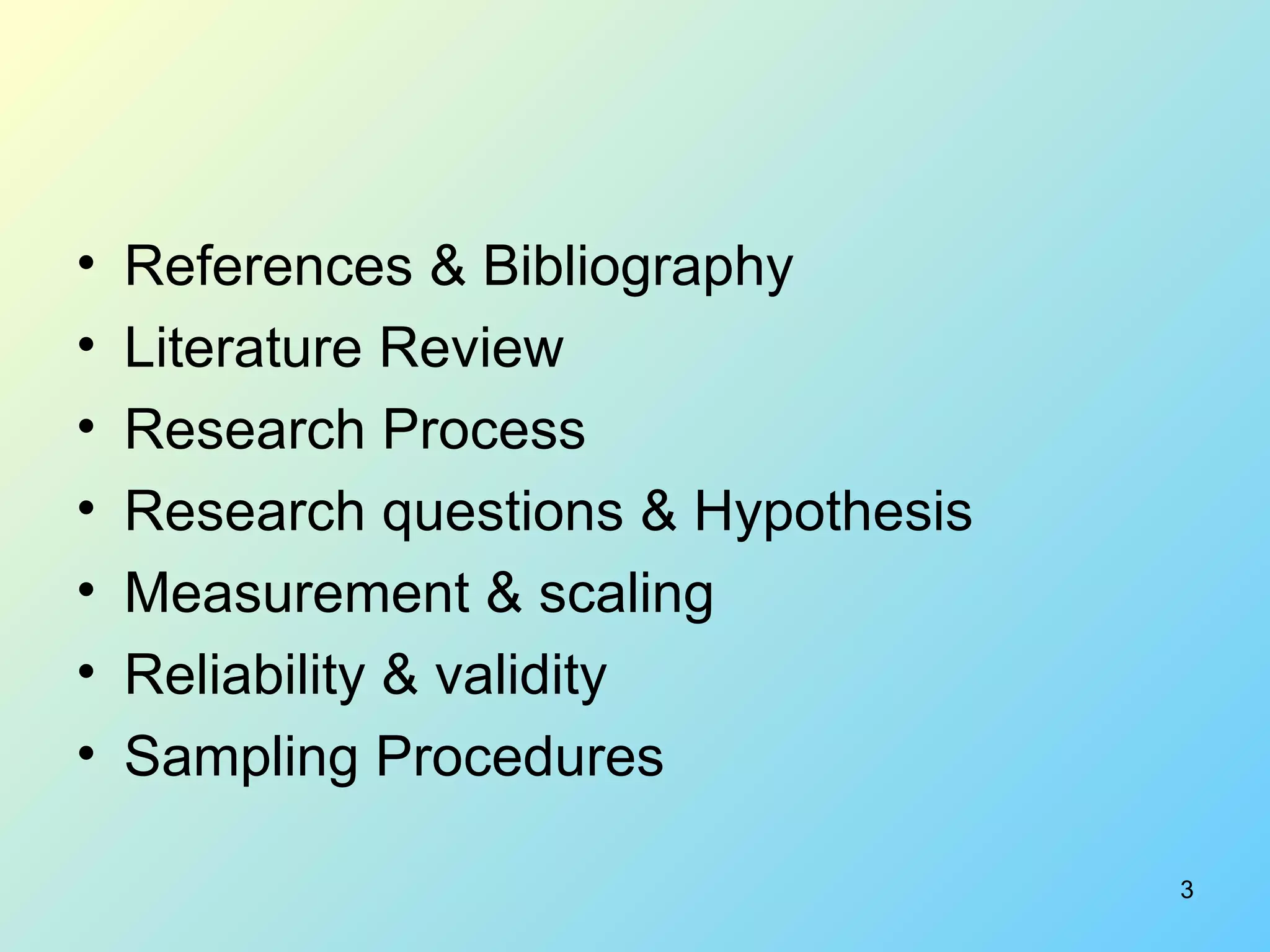
References & Bibliography  Literature Review Research Process Research questions & Hypothesis Measurement & scaling  Reliability & validity Sampling Procedures
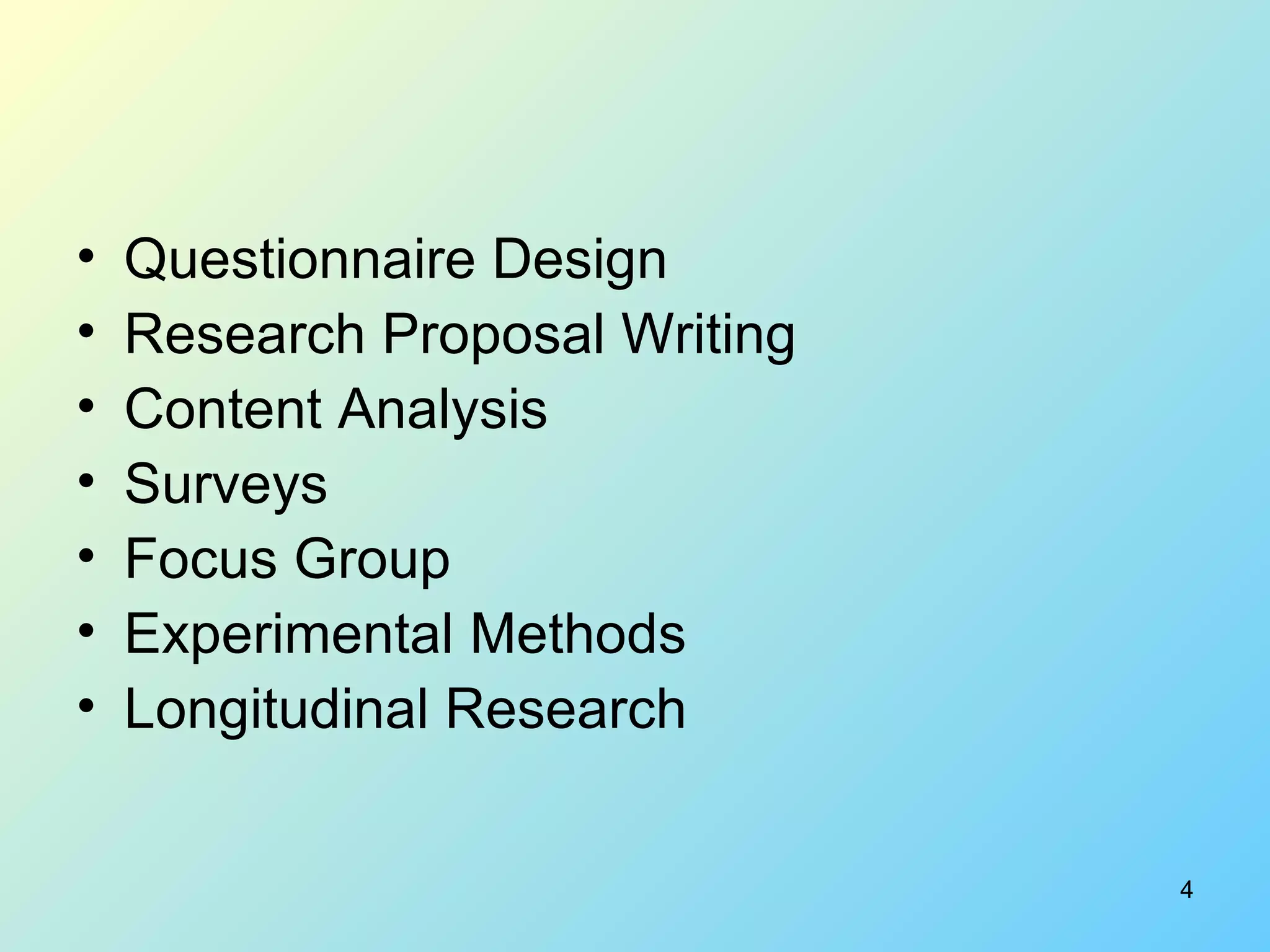
Questionnaire Design Research Proposal Writing  Content Analysis Surveys Focus Group Experimental Methods Longitudinal Research
Participant Observation  Case Studies Using Secondary Data Analysis of Qualitative data Analysis of Quantitative data Research Report Writing
RESERACH Re  ----------------  Search Re   means  (once more, afresh, anew)   OR  (back; with return to a previous state)  Search  means  (look thorough or go over thoroughly to look something)  OR  (examine to find anything concealed)
Talky CEO wants to launch its company in Pakistan?
He is in a process of  Decision Making
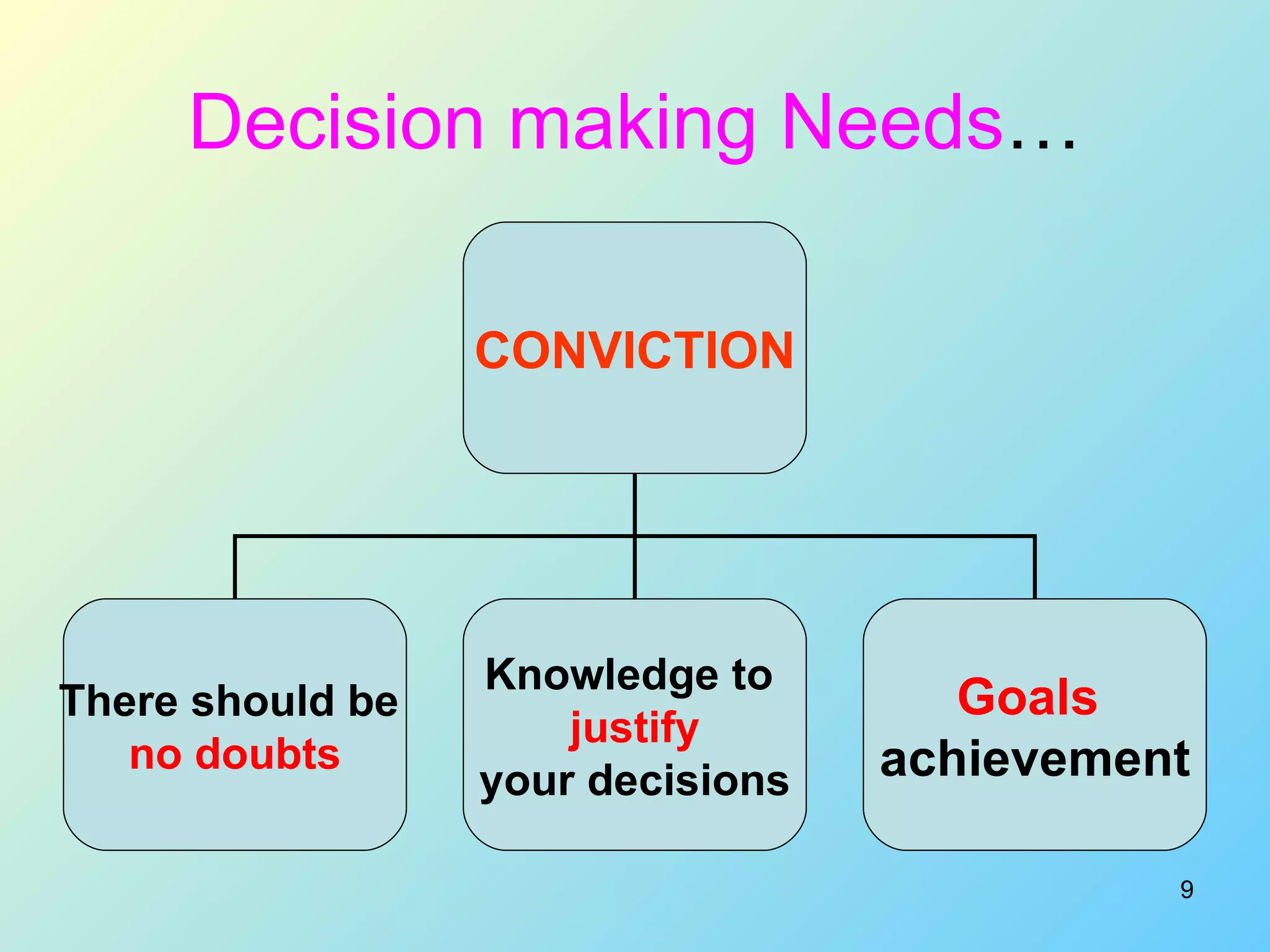
Decision making Needs … CONVICTION There should be  no doubts Knowledge to  justify your decisions Goals  achievement
Research? Research is an  ORGANIZED  and  SYSTEMATIC  way of  FINDING ANSWERS  to  QUESTIONS .
SYSTEMATIC because there is a definite set of procedures and steps which you will follow. There are certain things in the research process which are always done in order to get the most accurate results.
ORGANIZED in that there is a structure or method in going about doing research. It is a planned procedure, not a spontaneous one. It is focused and limited to a specific scope.
FINDING ANSWERS   is the end of all research. Whether it is the answer to a hypothesis or even a simple question, research is successful when we find answers. Sometimes the answer is no, but it is still an answer.
QUESTIONS   are central to research. If there is no question, then the answer is of no use. Research is focused on relevant, useful, and important questions. Without a question, research has no focus, drive, or purpose.
Defining Research  1). A collection of methods and  methodologies that researchers apply  systematically to produce scientifically  based knowledge about the social  world. (Neuman)
Methodology: Methodology & methods, two terms are often treated as synonyms. Methodology is broader and envelops methods. It is understanding the social-organizational context, philosophical assumptions, ethical principals and political issues of the enterprise of researchers who use methods.
Methods: Methods are set of specific techniques for selecting cases, measuring and observing aspects of social life, gathering and refining data, analyzing data and reporting on results.
Defining Research  2).  Research must be systematic and follow  a series of steps and a rigid standard  protocol. These rules are broadly similar but may vary slightly between the different fields of science.
Research is used as  Basis of knowledge
Alternative to Research  Authority Tradition Common sense Media myths Personal experience
1). Authority When you accept something as true just because someone in a position of authority says it is true or it is an authoritative publication, you are using authority  as basis of knowledge. Parents, Teachers, Books.
2). Tradition Tradition is a special case of authority-the authority of the past. It means you accept something as being true because “it’s the way things have always been.
3). Common Sense You rely on what everyone knows and what “just makes sense”. It is about ordinary reasoning. It can originate from tradition
4). Media Myths Media tends to perpetuate the myths of a culture.
5). Personal Experience If something happens to you, if you personally experience it or see it, you accept it as true.
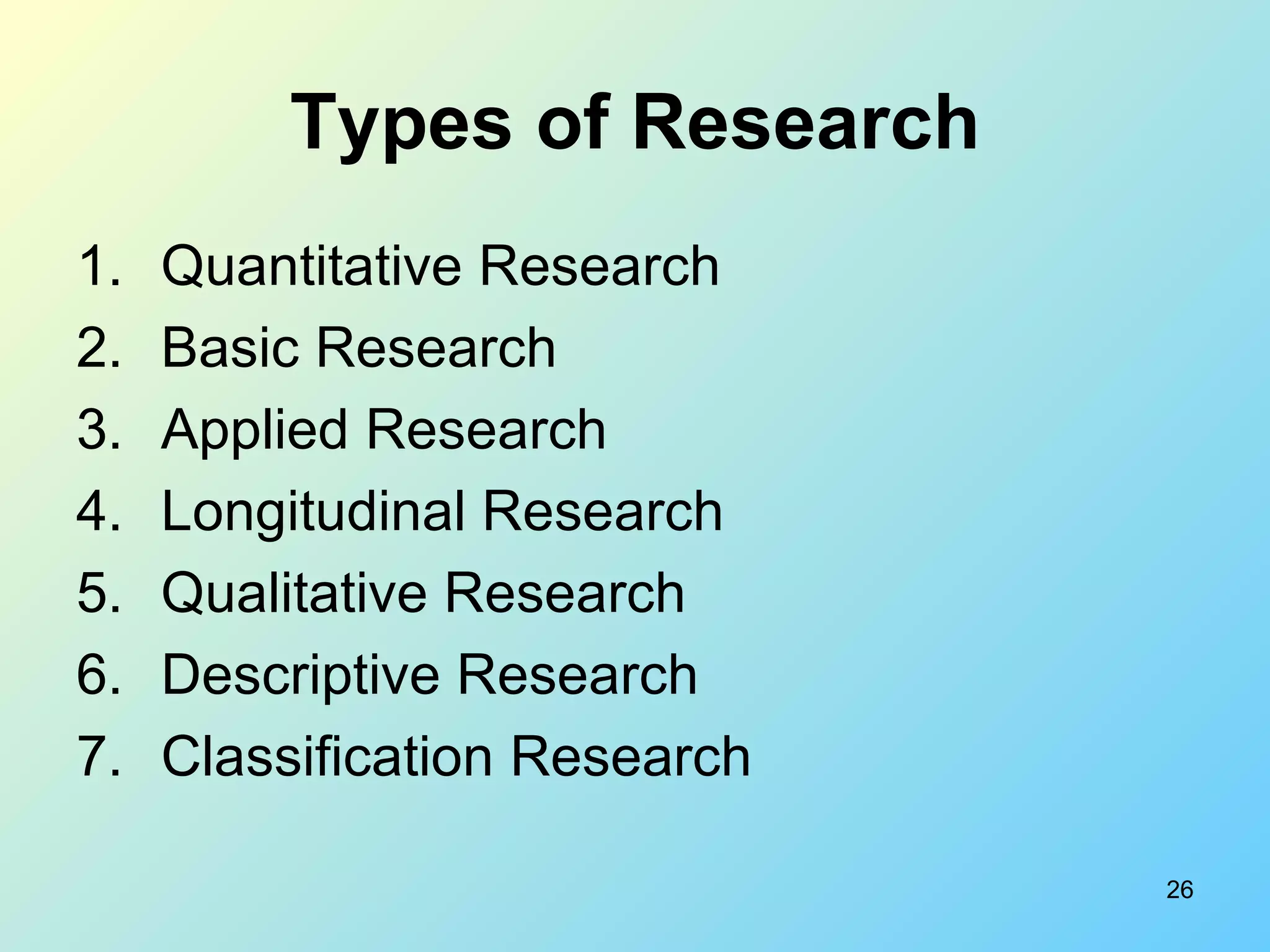
Types of Research Quantitative Research Basic Research Applied Research Longitudinal Research Qualitative Research Descriptive Research Classification Research
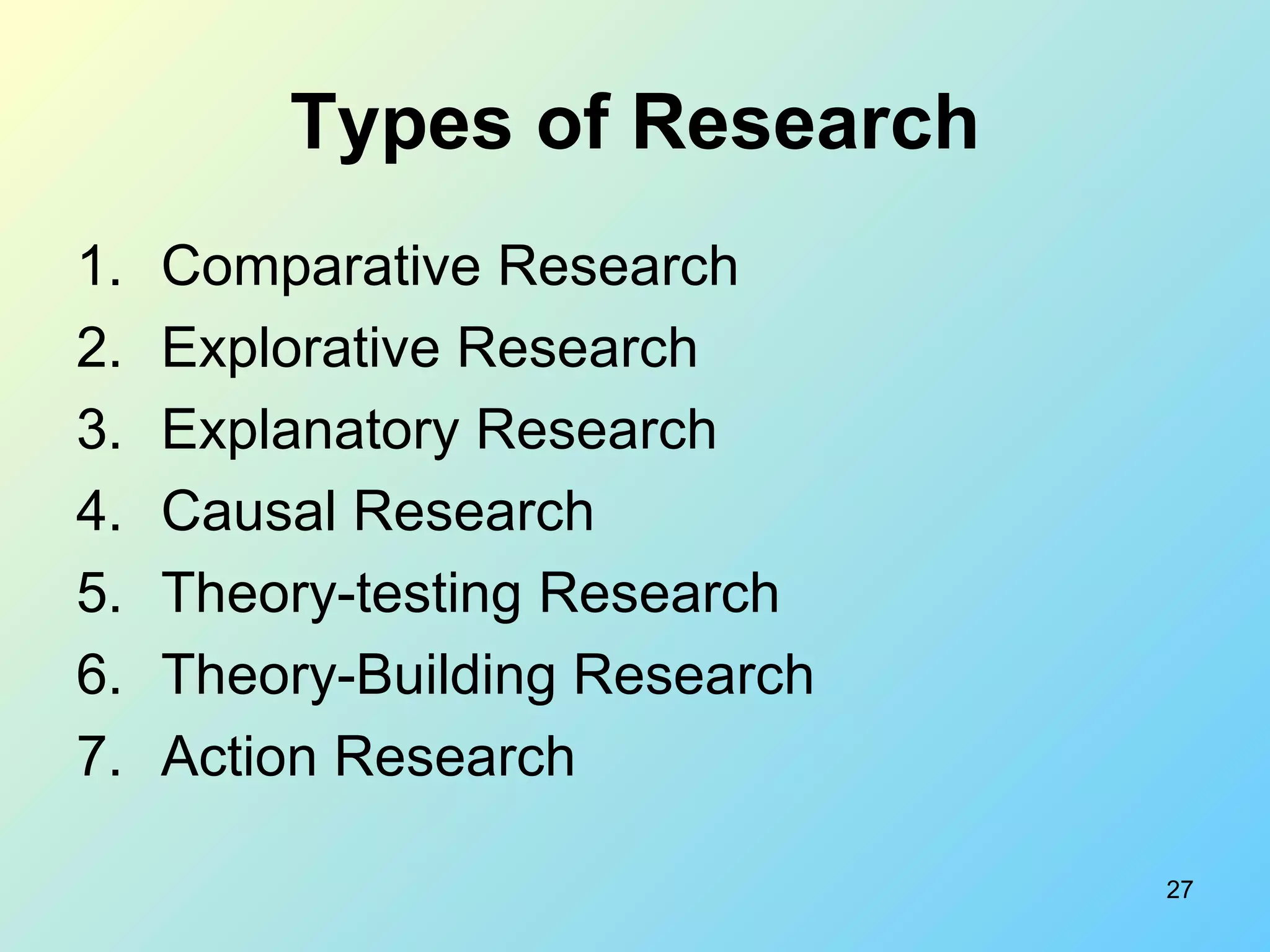
Types of Research Comparative Research Explorative Research Explanatory Research  Causal Research Theory-testing Research Theory-Building Research Action Research
1). Quantitative Research It is based on methodological principals of positivism and neo-positivism  It adheres to standards of strict research design. Statistical analysis is used in it.
2). Basic Research Purpose of gaining knowledge It advanced understanding about social world  Help in supporting & rejecting existing hypothesis & theories
3). Applied Research Aims at solving specific problems Aims at establishing policy programs that will help to improve social life Types of applied research are action research, social impact studies, cost-benefit analysis, evaluation research
4). Longitudinal Research It involves study of sample at more than one point in time or occasion e.g. Trend studies, Panel studies
4A). Cross sectional Research It involves study of many cases at one point in time or occasion
5). Qualitative Research   It is based on methodological principals of phenomenology, symbolic interactionism, hermeneutics. It aims at exploration of social world. Lazarsfeld:  following elements are there….exploration, relationship discovery, establishing construct, testing hypothesis.
6). Descriptive Research Usually it forms preliminary study of a research project. It aims at describe social events, relations and events. It provides background information about an event in question.
7). Classification research It aims at categorization of units into groups To demonstrate differences To explain relationships
8). Comparative Research To identify similarities and differences between units at all levels.
9). Exploratory Research It aims at gaining information about an issue in hand.
10).   Explanatory Research   It aims at explaining social relations and events. To build, test or revise a theory.
11). Causal Research   It aims at establishing cause and effect relationship among variables.
12). Theory testing Research It aims at testing validity of a theory
13). Theory building Research   To establish and formulate theory
14). Action Research It is application of fact findings to practical problem solving in a social situation with a view to improve quality of action within it, involving collaboration and cooperation of researchers, practitioners and laymen. It can be situational (diagnose a problem and attempts to solve it), collaborative, participatory (researcher take part in implementation of findings) and self-evaluation (it involves constant evaluation and adjustment of research and practice)

Definition and types of research

  • 1.
  • 2.
    Course Outlines Whatis Research? Research Types Qualities for Researcher Research Paradigms Theory & Research Qualitative & Quantitative Methods Research Ethics
  • 3.
    References & Bibliography Literature Review Research Process Research questions & Hypothesis Measurement & scaling Reliability & validity Sampling Procedures
  • 4.
    Questionnaire Design ResearchProposal Writing Content Analysis Surveys Focus Group Experimental Methods Longitudinal Research
  • 5.
    Participant Observation Case Studies Using Secondary Data Analysis of Qualitative data Analysis of Quantitative data Research Report Writing
  • 6.
    RESERACH Re ---------------- Search Re means (once more, afresh, anew) OR (back; with return to a previous state) Search means (look thorough or go over thoroughly to look something) OR (examine to find anything concealed)
  • 7.
    Talky CEO wantsto launch its company in Pakistan?
  • 8.
    He is ina process of Decision Making
  • 9.
    Decision making Needs… CONVICTION There should be no doubts Knowledge to justify your decisions Goals achievement
  • 10.
    Research? Research isan ORGANIZED and SYSTEMATIC way of FINDING ANSWERS to QUESTIONS .
  • 11.
    SYSTEMATIC because thereis a definite set of procedures and steps which you will follow. There are certain things in the research process which are always done in order to get the most accurate results.
  • 12.
    ORGANIZED in thatthere is a structure or method in going about doing research. It is a planned procedure, not a spontaneous one. It is focused and limited to a specific scope.
  • 13.
    FINDING ANSWERS is the end of all research. Whether it is the answer to a hypothesis or even a simple question, research is successful when we find answers. Sometimes the answer is no, but it is still an answer.
  • 14.
    QUESTIONS are central to research. If there is no question, then the answer is of no use. Research is focused on relevant, useful, and important questions. Without a question, research has no focus, drive, or purpose.
  • 15.
    Defining Research 1). A collection of methods and methodologies that researchers apply systematically to produce scientifically based knowledge about the social world. (Neuman)
  • 16.
    Methodology: Methodology &methods, two terms are often treated as synonyms. Methodology is broader and envelops methods. It is understanding the social-organizational context, philosophical assumptions, ethical principals and political issues of the enterprise of researchers who use methods.
  • 17.
    Methods: Methods areset of specific techniques for selecting cases, measuring and observing aspects of social life, gathering and refining data, analyzing data and reporting on results.
  • 18.
    Defining Research 2). Research must be systematic and follow a series of steps and a rigid standard protocol. These rules are broadly similar but may vary slightly between the different fields of science.
  • 19.
    Research is usedas Basis of knowledge
  • 20.
    Alternative to Research Authority Tradition Common sense Media myths Personal experience
  • 21.
    1). Authority Whenyou accept something as true just because someone in a position of authority says it is true or it is an authoritative publication, you are using authority as basis of knowledge. Parents, Teachers, Books.
  • 22.
    2). Tradition Traditionis a special case of authority-the authority of the past. It means you accept something as being true because “it’s the way things have always been.
  • 23.
    3). Common SenseYou rely on what everyone knows and what “just makes sense”. It is about ordinary reasoning. It can originate from tradition
  • 24.
    4). Media MythsMedia tends to perpetuate the myths of a culture.
  • 25.
    5). Personal ExperienceIf something happens to you, if you personally experience it or see it, you accept it as true.
  • 26.
    Types of ResearchQuantitative Research Basic Research Applied Research Longitudinal Research Qualitative Research Descriptive Research Classification Research
  • 27.
    Types of ResearchComparative Research Explorative Research Explanatory Research Causal Research Theory-testing Research Theory-Building Research Action Research
  • 28.
    1). Quantitative ResearchIt is based on methodological principals of positivism and neo-positivism It adheres to standards of strict research design. Statistical analysis is used in it.
  • 29.
    2). Basic ResearchPurpose of gaining knowledge It advanced understanding about social world Help in supporting & rejecting existing hypothesis & theories
  • 30.
    3). Applied ResearchAims at solving specific problems Aims at establishing policy programs that will help to improve social life Types of applied research are action research, social impact studies, cost-benefit analysis, evaluation research
  • 31.
    4). Longitudinal ResearchIt involves study of sample at more than one point in time or occasion e.g. Trend studies, Panel studies
  • 32.
    4A). Cross sectionalResearch It involves study of many cases at one point in time or occasion
  • 33.
    5). Qualitative Research It is based on methodological principals of phenomenology, symbolic interactionism, hermeneutics. It aims at exploration of social world. Lazarsfeld: following elements are there….exploration, relationship discovery, establishing construct, testing hypothesis.
  • 34.
    6). Descriptive ResearchUsually it forms preliminary study of a research project. It aims at describe social events, relations and events. It provides background information about an event in question.
  • 35.
    7). Classification researchIt aims at categorization of units into groups To demonstrate differences To explain relationships
  • 36.
    8). Comparative ResearchTo identify similarities and differences between units at all levels.
  • 37.
    9). Exploratory ResearchIt aims at gaining information about an issue in hand.
  • 38.
    10). Explanatory Research It aims at explaining social relations and events. To build, test or revise a theory.
  • 39.
    11). Causal Research It aims at establishing cause and effect relationship among variables.
  • 40.
    12). Theory testingResearch It aims at testing validity of a theory
  • 41.
    13). Theory buildingResearch To establish and formulate theory
  • 42.
    14). Action ResearchIt is application of fact findings to practical problem solving in a social situation with a view to improve quality of action within it, involving collaboration and cooperation of researchers, practitioners and laymen. It can be situational (diagnose a problem and attempts to solve it), collaborative, participatory (researcher take part in implementation of findings) and self-evaluation (it involves constant evaluation and adjustment of research and practice)