SELECTION OF A SAMPLE
By
Dr.Shazia Zamir
Contents
SELECTION OF A SAMPLE
- The Simple Random Sample
- The Systematic Sample
- The Stratified Random Sample
- The Area or Cluster Sample
TYPES OF SAMPLE
- Probability sampling
- Non-probability sampling
Population
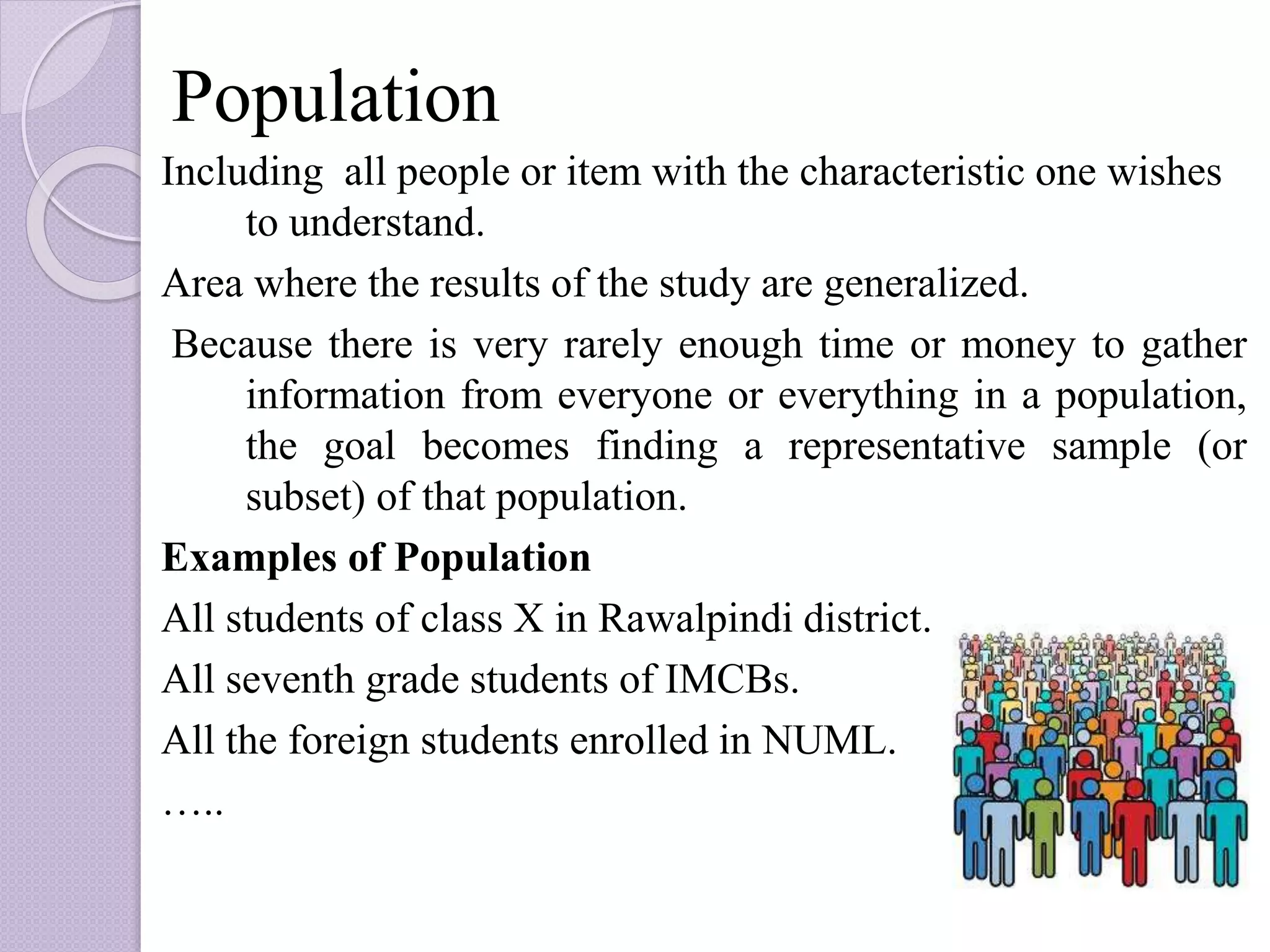
Including all people or item with the characteristic one wishes
to understand.
Area where the results of the study are generalized.
Because there is very rarely enough time or money to gather
information from everyone or everything in a population,
the goal becomes finding a representative sample (or
subset) of that population.
Examples of Population
All students of class X in Rawalpindi district.
All seventh grade students of IMCBs.
All the foreign students enrolled in NUML.
…..
SAMPLE
- A smaller group, which is selected from the
population to be included in the research.
- Sample has to be representative of characteristics of
the population.
- Results are drawn from the sample and
generalized to the entire population.
- Sample size depends upon the requirements of the
research.
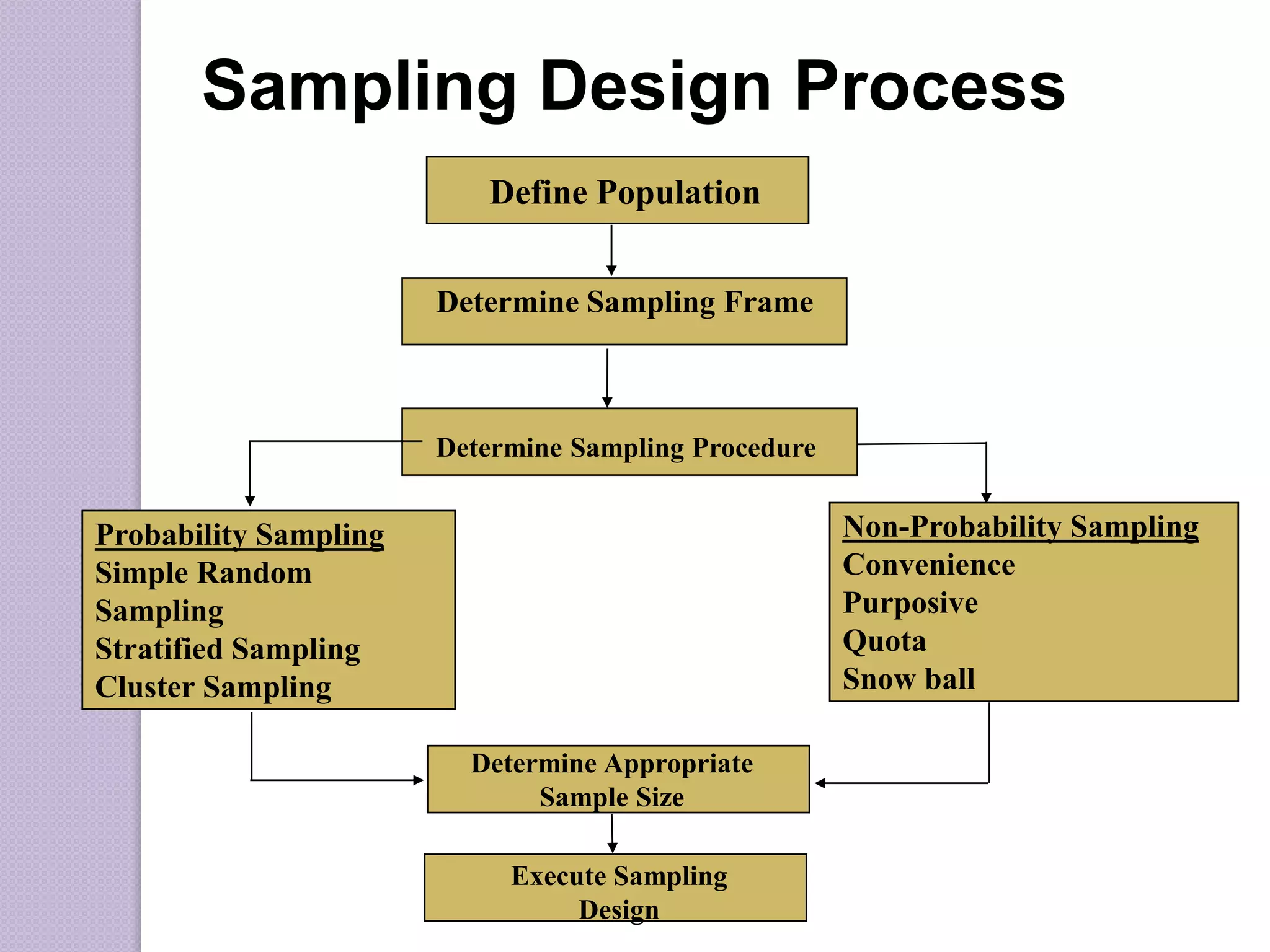
Sampling Design Process
Define Population
Determine Sampling Frame
Determine Sampling Procedure
Probability Sampling
Simple Random
Sampling
Stratified Sampling
Cluster Sampling
Non-Probability Sampling
Convenience
Purposive
Quota
Snow ball
Determine Appropriate
Sample Size
Execute Sampling
Design
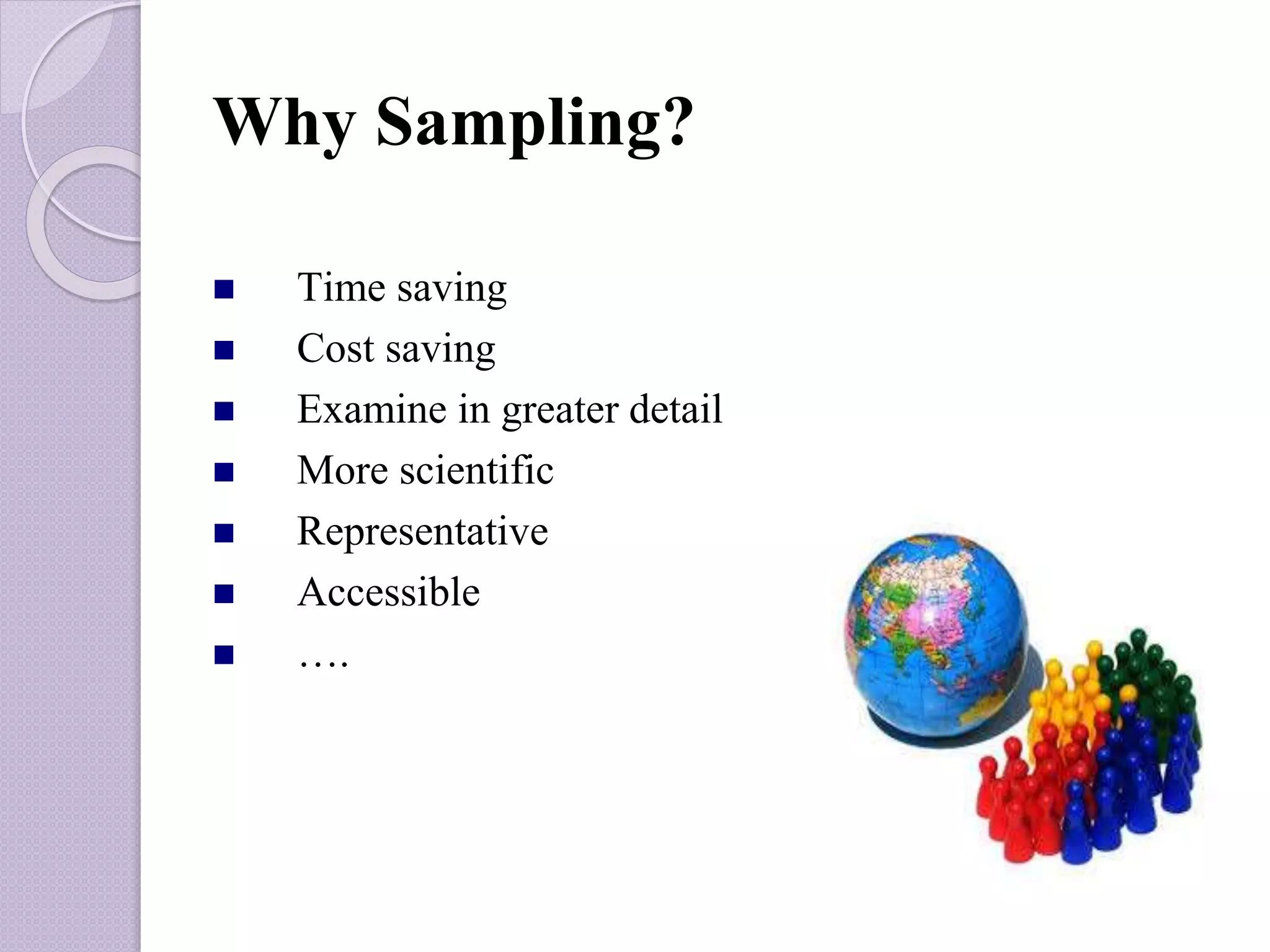
Why Sampling?
 Time saving
 Cost saving
 Examine in greater detail
 More scientific
 Representative
 Accessible
 ….
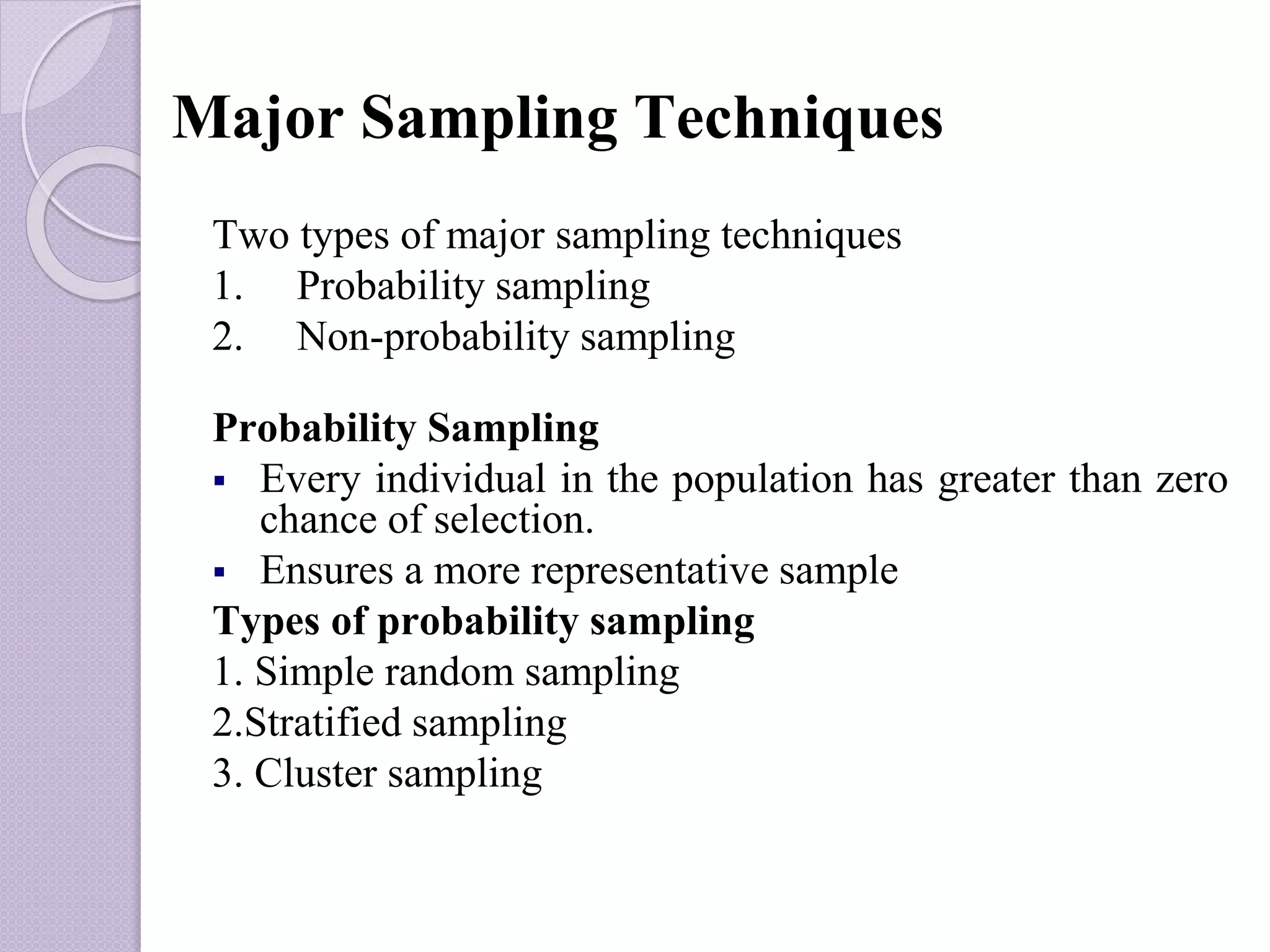
Major Sampling Techniques
Two types of major sampling techniques
1. Probability sampling
2. Non-probability sampling
Probability Sampling
 Every individual in the population has greater than zero
chance of selection.
 Ensures a more representative sample
Types of probability sampling
1. Simple random sampling
2.Stratified sampling
3. Cluster sampling
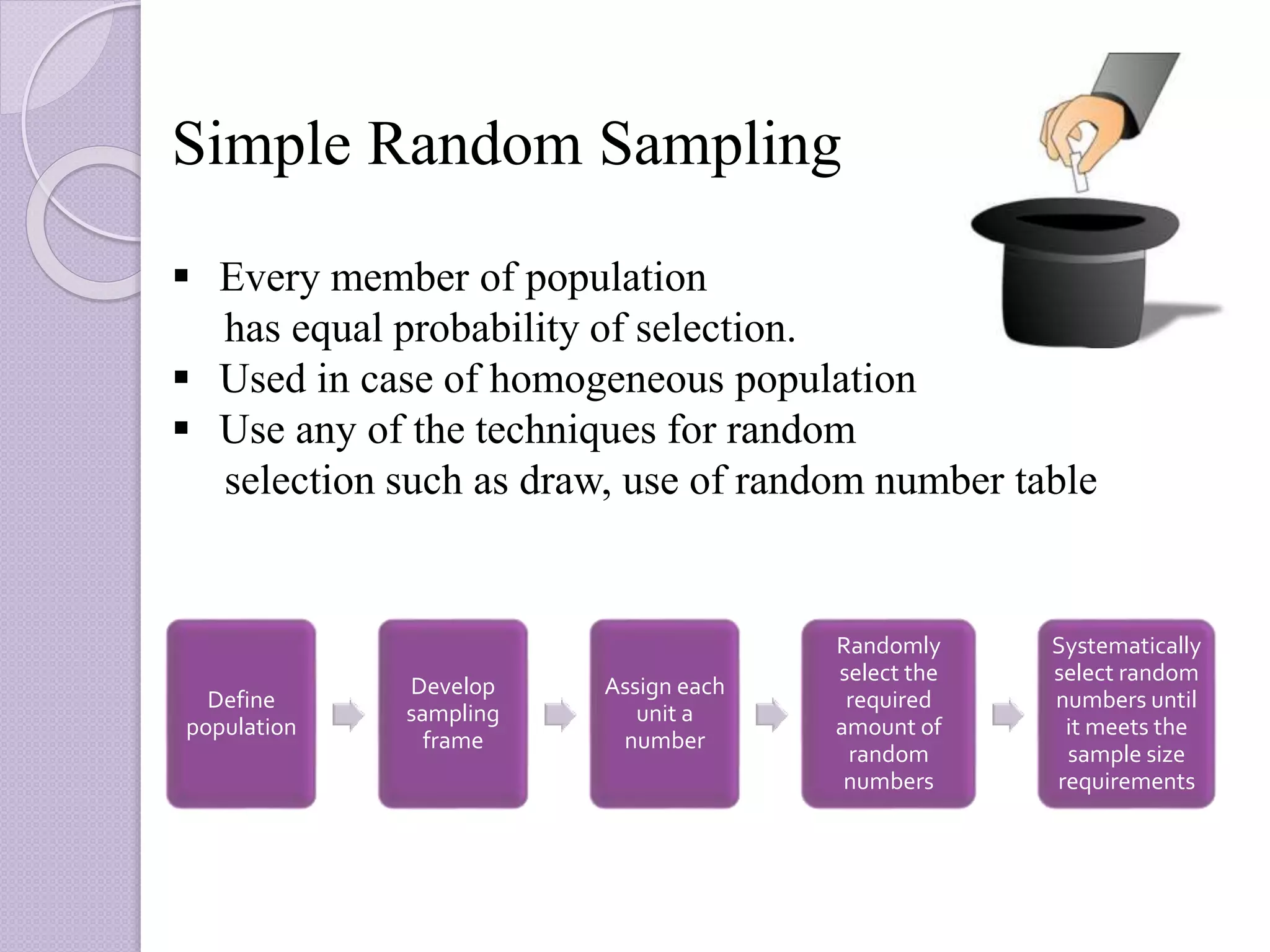
Simple Random Sampling
Define
population
Develop
sampling
frame
Assign each
unit a
number
Randomly
select the
required
amount of
random
numbers
Systematically
select random
numbers until
it meets the
sample size
requirements
 Every member of population
has equal probability of selection.
 Used in case of homogeneous population
 Use any of the techniques for random
selection such as draw, use of random number table
Stratified Sampling
 Where population embraces a number of distinct
categories, the frame can be organized into separate
"strata." Each stratum is then sampled as an independent
sub-population, out of which individual elements can be
randomly selected. Every unit in a stratum has same chance
of being selected.
 Using same sampling fraction for all strata ensures
proportionate representation in the sample.
 Adequate representation of minority subgroups of interest
can be ensured by stratification & varying sampling
fraction between strata as required.
9
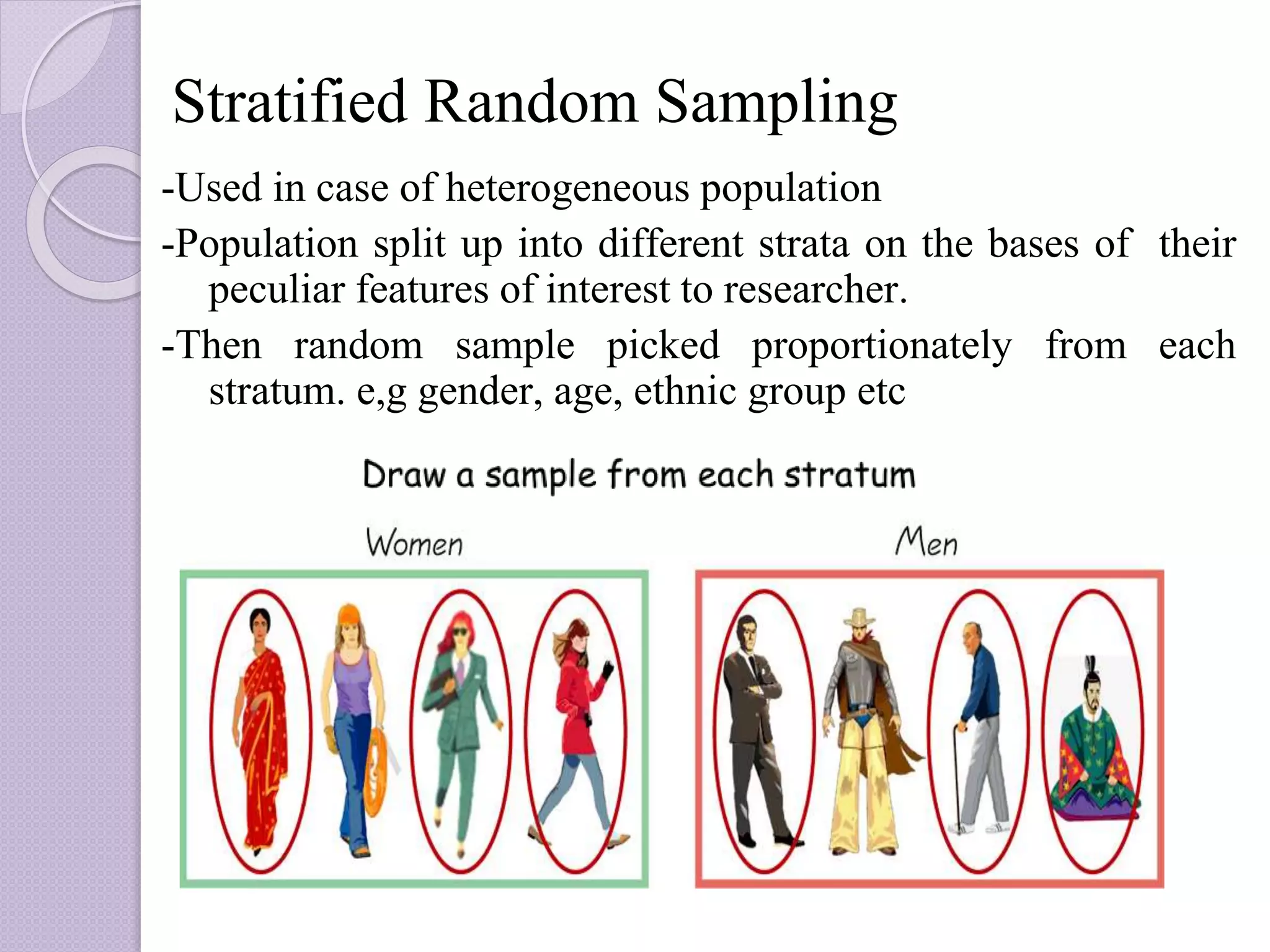
Stratified Random Sampling
-Used in case of heterogeneous population
-Population split up into different strata on the bases of their
peculiar features of interest to researcher.
-Then random sample picked proportionately from each
stratum. e,g gender, age, ethnic group etc
Cluster Sampling
Selecting a sample based on specific, naturally occurring
groups (clusters) within a population.
Example: randomly selecting 10 public sector universities
from a list of all public sector universities in Pakistan.
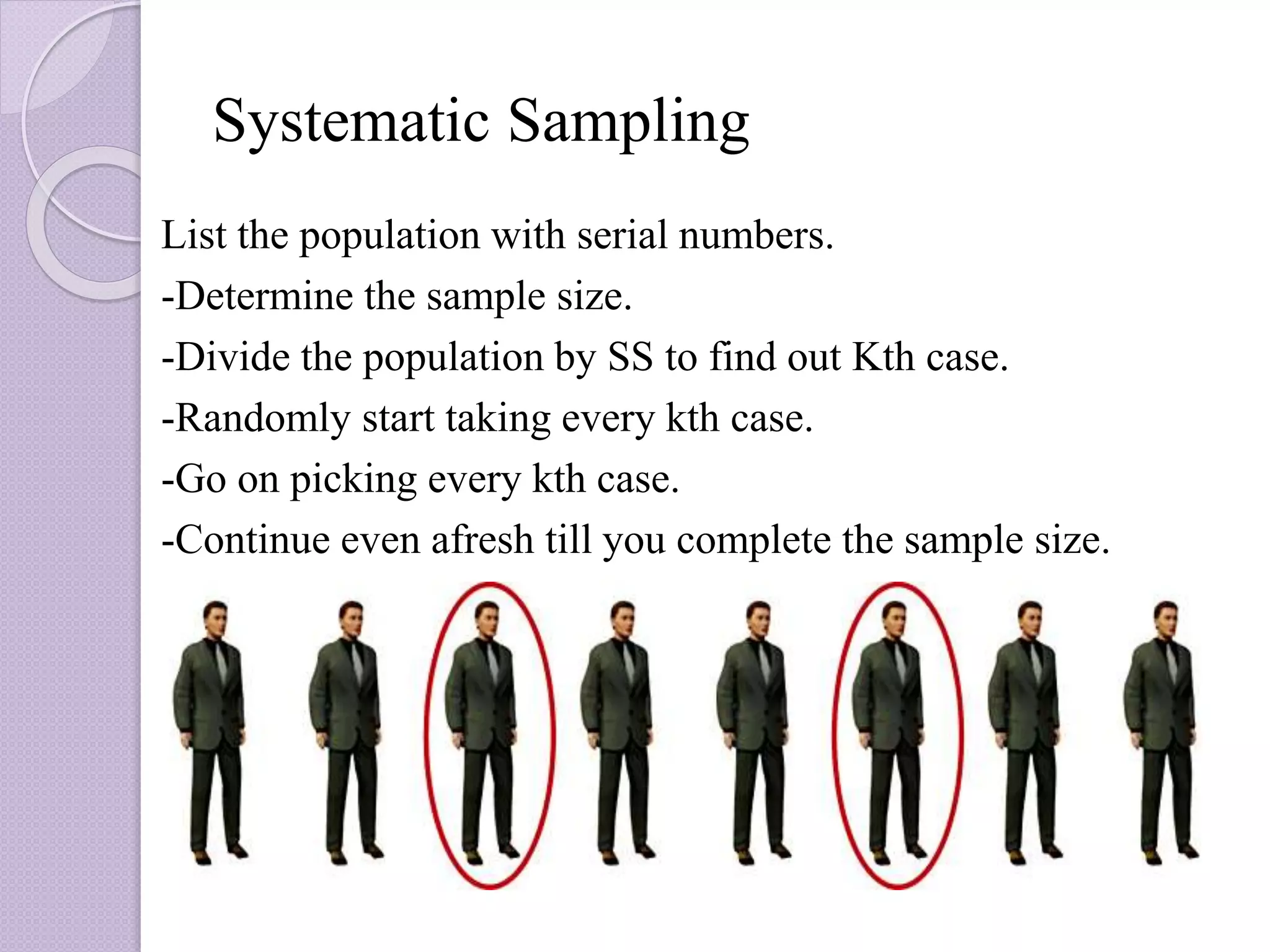
Systematic Sampling
List the population with serial numbers.
-Determine the sample size.
-Divide the population by SS to find out Kth case.
-Randomly start taking every kth case.
-Go on picking every kth case.
-Continue even afresh till you complete the sample size.
Non-Probability Sampling
- Where in every member doesn’t have equal chance
of selection.
1. Purposive Sampling
Look for the population of your interest e.g. in
selecting a school to perform experiment in
methods of teaching.
2. Quota Sampling
Just as in case of SRS, except that you purposefully
select certain cases/units to give representation to
cover the quota.
3. Snowball Sampling
Ask the sample to identify another one and go on till
the completion of sample size.
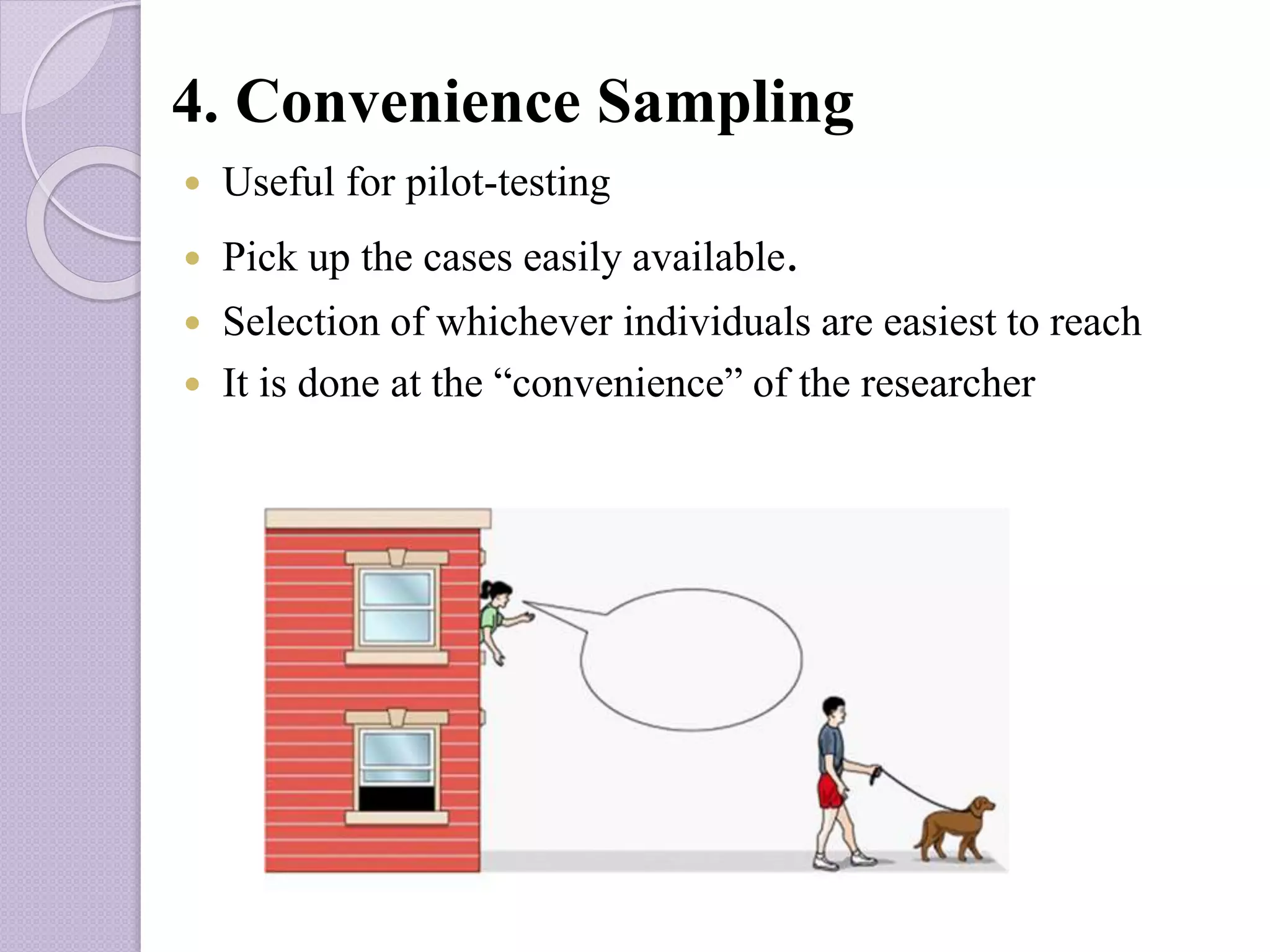
4. Convenience Sampling
 Useful for pilot-testing
 Pick up the cases easily available.
 Selection of whichever individuals are easiest to reach
 It is done at the “convenience” of the researcher

Selection of a sample

  • 1.
    SELECTION OF ASAMPLE By Dr.Shazia Zamir
  • 2.
    Contents SELECTION OF ASAMPLE - The Simple Random Sample - The Systematic Sample - The Stratified Random Sample - The Area or Cluster Sample TYPES OF SAMPLE - Probability sampling - Non-probability sampling
  • 3.
    Population Including all peopleor item with the characteristic one wishes to understand. Area where the results of the study are generalized. Because there is very rarely enough time or money to gather information from everyone or everything in a population, the goal becomes finding a representative sample (or subset) of that population. Examples of Population All students of class X in Rawalpindi district. All seventh grade students of IMCBs. All the foreign students enrolled in NUML. …..
  • 4.
    SAMPLE - A smallergroup, which is selected from the population to be included in the research. - Sample has to be representative of characteristics of the population. - Results are drawn from the sample and generalized to the entire population. - Sample size depends upon the requirements of the research.
  • 5.
    Sampling Design Process DefinePopulation Determine Sampling Frame Determine Sampling Procedure Probability Sampling Simple Random Sampling Stratified Sampling Cluster Sampling Non-Probability Sampling Convenience Purposive Quota Snow ball Determine Appropriate Sample Size Execute Sampling Design
  • 6.
    Why Sampling?  Timesaving  Cost saving  Examine in greater detail  More scientific  Representative  Accessible  ….
  • 7.
    Major Sampling Techniques Twotypes of major sampling techniques 1. Probability sampling 2. Non-probability sampling Probability Sampling  Every individual in the population has greater than zero chance of selection.  Ensures a more representative sample Types of probability sampling 1. Simple random sampling 2.Stratified sampling 3. Cluster sampling
  • 8.
    Simple Random Sampling Define population Develop sampling frame Assigneach unit a number Randomly select the required amount of random numbers Systematically select random numbers until it meets the sample size requirements  Every member of population has equal probability of selection.  Used in case of homogeneous population  Use any of the techniques for random selection such as draw, use of random number table
  • 9.
    Stratified Sampling  Wherepopulation embraces a number of distinct categories, the frame can be organized into separate "strata." Each stratum is then sampled as an independent sub-population, out of which individual elements can be randomly selected. Every unit in a stratum has same chance of being selected.  Using same sampling fraction for all strata ensures proportionate representation in the sample.  Adequate representation of minority subgroups of interest can be ensured by stratification & varying sampling fraction between strata as required. 9
  • 10.
    Stratified Random Sampling -Usedin case of heterogeneous population -Population split up into different strata on the bases of their peculiar features of interest to researcher. -Then random sample picked proportionately from each stratum. e,g gender, age, ethnic group etc
  • 11.
    Cluster Sampling Selecting asample based on specific, naturally occurring groups (clusters) within a population. Example: randomly selecting 10 public sector universities from a list of all public sector universities in Pakistan.
  • 12.
    Systematic Sampling List thepopulation with serial numbers. -Determine the sample size. -Divide the population by SS to find out Kth case. -Randomly start taking every kth case. -Go on picking every kth case. -Continue even afresh till you complete the sample size.
  • 13.
    Non-Probability Sampling - Wherein every member doesn’t have equal chance of selection. 1. Purposive Sampling Look for the population of your interest e.g. in selecting a school to perform experiment in methods of teaching. 2. Quota Sampling Just as in case of SRS, except that you purposefully select certain cases/units to give representation to cover the quota. 3. Snowball Sampling Ask the sample to identify another one and go on till the completion of sample size.
  • 14.
    4. Convenience Sampling Useful for pilot-testing  Pick up the cases easily available.  Selection of whichever individuals are easiest to reach  It is done at the “convenience” of the researcher