Educational Research 
Concept , Need and Classification
Research... 
 The systematic application of a family of 
methods employed to provide 
trustworthy information about problems 
…an ongoing process based on many 
accumulated understandings and 
explanations that, when taken together 
lead to generalizations about problems 
and the development of theories
How do we Know ? 
 Five ways we can know something 
 Personal experience 
 Tradition 
 Experts and authorities 
 Logic 
 Inductive 
 Deductive 
 The scientific method
Exploring Ways of Knowing 
 Personal experience 
 Relying on one’s knowledge of prior 
experiences 
 Limitations 
 How one is affected by an event depends on 
who one is 
 One frequently needs to know something that 
cannot by learned through experience
Exploring Ways of Knowing 
 Tradition 
 Doing things as they have always been done 
 Limitations 
 Traditions are often based on an idealized past 
 Traditions can be distant from current realities and the 
complexities associated with them 
 Experts or authorities 
 Relying on the expertise or authority of others 
 Limitations 
 Experts can be wrong 
 Experts can disagree among themselves, as in a 
“second opinion”
Exploring Ways of Knowing 
 Inductive reasoning 
 Reasoning from the specific to the general 
 Limitations 
 In order to be certain of a conclusion one must 
observe all examples 
 All examples can be observed only in very 
limited situations where there are few members 
of the group
Exploring Ways of Knowing 
 Deductive reasoning 
 Reasoning from the general to the specific 
 Limitations 
 You must begin with true premises in order to 
arrive at true conclusions 
 Deductive reasoning only organizes what is 
already known
The Scientific Method 
 The goal of the scientific method is to explain, 
predict, and/or control phenomena 
 This involves the acquisition of knowledge 
and the development and testing of theory 
 The use of the scientific method is more 
efficient and reliable than any other source of 
knowledge
The Scientific Method 
 Five steps in the scientific method 
 Recognition and definition of the problem 
 Formulation of hypotheses 
 Collection of data 
 Analysis of data 
 Stating conclusions
Educational Research ? 
 The application of the scientific method 
to study educational problems 
 The goal is to explain, predict, and/or 
control educational phenomena
Educational Research 
 Steps for conducting educational research 
 Selection of a problem 
 Use of specific research procedures to design and 
collect data 
 Analysis of data 
 Statement of conclusions based on the results of 
the data analyses 
 Parallels the steps in the scientific method
Classifying Research 
 Two helpful ways to view research 
 Purpose 
 The degree of direct applicability of research to 
educational practices and settings 
 Method 
 The overall strategies followed to collect and 
analyze data
Type of Research by 
Purposes 
 Five categories 
 Basic 
 Applied 
 Evaluation 
 Research and development (R & D) 
 Action
Type of Research by 
Purposes 
 Basic research 
 Collection and analysis of data to develop 
or enhance theory 
 Examples related to learning theory 
 Piaget 
 Constructivism 
 Mastery learning 
 Gardner’s multiple intelligences
Type of Research by 
Purposes 
 Applied research 
 Collection and analysis of data to examine the 
usefulness of theory in solving practical 
educational problems 
 Examples 
 Developing a seventh grade social studies curriculum 
around a problem-solving approach to learning 
 Examining the effectiveness of a computer-based 
algebra program developed around a mastery learning 
approach 
 Accommodating varied learning styles when teaching 
lessons in modern literature
Type of Research by 
Purposes 
 Evaluation research 
 The collection and analysis of data to make 
decisions related to the merit or worth of a 
specific program 
 Merit relates to a program accomplishing what 
it was supposed to accomplish 
 Worth relates to the value attached to a 
program by those using it
The Purposes of Research 
 Evaluation research 
 Types of evaluation 
 Formative evaluation is designed to inform and 
improve a program while it is being developed 
or implemented 
 Summative evaluation is designed to make 
decisions regarding the overall quality of the 
program being evaluated
Type of Research by 
Purposes 
 Evaluation research 
 Examples 
 The computerized algebra program being used 
in Williams Middle School has been installed 
properly, is being used properly, and student 
achievement is increasing as a result of its use 
 The computerized algebra program being used 
in Williams Middle School is perceived to be an 
efficient and effective expenditure of district 
funds
Type of Research by 
Purposes 
 Research and development 
 The development of effective products for 
use in schools 
 Examples 
 The development of the software to create a 
computerized algebra program that 
incorporates an individualized mastery learning 
approach to teaching basic algebraic concepts 
 The development of a Smart Board to enhance 
a teacher’s use of technology in the classroom
Type of Research by 
Purposes 
 Action research 
 The collection and analysis of data to provide a 
solution to the practical, valued problems of 
educators within their own school or organization 
 Examples 
 How can our college move to a performance based 
model for undergraduate teacher preparation programs? 
 How can disciplinary policies be enforced consistently in 
our school?
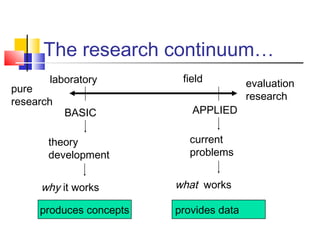
The research continuum… 
laboratory field 
pure 
research 
evaluation 
research 
BASIC APPLIED 
theory 
development 
current 
problems 
why it works what works 
produces concepts provides data

Educational research need concept and types by purpose

  • 1.
    Educational Research Concept, Need and Classification
  • 2.
    Research...  Thesystematic application of a family of methods employed to provide trustworthy information about problems …an ongoing process based on many accumulated understandings and explanations that, when taken together lead to generalizations about problems and the development of theories
  • 3.
    How do weKnow ?  Five ways we can know something  Personal experience  Tradition  Experts and authorities  Logic  Inductive  Deductive  The scientific method
  • 4.
    Exploring Ways ofKnowing  Personal experience  Relying on one’s knowledge of prior experiences  Limitations  How one is affected by an event depends on who one is  One frequently needs to know something that cannot by learned through experience
  • 5.
    Exploring Ways ofKnowing  Tradition  Doing things as they have always been done  Limitations  Traditions are often based on an idealized past  Traditions can be distant from current realities and the complexities associated with them  Experts or authorities  Relying on the expertise or authority of others  Limitations  Experts can be wrong  Experts can disagree among themselves, as in a “second opinion”
  • 6.
    Exploring Ways ofKnowing  Inductive reasoning  Reasoning from the specific to the general  Limitations  In order to be certain of a conclusion one must observe all examples  All examples can be observed only in very limited situations where there are few members of the group
  • 7.
    Exploring Ways ofKnowing  Deductive reasoning  Reasoning from the general to the specific  Limitations  You must begin with true premises in order to arrive at true conclusions  Deductive reasoning only organizes what is already known
  • 8.
    The Scientific Method  The goal of the scientific method is to explain, predict, and/or control phenomena  This involves the acquisition of knowledge and the development and testing of theory  The use of the scientific method is more efficient and reliable than any other source of knowledge
  • 9.
    The Scientific Method  Five steps in the scientific method  Recognition and definition of the problem  Formulation of hypotheses  Collection of data  Analysis of data  Stating conclusions
  • 10.
    Educational Research ?  The application of the scientific method to study educational problems  The goal is to explain, predict, and/or control educational phenomena
  • 11.
    Educational Research Steps for conducting educational research  Selection of a problem  Use of specific research procedures to design and collect data  Analysis of data  Statement of conclusions based on the results of the data analyses  Parallels the steps in the scientific method
  • 12.
    Classifying Research Two helpful ways to view research  Purpose  The degree of direct applicability of research to educational practices and settings  Method  The overall strategies followed to collect and analyze data
  • 13.
    Type of Researchby Purposes  Five categories  Basic  Applied  Evaluation  Research and development (R & D)  Action
  • 14.
    Type of Researchby Purposes  Basic research  Collection and analysis of data to develop or enhance theory  Examples related to learning theory  Piaget  Constructivism  Mastery learning  Gardner’s multiple intelligences
  • 15.
    Type of Researchby Purposes  Applied research  Collection and analysis of data to examine the usefulness of theory in solving practical educational problems  Examples  Developing a seventh grade social studies curriculum around a problem-solving approach to learning  Examining the effectiveness of a computer-based algebra program developed around a mastery learning approach  Accommodating varied learning styles when teaching lessons in modern literature
  • 16.
    Type of Researchby Purposes  Evaluation research  The collection and analysis of data to make decisions related to the merit or worth of a specific program  Merit relates to a program accomplishing what it was supposed to accomplish  Worth relates to the value attached to a program by those using it
  • 17.
    The Purposes ofResearch  Evaluation research  Types of evaluation  Formative evaluation is designed to inform and improve a program while it is being developed or implemented  Summative evaluation is designed to make decisions regarding the overall quality of the program being evaluated
  • 18.
    Type of Researchby Purposes  Evaluation research  Examples  The computerized algebra program being used in Williams Middle School has been installed properly, is being used properly, and student achievement is increasing as a result of its use  The computerized algebra program being used in Williams Middle School is perceived to be an efficient and effective expenditure of district funds
  • 19.
    Type of Researchby Purposes  Research and development  The development of effective products for use in schools  Examples  The development of the software to create a computerized algebra program that incorporates an individualized mastery learning approach to teaching basic algebraic concepts  The development of a Smart Board to enhance a teacher’s use of technology in the classroom
  • 20.
    Type of Researchby Purposes  Action research  The collection and analysis of data to provide a solution to the practical, valued problems of educators within their own school or organization  Examples  How can our college move to a performance based model for undergraduate teacher preparation programs?  How can disciplinary policies be enforced consistently in our school?
  • 21.
    The research continuum… laboratory field pure research evaluation research BASIC APPLIED theory development current problems why it works what works produces concepts provides data