Introduction of Curriculum
Components
By
Dr. Shazia Zamir
Contents
 Definition of Curriculum
 Stages of Curriculum
 Aims, goals and objectives
Todays’ Session’ Objectives
Learners will be able to
 Define curriculum
 Describe stages of curriculum
 Differentiate between aims, goals and
objectives
Curriculum
 The word "curriculum" began as a
Latin word which means "a race" or
"the course of a race" (which in turn
derives from the verb currere meaning
"to run/to proceed")
https://en.wikipedia.org/wiki/Curriculum
Curriculum
Curriculum is defined as
The term curriculum refers to the lessons and
academic content taught in a school or in a
specific course or program.
http://edglossary.org/curriculum/
Concept cont……
Tanner & Tanner,2007 offers the following
definition, derived from Dewey’s definition of
education
“That reconstruction of knowledge and experience
that enables the learner to grow in exercising
intelligent control of subsequent
knowledge and experience”
Curriculum Development
It is defined as the process of selecting,
organizing, executing, and evaluating
learning experiences on the basis of the
needs, abilities and interests of the
learners and the nature of the society or
community.
http://www.ibe.unesco.org
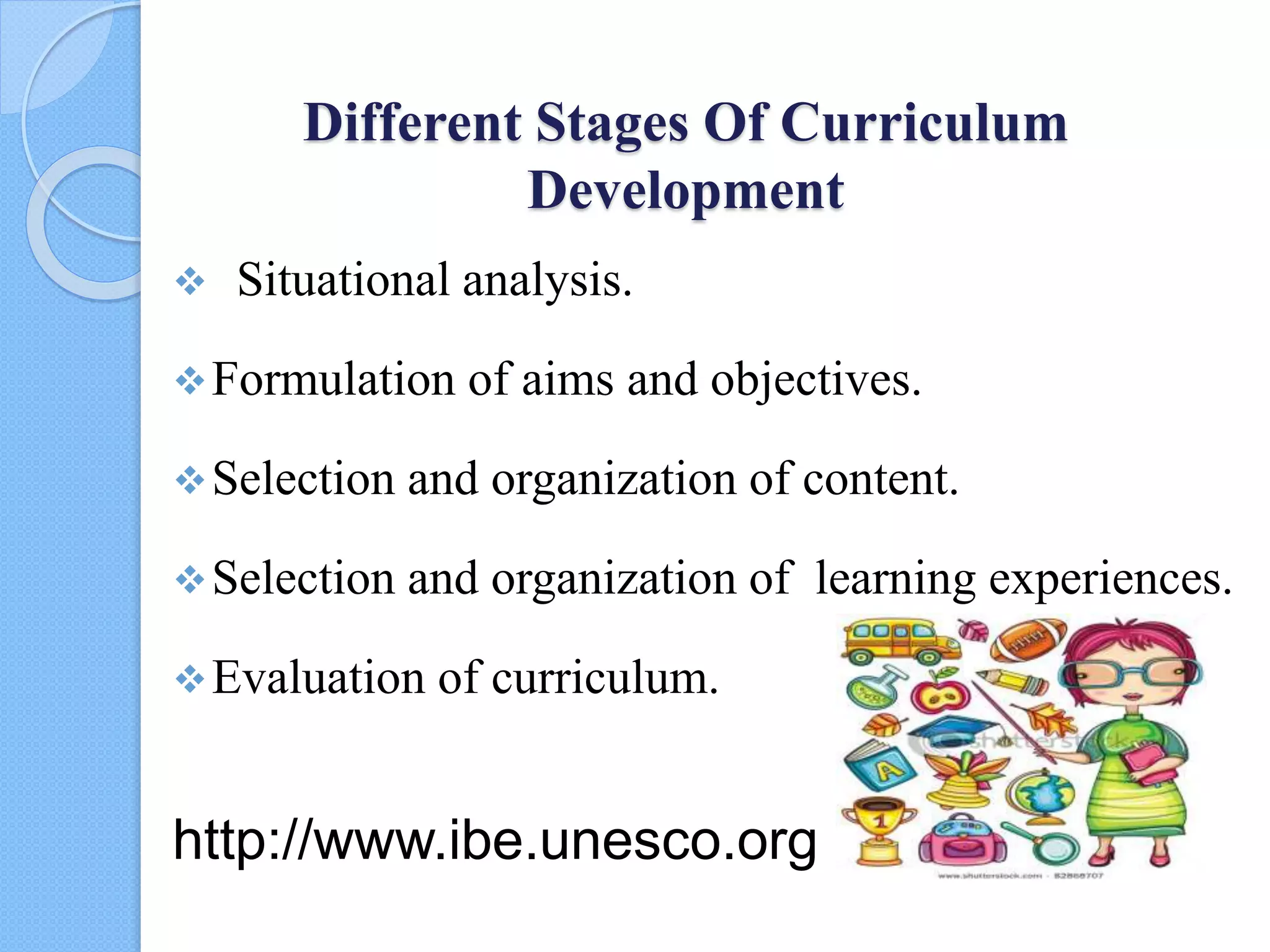
Different Stages Of Curriculum
Development
 Situational analysis.
Formulation of aims and objectives.
Selection and organization of content.
Selection and organization of learning experiences.
Evaluation of curriculum.
http://www.ibe.unesco.org
Elements of Curriculum
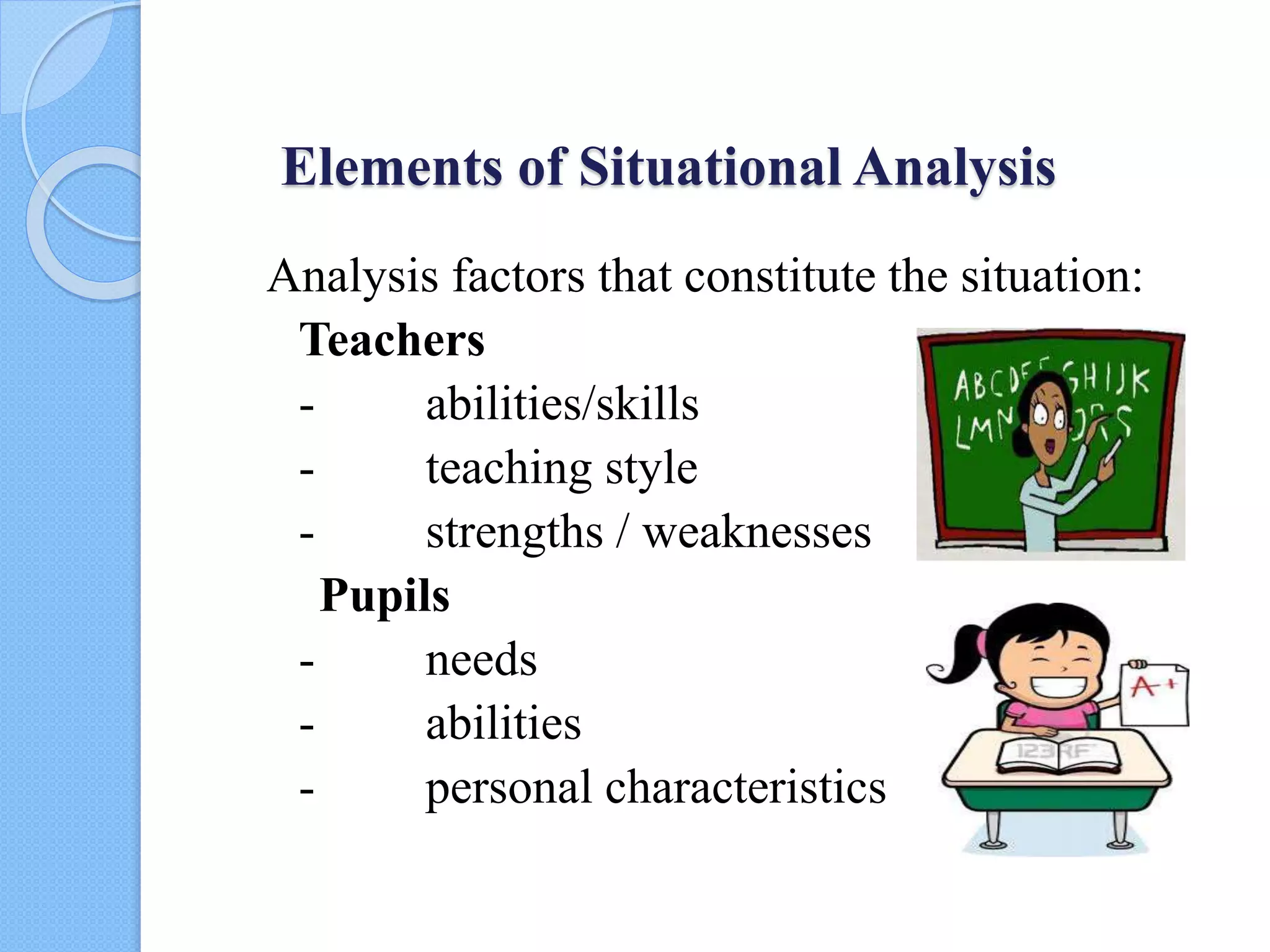
Elements of Situational Analysis
Analysis factors that constitute the situation:
Teachers
- abilities/skills
- teaching style
- strengths / weaknesses
Pupils
- needs
- abilities
- personal characteristics
Elements cont…..
Physical Plant And Facilities
Materials
Equipment
Facilities etc
Psycho-social Climate
Organizational climate
Traditions , beliefs , attitudes
Developmental trends etc
Aims
 Wilson(2004) defines AIMS as " general
statements that provide direction or intent to
educational action".
 Orstein and Hunkins concluded that AIMS serve
to:
1 Be general statements that provide shape and
direction to the more specific actions designed
to achieve future product and behavior.
2. Be starting point for ideal/inspirational vision of
the good future
All Schools shall aim to
 Develop moral character and personal
discipline.
 Encourage creative and critical thinking.
 Broaden scientific and technological
knowledge.
 Foster love of humanity.
 Teach the rights and duties of citizenship
 Promote respect for human right.
 Strengthen ethical and spiritual values
 --------------------------------
 Objectives are usually specific statement of
educational intention which define either general or
specific outcomes.
 Benjamin Bloom defined educational objective in
two ways:
1 Explicit formulations of the ways in which
students are expected to be changed by educative
process.
2. Intent communicated by statement describing
proposed change in learner
General objective:
Those objectives that describe school- wide
outcomes. E.g. Improving students skills
Specific objective:
Those objectives that describe behavior to be
attained in a particular unit, a subject/course or
particular programmed
E.g. cognitive, affective and psychomotor domain
Formulation of aims and objectives
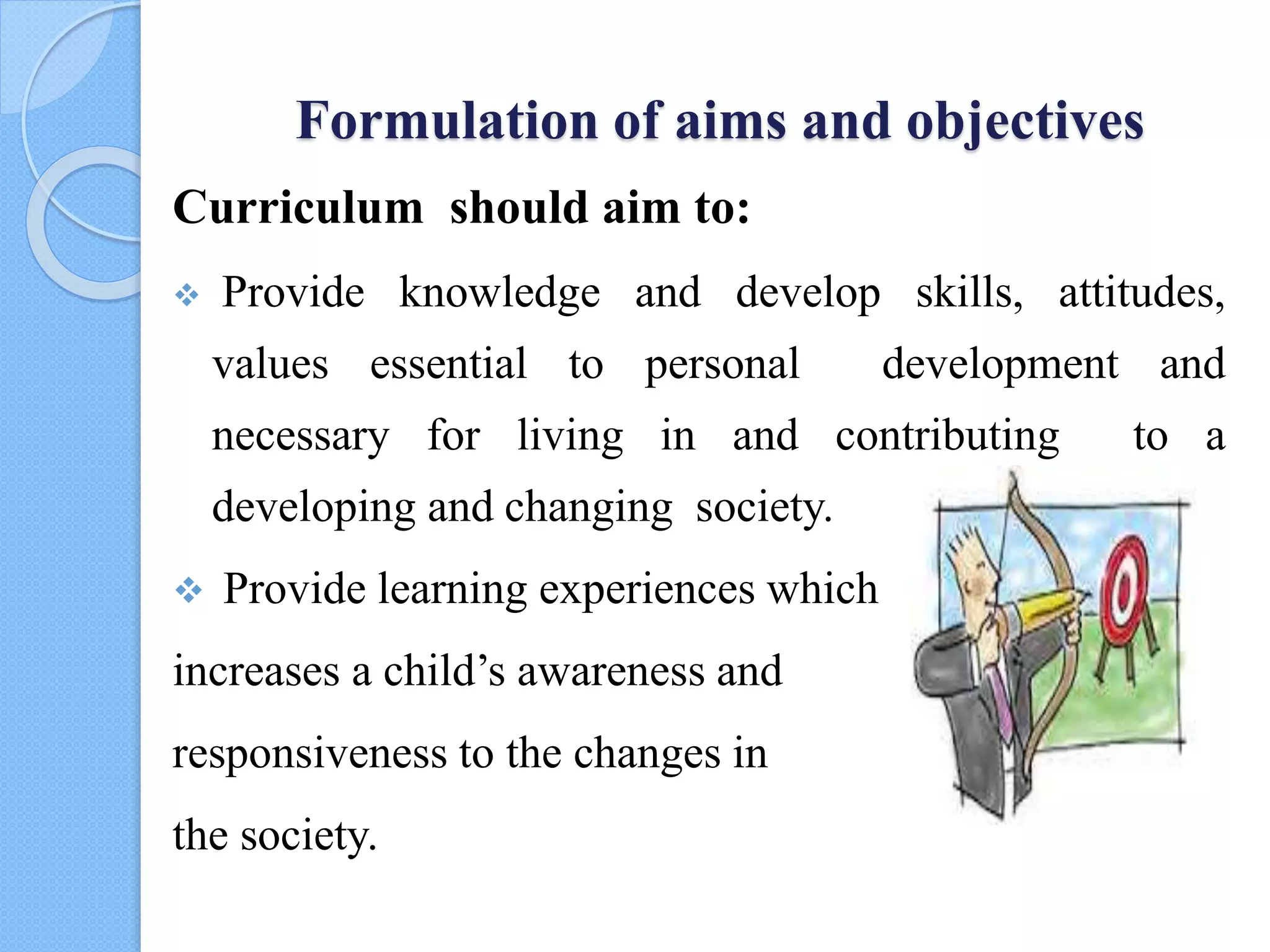
Curriculum should aim to:
 Provide knowledge and develop skills, attitudes,
values essential to personal development and
necessary for living in and contributing to a
developing and changing society.
 Provide learning experiences which
increases a child’s awareness and
responsiveness to the changes in
the society.
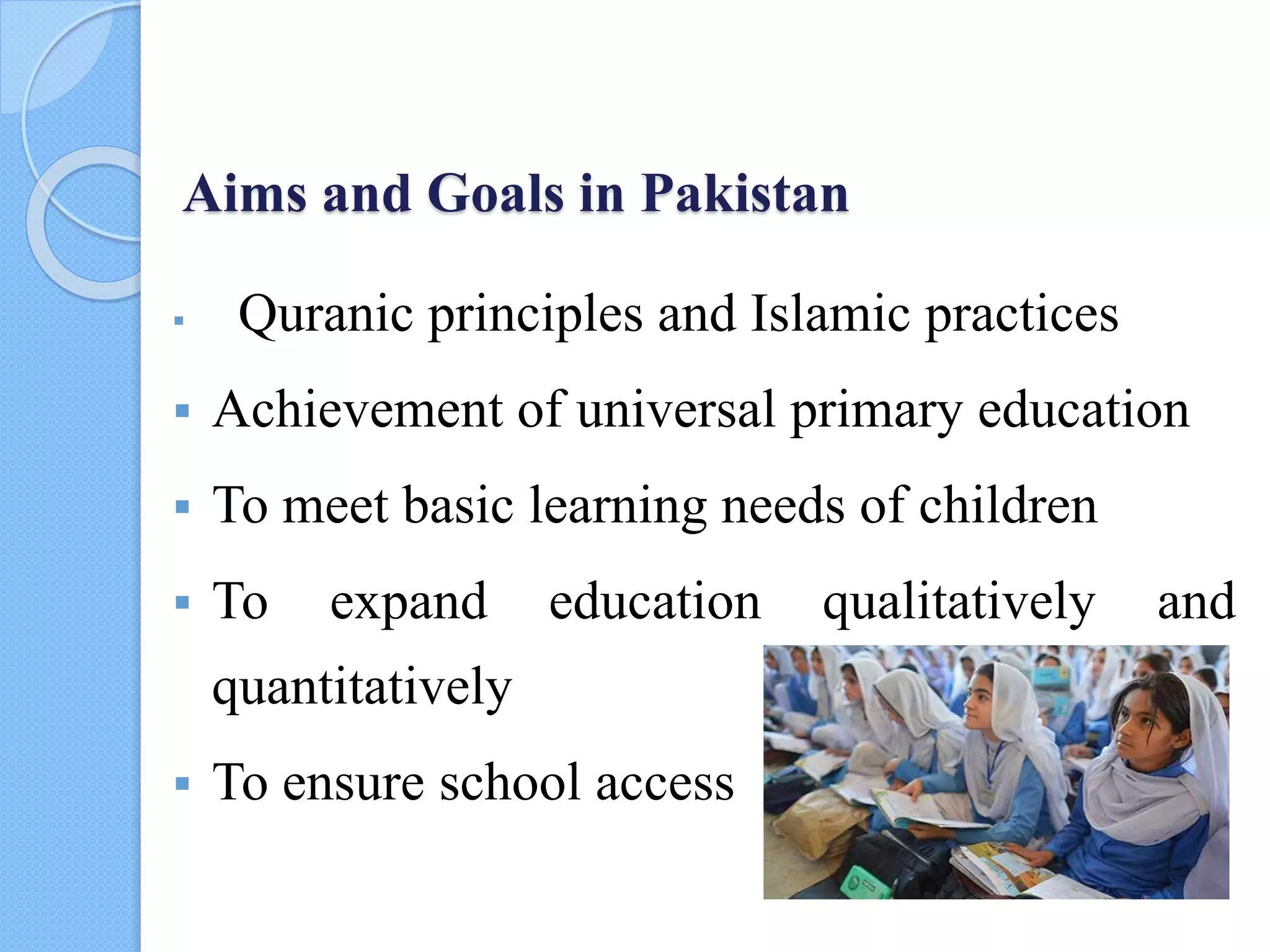
Aims and Goals in Pakistan
 Quranic principles and Islamic practices
 Achievement of universal primary education
 To meet basic learning needs of children
 To expand education qualitatively and
quantitatively
 To ensure school access
Continue…..
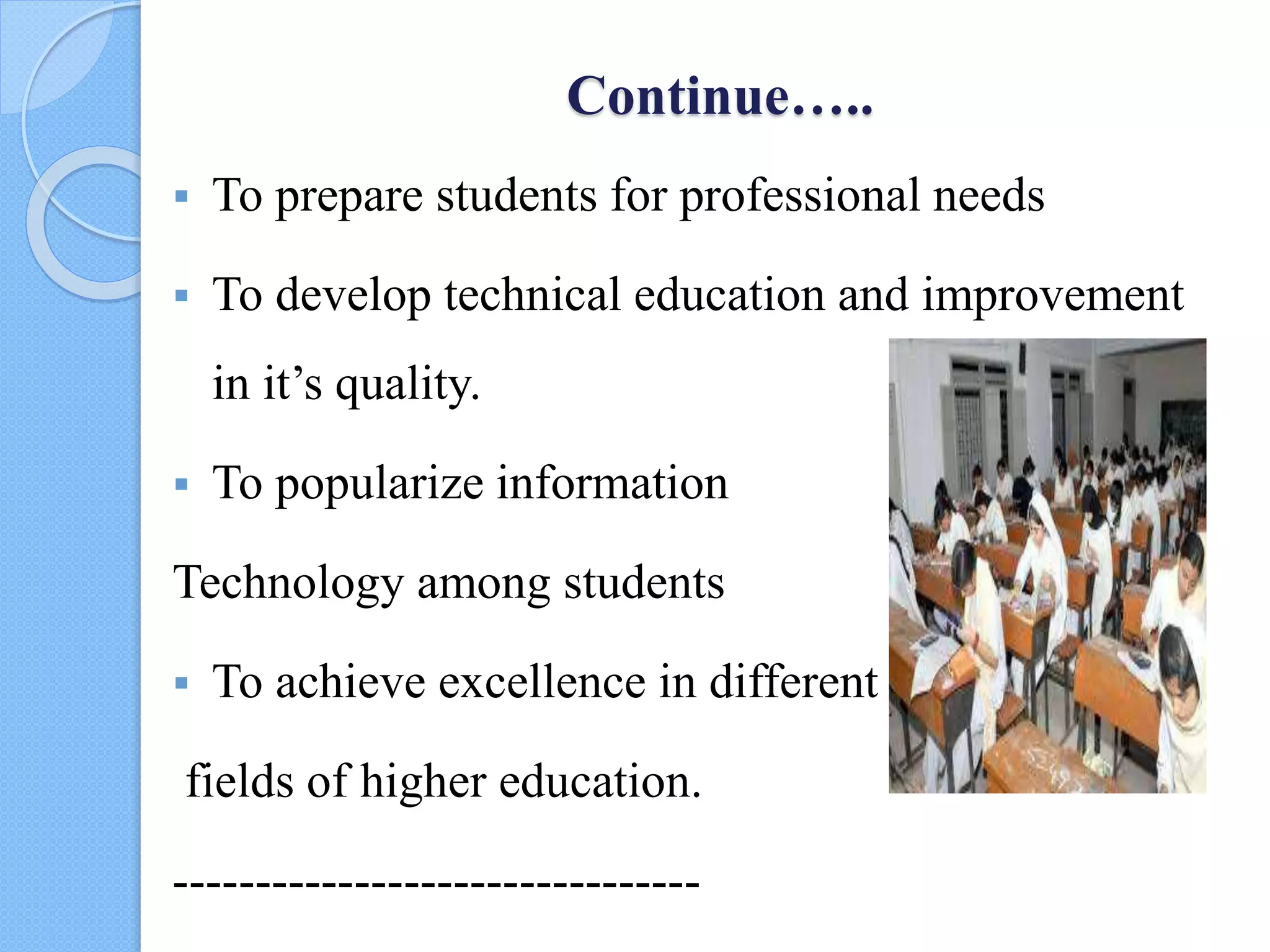
 To prepare students for professional needs
 To develop technical education and improvement
in it’s quality.
 To popularize information
Technology among students
 To achieve excellence in different
fields of higher education.
--------------------------------
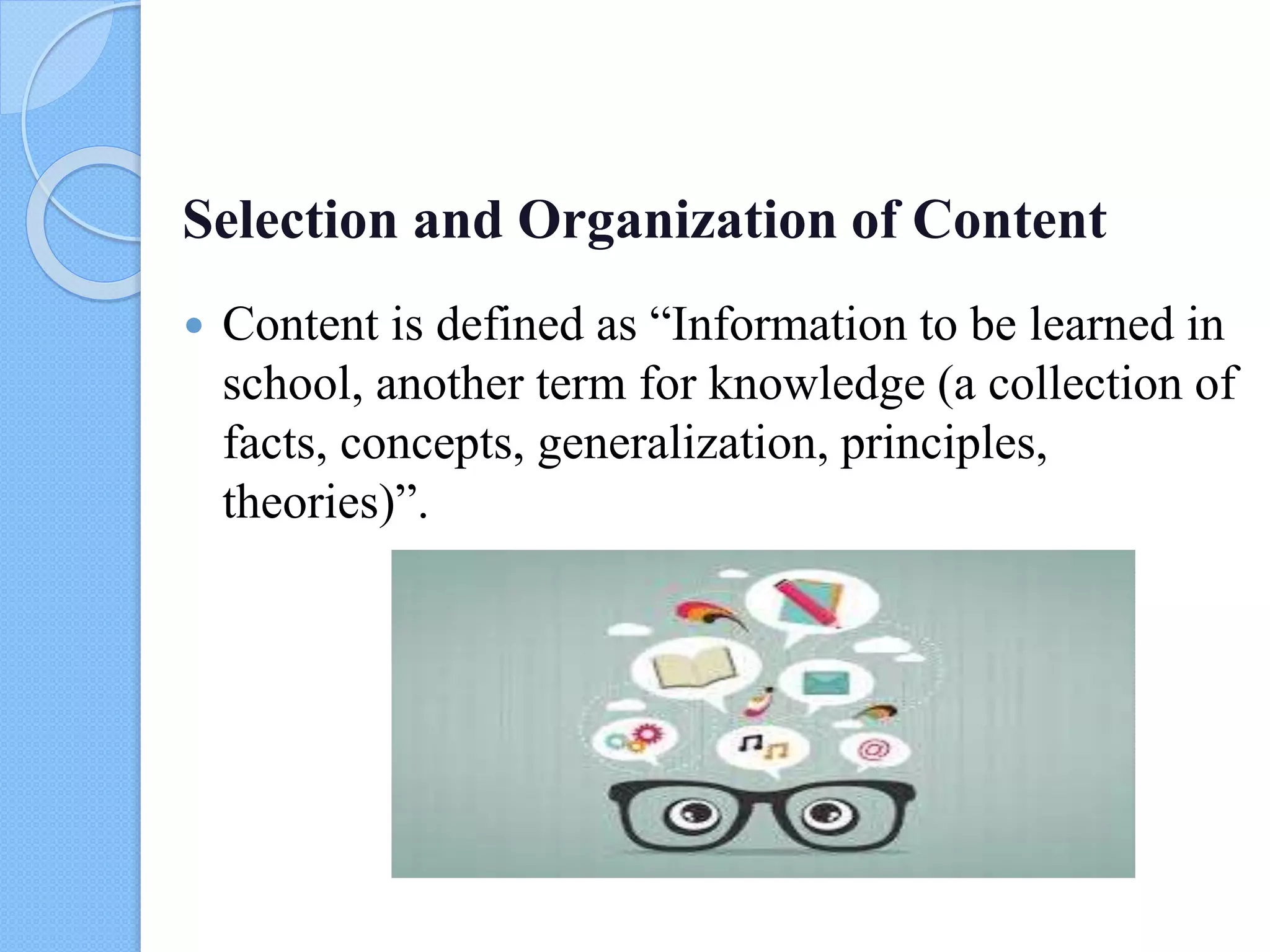
Selection and Organization of Content
 Content is defined as “Information to be learned in
school, another term for knowledge (a collection of
facts, concepts, generalization, principles,
theories)”.
Principle and criteria of content selection and
organization
• Selection of content according to aims and
objectives
 Validity
 Significance
 Difficulty
 Pupil’s needs and interests
 Universality
Activities organized while study of content
• Study of text book
 Additional instructional material
 Exercises consisted of recapitulation
 Practical work and experiments
 Educational visits and special education sessions
 Occasional celebrations
 Physical training including games and sports
 Students self-help activities
 Scouting and girl guiding
 -------------------------------
Selection and organization of learning
experiences
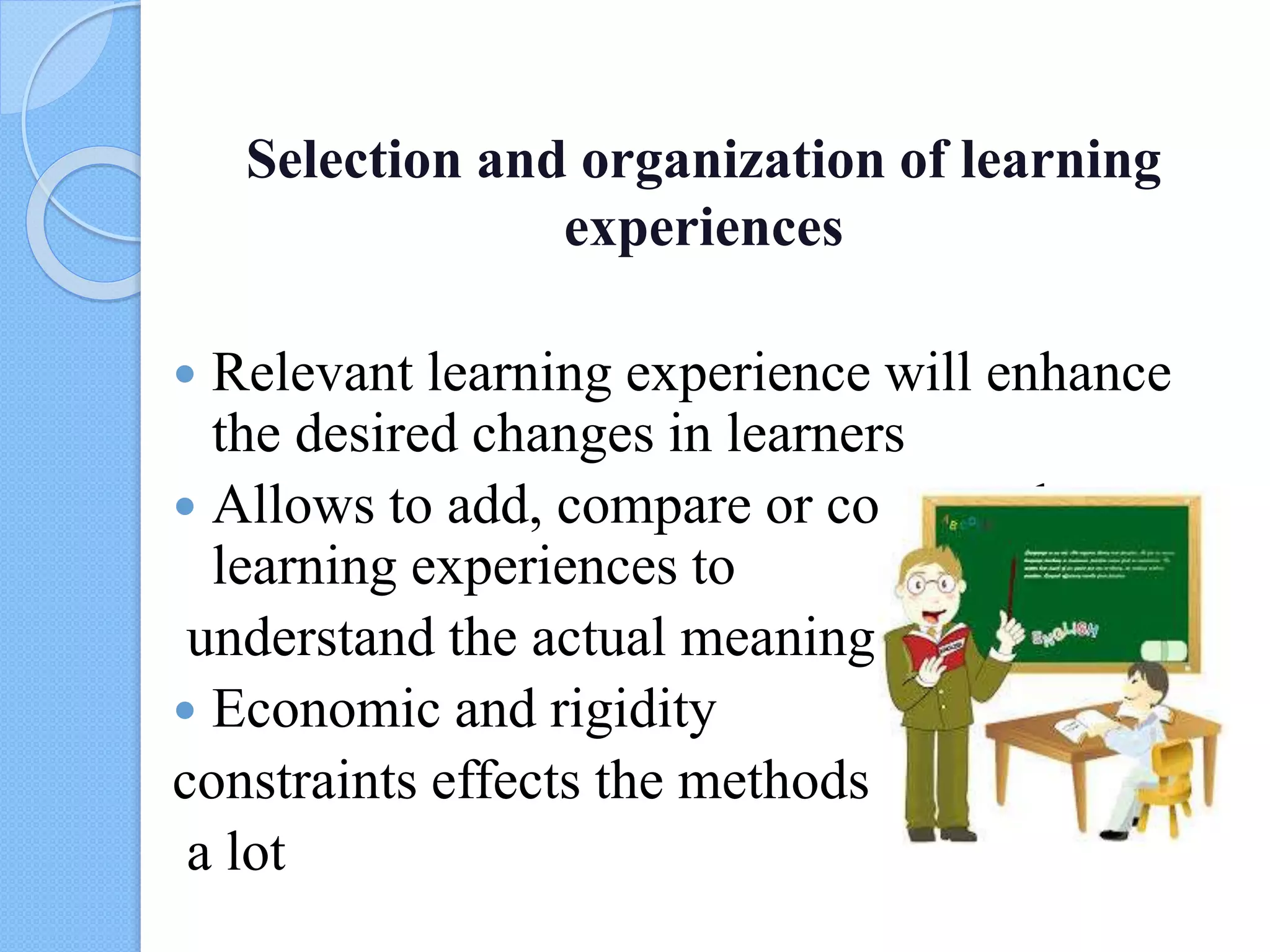
 Relevant learning experience will enhance
the desired changes in learners
 Allows to add, compare or contrast the
learning experiences to
understand the actual meanings
 Economic and rigidity
constraints effects the methods
a lot
Evaluation of the Curriculum
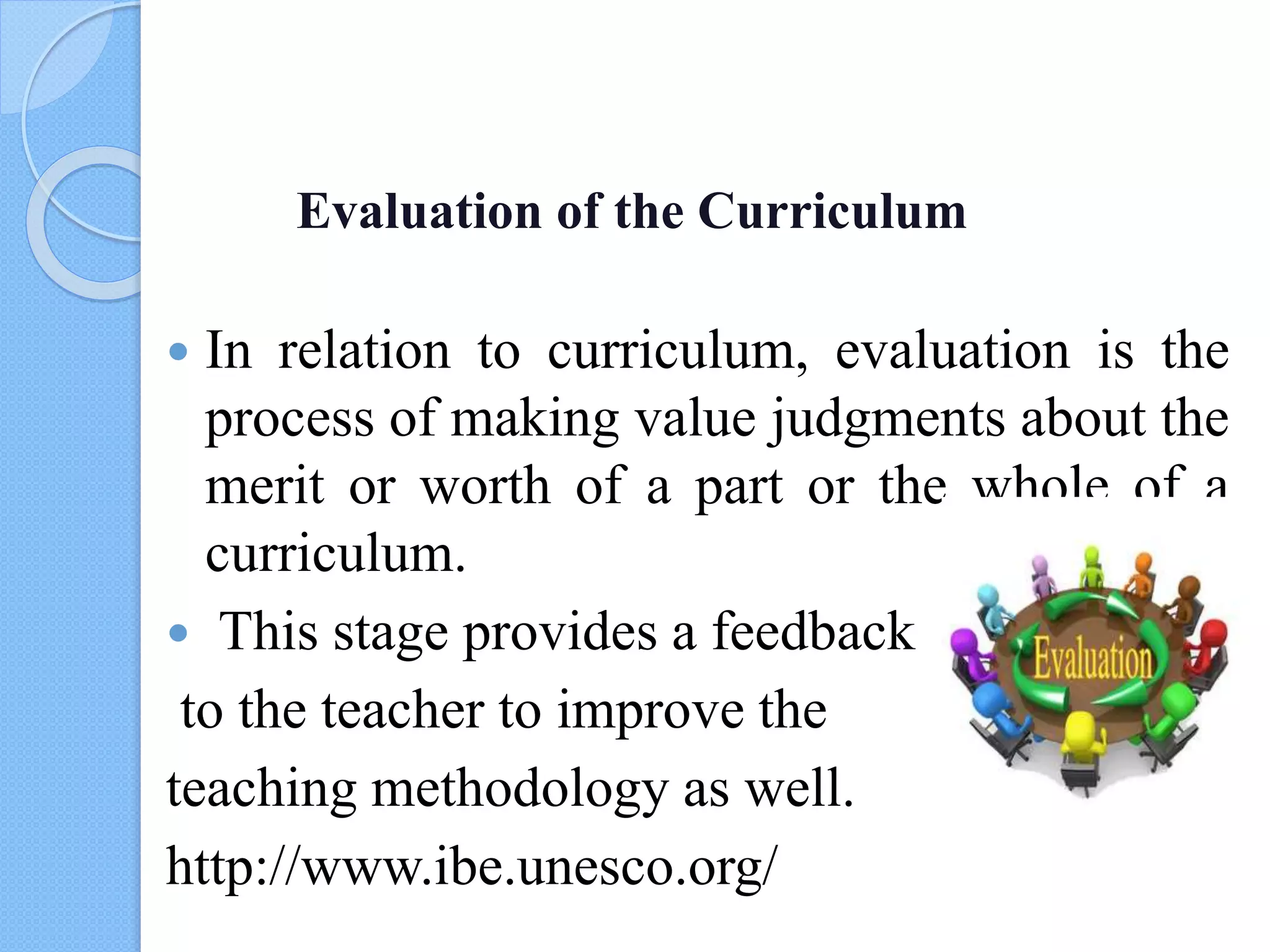
 In relation to curriculum, evaluation is the
process of making value judgments about the
merit or worth of a part or the whole of a
curriculum.
 This stage provides a feedback
to the teacher to improve the
teaching methodology as well.
http://www.ibe.unesco.org/
Introduction to curriculum components  lecture 1

Introduction to curriculum components lecture 1

  • 1.
  • 2.
    Contents  Definition ofCurriculum  Stages of Curriculum  Aims, goals and objectives
  • 3.
    Todays’ Session’ Objectives Learnerswill be able to  Define curriculum  Describe stages of curriculum  Differentiate between aims, goals and objectives
  • 4.
    Curriculum  The word"curriculum" began as a Latin word which means "a race" or "the course of a race" (which in turn derives from the verb currere meaning "to run/to proceed") https://en.wikipedia.org/wiki/Curriculum
  • 5.
    Curriculum Curriculum is definedas The term curriculum refers to the lessons and academic content taught in a school or in a specific course or program. http://edglossary.org/curriculum/
  • 6.
    Concept cont…… Tanner &Tanner,2007 offers the following definition, derived from Dewey’s definition of education “That reconstruction of knowledge and experience that enables the learner to grow in exercising intelligent control of subsequent knowledge and experience”
  • 7.
    Curriculum Development It isdefined as the process of selecting, organizing, executing, and evaluating learning experiences on the basis of the needs, abilities and interests of the learners and the nature of the society or community. http://www.ibe.unesco.org
  • 8.
    Different Stages OfCurriculum Development  Situational analysis. Formulation of aims and objectives. Selection and organization of content. Selection and organization of learning experiences. Evaluation of curriculum. http://www.ibe.unesco.org
  • 9.
  • 10.
    Elements of SituationalAnalysis Analysis factors that constitute the situation: Teachers - abilities/skills - teaching style - strengths / weaknesses Pupils - needs - abilities - personal characteristics
  • 11.
    Elements cont….. Physical PlantAnd Facilities Materials Equipment Facilities etc Psycho-social Climate Organizational climate Traditions , beliefs , attitudes Developmental trends etc
  • 12.
    Aims  Wilson(2004) definesAIMS as " general statements that provide direction or intent to educational action".  Orstein and Hunkins concluded that AIMS serve to: 1 Be general statements that provide shape and direction to the more specific actions designed to achieve future product and behavior. 2. Be starting point for ideal/inspirational vision of the good future
  • 13.
    All Schools shallaim to  Develop moral character and personal discipline.  Encourage creative and critical thinking.  Broaden scientific and technological knowledge.  Foster love of humanity.  Teach the rights and duties of citizenship  Promote respect for human right.  Strengthen ethical and spiritual values  --------------------------------
  • 14.
     Objectives areusually specific statement of educational intention which define either general or specific outcomes.  Benjamin Bloom defined educational objective in two ways: 1 Explicit formulations of the ways in which students are expected to be changed by educative process. 2. Intent communicated by statement describing proposed change in learner
  • 15.
    General objective: Those objectivesthat describe school- wide outcomes. E.g. Improving students skills Specific objective: Those objectives that describe behavior to be attained in a particular unit, a subject/course or particular programmed E.g. cognitive, affective and psychomotor domain
  • 16.
    Formulation of aimsand objectives Curriculum should aim to:  Provide knowledge and develop skills, attitudes, values essential to personal development and necessary for living in and contributing to a developing and changing society.  Provide learning experiences which increases a child’s awareness and responsiveness to the changes in the society.
  • 17.
    Aims and Goalsin Pakistan  Quranic principles and Islamic practices  Achievement of universal primary education  To meet basic learning needs of children  To expand education qualitatively and quantitatively  To ensure school access
  • 18.
    Continue…..  To preparestudents for professional needs  To develop technical education and improvement in it’s quality.  To popularize information Technology among students  To achieve excellence in different fields of higher education. --------------------------------
  • 19.
    Selection and Organizationof Content  Content is defined as “Information to be learned in school, another term for knowledge (a collection of facts, concepts, generalization, principles, theories)”.
  • 20.
    Principle and criteriaof content selection and organization • Selection of content according to aims and objectives  Validity  Significance  Difficulty  Pupil’s needs and interests  Universality
  • 21.
    Activities organized whilestudy of content • Study of text book  Additional instructional material  Exercises consisted of recapitulation  Practical work and experiments  Educational visits and special education sessions  Occasional celebrations  Physical training including games and sports  Students self-help activities  Scouting and girl guiding  -------------------------------
  • 22.
    Selection and organizationof learning experiences  Relevant learning experience will enhance the desired changes in learners  Allows to add, compare or contrast the learning experiences to understand the actual meanings  Economic and rigidity constraints effects the methods a lot
  • 23.
    Evaluation of theCurriculum  In relation to curriculum, evaluation is the process of making value judgments about the merit or worth of a part or the whole of a curriculum.  This stage provides a feedback to the teacher to improve the teaching methodology as well. http://www.ibe.unesco.org/