W16 - Groundwater Modification:
Stabilizing the Foundations of
Public Works Projects
Douglas Dycus, P.E.
Senior Engineer
E Sciences, Inc.
April 2013
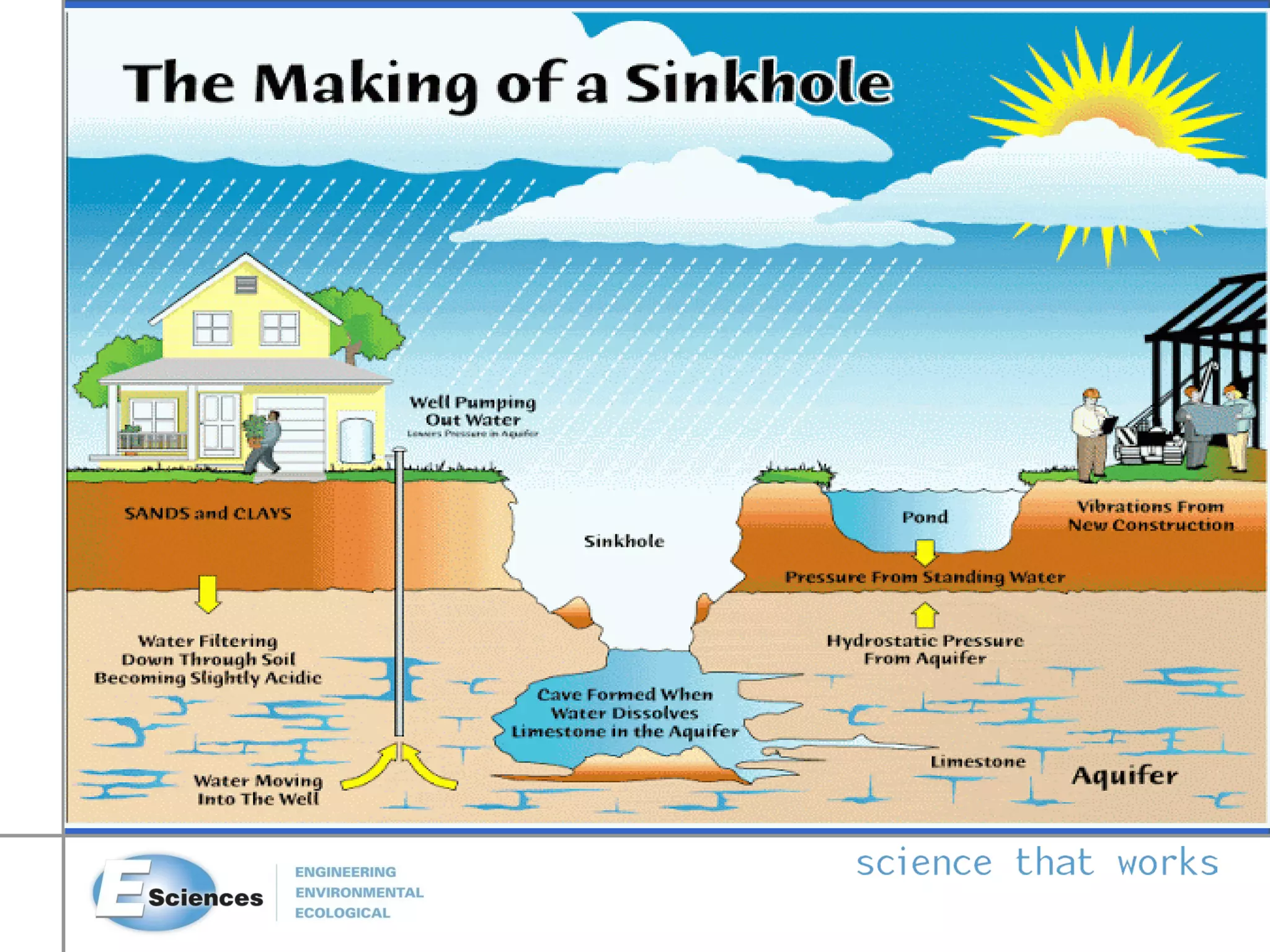
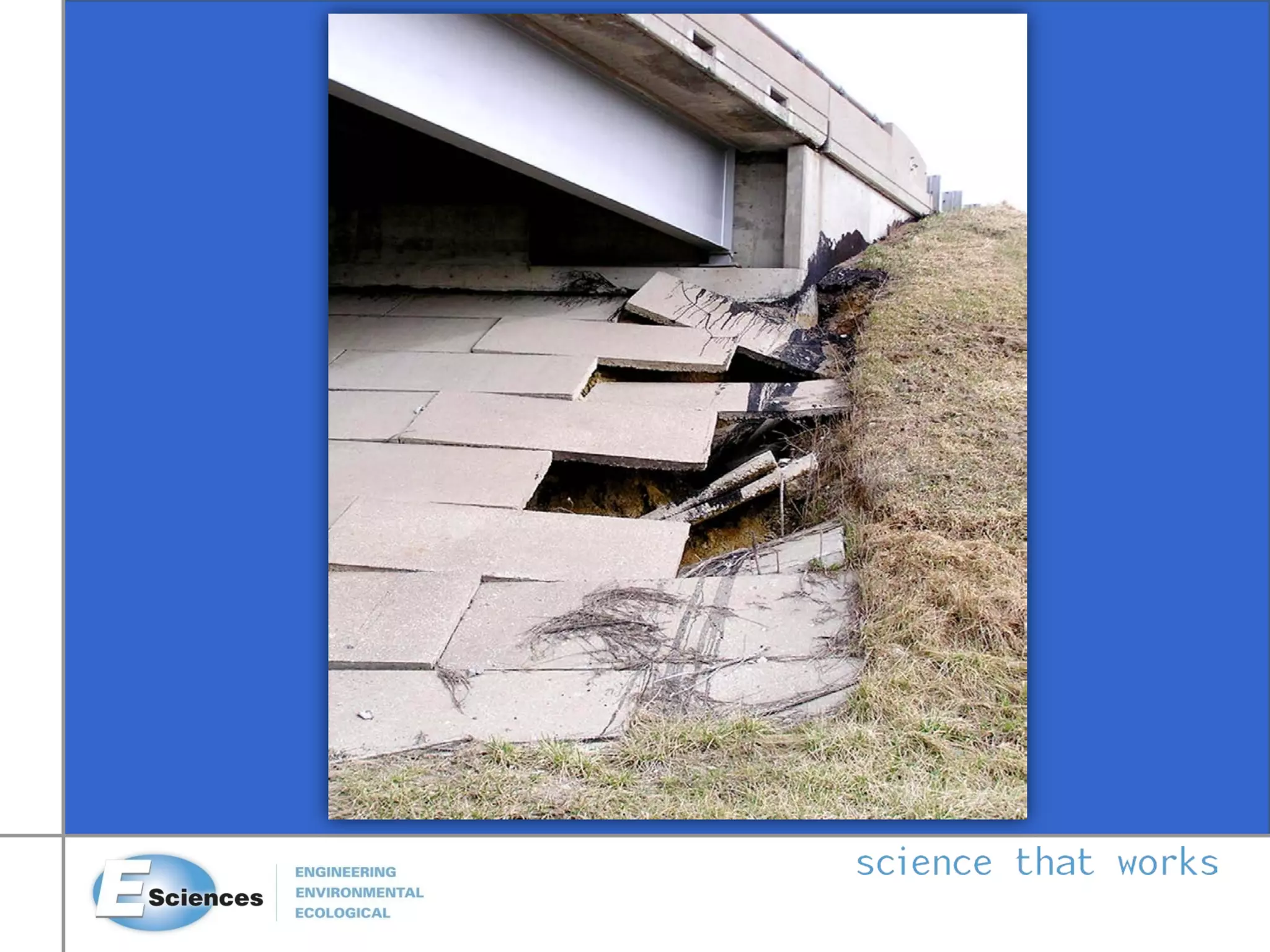
Causes of Unconsolidated Soils
• Water
• Clays
• Organics
• Man-made
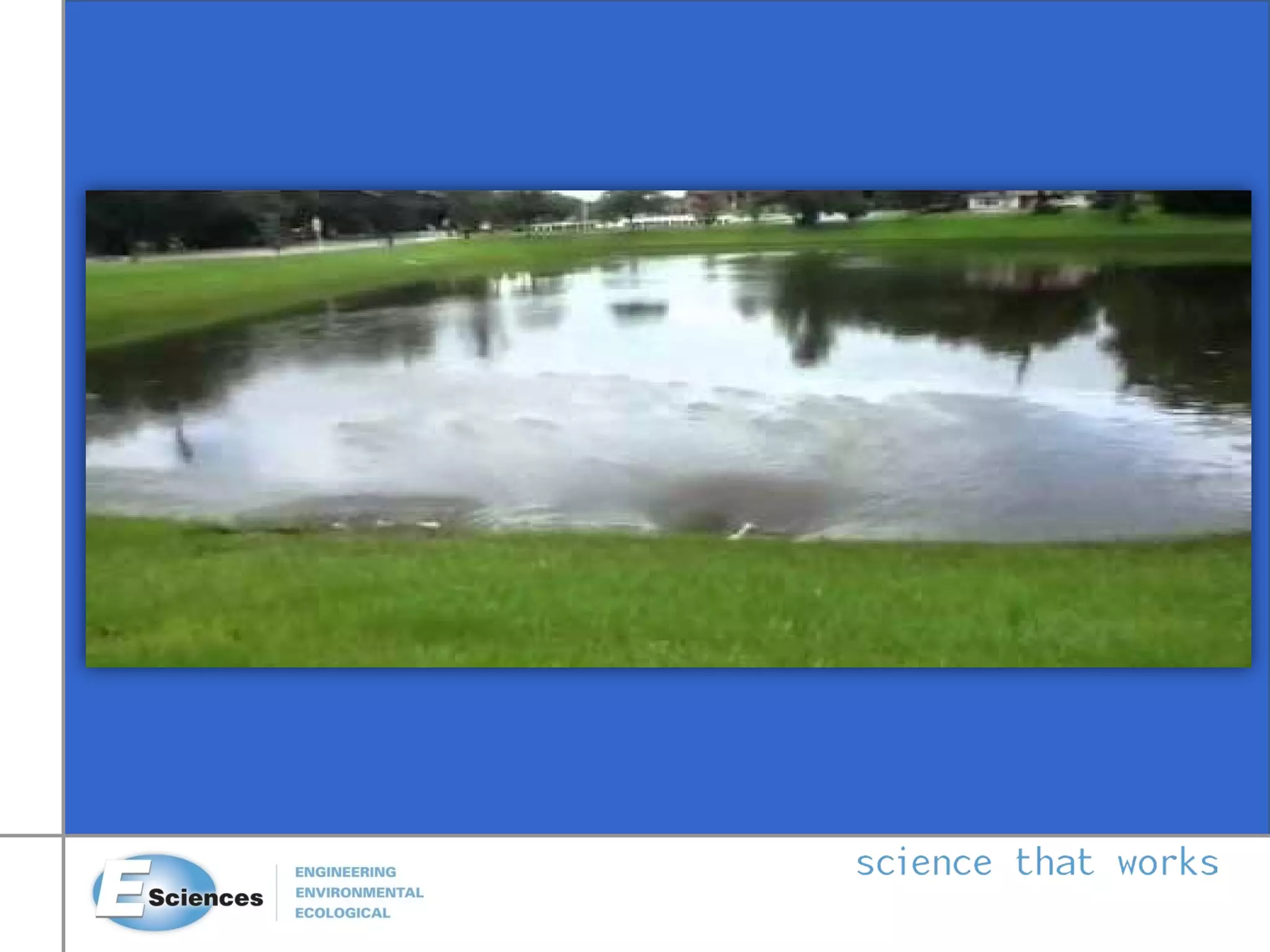
• Karst
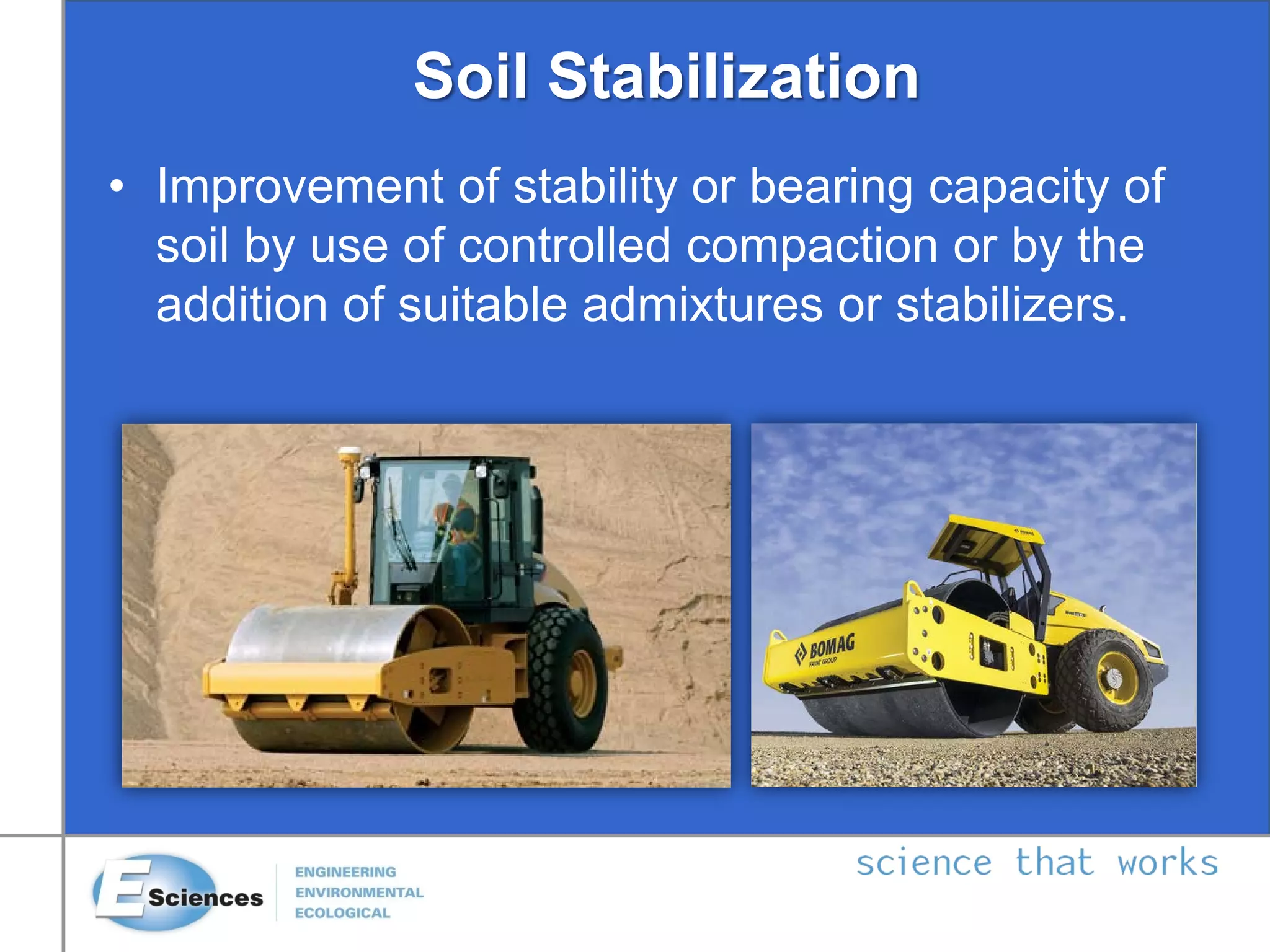
Soil Stabilization
• Improvement of stability or bearing capacity of
soil by use of controlled compaction or by the
addition of suitable admixtures or stabilizers.
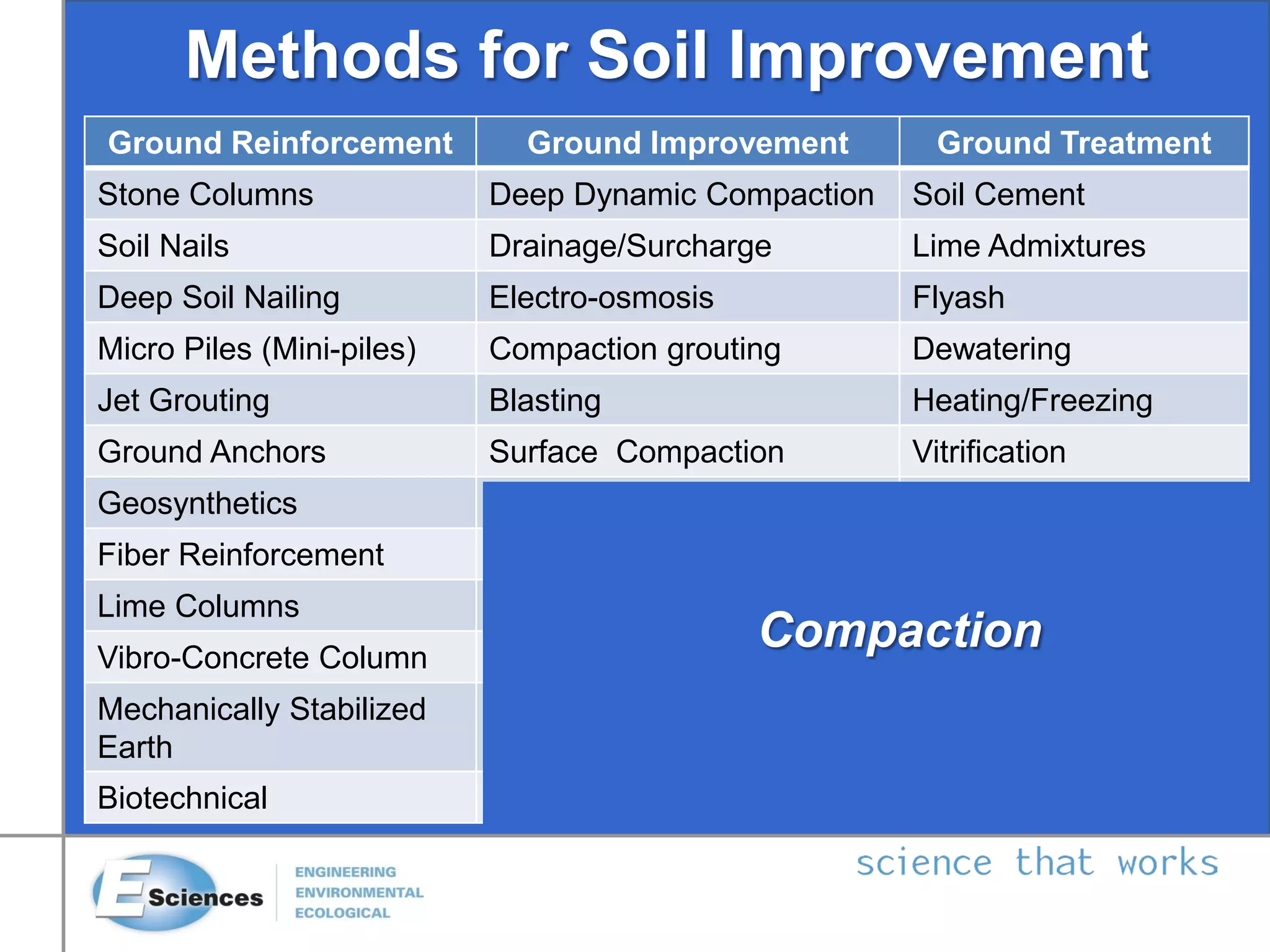
Methods for Soil Improvement
• Deep Dynamic
Compaction
• Drainage/Surcharg
e
• Electro-osmosis
• Compaction
grouting
• Blasting
• Surface
Compaction
• Soil Cement
• Lime
Admixtures
• Flyash
• Dewatering
• Heating/Freezin
g
• Vitrification
Ground Reinforcement Ground Improvement Ground Treatment
Stone Columns Deep Dynamic Compaction Soil Cement
Soil Nails Drainage/Surcharge Lime Admixtures
Deep Soil Nailing Electro-osmosis Flyash
Micro Piles (Mini-piles) Compaction grouting Dewatering
Jet Grouting Blasting Heating/Freezing
Ground Anchors Surface Compaction Vitrification
Geosynthetics
Fiber Reinforcement
Lime Columns
Vibro-Concrete Column
Mechanically Stabilized
Earth
Biotechnical
Compaction
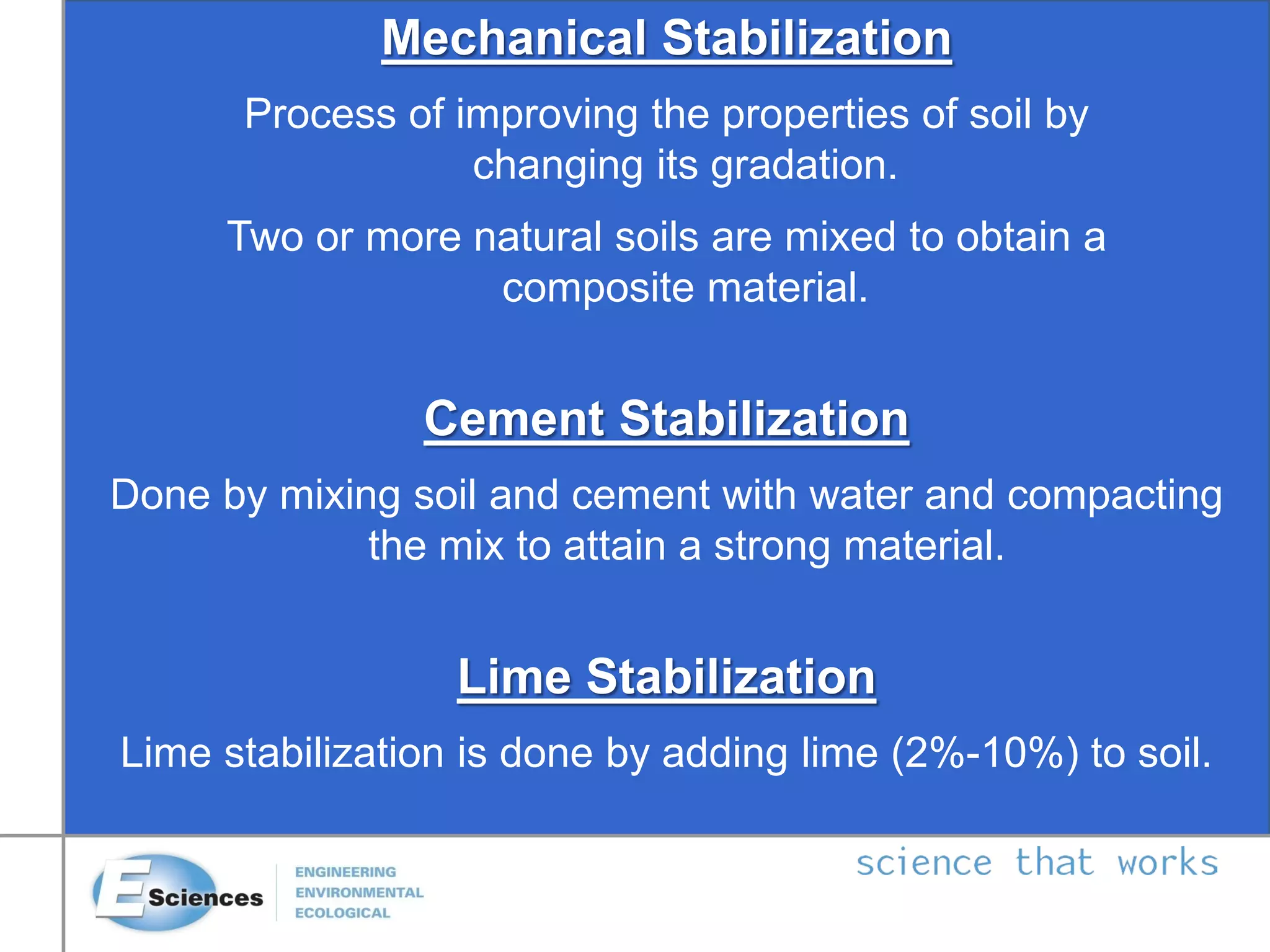
Mechanical Stabilization
Process of improving the properties of soil by
changing its gradation.
Two or more natural soils are mixed to obtain a
composite material.
Cement Stabilization
Done by mixing soil and cement with water and compacting
the mix to attain a strong material.
Lime Stabilization
Lime stabilization is done by adding lime (2%-10%) to soil.
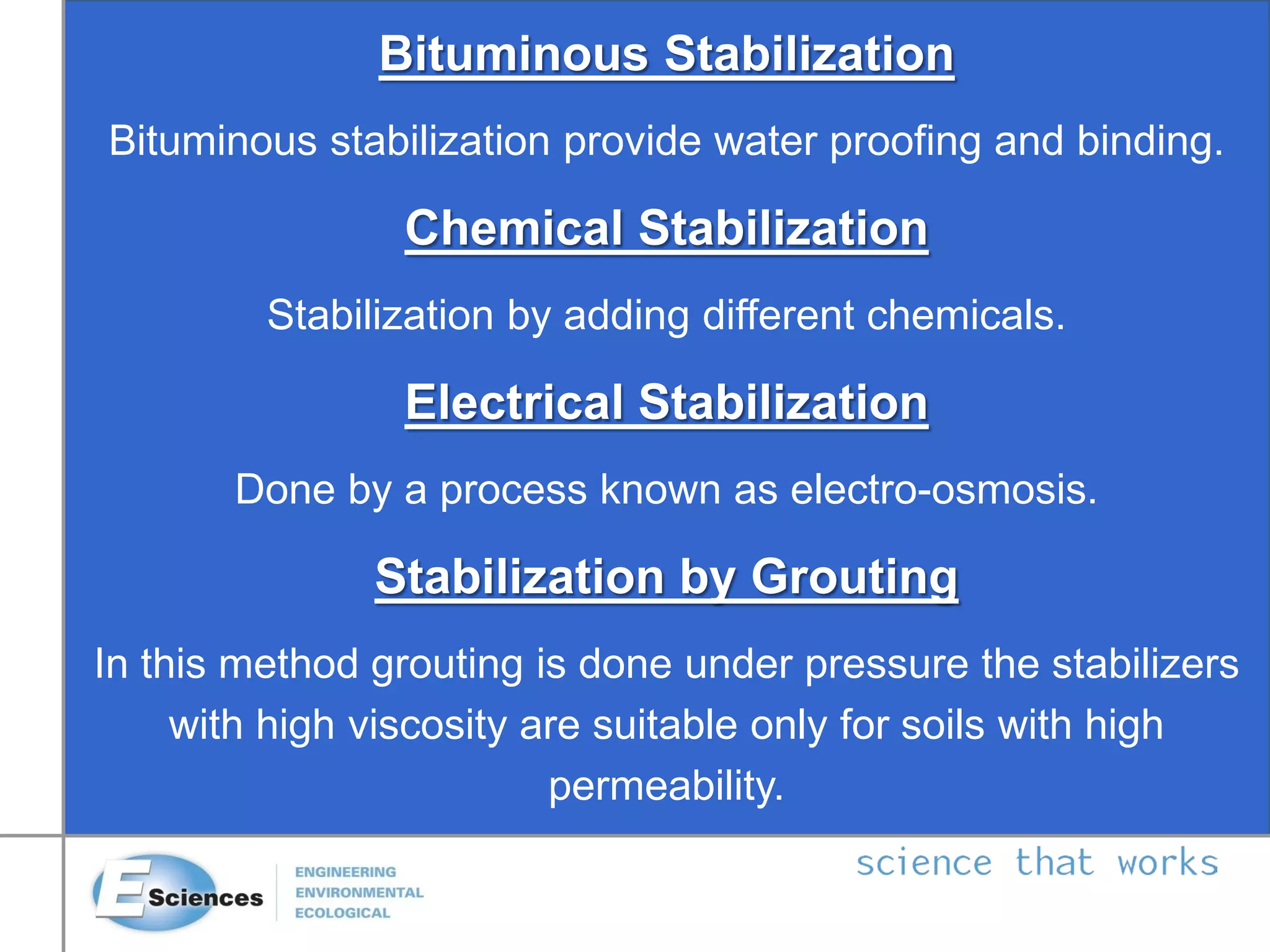
Bituminous Stabilization
Bituminous stabilization provide water proofing and binding.
Chemical Stabilization
Stabilization by adding different chemicals.
Electrical Stabilization
Done by a process known as electro-osmosis.
Stabilization by Grouting
In this method grouting is done under pressure the stabilizers
with high viscosity are suitable only for soils with high
permeability.
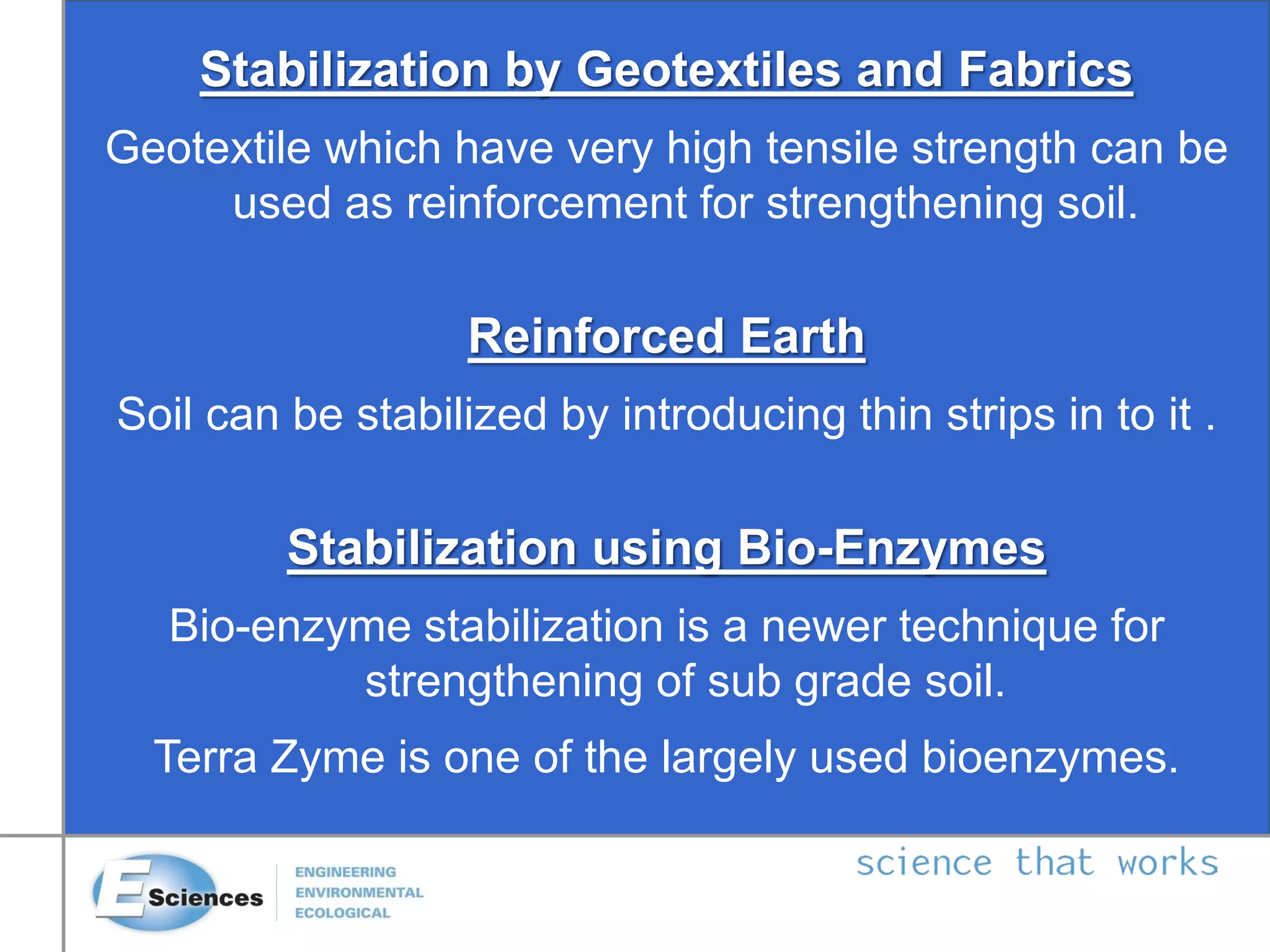
Stabilization by Geotextiles and Fabrics
Geotextile which have very high tensile strength can be
used as reinforcement for strengthening soil.
Reinforced Earth
Soil can be stabilized by introducing thin strips in to it .
Stabilization using Bio-Enzymes
Bio-enzyme stabilization is a newer technique for
strengthening of sub grade soil.
Terra Zyme is one of the largely used bioenzymes.
Vertical Drains
• Act as free draining water channel. surrounded by a
thin filter jacket which prevents the surrounding soil
from entering the core.
• A vertical sand drain accelerates the rate of
consolidation.
• Installation of vertical sand drains is a convenient
technique for stabilization of soft and compressible
soil.
• There are two types of vertical drains - sand drains
and sand wicks.
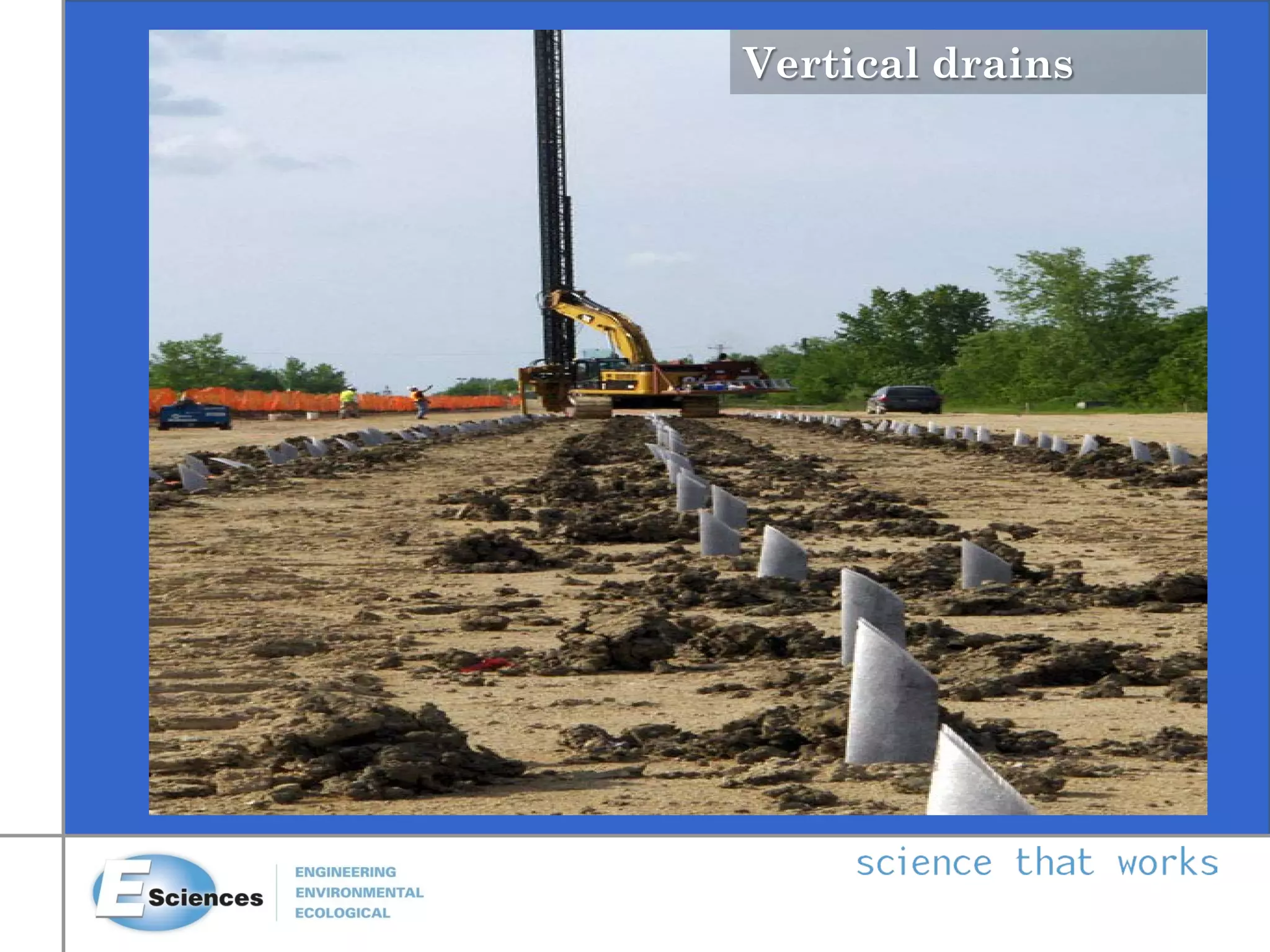
Vertical drains
Sand drains
• Typically 200-500 mm in diameter
• Formed by infilling sand in to a hole in the ground
• Hole formed by driving, jetting or augering
• Typical spacing 1.5 - 6.0
Sand wicks
• Sand wicks are improved technique of sand drains
• A small diameter hole is made by driving mandrel
or by boring
• Then cylindrical bag with sand is lowered into this
• Excavation which has a blanket of filter material
between 0.5m and 1.00 m thick against its
upstream slope and at the bottom of system for
collecting and eliminating water.
• Improves the stability of embankment by providing
drainage and replacing weaker material with better
material .
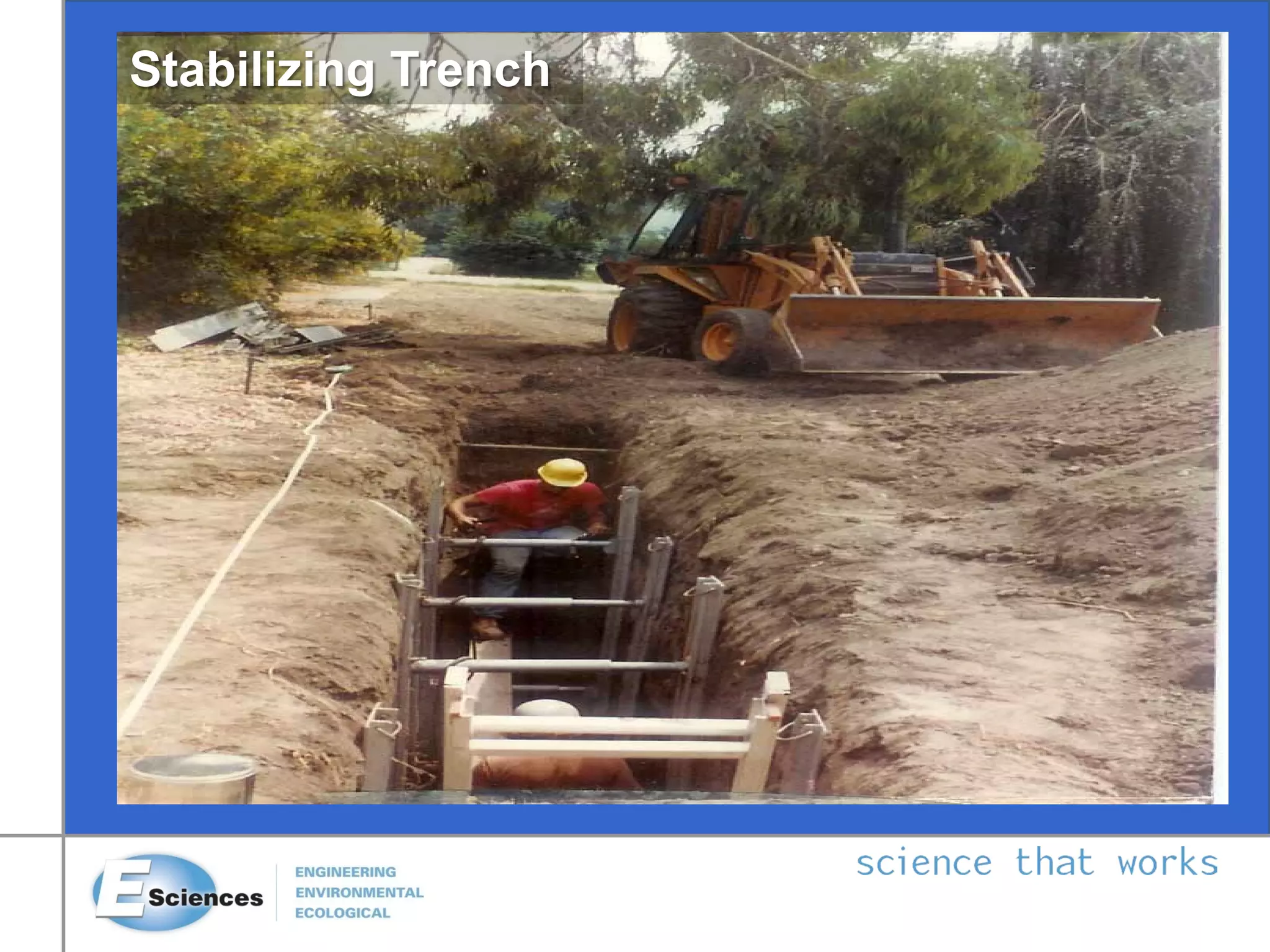
Stabilizing Trenches
Stabilizing Trench
Capillary Cut-Off
• In some cases capillary water accumulates and
saturates the subsurface layers which results in
failures.
• To arrest this capillary rise, capillary cut-off has to
be provided.
• Capillary cutoff is of two types.
• Permeable Capillary Cut-off
• Impermeable Capillary Cut-off
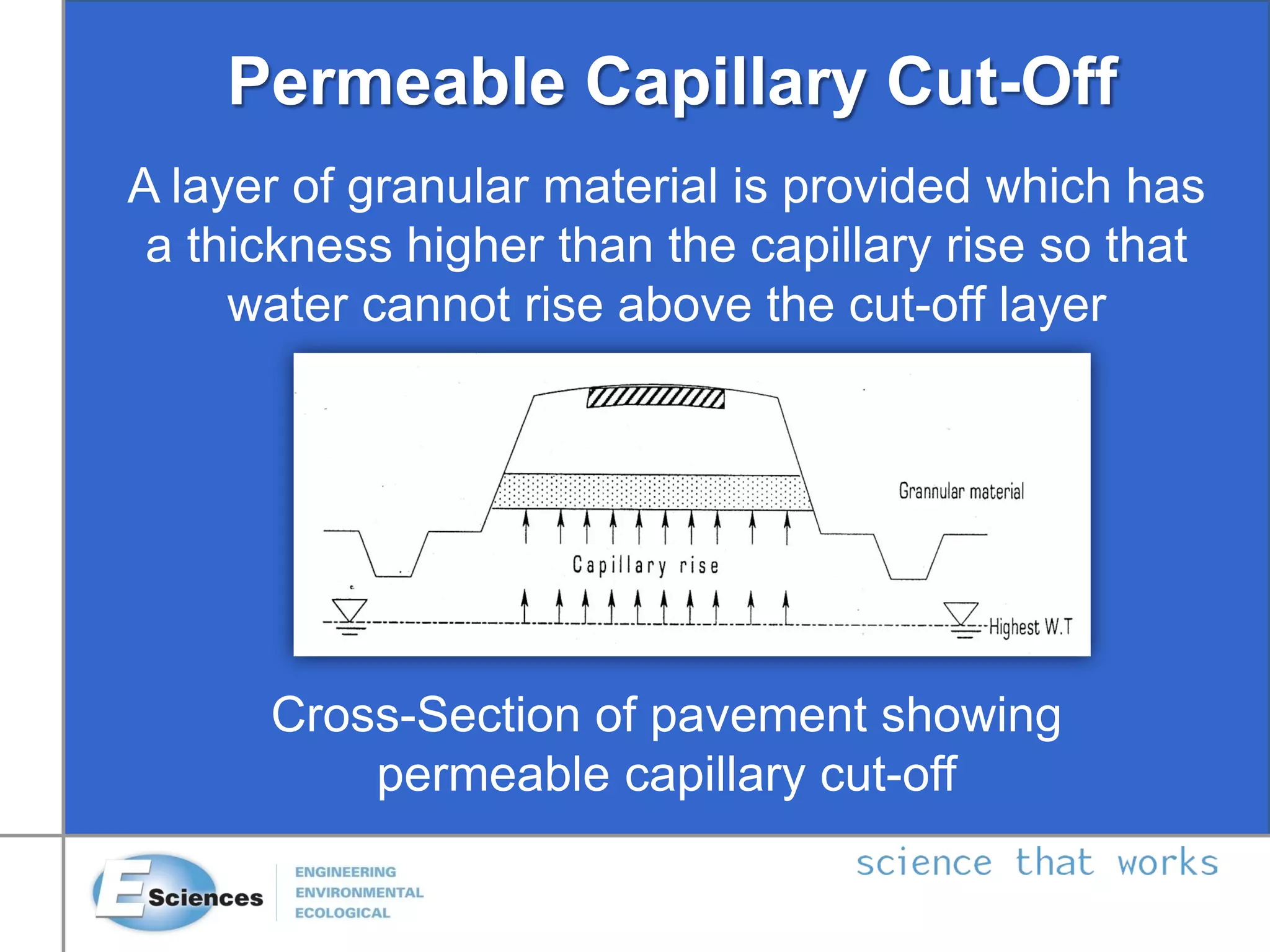
A layer of granular material is provided which has
a thickness higher than the capillary rise so that
water cannot rise above the cut-off layer
Cross-Section of pavement showing
permeable capillary cut-off
Permeable Capillary Cut-Off
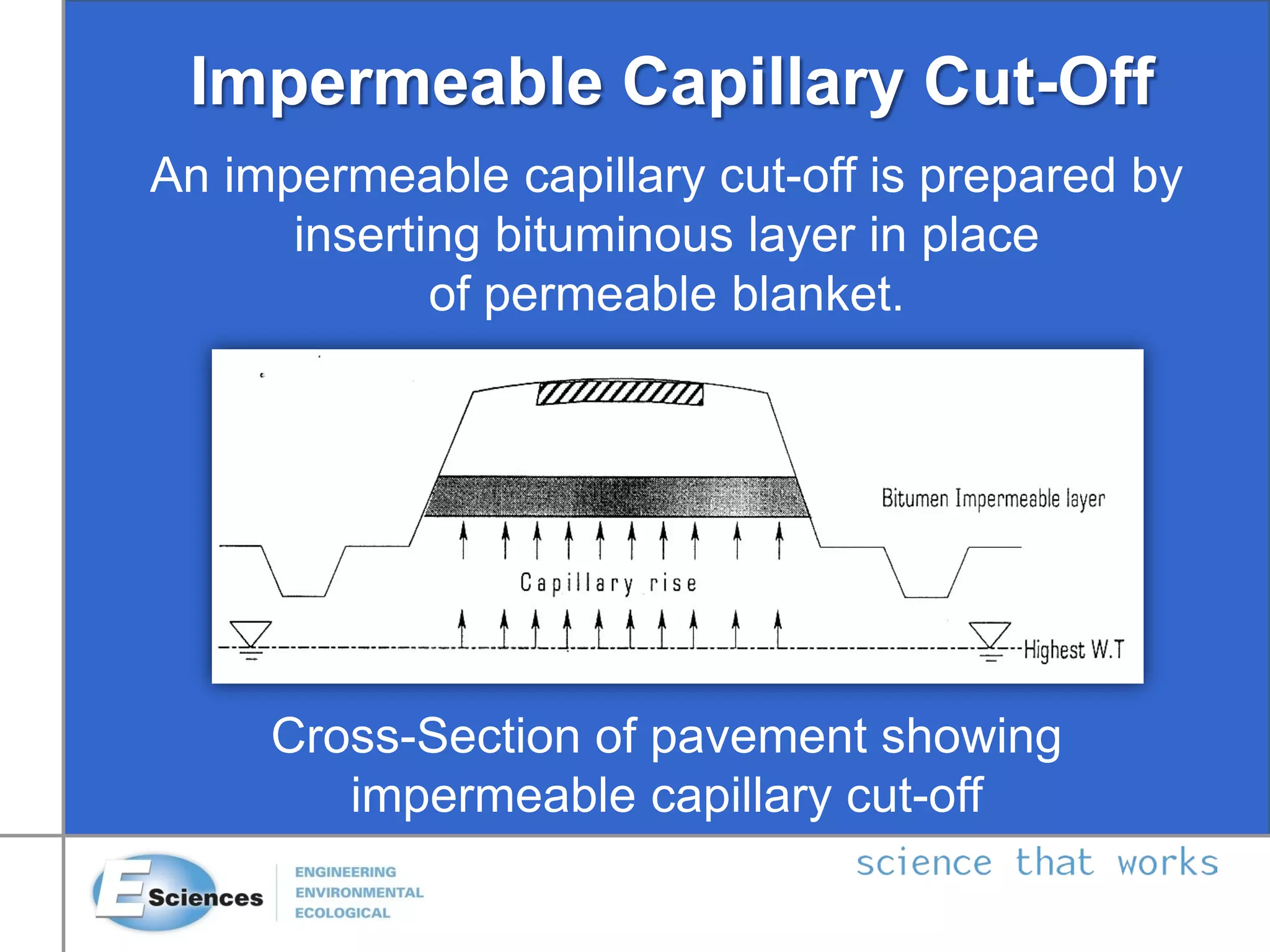
An impermeable capillary cut-off is prepared by
inserting bituminous layer in place
of permeable blanket.
Cross-Section of pavement showing
impermeable capillary cut-off
Impermeable Capillary Cut-Off
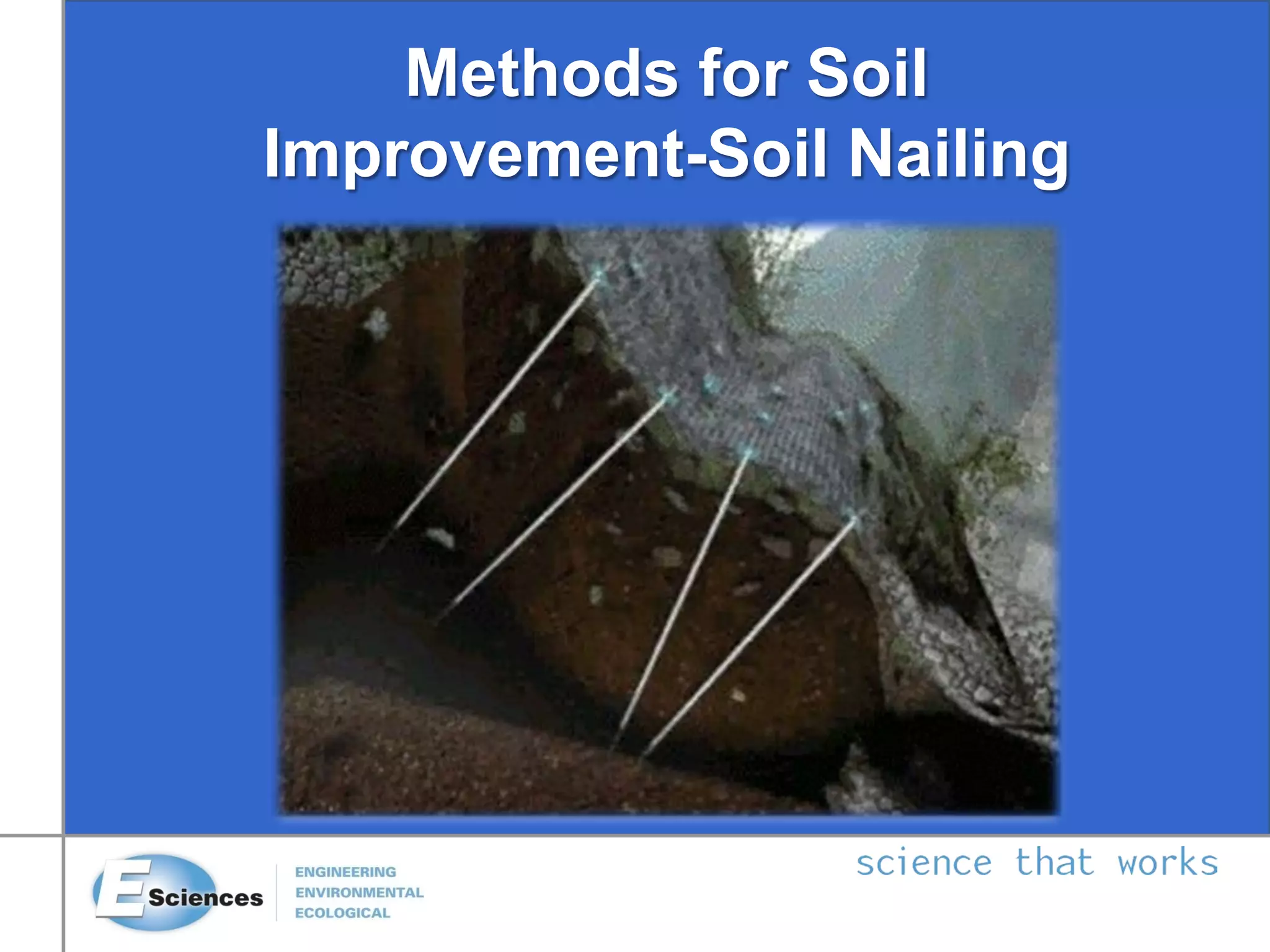
Methods for Soil
Improvement-Soil Nailing
Soil Nailing
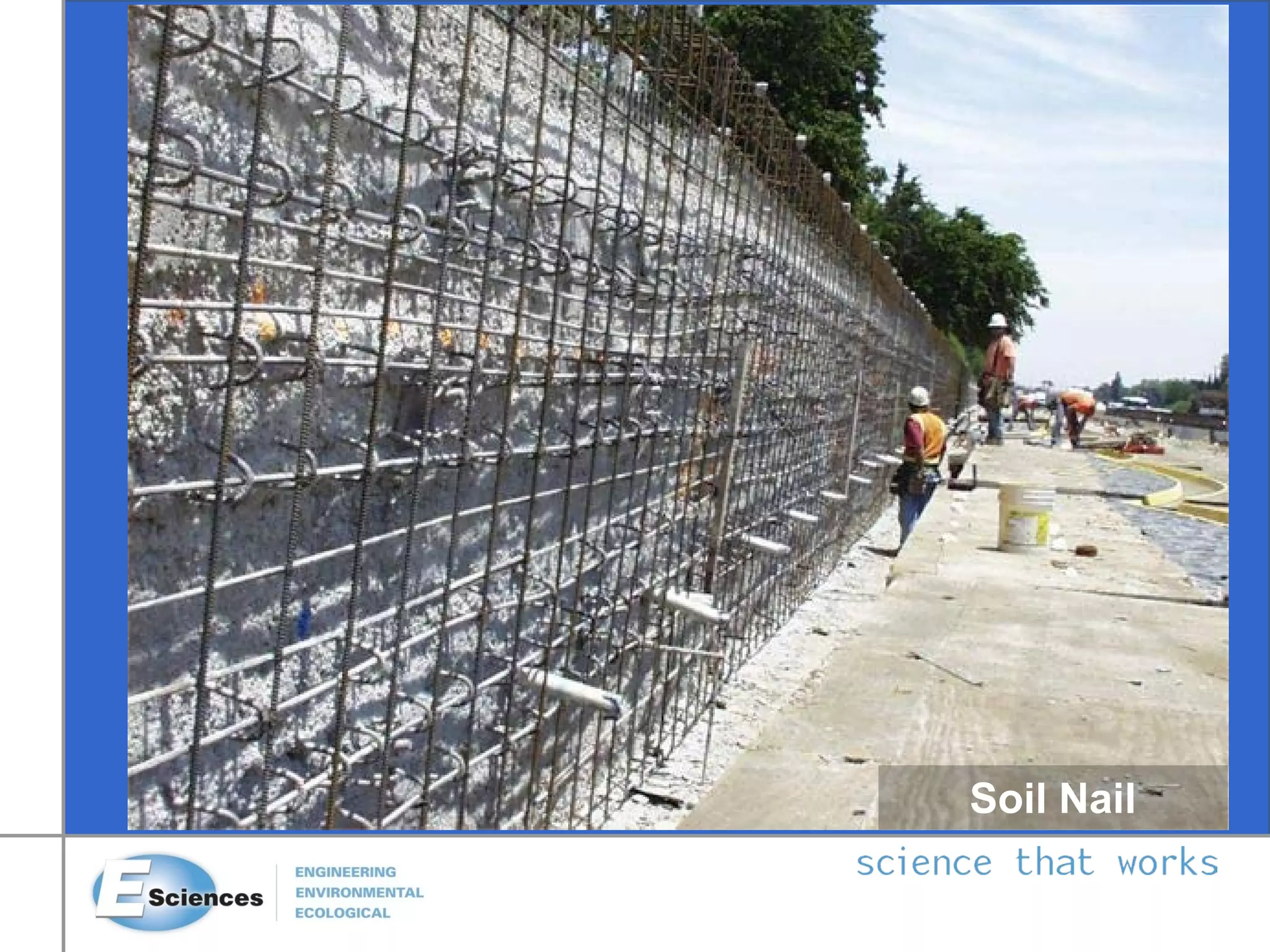
• Earth retention structure that combines
reinforcements and shortcrete to support
excavations, hillside, embankment steeping, etc.
• The nails must have bending stress. The tension
developed in nails provides resisting forces which
stabilize the soil mass.
Soil Nail
• Tiebacks can be used in tension applications to anchor
retaining walls.
• Helical tiebacks have shorter bond lengths than grouted
ones so they can be used where space is limited.
Tension Anchor
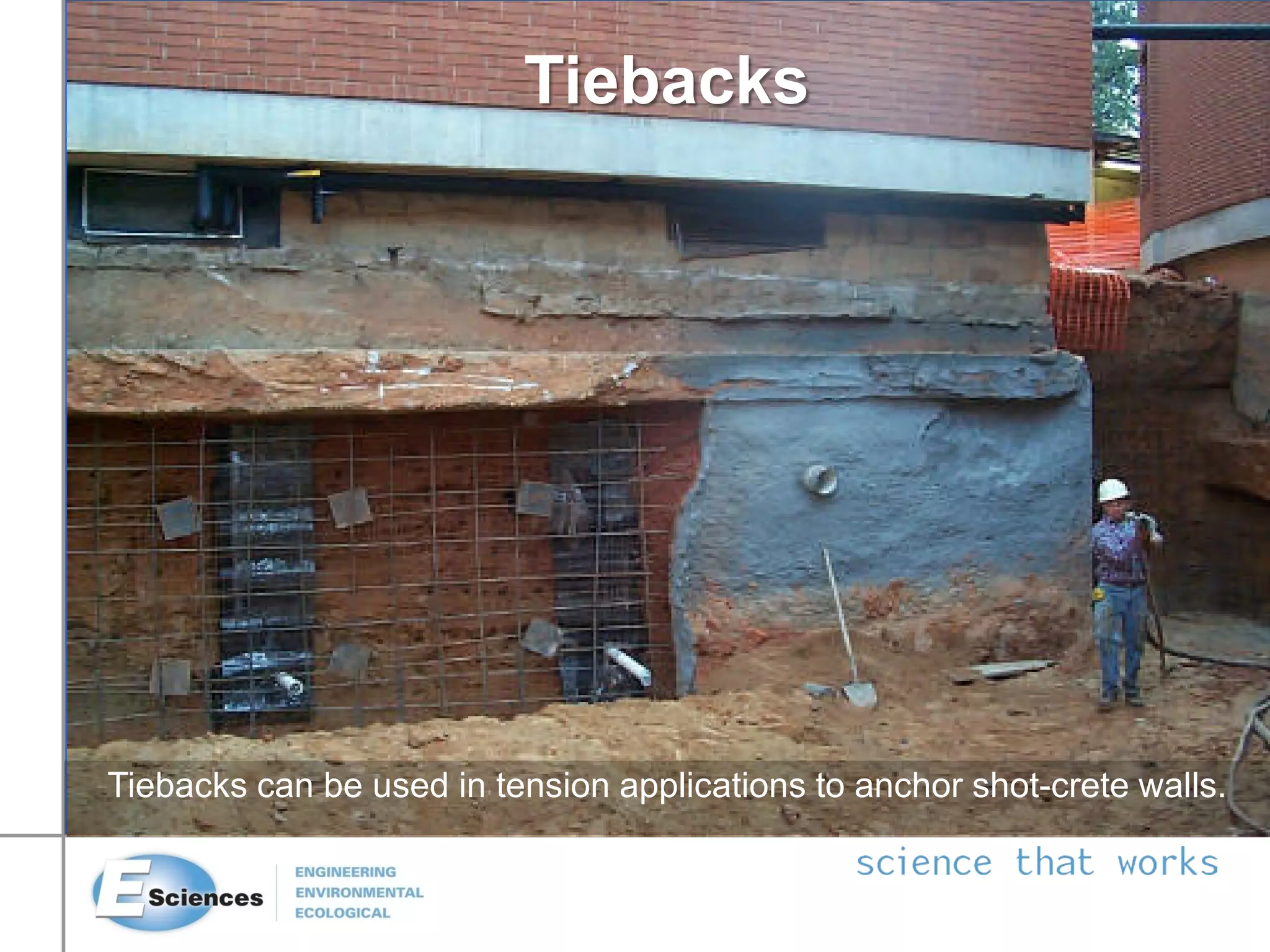
Tiebacks can be used in tension applications to anchor shot-crete walls.
Tiebacks
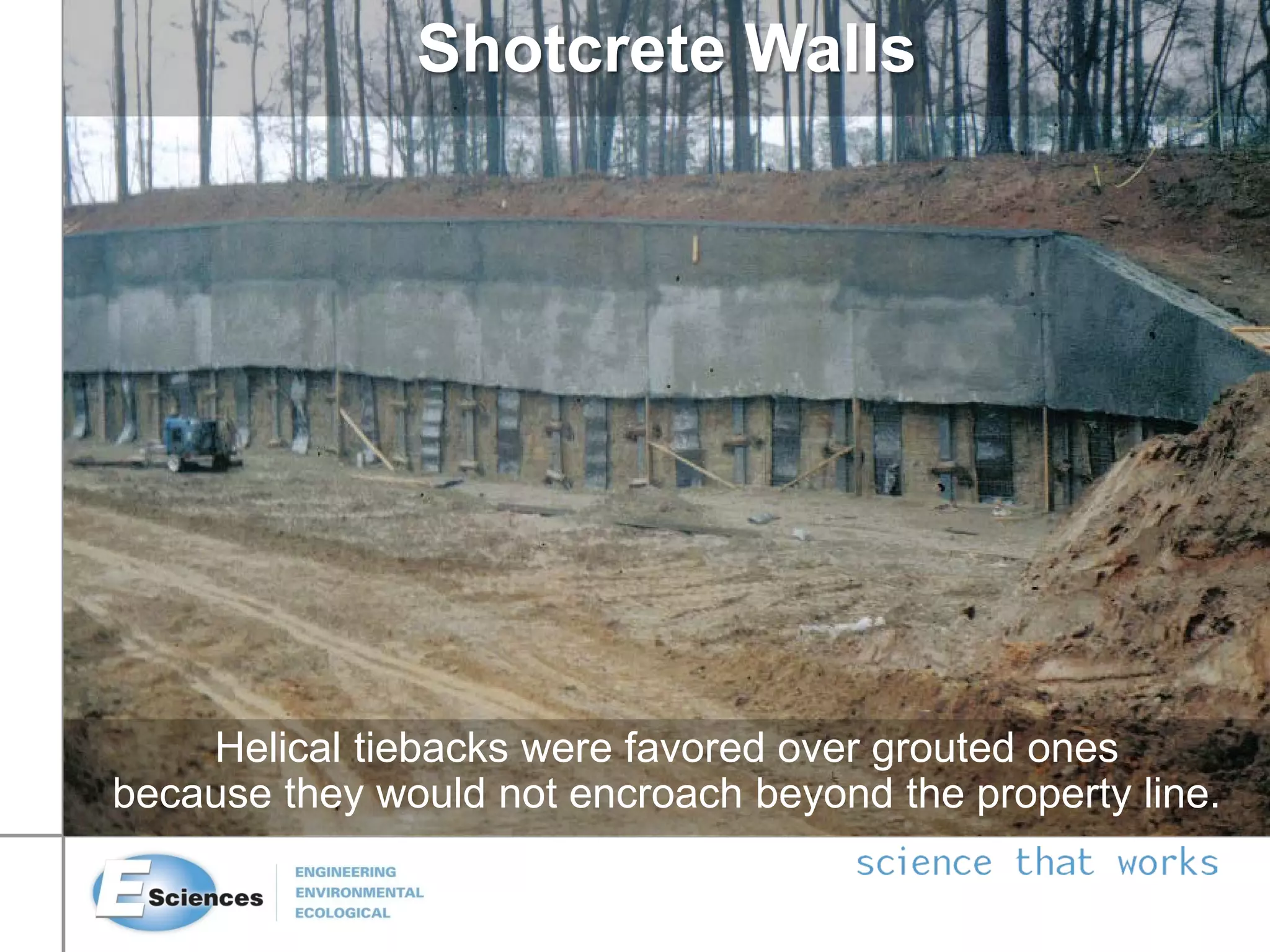
Shotcrete Walls
Helical tiebacks were favored over grouted ones
because they would not encroach beyond the property line.
Recesses were formed in the wall to allow the tiebacks
to be stressed against bearing plates.
Stressing Tiebacks
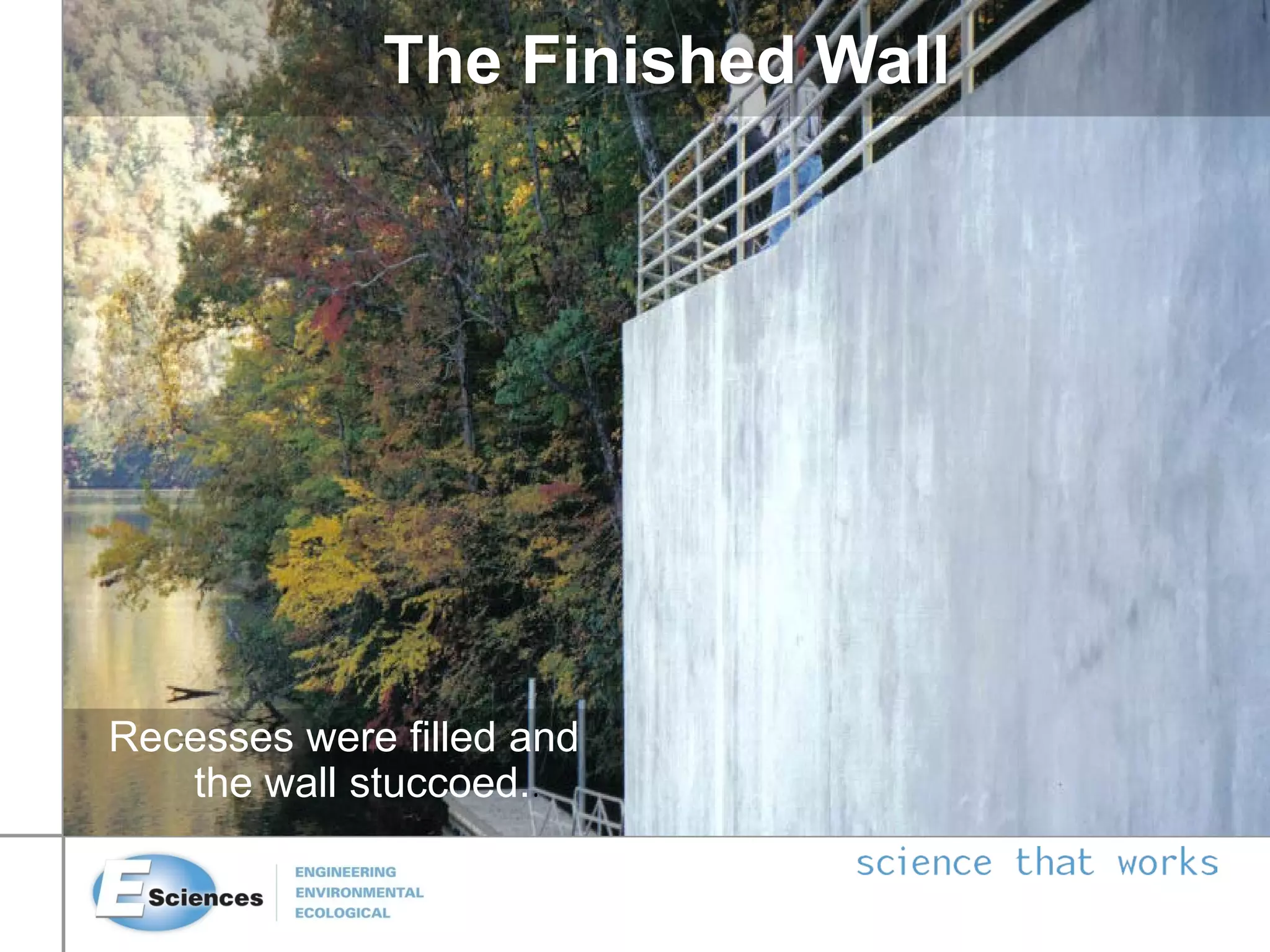
Recesses were filled and
the wall stuccoed..
The Finished Wall
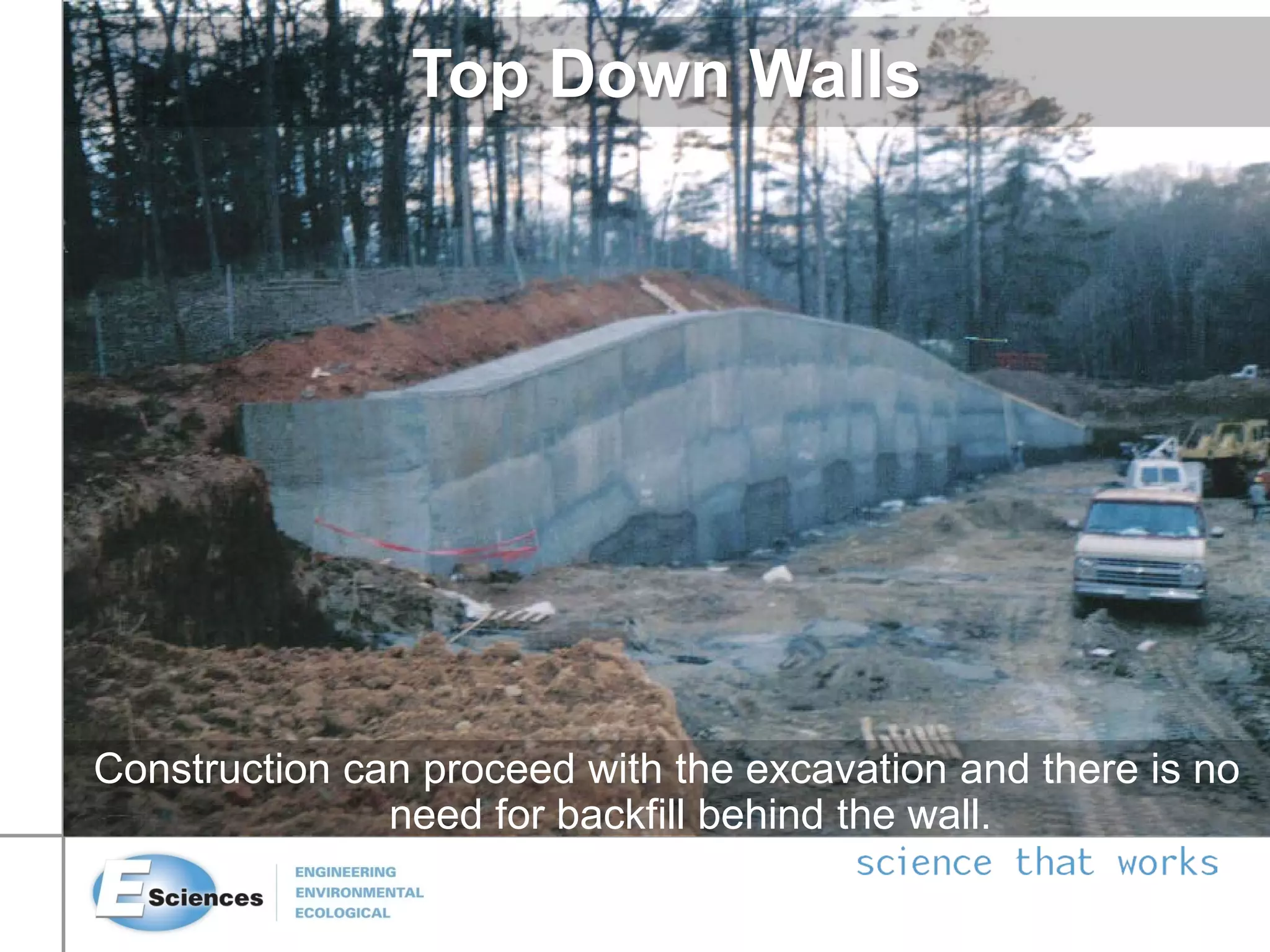
Construction can proceed with the excavation and there is no
need for backfill behind the wall.
Top Down Walls
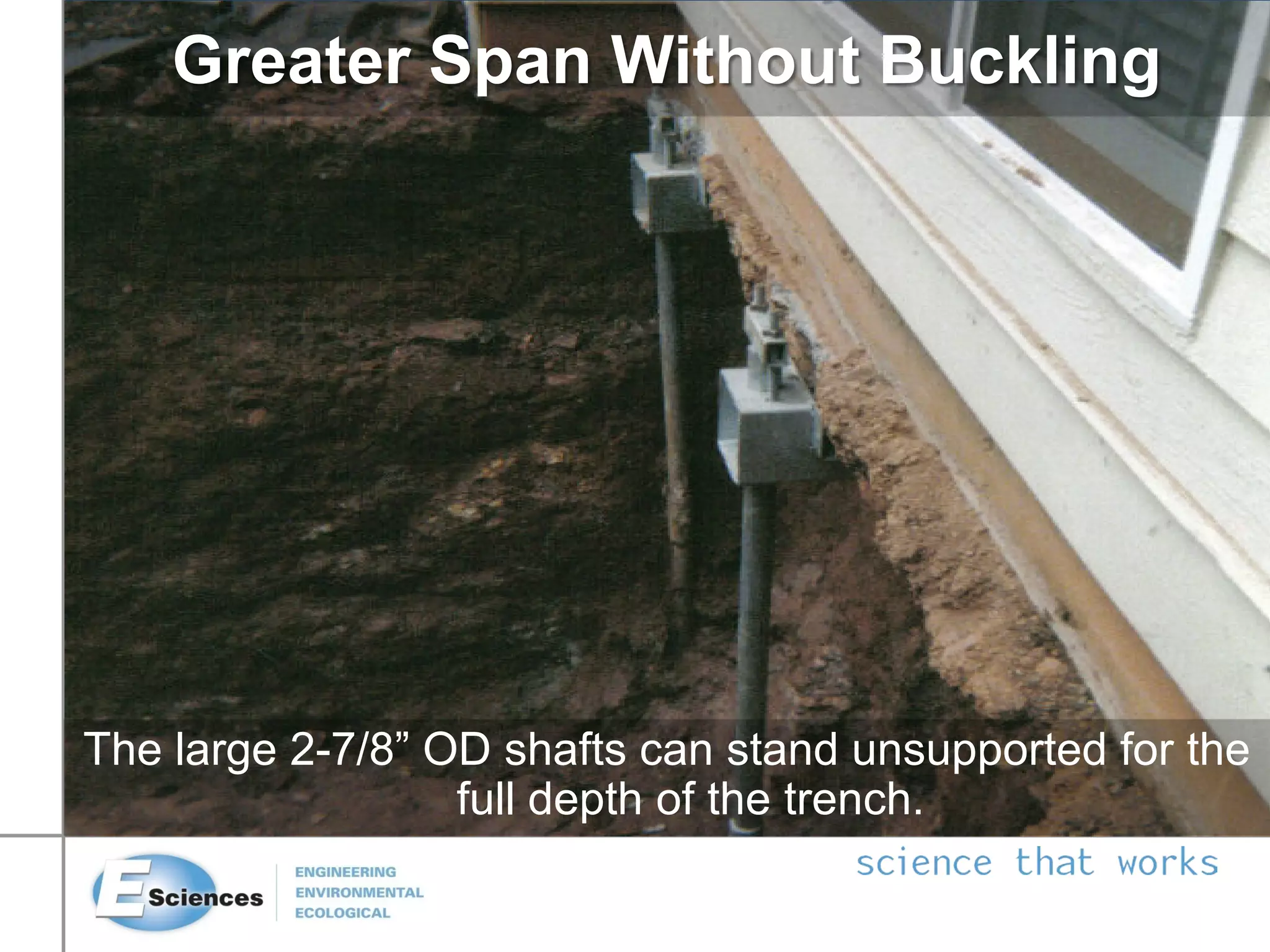
The large 2-7/8” OD shafts can stand unsupported for the
full depth of the trench.
Greater Span Without Buckling
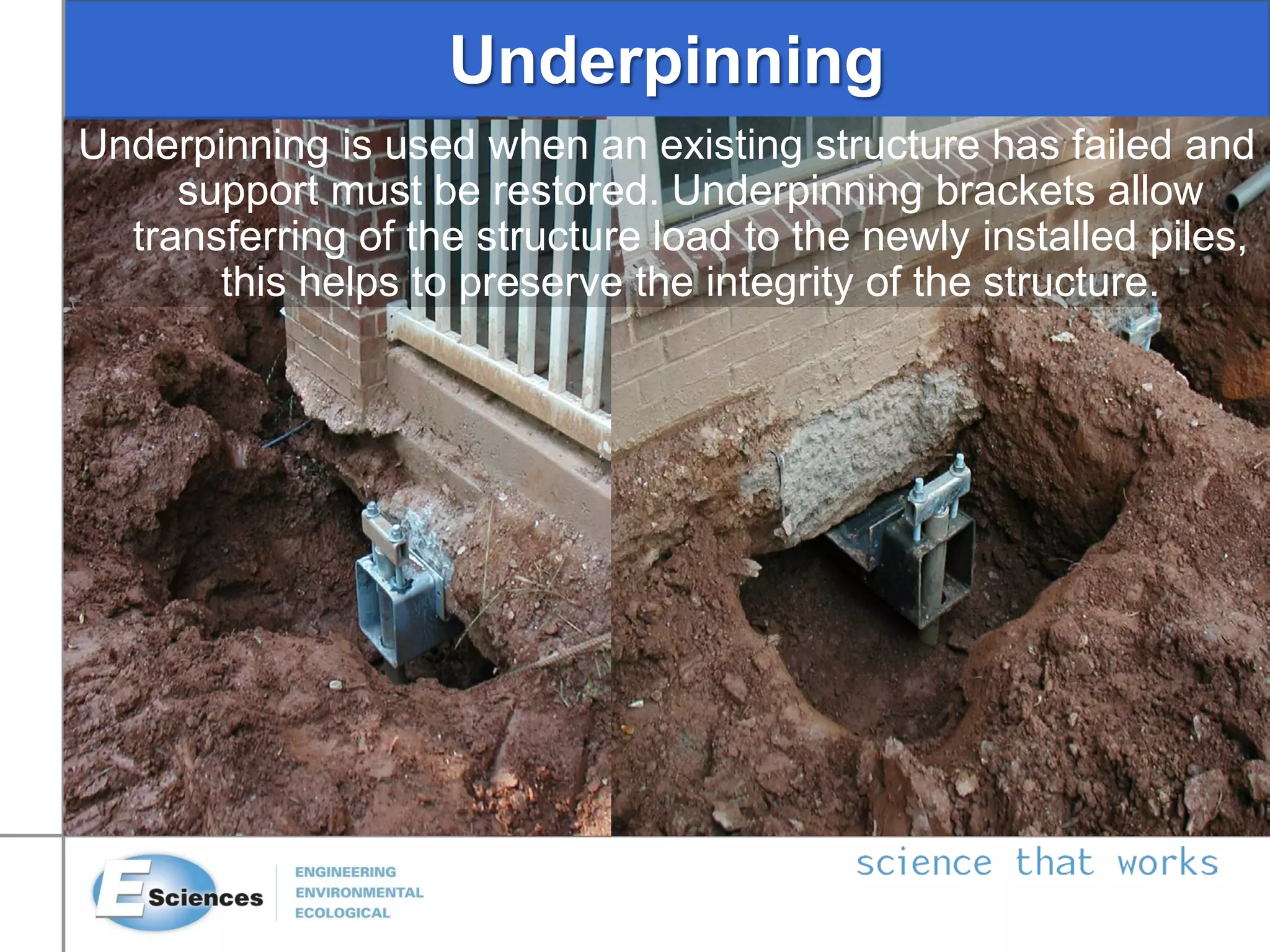
Underpinning
Underpinning is used when an existing structure has failed and
support must be restored. Underpinning brackets allow
transferring of the structure load to the newly installed piles,
this helps to preserve the integrity of the structure.
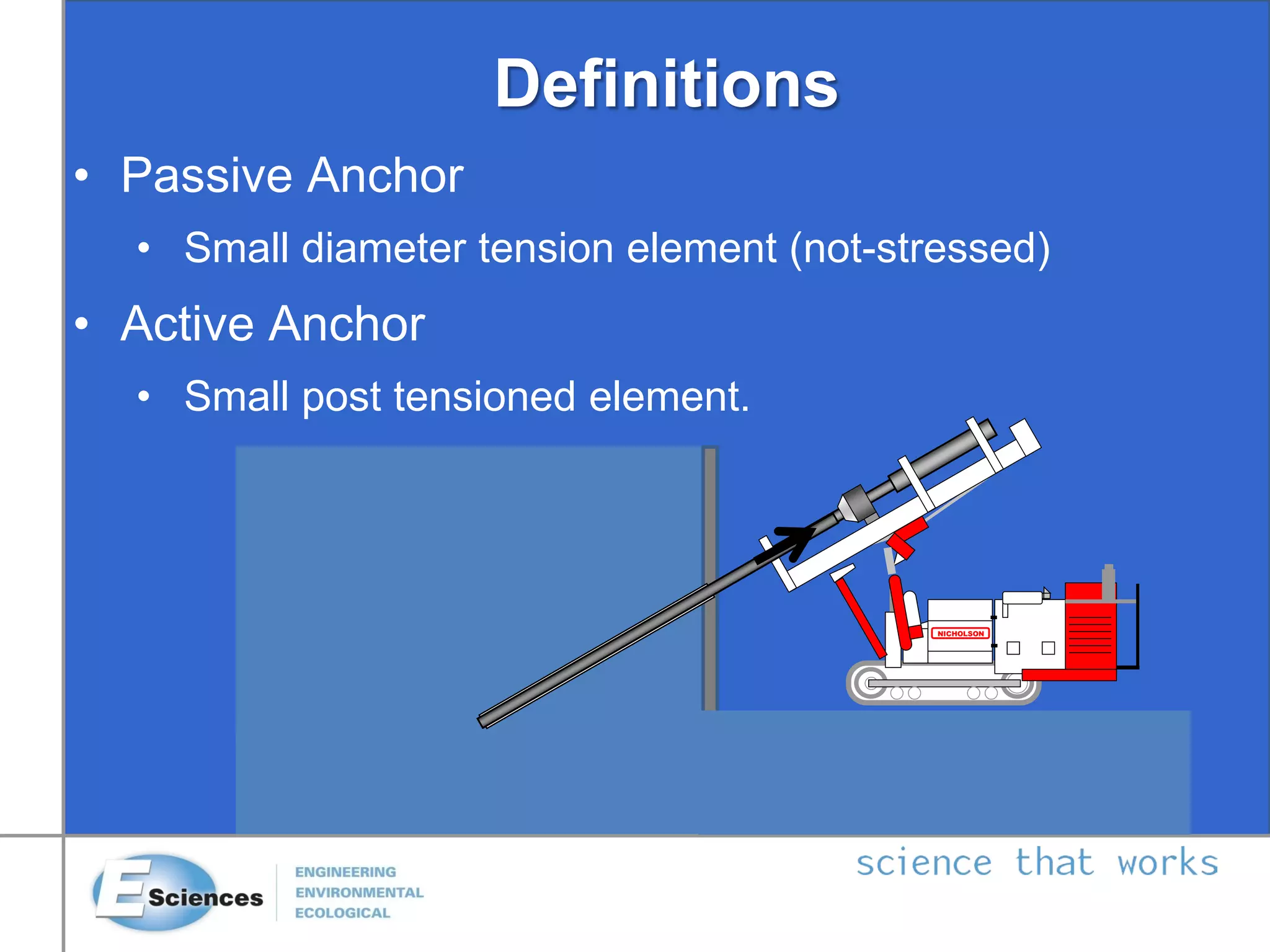
• Passive Anchor
• Small diameter tension element (not-stressed)
• Active Anchor
• Small post tensioned element.
Definitions
NICHOLSON
Definitions
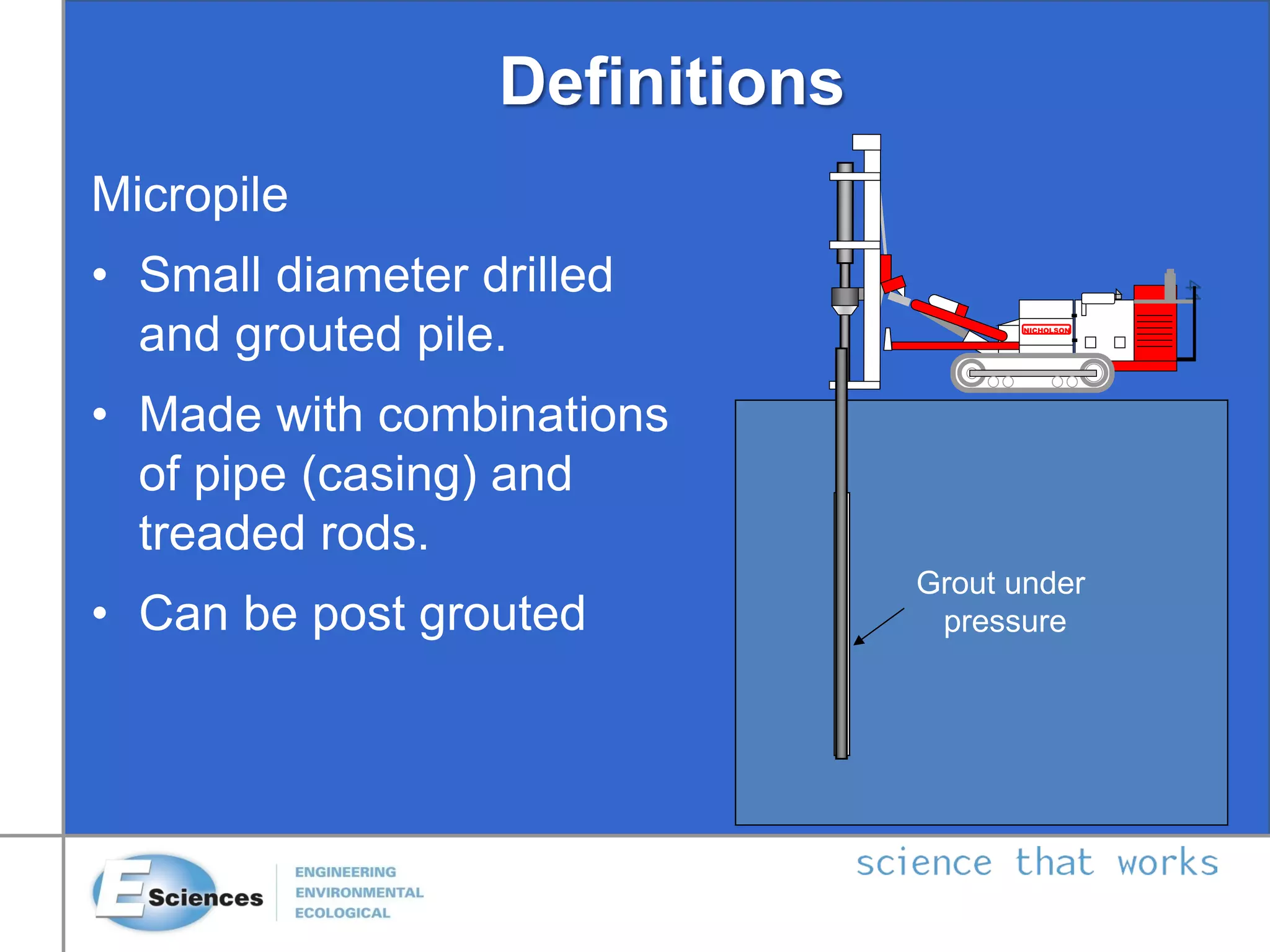
Micropile
• Small diameter drilled
and grouted pile.
• Made with combinations
of pipe (casing) and
treaded rods.
• Can be post grouted
41
NICHOLSON
Grout under
pressure
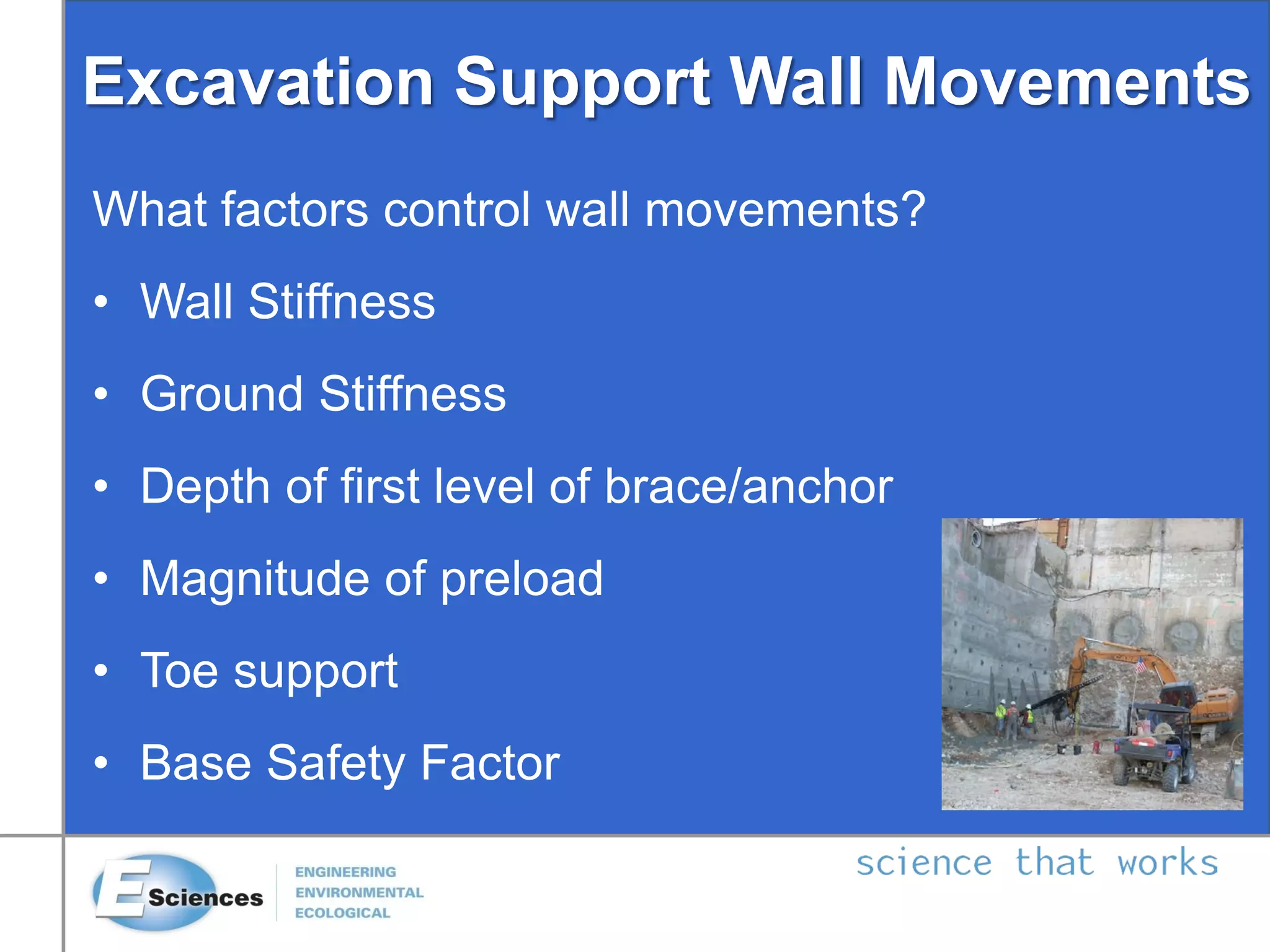
Excavation Support Wall Movements
What factors control wall movements?
• Wall Stiffness
• Ground Stiffness
• Depth of first level of brace/anchor
• Magnitude of preload
• Toe support
• Base Safety Factor
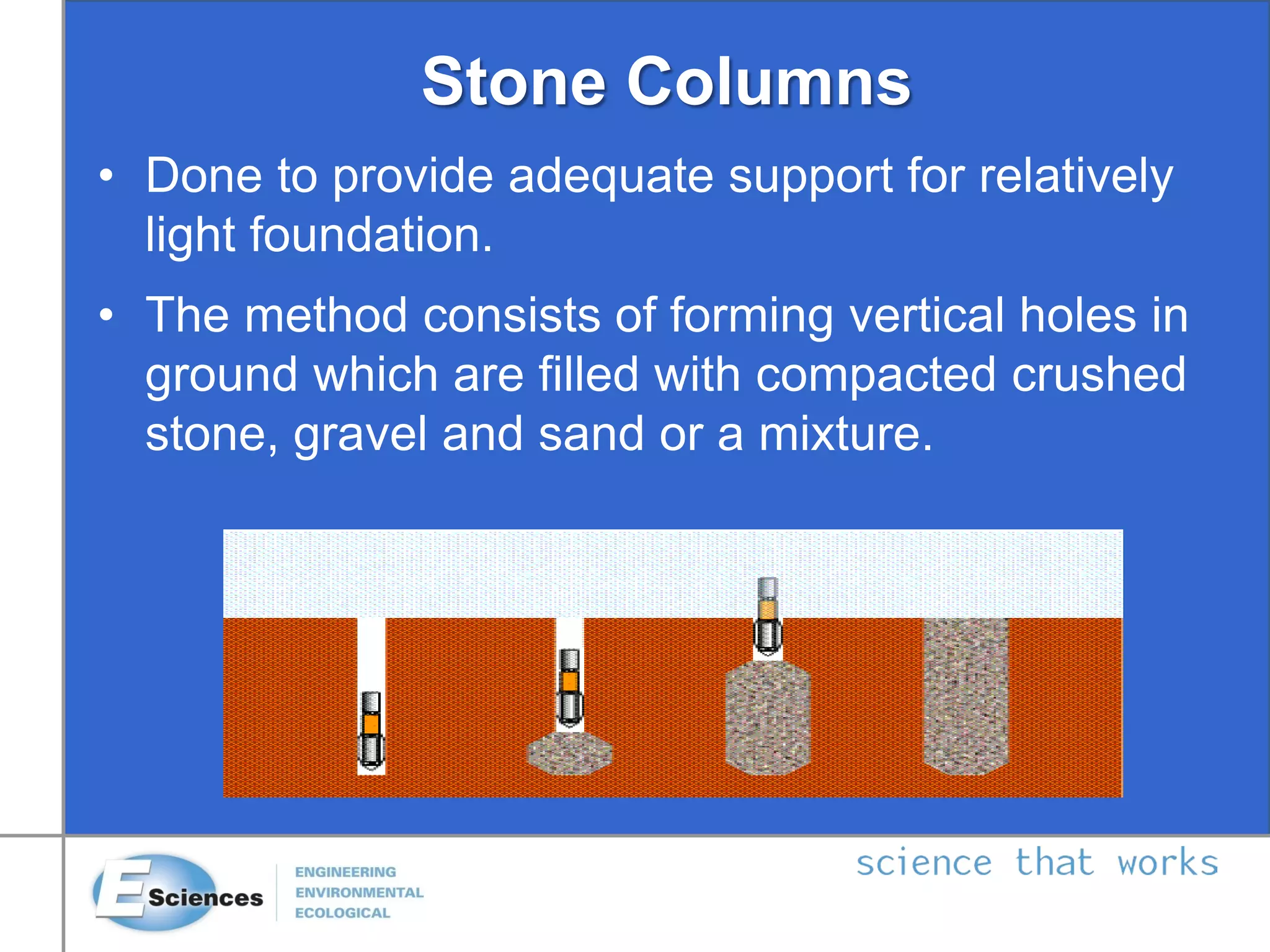
Stone Columns
• Done to provide adequate support for relatively
light foundation.
• The method consists of forming vertical holes in
ground which are filled with compacted crushed
stone, gravel and sand or a mixture.
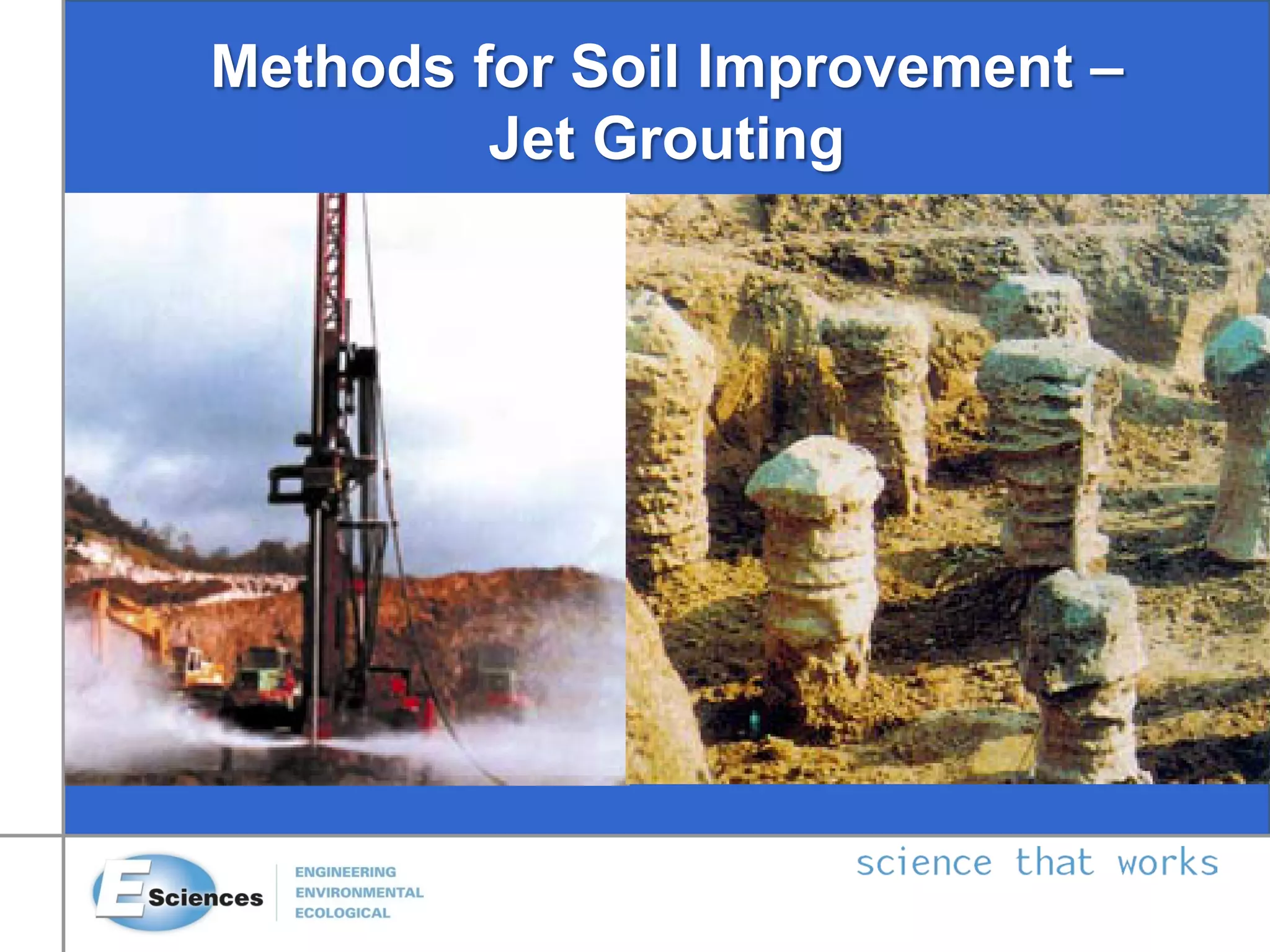
Methods for Soil Improvement –
Jet Grouting
45
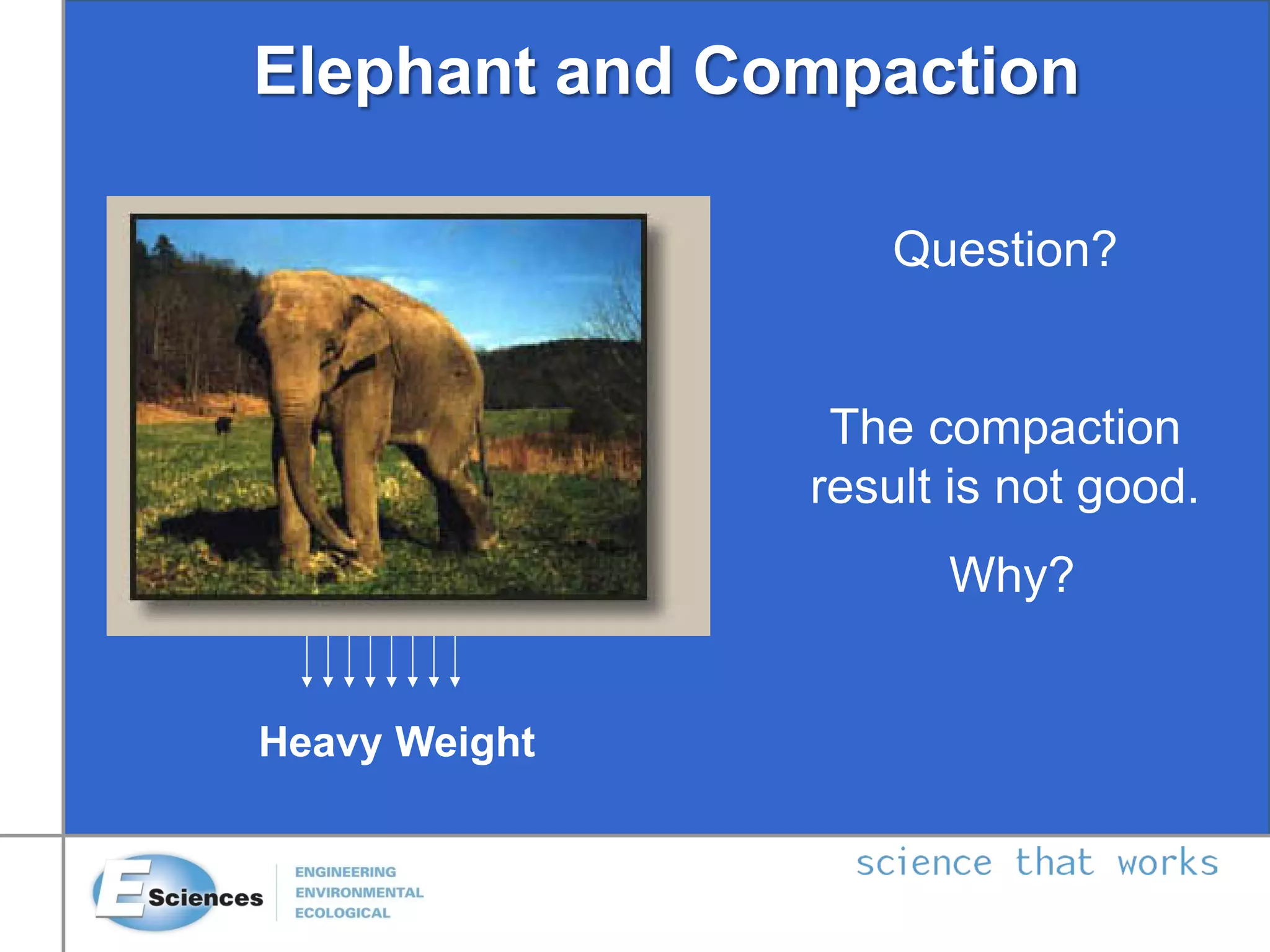
Elephant and Compaction
Heavy Weight
Question?
The compaction
result is not good.
Why?
Compaction and Objectives
Compaction
• Many types of earth construction, (dams, retaining walls,
highways, airport) require man-placed soil, or fill. To compact
a soil, that is, to place it in a dense state.
• The dense state is achieved through the reduction of the air
voids in the soil, with little or no reduction in the water
content. This process must not be confused with
consolidation, in which water is squeezed out under the
action of a continuous static load.
Objectives
• Decrease future settlements
• Increase shear strength
• Decrease permeability
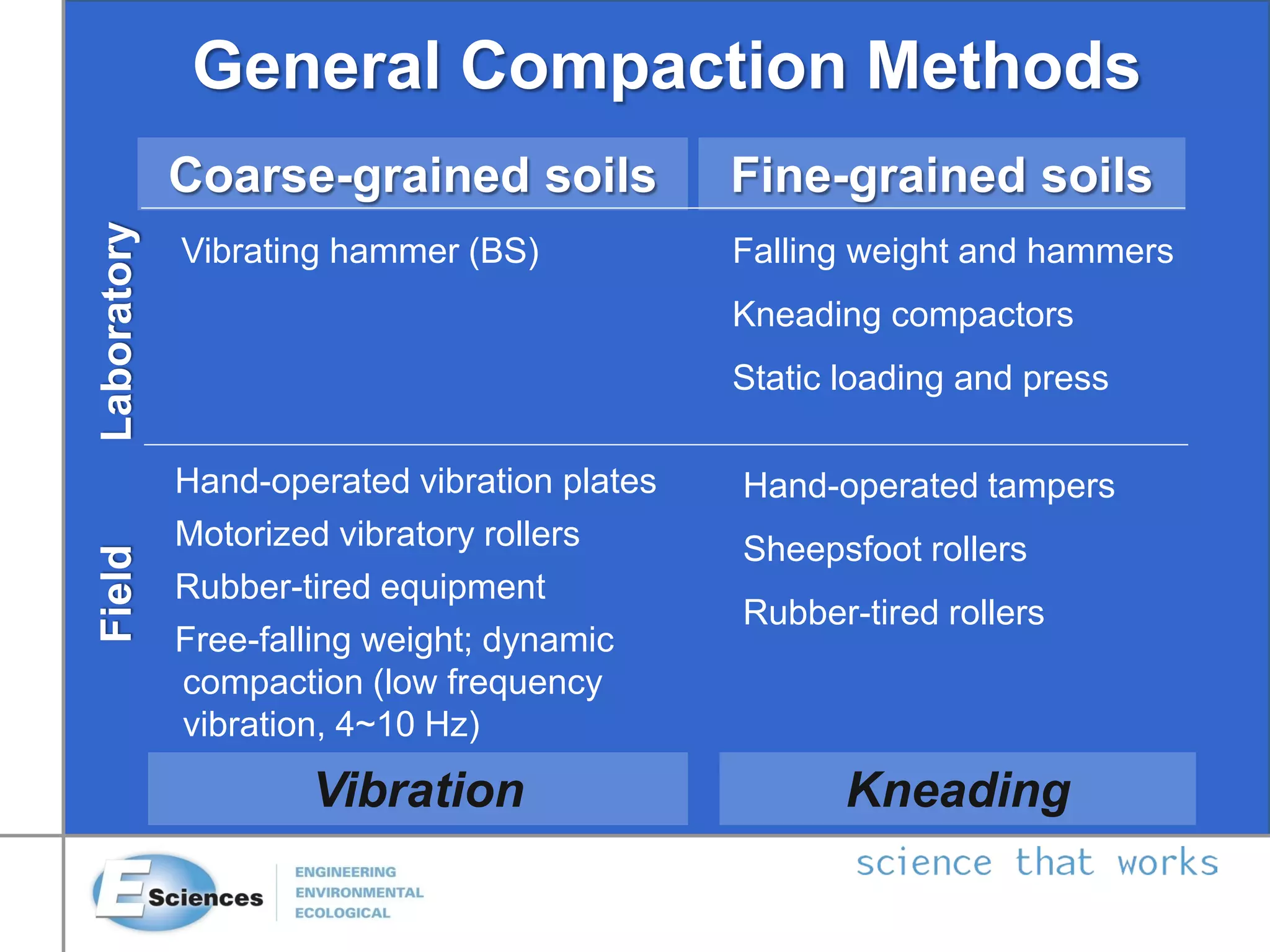
Coarse-grained soils Fine-grained soils
Hand-operated vibration plates
Motorized vibratory rollers
Rubber-tired equipment
Free-falling weight; dynamic
compaction (low frequency
vibration, 4~10 Hz)
Falling weight and hammers
Kneading compactors
Static loading and press
Hand-operated tampers
Sheepsfoot rollers
Rubber-tired rollers
LaboratoryField
Vibration
Vibrating hammer (BS)
Kneading
General Compaction Methods
Field Compaction Equipment
and Procedures
49
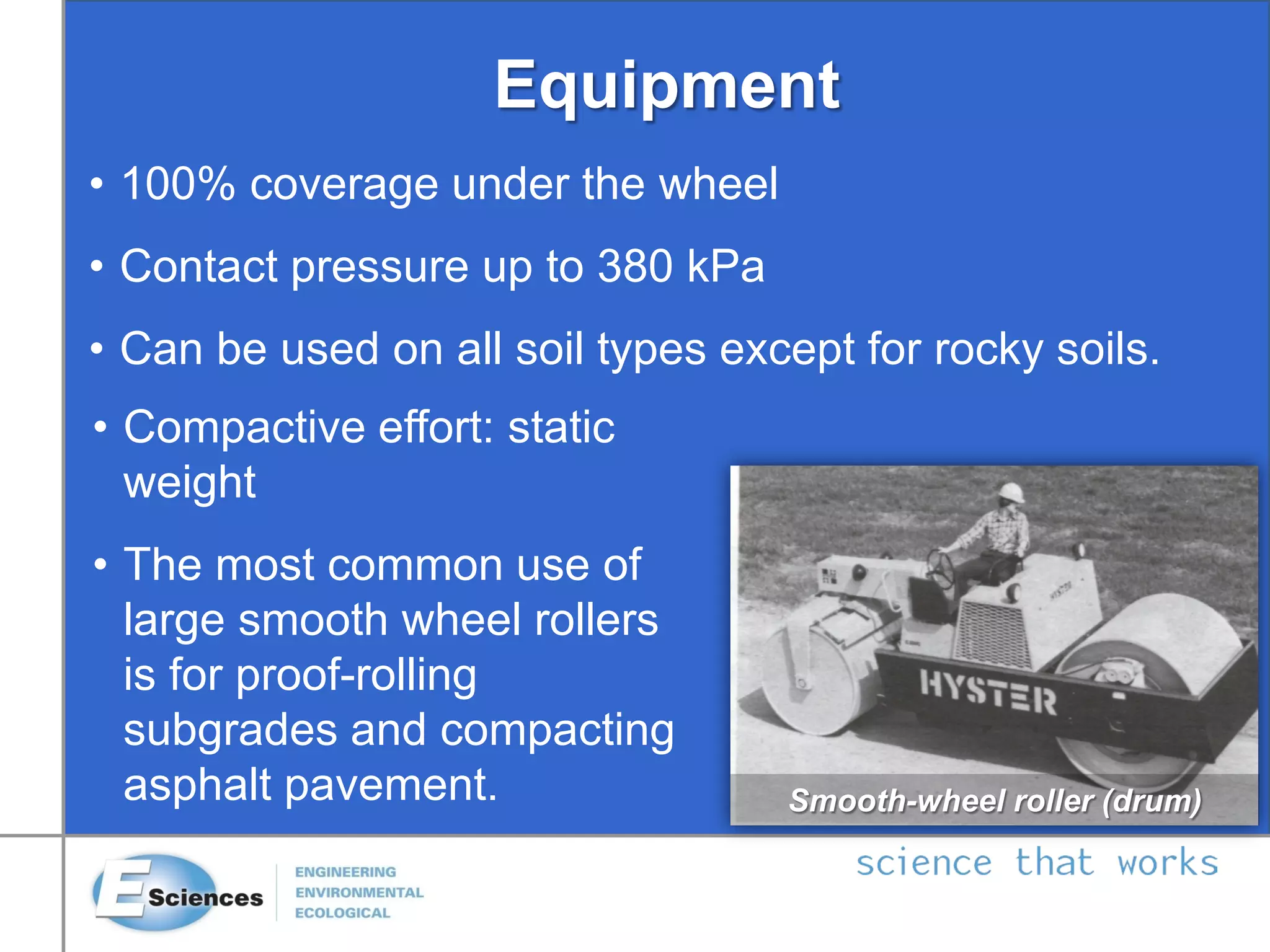
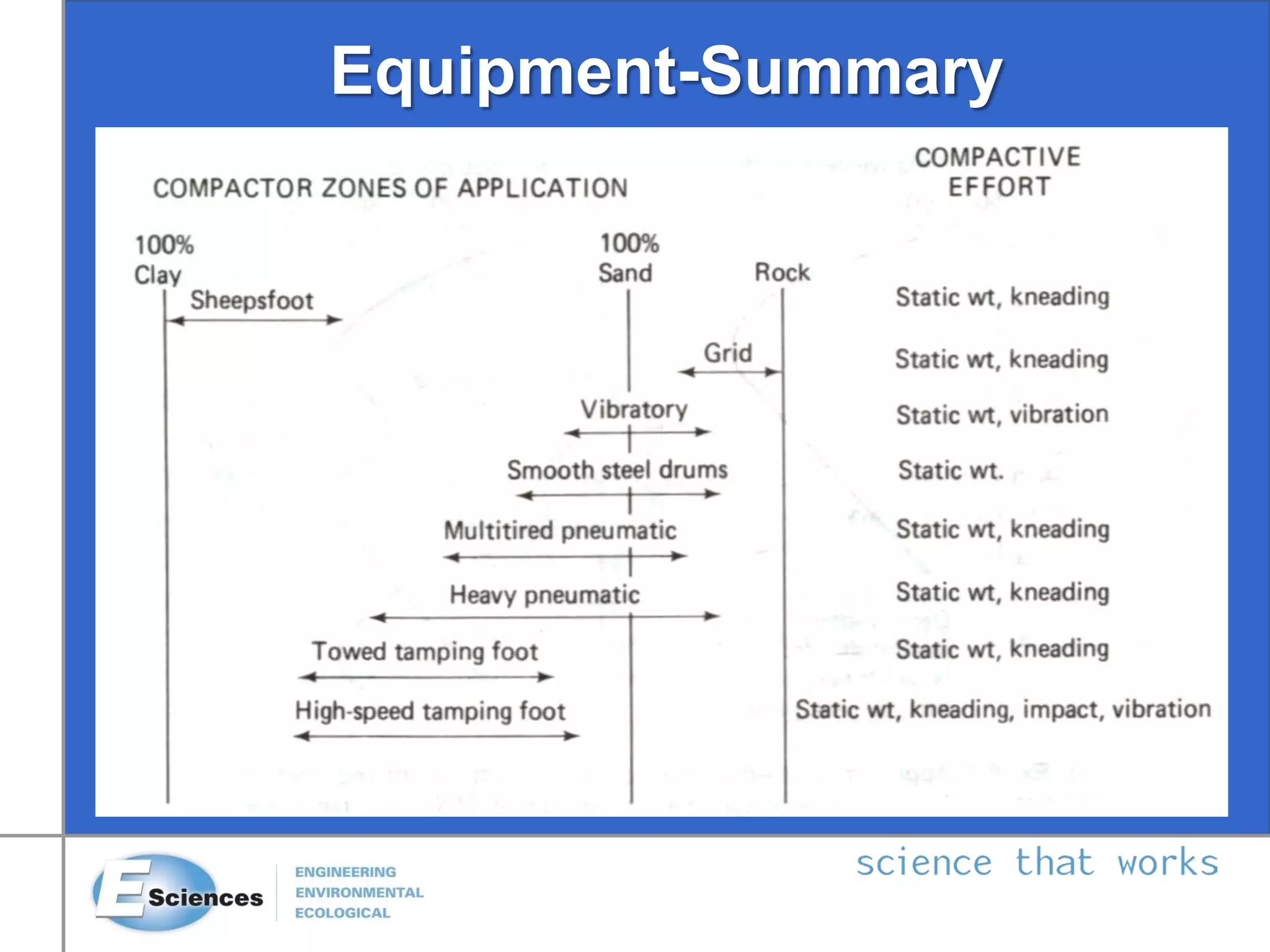
Equipment
Smooth-wheel roller (drum)
• 100% coverage under the wheel
• Contact pressure up to 380 kPa
• Can be used on all soil types except for rocky soils.
• Compactive effort: static
weight
• The most common use of
large smooth wheel rollers
is for proof-rolling
subgrades and compacting
asphalt pavement.
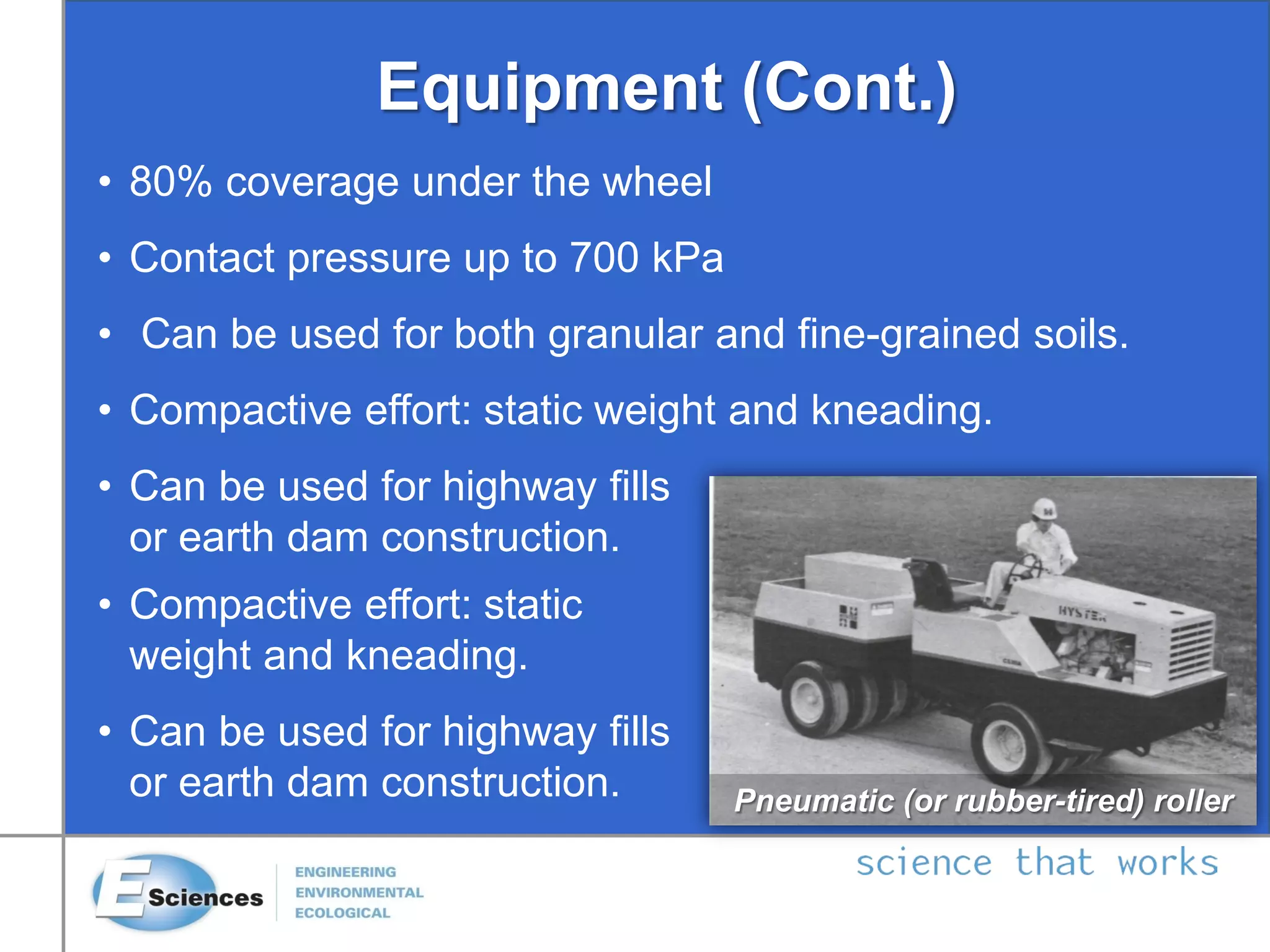
Equipment (Cont.)
Pneumatic (or rubber-tired) roller
• 80% coverage under the wheel
• Contact pressure up to 700 kPa
• Can be used for both granular and fine-grained soils.
• Compactive effort: static weight and kneading.
• Can be used for highway fills
or earth dam construction.
• Compactive effort: static
weight and kneading.
• Can be used for highway fills
or earth dam construction.
Equipment (Cont.)
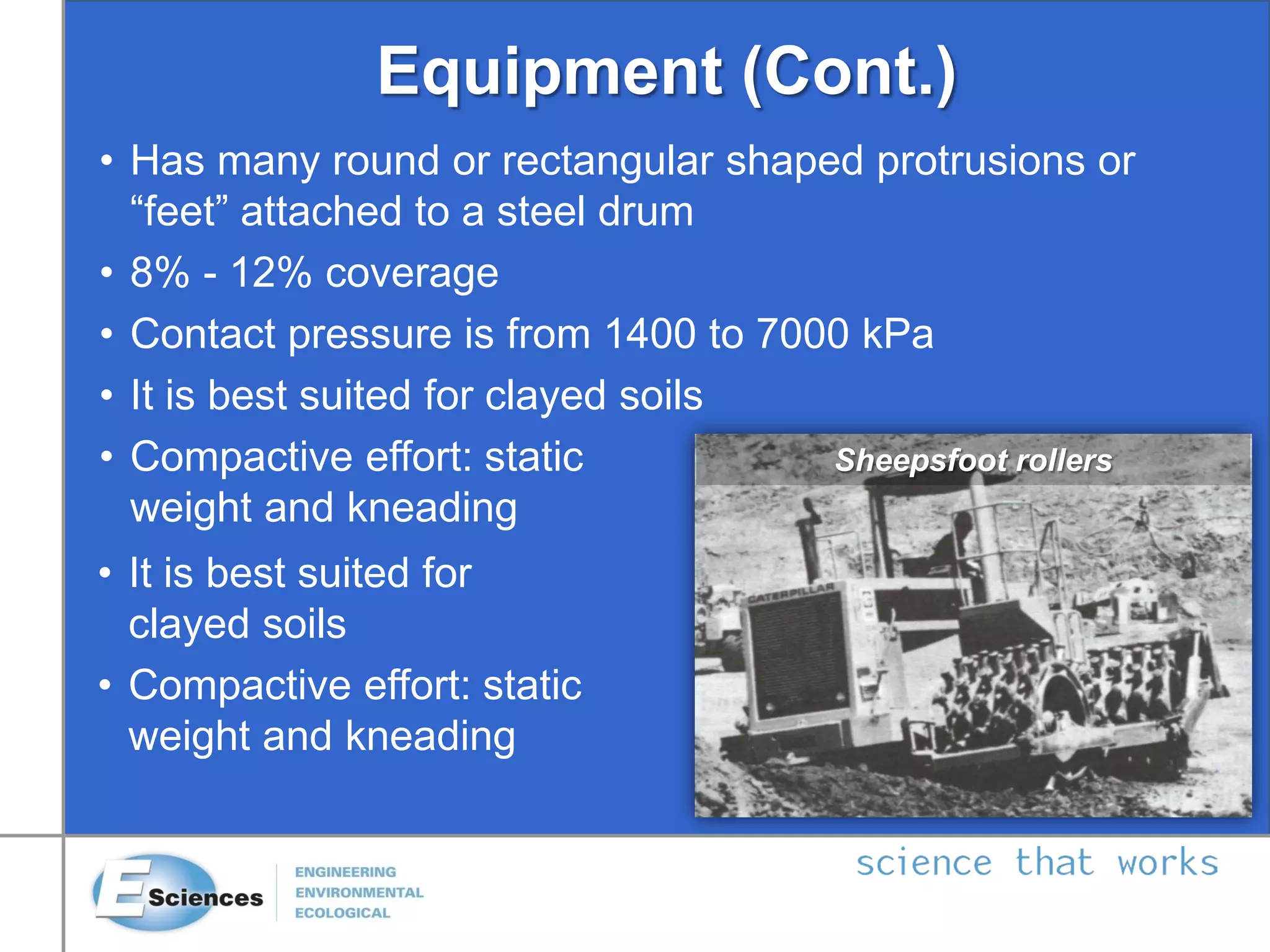
• Has many round or rectangular shaped protrusions or
“feet” attached to a steel drum
• 8% - 12% coverage
• Contact pressure is from 1400 to 7000 kPa
• It is best suited for clayed soils
• Compactive effort: static
weight and kneading
• It is best suited for
clayed soils
• Compactive effort: static
weight and kneading
Sheepsfoot rollers
Equipment (Cont.)
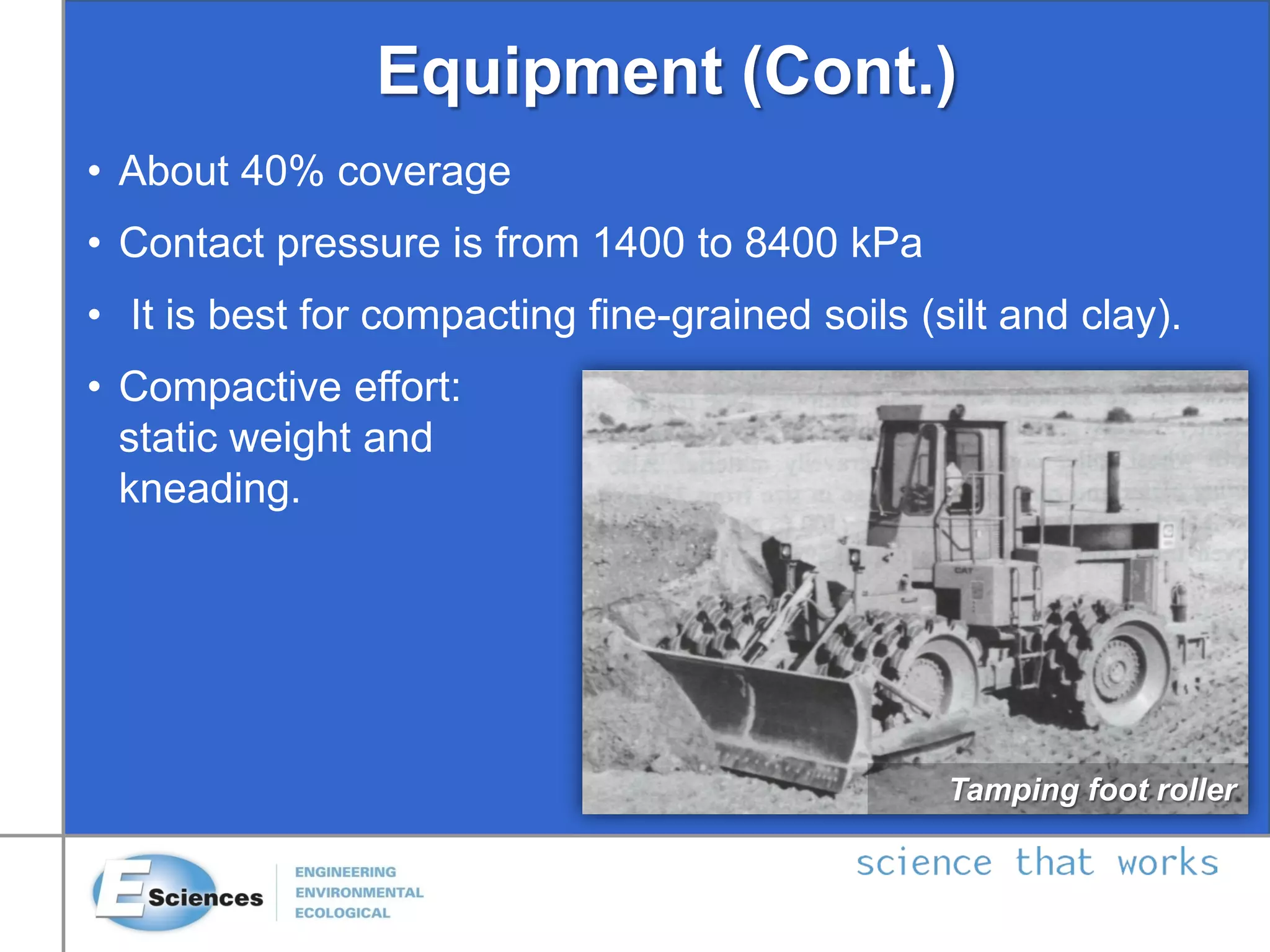
• About 40% coverage
• Contact pressure is from 1400 to 8400 kPa
• It is best for compacting fine-grained soils (silt and clay).
• Compactive effort:
static weight and
kneading.
Tamping foot roller
Equipment (Cont.)
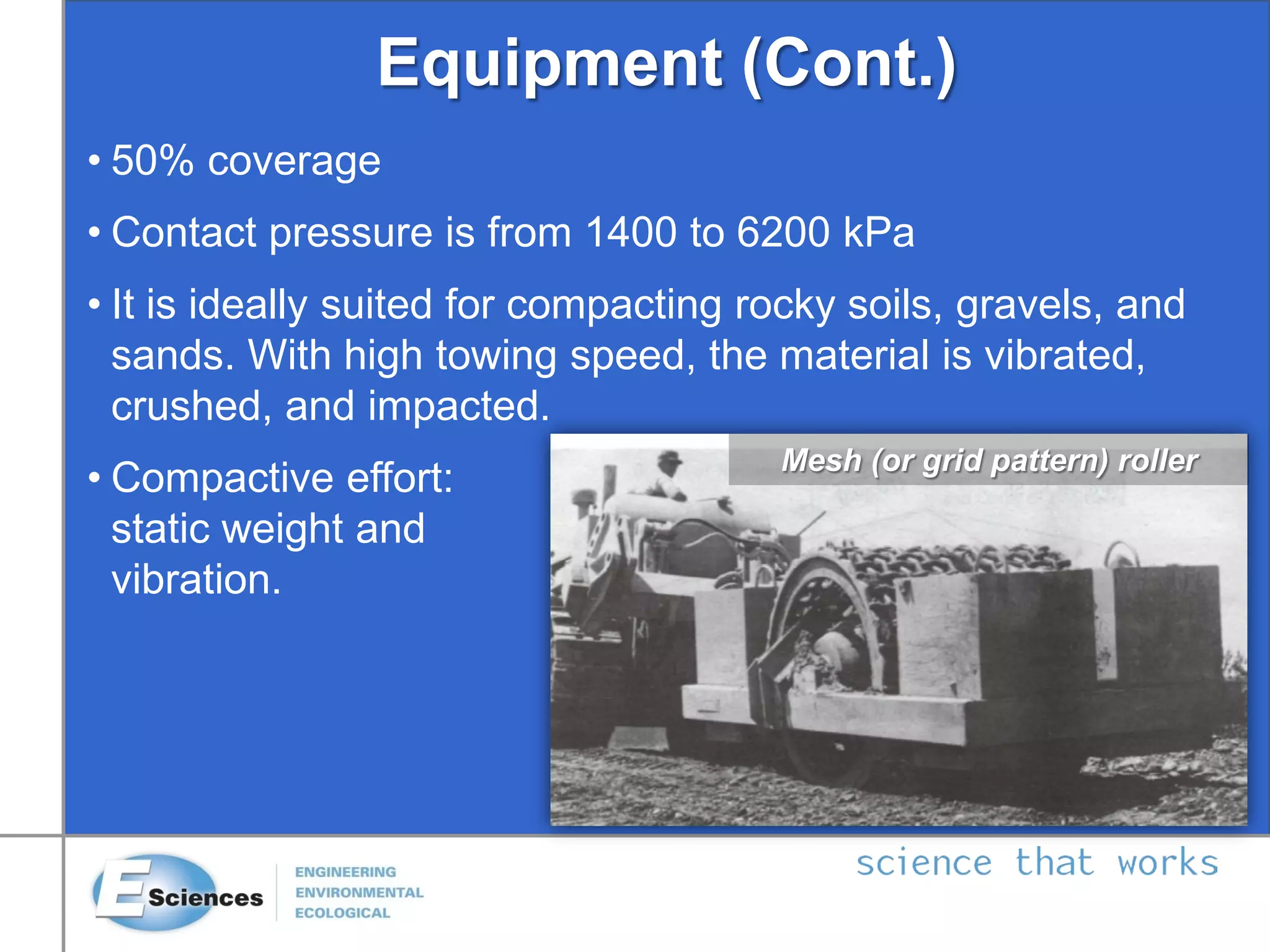
• 50% coverage
• Contact pressure is from 1400 to 6200 kPa
• It is ideally suited for compacting rocky soils, gravels, and
sands. With high towing speed, the material is vibrated,
crushed, and impacted.
• Compactive effort:
static weight and
vibration.
Mesh (or grid pattern) roller
Equipment (Cont.)
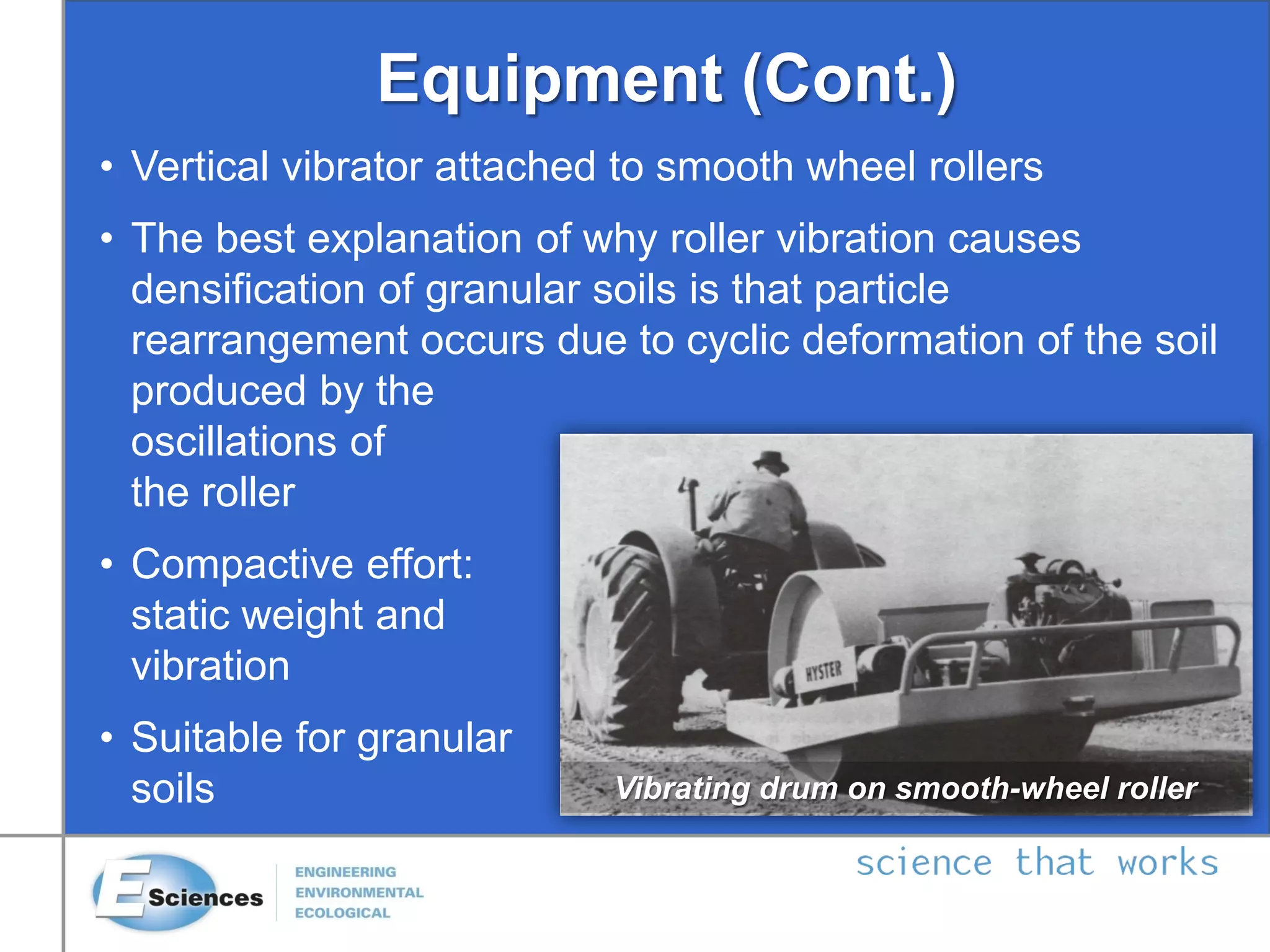
• Vertical vibrator attached to smooth wheel rollers
• The best explanation of why roller vibration causes
densification of granular soils is that particle
rearrangement occurs due to cyclic deformation of the soil
produced by the
oscillations of
the roller
• Compactive effort:
static weight and
vibration
• Suitable for granular
soils Vibrating drum on smooth-wheel roller
Equipment-Summary
56
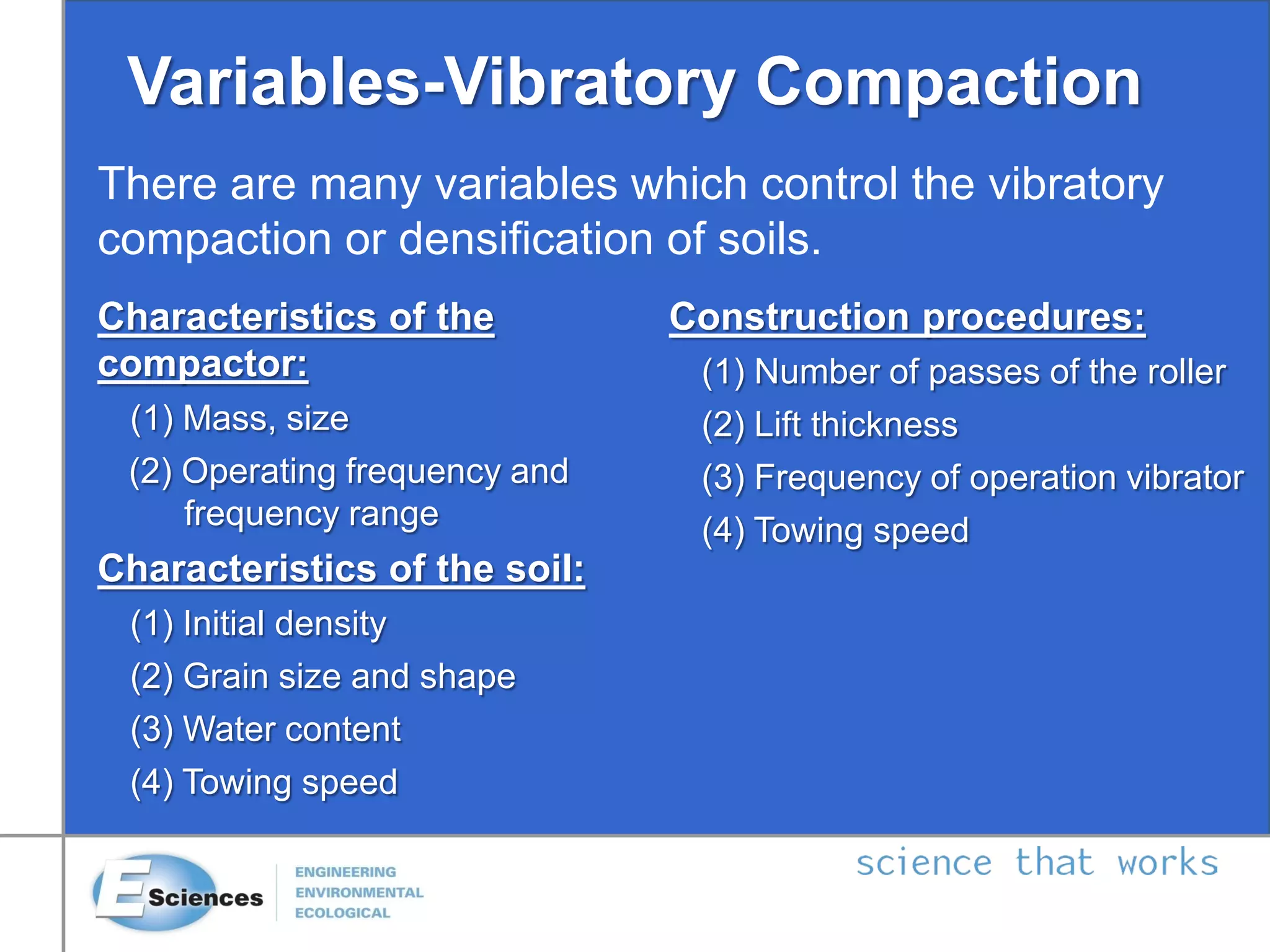
Variables-Vibratory Compaction
Characteristics of the
compactor:
(1) Mass, size
(2) Operating frequency and
frequency range
Characteristics of the soil:
(1) Initial density
(2) Grain size and shape
(3) Water content
(4) Towing speed
Construction procedures:
(1) Number of passes of the roller
(2) Lift thickness
(3) Frequency of operation vibrator
(4) Towing speed
There are many variables which control the vibratory
compaction or densification of soils.
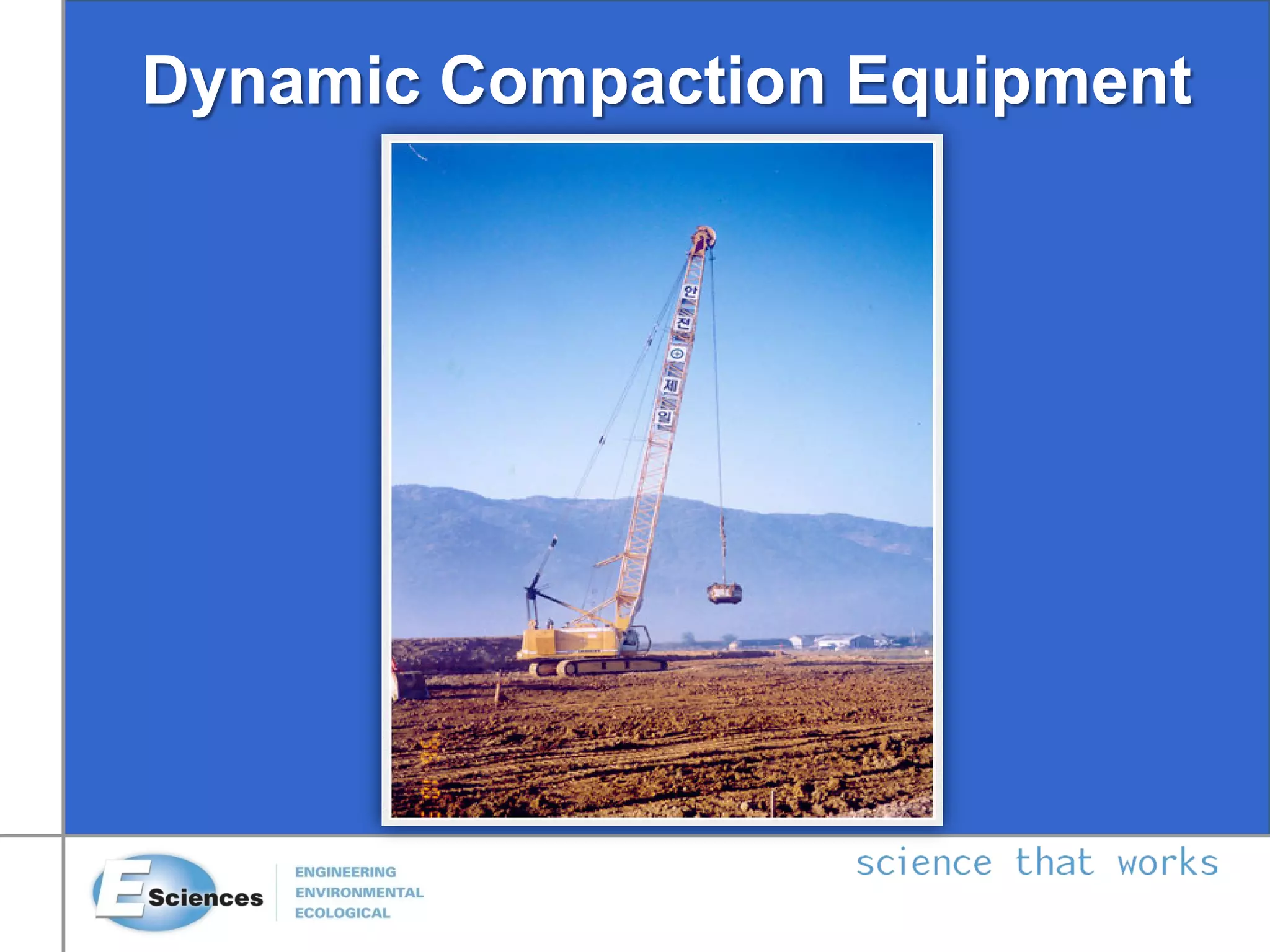
Dynamic Compaction
• This involves in increasing the density of soil
near the surface by tamping.
• Density improvement up to 10m is feasible.
• This method consists of dropping heavy mass
of 8 to 40 tonnes known as pounder on the
surface from a height 5 to 30m
58
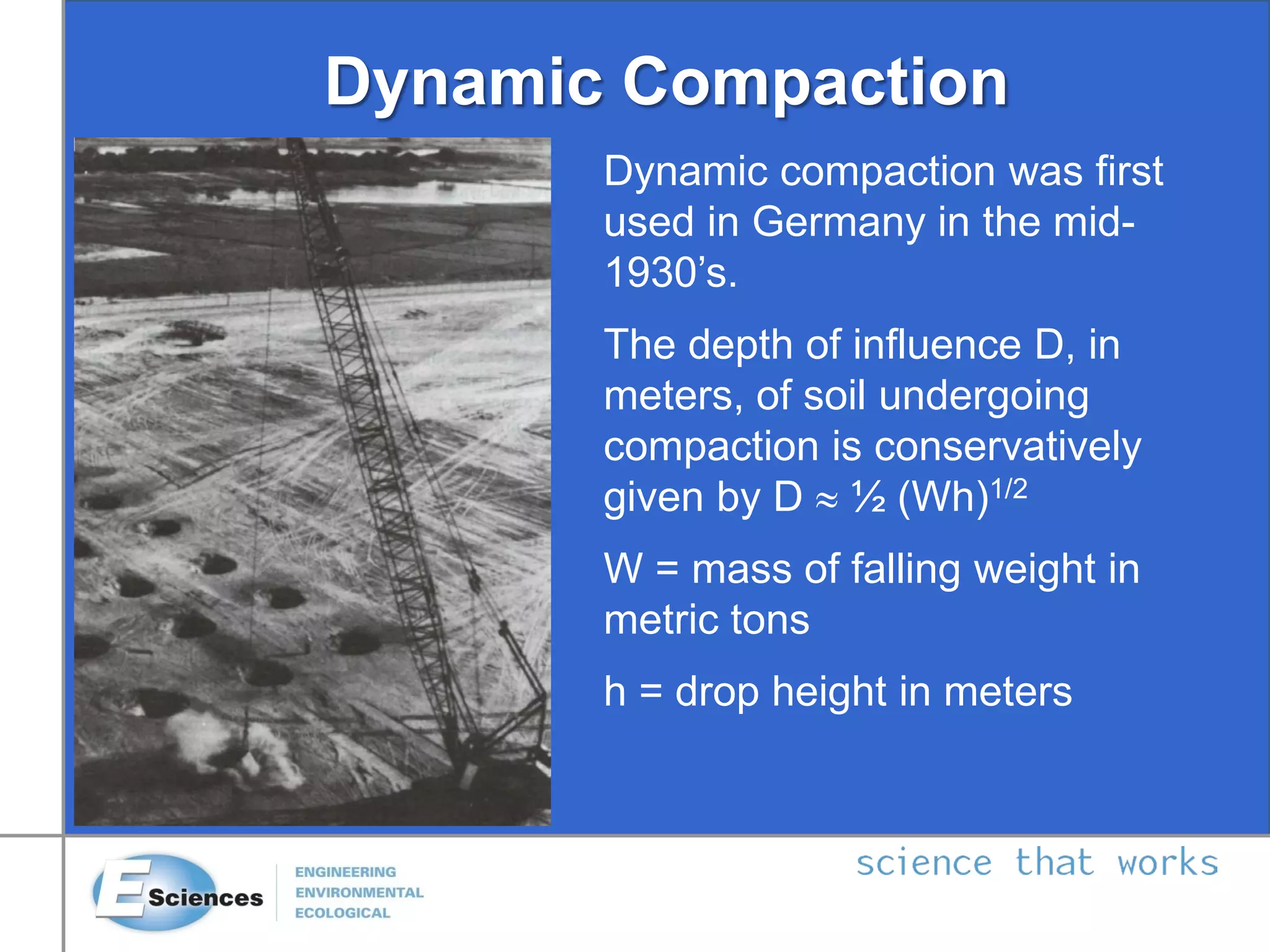
Dynamic Compaction
Dynamic compaction was first
used in Germany in the mid-
1930’s.
The depth of influence D, in
meters, of soil undergoing
compaction is conservatively
given by D ≈ ½ (Wh)1/2
W = mass of falling weight in
metric tons
h = drop height in meters
Dynamic Compaction Equipment
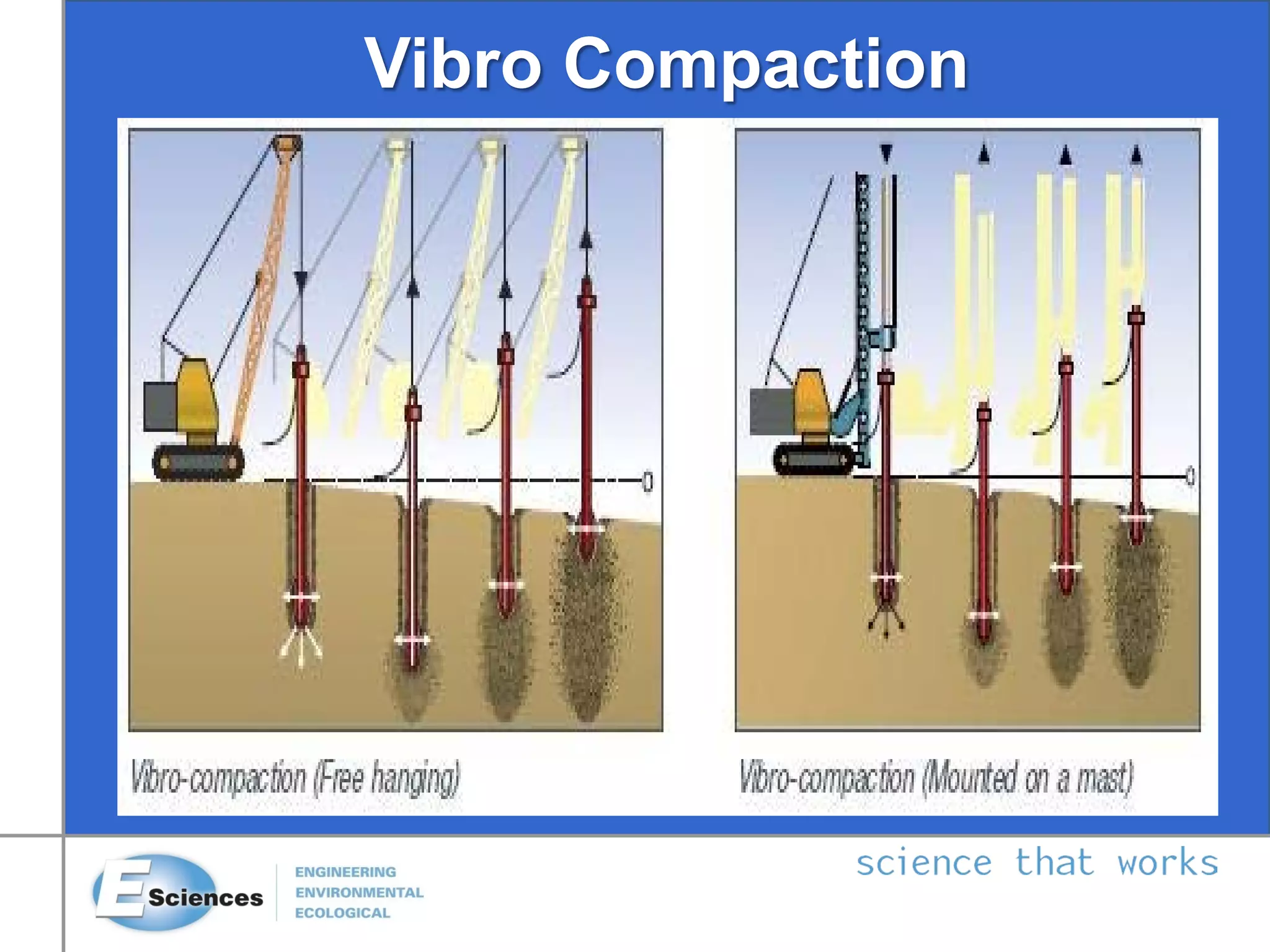
Vibro Compaction
• For loose sand deposits, the density index can
be increased by vibro compaction.
• This process employs a depth vibrator
suspended from crane.
• Compaction of sand can be achieved up to
distance of 2.5m from axis of vibrator.
• Compaction can be carried out to significant
depths up to 12m.
Vibro Compaction
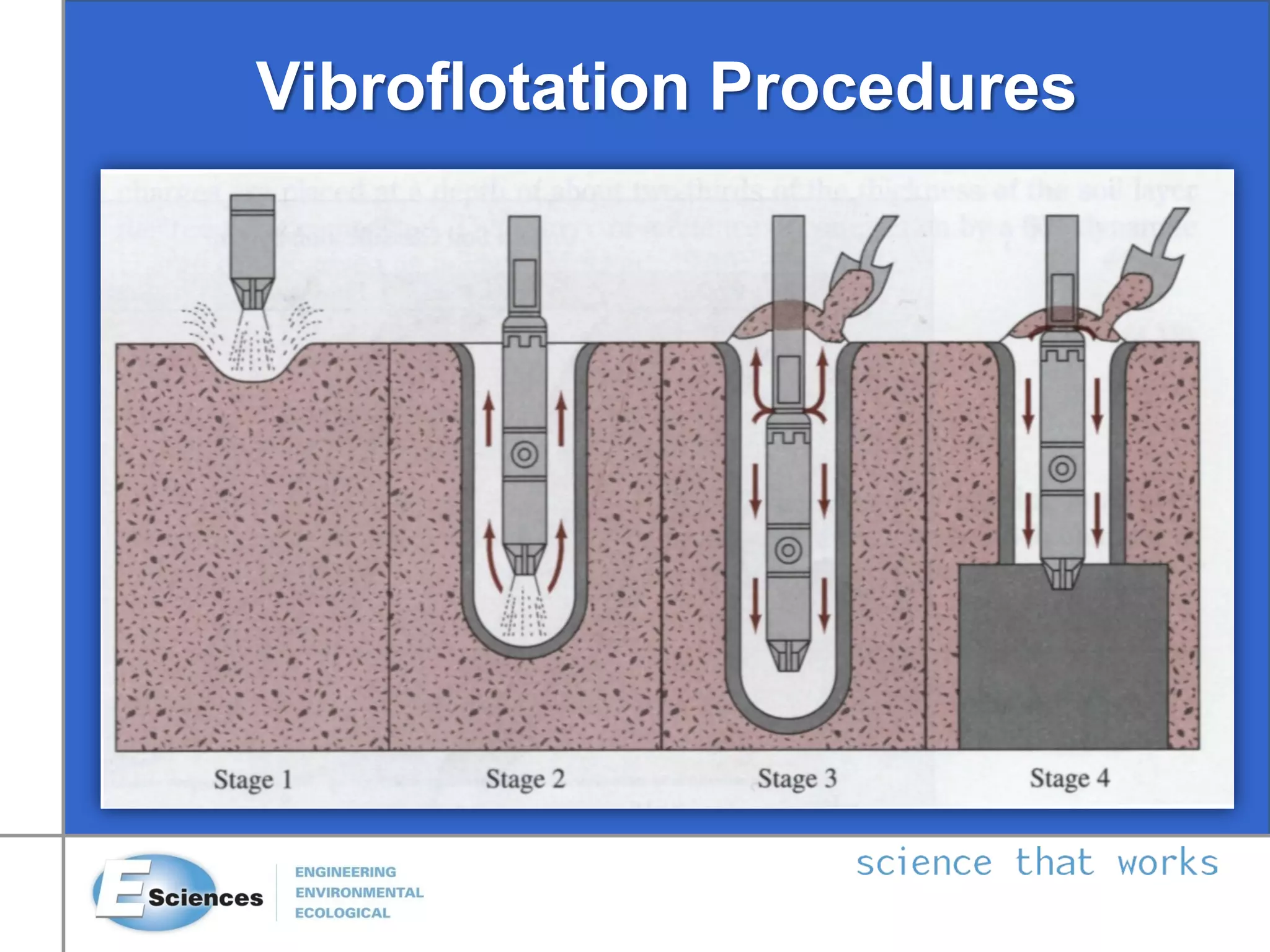
Vibroflotation
Vibroflotation is a technique
for in situ densification of
thick layers of loose
granular soil deposits.
It was developed in Germany
in the 1930s.
Vibroflotation Procedures
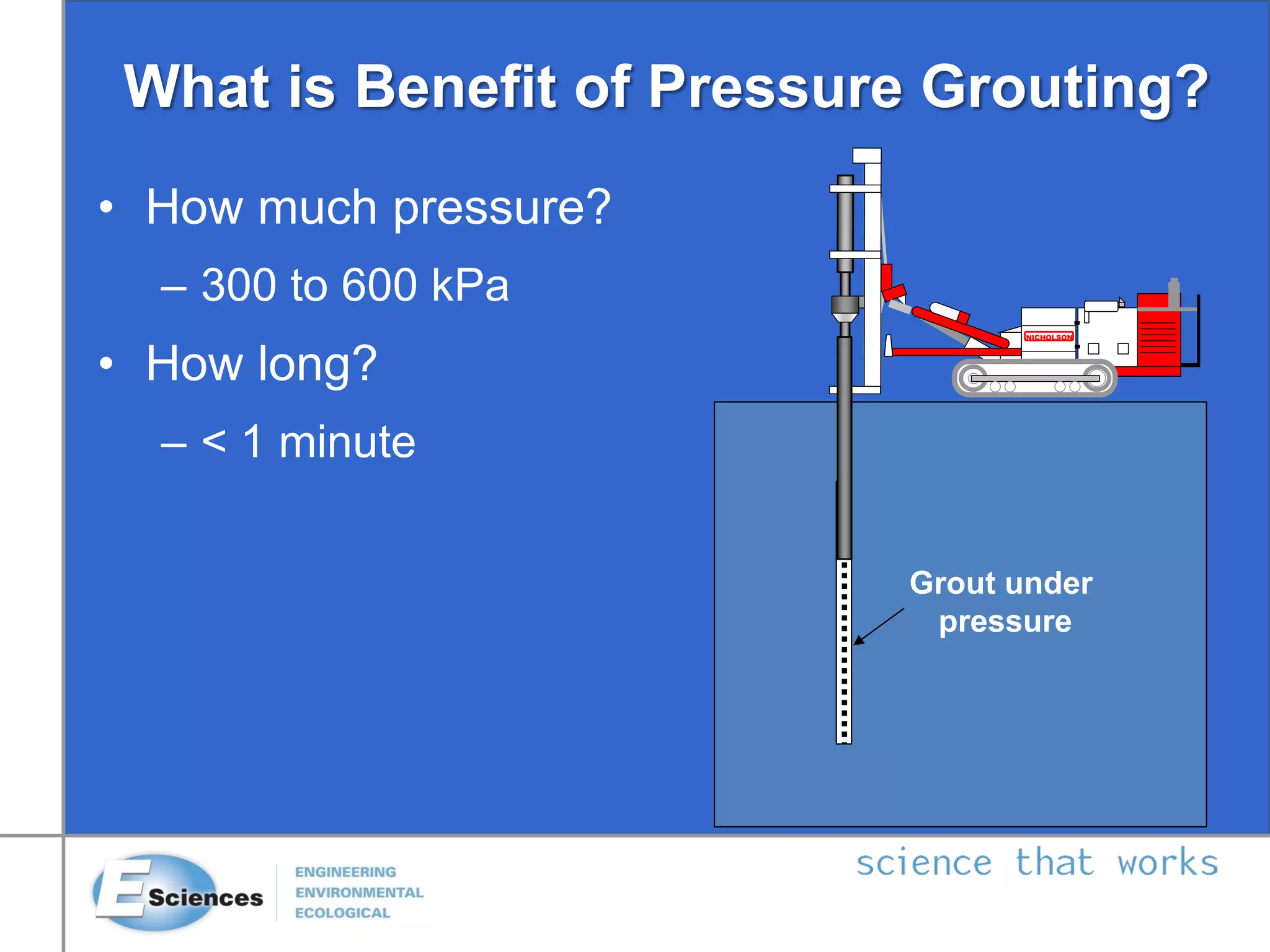
What is Benefit of Pressure Grouting?
• How much pressure?
– 300 to 600 kPa
• How long?
– < 1 minute
NICHOLSON
Grout under
pressure
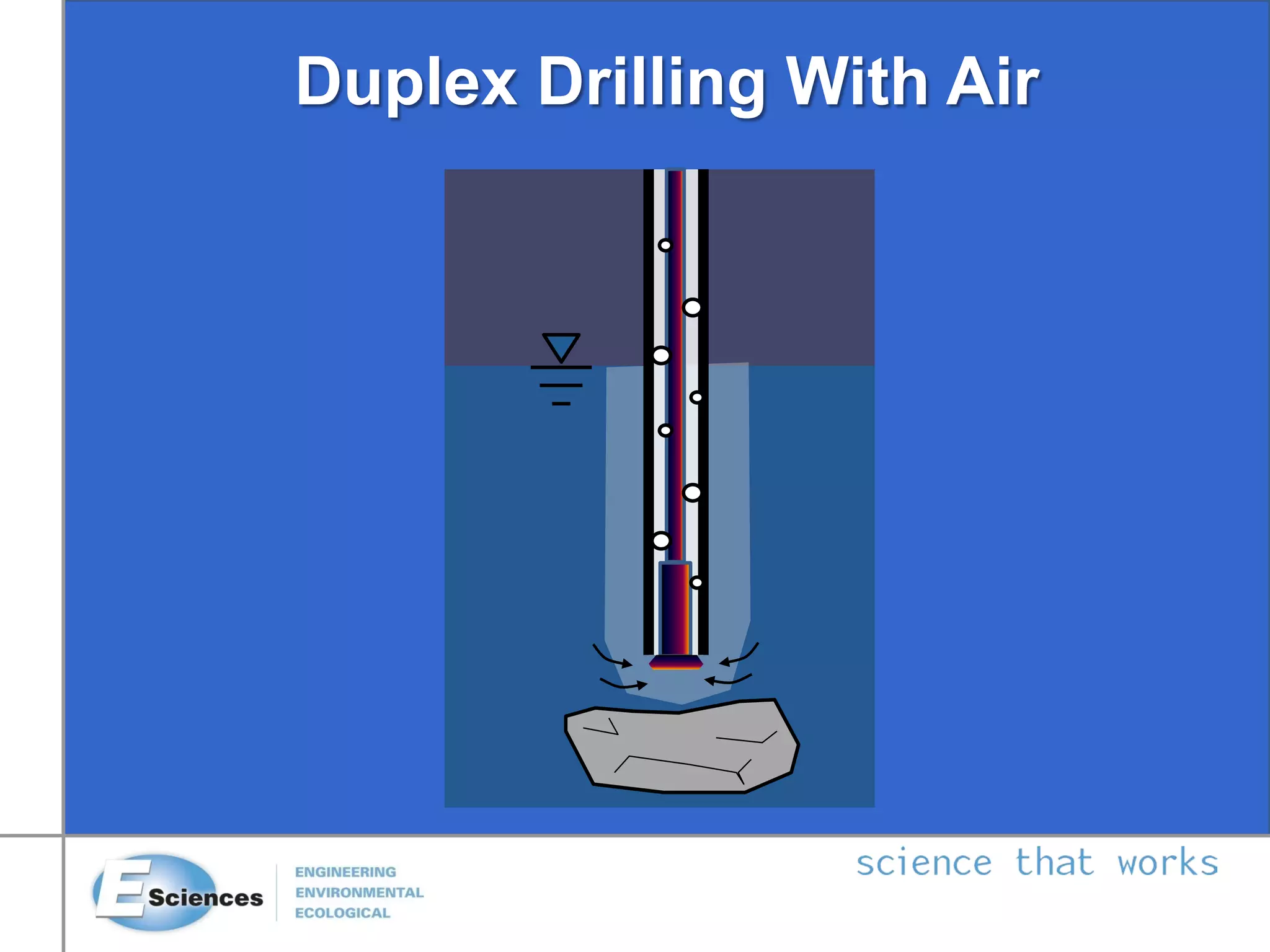
Duplex Drilling With Air
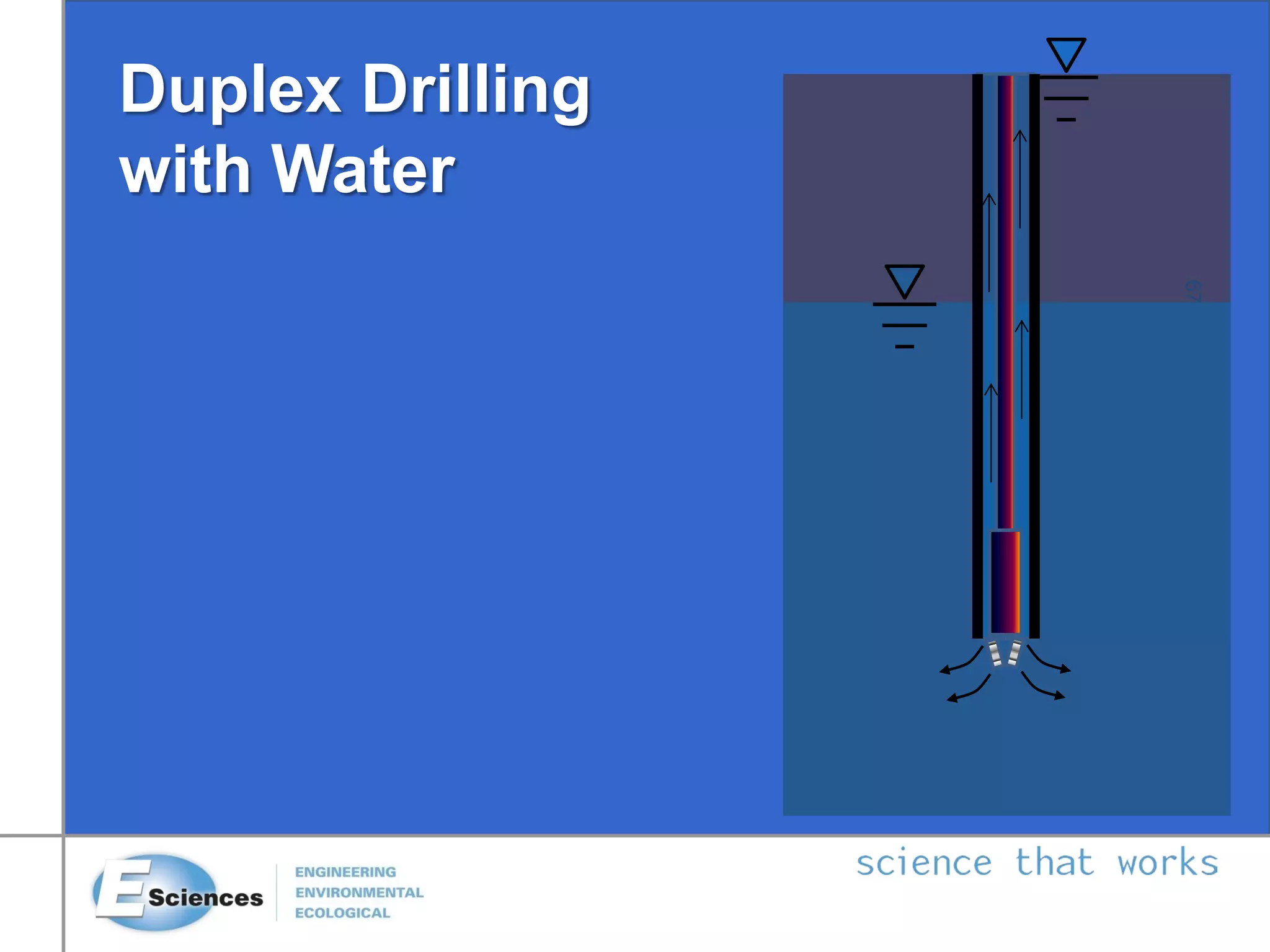
Duplex Drilling
with Water
67
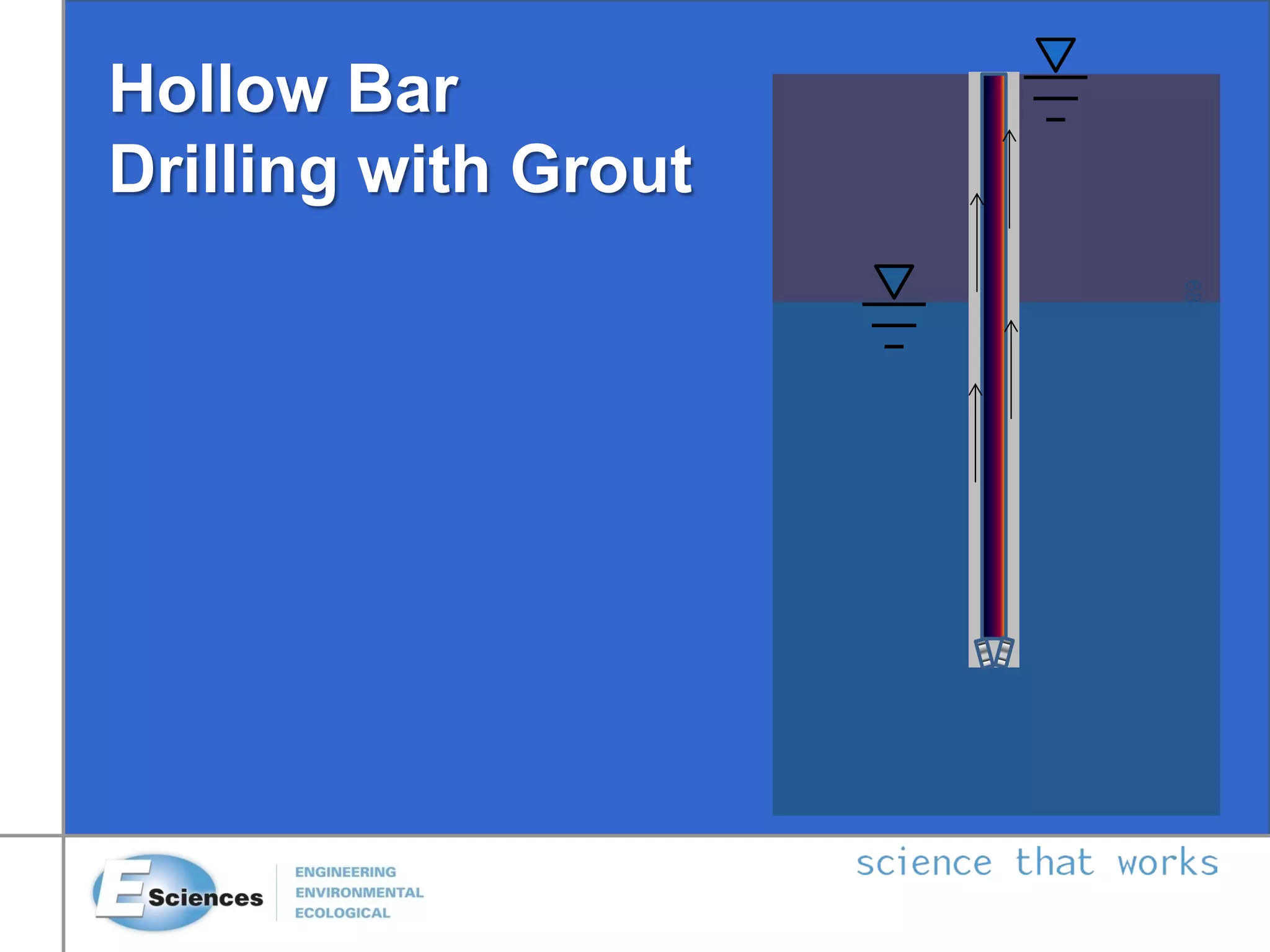
Hollow Bar
Drilling with Grout
68
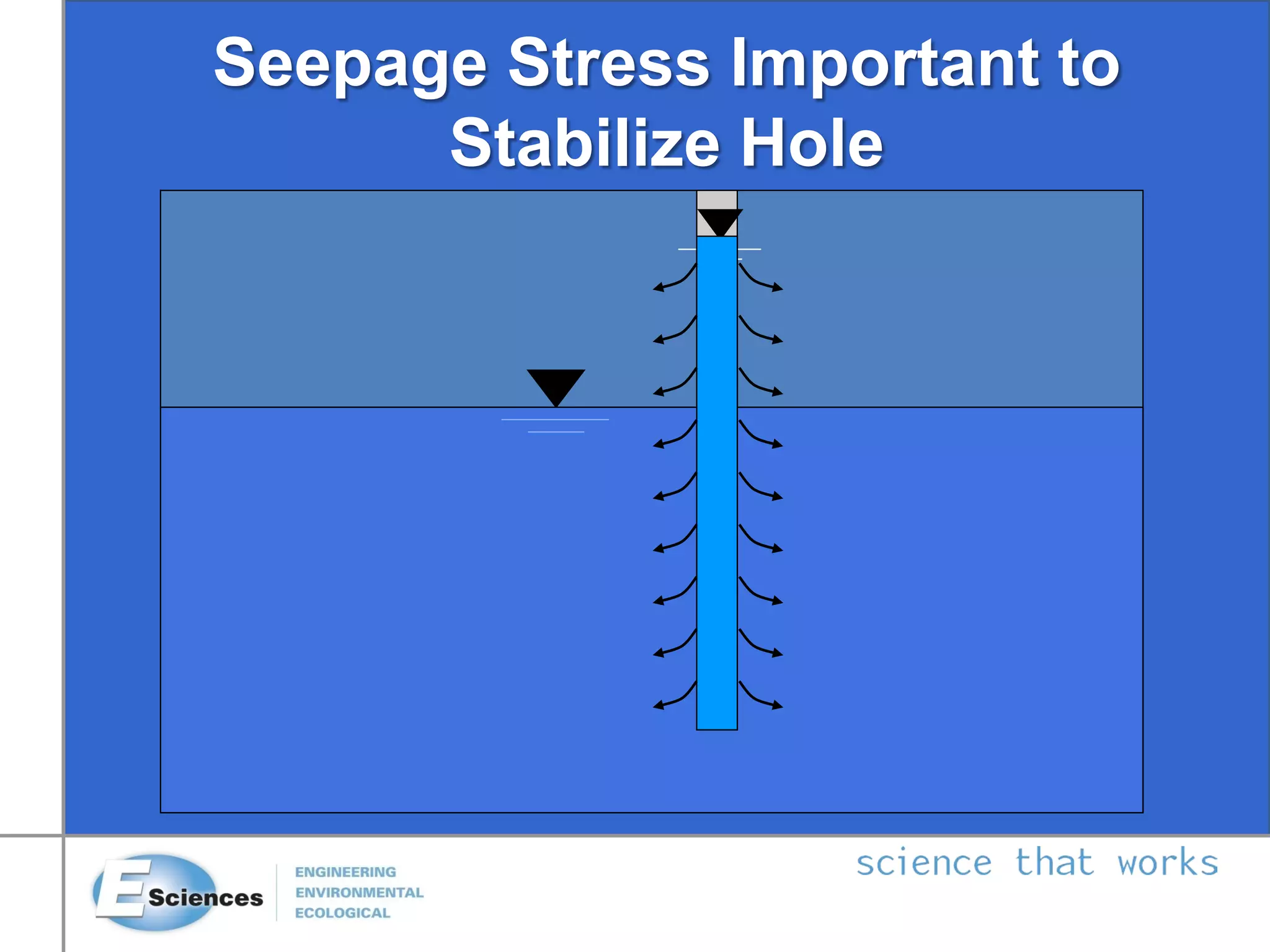
Seepage Stress Important to
Stabilize Hole
Chemical Grouting
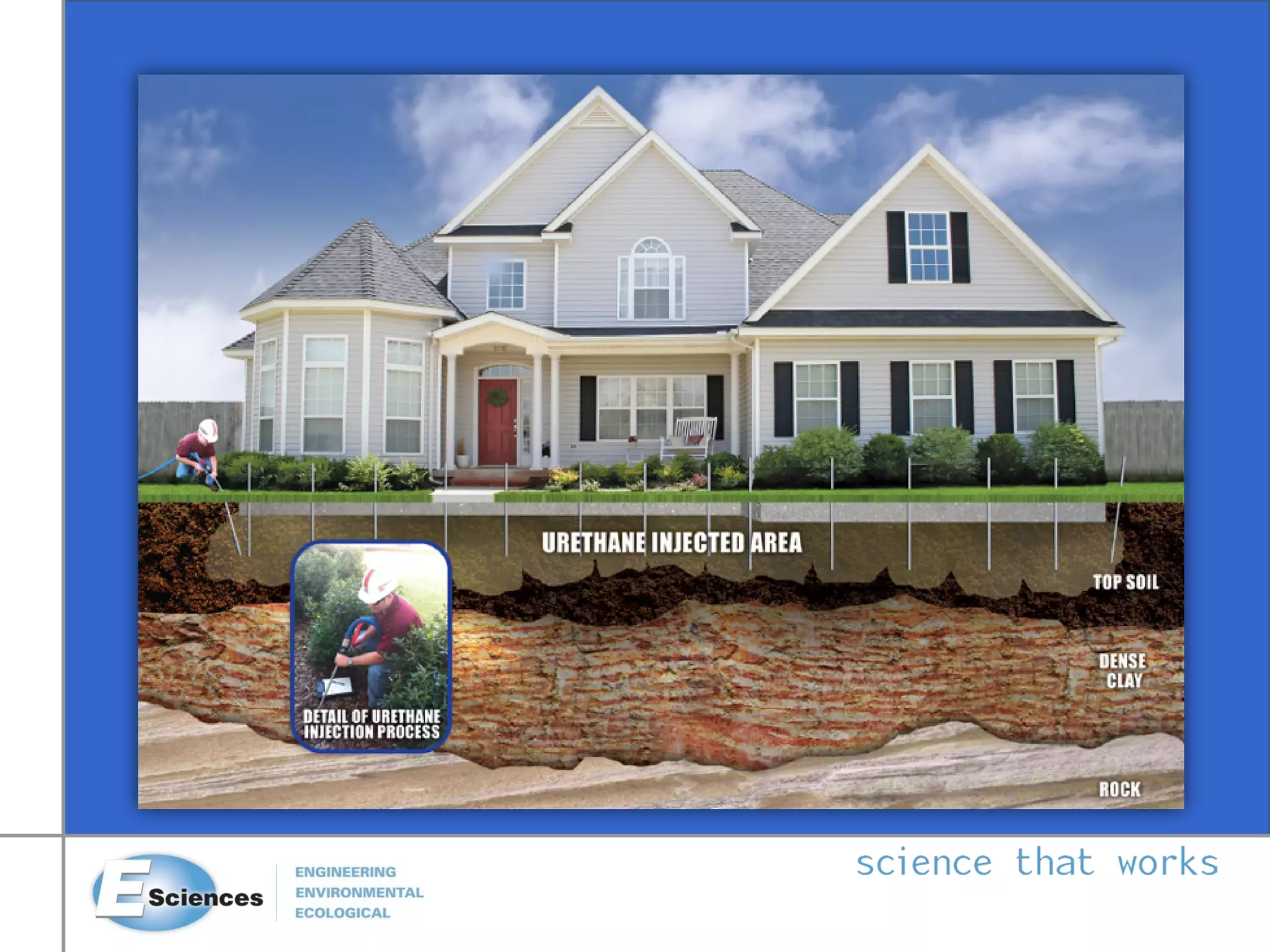
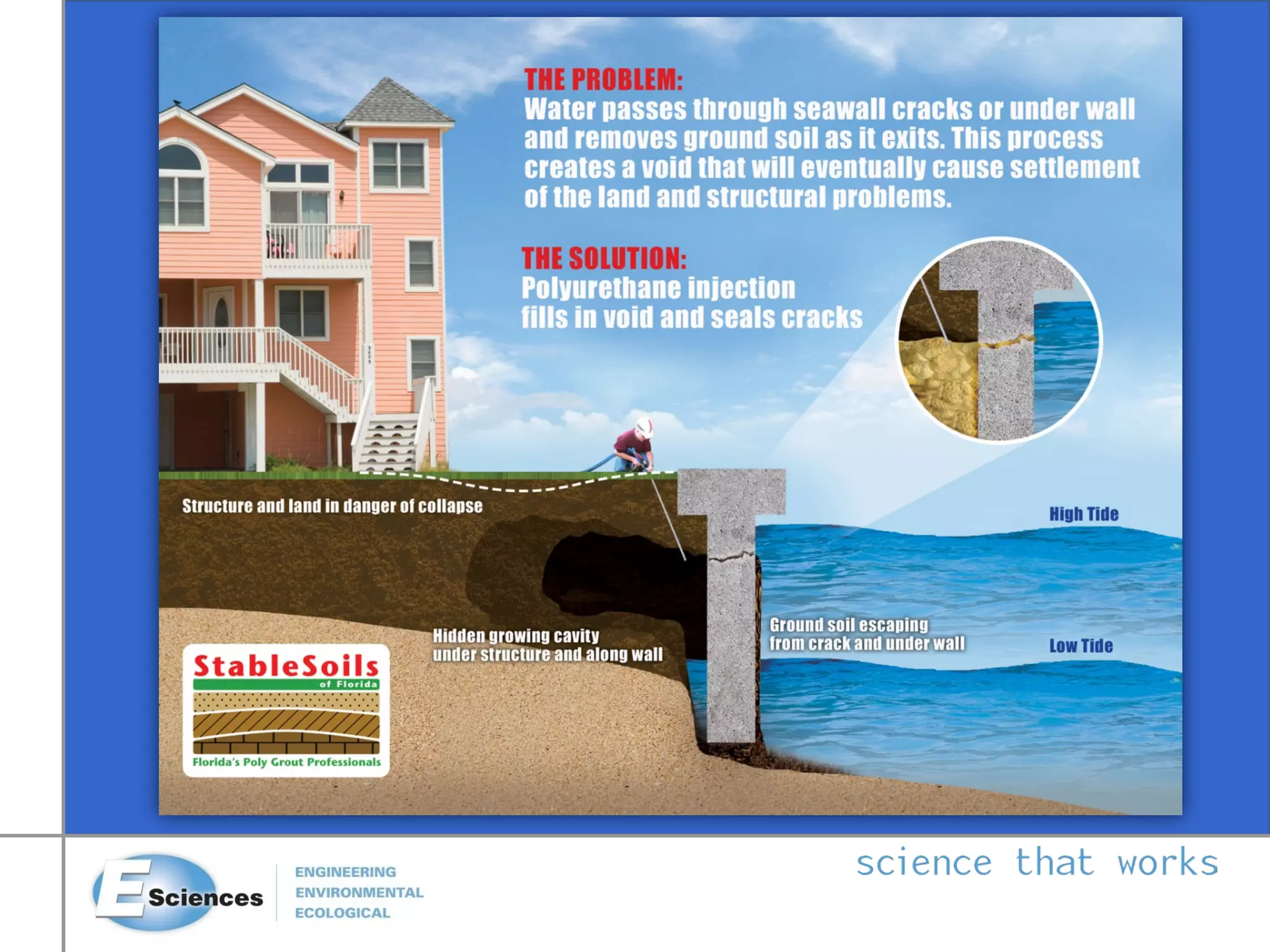
• Same Principles as Pressure Grouting but
changing the product from slurry grout to
polyurethane.
• Use of either single part or two part polyurethane
depending on the situation.
• Benefit:
– Quicker & Cleaner
– Less down time/MOT
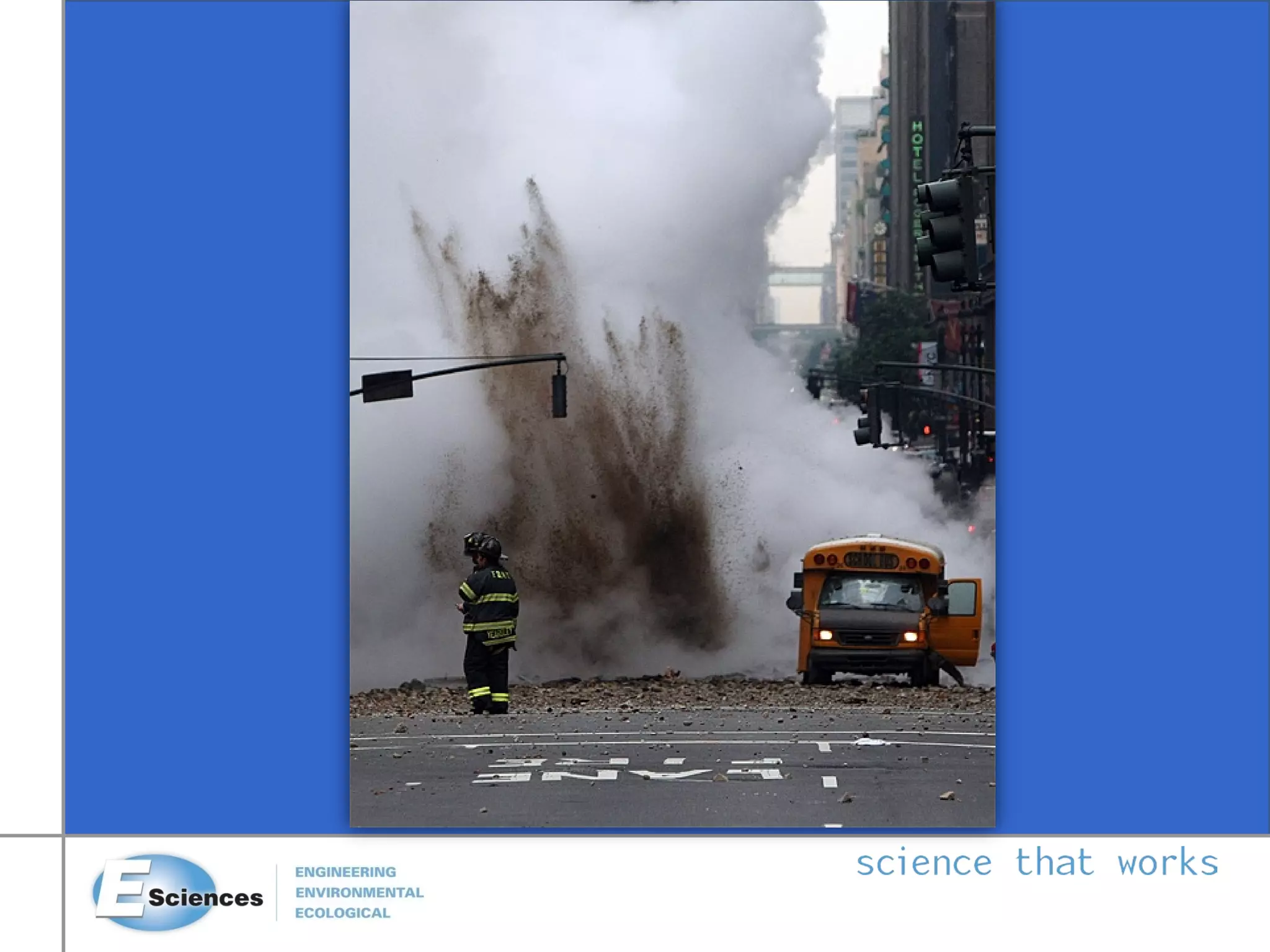
New York, July 18, 2007
• An underground steam line ruptured, blasting a
hole in a Manhattan street and releasing large
quantities of asbestos into the air along with the
escaping steam.
• Companies like ConEd in New York need to
have a regular schedule of replacement of parts
of the system that weaken with age.
A New York City policeman wears a mask as he walks past
the scene of the steam pipe explosion.
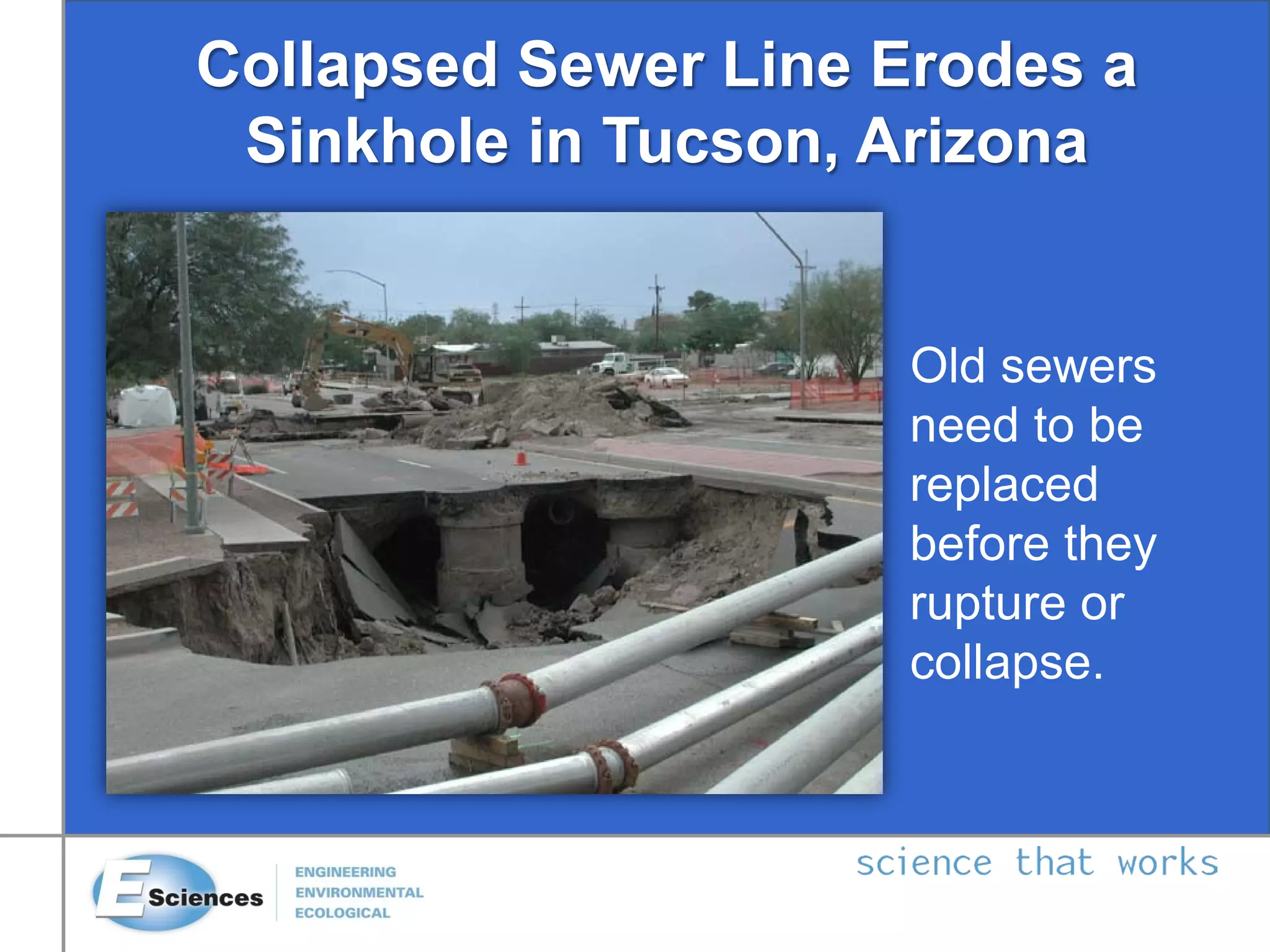
Collapsed Sewer Line Erodes a
Sinkhole in Tucson, Arizona
Old sewers
need to be
replaced
before they
rupture or
collapse.
St. Louis, MO – 2007
A 100-year-old large brick sewer line in
downtown St. Louis collapsed causing
a very large hole in a downtown street.
Many old cities like St. Louis have
old masonry sewers or pipes made
of wood – these have limited
serviceable life.
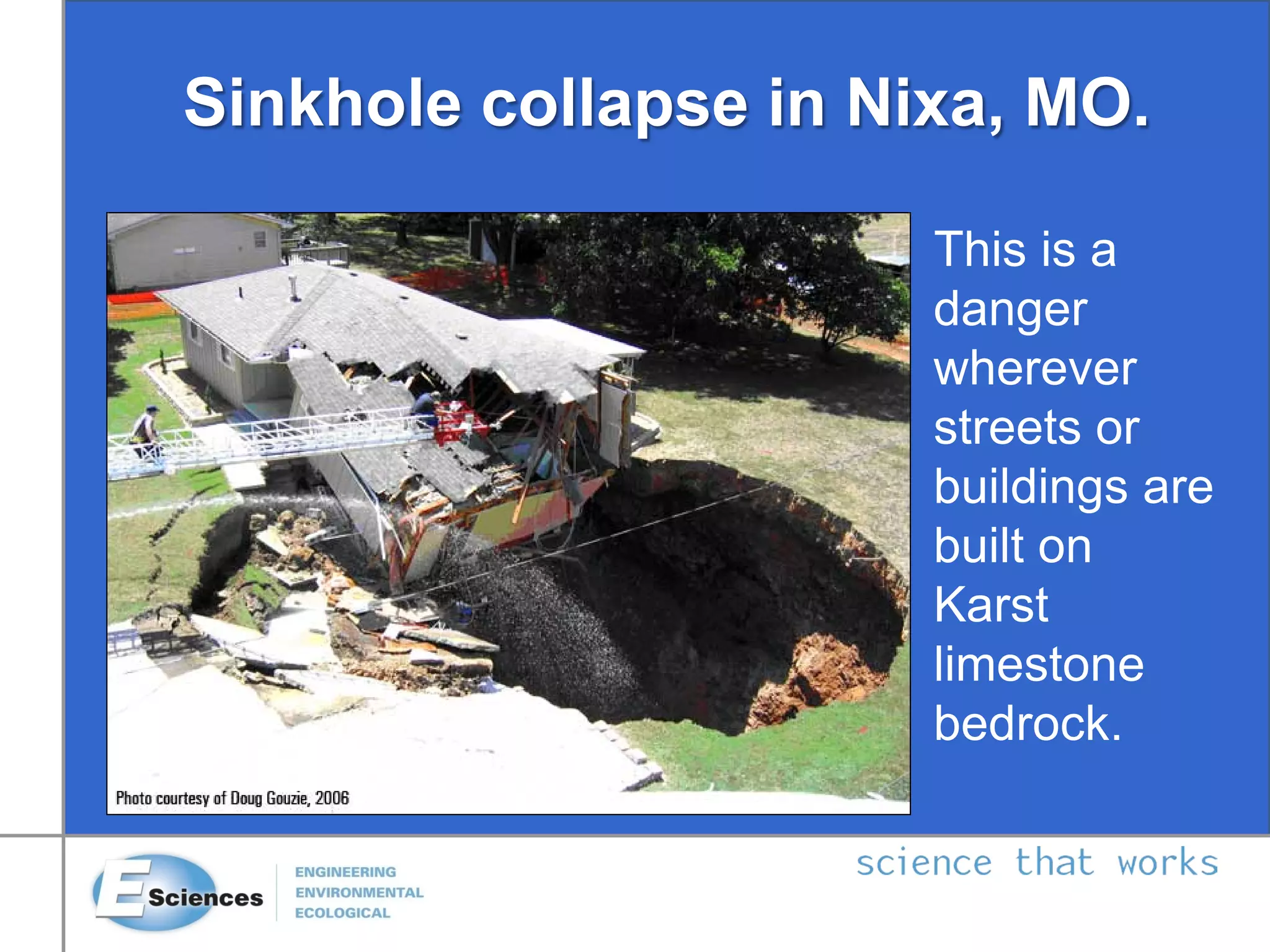
Sinkhole collapse in Nixa, MO.
This is a
danger
wherever
streets or
buildings are
built on
Karst
limestone
bedrock.
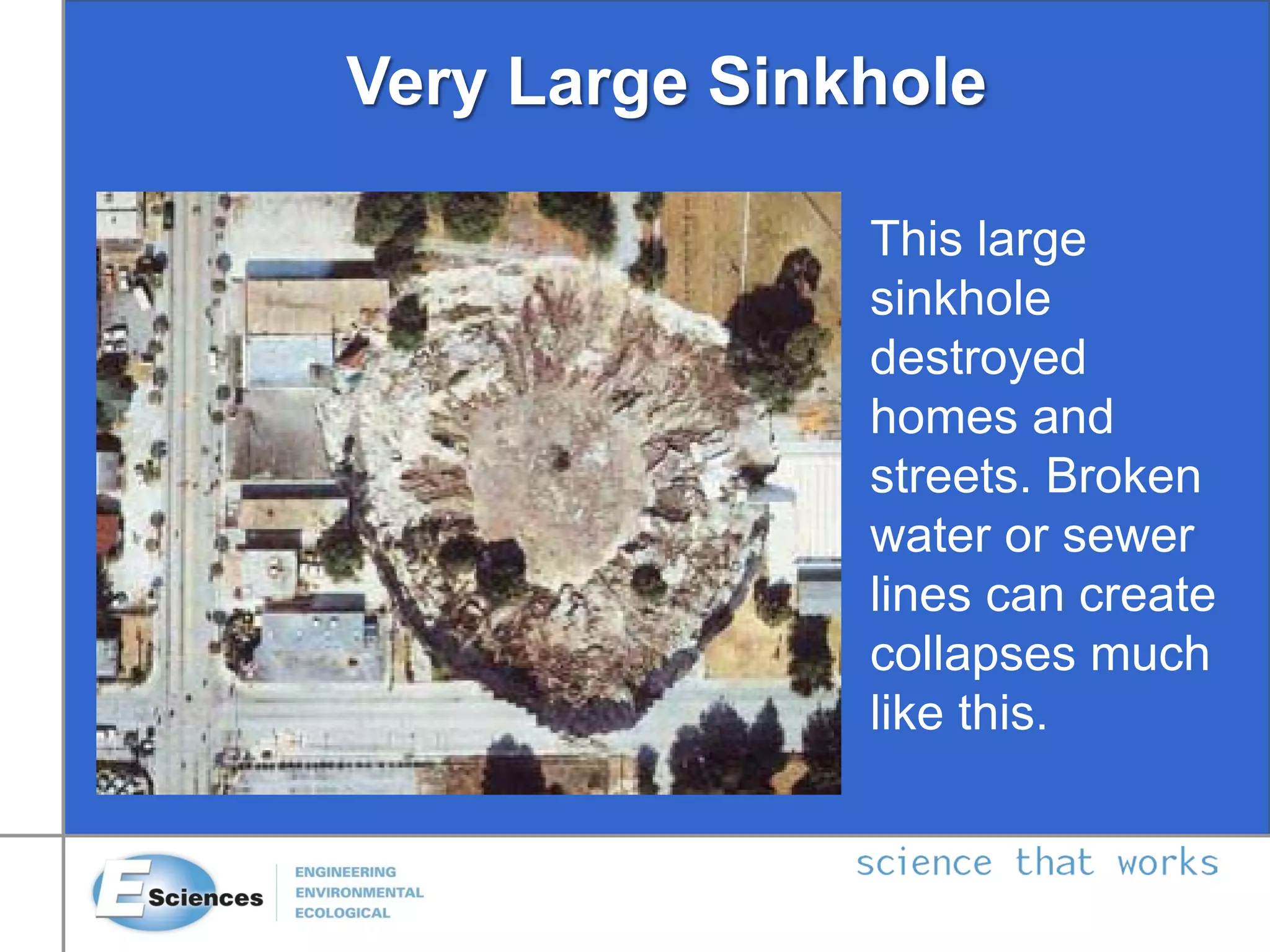
Very Large Sinkhole
This large
sinkhole
destroyed
homes and
streets. Broken
water or sewer
lines can create
collapses much
like this.
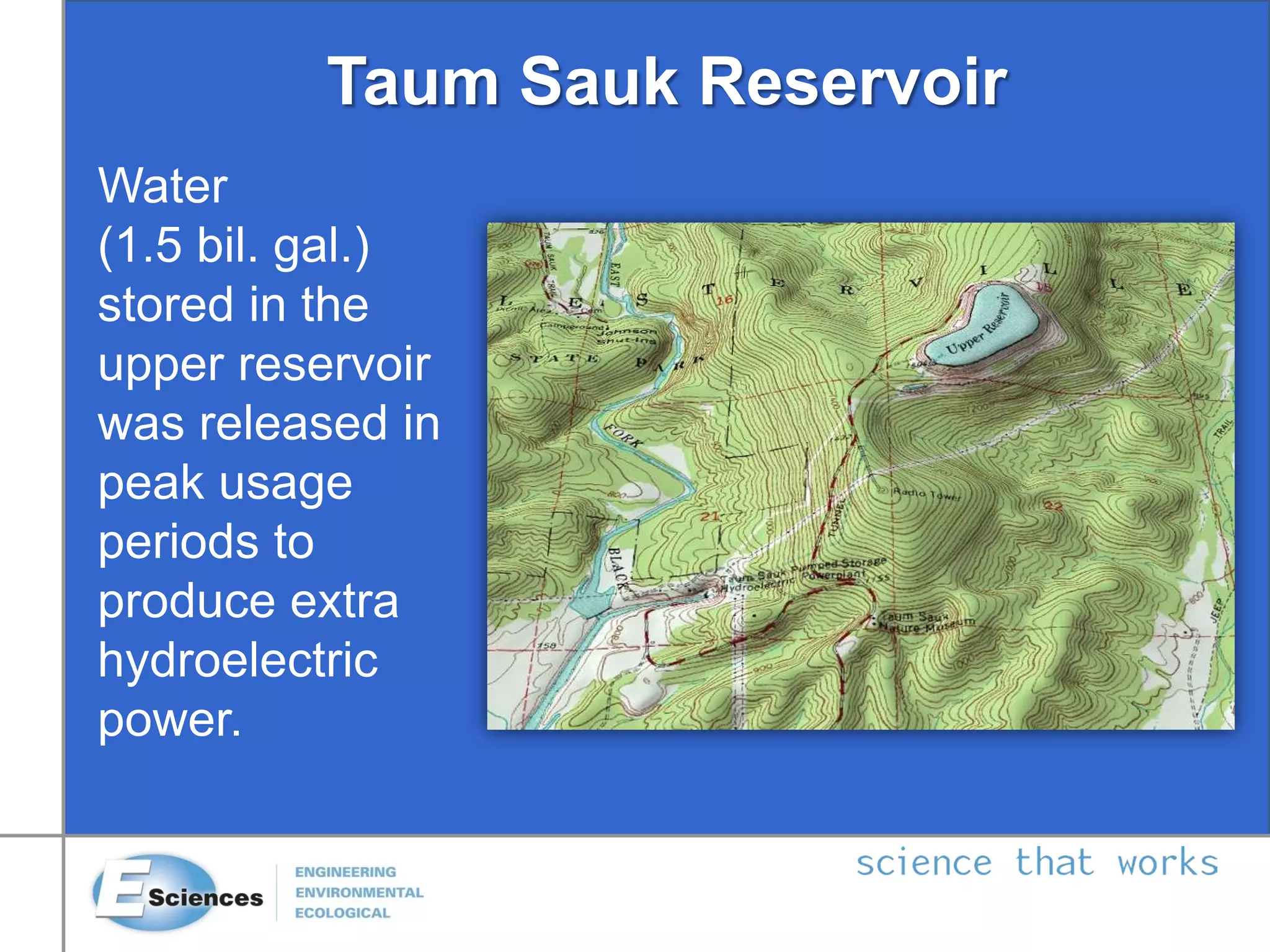
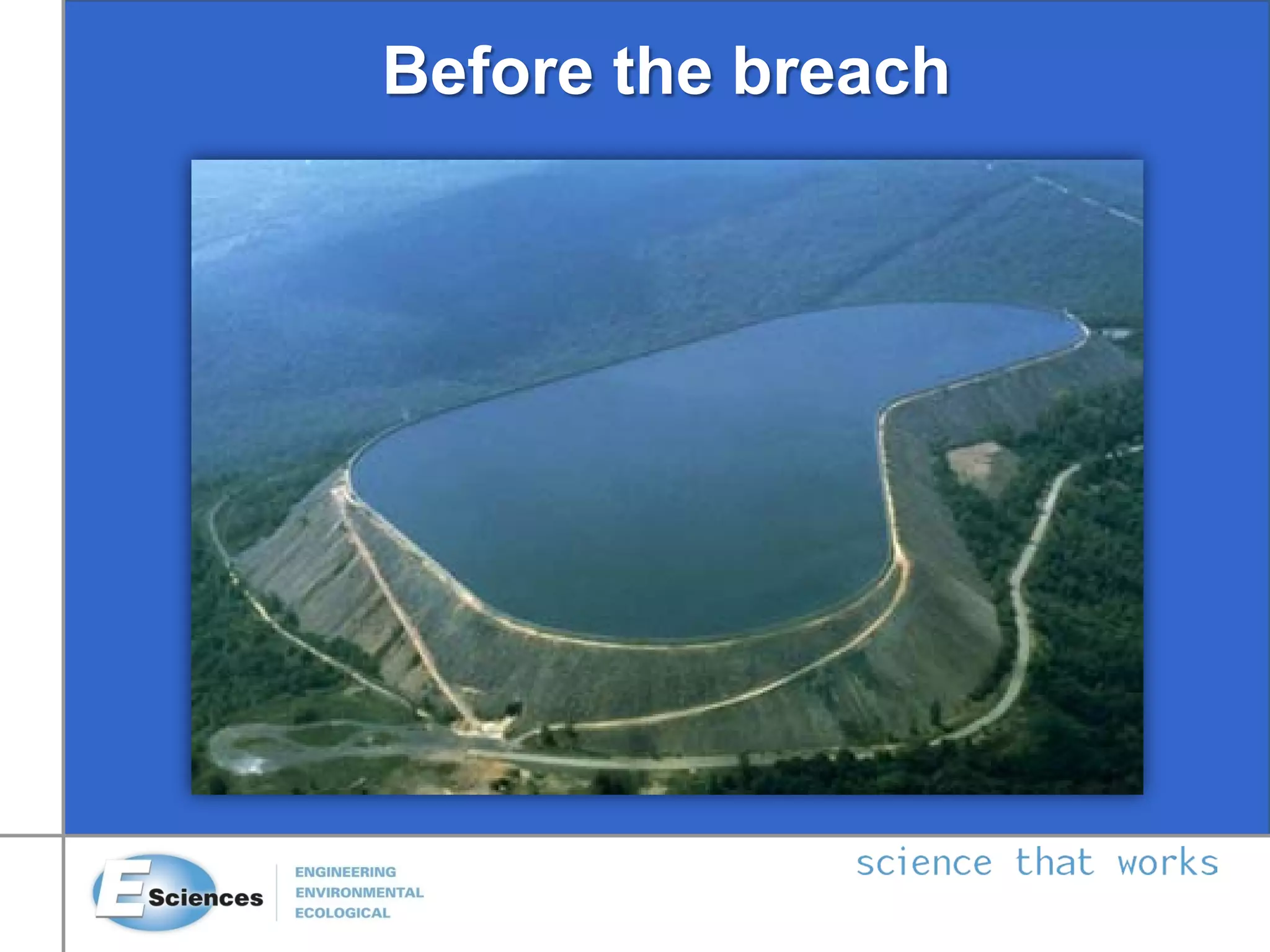
Taum Sauk Reservoir
Water
(1.5 bil. gal.)
stored in the
upper reservoir
was released in
peak usage
periods to
produce extra
hydroelectric
power.
December 14, 2005
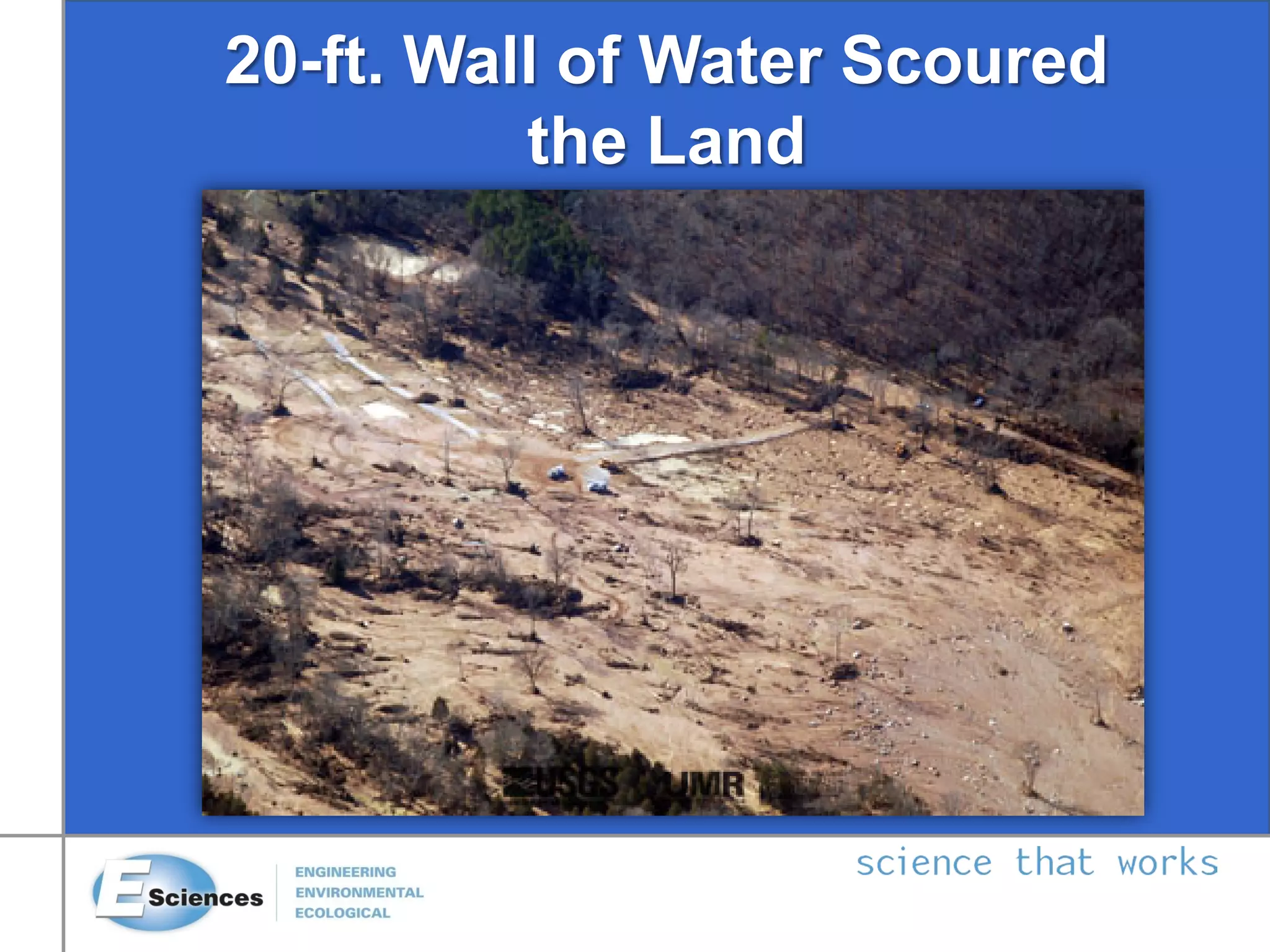
• There was a breach in the upper reservoir to the
Taum Sauk Hydroelectric plant in Southern
Missouri early this morning. A 20 foot wall of water
came rushing down into the Black River like the
water of a gigantic bathtub being drained.
• Negligence in maintenance and repair and refusal
of management to heed warnings seem to be
responsible for the catastrophe.
Before the breach
After the breach
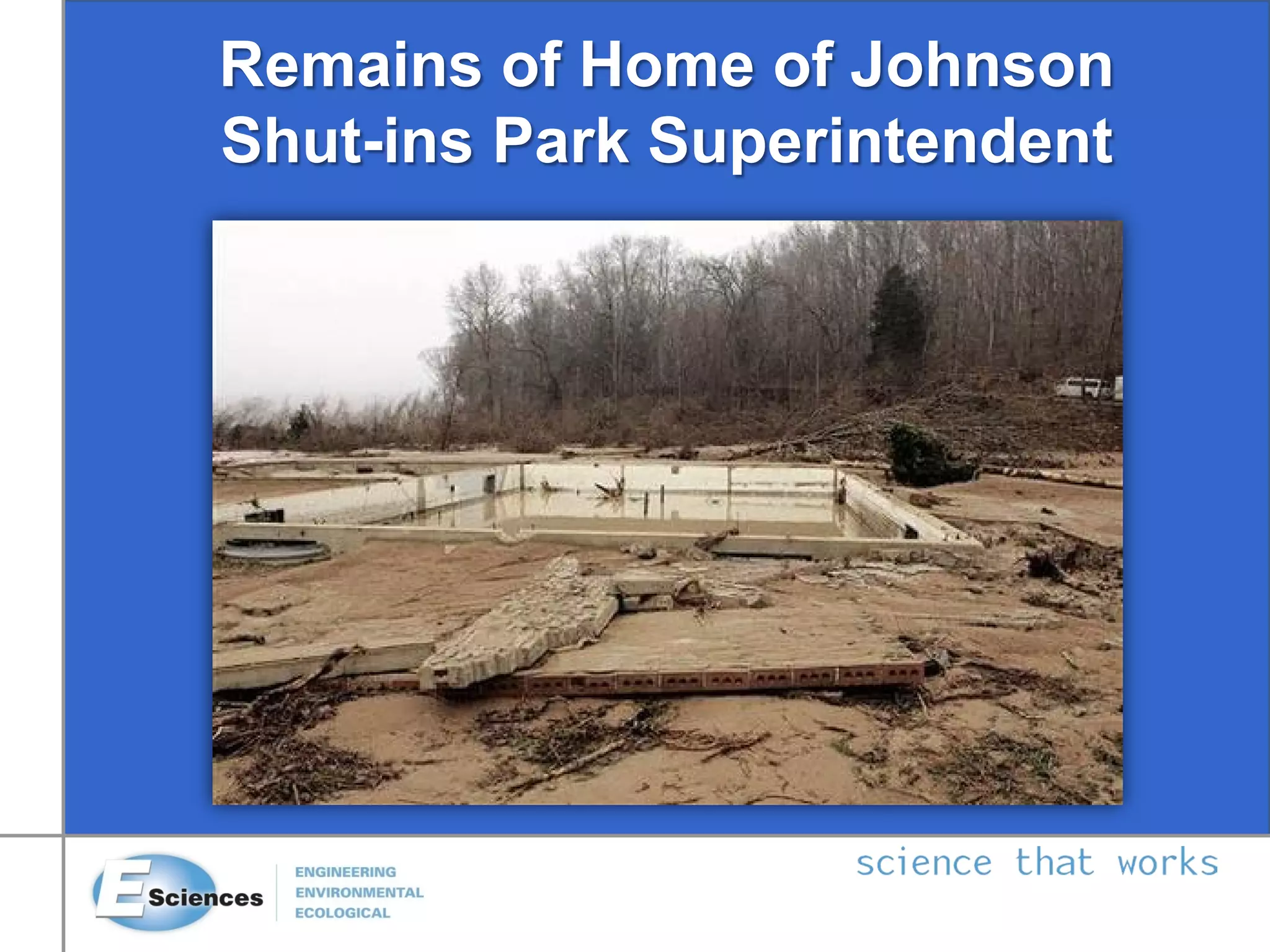
Remains of Home of Johnson
Shut-ins Park Superintendent
20-ft. Wall of Water Scoured
the Land
Conclusions
While constructing public works facilities,
different ground conditions are encountered.
Considering all factors a suitable ground
improvement technique has to be done. Ground
improvement techniques have been extensively
used by developed countries.
Questions

W16 ground improvement techniques-dycus

  • 1.
    W16 - GroundwaterModification: Stabilizing the Foundations of Public Works Projects Douglas Dycus, P.E. Senior Engineer E Sciences, Inc. April 2013
  • 3.
    Causes of UnconsolidatedSoils • Water • Clays • Organics • Man-made • Karst
  • 8.
    Soil Stabilization • Improvementof stability or bearing capacity of soil by use of controlled compaction or by the addition of suitable admixtures or stabilizers.
  • 9.
    Methods for SoilImprovement • Deep Dynamic Compaction • Drainage/Surcharg e • Electro-osmosis • Compaction grouting • Blasting • Surface Compaction • Soil Cement • Lime Admixtures • Flyash • Dewatering • Heating/Freezin g • Vitrification Ground Reinforcement Ground Improvement Ground Treatment Stone Columns Deep Dynamic Compaction Soil Cement Soil Nails Drainage/Surcharge Lime Admixtures Deep Soil Nailing Electro-osmosis Flyash Micro Piles (Mini-piles) Compaction grouting Dewatering Jet Grouting Blasting Heating/Freezing Ground Anchors Surface Compaction Vitrification Geosynthetics Fiber Reinforcement Lime Columns Vibro-Concrete Column Mechanically Stabilized Earth Biotechnical Compaction
  • 10.
    Mechanical Stabilization Process ofimproving the properties of soil by changing its gradation. Two or more natural soils are mixed to obtain a composite material. Cement Stabilization Done by mixing soil and cement with water and compacting the mix to attain a strong material. Lime Stabilization Lime stabilization is done by adding lime (2%-10%) to soil.
  • 11.
    Bituminous Stabilization Bituminous stabilizationprovide water proofing and binding. Chemical Stabilization Stabilization by adding different chemicals. Electrical Stabilization Done by a process known as electro-osmosis. Stabilization by Grouting In this method grouting is done under pressure the stabilizers with high viscosity are suitable only for soils with high permeability.
  • 12.
    Stabilization by Geotextilesand Fabrics Geotextile which have very high tensile strength can be used as reinforcement for strengthening soil. Reinforced Earth Soil can be stabilized by introducing thin strips in to it . Stabilization using Bio-Enzymes Bio-enzyme stabilization is a newer technique for strengthening of sub grade soil. Terra Zyme is one of the largely used bioenzymes.
  • 21.
    Vertical Drains • Actas free draining water channel. surrounded by a thin filter jacket which prevents the surrounding soil from entering the core. • A vertical sand drain accelerates the rate of consolidation. • Installation of vertical sand drains is a convenient technique for stabilization of soft and compressible soil. • There are two types of vertical drains - sand drains and sand wicks.
  • 22.
  • 23.
    Sand drains • Typically200-500 mm in diameter • Formed by infilling sand in to a hole in the ground • Hole formed by driving, jetting or augering • Typical spacing 1.5 - 6.0 Sand wicks • Sand wicks are improved technique of sand drains • A small diameter hole is made by driving mandrel or by boring • Then cylindrical bag with sand is lowered into this
  • 24.
    • Excavation whichhas a blanket of filter material between 0.5m and 1.00 m thick against its upstream slope and at the bottom of system for collecting and eliminating water. • Improves the stability of embankment by providing drainage and replacing weaker material with better material . Stabilizing Trenches
  • 25.
  • 26.
    Capillary Cut-Off • Insome cases capillary water accumulates and saturates the subsurface layers which results in failures. • To arrest this capillary rise, capillary cut-off has to be provided. • Capillary cutoff is of two types. • Permeable Capillary Cut-off • Impermeable Capillary Cut-off
  • 27.
    A layer ofgranular material is provided which has a thickness higher than the capillary rise so that water cannot rise above the cut-off layer Cross-Section of pavement showing permeable capillary cut-off Permeable Capillary Cut-Off
  • 28.
    An impermeable capillarycut-off is prepared by inserting bituminous layer in place of permeable blanket. Cross-Section of pavement showing impermeable capillary cut-off Impermeable Capillary Cut-Off
  • 29.
  • 30.
    Soil Nailing • Earthretention structure that combines reinforcements and shortcrete to support excavations, hillside, embankment steeping, etc. • The nails must have bending stress. The tension developed in nails provides resisting forces which stabilize the soil mass.
  • 31.
  • 32.
    • Tiebacks canbe used in tension applications to anchor retaining walls. • Helical tiebacks have shorter bond lengths than grouted ones so they can be used where space is limited. Tension Anchor
  • 33.
    Tiebacks can beused in tension applications to anchor shot-crete walls. Tiebacks
  • 34.
    Shotcrete Walls Helical tiebackswere favored over grouted ones because they would not encroach beyond the property line.
  • 35.
    Recesses were formedin the wall to allow the tiebacks to be stressed against bearing plates. Stressing Tiebacks
  • 36.
    Recesses were filledand the wall stuccoed.. The Finished Wall
  • 37.
    Construction can proceedwith the excavation and there is no need for backfill behind the wall. Top Down Walls
  • 38.
    The large 2-7/8”OD shafts can stand unsupported for the full depth of the trench. Greater Span Without Buckling
  • 39.
    Underpinning Underpinning is usedwhen an existing structure has failed and support must be restored. Underpinning brackets allow transferring of the structure load to the newly installed piles, this helps to preserve the integrity of the structure.
  • 40.
    • Passive Anchor •Small diameter tension element (not-stressed) • Active Anchor • Small post tensioned element. Definitions NICHOLSON
  • 41.
    Definitions Micropile • Small diameterdrilled and grouted pile. • Made with combinations of pipe (casing) and treaded rods. • Can be post grouted 41 NICHOLSON Grout under pressure
  • 42.
    Excavation Support WallMovements What factors control wall movements? • Wall Stiffness • Ground Stiffness • Depth of first level of brace/anchor • Magnitude of preload • Toe support • Base Safety Factor
  • 43.
    Stone Columns • Doneto provide adequate support for relatively light foundation. • The method consists of forming vertical holes in ground which are filled with compacted crushed stone, gravel and sand or a mixture.
  • 45.
    Methods for SoilImprovement – Jet Grouting 45
  • 46.
    Elephant and Compaction HeavyWeight Question? The compaction result is not good. Why?
  • 47.
    Compaction and Objectives Compaction •Many types of earth construction, (dams, retaining walls, highways, airport) require man-placed soil, or fill. To compact a soil, that is, to place it in a dense state. • The dense state is achieved through the reduction of the air voids in the soil, with little or no reduction in the water content. This process must not be confused with consolidation, in which water is squeezed out under the action of a continuous static load. Objectives • Decrease future settlements • Increase shear strength • Decrease permeability
  • 48.
    Coarse-grained soils Fine-grainedsoils Hand-operated vibration plates Motorized vibratory rollers Rubber-tired equipment Free-falling weight; dynamic compaction (low frequency vibration, 4~10 Hz) Falling weight and hammers Kneading compactors Static loading and press Hand-operated tampers Sheepsfoot rollers Rubber-tired rollers LaboratoryField Vibration Vibrating hammer (BS) Kneading General Compaction Methods
  • 49.
  • 50.
    Equipment Smooth-wheel roller (drum) •100% coverage under the wheel • Contact pressure up to 380 kPa • Can be used on all soil types except for rocky soils. • Compactive effort: static weight • The most common use of large smooth wheel rollers is for proof-rolling subgrades and compacting asphalt pavement.
  • 51.
    Equipment (Cont.) Pneumatic (orrubber-tired) roller • 80% coverage under the wheel • Contact pressure up to 700 kPa • Can be used for both granular and fine-grained soils. • Compactive effort: static weight and kneading. • Can be used for highway fills or earth dam construction. • Compactive effort: static weight and kneading. • Can be used for highway fills or earth dam construction.
  • 52.
    Equipment (Cont.) • Hasmany round or rectangular shaped protrusions or “feet” attached to a steel drum • 8% - 12% coverage • Contact pressure is from 1400 to 7000 kPa • It is best suited for clayed soils • Compactive effort: static weight and kneading • It is best suited for clayed soils • Compactive effort: static weight and kneading Sheepsfoot rollers
  • 53.
    Equipment (Cont.) • About40% coverage • Contact pressure is from 1400 to 8400 kPa • It is best for compacting fine-grained soils (silt and clay). • Compactive effort: static weight and kneading. Tamping foot roller
  • 54.
    Equipment (Cont.) • 50%coverage • Contact pressure is from 1400 to 6200 kPa • It is ideally suited for compacting rocky soils, gravels, and sands. With high towing speed, the material is vibrated, crushed, and impacted. • Compactive effort: static weight and vibration. Mesh (or grid pattern) roller
  • 55.
    Equipment (Cont.) • Verticalvibrator attached to smooth wheel rollers • The best explanation of why roller vibration causes densification of granular soils is that particle rearrangement occurs due to cyclic deformation of the soil produced by the oscillations of the roller • Compactive effort: static weight and vibration • Suitable for granular soils Vibrating drum on smooth-wheel roller
  • 56.
  • 57.
    Variables-Vibratory Compaction Characteristics ofthe compactor: (1) Mass, size (2) Operating frequency and frequency range Characteristics of the soil: (1) Initial density (2) Grain size and shape (3) Water content (4) Towing speed Construction procedures: (1) Number of passes of the roller (2) Lift thickness (3) Frequency of operation vibrator (4) Towing speed There are many variables which control the vibratory compaction or densification of soils.
  • 58.
    Dynamic Compaction • Thisinvolves in increasing the density of soil near the surface by tamping. • Density improvement up to 10m is feasible. • This method consists of dropping heavy mass of 8 to 40 tonnes known as pounder on the surface from a height 5 to 30m 58
  • 59.
    Dynamic Compaction Dynamic compactionwas first used in Germany in the mid- 1930’s. The depth of influence D, in meters, of soil undergoing compaction is conservatively given by D ≈ ½ (Wh)1/2 W = mass of falling weight in metric tons h = drop height in meters
  • 60.
  • 61.
    Vibro Compaction • Forloose sand deposits, the density index can be increased by vibro compaction. • This process employs a depth vibrator suspended from crane. • Compaction of sand can be achieved up to distance of 2.5m from axis of vibrator. • Compaction can be carried out to significant depths up to 12m.
  • 62.
  • 63.
    Vibroflotation Vibroflotation is atechnique for in situ densification of thick layers of loose granular soil deposits. It was developed in Germany in the 1930s.
  • 64.
  • 65.
    What is Benefitof Pressure Grouting? • How much pressure? – 300 to 600 kPa • How long? – < 1 minute NICHOLSON Grout under pressure
  • 66.
  • 67.
  • 68.
  • 69.
    Seepage Stress Importantto Stabilize Hole
  • 70.
    Chemical Grouting • SamePrinciples as Pressure Grouting but changing the product from slurry grout to polyurethane. • Use of either single part or two part polyurethane depending on the situation. • Benefit: – Quicker & Cleaner – Less down time/MOT
  • 73.
    New York, July18, 2007 • An underground steam line ruptured, blasting a hole in a Manhattan street and releasing large quantities of asbestos into the air along with the escaping steam. • Companies like ConEd in New York need to have a regular schedule of replacement of parts of the system that weaken with age.
  • 75.
    A New YorkCity policeman wears a mask as he walks past the scene of the steam pipe explosion.
  • 77.
    Collapsed Sewer LineErodes a Sinkhole in Tucson, Arizona Old sewers need to be replaced before they rupture or collapse.
  • 78.
    St. Louis, MO– 2007 A 100-year-old large brick sewer line in downtown St. Louis collapsed causing a very large hole in a downtown street. Many old cities like St. Louis have old masonry sewers or pipes made of wood – these have limited serviceable life.
  • 79.
    Sinkhole collapse inNixa, MO. This is a danger wherever streets or buildings are built on Karst limestone bedrock.
  • 80.
    Very Large Sinkhole Thislarge sinkhole destroyed homes and streets. Broken water or sewer lines can create collapses much like this.
  • 81.
    Taum Sauk Reservoir Water (1.5bil. gal.) stored in the upper reservoir was released in peak usage periods to produce extra hydroelectric power.
  • 82.
    December 14, 2005 •There was a breach in the upper reservoir to the Taum Sauk Hydroelectric plant in Southern Missouri early this morning. A 20 foot wall of water came rushing down into the Black River like the water of a gigantic bathtub being drained. • Negligence in maintenance and repair and refusal of management to heed warnings seem to be responsible for the catastrophe.
  • 83.
  • 84.
  • 85.
    Remains of Homeof Johnson Shut-ins Park Superintendent
  • 86.
    20-ft. Wall ofWater Scoured the Land
  • 87.
    Conclusions While constructing publicworks facilities, different ground conditions are encountered. Considering all factors a suitable ground improvement technique has to be done. Ground improvement techniques have been extensively used by developed countries.
  • 88.