G.RAMKUMAR,
ASSISTANT PROFESSOR,
DMSSVHCE,
MACHILIPATNAM
 Removal and replacement
 In-situ densification
 Precompression / Pre loading
 Vertical drains-1.Sand drains 2.Geo drains
 Stone columns
 Dewatering
 Stabilization using admixtures
 Reinforcement
 Geosynthetics
 Grouting
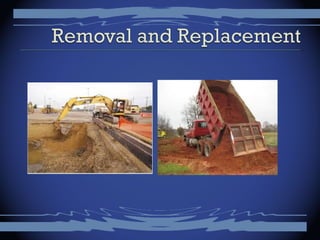
 One of oldest and simplest methods is
simply to remove and replace the soil
 Soils that will have to be replaced
include contaminated soils or organic
soils
 Method is usually practical only above
the groundwater table
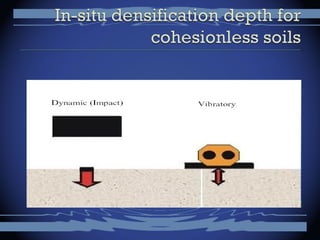
 Most effective in sands
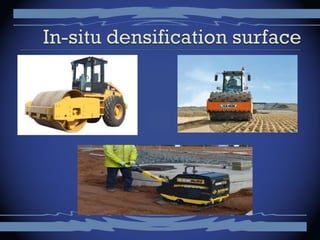
 Methods used in conventional earthwork
are only effective to about 2 m below the
surface
 In-situ methods like dynamic deep
compaction are for soils deeper than can
be compacted from the surface
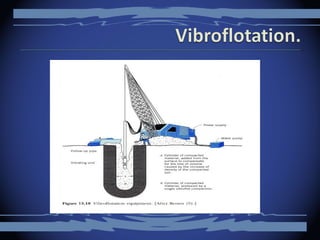
 Probe includes the vibrator mechanism and
water jets
 Probe is lowered into the ground using a crane
 Vibratory eccentric force induces densification
and water jets assist in insertion and extraction
 Vibratory probe compaction is effective if silt
content is less than 12-15% and clay is less than
3%
 Probes inserted in grid pattern at a spacing of
1.5 to 3 m
 A compaction technique employed mostly for
cohesion-less soils.
 The essence of the equipment is the vibroflot
probe. It consists of a cylindrical tubular section
that houses eccentrically rotating weights that
induce horizontal vibratory motion.
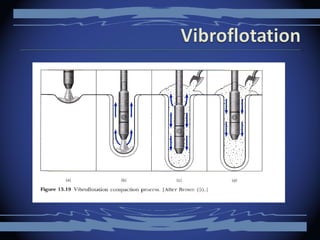
 While vibrating and water jetting , the probe is
lowered down under its own weight to the
required penetration depth
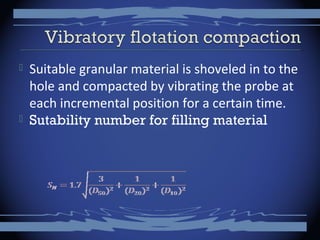
 Suitable granular material is shoveled in to the
hole and compacted by vibrating the probe at
each incremental position for a certain time.
 Sutability number for filling material
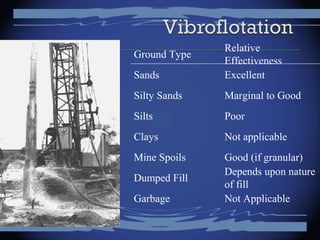
Ground Type
Relative
Effectiveness
Sands Excellent
Silty Sands Marginal to Good
Silts Poor
Clays Not applicable
Mine Spoils Good (if granular)
Dumped Fill
Depends upon nature
of fill
Garbage Not Applicable
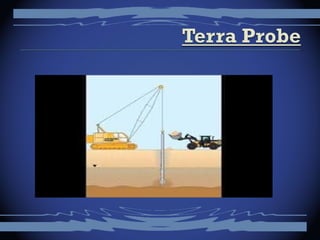
 Similar to vibro-float
 The extraction rate for the terra probe is
higher than that for the vibro-float
 Consists of dropping a heavy weight from
designated height repeatedly on the ground at
regular intervals to achieve densification of
loose cohesionless soils or fills.
 Uses a special crane to lift 80-360 KN to
heights of 7.5 to 30.5 m then drop these
weights onto the ground
 Cost effective method of densifying loose
sands and silty soils up to 15 to 30 feet
deep
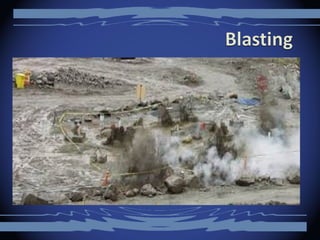
 Used for the densification of granular soils
 Detonation of explosive charges such as
60% dynamite at a certain depth below
the ground surface in saturated soil
 The lateral spacing of the charges varies
from 3 to 10 m( 10-30 feet). Three to five
successful detonations are usually
necessary to achieve the desired
compaction
 Compaction up to a relative density of about
80% and up to a depth of about 20 m (60 ft)
over a large area can easily be achieved by
using this process
 The explosive charges are placed at a depth
of about 2/3 rds of the thickness of the soil
layer desired to be compacted
 Precompression / Pre loading
 Vertical drains-
1.Sand drains
2.Geo drains/Wick drains
 Stone columns
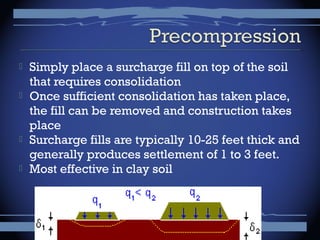
 Simply place a surcharge fill on top of the soil
that requires consolidation
 Once sufficient consolidation has taken place,
the fill can be removed and construction takes
place
 Surcharge fills are typically 10-25 feet thick and
generally produces settlement of 1 to 3 feet.
 Most effective in clay soil
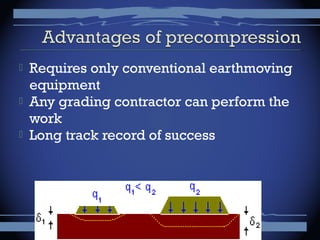
 Requires only conventional earthmoving
equipment
 Any grading contractor can perform the
work
 Long track record of success
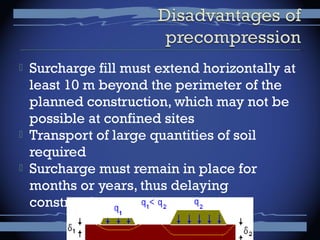
 Surcharge fill must extend horizontally at
least 10 m beyond the perimeter of the
planned construction, which may not be
possible at confined sites
 Transport of large quantities of soil
required
 Surcharge must remain in place for
months or years, thus delaying
construction
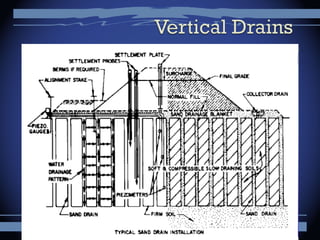
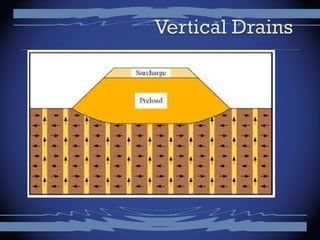
 Vertical drains are installed under a surcharge
load to accelerate the drainage of impervious
soils and thus speed up consolidation
 These drains provide a shorter path for the
water to flow through to get away from the soil
 Time to drain clay layers can be reduced from
years to a couple of months
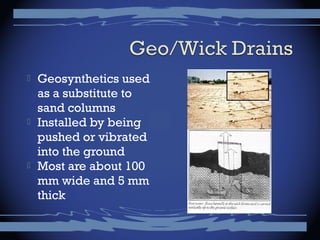
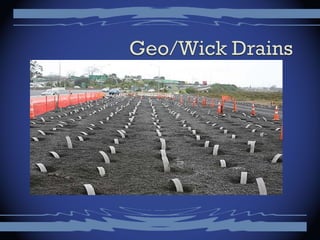
 Geosynthetics used
as a substitute to
sand columns
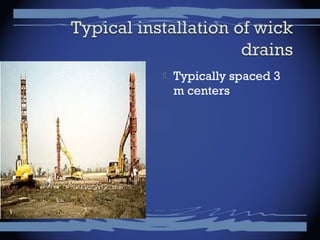
 Installed by being
pushed or vibrated
into the ground
 Most are about 100
mm wide and 5 mm
thick
 Typically spaced 3
m centers
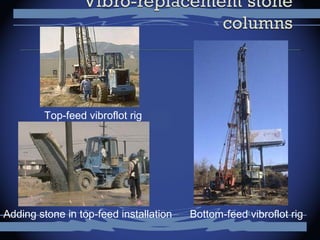
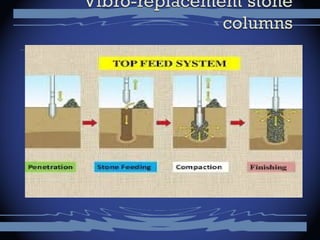
 Vibro-Replacement extends the range of
soils that can be improved by vibratory
techniques to include cohesive soils.
Reinforcement of the soil with compacted
granular columns or "stone columns" is
accomplished by the top-feed method.
Top-feed vibroflot rig
Adding stone in top-feed installation Bottom-feed vibroflot rig
GROUND IMPROVEMENT-DENSIFICATION METHODS

GROUND IMPROVEMENT-DENSIFICATION METHODS

  • 1.
  • 2.
     Removal andreplacement  In-situ densification  Precompression / Pre loading  Vertical drains-1.Sand drains 2.Geo drains  Stone columns  Dewatering  Stabilization using admixtures  Reinforcement  Geosynthetics  Grouting
  • 3.
     One ofoldest and simplest methods is simply to remove and replace the soil  Soils that will have to be replaced include contaminated soils or organic soils  Method is usually practical only above the groundwater table
  • 5.
     Most effectivein sands  Methods used in conventional earthwork are only effective to about 2 m below the surface  In-situ methods like dynamic deep compaction are for soils deeper than can be compacted from the surface
  • 8.
     Probe includesthe vibrator mechanism and water jets  Probe is lowered into the ground using a crane  Vibratory eccentric force induces densification and water jets assist in insertion and extraction  Vibratory probe compaction is effective if silt content is less than 12-15% and clay is less than 3%  Probes inserted in grid pattern at a spacing of 1.5 to 3 m
  • 9.
     A compactiontechnique employed mostly for cohesion-less soils.  The essence of the equipment is the vibroflot probe. It consists of a cylindrical tubular section that houses eccentrically rotating weights that induce horizontal vibratory motion.  While vibrating and water jetting , the probe is lowered down under its own weight to the required penetration depth
  • 10.
     Suitable granularmaterial is shoveled in to the hole and compacted by vibrating the probe at each incremental position for a certain time.  Sutability number for filling material
  • 11.
    Ground Type Relative Effectiveness Sands Excellent SiltySands Marginal to Good Silts Poor Clays Not applicable Mine Spoils Good (if granular) Dumped Fill Depends upon nature of fill Garbage Not Applicable
  • 12.
     Similar tovibro-float  The extraction rate for the terra probe is higher than that for the vibro-float
  • 16.
     Consists ofdropping a heavy weight from designated height repeatedly on the ground at regular intervals to achieve densification of loose cohesionless soils or fills.  Uses a special crane to lift 80-360 KN to heights of 7.5 to 30.5 m then drop these weights onto the ground  Cost effective method of densifying loose sands and silty soils up to 15 to 30 feet deep
  • 19.
     Used forthe densification of granular soils  Detonation of explosive charges such as 60% dynamite at a certain depth below the ground surface in saturated soil  The lateral spacing of the charges varies from 3 to 10 m( 10-30 feet). Three to five successful detonations are usually necessary to achieve the desired compaction
  • 20.
     Compaction upto a relative density of about 80% and up to a depth of about 20 m (60 ft) over a large area can easily be achieved by using this process  The explosive charges are placed at a depth of about 2/3 rds of the thickness of the soil layer desired to be compacted
  • 23.
     Precompression /Pre loading  Vertical drains- 1.Sand drains 2.Geo drains/Wick drains  Stone columns
  • 24.
     Simply placea surcharge fill on top of the soil that requires consolidation  Once sufficient consolidation has taken place, the fill can be removed and construction takes place  Surcharge fills are typically 10-25 feet thick and generally produces settlement of 1 to 3 feet.  Most effective in clay soil
  • 25.
     Requires onlyconventional earthmoving equipment  Any grading contractor can perform the work  Long track record of success
  • 26.
     Surcharge fillmust extend horizontally at least 10 m beyond the perimeter of the planned construction, which may not be possible at confined sites  Transport of large quantities of soil required  Surcharge must remain in place for months or years, thus delaying construction
  • 27.
     Vertical drainsare installed under a surcharge load to accelerate the drainage of impervious soils and thus speed up consolidation  These drains provide a shorter path for the water to flow through to get away from the soil  Time to drain clay layers can be reduced from years to a couple of months
  • 30.
     Geosynthetics used asa substitute to sand columns  Installed by being pushed or vibrated into the ground  Most are about 100 mm wide and 5 mm thick
  • 32.
  • 33.
     Vibro-Replacement extendsthe range of soils that can be improved by vibratory techniques to include cohesive soils. Reinforcement of the soil with compacted granular columns or "stone columns" is accomplished by the top-feed method.
  • 34.
    Top-feed vibroflot rig Addingstone in top-feed installation Bottom-feed vibroflot rig