FOUNDATION - I
• R.C.C. column footings,
• Foundations for workshops and machines.
• Formwork of foundation with column.
Footing
Footings are structural members used to
support columns and walls and to transmit
and distribute their loads to the soil in such a
way that the load bearing capacity of the soil
is not exceeded, excessive settlement,
differential settlement,or rotation are
prevented and adequate safety against
overturning or sliding is maintained.
TYPES OF FOOTING
WALL FOOTING
ISOLATED OR SINGLE FOOTING
COMBINED FOOTING
CANTILEVER OR STRAP FOOTING
CONTINUOUS FOOTING
MAT FOOTING
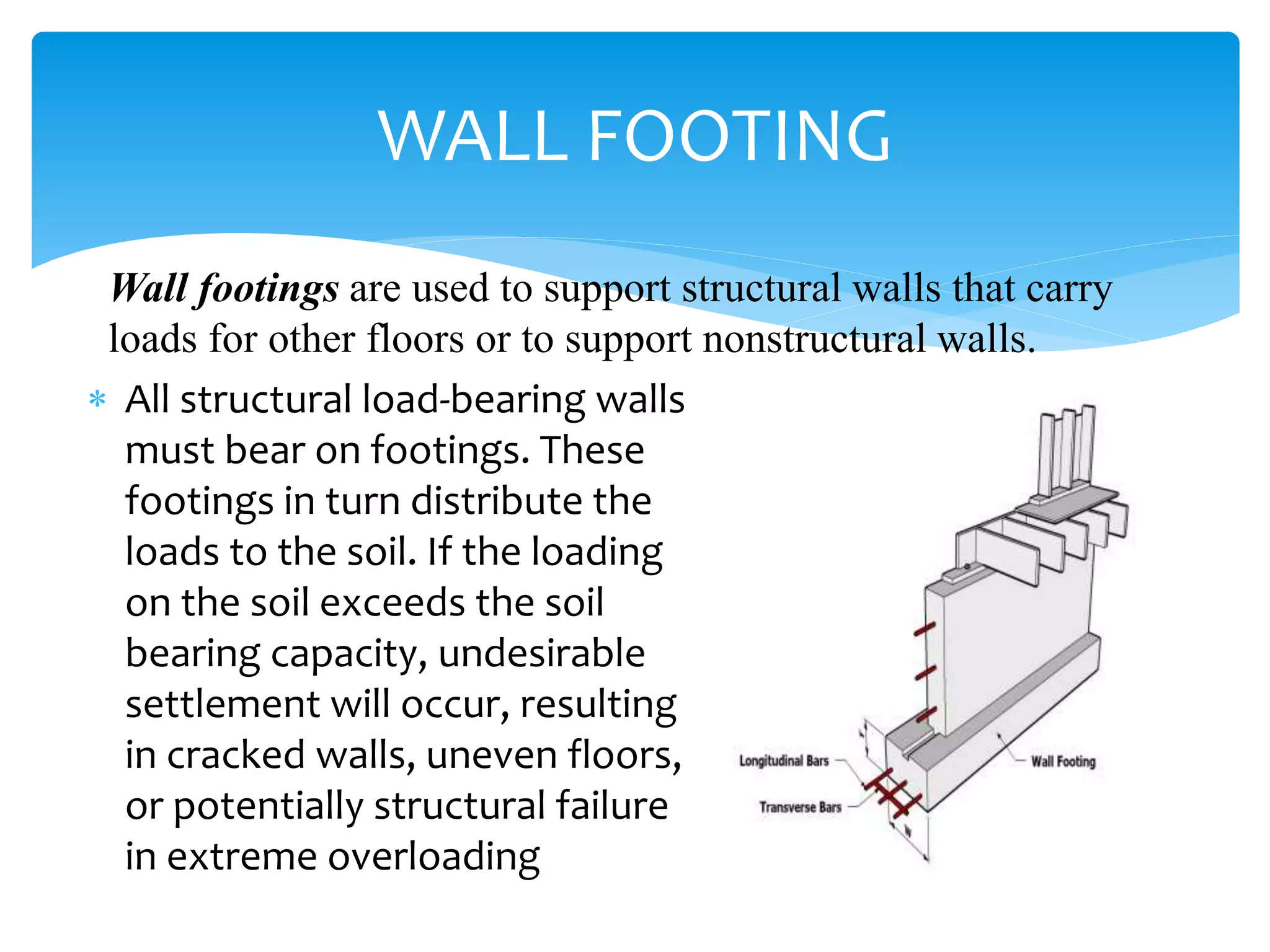
Wall footings are used to support structural walls that carry
loads for other floors or to support nonstructural walls.
 All structural load-bearing walls
must bear on footings. These
footings in turn distribute the
loads to the soil. If the loading
on the soil exceeds the soil
bearing capacity, undesirable
settlement will occur, resulting
in cracked walls, uneven floors,
or potentially structural failure
in extreme overloading
WALL FOOTING
CONTD
FORMWORK FOR WALL FOOTING
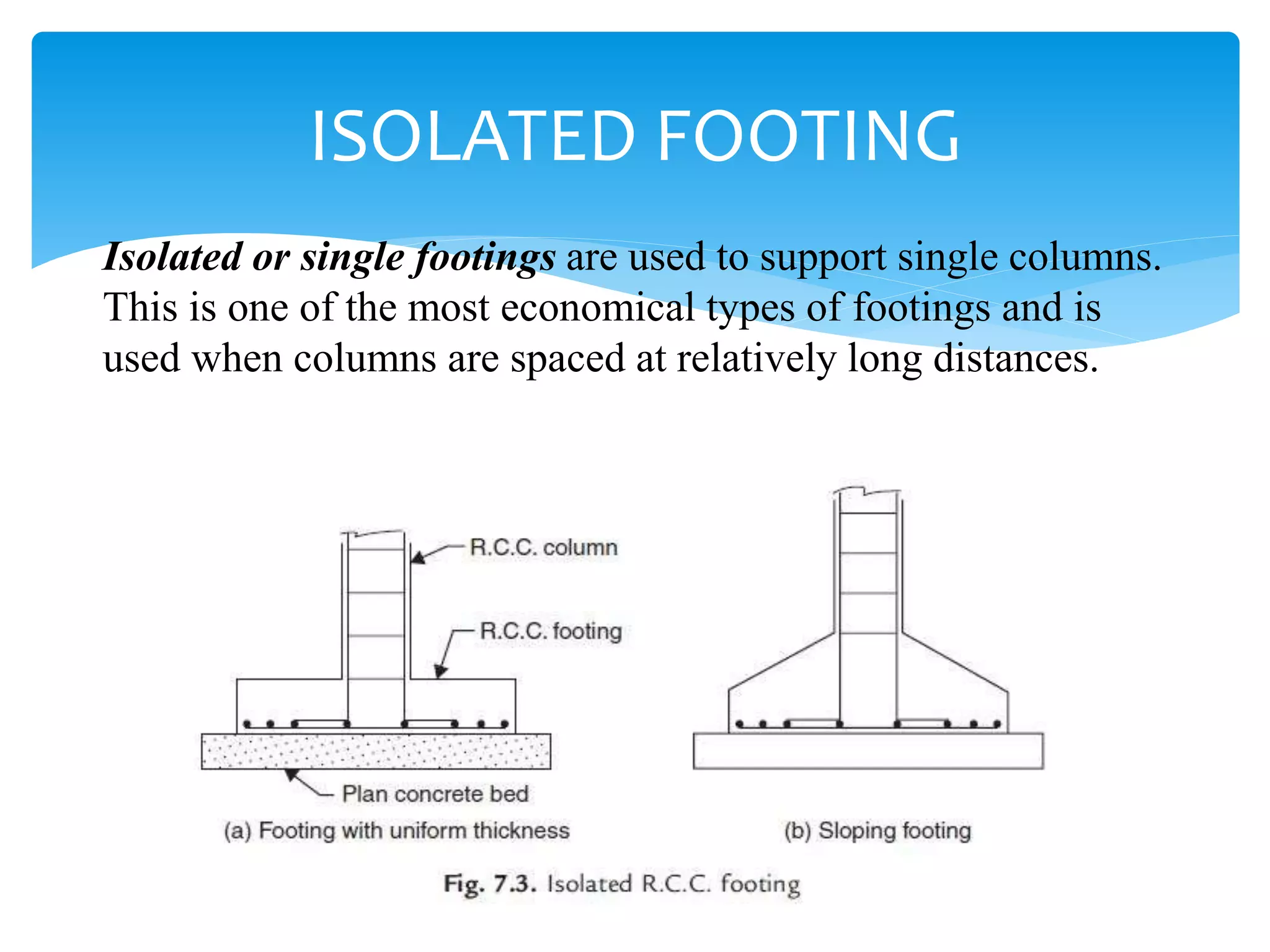
Isolated or single footings are used to support single columns.
This is one of the most economical types of footings and is
used when columns are spaced at relatively long distances.
ISOLATED FOOTING
LAYING OF FOOTING
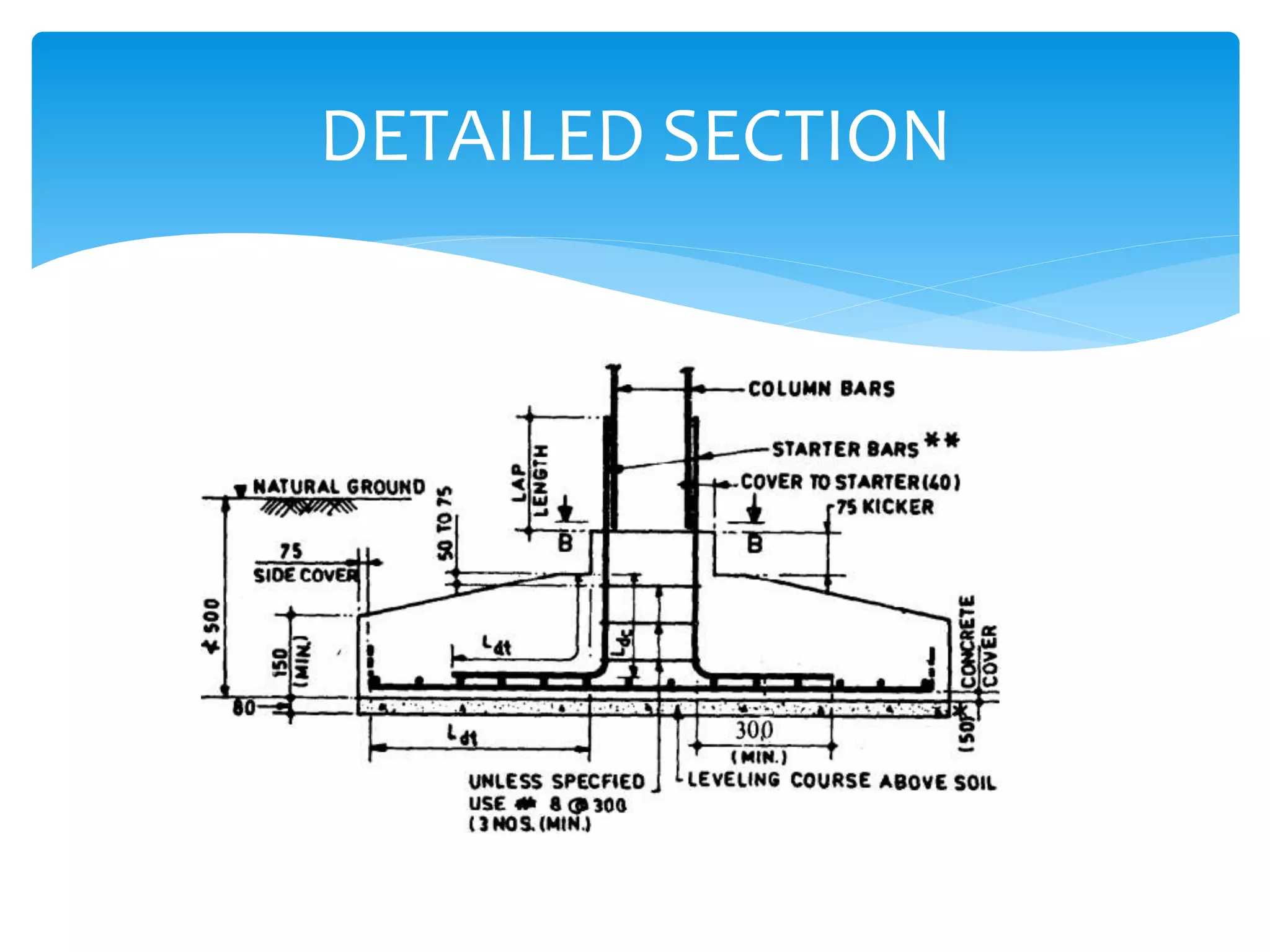
DETAILED SECTION
Combined footings usually
support two columns, or
three columns not in a row.
Combined footings are used
when tow columns are so
close that single footings
cannot be used or when one
column is located at or near
a property line.
COMBINED FOOTING
REINFORCEMENT DETAIL
CONTD..
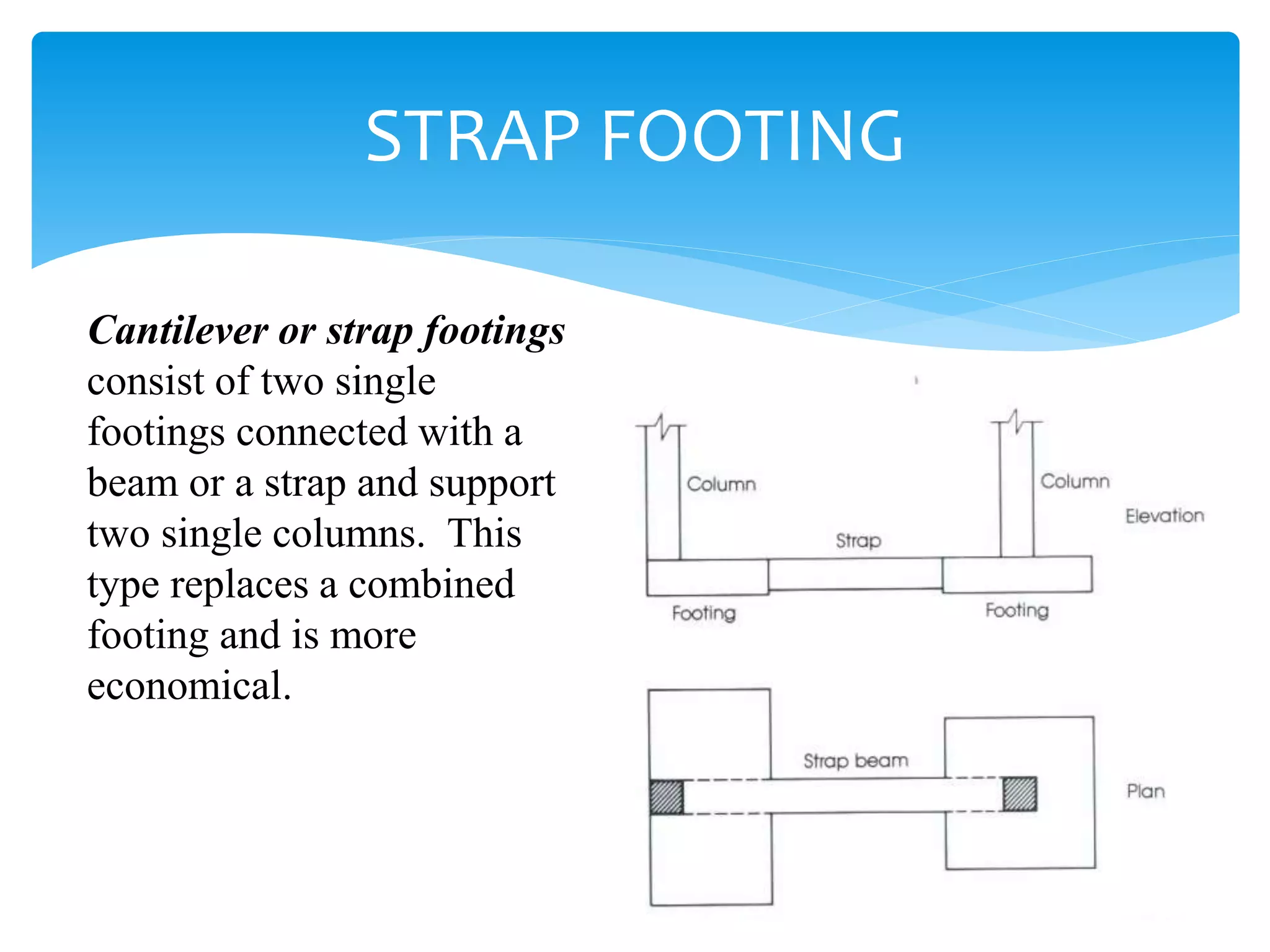
Cantilever or strap footings
consist of two single
footings connected with a
beam or a strap and support
two single columns. This
type replaces a combined
footing and is more
economical.
STRAP FOOTING
CONTD
Continuous footings support a row of three or more columns.
They have limited width and continue under all columns.
CONTINUOUS FOOTING
CONTD
 This foundation extends below the
entire building and distributes the
load from multiple columns and
walls of the structure to the soil
below. May be used for an entire
building or a portion of the building.
They are sometimes used to resist
water pressures when groundwater
extends above the level of the floor
of the lowest basement of a
building
MAT FOOTING
CONTD
 The analysis and design of structure or foundation
subjected to vibratory loading is a complex problem
 In majority of the cases the machines are supported
on a simple concrete block.
TYPES
• BLOCK TYPE
• FRAME TYPE
MACHINE FOUNDATION
CONTD
 The Analysis of the Machine foundation is done in two
stages:
 •Dynamic Analysis : Includes determination of the
natural frequencies of the Machine foundation system
and calculation of amplitudes of displacements and
rotations of the foundation under dynamic loading.
 •Static Analysis: Includes check for strength of the
foundation, stability of the foundation and check for
soil bearing capacity
CONTD
CONTD
THANK YOU

TYPES OF FOUNDATION

  • 1.
    FOUNDATION - I •R.C.C. column footings, • Foundations for workshops and machines. • Formwork of foundation with column.
  • 2.
    Footing Footings are structuralmembers used to support columns and walls and to transmit and distribute their loads to the soil in such a way that the load bearing capacity of the soil is not exceeded, excessive settlement, differential settlement,or rotation are prevented and adequate safety against overturning or sliding is maintained.
  • 3.
    TYPES OF FOOTING WALLFOOTING ISOLATED OR SINGLE FOOTING COMBINED FOOTING CANTILEVER OR STRAP FOOTING CONTINUOUS FOOTING MAT FOOTING
  • 4.
    Wall footings areused to support structural walls that carry loads for other floors or to support nonstructural walls.  All structural load-bearing walls must bear on footings. These footings in turn distribute the loads to the soil. If the loading on the soil exceeds the soil bearing capacity, undesirable settlement will occur, resulting in cracked walls, uneven floors, or potentially structural failure in extreme overloading WALL FOOTING
  • 5.
  • 6.
  • 7.
    Isolated or singlefootings are used to support single columns. This is one of the most economical types of footings and is used when columns are spaced at relatively long distances. ISOLATED FOOTING
  • 8.
  • 9.
  • 10.
    Combined footings usually supporttwo columns, or three columns not in a row. Combined footings are used when tow columns are so close that single footings cannot be used or when one column is located at or near a property line. COMBINED FOOTING
  • 11.
  • 12.
  • 13.
    Cantilever or strapfootings consist of two single footings connected with a beam or a strap and support two single columns. This type replaces a combined footing and is more economical. STRAP FOOTING
  • 14.
  • 15.
    Continuous footings supporta row of three or more columns. They have limited width and continue under all columns. CONTINUOUS FOOTING
  • 16.
  • 17.
     This foundationextends below the entire building and distributes the load from multiple columns and walls of the structure to the soil below. May be used for an entire building or a portion of the building. They are sometimes used to resist water pressures when groundwater extends above the level of the floor of the lowest basement of a building MAT FOOTING
  • 18.
  • 19.
     The analysisand design of structure or foundation subjected to vibratory loading is a complex problem  In majority of the cases the machines are supported on a simple concrete block. TYPES • BLOCK TYPE • FRAME TYPE MACHINE FOUNDATION
  • 20.
  • 21.
     The Analysisof the Machine foundation is done in two stages:  •Dynamic Analysis : Includes determination of the natural frequencies of the Machine foundation system and calculation of amplitudes of displacements and rotations of the foundation under dynamic loading.  •Static Analysis: Includes check for strength of the foundation, stability of the foundation and check for soil bearing capacity CONTD
  • 22.
  • 23.