
VITAMIN D


Dr SIVARAJ S
DEPT OF PHYSIOLOGY
ALL INDIA INSTITUTE OF MEDICAL SCIENCES
NEW DELHI
   Known as the “Sunshine
    vitamin”

   Can be produced in the
    body, has specific target
    tissues

   Dietary requirement is
    not essential
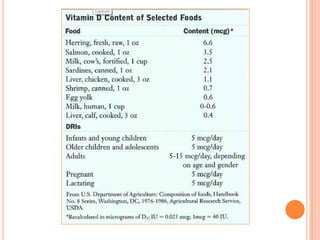
   Sources                            sources of vitamin
   Major source synthesis in the      D3, providing only 0.4 to 1
    skin ultraviolet B (wavelength     mcg/L.
    290–315 nm)
   Vitamin D3 exists naturally in
    animal products, and the
    richest sources are fish liver
    oils
   Except for fish, food (unless
    fortified) contains only limited
    amounts of vitamin D
   Vitamin D2 (ergocalciferol) is
    obtained from plant sources
    and is the chemical form
    found in some supplements.

   Human milk and unfortified
    cow's milk tend to be poor
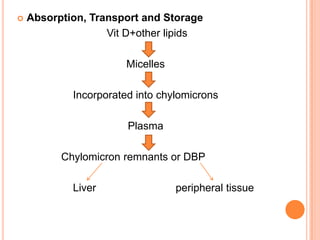
   Absorption, Transport and Storage
                   Vit D+other lipids

                       Micelles

            Incorporated into chylomicrons

                       Plasma

          Chylomicron remnants or DBP

            Liver                 peripheral tissue
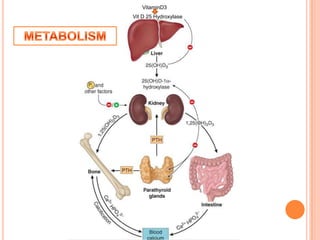
VitaminD3
Vit D 25 Hydroxylase
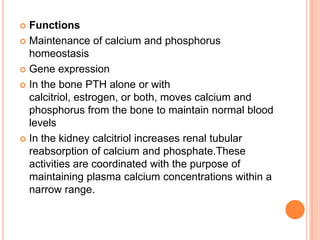
 Functions
 Maintenance of calcium and phosphorus
  homeostasis
 Gene expression

 In the bone PTH alone or with
  calcitriol, estrogen, or both, moves calcium and
  phosphorus from the bone to maintain normal blood
  levels
 In the kidney calcitriol increases renal tubular
  reabsorption of calcium and phosphate.These
  activities are coordinated with the purpose of
  maintaining plasma calcium concentrations within a
  narrow range.
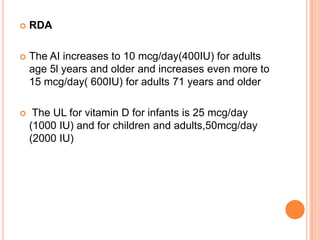
   RDA

   The AI increases to 10 mcg/day(400IU) for adults
    age 5l years and older and increases even more to
    15 mcg/day( 600IU) for adults 71 years and older

    The UL for vitamin D for infants is 25 mcg/day
    (1000 IU) and for children and adults,50mcg/day
    (2000 IU)
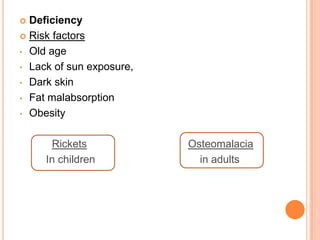
 Deficiency
 Risk factors

• Old age

• Lack of sun exposure,

• Dark skin

• Fat malabsorption

• Obesity


      Rickets             Osteomalacia
     In children            in adults
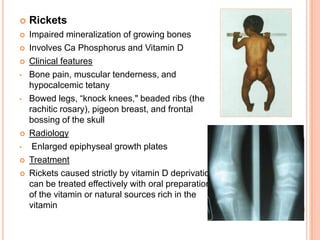
   Rickets
   Impaired mineralization of growing bones
   Involves Ca Phosphorus and Vitamin D
   Clinical features
•   Bone pain, muscular tenderness, and
    hypocalcemic tetany
•   Bowed legs, “knock knees," beaded ribs (the
    rachitic rosary), pigeon breast, and frontal
    bossing of the skull
   Radiology
•    Enlarged epiphyseal growth plates
   Treatment
   Rickets caused strictly by vitamin D deprivation
    can be treated effectively with oral preparations
    of the vitamin or natural sources rich in the
    vitamin
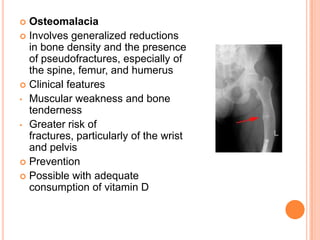
 Osteomalacia
 Involves generalized reductions
  in bone density and the presence
  of pseudofractures, especially of
  the spine, femur, and humerus
 Clinical features
• Muscular weakness and bone
  tenderness
• Greater risk of
  fractures, particularly of the wrist
  and pelvis
 Prevention
 Possible with adequate
  consumption of vitamin D
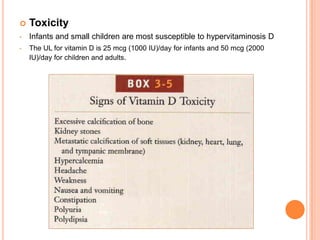
   Toxicity
•   Infants and small children are most susceptible to hypervitaminosis D
•   The UL for vitamin D is 25 mcg (1000 IU)/day for infants and 50 mcg (2000
    IU)/day for children and adults.
Vitamin D

Vitamin D

  • 1.
    VITAMIN D Dr SIVARAJS DEPT OF PHYSIOLOGY ALL INDIA INSTITUTE OF MEDICAL SCIENCES NEW DELHI
  • 2.
    Known as the “Sunshine vitamin”  Can be produced in the body, has specific target tissues  Dietary requirement is not essential
  • 3.
    Sources sources of vitamin  Major source synthesis in the D3, providing only 0.4 to 1 skin ultraviolet B (wavelength mcg/L. 290–315 nm)  Vitamin D3 exists naturally in animal products, and the richest sources are fish liver oils  Except for fish, food (unless fortified) contains only limited amounts of vitamin D  Vitamin D2 (ergocalciferol) is obtained from plant sources and is the chemical form found in some supplements.  Human milk and unfortified cow's milk tend to be poor
  • 4.
    Absorption, Transport and Storage Vit D+other lipids Micelles Incorporated into chylomicrons Plasma Chylomicron remnants or DBP Liver peripheral tissue
  • 5.
    VitaminD3 Vit D 25Hydroxylase
  • 6.
     Functions  Maintenanceof calcium and phosphorus homeostasis  Gene expression  In the bone PTH alone or with calcitriol, estrogen, or both, moves calcium and phosphorus from the bone to maintain normal blood levels  In the kidney calcitriol increases renal tubular reabsorption of calcium and phosphate.These activities are coordinated with the purpose of maintaining plasma calcium concentrations within a narrow range.
  • 8.
    RDA  The AI increases to 10 mcg/day(400IU) for adults age 5l years and older and increases even more to 15 mcg/day( 600IU) for adults 71 years and older  The UL for vitamin D for infants is 25 mcg/day (1000 IU) and for children and adults,50mcg/day (2000 IU)
  • 10.
     Deficiency  Riskfactors • Old age • Lack of sun exposure, • Dark skin • Fat malabsorption • Obesity Rickets Osteomalacia In children in adults
  • 11.
    Rickets  Impaired mineralization of growing bones  Involves Ca Phosphorus and Vitamin D  Clinical features • Bone pain, muscular tenderness, and hypocalcemic tetany • Bowed legs, “knock knees," beaded ribs (the rachitic rosary), pigeon breast, and frontal bossing of the skull  Radiology • Enlarged epiphyseal growth plates  Treatment  Rickets caused strictly by vitamin D deprivation can be treated effectively with oral preparations of the vitamin or natural sources rich in the vitamin
  • 12.
     Osteomalacia  Involvesgeneralized reductions in bone density and the presence of pseudofractures, especially of the spine, femur, and humerus  Clinical features • Muscular weakness and bone tenderness • Greater risk of fractures, particularly of the wrist and pelvis  Prevention  Possible with adequate consumption of vitamin D
  • 13.
    Toxicity • Infants and small children are most susceptible to hypervitaminosis D • The UL for vitamin D is 25 mcg (1000 IU)/day for infants and 50 mcg (2000 IU)/day for children and adults.