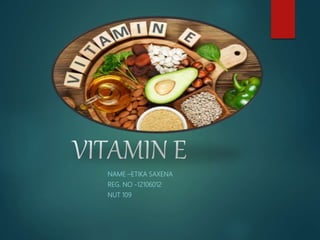
VITAMIN E
NAME –ETIKA SAXENA
REG. NO -12106012
NUT 109
Topics
 Introduction
 Dietary sources
 Biochemical functions
 Absorption storage transport
 RDA of vitamin E
 Diseases
 Deficiency symptoms
 Toxicity
 References
Introduction
 It is a fat soluble vitamin and heat labile.
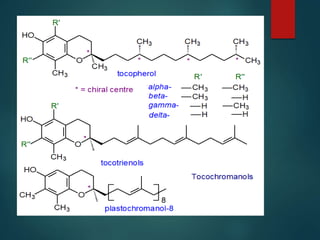
 The term vitamin E describes a family of 8
antioxidants , 4 tocopherols (a,b, g, & d) and 4
tocotrienols.
 a-tocopherol is the active form of vitamin E in the
human body.
 The tocopherols are derivatives of 6-hydroxy
chromane (tocol) ring with isoprenoid (3 units) side
chain.
 The antioxidant property is due to the hydroxyl
group of chromane ring.
Dietary sources
 Vitamin E is
synthesized by plants .
 Alpha – tocopherol in
other green plants.
FUNCTIONS
 It is a membrane antioxidant .
Vit E prevents lipid peroxidation.
 There is continuous production of free radicals in our
body . This free radicals can Damage PUFA ,Vitamin E
excepts free radicals and itself gets converted to
quinone form.
 Vitamin E is important for the maintainence of RBC
membrane prevents hemolysis
 It is important in maintainence of reproduction and
germinal epithelium in gonads.
 It prevents sterility
 It helps to prevents oxidized LDL formation
 Selenium is important constituent of glutathione
peroxidase . Vitamin E along with Selenium functions as an
antioxidant.
 Immune response
 It prevents oxidation of vitamin A
 It helps to prevent cataract along with vitamin A and C.
 It is important in heme synthesis because it activates
(aminolevulinic acid )ALA synthase and ALA dehydratase.
 It is important in nucleic acid synthesis.
 It is required for proper storage of creatine in skeletal
muscle.
 Vitamin E prevents massive hepatic necrosis produced
in diet deficient of amino acids .
RDA of vitamin E 2020
Absorption,storage and
Transport
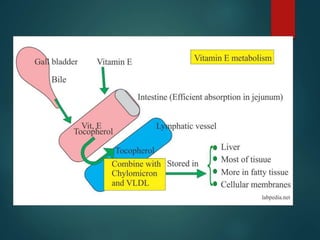
ABSORPTION
 small intestine
 It enters the bloodstream via the lymph
STORAGE
 liver and fatty tissue
EXCRETION
 Urine
 Vitamin E is absorbed along with fat in the small intestine.
Bile salts are necessary for the absorption. In the liver, it is
incorporated into lipoproteins (VLDL and LDL) and
transported.
 Vitamin E is stored in adipose tissue, liver and muscle. The
normal plasma level of tocopherol is less than 1 mg/dl.
DISEASES
 Myopathy(skeletal muscle pain)and weakness
 Ceroid pigment accumulation (fat accumulation)
 Hemolytic Anaemia
 Degenerative neuropathy
 Ataxia
 Loss of vibratory sense
 Loss of coordination of limbs
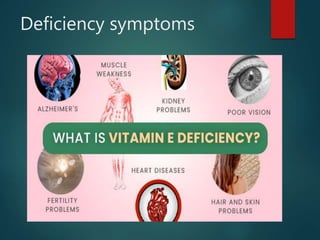
Deficiency symptoms
Toxicity
 Vitamin e is least toxic among other fat soluble vitamins.
 Doses above 1000mg /day leads to toxicity.
Headache
Fatigue
Nausea
Double
vision
Muscular
weakness
Creatinuria
Gastrointestinal
distress
Vit E
intoxication
NOTES
 Although there is no direct relation vitamin E in
disease .
 That’s why it is also known as insearch of disease
vitamin. But so many disease occur due to oxidation
of cells.
 It prevents in coronary artery disease
 Dilates the bloodvessels for easy bood flow.
 It is mainly known for its antioxidant role .
REFERENCES
 NUTRITION SCIENCE by B srilaxmi
 DR. U SATYANRAYANA biochemistry
 GOOGLE
 WIKIPEDIA
THANK YOU!

Vitamin e

  • 1.
    VITAMIN E NAME –ETIKASAXENA REG. NO -12106012 NUT 109
  • 2.
    Topics  Introduction  Dietarysources  Biochemical functions  Absorption storage transport  RDA of vitamin E  Diseases  Deficiency symptoms  Toxicity  References
  • 3.
    Introduction  It isa fat soluble vitamin and heat labile.  The term vitamin E describes a family of 8 antioxidants , 4 tocopherols (a,b, g, & d) and 4 tocotrienols.  a-tocopherol is the active form of vitamin E in the human body.  The tocopherols are derivatives of 6-hydroxy chromane (tocol) ring with isoprenoid (3 units) side chain.  The antioxidant property is due to the hydroxyl group of chromane ring.
  • 5.
    Dietary sources  VitaminE is synthesized by plants .  Alpha – tocopherol in other green plants.
  • 6.
    FUNCTIONS  It isa membrane antioxidant . Vit E prevents lipid peroxidation.  There is continuous production of free radicals in our body . This free radicals can Damage PUFA ,Vitamin E excepts free radicals and itself gets converted to quinone form.  Vitamin E is important for the maintainence of RBC membrane prevents hemolysis  It is important in maintainence of reproduction and germinal epithelium in gonads.
  • 7.
     It preventssterility  It helps to prevents oxidized LDL formation  Selenium is important constituent of glutathione peroxidase . Vitamin E along with Selenium functions as an antioxidant.  Immune response  It prevents oxidation of vitamin A  It helps to prevent cataract along with vitamin A and C.  It is important in heme synthesis because it activates (aminolevulinic acid )ALA synthase and ALA dehydratase.
  • 8.
     It isimportant in nucleic acid synthesis.  It is required for proper storage of creatine in skeletal muscle.  Vitamin E prevents massive hepatic necrosis produced in diet deficient of amino acids .
  • 9.
  • 10.
    Absorption,storage and Transport ABSORPTION  smallintestine  It enters the bloodstream via the lymph STORAGE  liver and fatty tissue EXCRETION  Urine
  • 11.
     Vitamin Eis absorbed along with fat in the small intestine. Bile salts are necessary for the absorption. In the liver, it is incorporated into lipoproteins (VLDL and LDL) and transported.  Vitamin E is stored in adipose tissue, liver and muscle. The normal plasma level of tocopherol is less than 1 mg/dl.
  • 13.
    DISEASES  Myopathy(skeletal musclepain)and weakness  Ceroid pigment accumulation (fat accumulation)  Hemolytic Anaemia  Degenerative neuropathy  Ataxia  Loss of vibratory sense  Loss of coordination of limbs
  • 14.
  • 15.
    Toxicity  Vitamin eis least toxic among other fat soluble vitamins.  Doses above 1000mg /day leads to toxicity. Headache Fatigue Nausea Double vision Muscular weakness Creatinuria Gastrointestinal distress Vit E intoxication
  • 16.
    NOTES  Although thereis no direct relation vitamin E in disease .  That’s why it is also known as insearch of disease vitamin. But so many disease occur due to oxidation of cells.  It prevents in coronary artery disease  Dilates the bloodvessels for easy bood flow.  It is mainly known for its antioxidant role .
  • 17.
    REFERENCES  NUTRITION SCIENCEby B srilaxmi  DR. U SATYANRAYANA biochemistry  GOOGLE  WIKIPEDIA
  • 18.