FAT SOLUBLE
VITAMINS
Dr. T. RAMESH,
Assistant Professor of Zoology
Vivekananda College
Introduction
 “Something to make us sick, When we do not eat it”
 They are Organic compounds
 Plants can synthesis vitamins and animal can synthesis few
 Animals obtain vitamins from food stuffs
 Man requires 15 vitamin and lesser
 Very small quantity of vitamins is needed
 It is function like hormones
 They cannot provide any energy but it is needed for
physiological activity functioning as catalyst
 High Temperature- losing the vitamins
 Causing deficiency diseases
 Dr. Funk- Introduced the term Vitamins
Types of Vitamins
 There are two groups - according their
solubility
 1. Fat Soluble Vitamins- A, D, E & K
 2. Water Soluble Vitamins- B & C
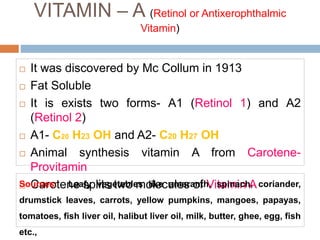
VITAMIN – A (Retinol or Antixerophthalmic
Vitamin)
 It was discovered by Mc Collum in 1913
 Fat Soluble
 It is exists two forms- A1 (Retinol 1) and A2
(Retinol 2)
 A1- C20 H23 OH and A2- C20 H27 OH
 Animal synthesis vitamin A from Carotene-
Provitamin
 Carotene splits two molecules of Vitamin A
Sources: Leafy vegetables like amaranth, spinach, coriander,
drumstick leaves, carrots, yellow pumpkins, mangoes, papayas,
tomatoes, fish liver oil, halibut liver oil, milk, butter, ghee, egg, fish
etc.,
Functions of Vitamin A
 Vitamin A is an important component of
Rhodopsin of retina.
 It promotes growth
 Protein synthesis
 Normal growth and shape of Bones
 Essential for the synthesis of
mucoploysaccharides
 Promotes fertility
 Essential function-Carbohydrate & DNA
metabolism- Normal structure and function of
epithelial tissues
Deficiency symptoms of Vitamin A
 In children- Retards growth-leads loss of weight
 Vision in dim light- rhodopsin pigment in retina of
eye- Night Blindness or Nyctalopia
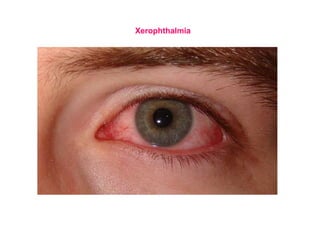
 Xerophthalmia- reddening, dryness, lusterless
conditions of the eye.
 Keratomalacia- Cornea becomes soft and
disorganised
 Degenerate- Lacrymal gland, Sweat and Sebaceous
glands of Skin
 Over dose of Vitamin A- Hypervitaminosis –
Drowsiness, sluggishness, severe headache,
vomitting and peeling of the skin
Xerophthalmia
Vitamin D (Calciferol or Antirachitic
Vitamin)
 Mc Collum in 1922
 It is a steroid compounds
 It is formed irradiation of sterols
 In skin the large amount of Cholesterol converted
into Vitamin D- Exposure of the skin to sunlight
 It exists in five known forms- D1, D2, D3, D4 & D5
 Vitamin D2 is of common- Ergocalciferol- C28 H43
OH
 D3- Cholecalciferol, D5- Ergosterol
Sources of Vitamin D
 Fish liver oil
 Butter
 Milk
 Egg
Functions:
It helps calcium absorption in the intestine
It improves absorption of phosphate
It Helps deposition of Calcium and Phosphates in the
bones
Essential- Calcium metabolism, normal development
of bone & teeth
Deficiency of Vitamin D
 It causes Rickets in child
 It causes Osteomalacia in adults
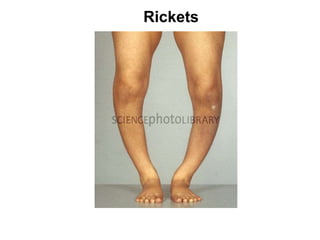
 Rickets
 It caused by deficiency of Vitamin D for Children
 It is characteristic- Soft and Weak bone- Leg bones are
curved and “Bow Shaped” and ribs appearance-
“Pigeon breast”
 Antirachiitic vitamin- Vitamin D against rickets
 Osteomalacia
 Adult ricket, lack of Calcium salts in diet, during
pregnancy and lactation
Rickets
Vitamin E (Tocopherol or
Antisterility)
 Matill and Conclin 1920
 Fat Soluble
 It exists three forms Alpha, Beta and Gamma
 Sources: Rich in Wheat, germ oil, cotton seed
oils, liver of hourse and cattle, muscles of heart,
kidney milk, egg-yolk
 Man requires 15 to 20 mg/day
 Function: it is a antioxidant
 Normal reproduction rate and functioning of
muscles
Deficiency and symptoms
 In man it not known exactly. It may causes
peripheral vascular disorder
 Heart disorder
 menopause
 In female rat the foetus dies sometime
 In chick it leads to embryonic moetality
Vitamin K (Antihaemorrhagic
vitamin)
 Dam 1935
 It is essential for coagulation or blood clotting
 Sources: Green plants, microbs, Cabbage,
spinach, tomato, soyabean. Also Liver, fish,
milk etc
 Functions: Essential for synthesis of
prothrombin in liver- Prothrombin is essential
for blood clotting
 Hence it is called Antihaemorrhagic vitamin
Deficiency of vitamin K
 Blood clotting
 Bleeds are stopped within 5-8 min
 Loss of cont. Bleeding- victim is dies
Vitamin Q
 DR. A.J. Quick 1972
 Found in Phopholipid extracted from
soyabeans
 Essential for blood clot
Vitamin U
 It isolated from curd
 It is essential for people suffers gastritis,
duodenal ulcers
 Doubles % of recoveries from gastro intestinal
diseases.

Fat soluble vitamins

  • 1.
    FAT SOLUBLE VITAMINS Dr. T.RAMESH, Assistant Professor of Zoology Vivekananda College
  • 2.
    Introduction  “Something tomake us sick, When we do not eat it”  They are Organic compounds  Plants can synthesis vitamins and animal can synthesis few  Animals obtain vitamins from food stuffs  Man requires 15 vitamin and lesser  Very small quantity of vitamins is needed  It is function like hormones  They cannot provide any energy but it is needed for physiological activity functioning as catalyst  High Temperature- losing the vitamins  Causing deficiency diseases  Dr. Funk- Introduced the term Vitamins
  • 3.
    Types of Vitamins There are two groups - according their solubility  1. Fat Soluble Vitamins- A, D, E & K  2. Water Soluble Vitamins- B & C
  • 4.
    VITAMIN – A(Retinol or Antixerophthalmic Vitamin)  It was discovered by Mc Collum in 1913  Fat Soluble  It is exists two forms- A1 (Retinol 1) and A2 (Retinol 2)  A1- C20 H23 OH and A2- C20 H27 OH  Animal synthesis vitamin A from Carotene- Provitamin  Carotene splits two molecules of Vitamin A Sources: Leafy vegetables like amaranth, spinach, coriander, drumstick leaves, carrots, yellow pumpkins, mangoes, papayas, tomatoes, fish liver oil, halibut liver oil, milk, butter, ghee, egg, fish etc.,
  • 5.
    Functions of VitaminA  Vitamin A is an important component of Rhodopsin of retina.  It promotes growth  Protein synthesis  Normal growth and shape of Bones  Essential for the synthesis of mucoploysaccharides  Promotes fertility  Essential function-Carbohydrate & DNA metabolism- Normal structure and function of epithelial tissues
  • 6.
    Deficiency symptoms ofVitamin A  In children- Retards growth-leads loss of weight  Vision in dim light- rhodopsin pigment in retina of eye- Night Blindness or Nyctalopia  Xerophthalmia- reddening, dryness, lusterless conditions of the eye.  Keratomalacia- Cornea becomes soft and disorganised  Degenerate- Lacrymal gland, Sweat and Sebaceous glands of Skin  Over dose of Vitamin A- Hypervitaminosis – Drowsiness, sluggishness, severe headache, vomitting and peeling of the skin
  • 7.
  • 8.
    Vitamin D (Calciferolor Antirachitic Vitamin)  Mc Collum in 1922  It is a steroid compounds  It is formed irradiation of sterols  In skin the large amount of Cholesterol converted into Vitamin D- Exposure of the skin to sunlight  It exists in five known forms- D1, D2, D3, D4 & D5  Vitamin D2 is of common- Ergocalciferol- C28 H43 OH  D3- Cholecalciferol, D5- Ergosterol
  • 9.
    Sources of VitaminD  Fish liver oil  Butter  Milk  Egg Functions: It helps calcium absorption in the intestine It improves absorption of phosphate It Helps deposition of Calcium and Phosphates in the bones Essential- Calcium metabolism, normal development of bone & teeth
  • 10.
    Deficiency of VitaminD  It causes Rickets in child  It causes Osteomalacia in adults  Rickets  It caused by deficiency of Vitamin D for Children  It is characteristic- Soft and Weak bone- Leg bones are curved and “Bow Shaped” and ribs appearance- “Pigeon breast”  Antirachiitic vitamin- Vitamin D against rickets  Osteomalacia  Adult ricket, lack of Calcium salts in diet, during pregnancy and lactation
  • 11.
  • 12.
    Vitamin E (Tocopherolor Antisterility)  Matill and Conclin 1920  Fat Soluble  It exists three forms Alpha, Beta and Gamma  Sources: Rich in Wheat, germ oil, cotton seed oils, liver of hourse and cattle, muscles of heart, kidney milk, egg-yolk  Man requires 15 to 20 mg/day  Function: it is a antioxidant  Normal reproduction rate and functioning of muscles
  • 13.
    Deficiency and symptoms In man it not known exactly. It may causes peripheral vascular disorder  Heart disorder  menopause  In female rat the foetus dies sometime  In chick it leads to embryonic moetality
  • 14.
    Vitamin K (Antihaemorrhagic vitamin) Dam 1935  It is essential for coagulation or blood clotting  Sources: Green plants, microbs, Cabbage, spinach, tomato, soyabean. Also Liver, fish, milk etc  Functions: Essential for synthesis of prothrombin in liver- Prothrombin is essential for blood clotting  Hence it is called Antihaemorrhagic vitamin
  • 15.
    Deficiency of vitaminK  Blood clotting  Bleeds are stopped within 5-8 min  Loss of cont. Bleeding- victim is dies
  • 16.
    Vitamin Q  DR.A.J. Quick 1972  Found in Phopholipid extracted from soyabeans  Essential for blood clot
  • 17.
    Vitamin U  Itisolated from curd  It is essential for people suffers gastritis, duodenal ulcers  Doubles % of recoveries from gastro intestinal diseases.