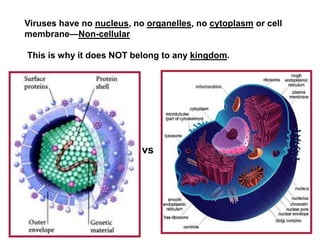
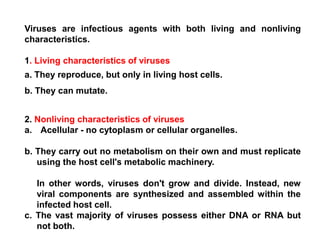
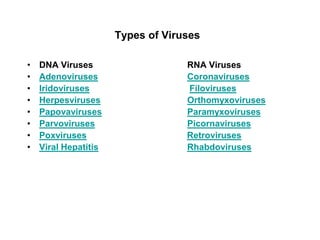
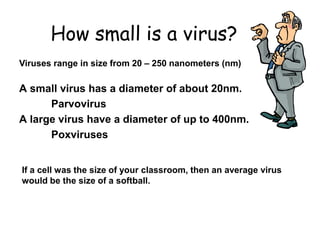
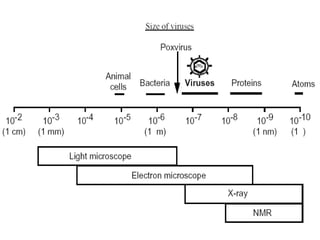
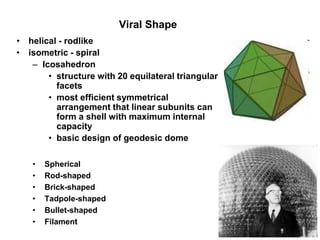
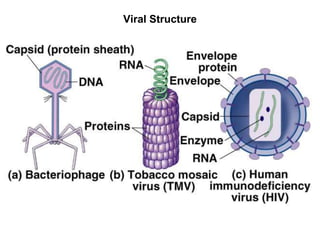
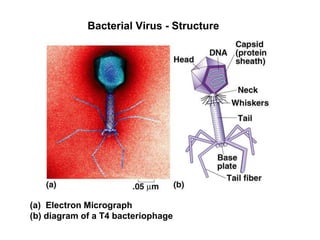
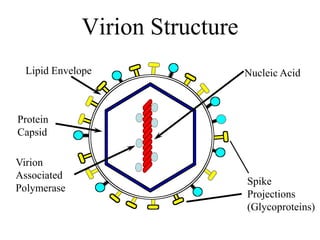
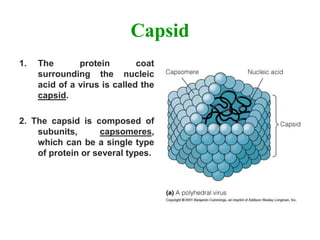
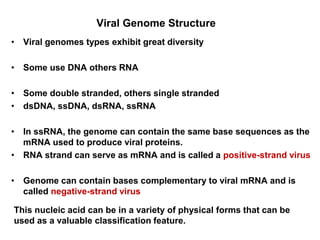
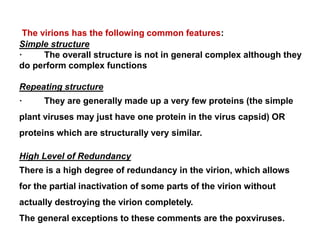
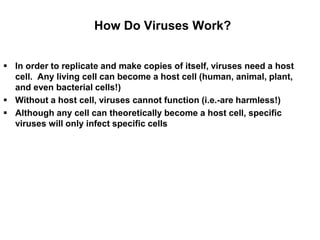
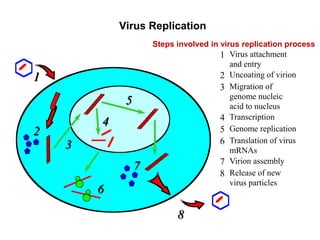
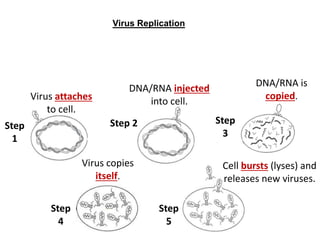
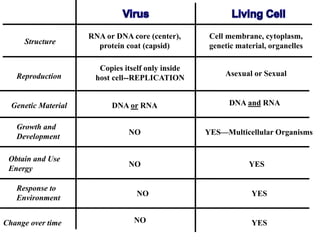
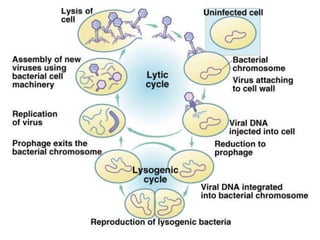
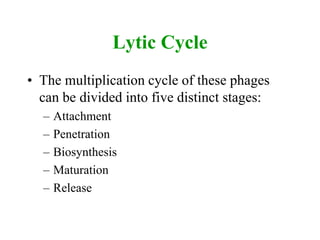
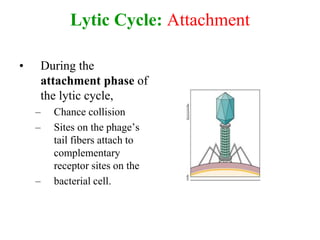
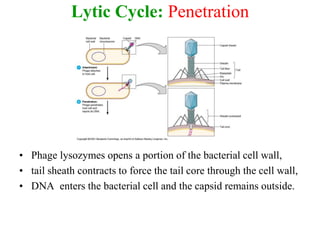
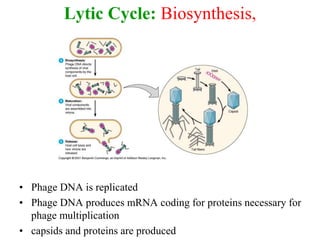
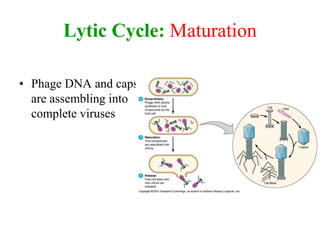
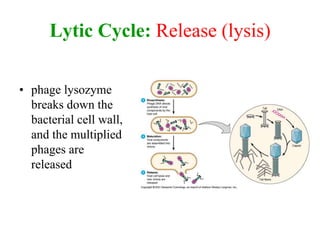
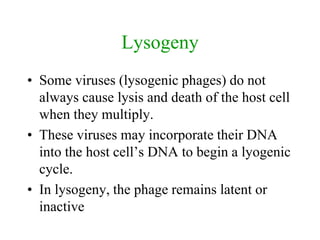
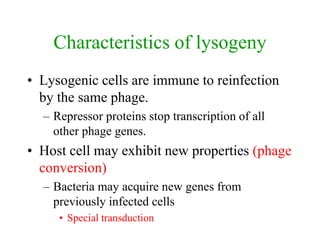
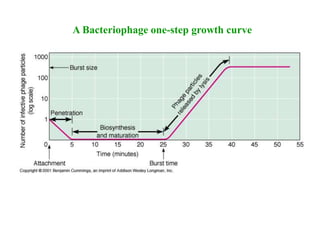
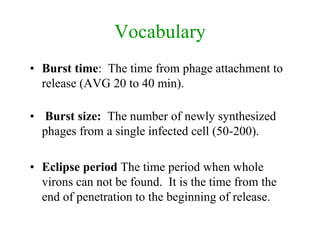
Viruses are parasites that can only replicate inside living host cells. They are made up of genetic material surrounded by a protein coat and have no cell structure of their own. Viruses come in many shapes and sizes but are typically 20-400 nanometers. They infect bacteria, plants, and animals. A virus replicates by entering a host cell, releasing its genetic material, and hijacking the cell's machinery to produce new virus particles that eventually cause the cell to burst and release new viruses. Viruses can have DNA or RNA as their genetic material and replicate through either a lytic or lysogenic cycle.