Downloaded 42 times
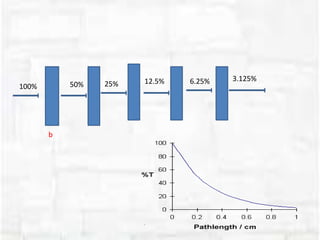
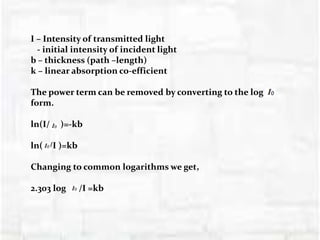
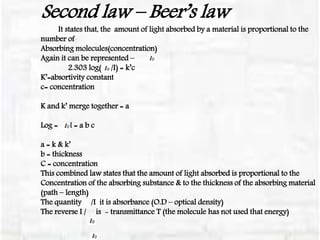
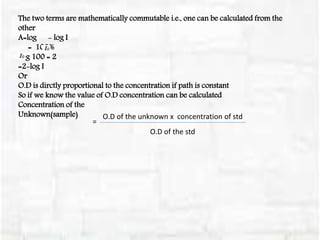
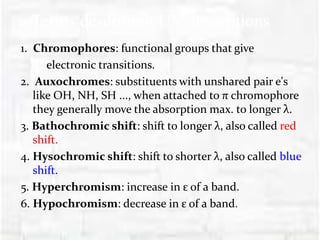
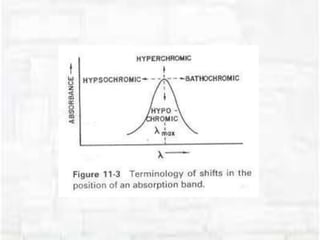
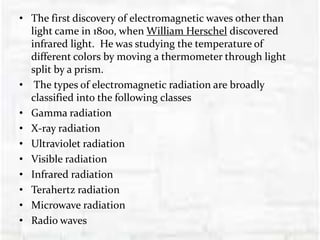
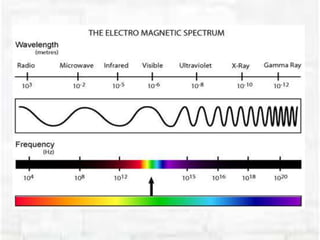
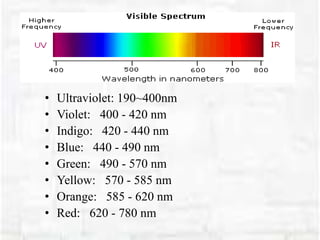
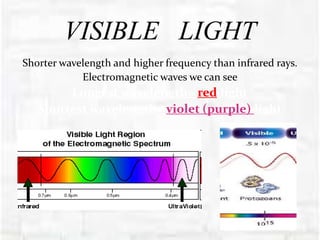
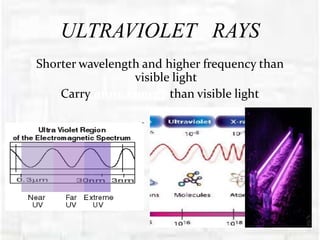
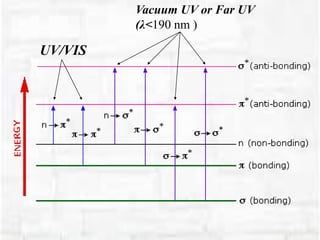
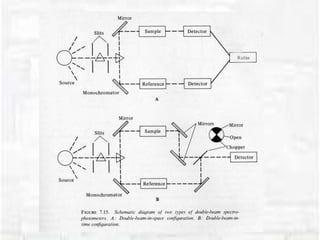
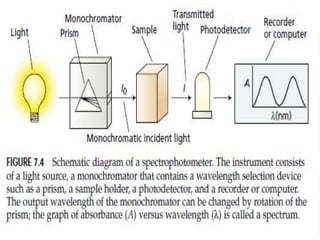
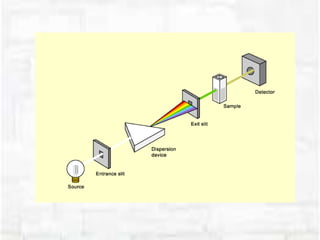
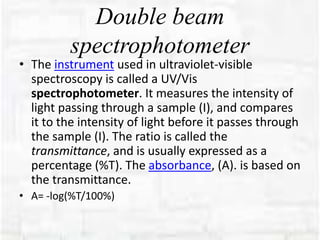
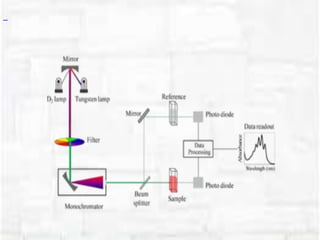

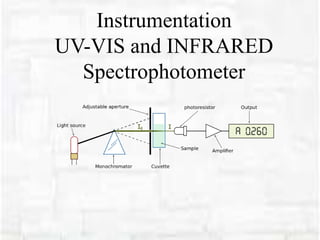
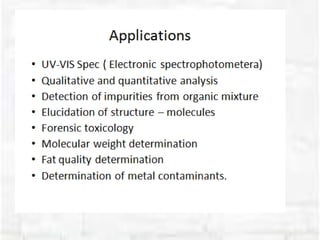


UV-visible spectroscopy measures the absorption of light in the ultraviolet-visible spectral region. It can be used to analyze concentration and interactions between molecules. The document discusses the history, basic principles, instrumentation, and applications of UV-visible spectroscopy. It provides details on electronic transitions, Beer's law, components of UV-visible spectrometers including light sources, wavelength selectors, sample holders, detectors, and the differences between single and double beam instruments.


