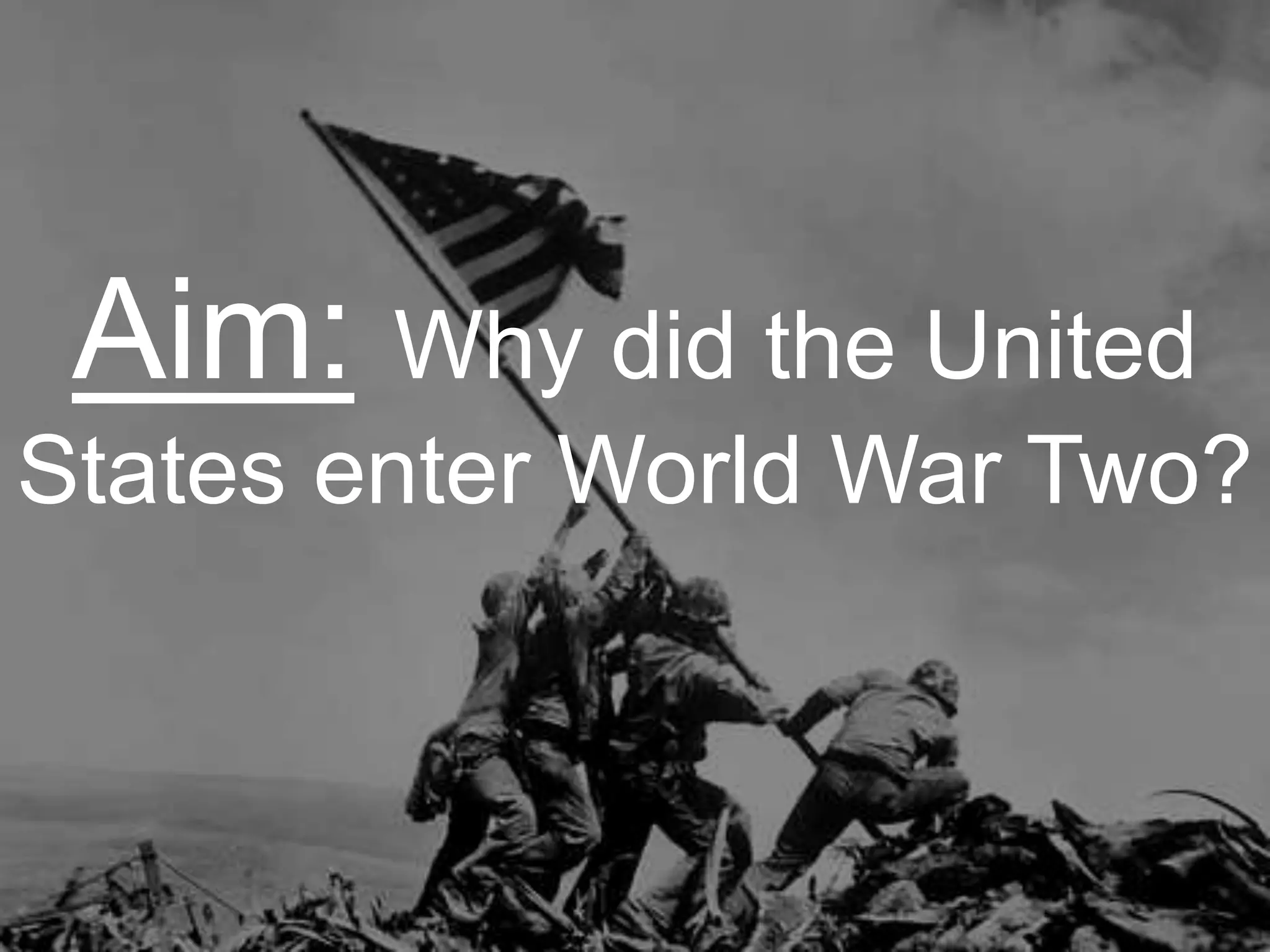
Aim: Why did the United
States enter World War Two?
Do Now: Read the transcript of FDR’s fireside chat and
answer the questions below;
1. What happened on September 3, 1939?
2. According to FDR, can Americans remain
detached?
3. What is the precedent that goes back to the
days of President Washington?
4. What does FDR promises the American
people of?
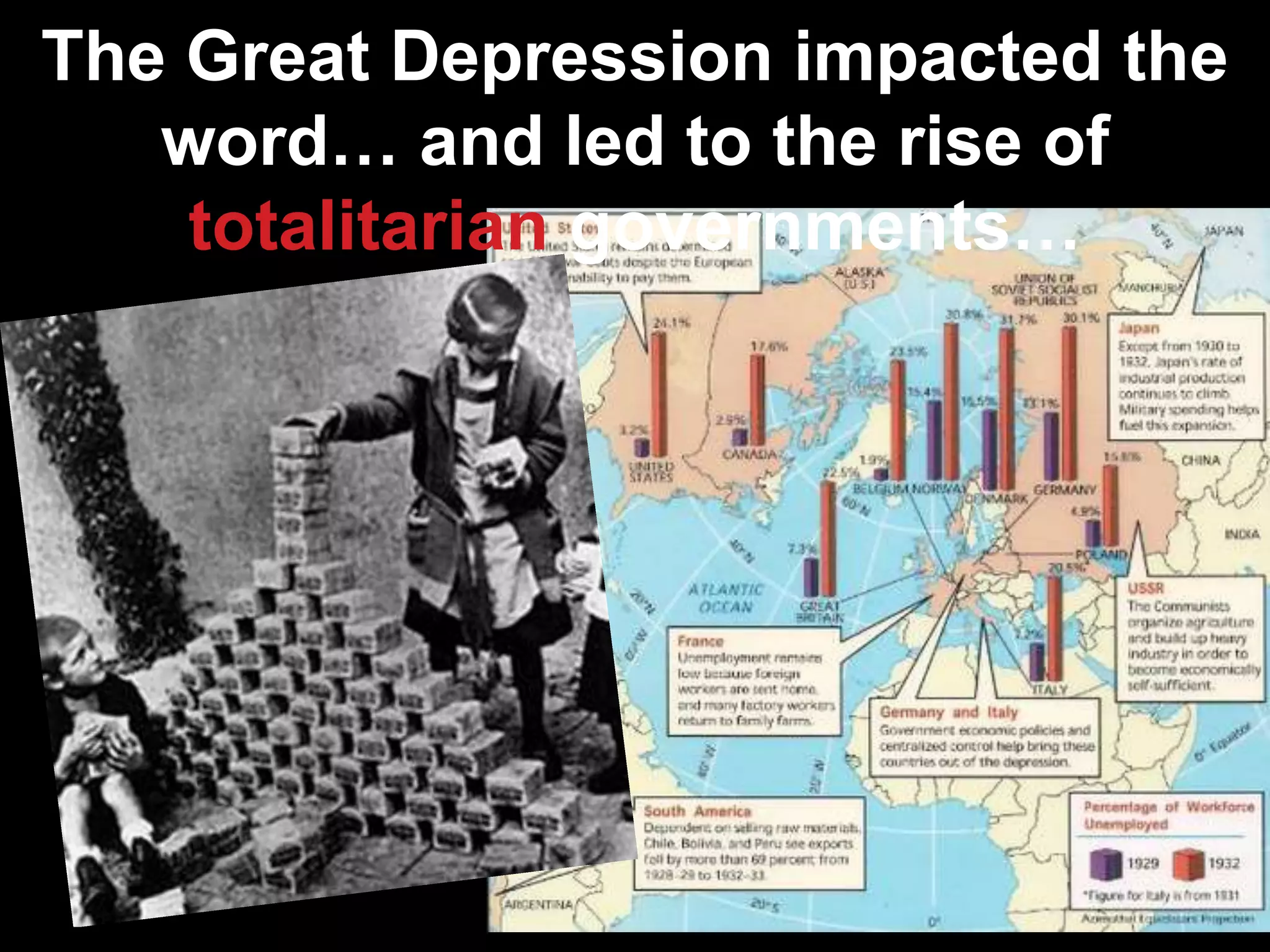
The Great Depression impacted the
word… and led to the rise of
totalitarian governments…
A Totalitarian Government is….
A form of government
that restricts personal
freedoms and prohibits
political opposition.
Russia
a.k.a. Soviet Union
a.k.a. USSR
Totalitarian Governments &
Leaders
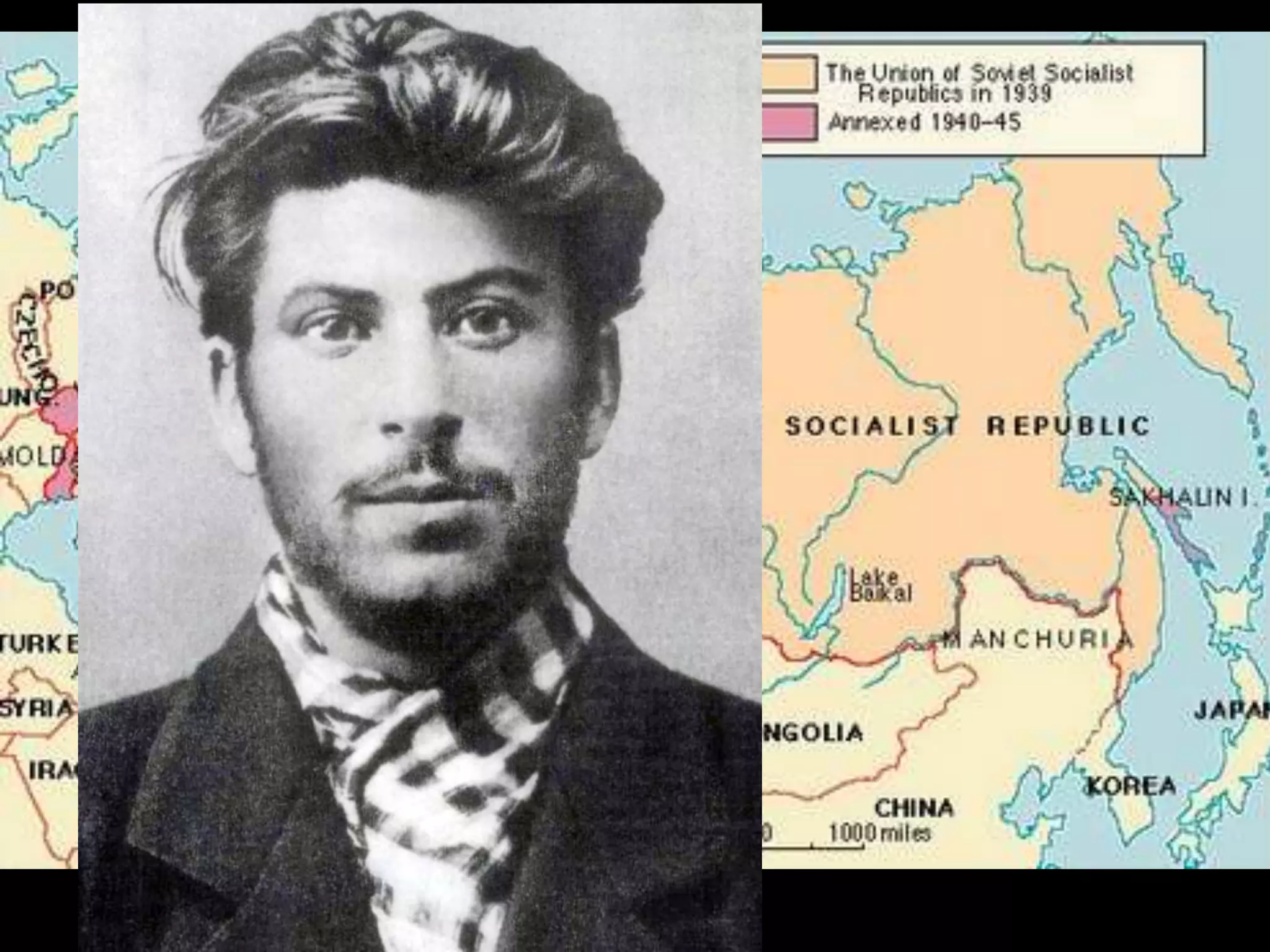
Country:
 Russia
 a.k.a. Soviet Union
 a.k.a. USSR
Leader:
 Joseph Stalin
Ideology:
 Communism
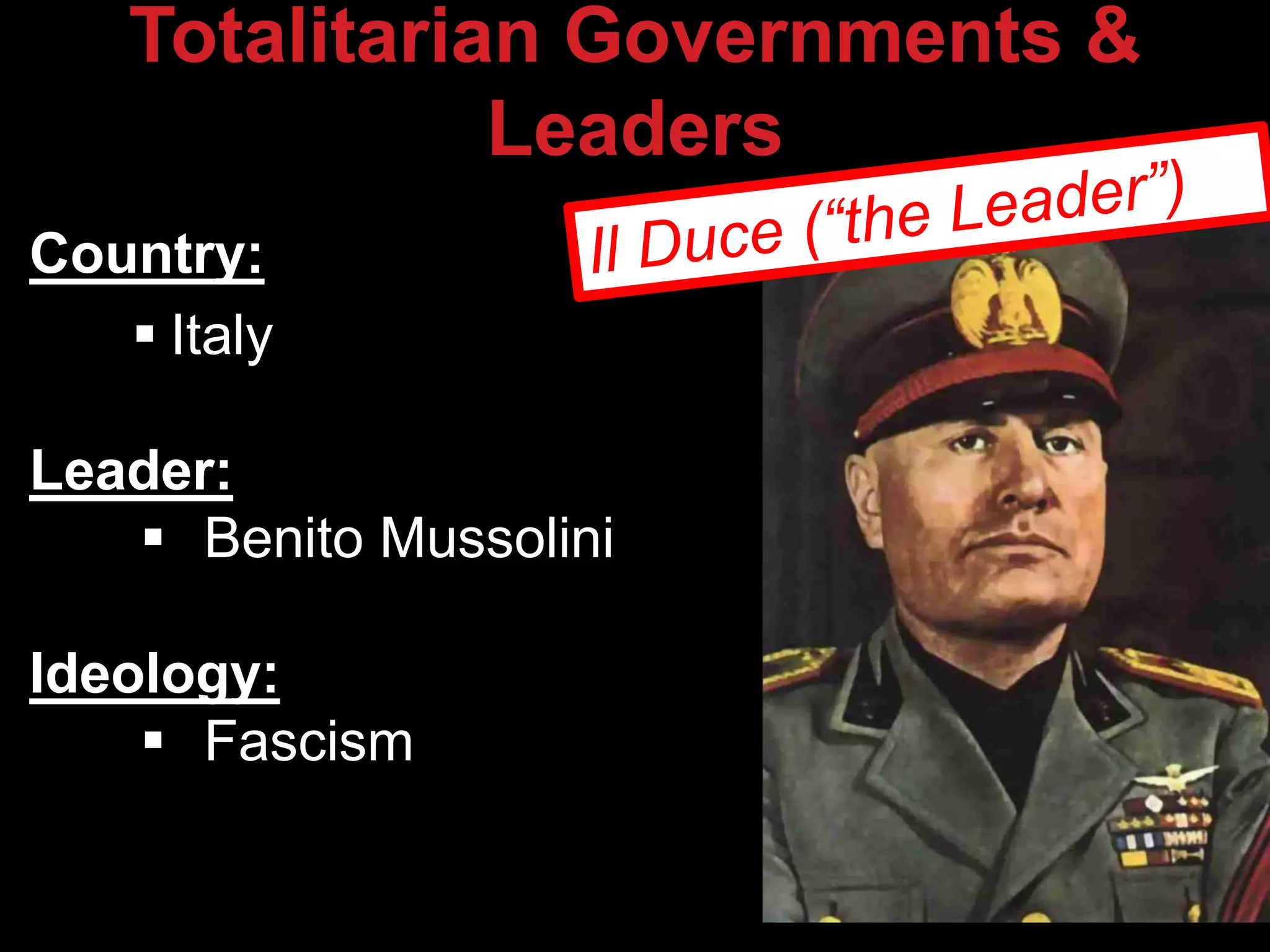
Italy
Country:
 Italy
Leader:
 Benito Mussolini
Ideology:
 Fascism
Totalitarian Governments &
Leaders
Japan
Country:
 Japan
Leader:
 Hirohito
 Hideki Tojo (General—
Japan’s true leader)
Ideology:
 Bushido Code
Totalitarian Governments &
Leaders
Germany
Totalitarian Governments &
Leaders
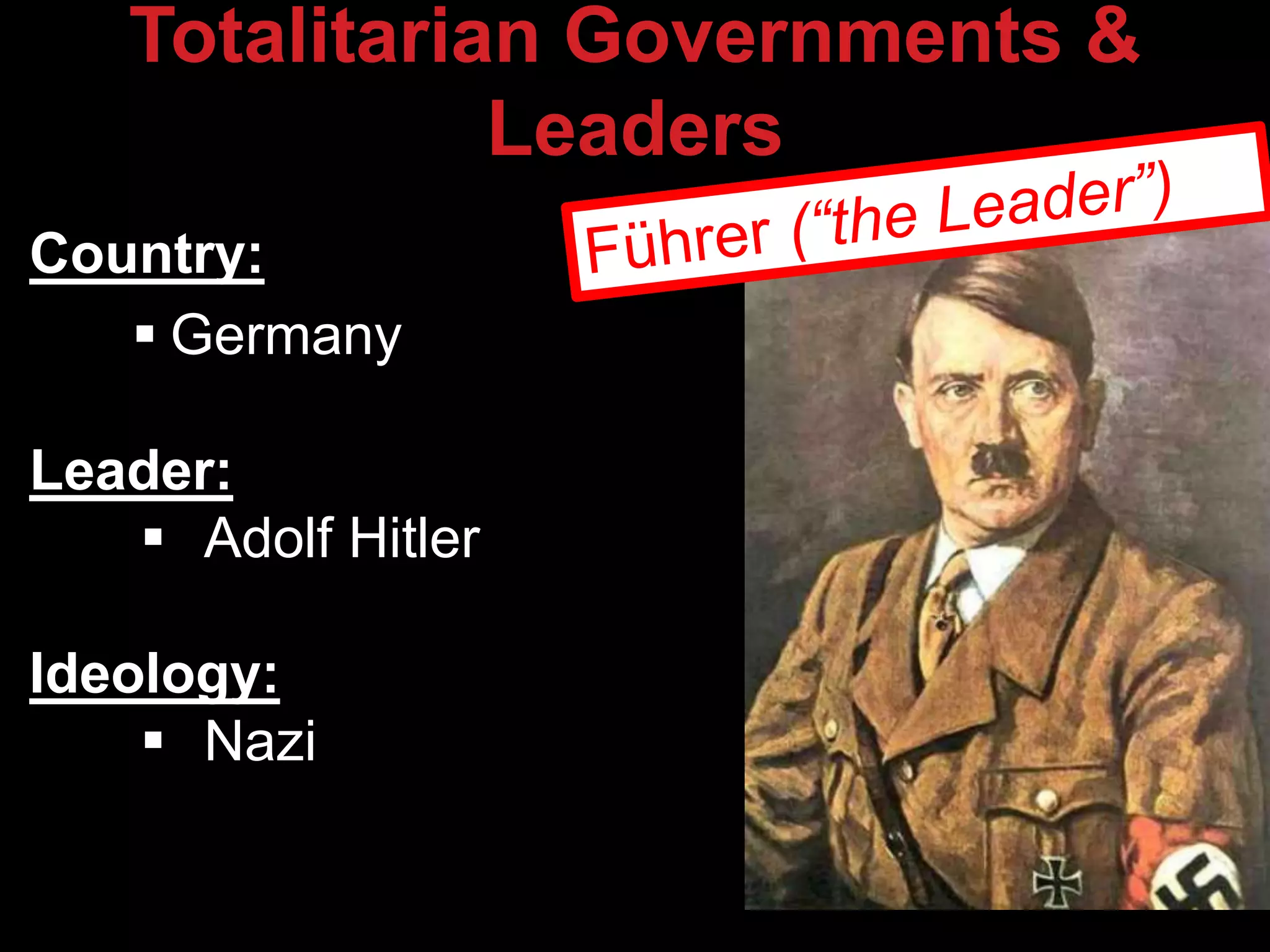
Country:
 Germany
Leader:
 Adolf Hitler
Ideology:
 Nazi
Adolf Hitler
“Fuhrer”
Hitler Gets Busy
• Gestapo Created -- April, 1933
• Jewish Boycott – April, 1933
• Jewish Books Banned & Burned – May, 1933
• 27,000 People in Camps – July, 1933
• 60,000 People in Camps – 1938
• Illegal to Leave Germany – October, 1941
Countries Invaded By Germany,
Pre-1939
• Rhineland:
March 1936
• Austria:
March 1938
• Sudetenland:
September
1938
• Bohemia-
Moravia:
March 1939
• Slovakia:
March 1939
Meeting at Munich, 1938
• A treaty was signed agreeing to
Hitler’s capture of Sudentenland
in exchange for his promise not
to invade anymore territories.
• Such an approach is known as
appeasement, the practice of
giving aggressors what they
want and hoping they will be
satisfied and stop the aggressive
behavior.
WWII Begins in Europe
• In September 1939
Hitler’s army invaded
Poland using a new type
of military strategy the
Germans called
blitzkrieg (meaning
“lightening war”). This
strategy involved striking
fast with tanks and
airplanes, catching other
nations off guard.
• Immediately after the
invasion Britain and
France declare war on
Germany.
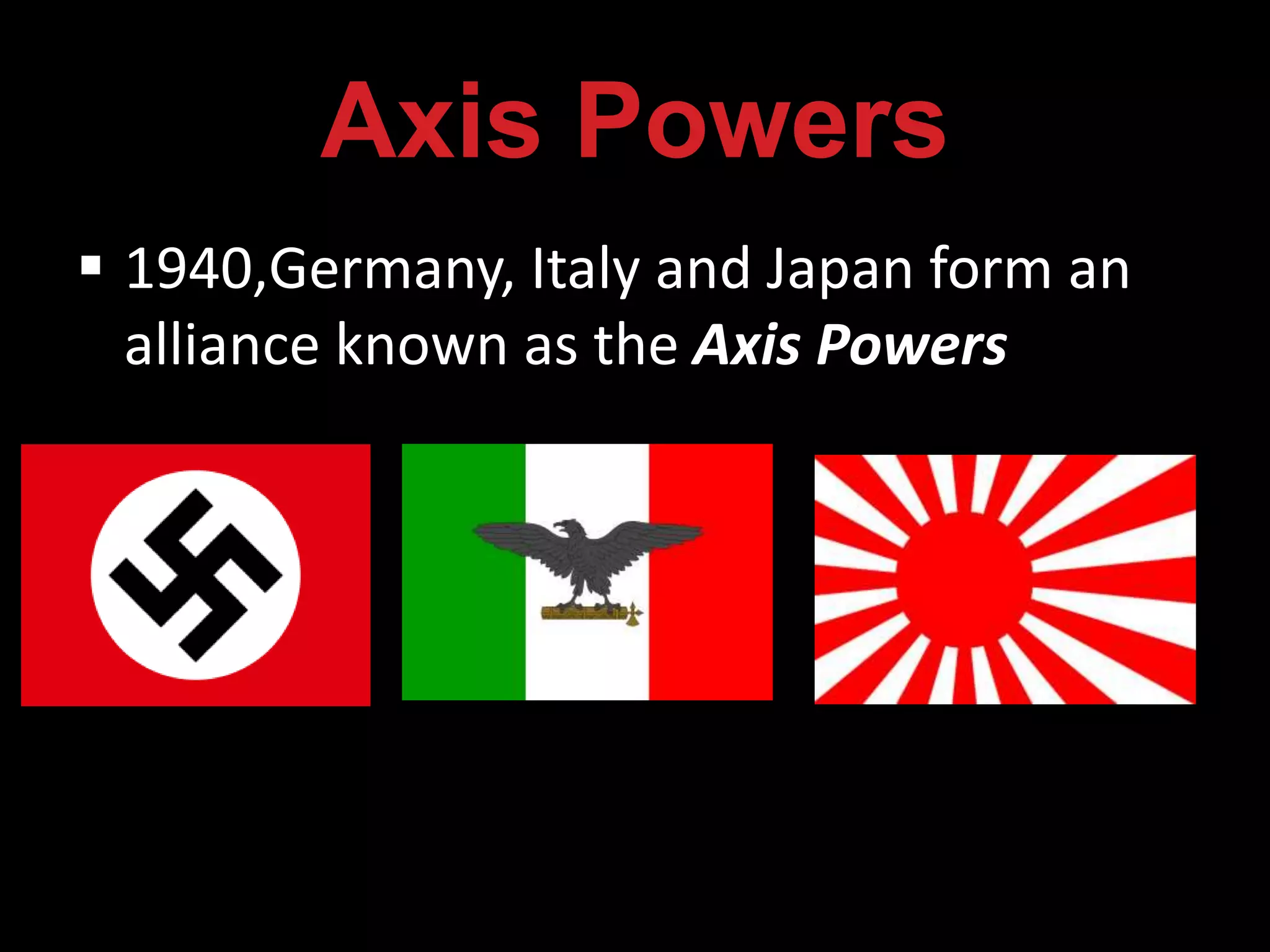
Axis Powers
 1940,Germany, Italy and Japan form an
alliance known as the Axis Powers
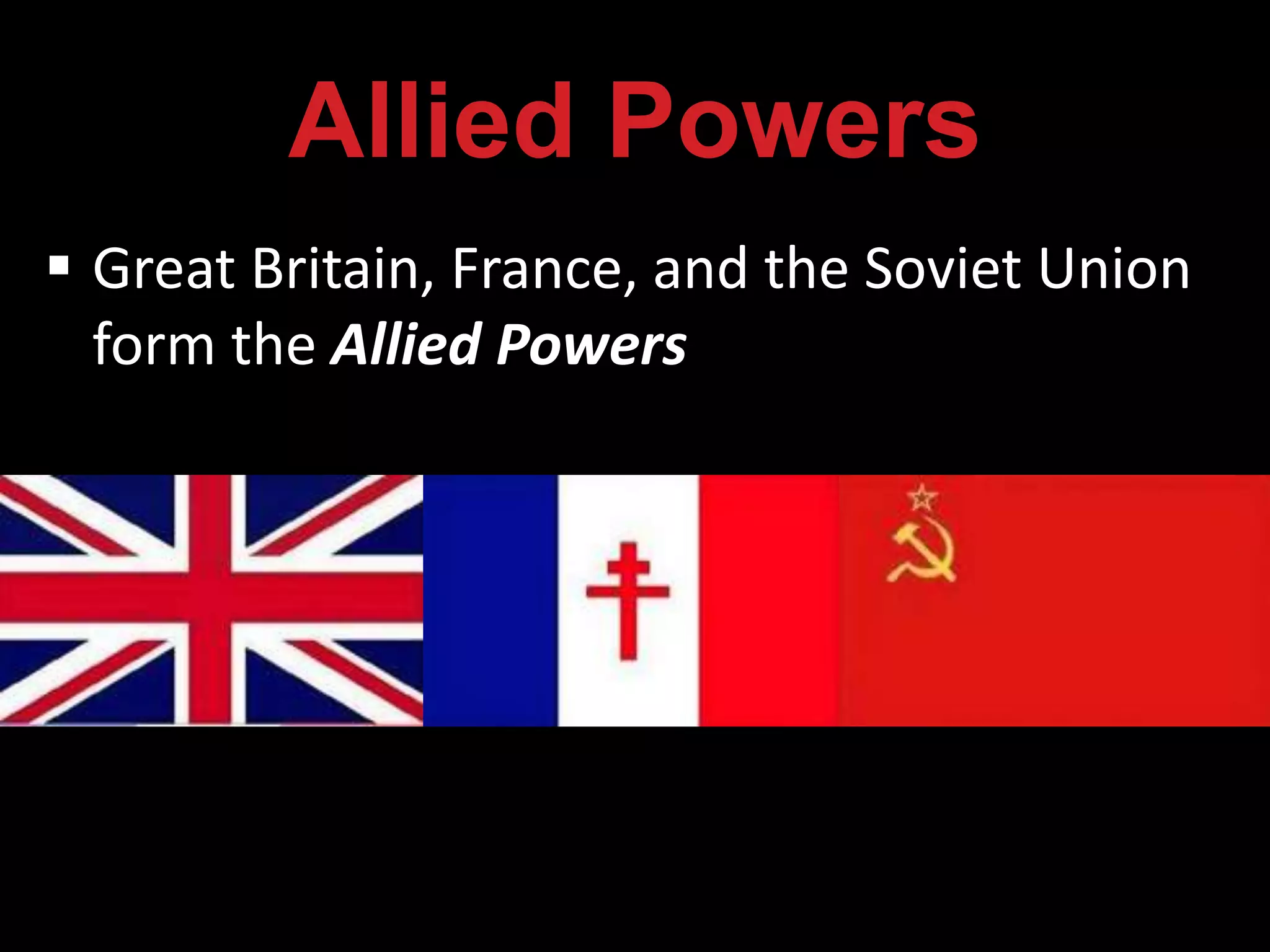
Allied Powers
 Great Britain, France, and the Soviet Union
form the Allied Powers
 How did the
US react to
the outbreak
of WW2?
U.S. Policy: Isolation & Neutrality
• Despite the concerns caused
by war in Europe, the United
States continued to practice
isolationism.
• Congress passed the
Neutrality Act. The Act
prohibited the sale of
weapons to warring nations
and was meant to keep the
U.S. from forming alliances
that might drag the nation to
war.
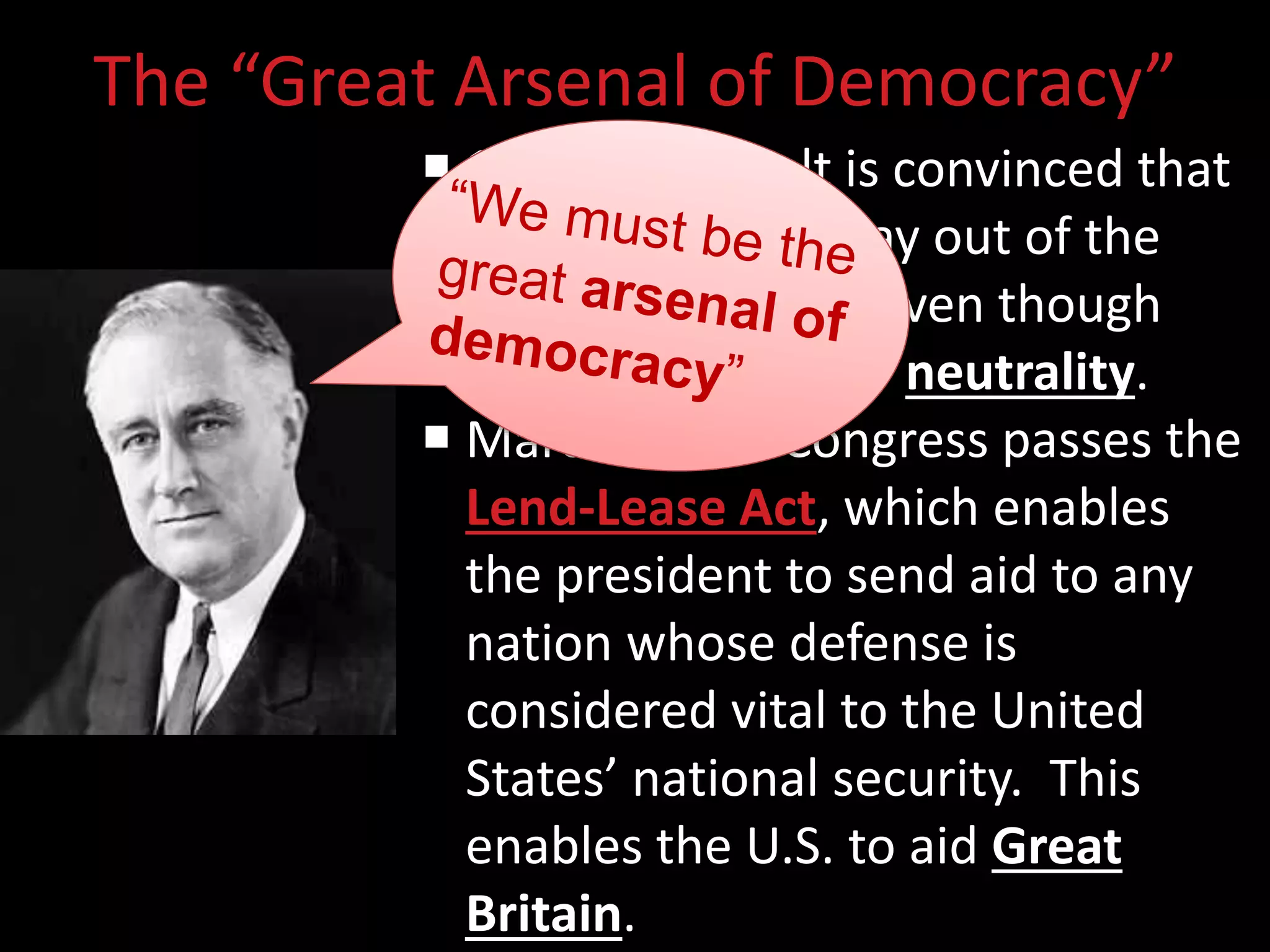
The “Great Arsenal of Democracy”
 1941: Roosevelt is convinced that
the U.S. cannot stay out of the
war much longer, even though
most citizens favor neutrality.
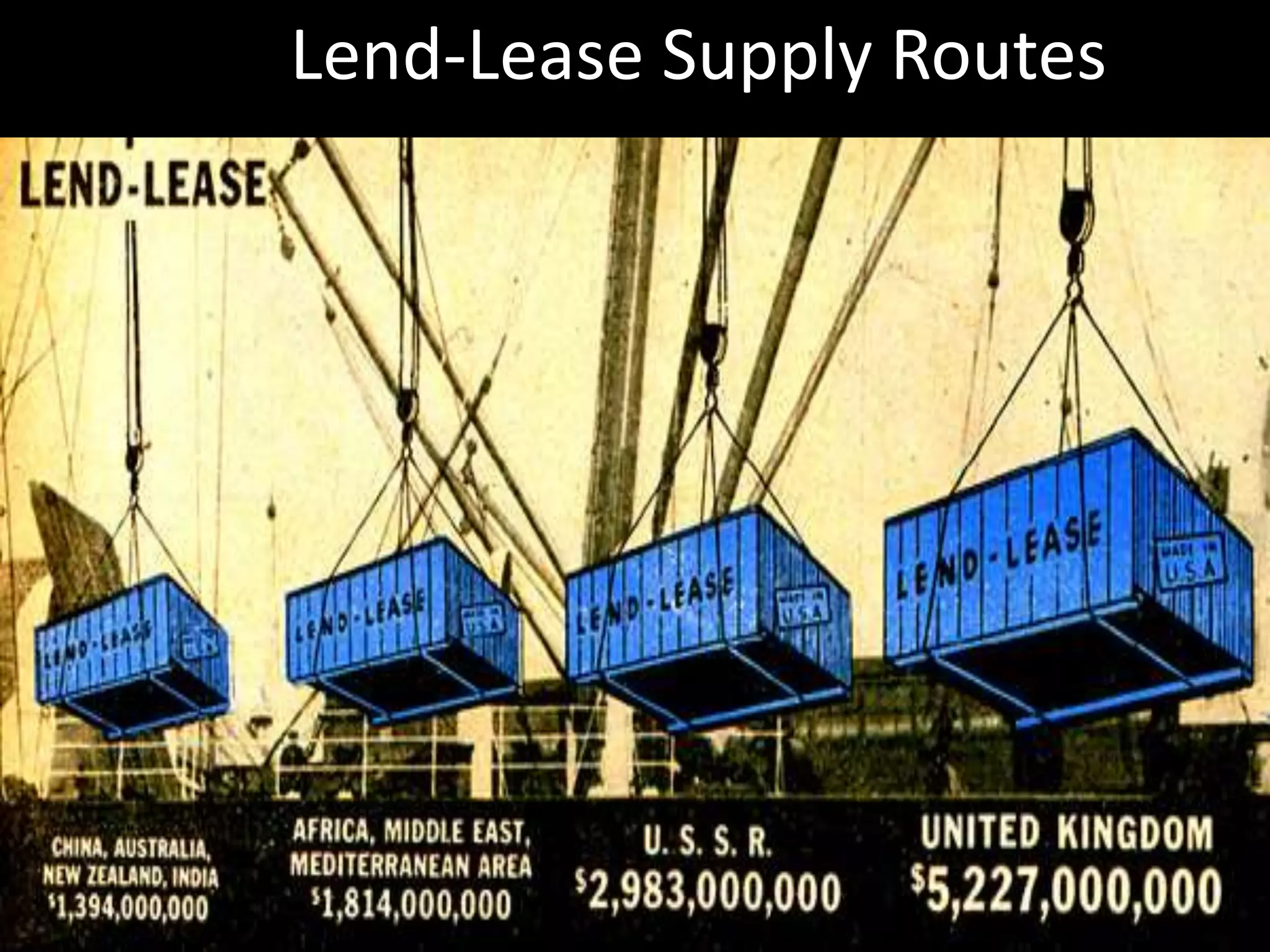
 March 1941: Congress passes the
Lend-Lease Act, which enables
the president to send aid to any
nation whose defense is
considered vital to the United
States’ national security. This
enables the U.S. to aid Great
Britain.
Lend-Lease Supply Routes
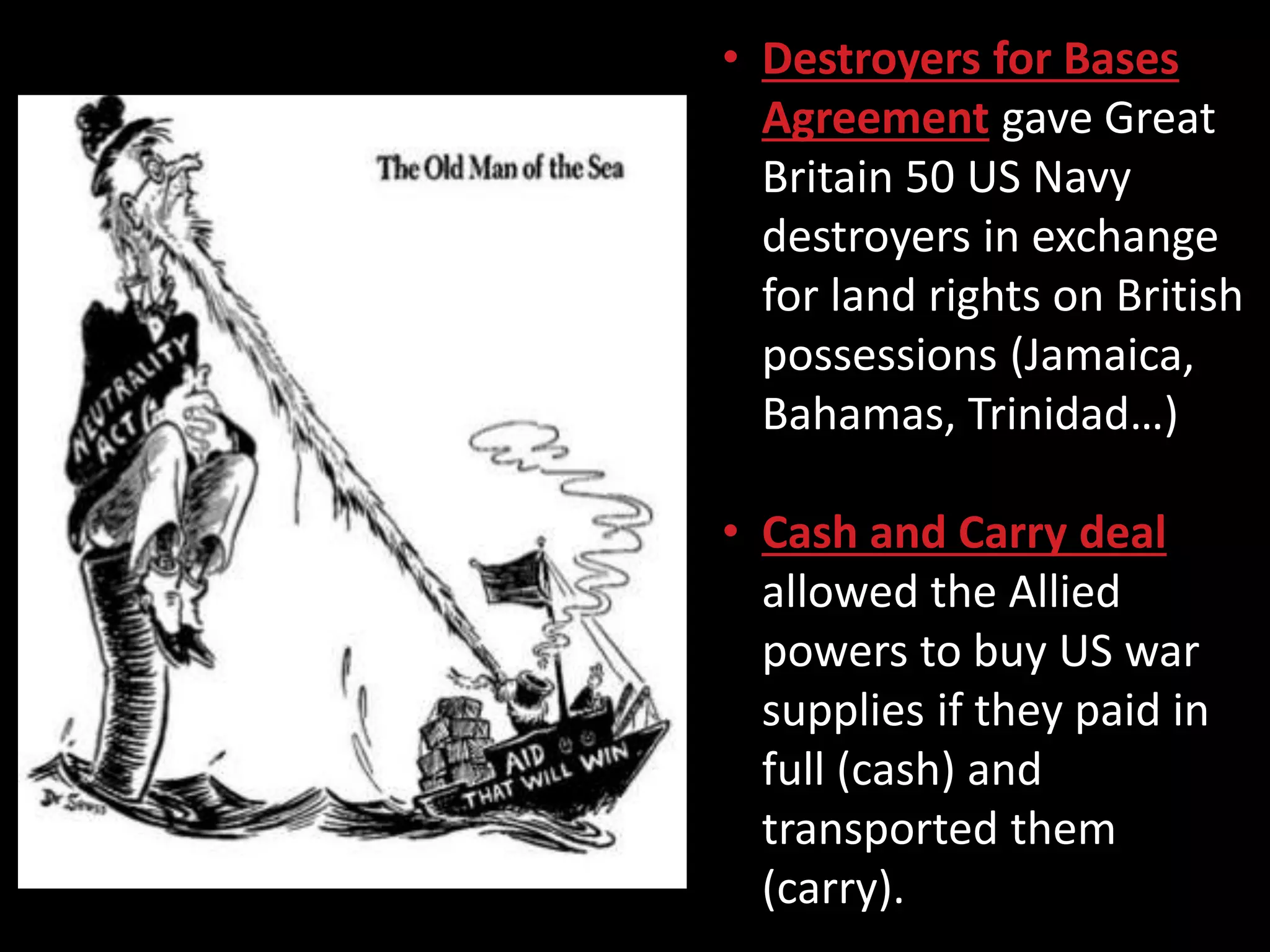
• Destroyers for Bases
Agreement gave Great
Britain 50 US Navy
destroyers in exchange
for land rights on British
possessions (Jamaica,
Bahamas, Trinidad…)
• Cash and Carry deal
allowed the Allied
powers to buy US war
supplies if they paid in
full (cash) and
transported them
(carry).
Japanese
Aggressio
n
• Japan had become an
imperialist force in Eastern
Asia. Its military invaded
foreign territories in the
region with the goal of gaining
resources.
• Japan invaded Manchuria, a
province of China, in 1931.
• Between 1937 and 1939 Japan
tried to seize the rest of China.
They were successful along
the coast, but not in the
countryside.
FDR delivers his 4
Freedoms Speech• “The first is freedom of speech—everywhere in the world.
• The second is freedom of every person to worship God in
his own way—everywhere in the world.
• The third is freedom from want—which will secure to every
nation a healthy peacetime life for its inhabitants-everywhere
in the world.
• The fourth is freedom from fear—which, means a world-
wide reduction of armaments (weapons) to such a point …
that no nation will be in a position to commit an act of
aggression against any neighbor—anywhere in the world.”
The U.S. declares War on
Japan:
• In 1941, the United States
imposed an embargo on
oil and steel.
• The US embargo angered
Japan.
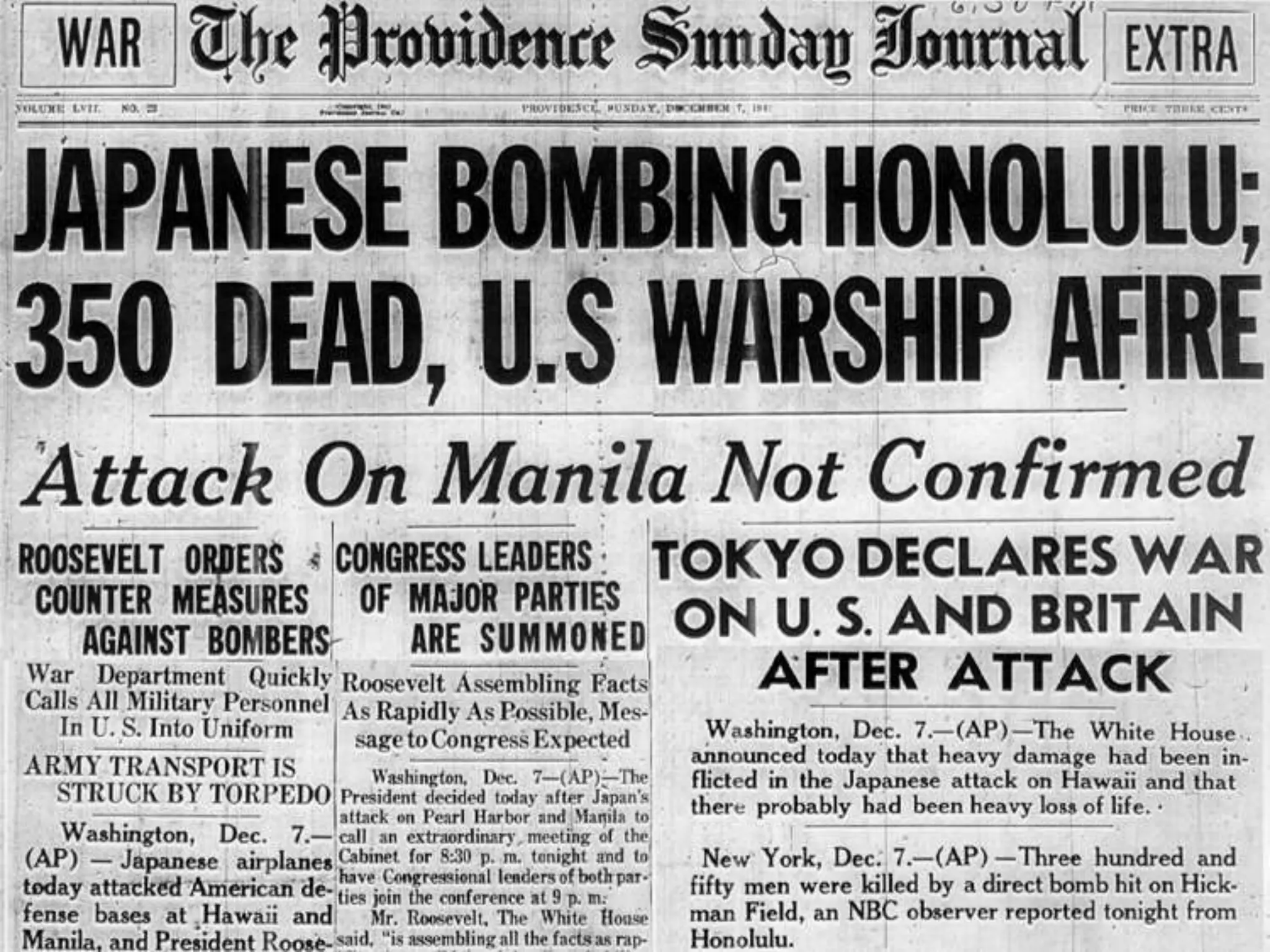
• In retaliation, Japanese
planes attack the US naval
fleet at Pearl Harbor,
Hawaii.
• In less than two hours, the Japanese air attack sank
or seriously damaged a dozen (12)naval vessels,
destroyed almost two hundred (200) warplanes,
and killed or wounded nearly three-thousand
(3,000) people.
• President delivers a speech. He describes
December 7, 1941 as:
Allied Powers
+the United States
Closure
3- things you learned
2- interesting facts
1- question you still have

1.ww2

  • 1.
    Aim: Why didthe United States enter World War Two?
  • 2.
    Do Now: Readthe transcript of FDR’s fireside chat and answer the questions below; 1. What happened on September 3, 1939? 2. According to FDR, can Americans remain detached? 3. What is the precedent that goes back to the days of President Washington? 4. What does FDR promises the American people of?
  • 3.
    The Great Depressionimpacted the word… and led to the rise of totalitarian governments…
  • 4.
    A Totalitarian Governmentis…. A form of government that restricts personal freedoms and prohibits political opposition.
  • 5.
  • 6.
    Totalitarian Governments & Leaders Country: Russia  a.k.a. Soviet Union  a.k.a. USSR Leader:  Joseph Stalin Ideology:  Communism
  • 8.
  • 9.
    Country:  Italy Leader:  BenitoMussolini Ideology:  Fascism Totalitarian Governments & Leaders
  • 11.
  • 12.
    Country:  Japan Leader:  Hirohito Hideki Tojo (General— Japan’s true leader) Ideology:  Bushido Code Totalitarian Governments & Leaders
  • 14.
  • 15.
    Totalitarian Governments & Leaders Country: Germany Leader:  Adolf Hitler Ideology:  Nazi
  • 17.
  • 19.
    Hitler Gets Busy •Gestapo Created -- April, 1933 • Jewish Boycott – April, 1933 • Jewish Books Banned & Burned – May, 1933 • 27,000 People in Camps – July, 1933 • 60,000 People in Camps – 1938 • Illegal to Leave Germany – October, 1941
  • 21.
    Countries Invaded ByGermany, Pre-1939 • Rhineland: March 1936 • Austria: March 1938 • Sudetenland: September 1938 • Bohemia- Moravia: March 1939 • Slovakia: March 1939
  • 22.
    Meeting at Munich,1938 • A treaty was signed agreeing to Hitler’s capture of Sudentenland in exchange for his promise not to invade anymore territories. • Such an approach is known as appeasement, the practice of giving aggressors what they want and hoping they will be satisfied and stop the aggressive behavior.
  • 23.
    WWII Begins inEurope • In September 1939 Hitler’s army invaded Poland using a new type of military strategy the Germans called blitzkrieg (meaning “lightening war”). This strategy involved striking fast with tanks and airplanes, catching other nations off guard. • Immediately after the invasion Britain and France declare war on Germany.
  • 24.
    Axis Powers  1940,Germany,Italy and Japan form an alliance known as the Axis Powers
  • 25.
    Allied Powers  GreatBritain, France, and the Soviet Union form the Allied Powers
  • 26.
     How didthe US react to the outbreak of WW2?
  • 27.
    U.S. Policy: Isolation& Neutrality • Despite the concerns caused by war in Europe, the United States continued to practice isolationism. • Congress passed the Neutrality Act. The Act prohibited the sale of weapons to warring nations and was meant to keep the U.S. from forming alliances that might drag the nation to war.
  • 29.
    The “Great Arsenalof Democracy”  1941: Roosevelt is convinced that the U.S. cannot stay out of the war much longer, even though most citizens favor neutrality.  March 1941: Congress passes the Lend-Lease Act, which enables the president to send aid to any nation whose defense is considered vital to the United States’ national security. This enables the U.S. to aid Great Britain.
  • 31.
  • 32.
    • Destroyers forBases Agreement gave Great Britain 50 US Navy destroyers in exchange for land rights on British possessions (Jamaica, Bahamas, Trinidad…) • Cash and Carry deal allowed the Allied powers to buy US war supplies if they paid in full (cash) and transported them (carry).
  • 33.
    Japanese Aggressio n • Japan hadbecome an imperialist force in Eastern Asia. Its military invaded foreign territories in the region with the goal of gaining resources. • Japan invaded Manchuria, a province of China, in 1931. • Between 1937 and 1939 Japan tried to seize the rest of China. They were successful along the coast, but not in the countryside.
  • 34.
    FDR delivers his4 Freedoms Speech• “The first is freedom of speech—everywhere in the world. • The second is freedom of every person to worship God in his own way—everywhere in the world. • The third is freedom from want—which will secure to every nation a healthy peacetime life for its inhabitants-everywhere in the world. • The fourth is freedom from fear—which, means a world- wide reduction of armaments (weapons) to such a point … that no nation will be in a position to commit an act of aggression against any neighbor—anywhere in the world.”
  • 35.
    The U.S. declaresWar on Japan: • In 1941, the United States imposed an embargo on oil and steel. • The US embargo angered Japan. • In retaliation, Japanese planes attack the US naval fleet at Pearl Harbor, Hawaii.
  • 37.
    • In lessthan two hours, the Japanese air attack sank or seriously damaged a dozen (12)naval vessels, destroyed almost two hundred (200) warplanes, and killed or wounded nearly three-thousand (3,000) people. • President delivers a speech. He describes December 7, 1941 as:
  • 38.
  • 39.
    Closure 3- things youlearned 2- interesting facts 1- question you still have