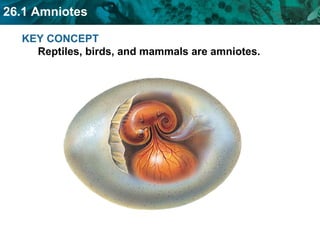
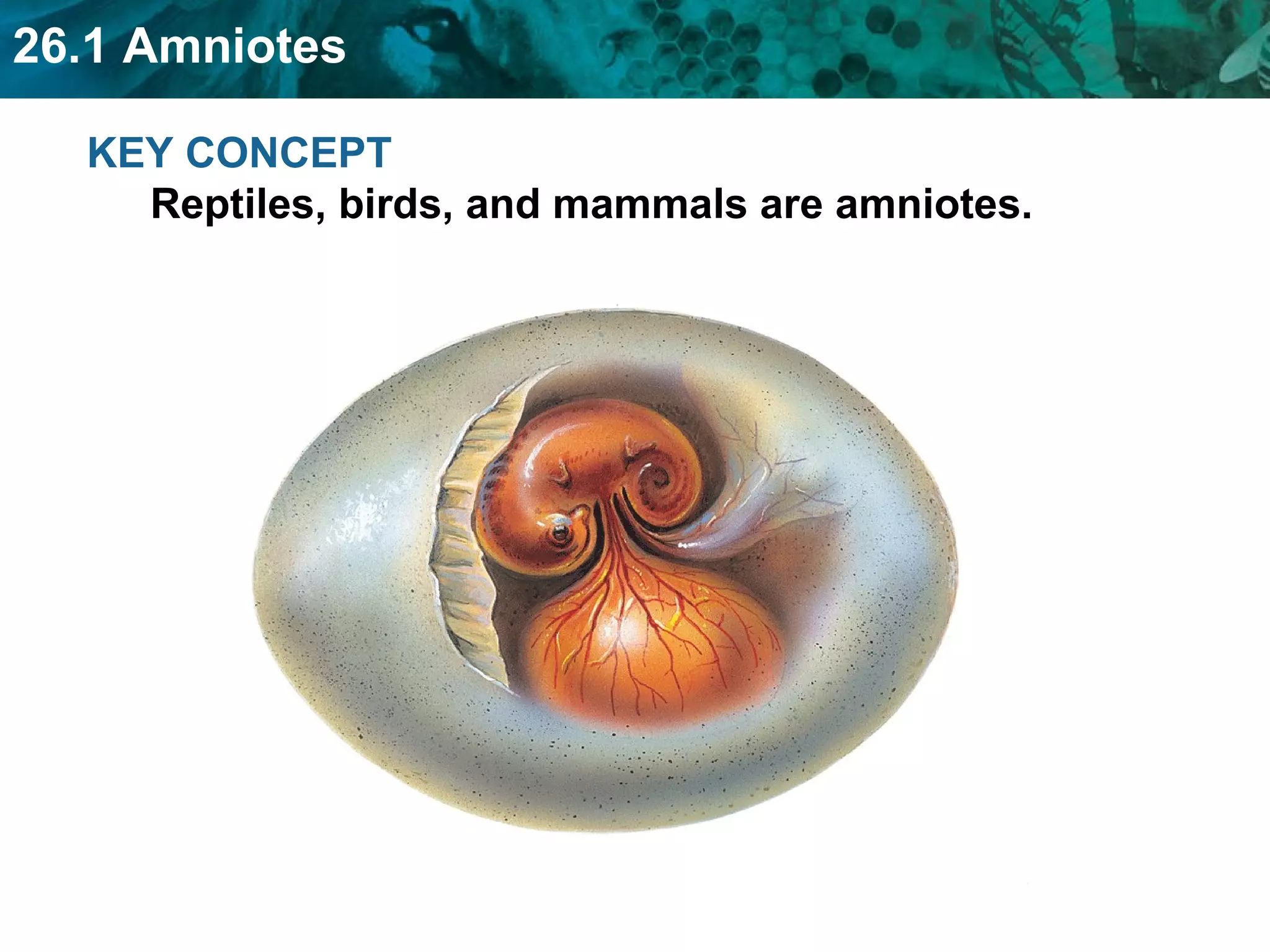
KEY CONCEPT  Reptiles, birds, and mammals are amniotes.
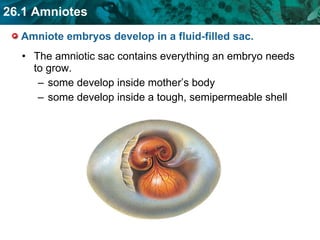
Amniote embryos develop in a fluid-filled sac.  The amniotic sac contains everything an embryo needs to grow. some develop inside mother’s body some develop inside a tough, semipermeable shell
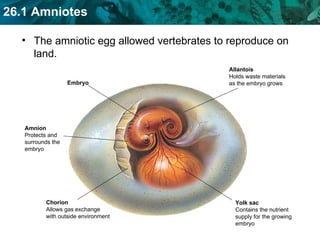
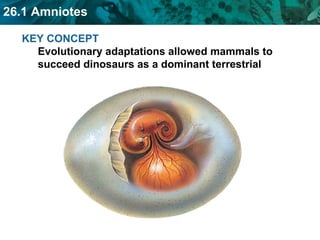
The amniotic egg allowed vertebrates to reproduce on land.  Embryo Allantois Holds waste materials as the embryo grows Yolk sac  Contains the nutrient  supply for the growing embryo Amnion Protects and surrounds the embryo Chorion  Allows gas exchange with outside environment
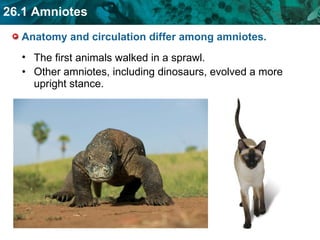
Anatomy and circulation differ among amniotes.  Other amniotes, including dinosaurs, evolved a more upright stance. The first animals walked in a sprawl.
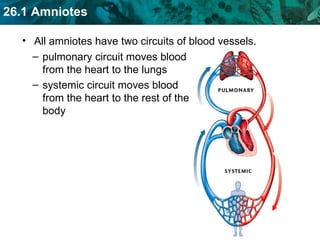
All amniotes have two circuits of blood vessels. pulmonary circuit moves blood from the heart to the lungs systemic circuit moves blood from the heart to the rest of the body
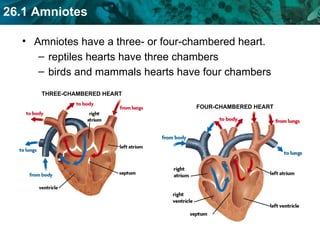
Amniotes have a three- or four-chambered heart. reptiles hearts have three chambers birds and mammals hearts have four chambers THREE-CHAMBERED HEART FOUR-CHAMBERED HEART
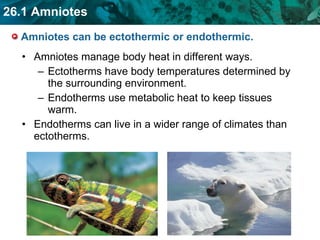
Amniotes can be ectothermic or endothermic.  Amniotes manage body heat in different ways. Ectotherms have body temperatures determined by the surrounding environment. Endotherms use metabolic heat to keep tissues warm. Endotherms can live in a wider range of climates than ectotherms.
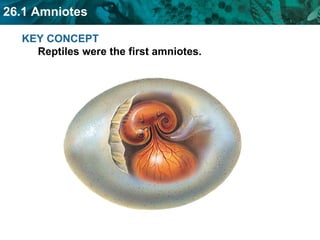
KEY CONCEPT  Reptiles were the first amniotes.
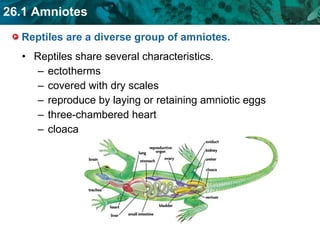
Reptiles are a diverse group of amniotes.  Reptiles share several characteristics. ectotherms covered with dry scales reproduce by laying or retaining amniotic eggs three-chambered heart cloaca
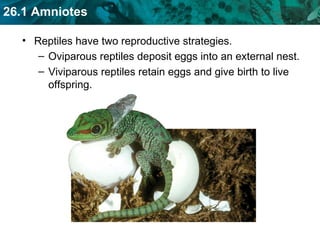
Reptiles have two reproductive strategies. Oviparous reptiles deposit eggs into an external nest. Viviparous reptiles retain eggs and give birth to live offspring.
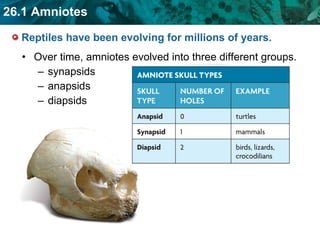
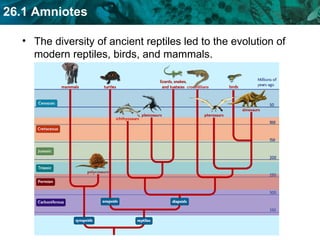
Reptiles have been evolving for millions of years.  Over time, amniotes evolved into three different groups.  synapsids anapsids  diapsids
The diversity of ancient reptiles led to the evolution of modern reptiles, birds, and mammals.
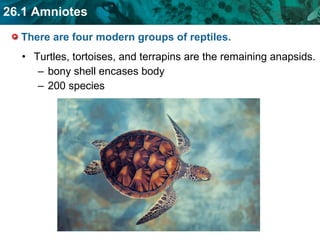
There are four modern groups of reptiles.  Turtles, tortoises, and terrapins are the remaining anapsids. bony shell encases body 200 species
Sphenodonts are closely related to lizards. diapsids primitive characteristics two species
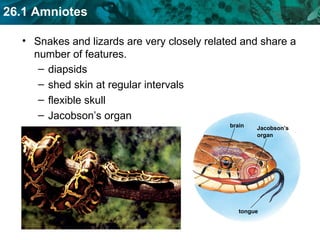
Snakes and lizards are very closely related and share a number of features. diapsids shed skin at regular intervals flexible skull Jacobson’s organ brain tongue Jacobson’s organ
Crocodilians are more closely related to birds than other diapsids. diapsids semi-aquatic predators 23 species
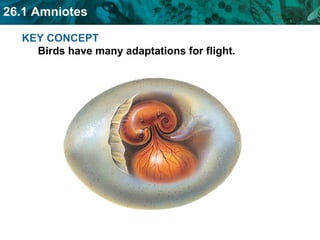
KEY CONCEPT  Birds have many adaptations for flight.
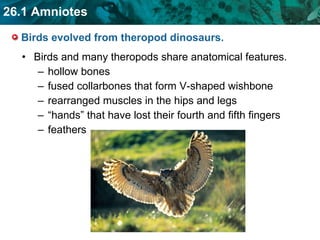
Birds evolved from theropod dinosaurs.  Birds and many theropods share anatomical features. hollow bones fused collarbones that form V-shaped wishbone rearranged muscles in the hips and legs  “ hands” that have lost their fourth and fifth fingers feathers
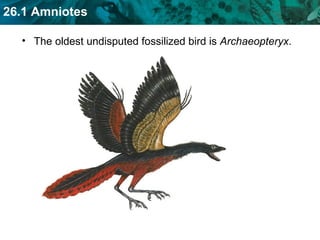
The oldest undisputed fossilized bird is  Archaeopteryx .
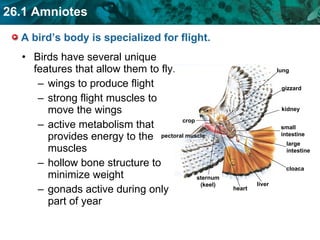
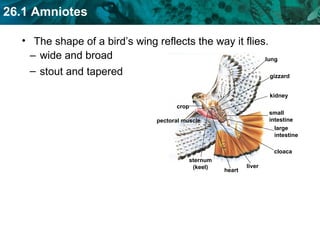
A bird’s body is specialized for flight.  Birds have several unique features that allow them to fly. wings to produce flight strong flight muscles to move the wings active metabolism that provides energy to the muscles hollow bone structure to minimize weight gonads active during only part of year small  intestine large intestine lung gizzard kidney cloaca crop sternum (keel) heart liver pectoral muscle
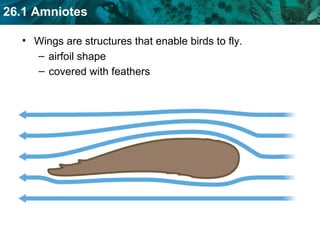
Wings are structures that enable birds to fly. airfoil shape covered with feathers
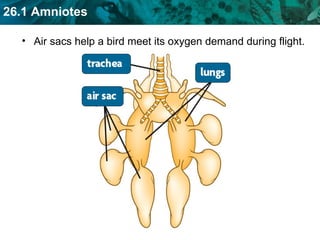
Air sacs help a bird meet its oxygen demand during flight.
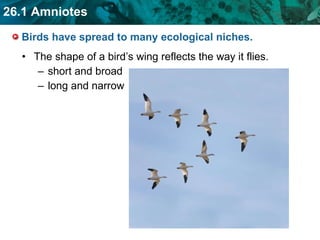
Birds have spread to many ecological niches.  The shape of a bird’s wing reflects the way it flies. short and broad long and narrow
wide and broad The shape of a bird’s wing reflects the way it flies. stout and tapered small  intestine large intestine lung gizzard kidney cloaca crop sternum (keel) heart liver pectoral muscle
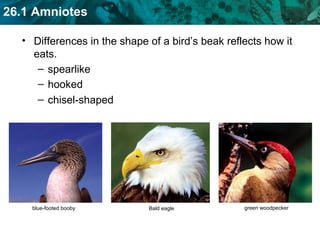
Differences in the shape of a bird’s beak reflects how it eats. spearlike hooked chisel-shaped blue-footed booby green woodpecker Bald eagle
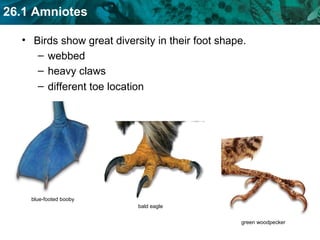
Birds show great diversity in their foot shape. webbed heavy claws different toe location blue-footed booby bald eagle green woodpecker
KEY CONCEPT  Evolutionary adaptations allowed mammals to succeed dinosaurs as a dominant terrestrial vertebrate.
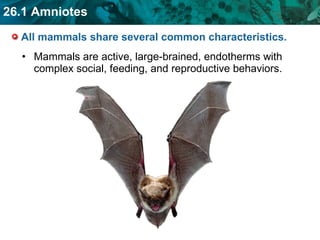
All mammals share several common characteristics.  Mammals are active, large-brained, endotherms with complex social, feeding, and reproductive behaviors.
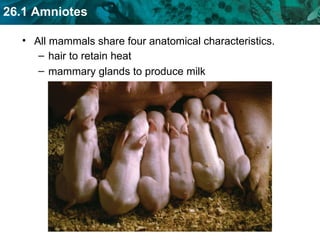
All mammals share four anatomical characteristics. hair to retain heat mammary glands to produce milk
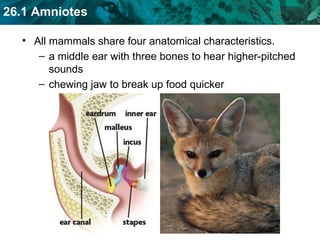
a middle ear with three bones to hear higher-pitched sounds chewing jaw to break up food quicker All mammals share four anatomical characteristics.
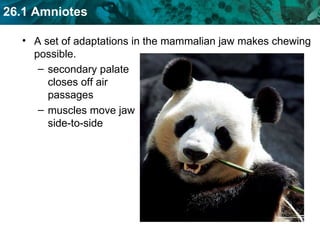
A set of adaptations in the mammalian jaw makes chewing possible. secondary palate closes off air passages muscles move jaw side-to-side
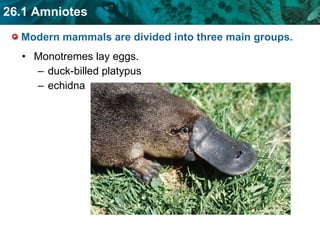
Modern mammals are divided into three main groups.  Monotremes lay eggs. duck-billed platypus echidna
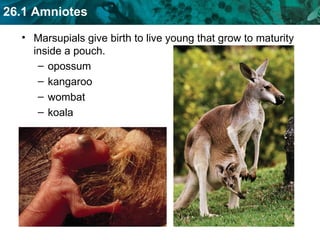
Marsupials give birth to live young that grow to maturity inside a pouch. opossum kangaroo wombat koala
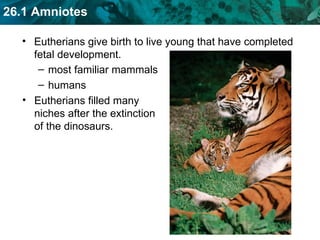
Eutherians give birth to live young that have completed fetal development. most familiar mammals humans Eutherians filled many niches after the extinction of the dinosaurs.

Unit 26 Amniotes

  • 1.
    KEY CONCEPT Reptiles, birds, and mammals are amniotes.
  • 2.
    Amniote embryos developin a fluid-filled sac. The amniotic sac contains everything an embryo needs to grow. some develop inside mother’s body some develop inside a tough, semipermeable shell
  • 3.
    The amniotic eggallowed vertebrates to reproduce on land. Embryo Allantois Holds waste materials as the embryo grows Yolk sac Contains the nutrient supply for the growing embryo Amnion Protects and surrounds the embryo Chorion Allows gas exchange with outside environment
  • 4.
    Anatomy and circulationdiffer among amniotes. Other amniotes, including dinosaurs, evolved a more upright stance. The first animals walked in a sprawl.
  • 5.
    All amniotes havetwo circuits of blood vessels. pulmonary circuit moves blood from the heart to the lungs systemic circuit moves blood from the heart to the rest of the body
  • 6.
    Amniotes have athree- or four-chambered heart. reptiles hearts have three chambers birds and mammals hearts have four chambers THREE-CHAMBERED HEART FOUR-CHAMBERED HEART
  • 7.
    Amniotes can beectothermic or endothermic. Amniotes manage body heat in different ways. Ectotherms have body temperatures determined by the surrounding environment. Endotherms use metabolic heat to keep tissues warm. Endotherms can live in a wider range of climates than ectotherms.
  • 8.
    KEY CONCEPT Reptiles were the first amniotes.
  • 9.
    Reptiles are adiverse group of amniotes. Reptiles share several characteristics. ectotherms covered with dry scales reproduce by laying or retaining amniotic eggs three-chambered heart cloaca
  • 10.
    Reptiles have tworeproductive strategies. Oviparous reptiles deposit eggs into an external nest. Viviparous reptiles retain eggs and give birth to live offspring.
  • 11.
    Reptiles have beenevolving for millions of years. Over time, amniotes evolved into three different groups. synapsids anapsids diapsids
  • 12.
    The diversity ofancient reptiles led to the evolution of modern reptiles, birds, and mammals.
  • 13.
    There are fourmodern groups of reptiles. Turtles, tortoises, and terrapins are the remaining anapsids. bony shell encases body 200 species
  • 14.
    Sphenodonts are closelyrelated to lizards. diapsids primitive characteristics two species
  • 15.
    Snakes and lizardsare very closely related and share a number of features. diapsids shed skin at regular intervals flexible skull Jacobson’s organ brain tongue Jacobson’s organ
  • 16.
    Crocodilians are moreclosely related to birds than other diapsids. diapsids semi-aquatic predators 23 species
  • 17.
    KEY CONCEPT Birds have many adaptations for flight.
  • 18.
    Birds evolved fromtheropod dinosaurs. Birds and many theropods share anatomical features. hollow bones fused collarbones that form V-shaped wishbone rearranged muscles in the hips and legs “ hands” that have lost their fourth and fifth fingers feathers
  • 19.
    The oldest undisputedfossilized bird is Archaeopteryx .
  • 20.
    A bird’s bodyis specialized for flight. Birds have several unique features that allow them to fly. wings to produce flight strong flight muscles to move the wings active metabolism that provides energy to the muscles hollow bone structure to minimize weight gonads active during only part of year small intestine large intestine lung gizzard kidney cloaca crop sternum (keel) heart liver pectoral muscle
  • 21.
    Wings are structuresthat enable birds to fly. airfoil shape covered with feathers
  • 22.
    Air sacs helpa bird meet its oxygen demand during flight.
  • 23.
    Birds have spreadto many ecological niches. The shape of a bird’s wing reflects the way it flies. short and broad long and narrow
  • 24.
    wide and broadThe shape of a bird’s wing reflects the way it flies. stout and tapered small intestine large intestine lung gizzard kidney cloaca crop sternum (keel) heart liver pectoral muscle
  • 25.
    Differences in theshape of a bird’s beak reflects how it eats. spearlike hooked chisel-shaped blue-footed booby green woodpecker Bald eagle
  • 26.
    Birds show greatdiversity in their foot shape. webbed heavy claws different toe location blue-footed booby bald eagle green woodpecker
  • 27.
    KEY CONCEPT Evolutionary adaptations allowed mammals to succeed dinosaurs as a dominant terrestrial vertebrate.
  • 28.
    All mammals shareseveral common characteristics. Mammals are active, large-brained, endotherms with complex social, feeding, and reproductive behaviors.
  • 29.
    All mammals sharefour anatomical characteristics. hair to retain heat mammary glands to produce milk
  • 30.
    a middle earwith three bones to hear higher-pitched sounds chewing jaw to break up food quicker All mammals share four anatomical characteristics.
  • 31.
    A set ofadaptations in the mammalian jaw makes chewing possible. secondary palate closes off air passages muscles move jaw side-to-side
  • 32.
    Modern mammals aredivided into three main groups. Monotremes lay eggs. duck-billed platypus echidna
  • 33.
    Marsupials give birthto live young that grow to maturity inside a pouch. opossum kangaroo wombat koala
  • 34.
    Eutherians give birthto live young that have completed fetal development. most familiar mammals humans Eutherians filled many niches after the extinction of the dinosaurs.