Birds
Damnjanović Ivana
Evolution and Classification
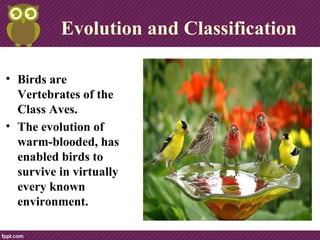
• Birds are Vertebrates
of the Class Aves.
• The evolution of
warm-blooded, has
enabled birds to
survive in virtually
every known
environment.
Origin and Early Evolution
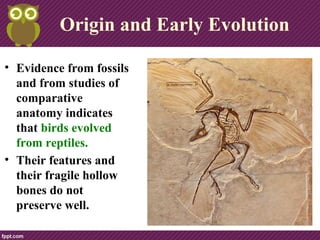
• Evidence from fossils
and from studies of
comparative
anatomy indicates
that birds evolved
from reptiles.
• Their features and
their fragile hollow
bones do not
preserve well.
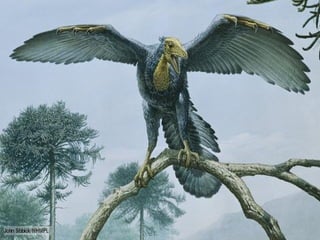
Archaeopteryx
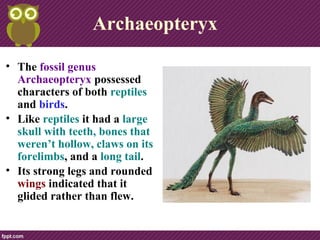
• The fossil genus
Archaeopteryx possessed
characters of both reptiles
and birds.
• Like reptiles it had a large
skull with teeth, bones that
weren’t hollow, claws on its
forelimbs, and a long tail.
• Its strong legs and rounded
wings indicated that it
glided rather than flew.
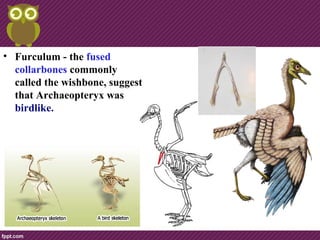
• Furculum - the fused
collarbones commonly
called the wishbone, suggest
that Archaeopteryx was
birdlike.
Characteristics of Birds
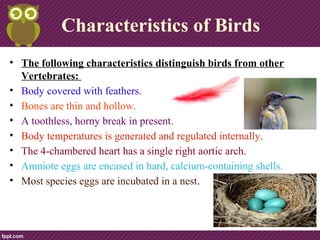
• The following characteristics distinguish birds from other
Vertebrates:
• Body covered with feathers.
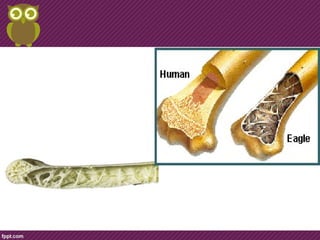
• Bones are thin and hollow.
• A toothless, horny beak .
• Body temperatures is generated and regulated internally.
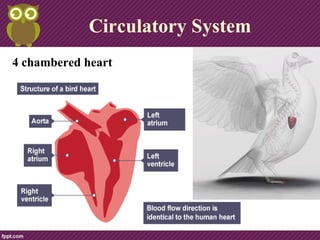
• The 4-chambered heart has a single right aortic arch.
• Amniote eggs are encased in hard, calcium-containing shells.
• Most species eggs are incubated in a nest.
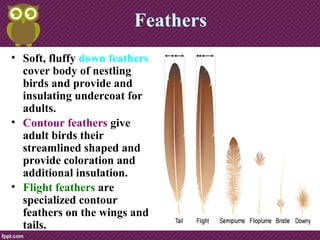
• Soft, fluffy down feathers
cover body of nestling
birds and provide and
insulating undercoat for
adults.
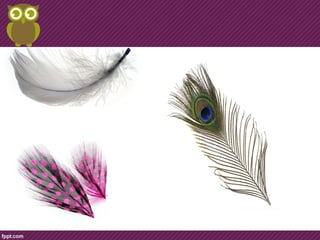
• Contour feathers give
adult birds their
streamlined shaped and
provide coloration and
additional insulation.
• Flight feathers are
specialized contour
feathers on the wings and
tails.
Feathers
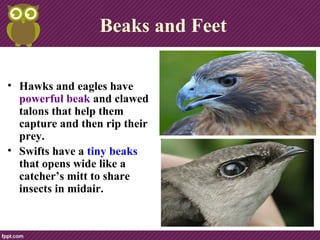
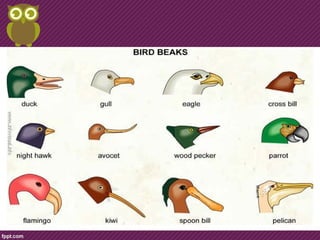
Beaks and Feet
• Hawks and eagles have
powerful beak and clawed
talons that help them
capture and then rip their
prey.
• Swifts have a tiny beaks
that opens wide like a
catcher’s mitt to share
insects in midair.
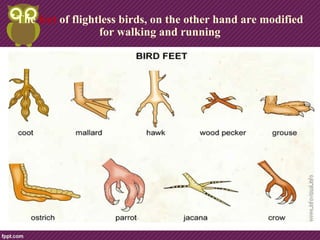
The feet of flightless birds, on the other hand are modified
for walking and running
Skeleton
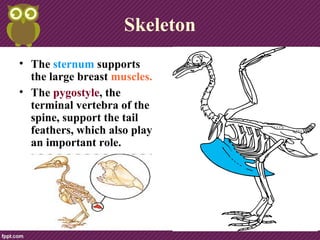
• The sternum supports
the large breast muscles.
• The pygostyle, the
terminal vertebra of the
spine, support the tail
feathers, which also play
an important role.
Endothermy
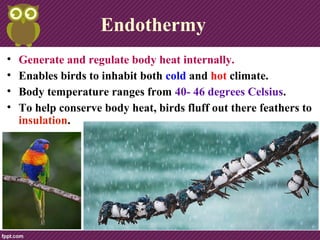
• Generate and regulate body heat internally.
• Enables birds to inhabit both cold and hot climate.
• Body temperature ranges from 40- 46 degrees Celsius.
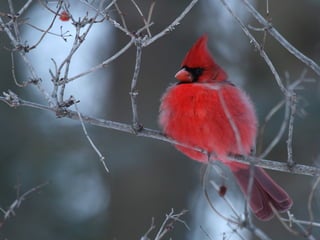
• To help conserve body heat, birds fluff out there feathers to
insulation.
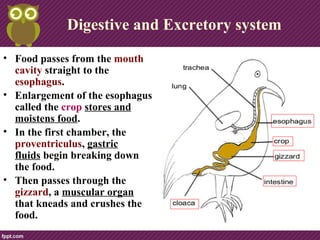
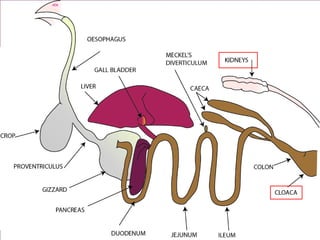
• Food passes from the mouth
cavity straight to the
esophagus.
• Enlargement of the esophagus
called the crop stores and
moistens food.
• In the first chamber, the
proventriculus, gastric
fluids begin breaking down
the food.
• Then passes through the
gizzard, a muscular organ
that kneads and crushes the
food.
Digestive and Excretory system
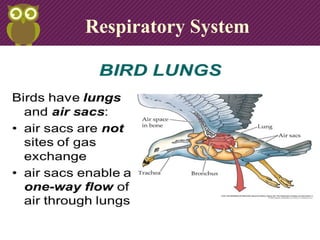
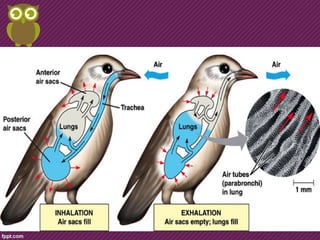
Respiratory System
Circulatory System
4 chambered heart
Nervous System
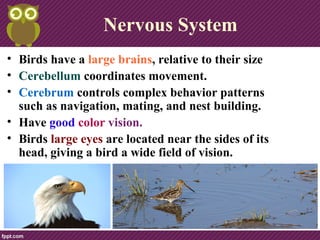
• Birds have a large brains, relative to their size
• Cerebellum coordinates movement.
• Cerebrum controls complex behavior patterns
such as navigation, mating, and nest building.
• Have good color vision.
• Birds large eyes are located near the sides of its
head, giving a bird a wide field of vision.

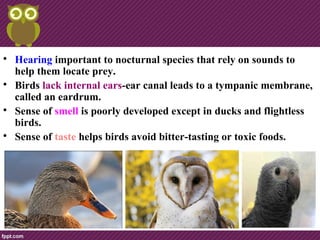
Hearing important to nocturnal species that rely on sounds to
help them locate prey.

Birds lack internal ears-ear canal leads to a tympanic membrane,
called an eardrum.

Sense of smell is poorly developed except in ducks and flightless
birds.

Sense of taste helps birds avoid bitter-tasting or toxic foods.
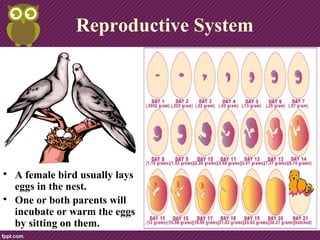
Reproductive System

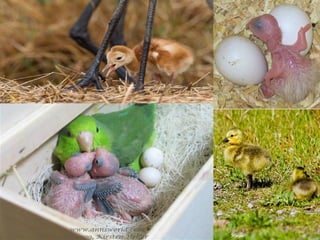
A female bird usually lays
eggs in the nest.

One or both parents will
incubate or warm the eggs
by sitting on them.
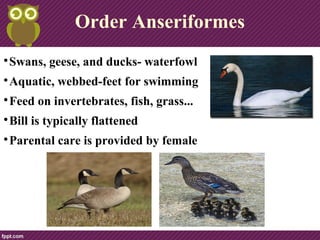
Order Anseriformes

Swans, geese, and ducks- waterfowl

Aquatic, webbed-feet for swimming

Feed on invertebrates, fish, grass...

Parental care is provided by female
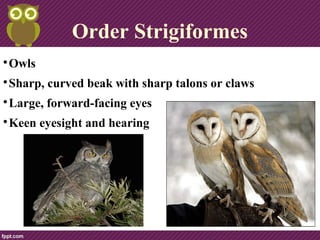
Order Strigiformes

Owls

Sharp, curved beak, claws

Large, forward-facing eyes

Keen eyesight and hearing
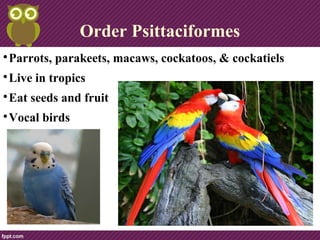
Order Psittaciformes

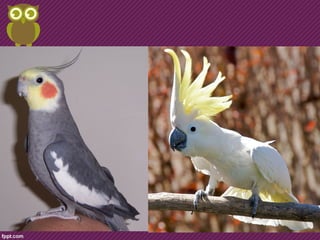
Parrots, parakeets, macaws, cockatoos, & cockatiels

Live in tropics

Eat seeds and fruit

Vocal birds
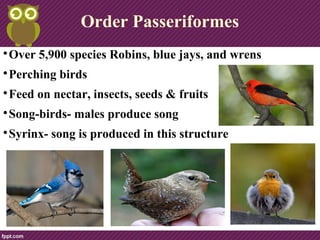
Order Passeriformes

Over 5,900 species; wrens...

Feed on nectar, insects, seeds & fruits

Song-birds- males produce song

Syrinx- song is produced in this structure
Order Struthioniformes

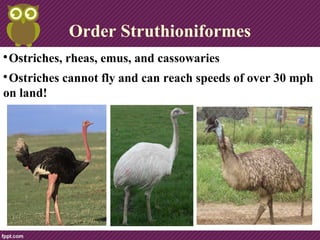
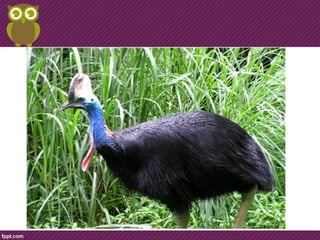
Ostriches, rheas, emus, and cassowaries.

Ostriches cannot fly.
Order Galliformes

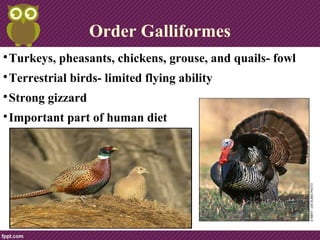
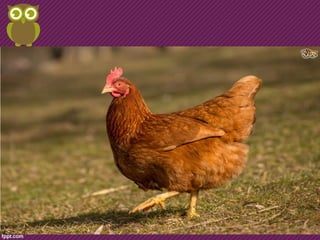
Turkeys, pheasants, chickens, grouse, and quails- fowl

Terrestrial birds- limited flying ability

Strong gizzard

Important part of human diet
Order Columbiformes

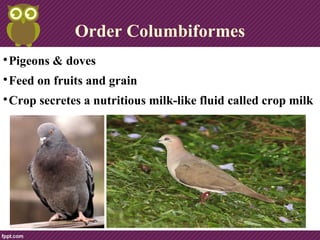
Pigeons & doves

Feed on fruits and grain

Crop secretes a nutritious milk-like fluid called crop milk
Birds

Birds

  • 1.
  • 2.
    Evolution and Classification •Birds are Vertebrates of the Class Aves. • The evolution of warm-blooded, has enabled birds to survive in virtually every known environment.
  • 3.
    Origin and EarlyEvolution • Evidence from fossils and from studies of comparative anatomy indicates that birds evolved from reptiles. • Their features and their fragile hollow bones do not preserve well.
  • 5.
    Archaeopteryx • The fossilgenus Archaeopteryx possessed characters of both reptiles and birds. • Like reptiles it had a large skull with teeth, bones that weren’t hollow, claws on its forelimbs, and a long tail. • Its strong legs and rounded wings indicated that it glided rather than flew.
  • 6.
    • Furculum -the fused collarbones commonly called the wishbone, suggest that Archaeopteryx was birdlike.
  • 7.
    Characteristics of Birds •The following characteristics distinguish birds from other Vertebrates: • Body covered with feathers. • Bones are thin and hollow. • A toothless, horny beak . • Body temperatures is generated and regulated internally. • The 4-chambered heart has a single right aortic arch. • Amniote eggs are encased in hard, calcium-containing shells. • Most species eggs are incubated in a nest.
  • 8.
    • Soft, fluffydown feathers cover body of nestling birds and provide and insulating undercoat for adults. • Contour feathers give adult birds their streamlined shaped and provide coloration and additional insulation. • Flight feathers are specialized contour feathers on the wings and tails. Feathers
  • 10.
    Beaks and Feet •Hawks and eagles have powerful beak and clawed talons that help them capture and then rip their prey. • Swifts have a tiny beaks that opens wide like a catcher’s mitt to share insects in midair.
  • 12.
    The feet offlightless birds, on the other hand are modified for walking and running
  • 14.
    Skeleton • The sternumsupports the large breast muscles. • The pygostyle, the terminal vertebra of the spine, support the tail feathers, which also play an important role.
  • 15.
    Endothermy • Generate andregulate body heat internally. • Enables birds to inhabit both cold and hot climate. • Body temperature ranges from 40- 46 degrees Celsius. • To help conserve body heat, birds fluff out there feathers to insulation.
  • 17.
    • Food passesfrom the mouth cavity straight to the esophagus. • Enlargement of the esophagus called the crop stores and moistens food. • In the first chamber, the proventriculus, gastric fluids begin breaking down the food. • Then passes through the gizzard, a muscular organ that kneads and crushes the food. Digestive and Excretory system
  • 19.
  • 21.
  • 22.
    Nervous System • Birdshave a large brains, relative to their size • Cerebellum coordinates movement. • Cerebrum controls complex behavior patterns such as navigation, mating, and nest building. • Have good color vision. • Birds large eyes are located near the sides of its head, giving a bird a wide field of vision.
  • 23.
     Hearing important tonocturnal species that rely on sounds to help them locate prey.  Birds lack internal ears-ear canal leads to a tympanic membrane, called an eardrum.  Sense of smell is poorly developed except in ducks and flightless birds.  Sense of taste helps birds avoid bitter-tasting or toxic foods.
  • 24.
    Reproductive System  A femalebird usually lays eggs in the nest.  One or both parents will incubate or warm the eggs by sitting on them.
  • 28.
    Order Anseriformes  Swans, geese,and ducks- waterfowl  Aquatic, webbed-feet for swimming  Feed on invertebrates, fish, grass...  Parental care is provided by female
  • 29.
    Order Strigiformes  Owls  Sharp, curvedbeak, claws  Large, forward-facing eyes  Keen eyesight and hearing
  • 30.
    Order Psittaciformes  Parrots, parakeets,macaws, cockatoos, & cockatiels  Live in tropics  Eat seeds and fruit  Vocal birds
  • 32.
    Order Passeriformes  Over 5,900species; wrens...  Feed on nectar, insects, seeds & fruits  Song-birds- males produce song  Syrinx- song is produced in this structure
  • 33.
    Order Struthioniformes  Ostriches, rheas,emus, and cassowaries.  Ostriches cannot fly.
  • 35.
    Order Galliformes  Turkeys, pheasants,chickens, grouse, and quails- fowl  Terrestrial birds- limited flying ability  Strong gizzard  Important part of human diet
  • 37.
    Order Columbiformes  Pigeons &doves  Feed on fruits and grain  Crop secretes a nutritious milk-like fluid called crop milk