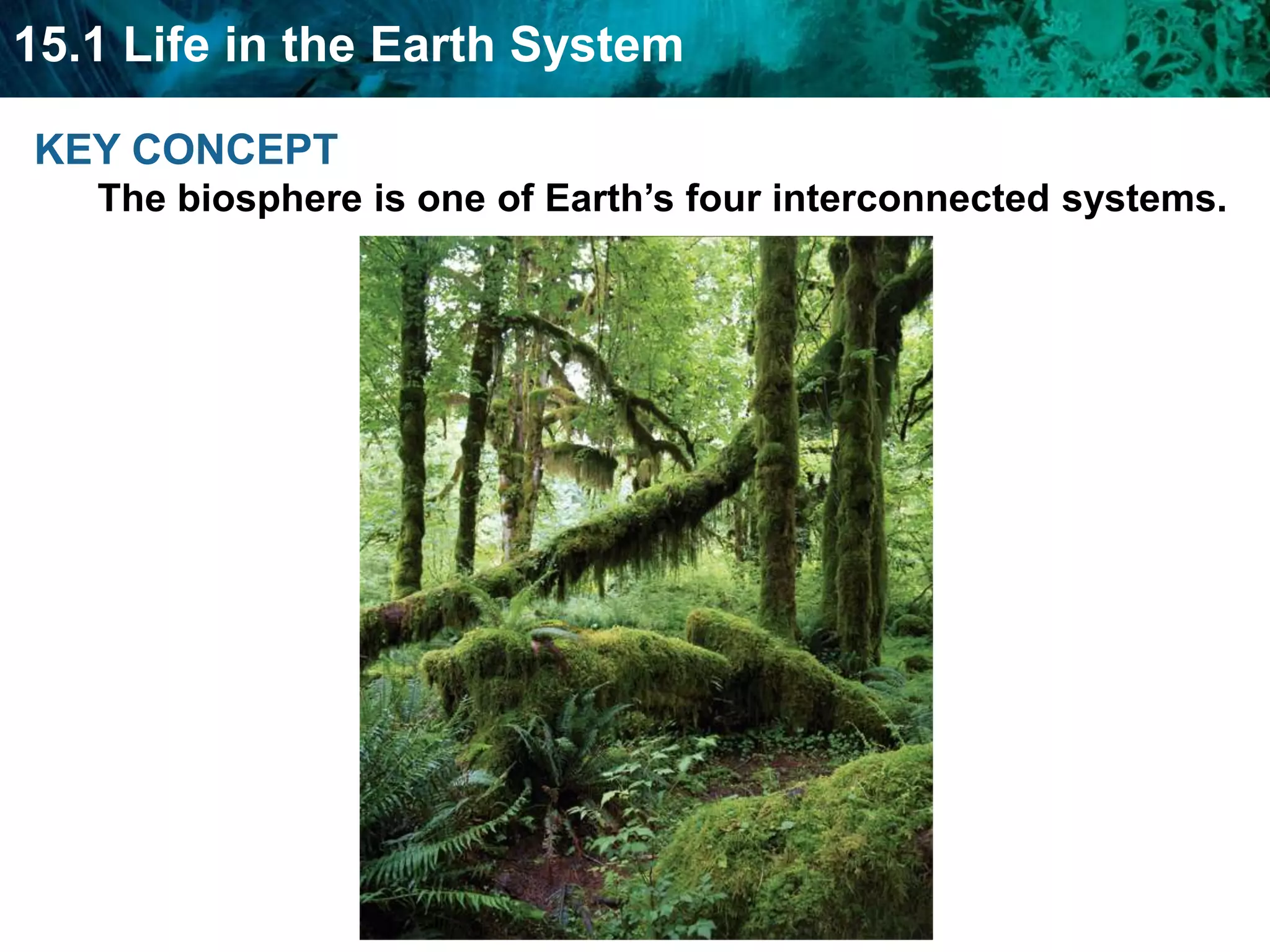
KEY CONCEPT The biosphere is one of Earth’s four interconnected systems.
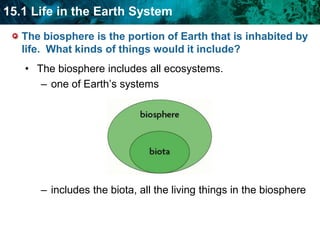
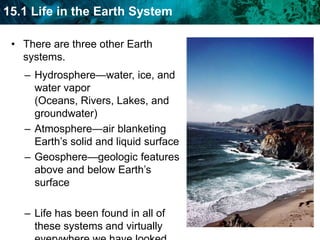
The biosphere is the portion of Earth that is inhabited by life.  What kinds of things would it include?The biosphere includes all ecosystems.one of Earth’s systemsincludes the biota, all the living things in the biosphereThere are three other Earth systems.Hydrosphere—water, ice, and water vapor (Oceans, Rivers, Lakes, and groundwater)
Atmosphere—air blanketing Earth’s solid and liquid surface
Geosphere—geologic features above and below Earth’s surface
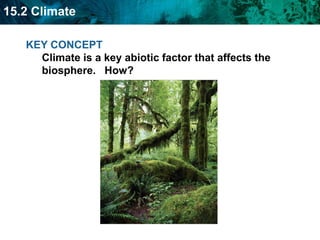
Life has been found in all of these systems and virtually everywhere we have lookedKEY CONCEPT Climate is a key abiotic factor that affects the biosphere.   How?
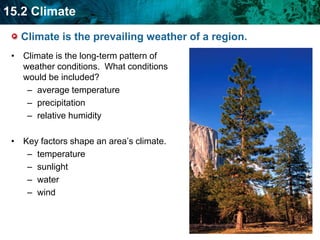
Climate is the prevailing weather of a region.Climate is the long-term pattern of weather conditions.  What conditions would be included?average temperatureprecipitationrelative humidityKey factors shape an area’s climate.temperaturesunlightwaterwind
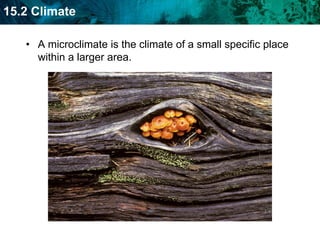
A microclimate is the climate of a small specific place within a larger area.
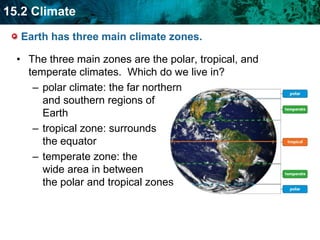
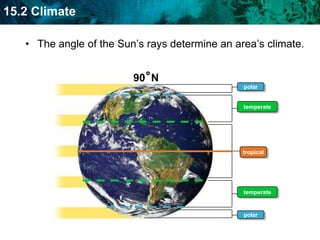
Earth has three main climate zones. The three main zones are the polar, tropical, and temperate climates.  Which do we live in?polar climate: the far northernand southern regions ofEarthtropical zone: surrounds the equatortemperate zone: the wide area in betweenthe polar and tropical zones
90  NpolartemperatetropicaltemperatepolarThe angle of the Sun’s rays determine an area’s climate.
Earth’s tilt on its axis results in seasonal change.Solar heating causes movements in both water and air.  Why?
wind
ocean currents
Earth’s rotation also has effects on the winds and currents.  How?
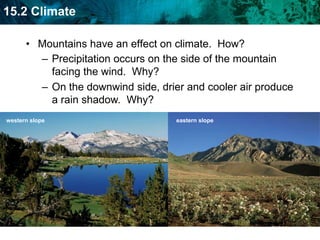
The uneven heating of the Earth is the ultimate cause of all weather.  Why?western slopeeastern slopeMountains have an effect on climate.  How?Precipitation occurs on the side of the mountain facing the wind.  Why?
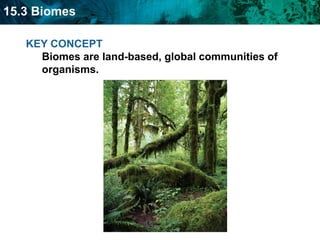
On the downwind side, drier and cooler air produce a rain shadow.  Why?KEY CONCEPT Biomes are land-based, global communities of organisms.
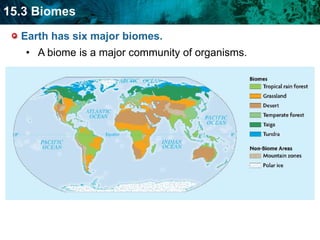
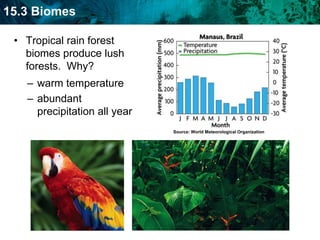
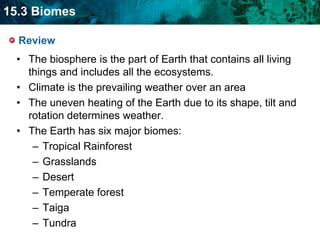
Earth has six major biomes.A biome is a major community of organisms.Source: World Meteorological OrganizationTropical rain forest biomes produce lush forests.  Why?warm temperature
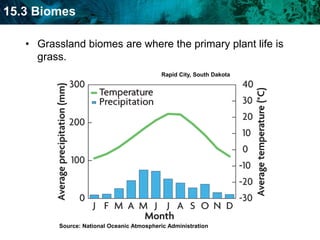
abundant precipitation all yearRapid City, South DakotaSource: National Oceanic Atmospheric AdministrationGrassland biomes are where the primary plant life is grass.
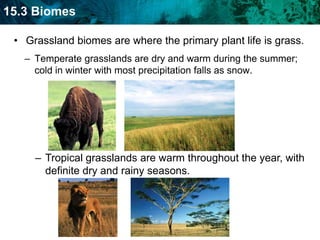
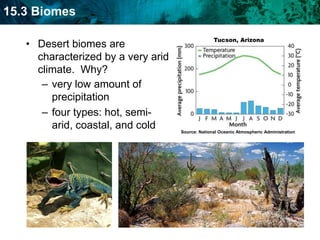
Grassland biomes are where the primary plant life is grass.Temperate grasslands are dry and warm during the summer; cold in winter with most precipitation falls as snow.Tropical grasslands are warm throughout the year, with definite dry and rainy seasons.Tucson, ArizonaSource: National Oceanic Atmospheric AdministrationDesert biomes are characterized by a very arid climate.  Why?very low amount of precipitation
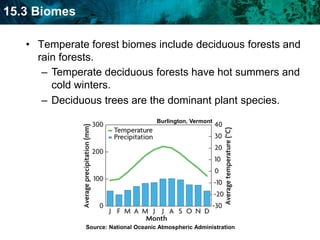
four types: hot, semi-arid, coastal, and coldBurlington, VermontSource: National Oceanic Atmospheric AdministrationTemperate forest biomes include deciduous forests and rain forests.Temperate deciduous forests have hot summers and cold winters.
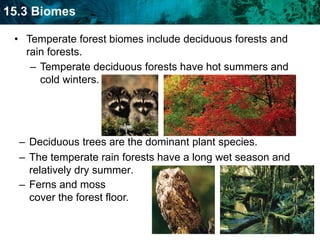
Deciduous trees are the dominant plant species.Temperate forest biomes include deciduous forests and rain forests.
Temperate deciduous forests have hot summers and cold winters.Deciduous trees are the dominant plant species.The temperate rain forests have a long wet season and relatively dry summer. Ferns and moss cover the forest floor. Banff, CanadaSource: Environment CanadaThe taiga biome is located in cooler northern climates.boreal forest
long winters and short summers
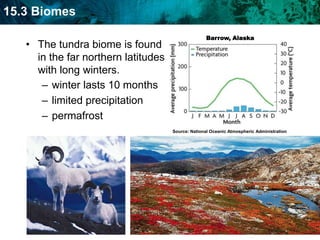
small amount of precipitationBarrow, AlaskaSource: National Oceanic Atmospheric AdministrationThe tundra biome is found in the far northern latitudes with long winters.winter lasts 10 months
limited precipitation
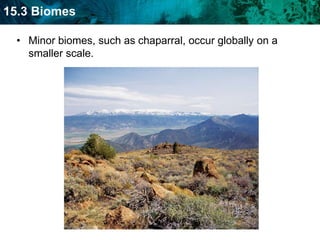
permafrostMinor biomes, such as chaparral, occur globally on a smaller scale.
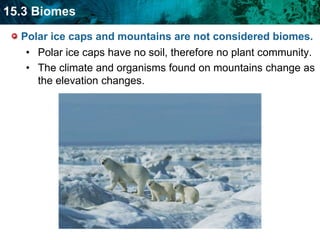
Polar ice caps and mountains are not considered biomes.Polar ice caps have no soil, therefore no plant community.  The climate and organisms found on mountains change as the elevation changes.

Unit 15b Biosphere climate and biomes

  • 1.
    KEY CONCEPT Thebiosphere is one of Earth’s four interconnected systems.
  • 2.
    The biosphere isthe portion of Earth that is inhabited by life. What kinds of things would it include?The biosphere includes all ecosystems.one of Earth’s systemsincludes the biota, all the living things in the biosphereThere are three other Earth systems.Hydrosphere—water, ice, and water vapor (Oceans, Rivers, Lakes, and groundwater)
  • 3.
  • 4.
    Geosphere—geologic features aboveand below Earth’s surface
  • 5.
    Life has beenfound in all of these systems and virtually everywhere we have lookedKEY CONCEPT Climate is a key abiotic factor that affects the biosphere. How?
  • 6.
    Climate is theprevailing weather of a region.Climate is the long-term pattern of weather conditions. What conditions would be included?average temperatureprecipitationrelative humidityKey factors shape an area’s climate.temperaturesunlightwaterwind
  • 7.
    A microclimate isthe climate of a small specific place within a larger area.
  • 8.
    Earth has threemain climate zones. The three main zones are the polar, tropical, and temperate climates. Which do we live in?polar climate: the far northernand southern regions ofEarthtropical zone: surrounds the equatortemperate zone: the wide area in betweenthe polar and tropical zones
  • 9.
    90 NpolartemperatetropicaltemperatepolarTheangle of the Sun’s rays determine an area’s climate.
  • 10.
    Earth’s tilt onits axis results in seasonal change.Solar heating causes movements in both water and air. Why?
  • 11.
  • 12.
  • 13.
    Earth’s rotation alsohas effects on the winds and currents. How?
  • 14.
    The uneven heatingof the Earth is the ultimate cause of all weather. Why?western slopeeastern slopeMountains have an effect on climate. How?Precipitation occurs on the side of the mountain facing the wind. Why?
  • 15.
    On the downwindside, drier and cooler air produce a rain shadow. Why?KEY CONCEPT Biomes are land-based, global communities of organisms.
  • 16.
    Earth has sixmajor biomes.A biome is a major community of organisms.Source: World Meteorological OrganizationTropical rain forest biomes produce lush forests. Why?warm temperature
  • 17.
    abundant precipitation allyearRapid City, South DakotaSource: National Oceanic Atmospheric AdministrationGrassland biomes are where the primary plant life is grass.
  • 18.
    Grassland biomes arewhere the primary plant life is grass.Temperate grasslands are dry and warm during the summer; cold in winter with most precipitation falls as snow.Tropical grasslands are warm throughout the year, with definite dry and rainy seasons.Tucson, ArizonaSource: National Oceanic Atmospheric AdministrationDesert biomes are characterized by a very arid climate. Why?very low amount of precipitation
  • 19.
    four types: hot,semi-arid, coastal, and coldBurlington, VermontSource: National Oceanic Atmospheric AdministrationTemperate forest biomes include deciduous forests and rain forests.Temperate deciduous forests have hot summers and cold winters.
  • 20.
    Deciduous trees arethe dominant plant species.Temperate forest biomes include deciduous forests and rain forests.
  • 21.
    Temperate deciduous forestshave hot summers and cold winters.Deciduous trees are the dominant plant species.The temperate rain forests have a long wet season and relatively dry summer. Ferns and moss cover the forest floor. Banff, CanadaSource: Environment CanadaThe taiga biome is located in cooler northern climates.boreal forest
  • 22.
    long winters andshort summers
  • 23.
    small amount ofprecipitationBarrow, AlaskaSource: National Oceanic Atmospheric AdministrationThe tundra biome is found in the far northern latitudes with long winters.winter lasts 10 months
  • 24.
  • 25.
    permafrostMinor biomes, suchas chaparral, occur globally on a smaller scale.
  • 26.
    Polar ice capsand mountains are not considered biomes.Polar ice caps have no soil, therefore no plant community. The climate and organisms found on mountains change as the elevation changes.