Downloaded 87 times




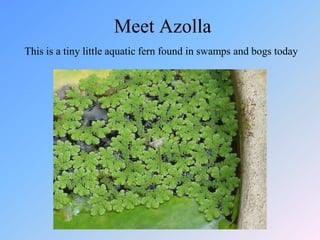
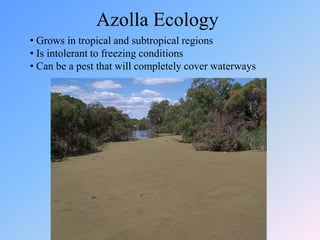




- Around 50 million years ago, the Arctic region was a warm temperate forest rather than today's frozen landscape. This was due to much higher CO2 levels during a period known as the Eocene hothouse. - A tiny aquatic fern called Azolla that grew in the Arctic's freshwater lakes and rivers is theorized to have caused global cooling. Azolla absorbed large amounts of CO2 from the atmosphere, eventually storing it in peat deposits on the lake and sea floors. - Within 800,000 years of the "Azolla Event", CO2 levels dropped by over 75%, Antarctic ice sheets formed, and global temperatures declined, marking the transition to today's cooler "Icehouse Earth" climate


