Chapter 4: PARADE OF THE
VERTEBRATES IN TIME AND TAXA
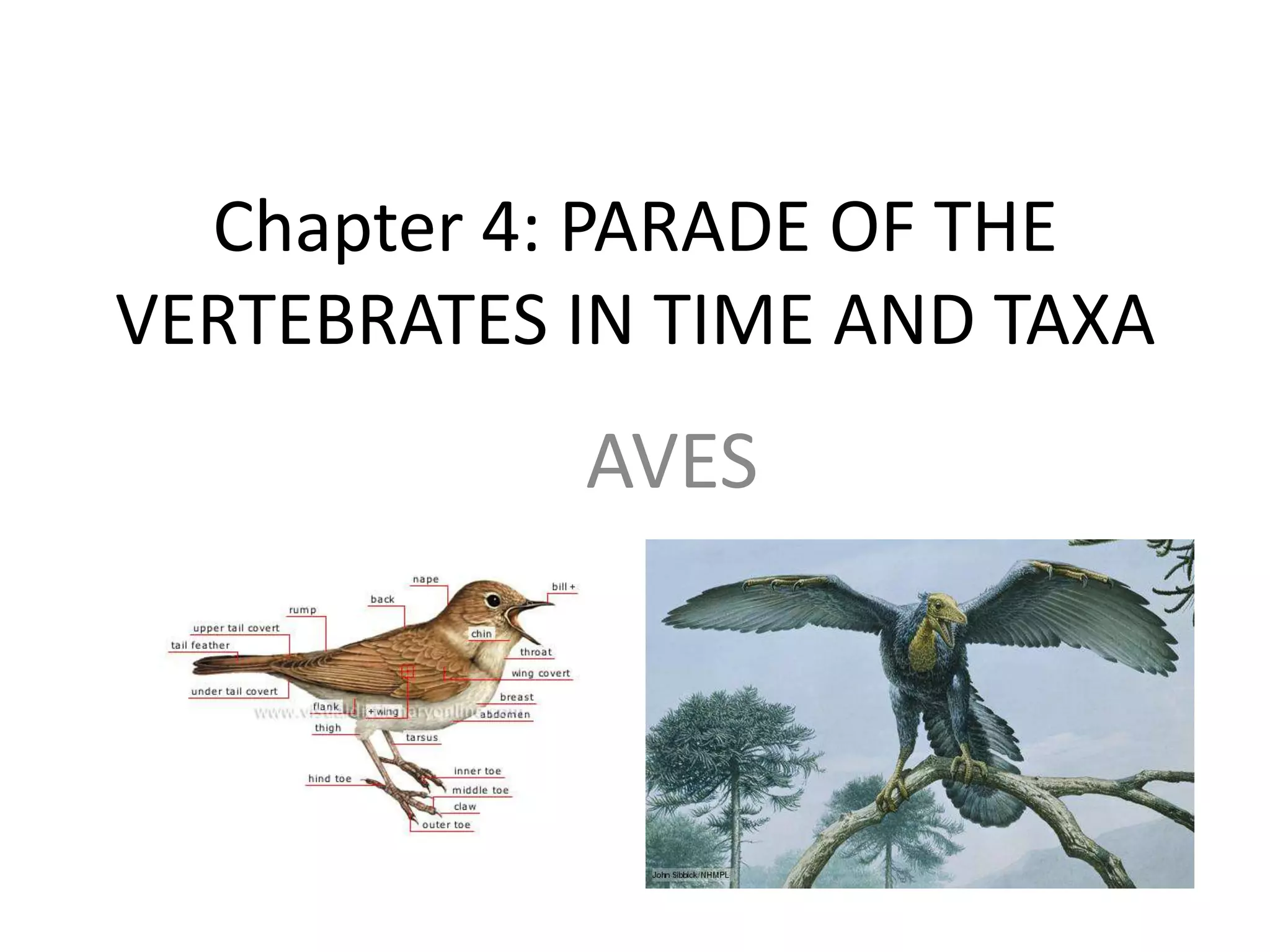
AVES
AVES
- known as Birds
- are endothermic vertebrates with feathers
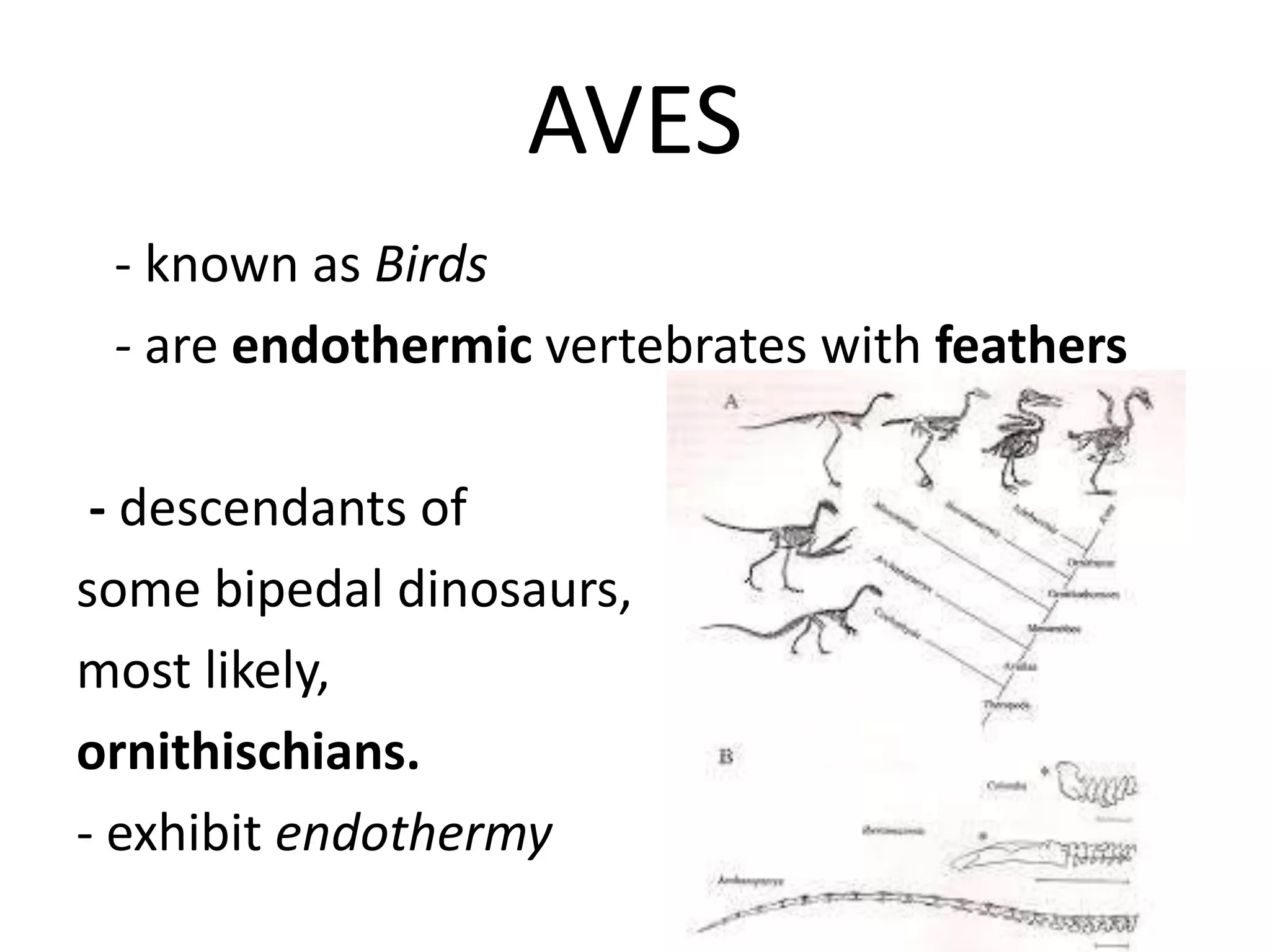
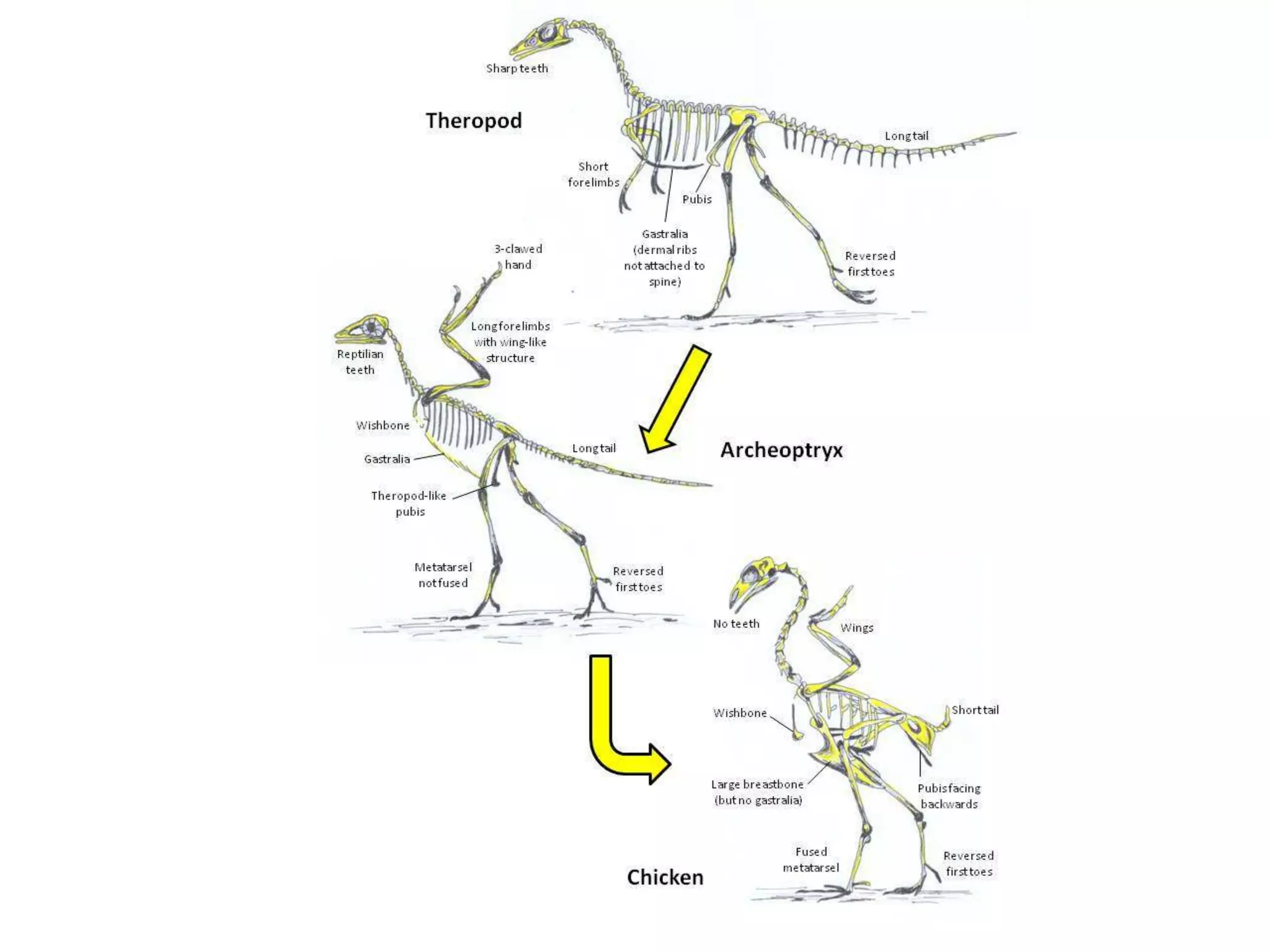
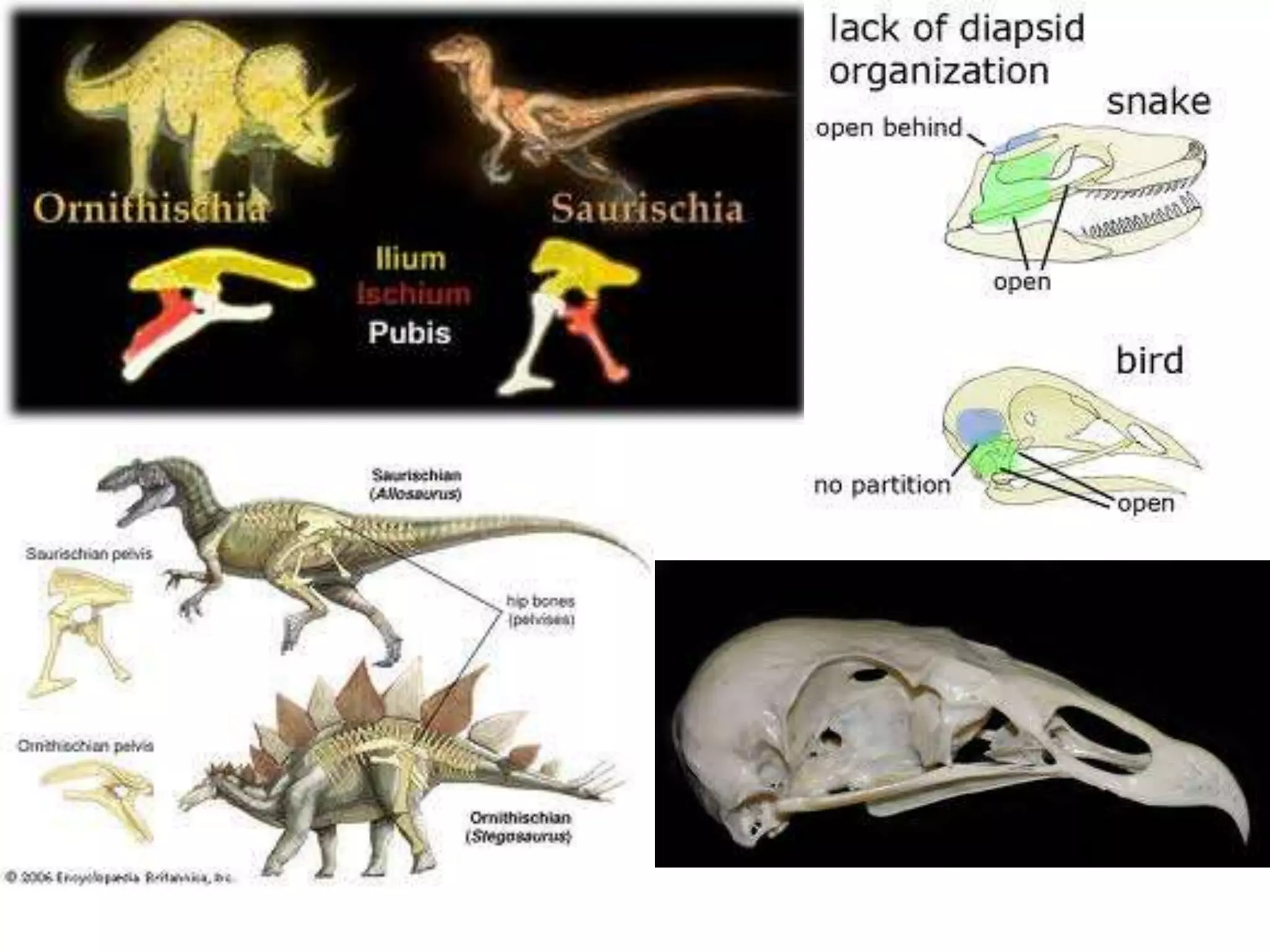
- descendants of
some bipedal dinosaurs,
most likely,
ornithischians.
- exhibit endothermy
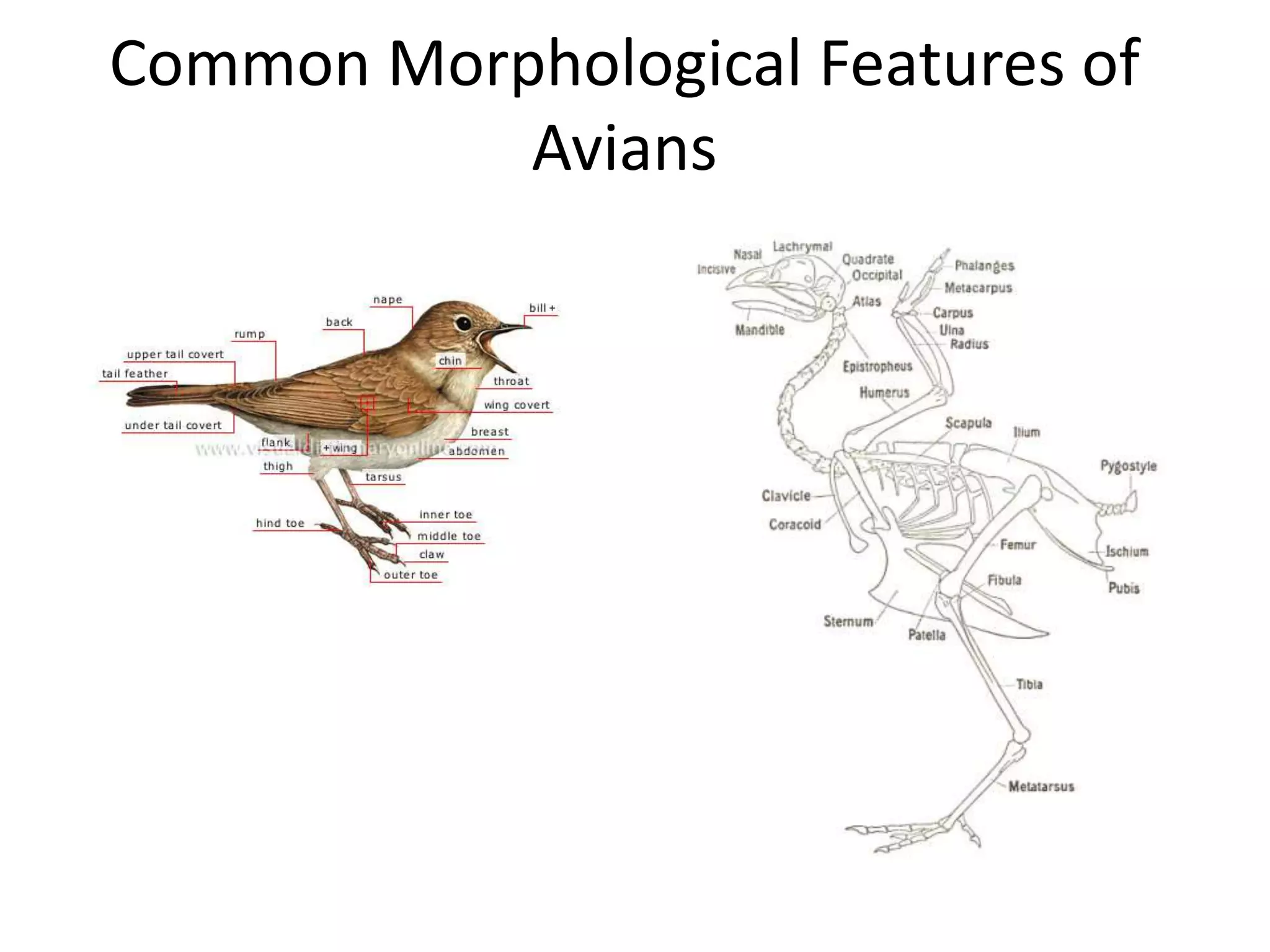
Common Morphological Features of
Avians
1. Have retained reptilian scales on their beak,
legs and feet.
2. Have a single occipital condyle.
3. Have a diapsid skull.
4. Birds have feathers.
Common Morphological Features of
Avians
Common Morphological Features of
Avians
Feathers – are made up of keratin derived from the
epidermis.
- replaced reptilian scales on all surfaces
except the beak, legs and feet.
- with pigments facilitating recognition by
other members of species.
- function as: to make bird flight possible,
and for insulation against seasonal heat and high-
altitude cold.
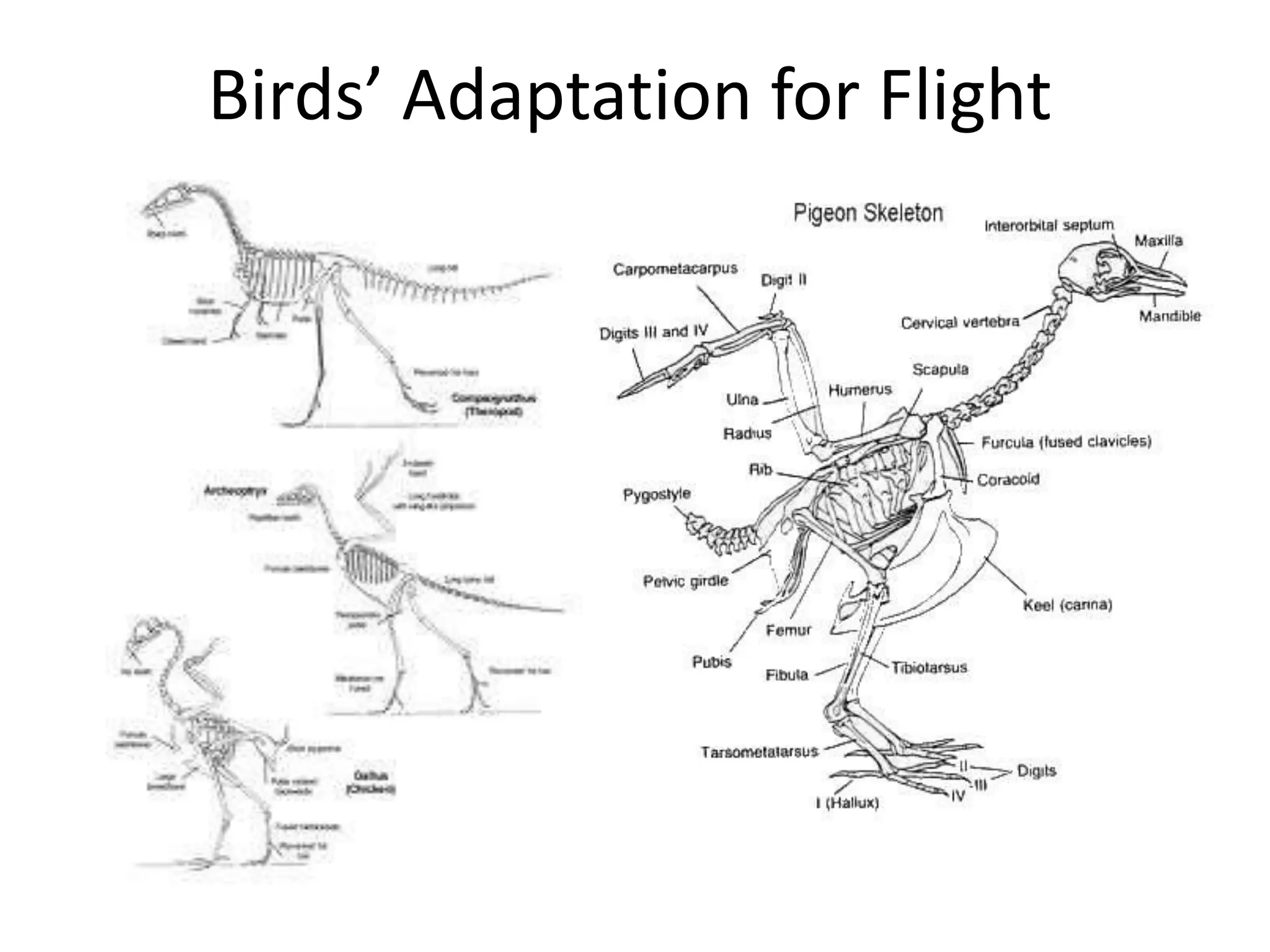
Birds’ Adaptation for Flight
1. Long bones become slender.
2. Most bones, including vertebrae lost central
marrow leaving cavities containing air-filled
extensions of air sacs from the lungs.
3. Skull is lightened by thinning of compact
layer.
4. All teeth have been lost, replaced by a
lighter-weight beak.
Birds’ Adaptation for Flight
5. The bones of wrist, palm and digits reduced
in size.
6. Volume of muscles in forelimbs also reduced.
7. Urinary bladder have been lost.
8. Large intestine have become shortened.
Birds’ Adaptation for Flight
Common Skeletal Structures That Are
Present in Birds
Carina – a large sternal keel for attachment of the
massive flight muscles. (Absent in birds that that
do not fly.)
Synsacrum – formed when entire skeleton of the
trunk except the ribs has become a rigid unit by
ankylosis of trunk vertebrae and their fusion in
the pelvic girdle.
Modification of Soft Parts
1. Esophagus with crop for storage of seeds and
grain.
2. Stomach has become a grinding gizzard like that
of crocodiles.
3. Sizes and shape of eyes – result in increased
activity of vision from high in the air.
4. Enlaged orbits.
5. Presence of hyperstriatum, a thick new stratum
of nerve cells in the cerebral hemisphere,
responsible for the struggled avian behavior.
Modification of Soft Parts
6. Enlarged cerebellum.
Classification
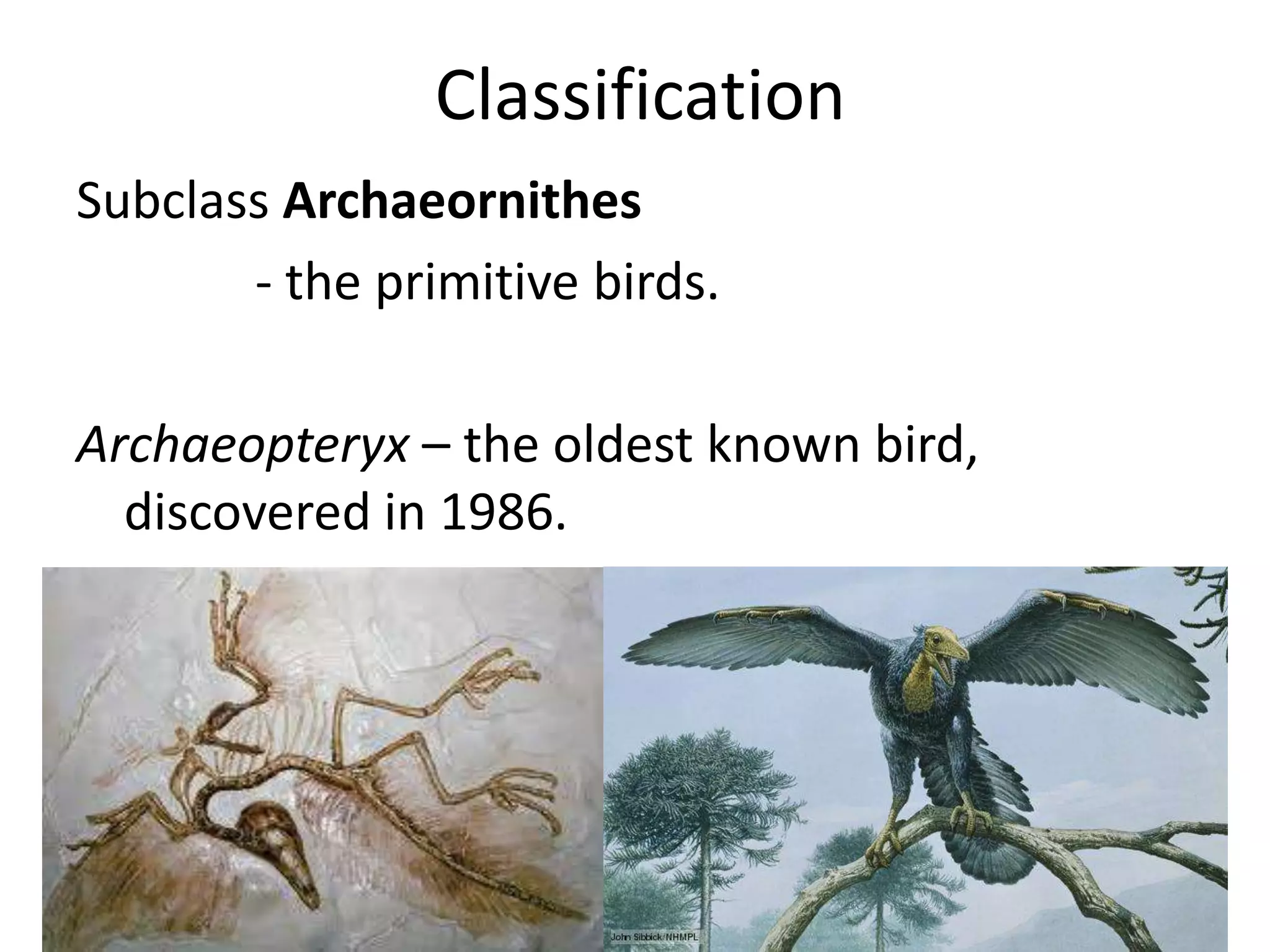
Subclass Archaeornithes
- the primitive birds.
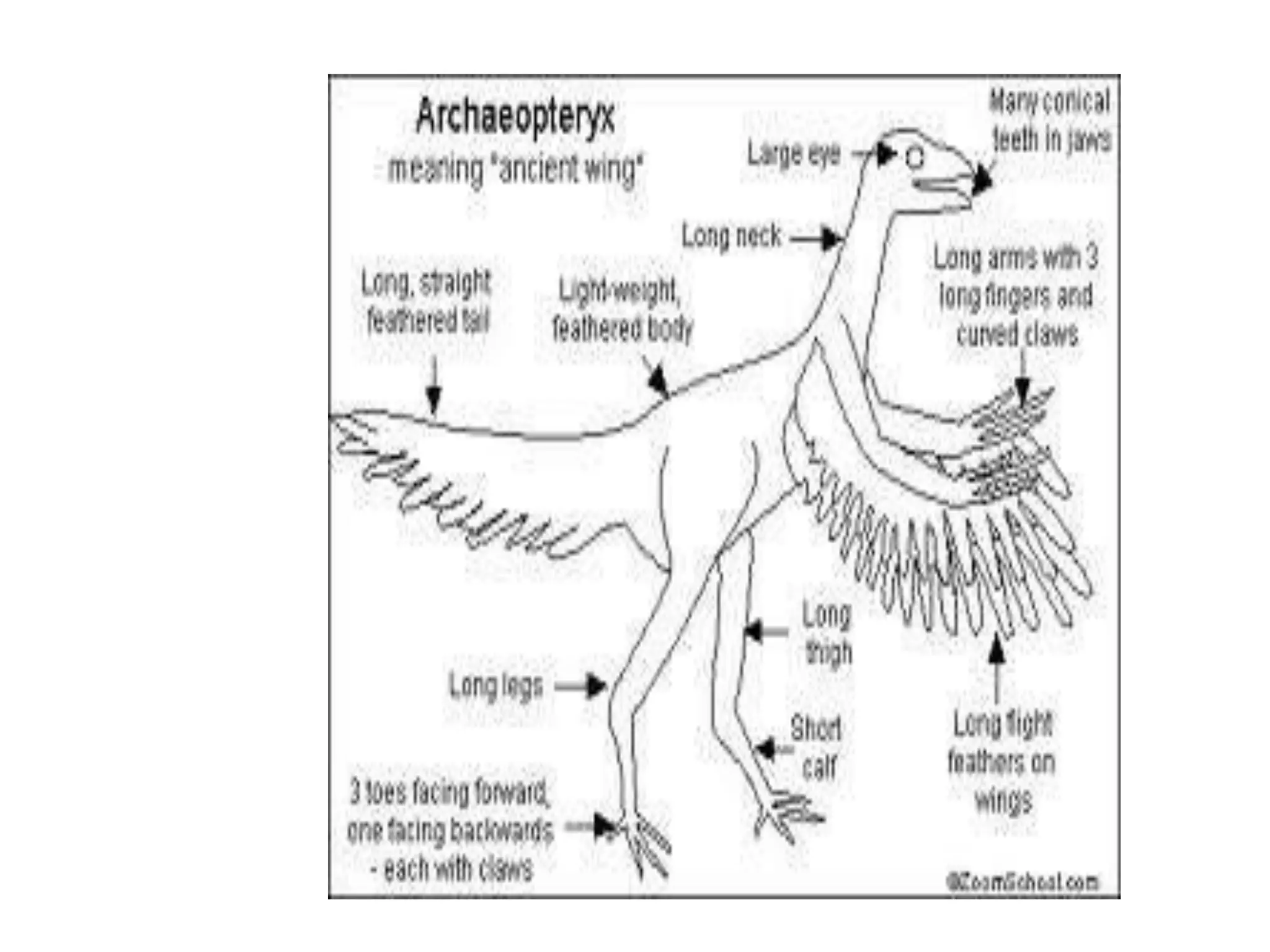
Archaeopteryx – the oldest known bird,
discovered in 1986.
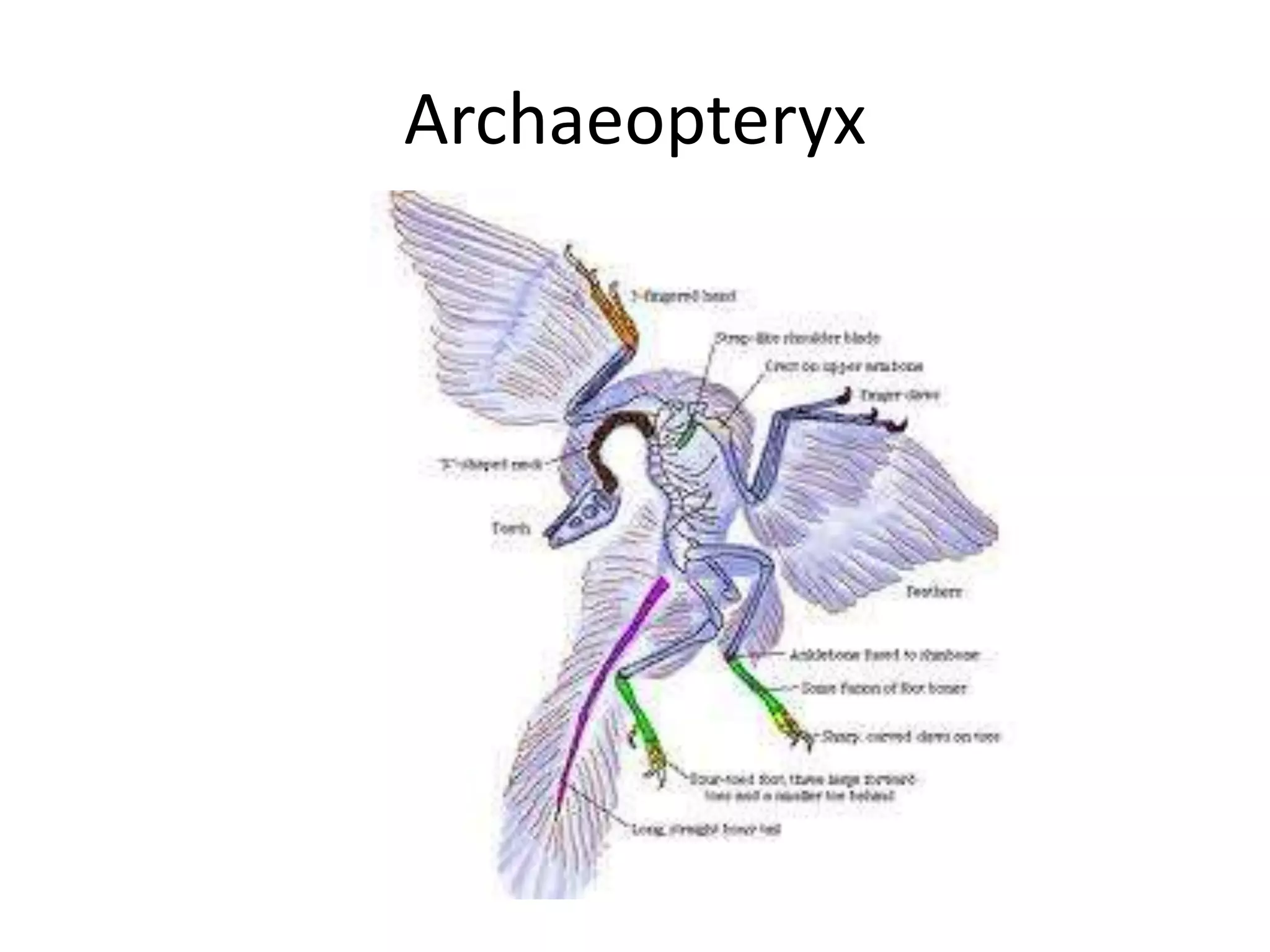
Archaeopteryx
Morphological Features of
Archaeopteryx
1. Had a long reptilian tail, thecodont teeth on both
jaws, and feathers on the tail and wings.
2. Skull was more reptilian than avian.
3. Nostrils were far forward.
4. No beak.
5. Braincase had not expanded to accommodate an
enlarged brain.
6. Cervical vertebrae was not saddle shaped at the ends
as in today’s birds.
7. Trunk vertebrae was not rigidly fused.
8. The sternum was not well developed.
Morphological Features of
Archaeopteryx
7. The synsacrum was not well-developed.
8. The sternum was small, not accommodated
with strong pectoral muscles for sustained
flight suggesting that these birds may have
soared more than they flew.
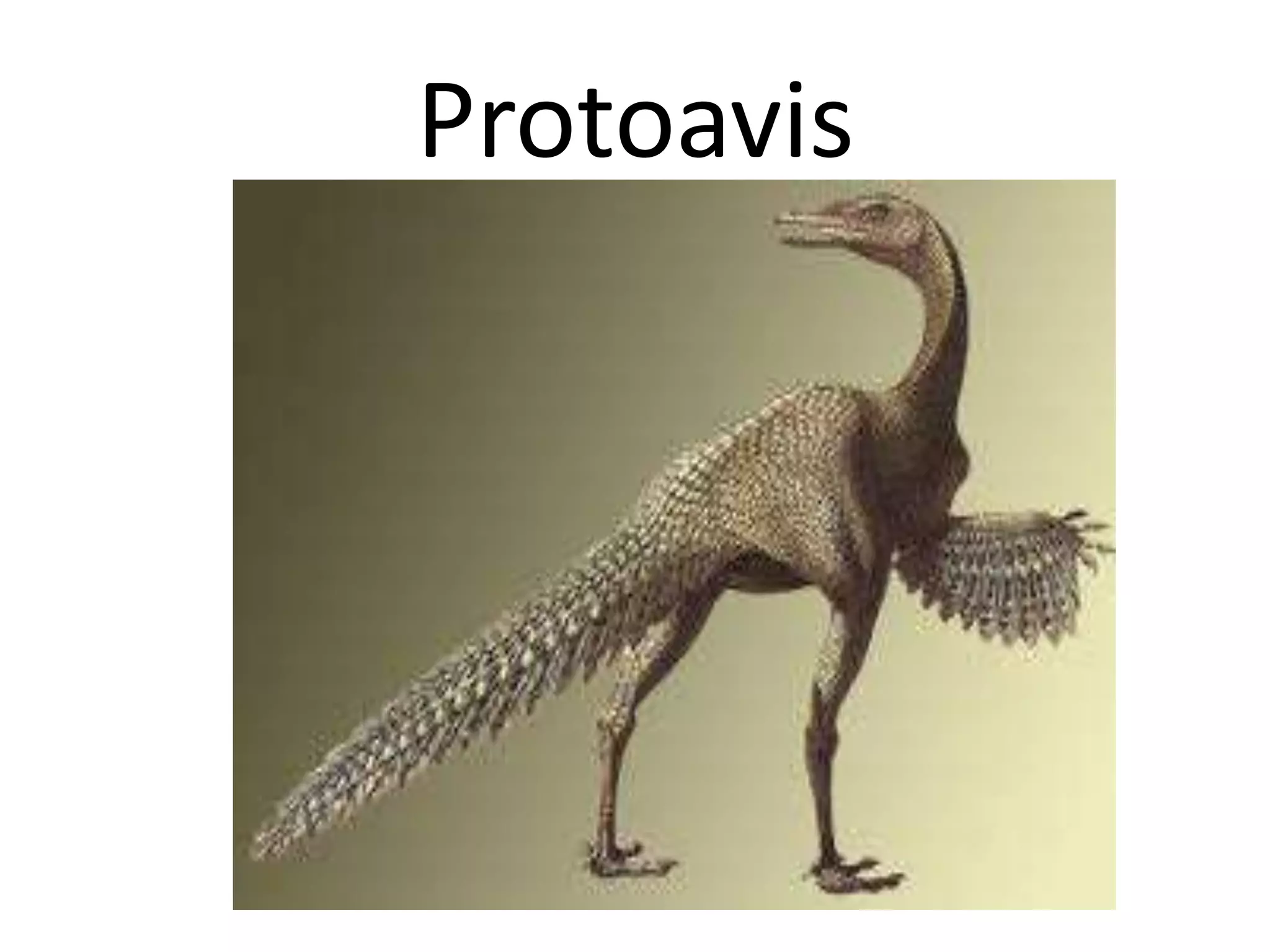
Protoavis – crow-like birds of Triassic Period, 75
million years older than Archaeopteryx.
- two fossils was discovered in 1986 in
a mudstone quarry in Texas, U.S.A.
- more dinosaur-like than
Archaeopteryx.
- may have been closer to the
evolutionary line leading to modern birds
than was Archaeopteryx.
Protoavis

Aves

  • 1.
    Chapter 4: PARADEOF THE VERTEBRATES IN TIME AND TAXA AVES
  • 2.
    AVES - known asBirds - are endothermic vertebrates with feathers - descendants of some bipedal dinosaurs, most likely, ornithischians. - exhibit endothermy
  • 4.
    Common Morphological Featuresof Avians 1. Have retained reptilian scales on their beak, legs and feet. 2. Have a single occipital condyle. 3. Have a diapsid skull. 4. Birds have feathers.
  • 5.
  • 7.
    Common Morphological Featuresof Avians Feathers – are made up of keratin derived from the epidermis. - replaced reptilian scales on all surfaces except the beak, legs and feet. - with pigments facilitating recognition by other members of species. - function as: to make bird flight possible, and for insulation against seasonal heat and high- altitude cold.
  • 8.
    Birds’ Adaptation forFlight 1. Long bones become slender. 2. Most bones, including vertebrae lost central marrow leaving cavities containing air-filled extensions of air sacs from the lungs. 3. Skull is lightened by thinning of compact layer. 4. All teeth have been lost, replaced by a lighter-weight beak.
  • 9.
    Birds’ Adaptation forFlight 5. The bones of wrist, palm and digits reduced in size. 6. Volume of muscles in forelimbs also reduced. 7. Urinary bladder have been lost. 8. Large intestine have become shortened.
  • 10.
  • 11.
    Common Skeletal StructuresThat Are Present in Birds Carina – a large sternal keel for attachment of the massive flight muscles. (Absent in birds that that do not fly.) Synsacrum – formed when entire skeleton of the trunk except the ribs has become a rigid unit by ankylosis of trunk vertebrae and their fusion in the pelvic girdle.
  • 12.
    Modification of SoftParts 1. Esophagus with crop for storage of seeds and grain. 2. Stomach has become a grinding gizzard like that of crocodiles. 3. Sizes and shape of eyes – result in increased activity of vision from high in the air. 4. Enlaged orbits. 5. Presence of hyperstriatum, a thick new stratum of nerve cells in the cerebral hemisphere, responsible for the struggled avian behavior.
  • 13.
    Modification of SoftParts 6. Enlarged cerebellum.
  • 14.
    Classification Subclass Archaeornithes - theprimitive birds. Archaeopteryx – the oldest known bird, discovered in 1986.
  • 15.
  • 16.
    Morphological Features of Archaeopteryx 1.Had a long reptilian tail, thecodont teeth on both jaws, and feathers on the tail and wings. 2. Skull was more reptilian than avian. 3. Nostrils were far forward. 4. No beak. 5. Braincase had not expanded to accommodate an enlarged brain. 6. Cervical vertebrae was not saddle shaped at the ends as in today’s birds. 7. Trunk vertebrae was not rigidly fused. 8. The sternum was not well developed.
  • 17.
    Morphological Features of Archaeopteryx 7.The synsacrum was not well-developed. 8. The sternum was small, not accommodated with strong pectoral muscles for sustained flight suggesting that these birds may have soared more than they flew.
  • 19.
    Protoavis – crow-likebirds of Triassic Period, 75 million years older than Archaeopteryx. - two fossils was discovered in 1986 in a mudstone quarry in Texas, U.S.A. - more dinosaur-like than Archaeopteryx. - may have been closer to the evolutionary line leading to modern birds than was Archaeopteryx.
  • 20.