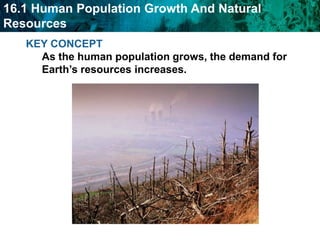
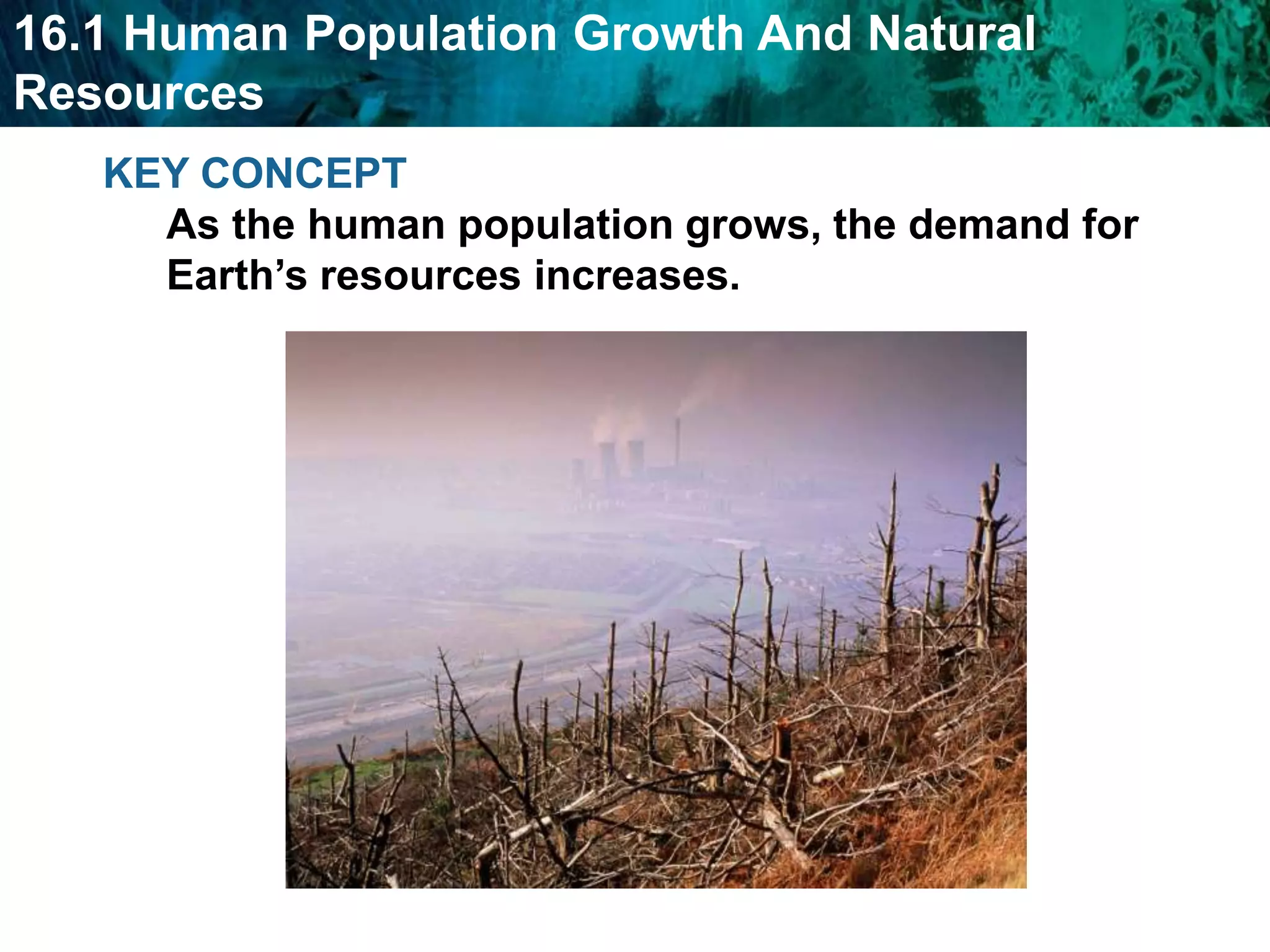
KEY CONCEPT As the human population grows, the demand for Earth’s resources increases.
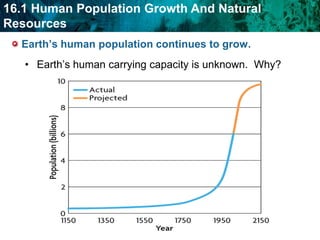
Earth’s human population continues to grow. Earth’s human carrying capacity is unknown.  Why?
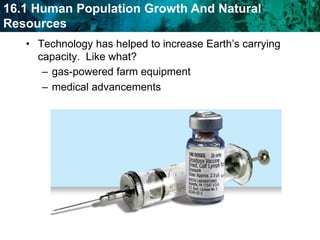
Technology has helped to increase Earth’s carrying capacity.  Like what?gas-powered farm equipment
medical advancementsThe growing human population exerts pressure on Earth’s natural resources.  How?Nonrenewable resources are used faster than they form.CoalOilNatural gasUranium (for nuclear power)Minerals (especially rare heavy metals for technology)
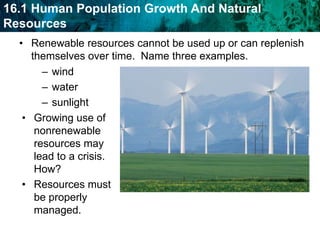
Renewable resources cannot be used up or can replenish themselves over time.  Name three examples.wind
water
sunlight
Growing use of nonrenewable resources may lead to a crisis.  How?
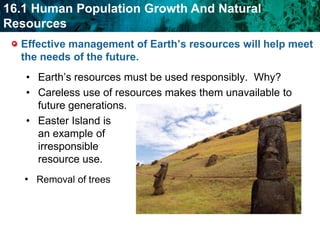
Resources must be properly managed.Effective management of Earth’s resources will help meet the needs of the future. Earth’s resources must be used responsibly.  Why?Careless use of resources makes them unavailable to future generations.Easter Island isan example ofirresponsibleresource use.Removal of trees An ecological footprint is the amount of land needed to support a person.What must the land be able to produce and maintain?
food and water
shelter
energy
wasteHow can you lessen your environmental footprint?http://www.carbonfootprint.com/calculator.aspxUse the calculator to determine your footprint and check the CO2 Reduction list for some easy ways to reduce your impact.
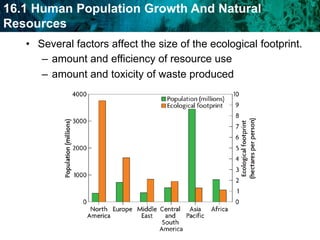
Several factors affect the size of the ecological footprint.amount and efficiency of resource use
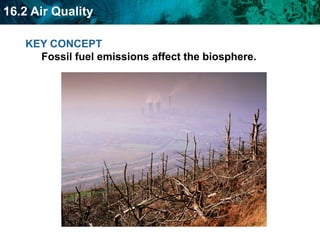
amount and toxicity of waste producedKEY CONCEPT Fossil fuel emissions affect the biosphere.
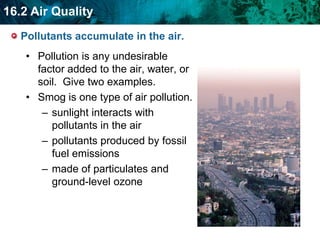
Pollutants accumulate in the air.  Pollution is any undesirable factor added to the air, water, or soil.  Give two examples.Smog is one type of air pollution.sunlight interacts with pollutants in the airpollutants produced by fossil fuel emissionsmade of particulates and ground-level ozone
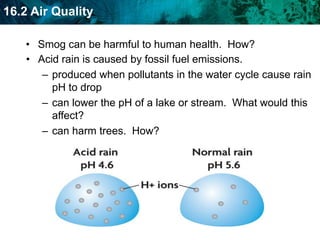
Smog can be harmful to human health.  How?Acid rain is caused by fossil fuel emissions.
produced when pollutants in the water cycle cause rain pH to drop
can lower the pH of a lake or stream.  What would this affect?
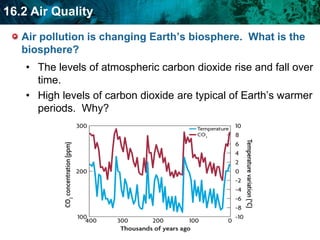
can harm trees.  How?Air pollution is changing Earth’s biosphere.  What is the biosphere?  The levels of atmospheric carbon dioxide rise and fall over time.High levels of carbon dioxide are typical of Earth’s warmer periods.  Why?
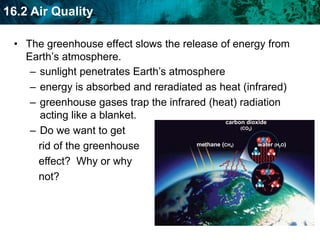
carbon dioxide(CO2)methane (CH4)water (H2O)The greenhouse effect slows the release of energy from Earth’s atmosphere.sunlight penetrates Earth’s atmosphere
energy is absorbed and reradiated as heat (infrared)
greenhouse gases trap the infrared (heat) radiation acting like a blanket.
Do we want to get   rid of the greenhouse   effect?  Why or why   not?
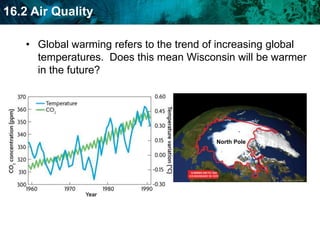
Global warming refers to the trend of increasing global temperatures.  Does this mean Wisconsin will be warmer in the future?North Pole

Unit 16a Resource consumption pollution and greenhouse effect

  • 1.
    KEY CONCEPT Asthe human population grows, the demand for Earth’s resources increases.
  • 2.
    Earth’s human populationcontinues to grow. Earth’s human carrying capacity is unknown. Why?
  • 3.
    Technology has helpedto increase Earth’s carrying capacity. Like what?gas-powered farm equipment
  • 4.
    medical advancementsThe growinghuman population exerts pressure on Earth’s natural resources. How?Nonrenewable resources are used faster than they form.CoalOilNatural gasUranium (for nuclear power)Minerals (especially rare heavy metals for technology)
  • 5.
    Renewable resources cannotbe used up or can replenish themselves over time. Name three examples.wind
  • 6.
  • 7.
  • 8.
    Growing use ofnonrenewable resources may lead to a crisis. How?
  • 9.
    Resources must beproperly managed.Effective management of Earth’s resources will help meet the needs of the future. Earth’s resources must be used responsibly. Why?Careless use of resources makes them unavailable to future generations.Easter Island isan example ofirresponsibleresource use.Removal of trees An ecological footprint is the amount of land needed to support a person.What must the land be able to produce and maintain?
  • 10.
  • 11.
  • 12.
  • 13.
    wasteHow can youlessen your environmental footprint?http://www.carbonfootprint.com/calculator.aspxUse the calculator to determine your footprint and check the CO2 Reduction list for some easy ways to reduce your impact.
  • 14.
    Several factors affectthe size of the ecological footprint.amount and efficiency of resource use
  • 15.
    amount and toxicityof waste producedKEY CONCEPT Fossil fuel emissions affect the biosphere.
  • 16.
    Pollutants accumulate inthe air. Pollution is any undesirable factor added to the air, water, or soil. Give two examples.Smog is one type of air pollution.sunlight interacts with pollutants in the airpollutants produced by fossil fuel emissionsmade of particulates and ground-level ozone
  • 17.
    Smog can beharmful to human health. How?Acid rain is caused by fossil fuel emissions.
  • 18.
    produced when pollutantsin the water cycle cause rain pH to drop
  • 19.
    can lower thepH of a lake or stream. What would this affect?
  • 20.
    can harm trees. How?Air pollution is changing Earth’s biosphere. What is the biosphere? The levels of atmospheric carbon dioxide rise and fall over time.High levels of carbon dioxide are typical of Earth’s warmer periods. Why?
  • 21.
    carbon dioxide(CO2)methane (CH4)water(H2O)The greenhouse effect slows the release of energy from Earth’s atmosphere.sunlight penetrates Earth’s atmosphere
  • 22.
    energy is absorbedand reradiated as heat (infrared)
  • 23.
    greenhouse gases trapthe infrared (heat) radiation acting like a blanket.
  • 24.
    Do we wantto get rid of the greenhouse effect? Why or why not?
  • 25.
    Global warming refersto the trend of increasing global temperatures. Does this mean Wisconsin will be warmer in the future?North Pole