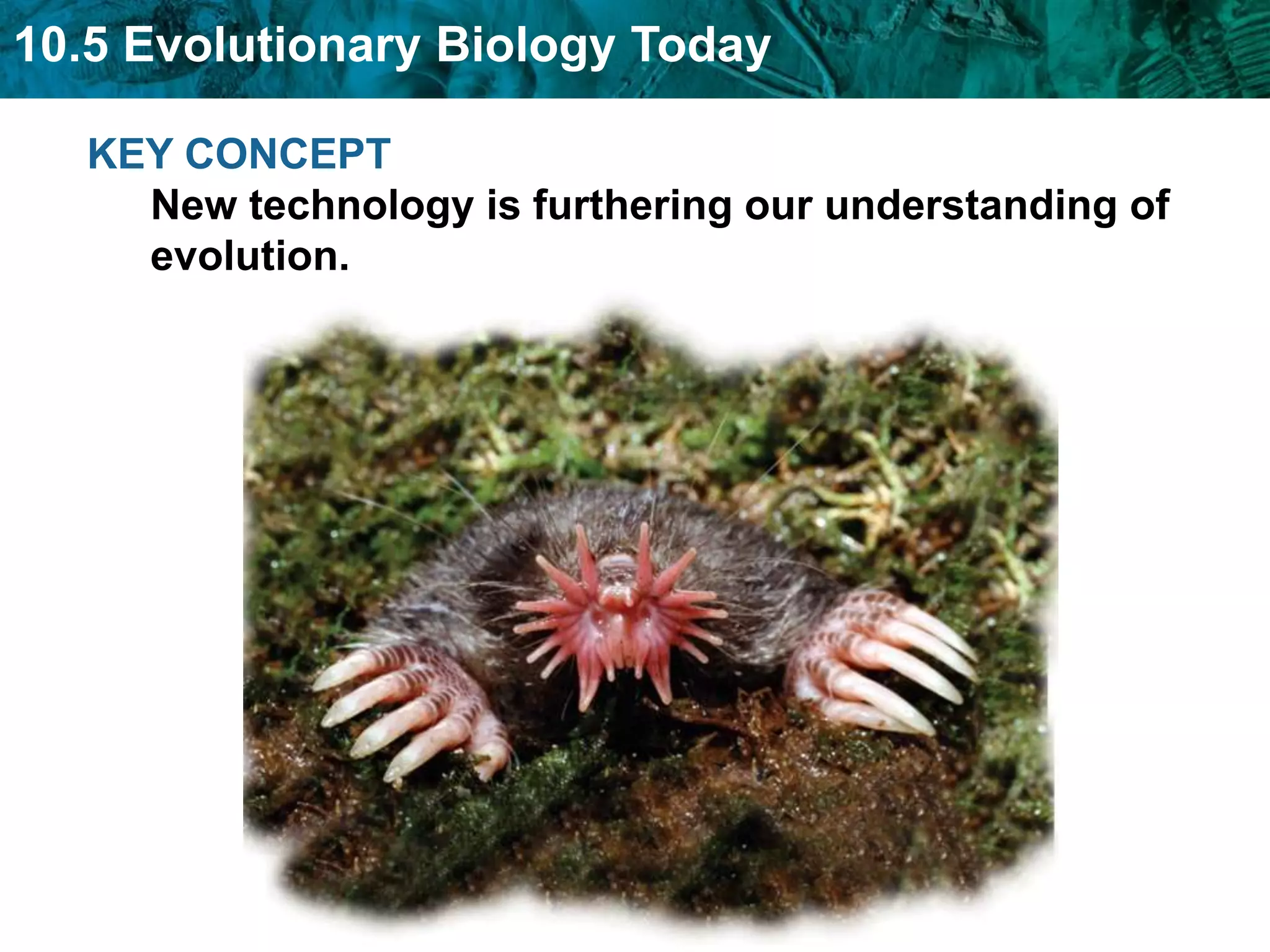
KEY CONCEPT New technology is furthering our understanding of evolution.
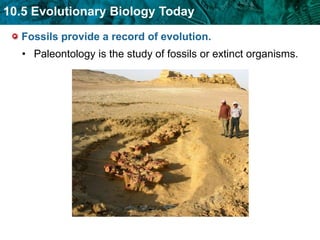
Fossils provide a record of evolution. Paleontology is the study of fossils or extinct organisms.
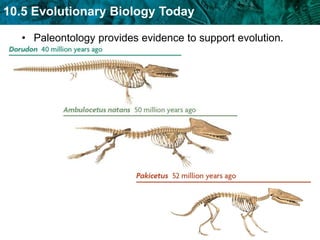
Paleontology provides evidence to support evolution.
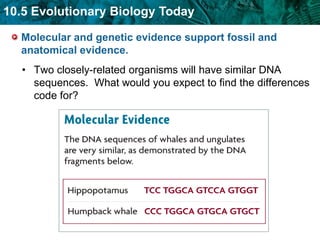
Molecular and genetic evidence support fossil and anatomical evidence.  Two closely-related organisms will have similar DNA sequences.  What would you expect to find the differences code for?
Pseudogenes are sequences providing evidence of evolution.no longer function
carried along with functional DNA
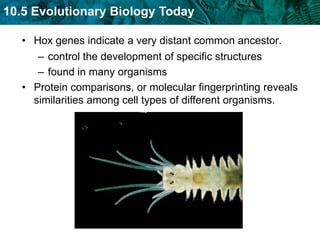
can be clues to a common ancestorHox genes indicate a very distant common ancestor.control the development of specific structures
found in many organisms
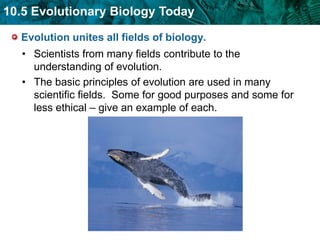
Protein comparisons, or molecular fingerprinting reveals similarities among cell types of different organisms.Evolution unites all fields of biology.  Scientists from many fields contribute to the understanding of evolution.
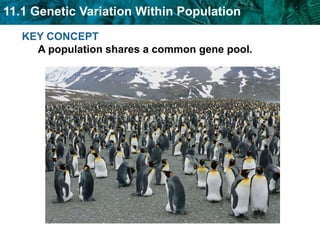
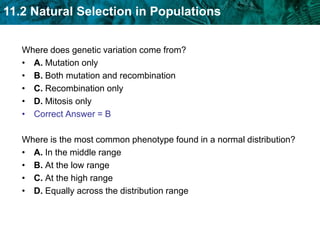
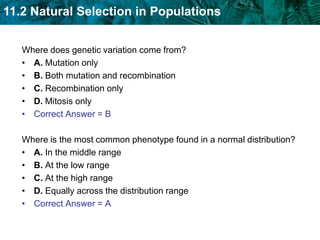
The basic principles of evolution are used in many scientific fields.  Some for good purposes and some for less ethical – give an example of each.KEY CONCEPT A population shares a common gene pool.
Remember me?GenotypicPhenotypic
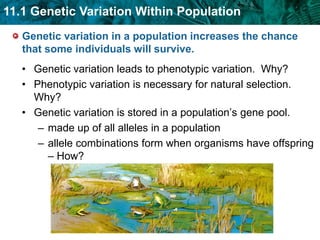
Genetic variation in a population increases the chance that some individuals will survive.Genetic variation leads to phenotypic variation.  Why?Phenotypic variation is necessary for natural selection.  Why?Genetic variation is stored in a population’s gene pool.made up of all alleles in a populationallele combinations form when organisms have offspring – How?
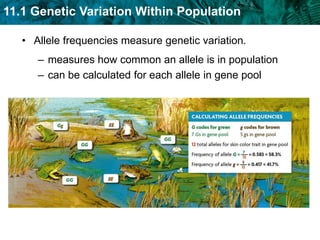
Allele frequencies measure genetic variation.measures how common an allele is in population
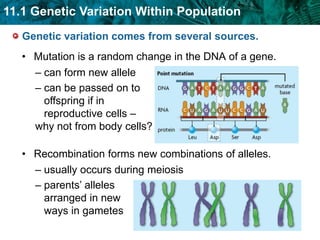
can be calculated for each allele in gene poolGenetic variation comes from several sources.Mutation is a random change in the DNA of a gene. can form new allele
 can be passed on to    offspring if in    reproductive cells – why not from body cells?
Recombination forms new combinations of alleles.
 usually occurs during meiosis
 parents’ alleles    arranged in new    ways in gametesGenetic variation comes from several sources.Hybridization is the crossing of two different species.occurs when individuals can’t find mate of own speciestopic of current scientific research
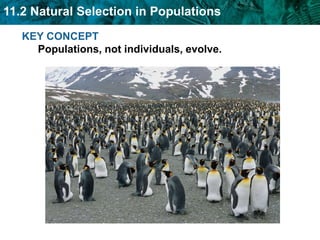
KEY CONCEPT Populations, not individuals, evolve.
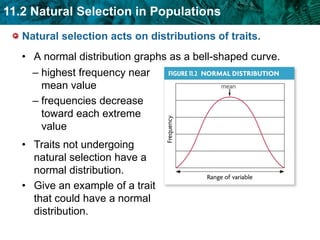
Natural selection acts on distributions of traits. A normal distribution graphs as a bell-shaped curve. highest frequency near    mean value
 frequencies decrease    toward each extreme    value
Traits not undergoing natural selection have a normal distribution.
Give an example of a trait that could have a normal distribution.Natural selection can change the distribution of a trait in one of three ways. Microevolution is evolution within a population.observable change in the allele frequencies can result from natural selection
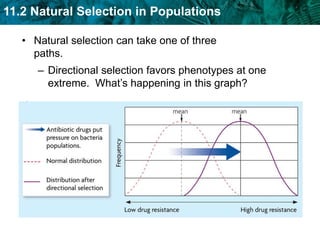
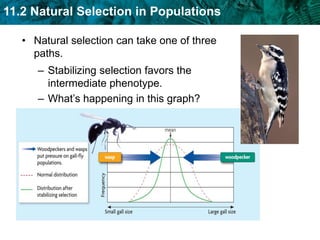
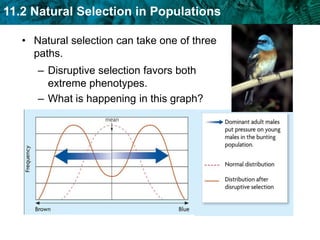
Natural selection can take one of three paths. Directional selection favors phenotypes at one extreme.  What’s happening in this graph?Natural selection can take one of three paths. Stabilizing selection favors the intermediate phenotype.

Unit 11 evolution of populations

  • 1.
    KEY CONCEPT Newtechnology is furthering our understanding of evolution.
  • 2.
    Fossils provide arecord of evolution. Paleontology is the study of fossils or extinct organisms.
  • 3.
    Paleontology provides evidenceto support evolution.
  • 4.
    Molecular and geneticevidence support fossil and anatomical evidence. Two closely-related organisms will have similar DNA sequences. What would you expect to find the differences code for?
  • 5.
    Pseudogenes are sequencesproviding evidence of evolution.no longer function
  • 6.
    carried along withfunctional DNA
  • 7.
    can be cluesto a common ancestorHox genes indicate a very distant common ancestor.control the development of specific structures
  • 8.
    found in manyorganisms
  • 9.
    Protein comparisons, ormolecular fingerprinting reveals similarities among cell types of different organisms.Evolution unites all fields of biology. Scientists from many fields contribute to the understanding of evolution.
  • 10.
    The basic principlesof evolution are used in many scientific fields. Some for good purposes and some for less ethical – give an example of each.KEY CONCEPT A population shares a common gene pool.
  • 11.
  • 12.
    Genetic variation ina population increases the chance that some individuals will survive.Genetic variation leads to phenotypic variation. Why?Phenotypic variation is necessary for natural selection. Why?Genetic variation is stored in a population’s gene pool.made up of all alleles in a populationallele combinations form when organisms have offspring – How?
  • 13.
    Allele frequencies measuregenetic variation.measures how common an allele is in population
  • 14.
    can be calculatedfor each allele in gene poolGenetic variation comes from several sources.Mutation is a random change in the DNA of a gene. can form new allele
  • 15.
    can bepassed on to offspring if in reproductive cells – why not from body cells?
  • 16.
    Recombination forms newcombinations of alleles.
  • 17.
    usually occursduring meiosis
  • 18.
    parents’ alleles arranged in new ways in gametesGenetic variation comes from several sources.Hybridization is the crossing of two different species.occurs when individuals can’t find mate of own speciestopic of current scientific research
  • 19.
    KEY CONCEPT Populations,not individuals, evolve.
  • 20.
    Natural selection actson distributions of traits. A normal distribution graphs as a bell-shaped curve. highest frequency near mean value
  • 21.
    frequencies decrease toward each extreme value
  • 22.
    Traits not undergoingnatural selection have a normal distribution.
  • 23.
    Give an exampleof a trait that could have a normal distribution.Natural selection can change the distribution of a trait in one of three ways. Microevolution is evolution within a population.observable change in the allele frequencies can result from natural selection
  • 24.
    Natural selection cantake one of three paths. Directional selection favors phenotypes at one extreme. What’s happening in this graph?Natural selection can take one of three paths. Stabilizing selection favors the intermediate phenotype.