UNDERSTANDING
THE SELF
 CONCEPT OF SELF IDENTITY
 SELF ESTEEM AND ITS TYPES
 ASPECTS OF DEVELOPMENT OF INNER SELF
 STRATEGIES FOR SELF DEVELOPMENT
 PERSONALITY
 DETERMINING A DISTINCTIVE PERSONALITY
 FORMS OF SELF EXPRESSION
 COMMUNICATION SKILLS
 STRESS
 SOCIAL INTERACTION AND GROUP INFLUENCE
contents
KNOWING ONES TRUE-POTENTIAL
COOPERATION AND COMPETITION
RESOLUTION
SOCIAL HARMONY
YOGA
MEANING
Collection of belief about onesef
that include academic performance,
gender roles.
 Concept of “I” and “ME”.
(I = subject and ME= object)
 Generally answer to ‘WHO AM I’’.
3
 IT IS AN EMOTIONAL MEASURE
OF HOW WE ARE LIVING UPTO
OUR WORLD VIEW.
 IT AFFECTS OUR MEASURE OF
HAPPINESS, SUCCESS AND
WELL BEING.
Typesofselfesteem:
5
TYPES
High self
esteem
Low self
esteem
 Positive view of ourself
 Self acceptance
 Confidence in our own abilities.
 Negative view of ourself
 Wants to be someone else
 Lack of Confidence
INNER-SELF:
6
 Refer to self identification not ego
identification.
 One’s inner-self contain following questions:
What is your life purpose?
What is the purpose you see your life to
have?
What are your motivation in life?
ASPECTSOFDEVELOPMENTOFINNERSELF
7
Aspects
Physical
Mental
Spiritual
Emotional
SELF DEVELOPMENT
8
Include activities that
• improve awareness ,
• enhance quality of life,
• contribute to realization of dreams and
• as piration not limited to self help.
STRATEGIES FOR SELF DEVELOPMENT
• Improve self Awareness.
• Improve self knowledge.
• Improve self esteem/identity.
• Improve strength or talents.
• Improve confidence level.
PERSONALITY:
9
Aggregate of a person feeling ,thinking, behaviour
and response to different situation and people.
Determining a distinctive personality / factors of personality
FACTORS
ENVIRONM
ENTAL
SITUATION
AL
HEREDTIT
Y
PHYSICAL
SELFEXPRESSION
10
Clusture of values that include :
Social toleration
Life satisfaction
Public expression
It takes place through :
 communication
Body language
Art work
Clothes and Hairstyle
FORMSOFSELFEXPRESSION
11
FORMS
PERSONAL
CONSTRUCT
SOCIAL
CONSTRUCT
COMMUNICATION SKILLS
12
Process of transferring signals ,
messages between sender and
receiver through various methods
(oral, written etc.)
• Used to modify and establish
relationships.
13
Softskills
14
Soft skills include personal traits that help employees interact with
others and get the most out of their hard skills.
• Associate with a person’s EQ(Emotional Quotient).
Some soft skills are:
• Patience
• Preservance
• Communication
• Skill in dealing different situation
• Teamwork
• Stress management
STRESS
15
• Stress is a state of mental or emotional strain caused by adverse
circumstances.
• Stress releases powerful neurochemicals and hormones that
prepare us for action (to fight or flee).
• If we don't take action, the stress response can create or worsen
health problems.
• stress promotes survival because it forces organisms to adapt to
rapidly changing environmental conditions.
STRESSRELIEVINGTECHNIQUES
16
o Don’t focus on the problem.
o Try some Yoga.
o Go for a walk.
o Get a head massage.
o Play a game.
o Play some music.
o Avoid drugs.
o Sleep better.
SOCIALINTERACTION
AND
GROUPINFLUENCE
17
SOCIALINTERACTION
18
• Social interaction can be
studied between
 groups of two (dyads),
 three (triads) or
 larger social groups.
• By interacting with one
another, people design
rules, institutions and
systems within which
they seek to live.
An exchange between two or more individuals
and is a building block of society.
Socialbonds
19
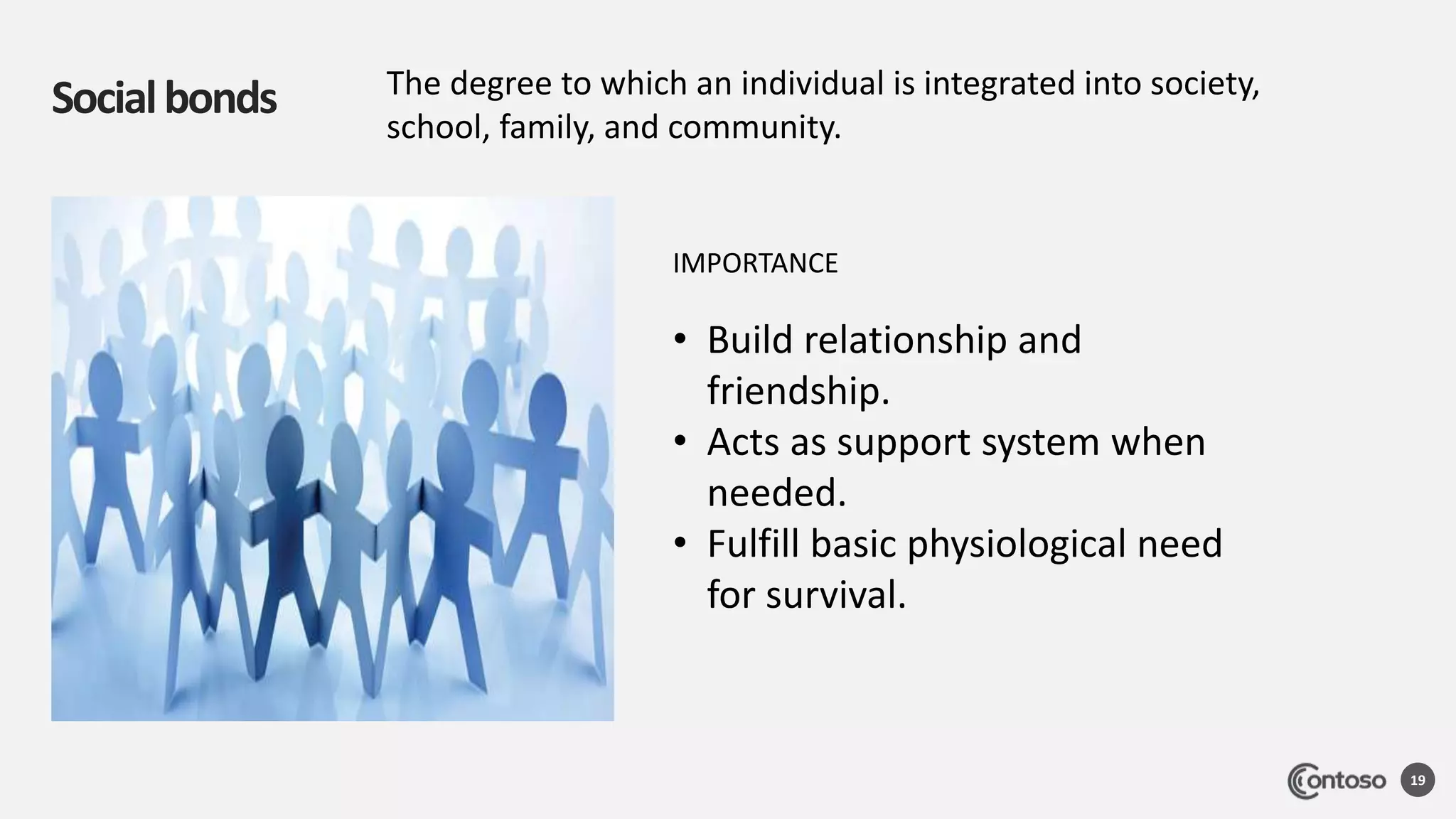
The degree to which an individual is integrated into society,
school, family, and community.
IMPORTANCE
• Build relationship and
friendship.
• Acts as support system when
needed.
• Fulfill basic physiological need
for survival.
GROUPFORMATION
20
A group is a primary group of people who have
similar interest or social status.
Advantages
PROBLEM SOLVING
ROLE PLAYING
TRUST BUILDING
TEAM BUILDING
COOPERATION-
21
CO means JOINT and OPERATION means WORK
• Joint work for common goal.
• Allow people to work together.
• It is a continuous process.
Co-operation is the process where groups of organisms
work or act together for common or mutual benefits.
ADVANTAGES
• Increase productivity.
• Improve work satisfaction.
• Increase team moral.
COMPETITION-
22
A situation in which someone is trying to
win something or be more successful than
someone else:
Competition for jobs is intense.
THANK
YOU
23

Understanding the self

  • 1.
  • 2.
     CONCEPT OFSELF IDENTITY  SELF ESTEEM AND ITS TYPES  ASPECTS OF DEVELOPMENT OF INNER SELF  STRATEGIES FOR SELF DEVELOPMENT  PERSONALITY  DETERMINING A DISTINCTIVE PERSONALITY  FORMS OF SELF EXPRESSION  COMMUNICATION SKILLS  STRESS  SOCIAL INTERACTION AND GROUP INFLUENCE contents KNOWING ONES TRUE-POTENTIAL COOPERATION AND COMPETITION RESOLUTION SOCIAL HARMONY YOGA
  • 3.
    MEANING Collection of beliefabout onesef that include academic performance, gender roles.  Concept of “I” and “ME”. (I = subject and ME= object)  Generally answer to ‘WHO AM I’’. 3
  • 4.
     IT ISAN EMOTIONAL MEASURE OF HOW WE ARE LIVING UPTO OUR WORLD VIEW.  IT AFFECTS OUR MEASURE OF HAPPINESS, SUCCESS AND WELL BEING.
  • 5.
    Typesofselfesteem: 5 TYPES High self esteem Low self esteem Positive view of ourself  Self acceptance  Confidence in our own abilities.  Negative view of ourself  Wants to be someone else  Lack of Confidence
  • 6.
    INNER-SELF: 6  Refer toself identification not ego identification.  One’s inner-self contain following questions: What is your life purpose? What is the purpose you see your life to have? What are your motivation in life?
  • 7.
  • 8.
    SELF DEVELOPMENT 8 Include activitiesthat • improve awareness , • enhance quality of life, • contribute to realization of dreams and • as piration not limited to self help. STRATEGIES FOR SELF DEVELOPMENT • Improve self Awareness. • Improve self knowledge. • Improve self esteem/identity. • Improve strength or talents. • Improve confidence level.
  • 9.
    PERSONALITY: 9 Aggregate of aperson feeling ,thinking, behaviour and response to different situation and people. Determining a distinctive personality / factors of personality FACTORS ENVIRONM ENTAL SITUATION AL HEREDTIT Y PHYSICAL
  • 10.
    SELFEXPRESSION 10 Clusture of valuesthat include : Social toleration Life satisfaction Public expression It takes place through :  communication Body language Art work Clothes and Hairstyle
  • 11.
  • 12.
    COMMUNICATION SKILLS 12 Process oftransferring signals , messages between sender and receiver through various methods (oral, written etc.) • Used to modify and establish relationships.
  • 13.
  • 14.
    Softskills 14 Soft skills includepersonal traits that help employees interact with others and get the most out of their hard skills. • Associate with a person’s EQ(Emotional Quotient). Some soft skills are: • Patience • Preservance • Communication • Skill in dealing different situation • Teamwork • Stress management
  • 15.
    STRESS 15 • Stress isa state of mental or emotional strain caused by adverse circumstances. • Stress releases powerful neurochemicals and hormones that prepare us for action (to fight or flee). • If we don't take action, the stress response can create or worsen health problems. • stress promotes survival because it forces organisms to adapt to rapidly changing environmental conditions.
  • 16.
    STRESSRELIEVINGTECHNIQUES 16 o Don’t focuson the problem. o Try some Yoga. o Go for a walk. o Get a head massage. o Play a game. o Play some music. o Avoid drugs. o Sleep better.
  • 17.
  • 18.
    SOCIALINTERACTION 18 • Social interactioncan be studied between  groups of two (dyads),  three (triads) or  larger social groups. • By interacting with one another, people design rules, institutions and systems within which they seek to live. An exchange between two or more individuals and is a building block of society.
  • 19.
    Socialbonds 19 The degree towhich an individual is integrated into society, school, family, and community. IMPORTANCE • Build relationship and friendship. • Acts as support system when needed. • Fulfill basic physiological need for survival.
  • 20.
    GROUPFORMATION 20 A group isa primary group of people who have similar interest or social status. Advantages PROBLEM SOLVING ROLE PLAYING TRUST BUILDING TEAM BUILDING
  • 21.
    COOPERATION- 21 CO means JOINTand OPERATION means WORK • Joint work for common goal. • Allow people to work together. • It is a continuous process. Co-operation is the process where groups of organisms work or act together for common or mutual benefits. ADVANTAGES • Increase productivity. • Improve work satisfaction. • Increase team moral.
  • 22.
    COMPETITION- 22 A situation inwhich someone is trying to win something or be more successful than someone else: Competition for jobs is intense.
  • 23.