META COGNITION
 Meta cognition refers to higher order thinking that involve
active control over the thinking processes involved in
learning.
 Activities such as planning how to approach a given
learning task, monitoring comprehension, and evaluating
progress towards the completion of a task are
metacognitive in nature.
 It plays a critical role in successful learning and it is
important for both students and teachers.
 Metacognition is often referred to as “thinking about
thinking” and can be used to help students “lean how to
learn”.
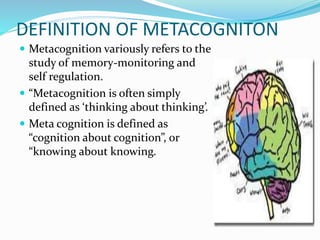
DEFINITION OF METACOGNITON
 Metacognition variously refers to the
study of memory-monitoring and
self regulation.
 “Metacognition is often simply
defined as ‘thinking about thinking’.
 Meta cognition is defined as
“cognition about cognition”, or
“knowing about knowing.
STUDENTS
 Encourage students to take a role in the
documentation, observation, and review of
learning; are a powerful tool for
improvement;
 Create a culture of professionalism about
learning.
 The chief benefits for students are their
actually performing effective learning
strategies and the opportunity for self-
assessment.
JAHITHA’S STRATEGY TO DEVELOP
METACOGNITION
PLANNING
 Self Determination
 Self Esteem
 Analysing strengths & Weakness
 Goal Setting
 Time Management
FOCUSSING ATTENTION
 Selective Attention
 Selective comparison
 Selective
 Decoding
 Selective Encoding
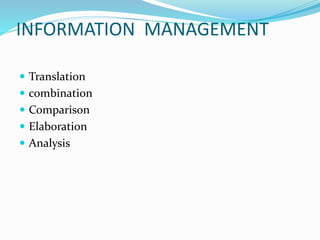
INFORMATION MANAGEMENT
 Translation
 combination
 Comparison
 Elaboration
 Analysis
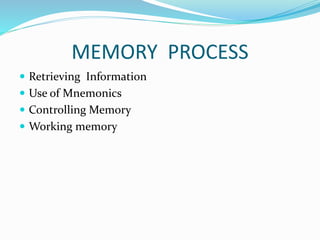
MEMORY PROCESS
 Retrieving Information
 Use of Mnemonics
 Controlling Memory
 Working memory
MONITORING
 Self Questioning
 Self talk
 Self Reporting
 Prospective Monitoring
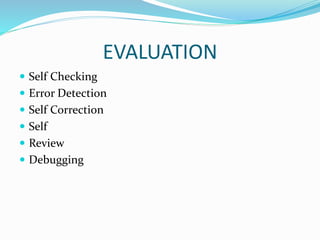
EVALUATION
 Self Checking
 Error Detection
 Self Correction
 Self
 Review
 Debugging
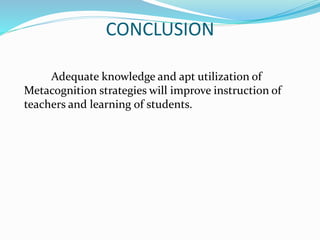
CONCLUSION
Adequate knowledge and apt utilization of
Metacognition strategies will improve instruction of
teachers and learning of students.

Meta Cognition - PPT

  • 1.
    META COGNITION  Metacognition refers to higher order thinking that involve active control over the thinking processes involved in learning.  Activities such as planning how to approach a given learning task, monitoring comprehension, and evaluating progress towards the completion of a task are metacognitive in nature.  It plays a critical role in successful learning and it is important for both students and teachers.  Metacognition is often referred to as “thinking about thinking” and can be used to help students “lean how to learn”.
  • 2.
    DEFINITION OF METACOGNITON Metacognition variously refers to the study of memory-monitoring and self regulation.  “Metacognition is often simply defined as ‘thinking about thinking’.  Meta cognition is defined as “cognition about cognition”, or “knowing about knowing.
  • 3.
    STUDENTS  Encourage studentsto take a role in the documentation, observation, and review of learning; are a powerful tool for improvement;  Create a culture of professionalism about learning.  The chief benefits for students are their actually performing effective learning strategies and the opportunity for self- assessment.
  • 4.
    JAHITHA’S STRATEGY TODEVELOP METACOGNITION PLANNING  Self Determination  Self Esteem  Analysing strengths & Weakness  Goal Setting  Time Management
  • 5.
    FOCUSSING ATTENTION  SelectiveAttention  Selective comparison  Selective  Decoding  Selective Encoding
  • 6.
    INFORMATION MANAGEMENT  Translation combination  Comparison  Elaboration  Analysis
  • 7.
    MEMORY PROCESS  RetrievingInformation  Use of Mnemonics  Controlling Memory  Working memory
  • 8.
    MONITORING  Self Questioning Self talk  Self Reporting  Prospective Monitoring
  • 9.
    EVALUATION  Self Checking Error Detection  Self Correction  Self  Review  Debugging
  • 10.
    CONCLUSION Adequate knowledge andapt utilization of Metacognition strategies will improve instruction of teachers and learning of students.