
Types
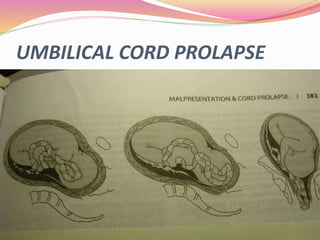
 Occult prolapse – cord is prolapsed by side of presenting
part & it’s not felt by fingers on internal examination.
 Cord persentation- cord is slipped down below prenting part &
is felt lying in the intact beg of membranes.
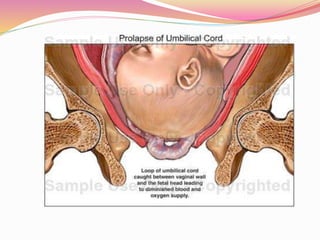
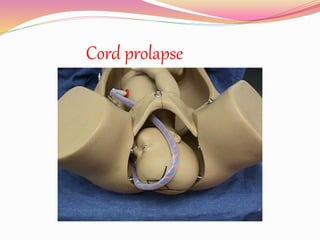
 Cord prolapse-cord lying inside of vagina or outside of vulva
following ROM.
UMBILICAL CORD PROLAPSE
Cord prolapse
Incidence & etiology
 Incidence of cord prolapse is 1 in 300 deliveries.
 Mostly found in parous women.
 Etiology- Anything which interfere with perfect
adaption of presenting part to lower uterine segment
in it more than one factor operates .
Umbilical Cord Prolapse
 Precipitating factors:
 Long umbilical cord
 Abnormal location on
placenta
 Small or preterm infant
 Polyhydramnios
 Multiple gestation
 Precipitating factors:
 Amniotomy before fetal
head is engaged
 External cephalic
version
 Malpresentation
( Transverse common )
 Contracted pelvis
Umbilical Cord Prolapse
 Clinical Manifestations:
 Cord observed or palpated
 Bradycardia following ROM
 Repetitive, variable decelerations that do not respond to
medical intervention (e.g. amnioinfusion)
 Prolonged decelerations (>15 bpm lasting 2 mins or
longer yet <10 mins)
DIAGNOSIS
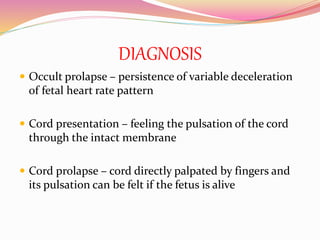
 Occult prolapse – persistence of variable deceleration
of fetal heart rate pattern
 Cord presentation – feeling the pulsation of the cord
through the intact membrane
 Cord prolapse – cord directly palpated by fingers and
its pulsation can be felt if the fetus is alive
management
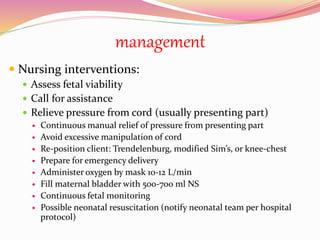
 Nursing interventions:
 Assess fetal viability
 Call for assistance
 Relieve pressure from cord (usually presenting part)
 Continuous manual relief of pressure from presenting part
 Avoid excessive manipulation of cord
 Re-position client: Trendelenburg, modified Sim’s, or knee-chest
 Prepare for emergency delivery
 Administer oxygen by mask 10-12 L/min
 Fill maternal bladder with 500-700 ml NS
 Continuous fetal monitoring
 Possible neonatal resuscitation (notify neonatal team per hospital
protocol)
Umbilical Cord Prolapse
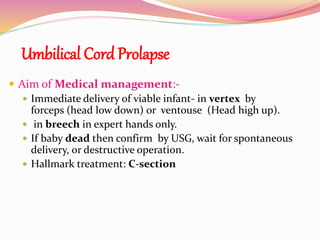
 Aim of Medical management:-
 Immediate delivery of viable infant- in vertex by
forceps (head low down) or ventouse (Head high up).
 in breech in expert hands only.
 If baby dead then confirm by USG, wait for spontaneous
delivery, or destructive operation.
 Hallmark treatment: C-section
Umbilical Cord prolapse

Umbilical Cord prolapse

  • 2.
    Types  Occult prolapse– cord is prolapsed by side of presenting part & it’s not felt by fingers on internal examination.  Cord persentation- cord is slipped down below prenting part & is felt lying in the intact beg of membranes.  Cord prolapse-cord lying inside of vagina or outside of vulva following ROM.
  • 3.
  • 5.
  • 6.
    Incidence & etiology Incidence of cord prolapse is 1 in 300 deliveries.  Mostly found in parous women.  Etiology- Anything which interfere with perfect adaption of presenting part to lower uterine segment in it more than one factor operates .
  • 7.
    Umbilical Cord Prolapse Precipitating factors:  Long umbilical cord  Abnormal location on placenta  Small or preterm infant  Polyhydramnios  Multiple gestation  Precipitating factors:  Amniotomy before fetal head is engaged  External cephalic version  Malpresentation ( Transverse common )  Contracted pelvis
  • 8.
    Umbilical Cord Prolapse Clinical Manifestations:  Cord observed or palpated  Bradycardia following ROM  Repetitive, variable decelerations that do not respond to medical intervention (e.g. amnioinfusion)  Prolonged decelerations (>15 bpm lasting 2 mins or longer yet <10 mins)
  • 9.
    DIAGNOSIS  Occult prolapse– persistence of variable deceleration of fetal heart rate pattern  Cord presentation – feeling the pulsation of the cord through the intact membrane  Cord prolapse – cord directly palpated by fingers and its pulsation can be felt if the fetus is alive
  • 10.
    management  Nursing interventions: Assess fetal viability  Call for assistance  Relieve pressure from cord (usually presenting part)  Continuous manual relief of pressure from presenting part  Avoid excessive manipulation of cord  Re-position client: Trendelenburg, modified Sim’s, or knee-chest  Prepare for emergency delivery  Administer oxygen by mask 10-12 L/min  Fill maternal bladder with 500-700 ml NS  Continuous fetal monitoring  Possible neonatal resuscitation (notify neonatal team per hospital protocol)
  • 11.
    Umbilical Cord Prolapse Aim of Medical management:-  Immediate delivery of viable infant- in vertex by forceps (head low down) or ventouse (Head high up).  in breech in expert hands only.  If baby dead then confirm by USG, wait for spontaneous delivery, or destructive operation.  Hallmark treatment: C-section