BY, MS.PRIYANKA GOHIL
M.Sc. (N) OBG
PhD Scholar
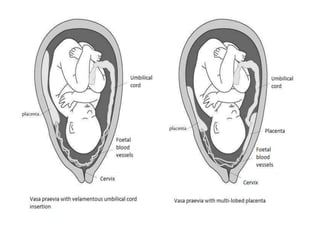
Vasa previa is an obstetric complication
in which the fetal blood vessels cross or
run near the internal orifice of the
uterus.
These vessels are at risk of rupture
when the supporting membranes
rupture as they are unsupported by the
umbilical cord or placental tissue.
This complication can happen during
labour.
In terms of risk, 56% of instances of
vasa previa that go undiagnosed result
in stillbirth.
However, when the condition is
detected in pregnancy, the chances of
survival for the fetus rise to 97 %.
1. A low lying placenta.
 It can be due to scarring of the
uterus as a result of previous
miscarriage and D/C ( Dilatation and
Curettage)
2. An abnormally or unusually form
placenta.
It can be a bilobed placenta or
succenturiate- low placenta.
3. In cases of in-vitro fertilization
pregnancies and multiple pregnancies
( twins, triplets, etc)
4. In case of velamentous insertion of
umbilical cord.
By noting the triad signs
Painless vaginal bleeding
Membrane rupture
Fetal bradycardia or death.
Ultrasonography
Transvaginal sonography in
combination with color doppler help
to detect vasa previa as early as 16th
week of pregnancy.
There are no warning sign but these can
be...
Painless vaginal bleeding (2nd and 3rd
trimester)
Darker red color blood (as the baby
blood is dark in color, bright red blood
signifies blood from the mother.)
Fetal bradycardia
The only treatment plan to be followed is
a healthy delivery by cesarean section.
Cesarean section should be planned as
early enough to avoid an emergency and
should be late enough in orde to prevent
the problems related with prematurity.
Usually cesarean section is
recommonded at 35-36 weeks provided
the mother is normal without any risk.
Vasa previa