Umbilical Cord Prolapse
Deepa Mishra
Assist. Professor (OBG N)
INTRODUCTION
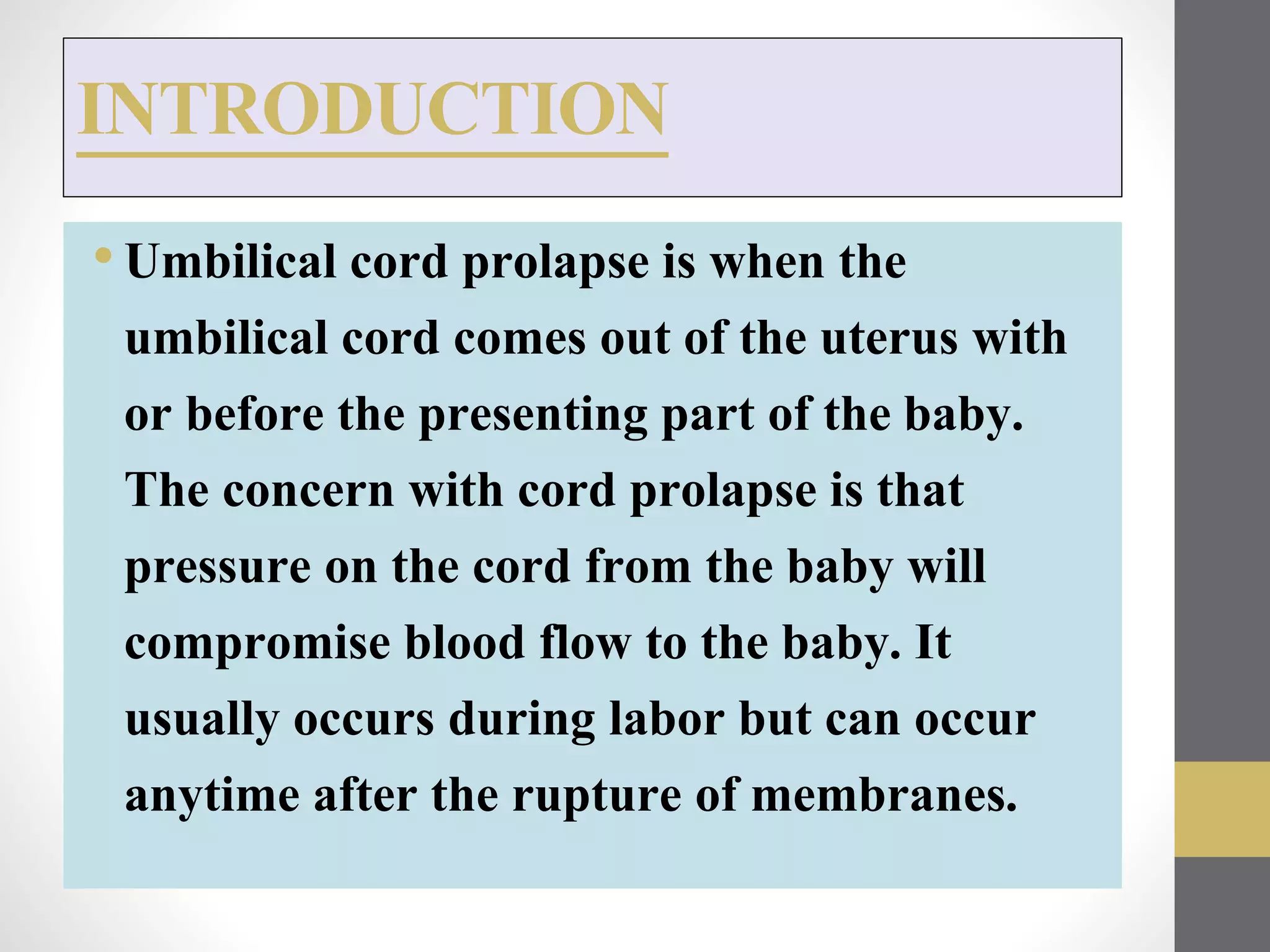
•Umbilical cord prolapse is when the
umbilical cord comes out of the uterus with
or before the presenting part of the baby.
The concern with cord prolapse is that
pressure on the cord from the baby will
compromise blood flow to the baby. It
usually occurs during labor but can occur
anytime after the rupture of membranes.
DEFINITION
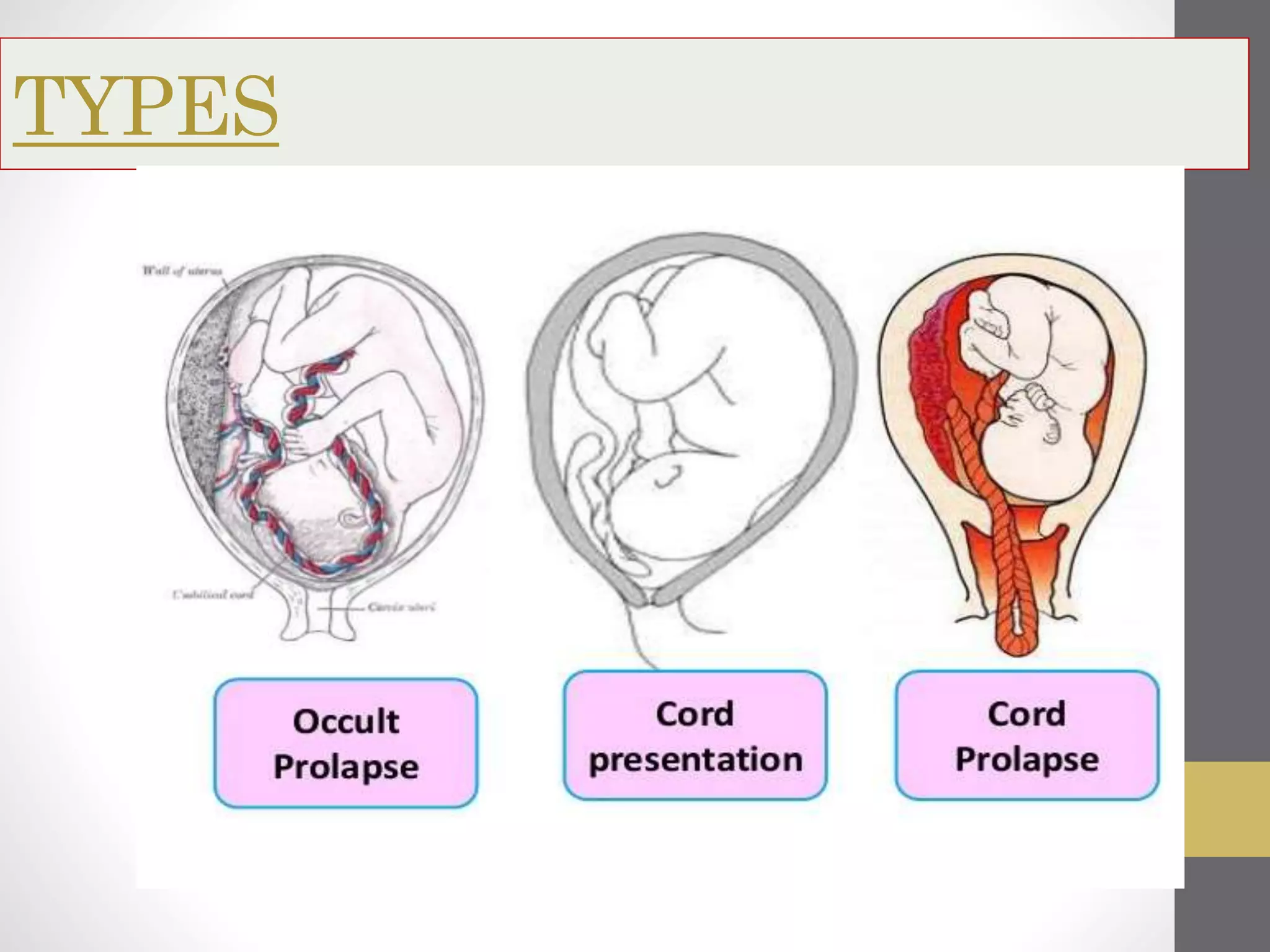
• Cord prolapse has been defined as the descent
of the umbilical cord through the cervix
alongside (occult) or past the presenting part
(overt) in the presence of ruptured membranes.
• Cord presentation is the presence of the
umbilical cord between the fetal presenting part
and the cervix, with or without membrane
rupture.
INCIDENCE
• 0.1-0.6% of all pregnancies. 1 in every 500 pregnancies.
• The risk of death of the baby is about 10%
• Recent study estimates 77% of cord prolapses occur in
singleton pregnancies
• In twin pregnancies, cord prolapses occur more frequently in
the second twin to be delivered, with 9% in the first twin and
14% in the second twin.
TYPES
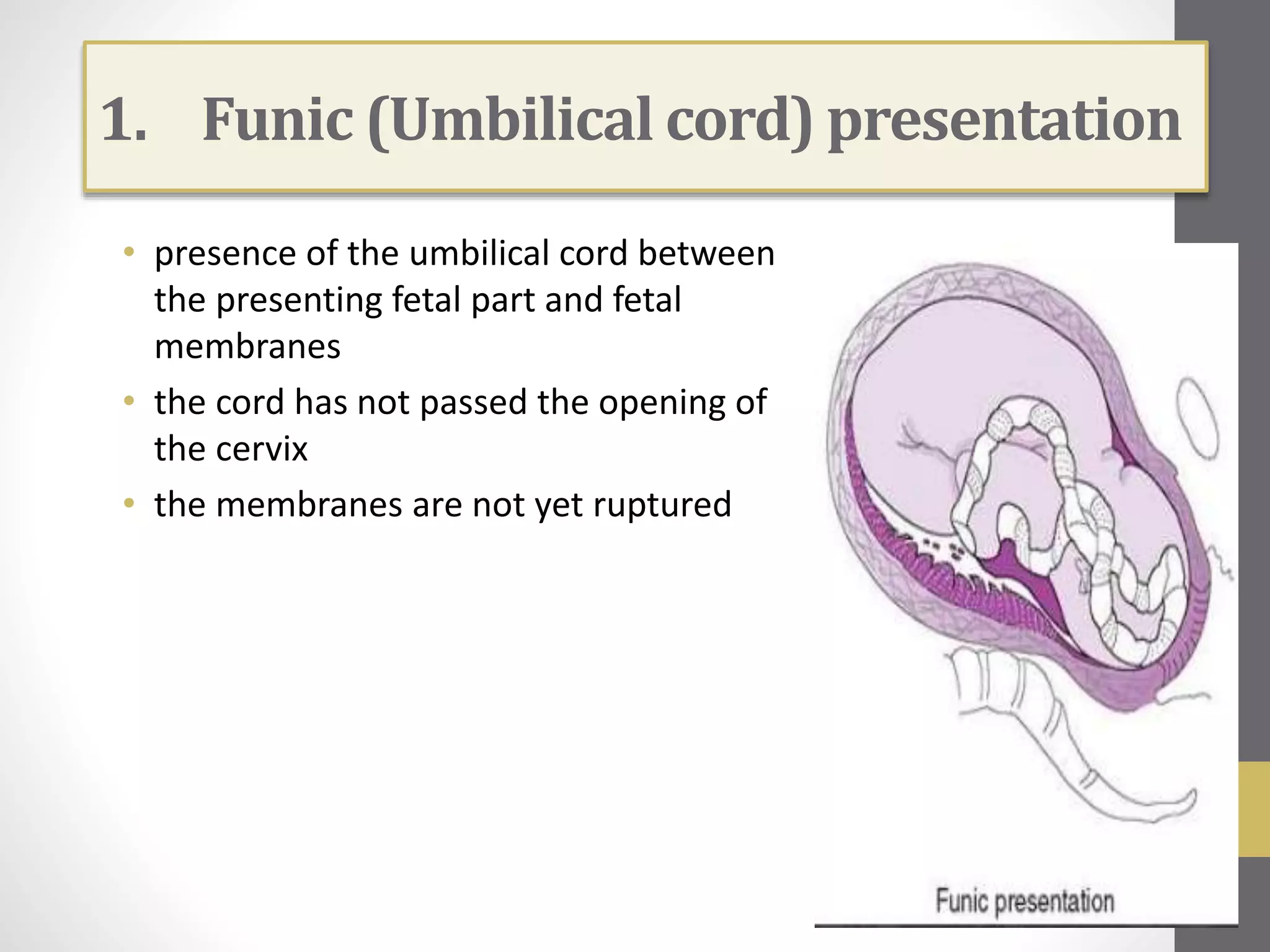
1. Funic (Umbilical cord) presentation
• presence of the umbilical cord between
the presenting fetal part and fetal
membranes
• the cord has not passed the opening of
the cervix
• the membranes are not yet ruptured
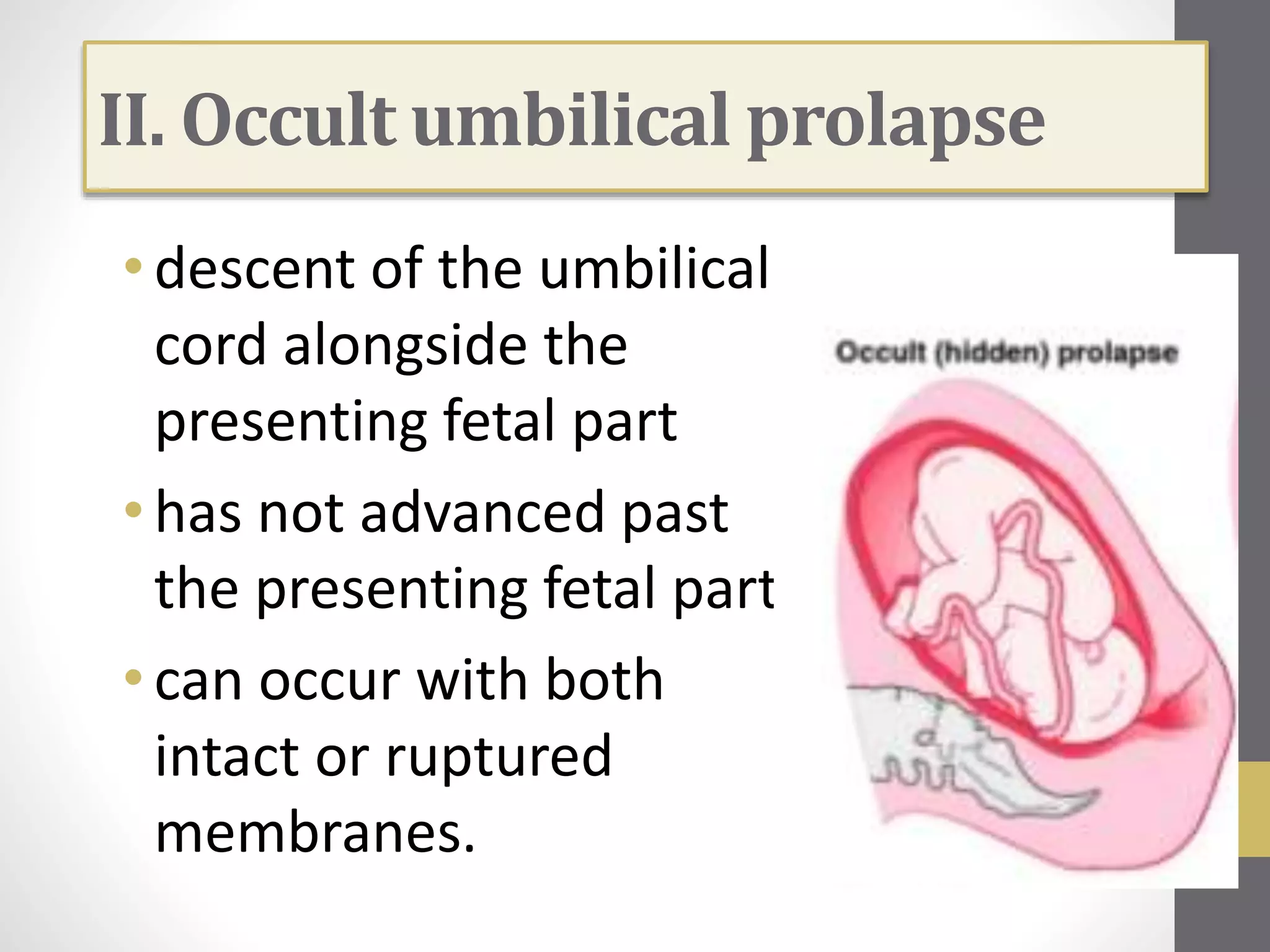
II. Occult umbilical prolapse
• descent of the umbilical
cord alongside the
presenting fetal part
• has not advanced past
the presenting fetal part
• can occur with both
intact or ruptured
membranes.
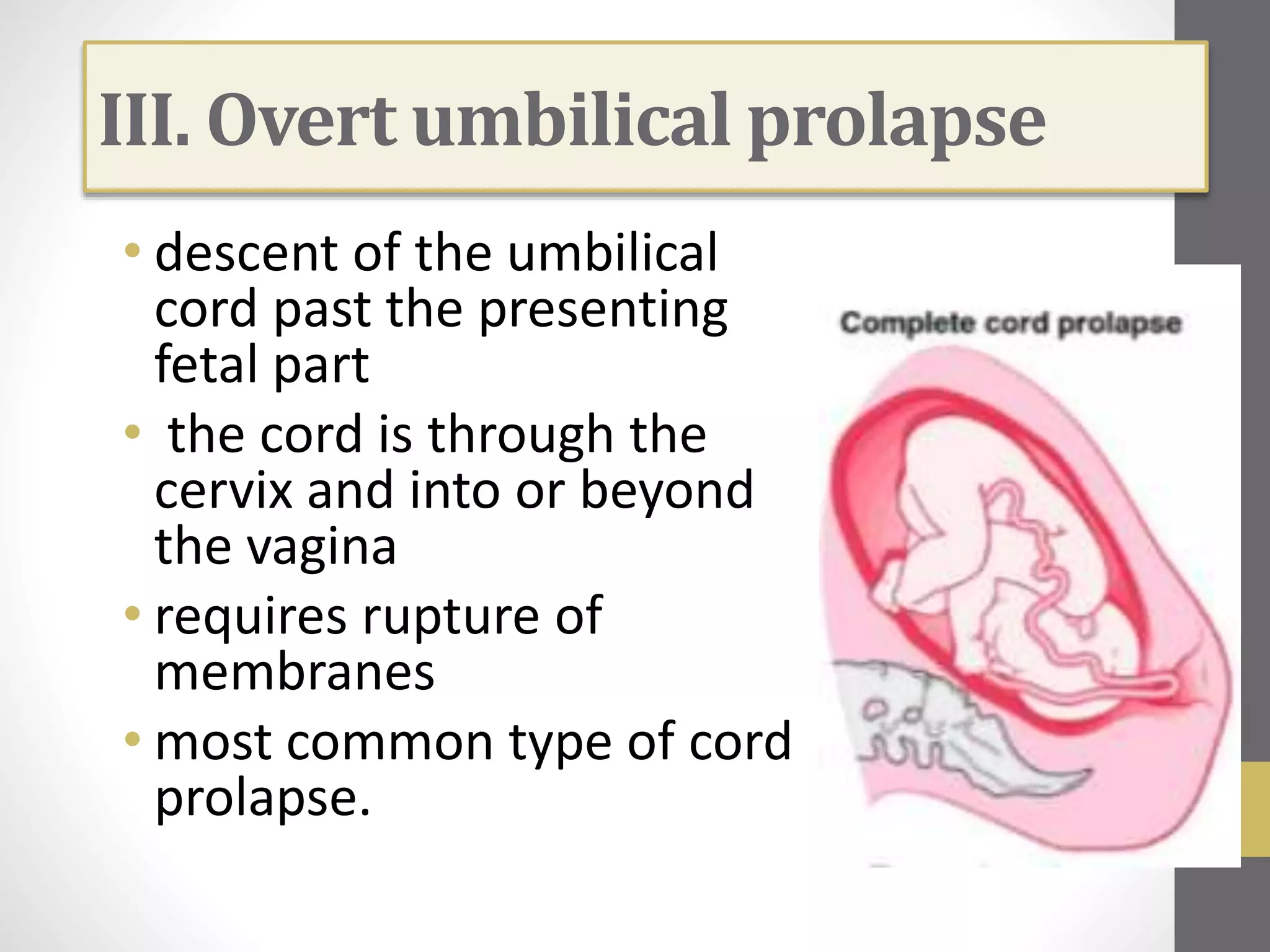
III. Overt umbilical prolapse
• descent of the umbilical
cord past the presenting
fetal part
• the cord is through the
cervix and into or beyond
the vagina
• requires rupture of
membranes
• most common type of cord
prolapse.
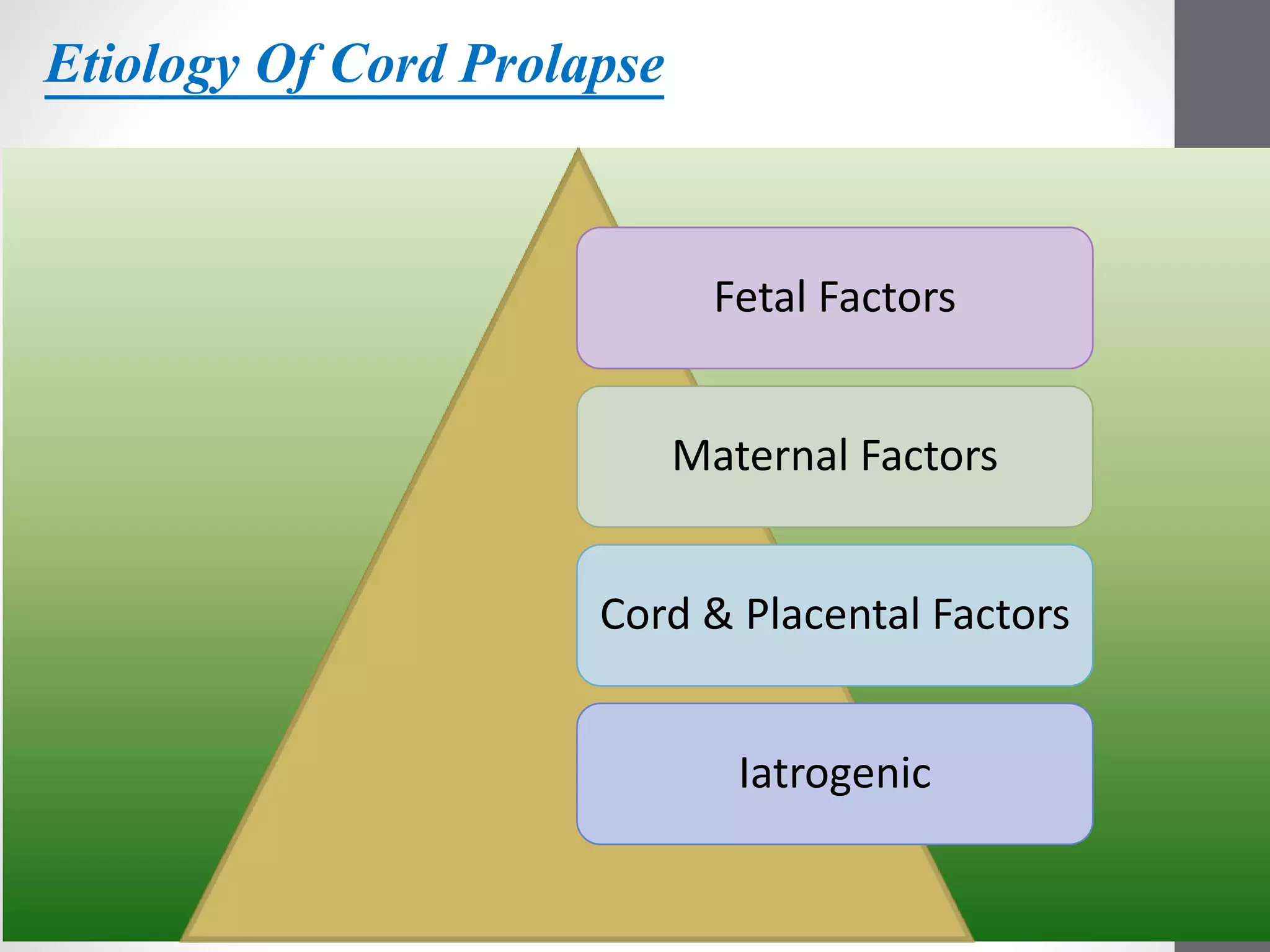
Fetal Factors
Maternal Factors
Cord & Placental Factors
Iatrogenic
Etiology Of Cord Prolapse
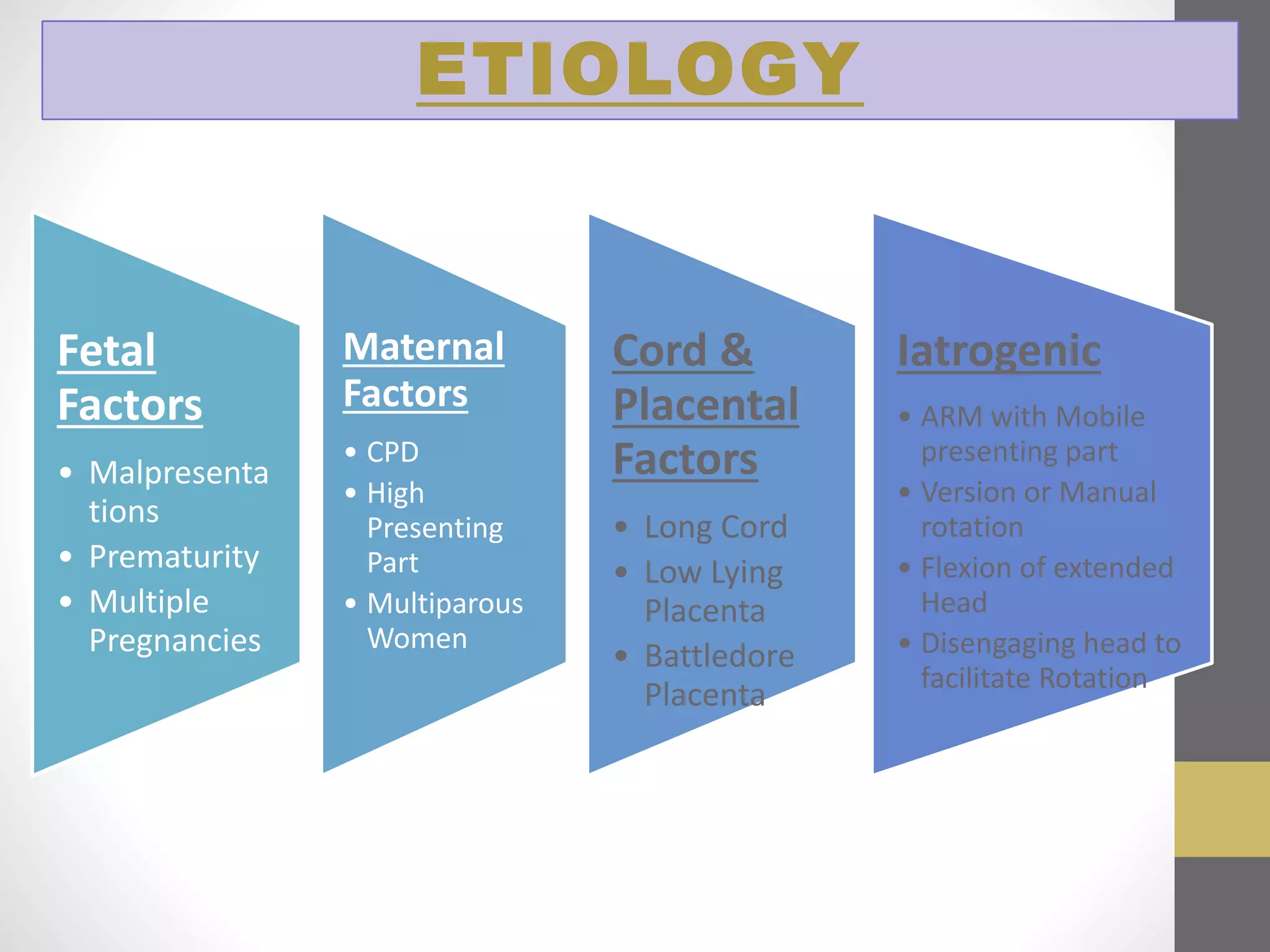
Fetal
Factors
• Malpresenta
tions
• Prematurity
• Multiple
Pregnancies
Maternal
Factors
• CPD
• High
Presenting
Part
• Multiparous
Women
Cord &
Placental
Factors
• Long Cord
• Low Lying
Placenta
• Battledore
Placenta
Iatrogenic
• ARM with Mobile
presenting part
• Version or Manual
rotation
• Flexion of extended
Head
• Disengaging head to
facilitate Rotation
ETIOLOGY
Occult Prolapse
Cord
Presentation/Funic
Cord Prolapse/Overt
DIAGNOSIS
DIAGNOSIS
Occult Cord Presentation Cord Prolapse
•Variable
Deceleration
Pattern in
continuous
electronic
fetal
monitoring
 On PV umbilical Pulsations
found on intact membranes
 PV can be done-
1. In unexplained fetal
distress and unengaged
presenting part
2. Ruptured membranes with
high presenting part
3. Ruptured membranes in
mal presentations
4. Premature fetus
5. Twin pregnancy
 PV after rupture of
membranes or
abnormal fetal
pattern in cardio-
tocography
 Cord pulsations
feel if fetus alive
 But due to
vasospasm
pulsations may not
feel
 USG is must for
diagnosing IUD.
The Maternal Prognosis
• Not harmful, labour is not affected
• Risk factors are emergency operative delivery,
anesthesia, blood loss, infection
Fetal Prognosis
• Poor prognosis due to hypoxia from compression of
cord
• Risk is higher in cephalic presentation and in
completely dilated cervix
• Prognosis largely depends on length of time
• Perinatal mortality rates have fallen in past 50 years
due to early hospitalization
Prevention
• Early hospitalization at 37 weeks in unstable
and transverse lie
• Vaginal examination necessary in membrane
ruptures, specially in high risk cases
• Amniotomy should be done only if part is
engaged/fixed in pelvis
• Always check for prolapse in unexplained fetal
distress
• Surgical induction of labor for hydramnios and
unstable lie should always be performed in OT
with all preparations for cesarean delivery
MANAGEMENT
MANAGEMENT
Caesarean Delivery
• CS within 30 min with live fetus
• Fast CS techniques like vertical incision or blunt abdominal opening
• FHS should be auscultated to prevent CS on dead baby
Temporary Nsg Intervention Measures
• If immediate delivery not possible then the presenting part should
be pushed up and away by cord
• Bladder distention to push the presenting part higher
• 4 litres/min Oxygen administration to mother by mask
• Tocolytic administration in case of strong contraction
• Postural Treatment in knee chest position or sim’s position or
trendelenberg position to keep pelvis high
• Till arrangement for CS is done the cord should be pushed back in
the vagina by hand or packing by gauze
MANAGEMENT
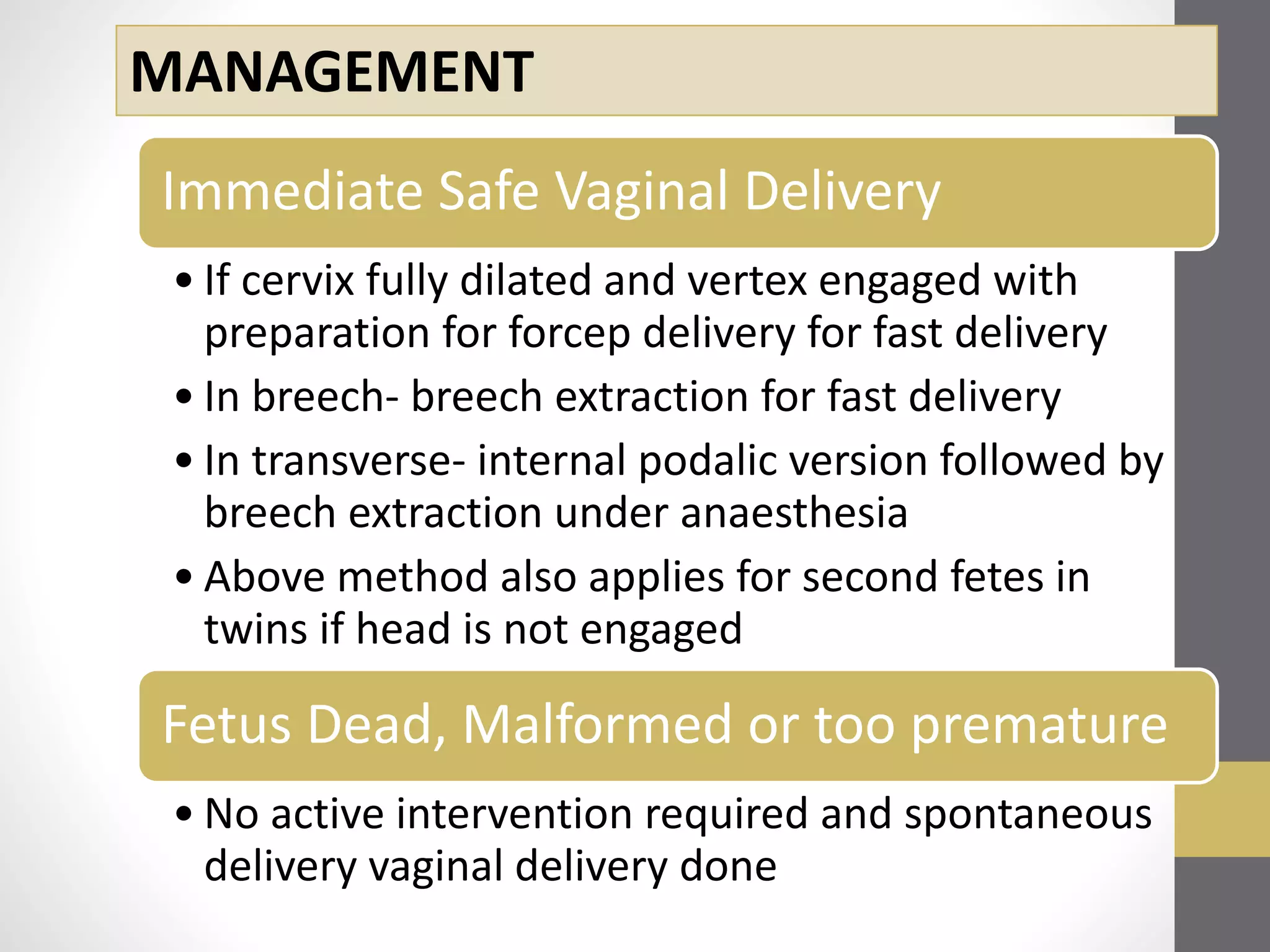
Immediate Safe Vaginal Delivery
• If cervix fully dilated and vertex engaged with
preparation for forcep delivery for fast delivery
• In breech- breech extraction for fast delivery
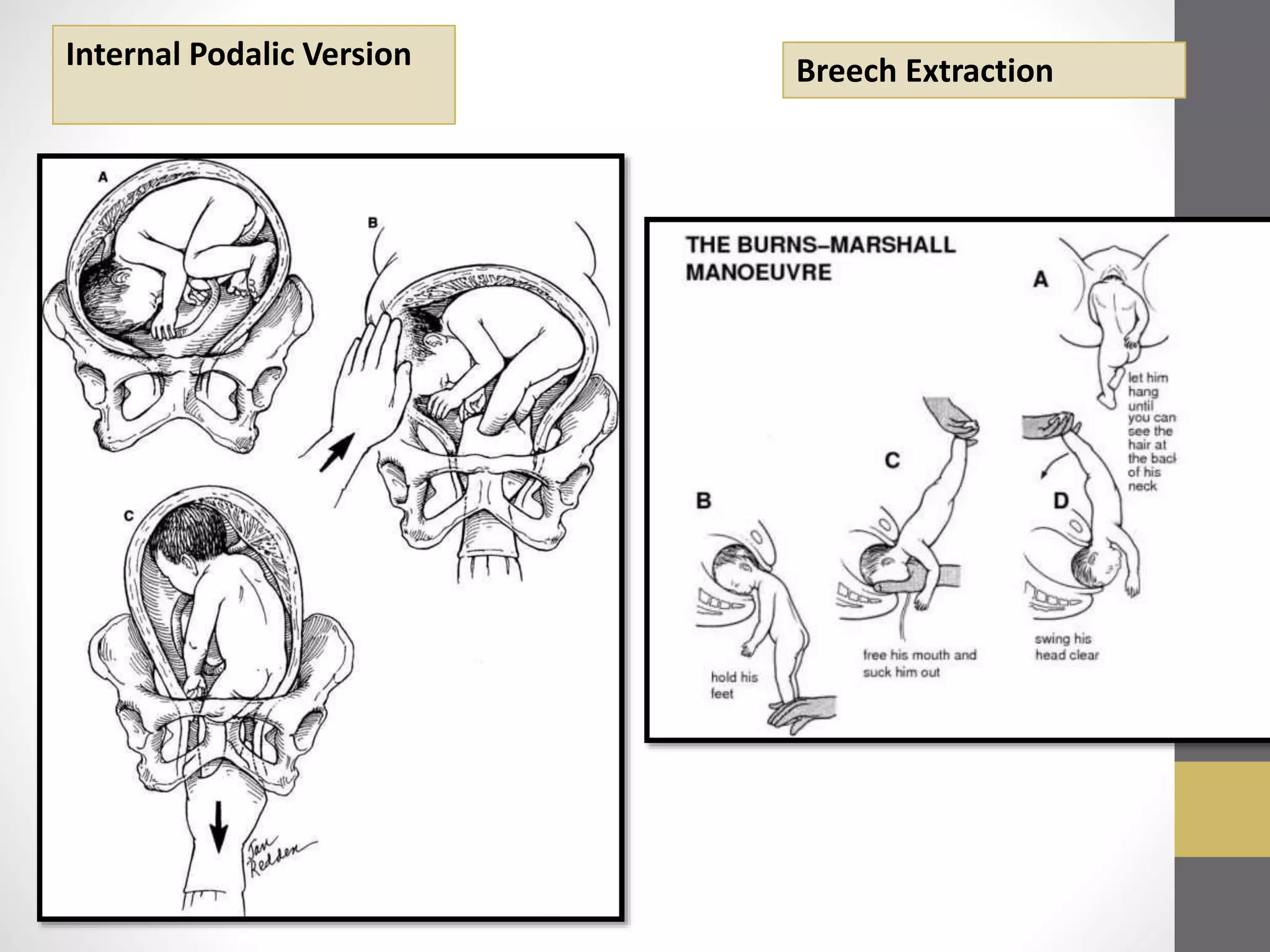
• In transverse- internal podalic version followed by
breech extraction under anaesthesia
• Above method also applies for second fetes in
twins if head is not engaged
Fetus Dead, Malformed or too premature
• No active intervention required and spontaneous
delivery vaginal delivery done
Internal Podalic Version Breech Extraction
Umbilical Cord prolapse

Umbilical Cord prolapse

  • 1.
    Umbilical Cord Prolapse DeepaMishra Assist. Professor (OBG N)
  • 2.
    INTRODUCTION •Umbilical cord prolapseis when the umbilical cord comes out of the uterus with or before the presenting part of the baby. The concern with cord prolapse is that pressure on the cord from the baby will compromise blood flow to the baby. It usually occurs during labor but can occur anytime after the rupture of membranes.
  • 3.
    DEFINITION • Cord prolapsehas been defined as the descent of the umbilical cord through the cervix alongside (occult) or past the presenting part (overt) in the presence of ruptured membranes. • Cord presentation is the presence of the umbilical cord between the fetal presenting part and the cervix, with or without membrane rupture.
  • 4.
    INCIDENCE • 0.1-0.6% ofall pregnancies. 1 in every 500 pregnancies. • The risk of death of the baby is about 10% • Recent study estimates 77% of cord prolapses occur in singleton pregnancies • In twin pregnancies, cord prolapses occur more frequently in the second twin to be delivered, with 9% in the first twin and 14% in the second twin.
  • 5.
  • 6.
    1. Funic (Umbilicalcord) presentation • presence of the umbilical cord between the presenting fetal part and fetal membranes • the cord has not passed the opening of the cervix • the membranes are not yet ruptured
  • 7.
    II. Occult umbilicalprolapse • descent of the umbilical cord alongside the presenting fetal part • has not advanced past the presenting fetal part • can occur with both intact or ruptured membranes.
  • 8.
    III. Overt umbilicalprolapse • descent of the umbilical cord past the presenting fetal part • the cord is through the cervix and into or beyond the vagina • requires rupture of membranes • most common type of cord prolapse.
  • 9.
    Fetal Factors Maternal Factors Cord& Placental Factors Iatrogenic Etiology Of Cord Prolapse
  • 10.
    Fetal Factors • Malpresenta tions • Prematurity •Multiple Pregnancies Maternal Factors • CPD • High Presenting Part • Multiparous Women Cord & Placental Factors • Long Cord • Low Lying Placenta • Battledore Placenta Iatrogenic • ARM with Mobile presenting part • Version or Manual rotation • Flexion of extended Head • Disengaging head to facilitate Rotation ETIOLOGY
  • 11.
  • 12.
    DIAGNOSIS Occult Cord PresentationCord Prolapse •Variable Deceleration Pattern in continuous electronic fetal monitoring  On PV umbilical Pulsations found on intact membranes  PV can be done- 1. In unexplained fetal distress and unengaged presenting part 2. Ruptured membranes with high presenting part 3. Ruptured membranes in mal presentations 4. Premature fetus 5. Twin pregnancy  PV after rupture of membranes or abnormal fetal pattern in cardio- tocography  Cord pulsations feel if fetus alive  But due to vasospasm pulsations may not feel  USG is must for diagnosing IUD.
  • 13.
    The Maternal Prognosis •Not harmful, labour is not affected • Risk factors are emergency operative delivery, anesthesia, blood loss, infection Fetal Prognosis • Poor prognosis due to hypoxia from compression of cord • Risk is higher in cephalic presentation and in completely dilated cervix • Prognosis largely depends on length of time • Perinatal mortality rates have fallen in past 50 years due to early hospitalization
  • 14.
    Prevention • Early hospitalizationat 37 weeks in unstable and transverse lie • Vaginal examination necessary in membrane ruptures, specially in high risk cases • Amniotomy should be done only if part is engaged/fixed in pelvis • Always check for prolapse in unexplained fetal distress • Surgical induction of labor for hydramnios and unstable lie should always be performed in OT with all preparations for cesarean delivery
  • 15.
  • 16.
    MANAGEMENT Caesarean Delivery • CSwithin 30 min with live fetus • Fast CS techniques like vertical incision or blunt abdominal opening • FHS should be auscultated to prevent CS on dead baby Temporary Nsg Intervention Measures • If immediate delivery not possible then the presenting part should be pushed up and away by cord • Bladder distention to push the presenting part higher • 4 litres/min Oxygen administration to mother by mask • Tocolytic administration in case of strong contraction • Postural Treatment in knee chest position or sim’s position or trendelenberg position to keep pelvis high • Till arrangement for CS is done the cord should be pushed back in the vagina by hand or packing by gauze
  • 17.
    MANAGEMENT Immediate Safe VaginalDelivery • If cervix fully dilated and vertex engaged with preparation for forcep delivery for fast delivery • In breech- breech extraction for fast delivery • In transverse- internal podalic version followed by breech extraction under anaesthesia • Above method also applies for second fetes in twins if head is not engaged Fetus Dead, Malformed or too premature • No active intervention required and spontaneous delivery vaginal delivery done
  • 18.
    Internal Podalic VersionBreech Extraction