OBSTETRIC
EMERGENCIES
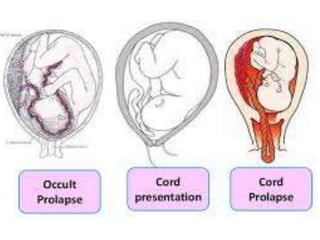
CORD PROLAPSE , CORD
PRESENTATION
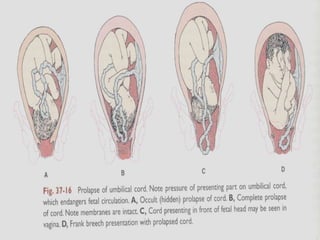
• When the umbilical cord lies alongside or in
front of the presenting part while the fetal
membranes are intact is known as cord
presentation
• If the fetal membranes rupture and the cord
is felt it is called cord prolapse
TYPES
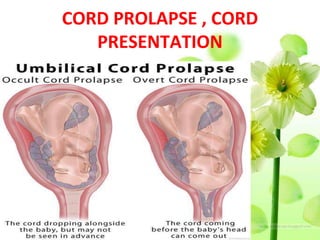
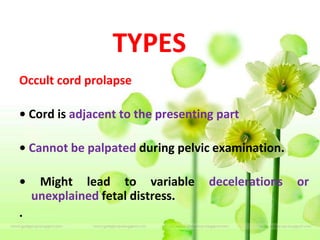
Occult cord prolapse
• Cord is adjacent to the presenting part
• Cannot be palpated during pelvic examination.
• Might lead to variable decelerations or
unexplained fetal distress.
.
TYPES
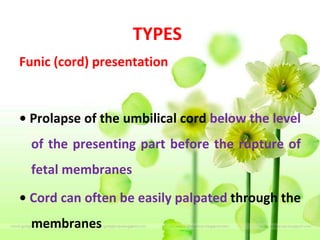
Funic (cord) presentation
• Prolapse of the umbilical cord below the level
of the presenting part before the rupture of
fetal membranes
• Cord can often be easily palpated through the
membranes
TYPES
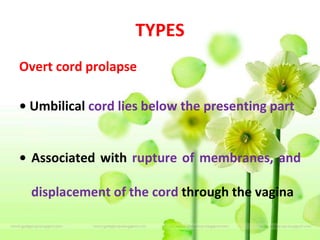
Overt cord prolapse
• Umbilical cord lies below the presenting part
• Associated with rupture of membranes, and
displacement of the cord through the vagina
Predisposing factors
• Malposition
• Malpresenation
• Cephalopelvic disproportion
• Polyhydramnious
• Prematurity
MATERNAL and PLACENTAL
factors
MATERNAL
âť‘ Rupture of membranes
âť‘ Spontaneous (including preterm ROM)
âť‘ Amniotomy (ARM)
âť‘ Pelvic tumors e.g cervical fibroid
âť‘ Pelvic contraction
âť‘ Preterm labour
PLACENTAL
• Polyhydramnios
• Minor degree of placenta previa
Aetiology/ Risk Factors
• Cord abnormalities (such as true knots or low content of
Wharton’s jelly)
• Fetal hypoxia-acidosis may alter the turgidity of the cord
and predispose to prolapse.
Aetiology/ Risk Factors
• PROCEDURE- RELATED
• Amniotomy
• External Cephalic Version
• Internal Podalic Version
• Stabilizing Induction of labor
• Applying fetal scalp electrode
• Amnion infusion
• Placement of a cervical ripening balloon catheter
• Complication
• Fetal distress
• Fetal anoxia
• Fetal death
• Emergency operative intervention
• Cord compression
• Umbilical artery vasospasm
• Hypoxic-Ischemic Perinatal death
• Encephalopathy
DIAGNOSIS
• Cord presentation and prolapse may occur without outward
physical signs.
• Suspected during clinical examinations
• abnormal fetal heart rate pattern may suggest overt or occult
cord prolapse
• (bradycardia, marked variable decelerations etc) in the
presence of ruptured membranes, particularly if such changes
occur soon after membrane rupture, spontaneously or with
amniotomy
VAGINAL EXAMINATION
• Sudden appearance of a loop of umbilical cord at
the introitus, usually just after membrane rupture
• May palpate cord during a vaginal examination
in the absence of intact membranes
• Cord presentation, sometimes felt below the
presenting part when membranes are intact.
MANAGEMENT
• Cord prolapse is an obstetric emergency and delivery
must be as quick as possible
• C/S is necessarily except if :
• The cervix is fully dilated and the presenting
• part is engaged forceps or vacuum can be
• performed by experienced obstetrician.
• ◒ Death fetus with no other indication for C/S allow
vaginal delivery.
• As soon as the diagnoses is made the cord
should be handled as little as possible to
avoid arterial spasm
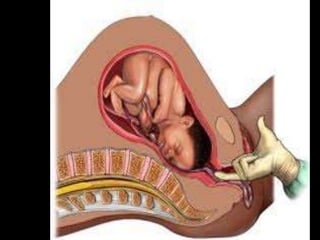
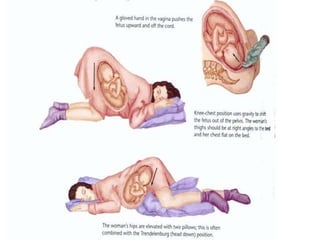
• Pressure on the cord can be reduced by
displacing the presenting part by hand in the
vagina or
• by placing the patient in the knee-chest
position
• Syntocin should be stopped if it was used
• Investigation should be sent urgently
• Patient should be transferred to the operating theater
for emergency C/S
• The pediatrician should be informed to attend the
delivery
MANAGEMENT OF OCCULT PROLAPSE
• Immediate vaginal examination to rule out cord
prolapse
• Left lateral position
• O2 to mother
• Discontinue oxytocin infusion if in place
• Allow labor to progress if FH returns to normal and
no further insult.
• Continuous fetal heart rate monitoring
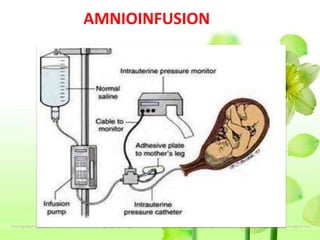
• Amnioinfusion
• CS if cord compression pattern continues
AMNIOINFUSION
MANAGEMENT CORD PRESENTATION
• Term: CS prior to membrane rupture.
• Premature: No consensus on management
• Hospitalize patient on bed rest in Sim’s
position or Tredelenburg position
• Serial USS to ascertain cord position,
presentation and GA 20
MANAGEMENT OF OVERT CORD
PROLAPSE
• Speed is of the essence and perinatal
outcome is largely dictated by the
diagnosis-delivery interval.
• The three components of management
are:
1. Prevent or relieve cord compression and
vasospasm
2. Fetal assessment
3. Prompt delivery of the infant
THANK
YOU
THANK U

CORD PROLAPSE CORD PRESENTATION (1).pptx

  • 1.
  • 4.
    CORD PROLAPSE ,CORD PRESENTATION
  • 5.
    • When theumbilical cord lies alongside or in front of the presenting part while the fetal membranes are intact is known as cord presentation • If the fetal membranes rupture and the cord is felt it is called cord prolapse
  • 7.
    TYPES Occult cord prolapse •Cord is adjacent to the presenting part • Cannot be palpated during pelvic examination. • Might lead to variable decelerations or unexplained fetal distress. .
  • 8.
    TYPES Funic (cord) presentation •Prolapse of the umbilical cord below the level of the presenting part before the rupture of fetal membranes • Cord can often be easily palpated through the membranes
  • 9.
    TYPES Overt cord prolapse •Umbilical cord lies below the presenting part • Associated with rupture of membranes, and displacement of the cord through the vagina
  • 12.
    Predisposing factors • Malposition •Malpresenation • Cephalopelvic disproportion • Polyhydramnious • Prematurity
  • 13.
    MATERNAL and PLACENTAL factors MATERNAL ❑Rupture of membranes ❑ Spontaneous (including preterm ROM) ❑ Amniotomy (ARM) ❑ Pelvic tumors e.g cervical fibroid ❑ Pelvic contraction ❑ Preterm labour PLACENTAL • Polyhydramnios • Minor degree of placenta previa
  • 14.
    Aetiology/ Risk Factors •Cord abnormalities (such as true knots or low content of Wharton’s jelly) • Fetal hypoxia-acidosis may alter the turgidity of the cord and predispose to prolapse.
  • 15.
    Aetiology/ Risk Factors •PROCEDURE- RELATED • Amniotomy • External Cephalic Version • Internal Podalic Version • Stabilizing Induction of labor • Applying fetal scalp electrode • Amnion infusion • Placement of a cervical ripening balloon catheter
  • 16.
    • Complication • Fetaldistress • Fetal anoxia • Fetal death • Emergency operative intervention • Cord compression • Umbilical artery vasospasm • Hypoxic-Ischemic Perinatal death • Encephalopathy
  • 17.
    DIAGNOSIS • Cord presentationand prolapse may occur without outward physical signs. • Suspected during clinical examinations • abnormal fetal heart rate pattern may suggest overt or occult cord prolapse • (bradycardia, marked variable decelerations etc) in the presence of ruptured membranes, particularly if such changes occur soon after membrane rupture, spontaneously or with amniotomy
  • 18.
    VAGINAL EXAMINATION • Suddenappearance of a loop of umbilical cord at the introitus, usually just after membrane rupture • May palpate cord during a vaginal examination in the absence of intact membranes • Cord presentation, sometimes felt below the presenting part when membranes are intact.
  • 19.
    MANAGEMENT • Cord prolapseis an obstetric emergency and delivery must be as quick as possible • C/S is necessarily except if : • The cervix is fully dilated and the presenting • part is engaged forceps or vacuum can be • performed by experienced obstetrician. • ◒ Death fetus with no other indication for C/S allow vaginal delivery.
  • 20.
    • As soonas the diagnoses is made the cord should be handled as little as possible to avoid arterial spasm • Pressure on the cord can be reduced by displacing the presenting part by hand in the vagina or • by placing the patient in the knee-chest position
  • 21.
    • Syntocin shouldbe stopped if it was used • Investigation should be sent urgently • Patient should be transferred to the operating theater for emergency C/S • The pediatrician should be informed to attend the delivery
  • 22.
    MANAGEMENT OF OCCULTPROLAPSE • Immediate vaginal examination to rule out cord prolapse • Left lateral position • O2 to mother • Discontinue oxytocin infusion if in place • Allow labor to progress if FH returns to normal and no further insult. • Continuous fetal heart rate monitoring • Amnioinfusion • CS if cord compression pattern continues
  • 23.
  • 24.
    MANAGEMENT CORD PRESENTATION •Term: CS prior to membrane rupture. • Premature: No consensus on management • Hospitalize patient on bed rest in Sim’s position or Tredelenburg position • Serial USS to ascertain cord position, presentation and GA 20
  • 26.
    MANAGEMENT OF OVERTCORD PROLAPSE • Speed is of the essence and perinatal outcome is largely dictated by the diagnosis-delivery interval. • The three components of management are: 1. Prevent or relieve cord compression and vasospasm 2. Fetal assessment 3. Prompt delivery of the infant
  • 27.