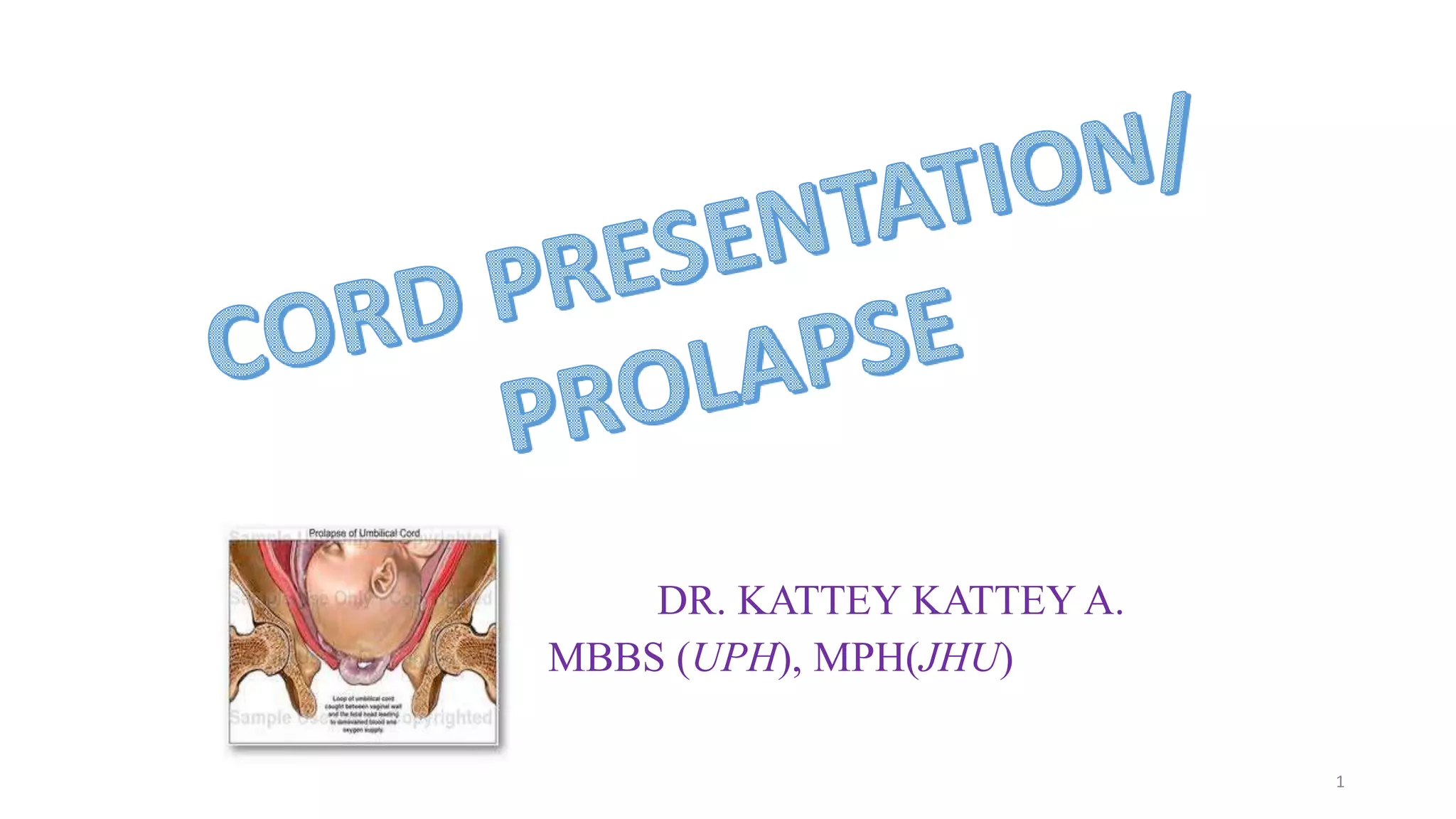
DR. KATTEY KATTEY A.
MBBS (UPH), MPH(JHU)
1
OUTLINE
Introduction
Definition
Types
Incidence and Epidemiology
Risk Factors
Diagnosis
Management
Community Setting
Prevention
Counseling
Conclusion
2
KATTEY K.A (MBBS, MPH)
INTRODUCTION
• Cord prolapse is one of the many causes of fresh stillbirth.
• It is one of the obstetric emergencies seen in maternity units in obstetrics
and timely delivery is the hallmark of good clinical management.
• In many developing countries like ours, mobilizing the theatre for
emergency CS may pose a challenge and patients with cord prolapse with
partially dilated cervix may have to travel long distances before reaching a
hospital equipped for CS. This usually results in fetal deaths.
3
KATTEY K.A (MBBS, MPH)
CORD PROLAPSE
• Defined as descent of the umbilical cord into the lower
uterine segment where it may lie adjacent to the presenting
part or below the presenting part, without intact fetal
membranes.
• When the membranes are intact, it is called CORD
PRESENTATION.
4
KATTEY K.A (MBBS, MPH)
TYPES
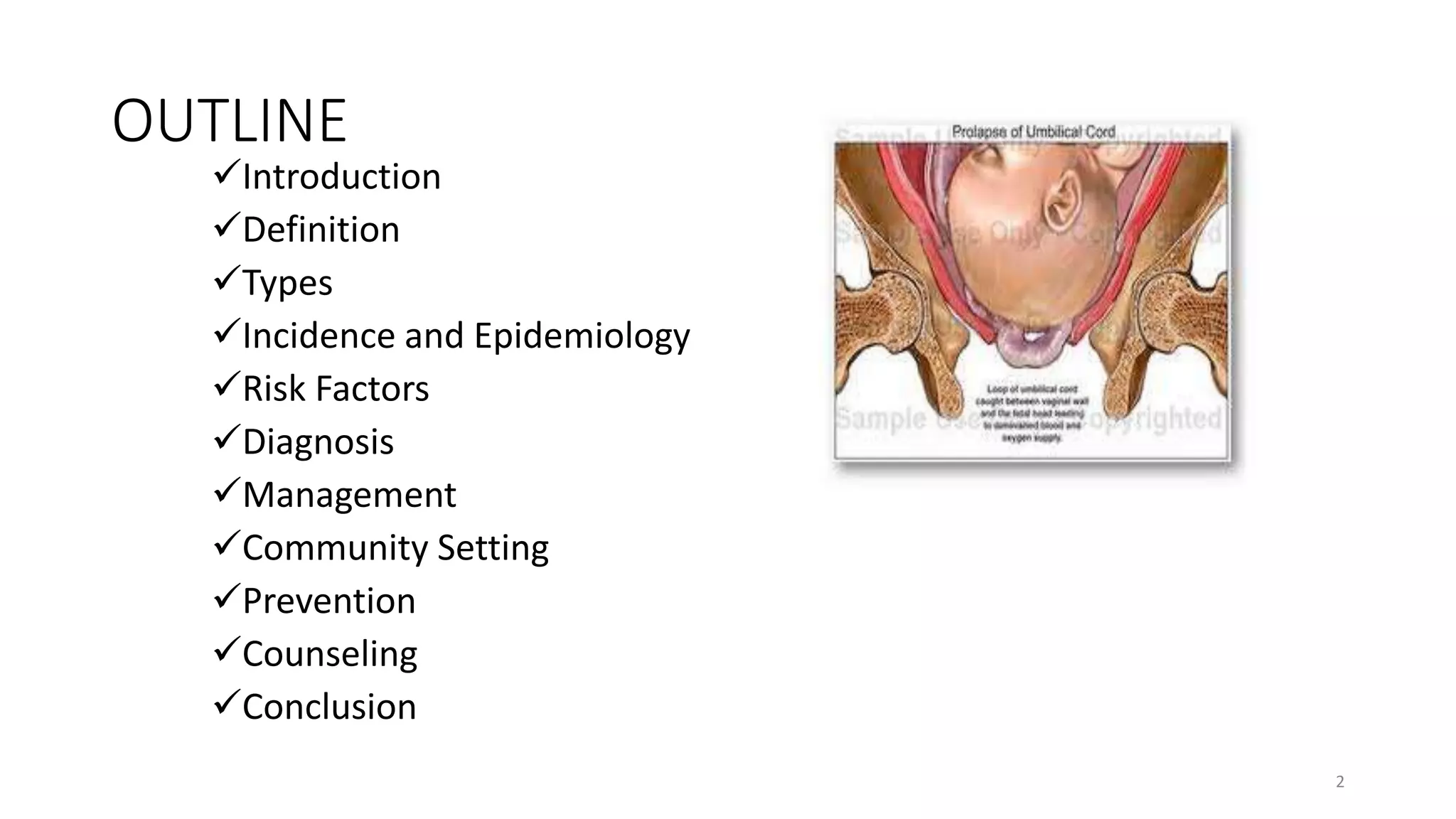
• Occult cord prolapse
• Cord is adjacent to the presenting part
• Cannot be palpated during pelvic examination.
• Might lead to variable decelerations or unexplained fetal distress.
• Funic (cord) presentation
• Prolapse of the umbilical cord below the level of the presenting part before the
rupture of fetal membranes
• Cord can often be easily palpated through the membranes
• Often the harbinger of cord prolapse
• Overt cord prolapse
• Umbilical cord lies below the presenting part
• Associated with rupture of membranes, and displacement of the cord through the
vagina.
5
KATTEY K.A (MBBS, MPH)
Other Types of Cord Accidents
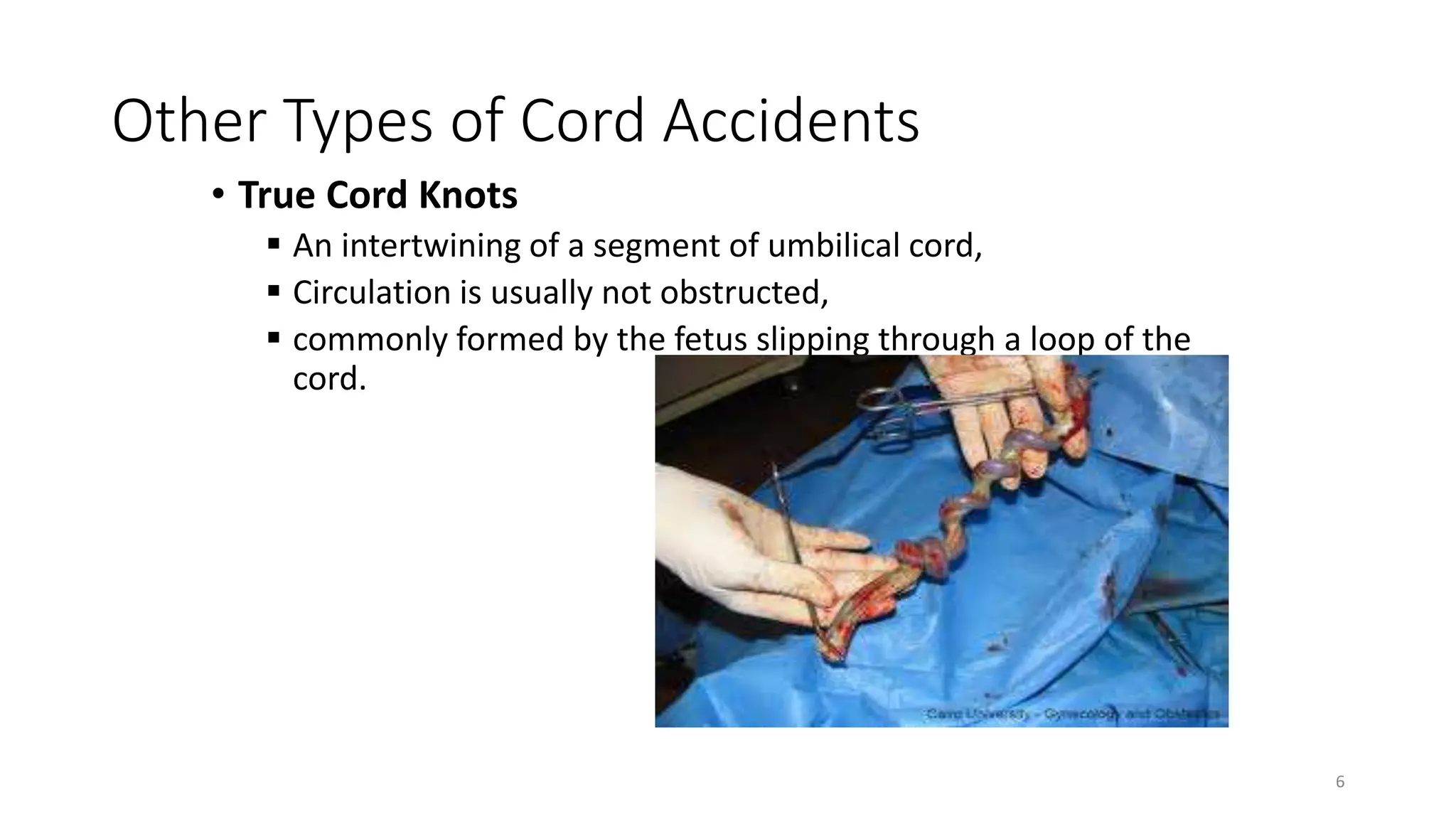
• True Cord Knots
 An intertwining of a segment of umbilical cord,
 Circulation is usually not obstructed,
 commonly formed by the fetus slipping through a loop of the
cord.
6
KATTEY K.A (MBBS, MPH)
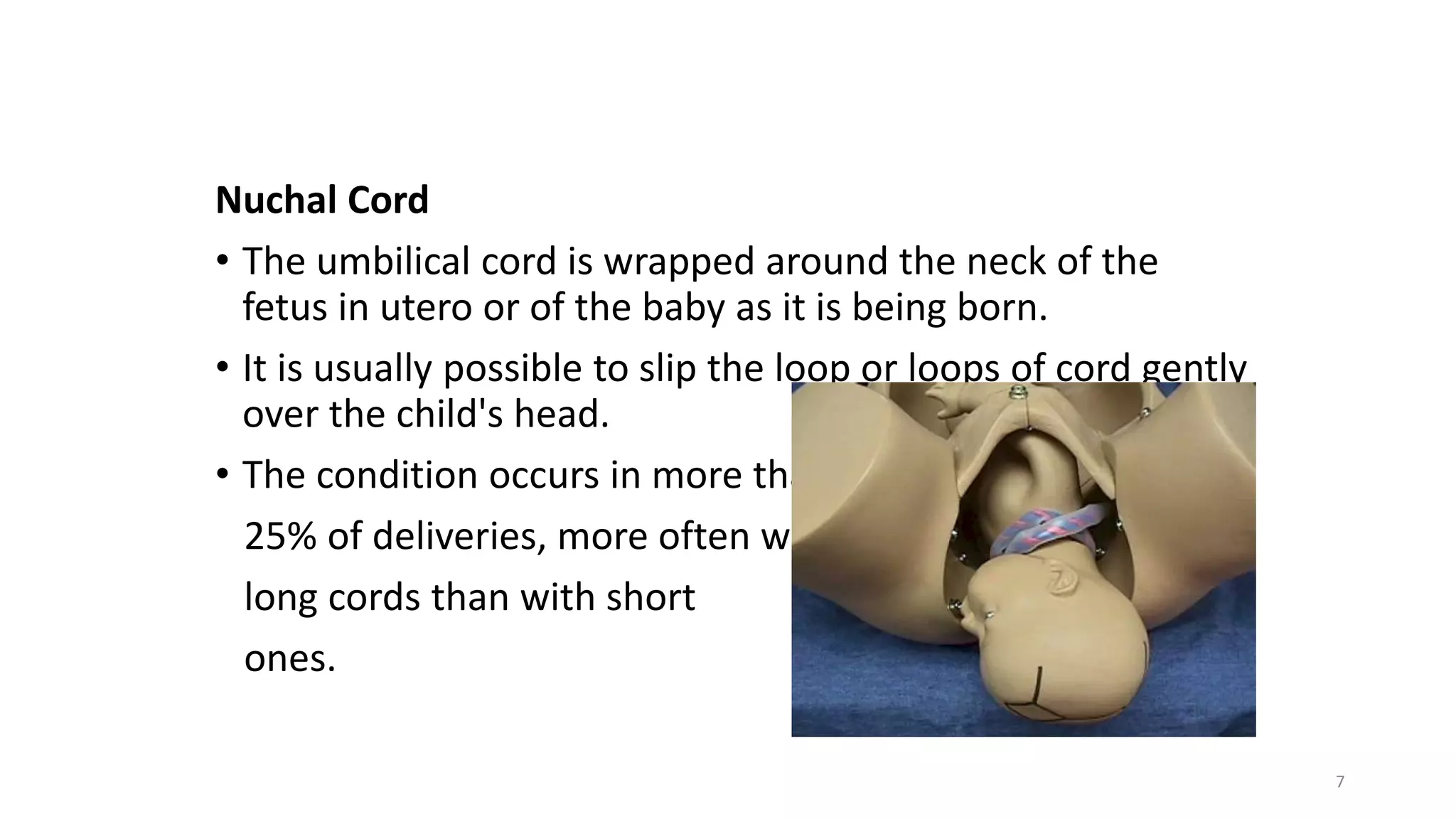
Nuchal Cord
• The umbilical cord is wrapped around the neck of the
fetus in utero or of the baby as it is being born.
• It is usually possible to slip the loop or loops of cord gently
over the child's head.
• The condition occurs in more than
25% of deliveries, more often with
long cords than with short
ones.
7
KATTEY K.A (MBBS, MPH)
INCIDENCE AND EPIDEMIOLOGY• The incidence of occult cord prolapse is unknown because it can be
detected only by fetal heart rate changes characteristic of umbilical
cord compression.
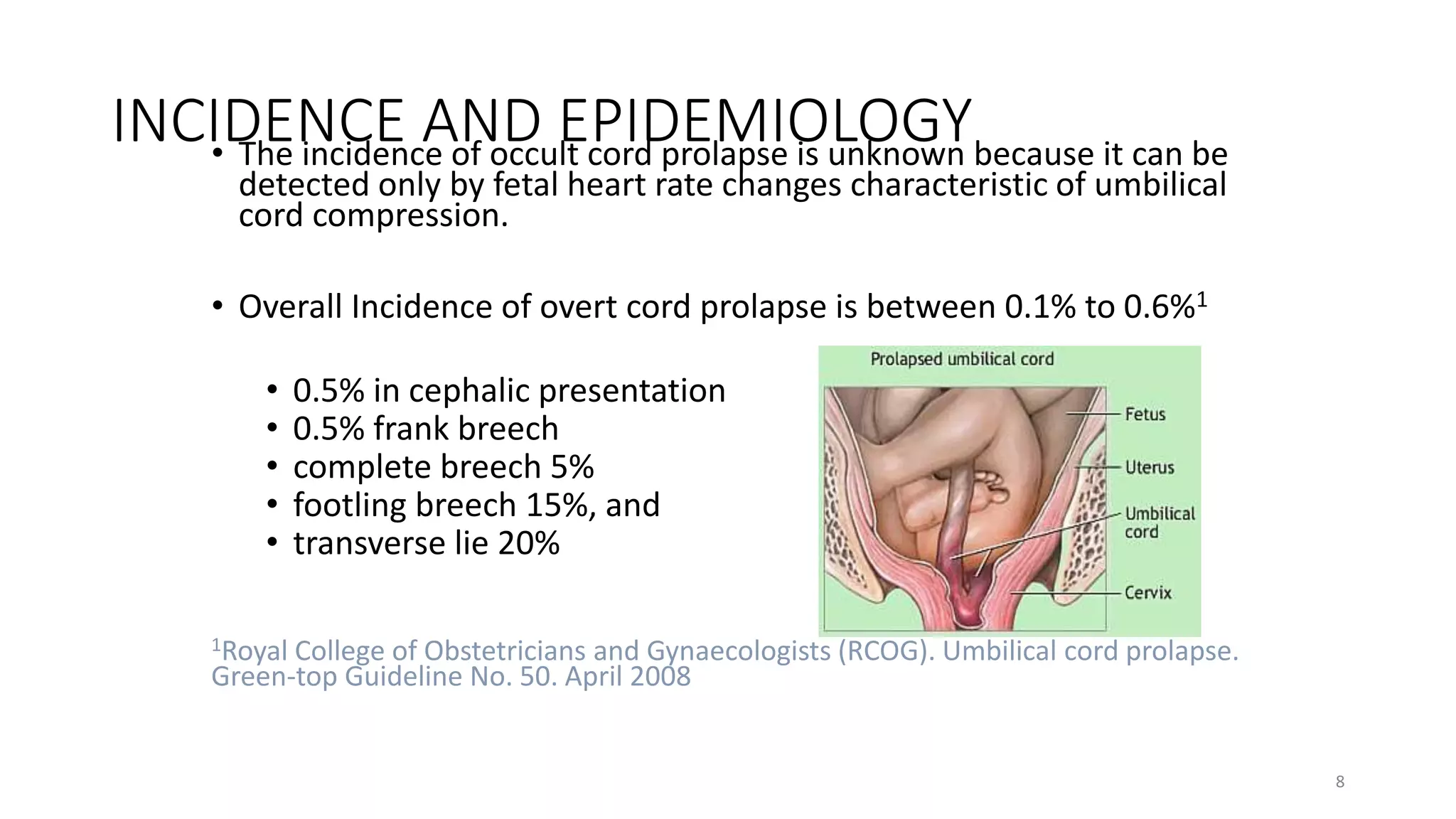
• Overall Incidence of overt cord prolapse is between 0.1% to 0.6%1
• 0.5% in cephalic presentation
• 0.5% frank breech
• complete breech 5%
• footling breech 15%, and
• transverse lie 20%
1Royal College of Obstetricians and Gynaecologists (RCOG). Umbilical cord prolapse.
Green-top Guideline No. 50. April 2008
8
KATTEY K.A (MBBS, MPH)
INCIDENCE AND EPIDEMIOLOGY (Cont’d)
• Incidence of 0.2% (34/16633) over a 12 ½ year period at the ABUTH,
Kaduna State.2
• BMSH over a 12 month period (June 1, 2012- May 30, 2013):
28/2846 = 0.98%3 or 9.8 per 1,000 child births.
2 Onwuhafua et.al, Umbilical Cord Prolapse in Kaduna. Niger J Clin Pract, 2008
3 Source: BMSH Labour Ward Register, 2012/2013.
9
KATTEY K.A (MBBS, MPH)
Aetiology/ Risk Factors
• The common denominator is incomplete fitting of the presenting part
into the maternal pelvis at the time of rupture of membranes.
• Factors are interrelated.
• Can be SPONTANEOUS OR IATROGENIC.
• SPONTANEOUS factors are fetal, placental and maternal.
• IATROGENIC factors are procedure-related.
10
KATTEY K.A (MBBS, MPH)
Aetiology/ Risk Factors
FETAL FACTORS
• Prematurity & IUGR
• Abnormal lies
• Malpresentation
• Fetal anomaly
• Multiple pregnancy
11
KATTEY K.A (MBBS, MPH)
Aetiology/ Risk FactorsMATERNAL
• Rupture of membranes
• Spontaneous (including preterm ROM)
• Amniotomy (ARM)
• Pelvic tumors e.g cervical fibroid
• Pelvic contraction
• Preterm labour
PLACENTAL
• Polyhydramnios
• Minor degree of placenta previa
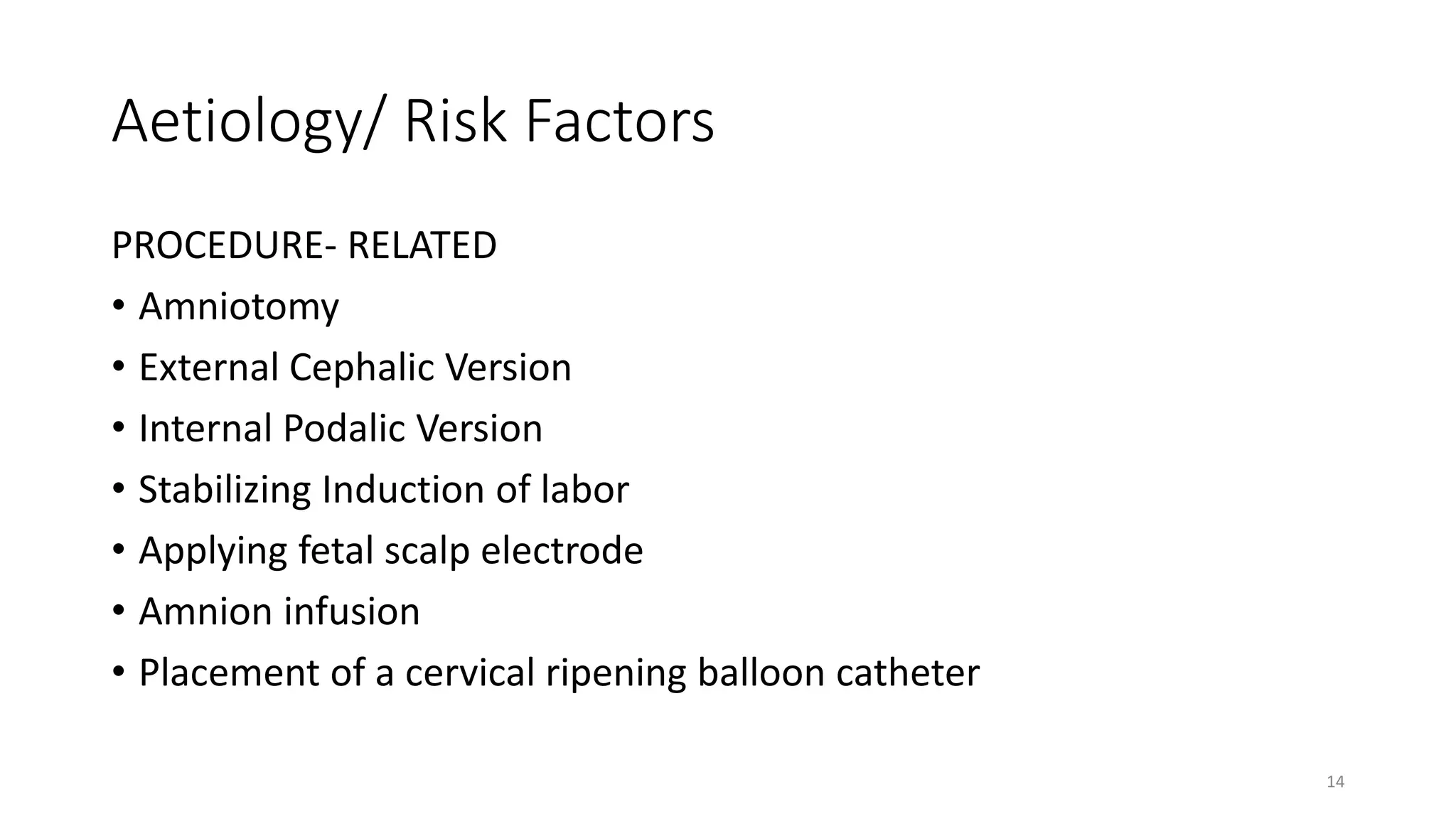
12
Aetiology/ Risk Factors
• Some authorities have also speculated that Cord
abnormalities (such as true knots or low content of
Wharton’s jelly) and Fetal hypoxia-acidosis may alter
the turgidity of the cord and predispose to prolapse.
13
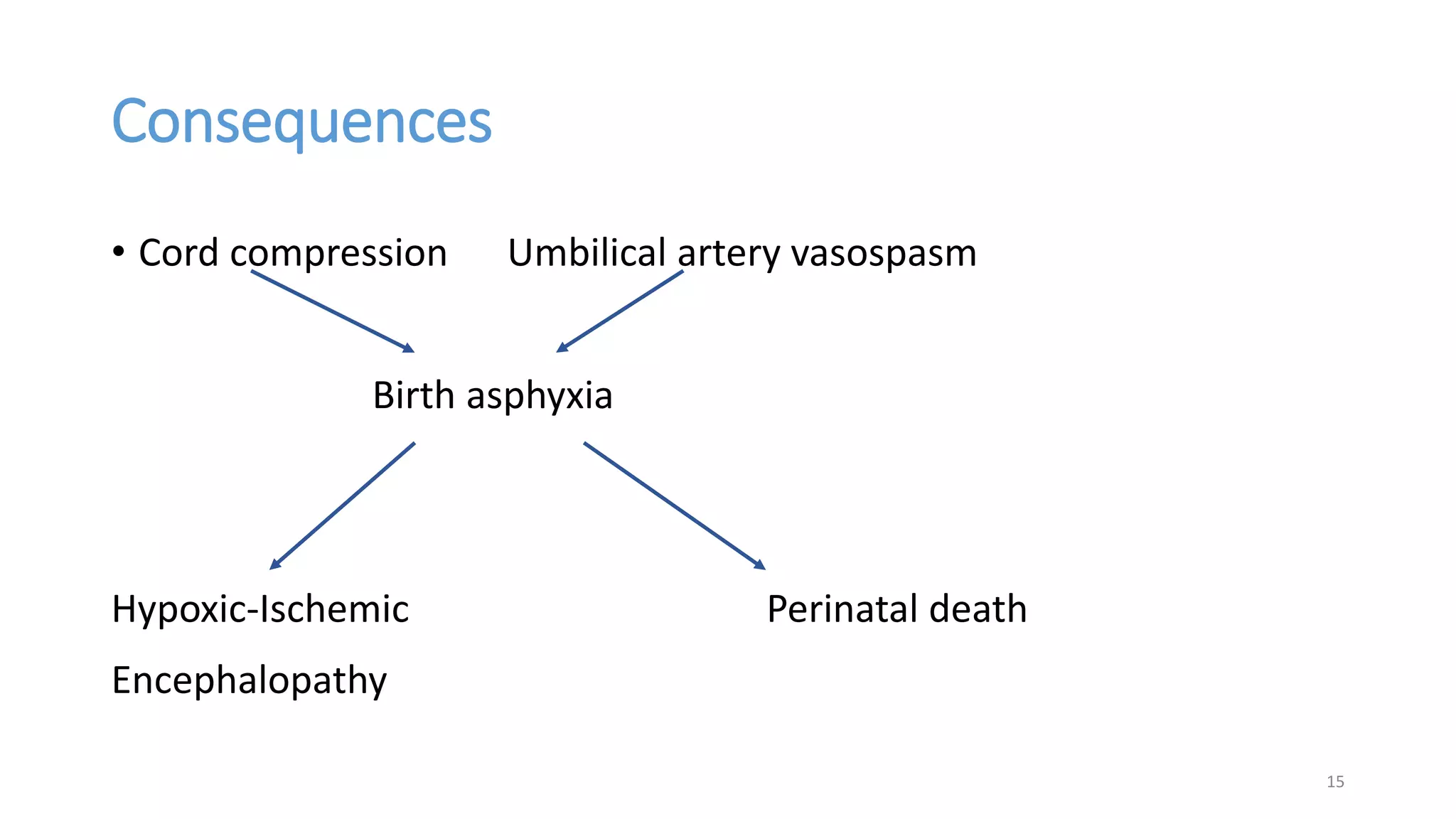
Aetiology/ Risk Factors
PROCEDURE- RELATED
• Amniotomy
• External Cephalic Version
• Internal Podalic Version
• Stabilizing Induction of labor
• Applying fetal scalp electrode
• Amnion infusion
• Placement of a cervical ripening balloon catheter
14
KATTEY K.A (MBBS, MPH)
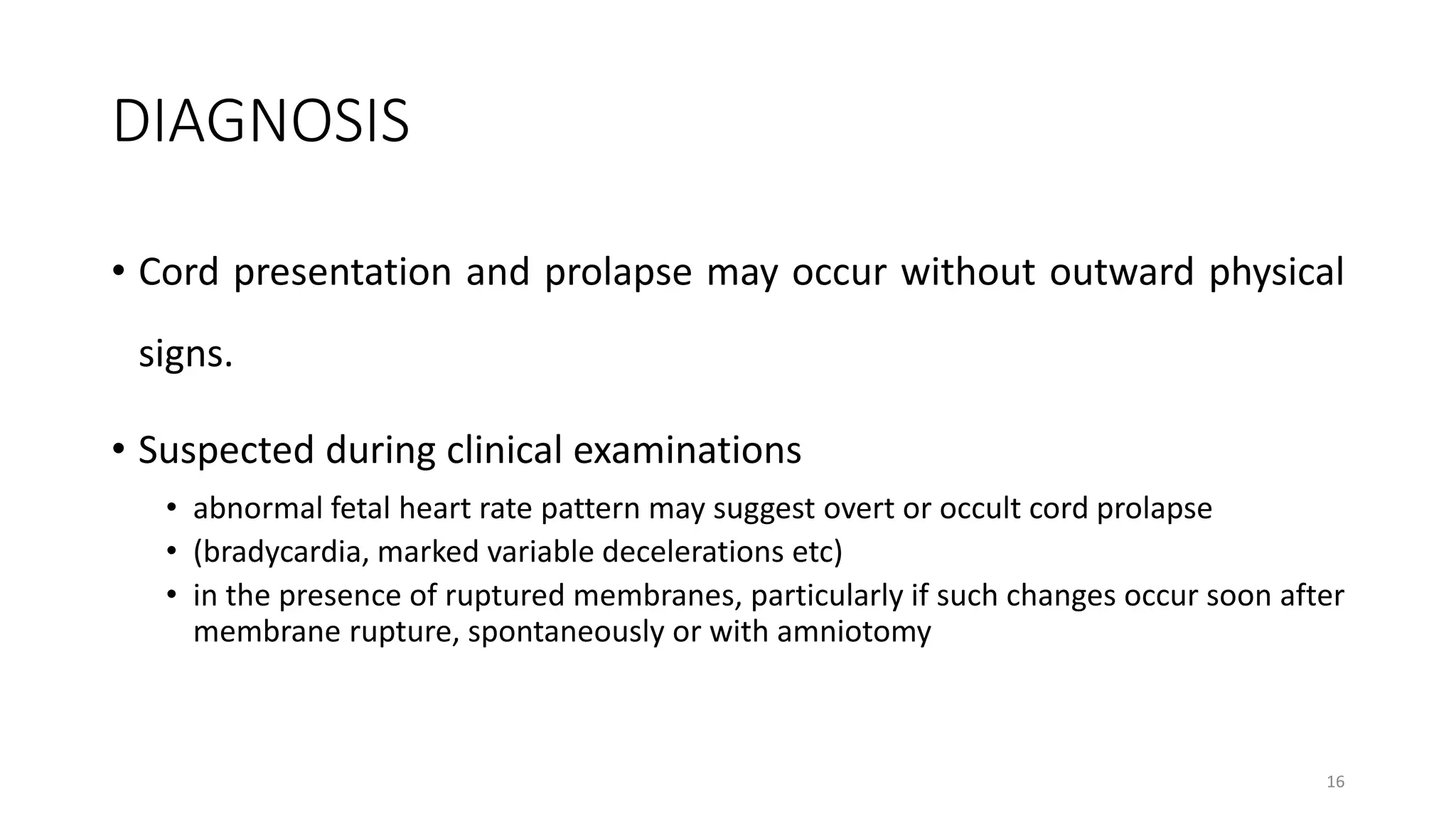
Consequences
• Cord compression Umbilical artery vasospasm
Birth asphyxia
Hypoxic-Ischemic Perinatal death
Encephalopathy
15
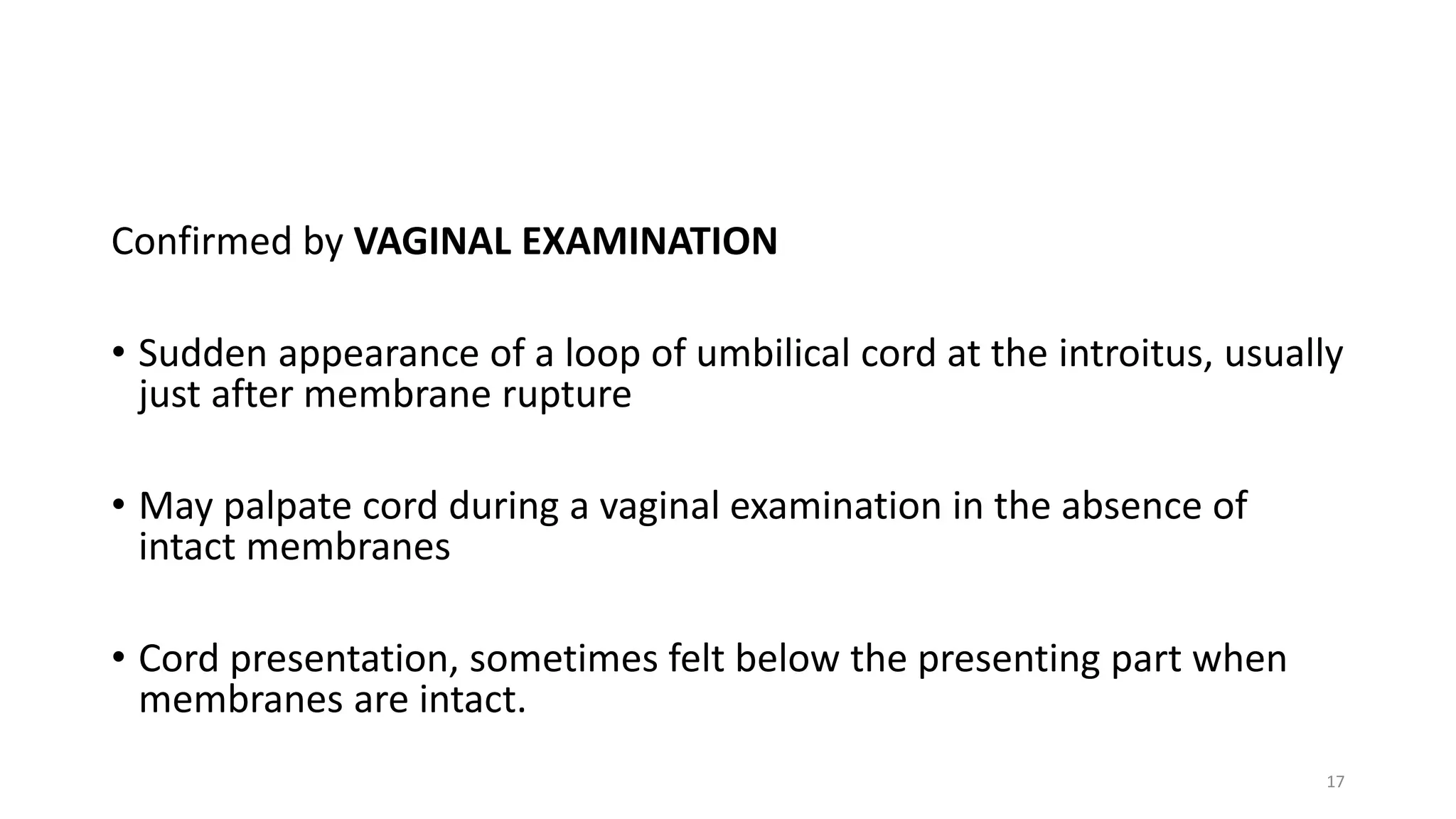
DIAGNOSIS
• Cord presentation and prolapse may occur without outward physical
signs.
• Suspected during clinical examinations
• abnormal fetal heart rate pattern may suggest overt or occult cord prolapse
• (bradycardia, marked variable decelerations etc)
• in the presence of ruptured membranes, particularly if such changes occur soon after
membrane rupture, spontaneously or with amniotomy
16
Confirmed by VAGINAL EXAMINATION
• Sudden appearance of a loop of umbilical cord at the introitus, usually
just after membrane rupture
• May palpate cord during a vaginal examination in the absence of
intact membranes
• Cord presentation, sometimes felt below the presenting part when
membranes are intact.
17
Diagnosis (Cont’d)
Cord (Funic) Presentation can also be diagnosed with USS before the
onset or during early labour.
• However, note that USS is not sufficiently sensitive or specific for
identification of cord presentation ante-natally and should not be
performed routinely to predict cord prolapse.
18
MANAGEMENT
The various modalities of management aim at raising the pelvis, and therefore bring the cervix to a higher
level than the fundus of the uterus.
• Depends on the type of cord prolapse.
OCCULT PROLAPSE
 Immediate VE to rule out cord prolapse
 Left lateral position
 O2 to mother
 Discontinue oxytocin infusion if in place
 Allow labor to progress if FH returns to normal and no further insult.
 Continuous fetal heart rate monitoring
 Amnioinfusion
 CS if cord compression pattern continues
19
MANAGEMENT
CORD PRESENTATION
• Term: CS prior to membrane rupture.
• Premature: No consensus on management
• Hospitalize px on bed rest in Sim’s position or Tredelenburg position
• Serial USS to ascertain cord position, presentation and GA
20
MANAGEMENT OF OVERT CORD PROLAPSE
Speed is of the essence and perinatal outcome is largely dictated by the
diagnosis-delivery interval.
The three components of management are:
1. Prevent or relieve cord compression and vasospasm
2. Fetal assessment
3. Prompt delivery of the infant
21
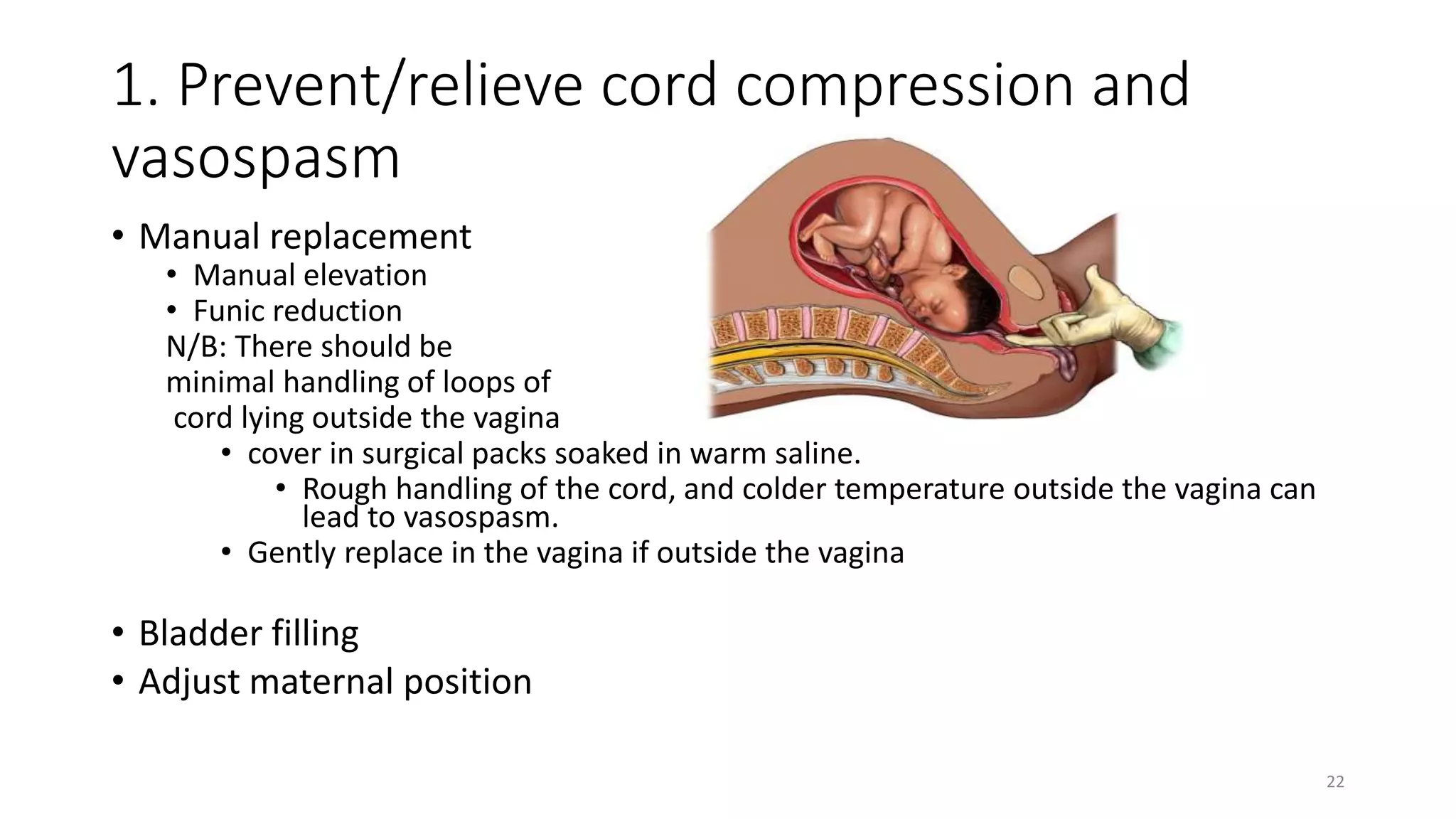
1. Prevent/relieve cord compression and
vasospasm
• Manual replacement
• Manual elevation
• Funic reduction
N/B: There should be
minimal handling of loops of
cord lying outside the vagina
• cover in surgical packs soaked in warm saline.
• Rough handling of the cord, and colder temperature outside the vagina can
lead to vasospasm.
• Gently replace in the vagina if outside the vagina
• Bladder filling
• Adjust maternal position
22
Bladder filling
• If the decision-to-delivery interval is likely to be prolonged,
elevation through bladder filling may be more practical.
• Introduced by Vago4 in 1970
• It is essential to empty the bladder again just before any delivery
attempt, be it vaginal or CS.
• Physiologically inhibits uterine contraction. There may be
contractions but not strong enough for the presenting part to
effectively compress the cord.
• Tocolytics can also be used to achieve this (Katz et al., 1982)
4 Vago, T. Prolapse of the umbilical cord: a method of management.
Am J. Obstet Gynecol,1970.
23
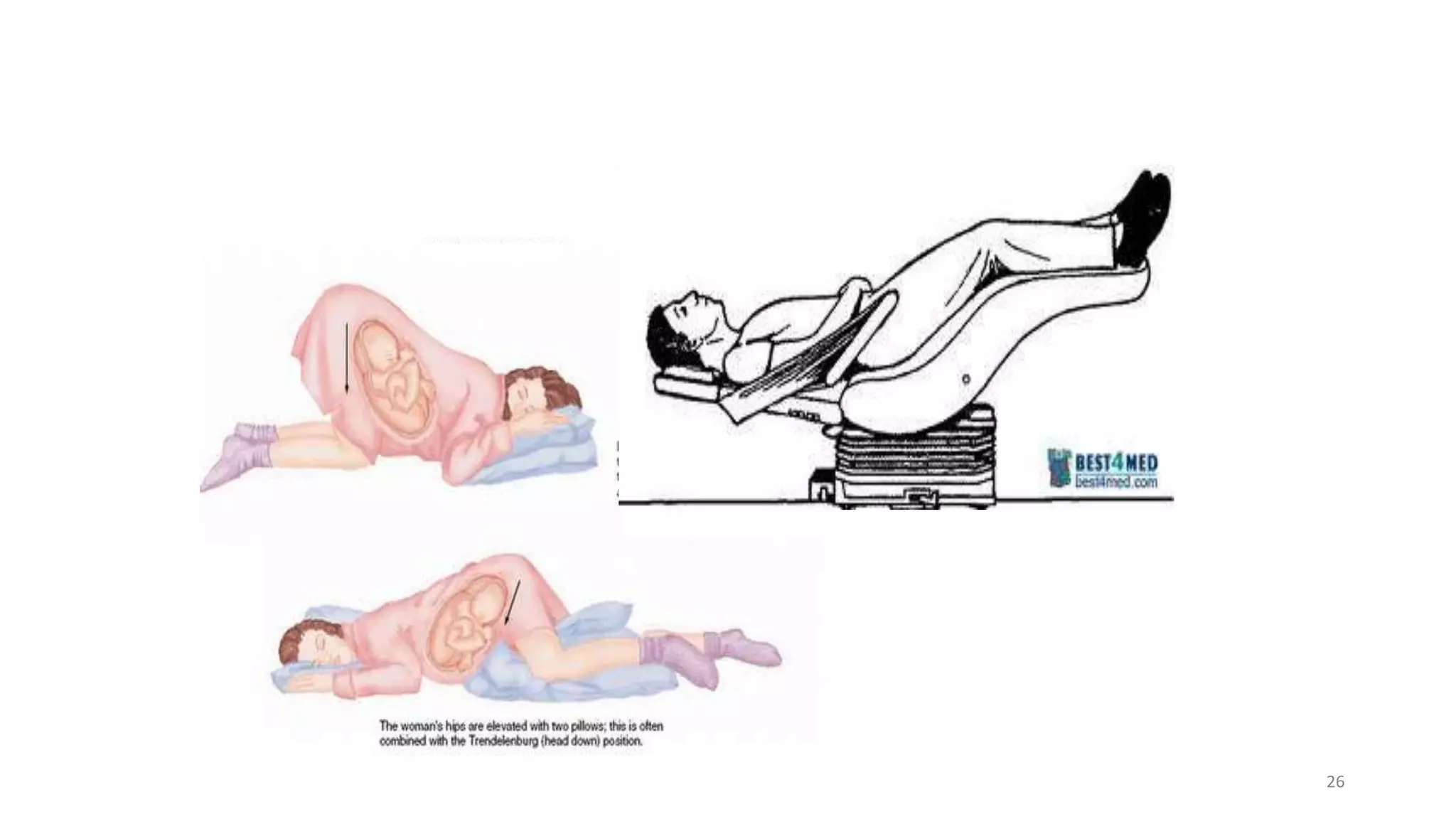
Maternal Position Adjustment
• Knee-chest position (Genu-pectoral)
• Gives maximum elevation of the presenting part.
• Provides good initial evaluation of the presenting part.
• A tiring posture to maintain.
• If any length of time is involved, move to the Sim’s
lateral position
24
• Sim’s lateral position
• More relaxed and dignified for the patient.
• Elevate buttocks with pillow
• Tredelenburg position
• A head-down tilt.
• Very tiring
25
26
2. FETAL ASSESSMENT
IS THE BABY VIABLE?
Interventions for fetal reasons are not necessary for:
• Already dead baby
• Too immature to survive (e.g. before age of fetal viability)
• Lethal fetal anomaly (e.g. anencephaly)
• In these cases, allow labour to progress and deliver vaginally unless there’s a
contraindication to vaginal delivery.
27
2. FETAL ASSESSMENT
IF BABY IS ALIVE
• Quickest way to tell is by palpating the presence or absence of pulsations in the cord.
• Beware of mistaking folds of membranes or tips of fetal fingers and toes for the cord. Or
clinician’s finger pulsation.
• Absent pulsations should be confirmed between contractions in case cord compression is
released and pulsations return.
• Fetal heart auscultation best determines whether or not the fetus is alive. Electronic fetal
heart monitoring using fetal scalp electrode may be useful.
• Real-time USS if available.
28
3. PROMPT DELIVERY
CERVIX FULLY DILATED
• Vaginal birth can be attempted at full dilatation if it is anticipated that
delivery would be accomplished within 20 minutes from diagnosis.
• Depending on the circumstances, this may involve delivery by forceps,
vacuum or breech extraction.
• Breech extraction e.g after IPV for 2nd twin, or for singleton breech babies
with presenting part distending the perineum
29
3. PROMPT DELIVERY
CERVIX NOT FULLY DILATED
• An immediate Caesarean Section (usually within 30 minutes) is the
recommended mode of delivery in cases of cord prolapse when
vaginal delivery is not imminent, in order to prevent hypoxia-acidosis.
• The 30-minute decision-to-delivery interval (DDI) is the target for CS.
• Some investigators have noted that the interval to delivery had little effect on
Apgar scores if they delivered within 30 minutes.
30
3. PROMPT DELIVERY
• The presenting part should be kept elevated during induction of anaesthesia and
placement of sterile sheets.
• Remember to drain bladder before incision.
• Recheck fetal heart before incision.
• Regional anaesthesia may be considered in consultation with an experienced anaesthetist
31
3. PROMPT DELIVERY
• A practitioner competent in the resuscitation of the newborn, usually
a neonatologist, should attend all deliveries with cord prolapse.
• Neonates born after cord prolapse are at significant risk of needing
neonatal resuscitation, as evidenced by a high rate of low APGAR
scores (<7)
32
MANAGEMENT IN COMMUNITY SETTING
There’s an increase in perinatal mortality in cases of cord prolapse
occurring outside the hospital, even compared with an unmonitored
fetus whose cord prolapsed while in the hospital.
33
MANAGEMENT IN COMMUNITY SETTING
• Women should be advised, over the telephone if necessary, to
assume the knee-chest or steep Trendelenburg position while
waiting for hospital transfer.
• During emergency ambulance transfer, the knee–chest is
potentially unsafe and the left-lateral position should be used.
34
• All women with cord prolapse should be advised to be transferred to the nearest
consultant unit for delivery, unless an immediate vaginal examination by a
competent professional reveals that a spontaneous vaginal delivery is imminent.
• Preparations for transfer should still be made.
35
• The presenting part should be elevated during transfer by either
manual or bladder filling methods.
• It is recommended that community midwives carry a Foley catheter
for this purpose and equipment for fluid infusion.
36
PREVENTION
• Women with transverse, oblique or unstable lie should be offered elective
admission to hospital at 37 weeks of gestation, or sooner if there are signs of
labour or suspicion of ruptured membranes.
• Women with non-cephalic presentations and preterm pre-labour rupture of the
membranes should be offered admission.
37
PREVENTION (Cont’d)
• In-patient care will minimise delay in diagnosis and management of
cord prolapse.
• Labour or ruptured membranes of an abnormal lie is an indication for
caesarean section.
38
PREVENTION (Cont’d)
• Bradycardia or variable fetal heart rate decelerations have been
associated with cord prolapse and their presence should prompt
vaginal examination.
• Mismanagement of abnormal fetal heart rate patterns is the
commonest feature of substandard care identified in perinatal death
associated with cord prolapse
39
PREVENTION (Cont’d)
• Speculum and/or a digital vaginal examination should be performed when cord
prolapse is suspected, regardless of gestation.
• Prompt vaginal examination is the most important aspect of
diagnosis.
40
PREVENTION (Cont’d)
• Artificial rupture of membranes should be avoided whenever possible
if the presenting part is unengaged and mobile.
• If it becomes necessary to rupture the membranes in such
circumstances, this should be performed in theatre with capability for
immediate caesarean birth.
41
PREVENTION (Cont’d)
• Vaginal examination and obstetric interventions in the context of ruptured
membranes carry a risk of upwards displacement of the presenting part and cord
prolapse.
• Rupture of membranes should be avoided if on vaginal examination the cord is
felt below the presenting part in labour (Cord presentation). A caesarean section
should be performed.
42
COUNSELLING
• Postnatal debriefing should be offered to every woman with cord
prolapse.
• After severe obstetric emergencies, women might be psychologically
affected with postnatal depression, post-traumatic stress disorder, or
fear of further childbirth.
43
COUNSELLING
• Women with cord prolapse who undergo urgent transfers to hospital
are possibly particularly vulnerable to psychological trauma.
• Debriefing is an important part of maternity care and should be
offered by a suitably trained professional.
44
CONCLUSION
Cord prolapse is a frightening and life-threatening event that
occurs in labour. Rapid identification and immediate
appropriate response may well save the life of a neonate.
Therefore, clinicians should be knowledgeable in its
recognition and management.
45
46

Cord Prolapse

  • 1.
    DR. KATTEY KATTEYA. MBBS (UPH), MPH(JHU) 1
  • 2.
    OUTLINE Introduction Definition Types Incidence and Epidemiology RiskFactors Diagnosis Management Community Setting Prevention Counseling Conclusion 2 KATTEY K.A (MBBS, MPH)
  • 3.
    INTRODUCTION • Cord prolapseis one of the many causes of fresh stillbirth. • It is one of the obstetric emergencies seen in maternity units in obstetrics and timely delivery is the hallmark of good clinical management. • In many developing countries like ours, mobilizing the theatre for emergency CS may pose a challenge and patients with cord prolapse with partially dilated cervix may have to travel long distances before reaching a hospital equipped for CS. This usually results in fetal deaths. 3 KATTEY K.A (MBBS, MPH)
  • 4.
    CORD PROLAPSE • Definedas descent of the umbilical cord into the lower uterine segment where it may lie adjacent to the presenting part or below the presenting part, without intact fetal membranes. • When the membranes are intact, it is called CORD PRESENTATION. 4 KATTEY K.A (MBBS, MPH)
  • 5.
    TYPES • Occult cordprolapse • Cord is adjacent to the presenting part • Cannot be palpated during pelvic examination. • Might lead to variable decelerations or unexplained fetal distress. • Funic (cord) presentation • Prolapse of the umbilical cord below the level of the presenting part before the rupture of fetal membranes • Cord can often be easily palpated through the membranes • Often the harbinger of cord prolapse • Overt cord prolapse • Umbilical cord lies below the presenting part • Associated with rupture of membranes, and displacement of the cord through the vagina. 5 KATTEY K.A (MBBS, MPH)
  • 6.
    Other Types ofCord Accidents • True Cord Knots  An intertwining of a segment of umbilical cord,  Circulation is usually not obstructed,  commonly formed by the fetus slipping through a loop of the cord. 6 KATTEY K.A (MBBS, MPH)
  • 7.
    Nuchal Cord • Theumbilical cord is wrapped around the neck of the fetus in utero or of the baby as it is being born. • It is usually possible to slip the loop or loops of cord gently over the child's head. • The condition occurs in more than 25% of deliveries, more often with long cords than with short ones. 7 KATTEY K.A (MBBS, MPH)
  • 8.
    INCIDENCE AND EPIDEMIOLOGY•The incidence of occult cord prolapse is unknown because it can be detected only by fetal heart rate changes characteristic of umbilical cord compression. • Overall Incidence of overt cord prolapse is between 0.1% to 0.6%1 • 0.5% in cephalic presentation • 0.5% frank breech • complete breech 5% • footling breech 15%, and • transverse lie 20% 1Royal College of Obstetricians and Gynaecologists (RCOG). Umbilical cord prolapse. Green-top Guideline No. 50. April 2008 8 KATTEY K.A (MBBS, MPH)
  • 9.
    INCIDENCE AND EPIDEMIOLOGY(Cont’d) • Incidence of 0.2% (34/16633) over a 12 ½ year period at the ABUTH, Kaduna State.2 • BMSH over a 12 month period (June 1, 2012- May 30, 2013): 28/2846 = 0.98%3 or 9.8 per 1,000 child births. 2 Onwuhafua et.al, Umbilical Cord Prolapse in Kaduna. Niger J Clin Pract, 2008 3 Source: BMSH Labour Ward Register, 2012/2013. 9 KATTEY K.A (MBBS, MPH)
  • 10.
    Aetiology/ Risk Factors •The common denominator is incomplete fitting of the presenting part into the maternal pelvis at the time of rupture of membranes. • Factors are interrelated. • Can be SPONTANEOUS OR IATROGENIC. • SPONTANEOUS factors are fetal, placental and maternal. • IATROGENIC factors are procedure-related. 10 KATTEY K.A (MBBS, MPH)
  • 11.
    Aetiology/ Risk Factors FETALFACTORS • Prematurity & IUGR • Abnormal lies • Malpresentation • Fetal anomaly • Multiple pregnancy 11 KATTEY K.A (MBBS, MPH)
  • 12.
    Aetiology/ Risk FactorsMATERNAL •Rupture of membranes • Spontaneous (including preterm ROM) • Amniotomy (ARM) • Pelvic tumors e.g cervical fibroid • Pelvic contraction • Preterm labour PLACENTAL • Polyhydramnios • Minor degree of placenta previa 12
  • 13.
    Aetiology/ Risk Factors •Some authorities have also speculated that Cord abnormalities (such as true knots or low content of Wharton’s jelly) and Fetal hypoxia-acidosis may alter the turgidity of the cord and predispose to prolapse. 13
  • 14.
    Aetiology/ Risk Factors PROCEDURE-RELATED • Amniotomy • External Cephalic Version • Internal Podalic Version • Stabilizing Induction of labor • Applying fetal scalp electrode • Amnion infusion • Placement of a cervical ripening balloon catheter 14 KATTEY K.A (MBBS, MPH)
  • 15.
    Consequences • Cord compressionUmbilical artery vasospasm Birth asphyxia Hypoxic-Ischemic Perinatal death Encephalopathy 15
  • 16.
    DIAGNOSIS • Cord presentationand prolapse may occur without outward physical signs. • Suspected during clinical examinations • abnormal fetal heart rate pattern may suggest overt or occult cord prolapse • (bradycardia, marked variable decelerations etc) • in the presence of ruptured membranes, particularly if such changes occur soon after membrane rupture, spontaneously or with amniotomy 16
  • 17.
    Confirmed by VAGINALEXAMINATION • Sudden appearance of a loop of umbilical cord at the introitus, usually just after membrane rupture • May palpate cord during a vaginal examination in the absence of intact membranes • Cord presentation, sometimes felt below the presenting part when membranes are intact. 17
  • 18.
    Diagnosis (Cont’d) Cord (Funic)Presentation can also be diagnosed with USS before the onset or during early labour. • However, note that USS is not sufficiently sensitive or specific for identification of cord presentation ante-natally and should not be performed routinely to predict cord prolapse. 18
  • 19.
    MANAGEMENT The various modalitiesof management aim at raising the pelvis, and therefore bring the cervix to a higher level than the fundus of the uterus. • Depends on the type of cord prolapse. OCCULT PROLAPSE  Immediate VE to rule out cord prolapse  Left lateral position  O2 to mother  Discontinue oxytocin infusion if in place  Allow labor to progress if FH returns to normal and no further insult.  Continuous fetal heart rate monitoring  Amnioinfusion  CS if cord compression pattern continues 19
  • 20.
    MANAGEMENT CORD PRESENTATION • Term:CS prior to membrane rupture. • Premature: No consensus on management • Hospitalize px on bed rest in Sim’s position or Tredelenburg position • Serial USS to ascertain cord position, presentation and GA 20
  • 21.
    MANAGEMENT OF OVERTCORD PROLAPSE Speed is of the essence and perinatal outcome is largely dictated by the diagnosis-delivery interval. The three components of management are: 1. Prevent or relieve cord compression and vasospasm 2. Fetal assessment 3. Prompt delivery of the infant 21
  • 22.
    1. Prevent/relieve cordcompression and vasospasm • Manual replacement • Manual elevation • Funic reduction N/B: There should be minimal handling of loops of cord lying outside the vagina • cover in surgical packs soaked in warm saline. • Rough handling of the cord, and colder temperature outside the vagina can lead to vasospasm. • Gently replace in the vagina if outside the vagina • Bladder filling • Adjust maternal position 22
  • 23.
    Bladder filling • Ifthe decision-to-delivery interval is likely to be prolonged, elevation through bladder filling may be more practical. • Introduced by Vago4 in 1970 • It is essential to empty the bladder again just before any delivery attempt, be it vaginal or CS. • Physiologically inhibits uterine contraction. There may be contractions but not strong enough for the presenting part to effectively compress the cord. • Tocolytics can also be used to achieve this (Katz et al., 1982) 4 Vago, T. Prolapse of the umbilical cord: a method of management. Am J. Obstet Gynecol,1970. 23
  • 24.
    Maternal Position Adjustment •Knee-chest position (Genu-pectoral) • Gives maximum elevation of the presenting part. • Provides good initial evaluation of the presenting part. • A tiring posture to maintain. • If any length of time is involved, move to the Sim’s lateral position 24
  • 25.
    • Sim’s lateralposition • More relaxed and dignified for the patient. • Elevate buttocks with pillow • Tredelenburg position • A head-down tilt. • Very tiring 25
  • 26.
  • 27.
    2. FETAL ASSESSMENT ISTHE BABY VIABLE? Interventions for fetal reasons are not necessary for: • Already dead baby • Too immature to survive (e.g. before age of fetal viability) • Lethal fetal anomaly (e.g. anencephaly) • In these cases, allow labour to progress and deliver vaginally unless there’s a contraindication to vaginal delivery. 27
  • 28.
    2. FETAL ASSESSMENT IFBABY IS ALIVE • Quickest way to tell is by palpating the presence or absence of pulsations in the cord. • Beware of mistaking folds of membranes or tips of fetal fingers and toes for the cord. Or clinician’s finger pulsation. • Absent pulsations should be confirmed between contractions in case cord compression is released and pulsations return. • Fetal heart auscultation best determines whether or not the fetus is alive. Electronic fetal heart monitoring using fetal scalp electrode may be useful. • Real-time USS if available. 28
  • 29.
    3. PROMPT DELIVERY CERVIXFULLY DILATED • Vaginal birth can be attempted at full dilatation if it is anticipated that delivery would be accomplished within 20 minutes from diagnosis. • Depending on the circumstances, this may involve delivery by forceps, vacuum or breech extraction. • Breech extraction e.g after IPV for 2nd twin, or for singleton breech babies with presenting part distending the perineum 29
  • 30.
    3. PROMPT DELIVERY CERVIXNOT FULLY DILATED • An immediate Caesarean Section (usually within 30 minutes) is the recommended mode of delivery in cases of cord prolapse when vaginal delivery is not imminent, in order to prevent hypoxia-acidosis. • The 30-minute decision-to-delivery interval (DDI) is the target for CS. • Some investigators have noted that the interval to delivery had little effect on Apgar scores if they delivered within 30 minutes. 30
  • 31.
    3. PROMPT DELIVERY •The presenting part should be kept elevated during induction of anaesthesia and placement of sterile sheets. • Remember to drain bladder before incision. • Recheck fetal heart before incision. • Regional anaesthesia may be considered in consultation with an experienced anaesthetist 31
  • 32.
    3. PROMPT DELIVERY •A practitioner competent in the resuscitation of the newborn, usually a neonatologist, should attend all deliveries with cord prolapse. • Neonates born after cord prolapse are at significant risk of needing neonatal resuscitation, as evidenced by a high rate of low APGAR scores (<7) 32
  • 33.
    MANAGEMENT IN COMMUNITYSETTING There’s an increase in perinatal mortality in cases of cord prolapse occurring outside the hospital, even compared with an unmonitored fetus whose cord prolapsed while in the hospital. 33
  • 34.
    MANAGEMENT IN COMMUNITYSETTING • Women should be advised, over the telephone if necessary, to assume the knee-chest or steep Trendelenburg position while waiting for hospital transfer. • During emergency ambulance transfer, the knee–chest is potentially unsafe and the left-lateral position should be used. 34
  • 35.
    • All womenwith cord prolapse should be advised to be transferred to the nearest consultant unit for delivery, unless an immediate vaginal examination by a competent professional reveals that a spontaneous vaginal delivery is imminent. • Preparations for transfer should still be made. 35
  • 36.
    • The presentingpart should be elevated during transfer by either manual or bladder filling methods. • It is recommended that community midwives carry a Foley catheter for this purpose and equipment for fluid infusion. 36
  • 37.
    PREVENTION • Women withtransverse, oblique or unstable lie should be offered elective admission to hospital at 37 weeks of gestation, or sooner if there are signs of labour or suspicion of ruptured membranes. • Women with non-cephalic presentations and preterm pre-labour rupture of the membranes should be offered admission. 37
  • 38.
    PREVENTION (Cont’d) • In-patientcare will minimise delay in diagnosis and management of cord prolapse. • Labour or ruptured membranes of an abnormal lie is an indication for caesarean section. 38
  • 39.
    PREVENTION (Cont’d) • Bradycardiaor variable fetal heart rate decelerations have been associated with cord prolapse and their presence should prompt vaginal examination. • Mismanagement of abnormal fetal heart rate patterns is the commonest feature of substandard care identified in perinatal death associated with cord prolapse 39
  • 40.
    PREVENTION (Cont’d) • Speculumand/or a digital vaginal examination should be performed when cord prolapse is suspected, regardless of gestation. • Prompt vaginal examination is the most important aspect of diagnosis. 40
  • 41.
    PREVENTION (Cont’d) • Artificialrupture of membranes should be avoided whenever possible if the presenting part is unengaged and mobile. • If it becomes necessary to rupture the membranes in such circumstances, this should be performed in theatre with capability for immediate caesarean birth. 41
  • 42.
    PREVENTION (Cont’d) • Vaginalexamination and obstetric interventions in the context of ruptured membranes carry a risk of upwards displacement of the presenting part and cord prolapse. • Rupture of membranes should be avoided if on vaginal examination the cord is felt below the presenting part in labour (Cord presentation). A caesarean section should be performed. 42
  • 43.
    COUNSELLING • Postnatal debriefingshould be offered to every woman with cord prolapse. • After severe obstetric emergencies, women might be psychologically affected with postnatal depression, post-traumatic stress disorder, or fear of further childbirth. 43
  • 44.
    COUNSELLING • Women withcord prolapse who undergo urgent transfers to hospital are possibly particularly vulnerable to psychological trauma. • Debriefing is an important part of maternity care and should be offered by a suitably trained professional. 44
  • 45.
    CONCLUSION Cord prolapse isa frightening and life-threatening event that occurs in labour. Rapid identification and immediate appropriate response may well save the life of a neonate. Therefore, clinicians should be knowledgeable in its recognition and management. 45
  • 46.