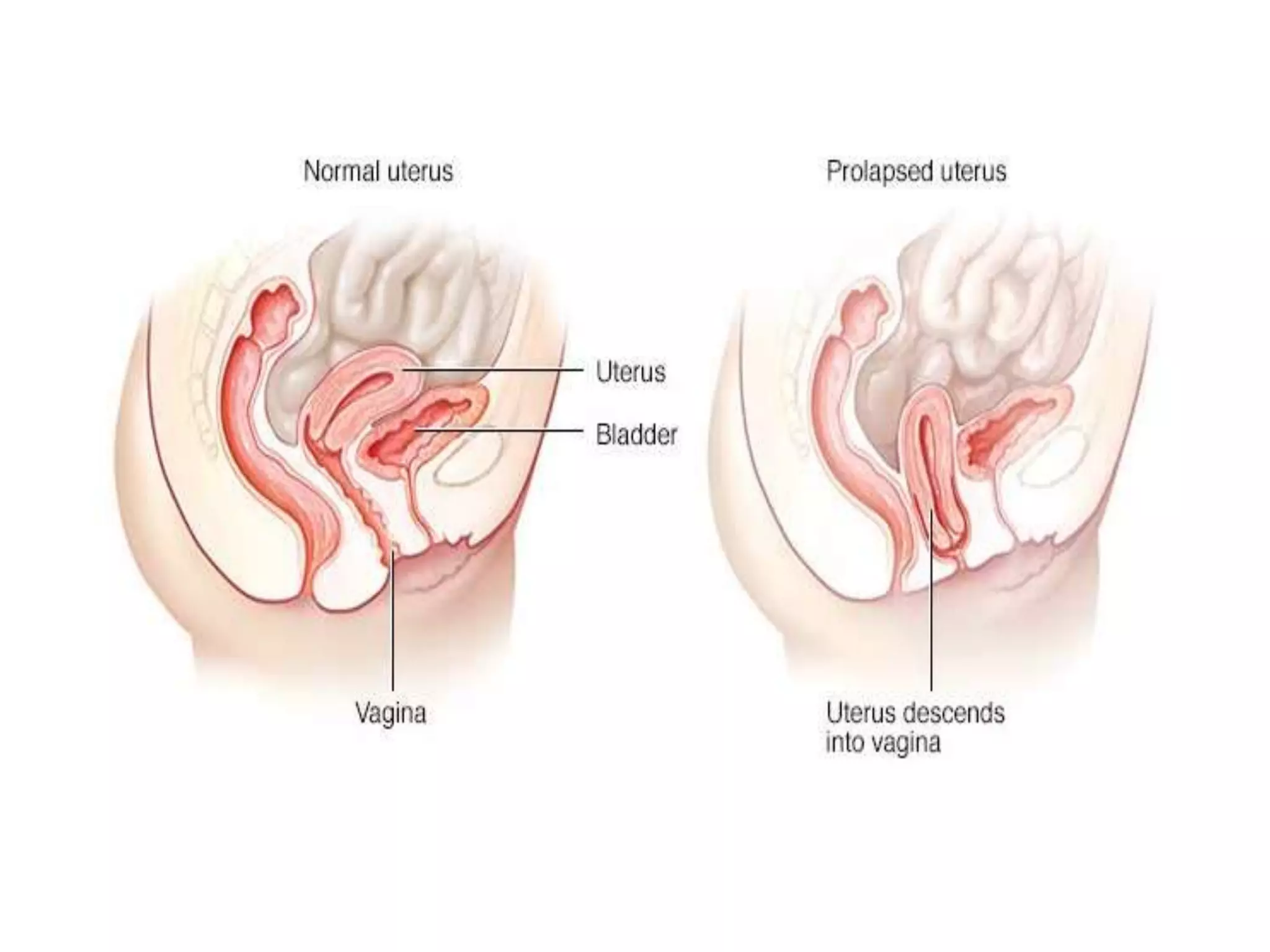
“Genital prolapse is one of the common
clinical gynecological condition. It
includes descent of the vaginal wall or
the uterus. Pregnancy can occur in
women with cystocele, rectocele and
uterine prolapse. It is a form of hernia.”
Pregnancy is not uncommon in first
degree uterine prolapse with cyctocele
and rectcele.
Pregnancy, is however, unlikely when
the cervix remains outside the introitus
and continuation of pregnancy in 3rd
degree prolapse is an extremely rare
event.
The incidence of prolapse is about 1 in
250 pregnancies.
Uterine prolapse can be categerized as
incomplete or complete
When the uterus is partially displaced
into the vagina but does not protrude it
is called incomplete uterine prolapse.
 When a portion of the uterus protrudes
from the vaginal opening it is called
complete uterine prolapse.
The condition is graded by its severity,
determined by how far the uterus has
descended.
First Grade / First Degree
Second Grade / Second Degree
Third Grade / Third Degree
Fourth Grade / Fourth Degree
First grade : Uterus descended to the
upper vagina
Second grade : Uterus descended to
the introitus
Third grade : Cervix has descended
outside the introitus
Fourth grade : Cervix and uterus have
both descended outside the introitus
The main causes is weakness of the
structures supporting the organs in
position.
Previou difficult labour and trauma during
labour
Delivery of the large baby
Being over weight or obese
Chronic contipation or straining with
bowel movements
Chronic cough or bronchitis
Repeated heavy lifting
Multiparity
Grandmultipara
Obesity
Prior pelvic surgery
Family history of weakness in connective
tissue
 Fall of womb
 White discharge per vaginam
 Pelvic pain
 Bachache Bladder symptoms like frequency
of urination, inability to pass urine comletely,
stress incontinence, rectal symptoms
 Difficulty in defecation
 Constipation
 There are signs of cystocele, uterine prolapse
with ulcerated hypertrophic elongated cervix
and urethrocele.
There is aggracation of the morbid
anatomical changes inprolapse such as
marked hypertrophy and edema of the
cervix, first degree becomes second
degree, cyctocele and rectocele become
pronounced and there is aggravation of
stress incontinence.
These are marked during early
pregnancy and the effects are due to the
weight of the uterus and increased
vascularity.
Vaginal discharge may be copious and
decubitus ulcer may develop when the
cervix remains outside the introitus.
There is chance of incarceration, if the
uterus fails to rise above the pelvis by
16th week of pregnancy.
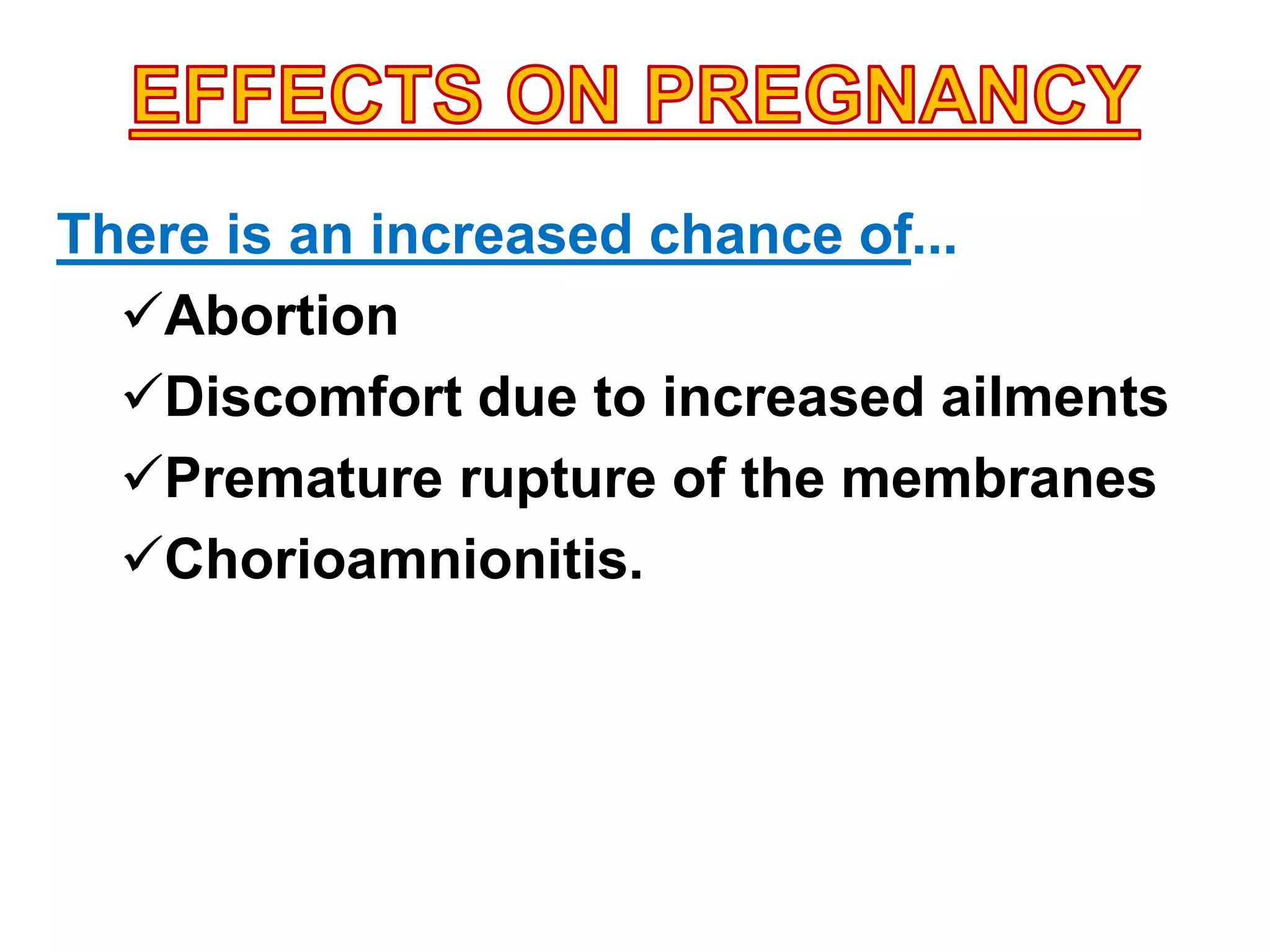
There is an increased chance of...
Abortion
Discomfort due to increased ailments
Premature rupture of the membranes
Chorioamnionitis.
There is an increased chance of...
Early rupture of the membranes
Cervical dystocia
Prolonged labour due to non-
dilatation of cervix
Obstruction due to sagging cyctocele
and rectocele
Operative interference
There is an increased chance of...
Subinvolution
Uterine sepsis
Performing kegal exercises regulary
Treatment and prevention of constipation
Avoidance of heavy lifting and promotion
of correct lifting
Control coughing
Avoidance of over weight gain
During pregnancy...
If the cervix is outside the itroitus, the
cervix is to be replaced inside the vagina
and is to be kept in position by a ring
pessary.
The pessary is to be kept until 18-20th
week of prenancy.
Make the patient lay in bed with foot end
raised to 20 cm.
Cover it with a gause soaked in glycerine
and acriflavine to relieve edema and
congestion.
If reposition is not possible, then
termination is done.
If the cervix remains outside even later
months, the patient is admitted in the
hospital at the 36th week.
RING PESSARY
During Labour...
The patient should be in bed not only to
prevent early rupture of the membranes but
also to facilitate replacement of the
prolapsed cervix inside the vagina.
Intravaginal plugging soaked with glycerine
and acriflavine not only helps in reduction of
cervical edema but also facilitates its dtation.
Prophylactic antibiotic should be
administered in case of premature rupture of
the membranes or when the cervix remains
outside.
 Mannual stretching of the cervix or pushing
up the custocele or rectocele posterior to the
presenting part durine uterine contractions
facilitates progressive descent of the head.
 If the head is deeply enagaged, with the
cervix remaining thin but undilated, delivery
may be facilitated by Duhrssen's incision at 2
and 10 o'clock positions followed by
ventouse extraction or forceps application.
 If the head is high up and or the cervix
remains edematous, thick or undialated,
cesarean section is a safe procedure.
During Puerperium...
The patientshould lay flay on the bed.
If the mass remains outside, it should be
covered with gauze soaked in glycerine and
acriflavine.
If subinvolution is evident, a ring pessary
may be put in until involution is completed.
Genital prolapse in pregnancy

Genital prolapse in pregnancy

  • 2.
    “Genital prolapse isone of the common clinical gynecological condition. It includes descent of the vaginal wall or the uterus. Pregnancy can occur in women with cystocele, rectocele and uterine prolapse. It is a form of hernia.”
  • 4.
    Pregnancy is notuncommon in first degree uterine prolapse with cyctocele and rectcele. Pregnancy, is however, unlikely when the cervix remains outside the introitus and continuation of pregnancy in 3rd degree prolapse is an extremely rare event. The incidence of prolapse is about 1 in 250 pregnancies.
  • 7.
    Uterine prolapse canbe categerized as incomplete or complete When the uterus is partially displaced into the vagina but does not protrude it is called incomplete uterine prolapse.  When a portion of the uterus protrudes from the vaginal opening it is called complete uterine prolapse.
  • 8.
    The condition isgraded by its severity, determined by how far the uterus has descended. First Grade / First Degree Second Grade / Second Degree Third Grade / Third Degree Fourth Grade / Fourth Degree
  • 9.
    First grade :Uterus descended to the upper vagina Second grade : Uterus descended to the introitus Third grade : Cervix has descended outside the introitus Fourth grade : Cervix and uterus have both descended outside the introitus
  • 10.
    The main causesis weakness of the structures supporting the organs in position. Previou difficult labour and trauma during labour Delivery of the large baby Being over weight or obese Chronic contipation or straining with bowel movements Chronic cough or bronchitis Repeated heavy lifting
  • 11.
  • 12.
     Fall ofwomb  White discharge per vaginam  Pelvic pain  Bachache Bladder symptoms like frequency of urination, inability to pass urine comletely, stress incontinence, rectal symptoms  Difficulty in defecation  Constipation  There are signs of cystocele, uterine prolapse with ulcerated hypertrophic elongated cervix and urethrocele.
  • 13.
    There is aggracationof the morbid anatomical changes inprolapse such as marked hypertrophy and edema of the cervix, first degree becomes second degree, cyctocele and rectocele become pronounced and there is aggravation of stress incontinence. These are marked during early pregnancy and the effects are due to the weight of the uterus and increased vascularity.
  • 14.
    Vaginal discharge maybe copious and decubitus ulcer may develop when the cervix remains outside the introitus. There is chance of incarceration, if the uterus fails to rise above the pelvis by 16th week of pregnancy.
  • 15.
    There is anincreased chance of... Abortion Discomfort due to increased ailments Premature rupture of the membranes Chorioamnionitis.
  • 16.
    There is anincreased chance of... Early rupture of the membranes Cervical dystocia Prolonged labour due to non- dilatation of cervix Obstruction due to sagging cyctocele and rectocele Operative interference
  • 17.
    There is anincreased chance of... Subinvolution Uterine sepsis
  • 18.
    Performing kegal exercisesregulary Treatment and prevention of constipation Avoidance of heavy lifting and promotion of correct lifting Control coughing Avoidance of over weight gain
  • 19.
    During pregnancy... If thecervix is outside the itroitus, the cervix is to be replaced inside the vagina and is to be kept in position by a ring pessary. The pessary is to be kept until 18-20th week of prenancy. Make the patient lay in bed with foot end raised to 20 cm.
  • 20.
    Cover it witha gause soaked in glycerine and acriflavine to relieve edema and congestion. If reposition is not possible, then termination is done. If the cervix remains outside even later months, the patient is admitted in the hospital at the 36th week.
  • 22.
  • 23.
    During Labour... The patientshould be in bed not only to prevent early rupture of the membranes but also to facilitate replacement of the prolapsed cervix inside the vagina. Intravaginal plugging soaked with glycerine and acriflavine not only helps in reduction of cervical edema but also facilitates its dtation. Prophylactic antibiotic should be administered in case of premature rupture of the membranes or when the cervix remains outside.
  • 24.
     Mannual stretchingof the cervix or pushing up the custocele or rectocele posterior to the presenting part durine uterine contractions facilitates progressive descent of the head.  If the head is deeply enagaged, with the cervix remaining thin but undilated, delivery may be facilitated by Duhrssen's incision at 2 and 10 o'clock positions followed by ventouse extraction or forceps application.  If the head is high up and or the cervix remains edematous, thick or undialated, cesarean section is a safe procedure.
  • 25.
    During Puerperium... The patientshouldlay flay on the bed. If the mass remains outside, it should be covered with gauze soaked in glycerine and acriflavine. If subinvolution is evident, a ring pessary may be put in until involution is completed.