CONTINUED NURSING EDUCATION
Presented By
Mrs. Heera KC Parajuli, BN
Staff Nurse
Post-natal ward, BPKIHS
10/20/2016 1Mrs. Heera KC Parajuli, BN
DIABETES MELLITUS AND
PREGNANCY
• About 1-14 % of all pregnancies are complicated by
Diabetes mellitus and 90% of them are gestational
Diabetes Mellitus.
• Nearly 50% of women with GDM will become overt
Diabetes over a period of 5 to 20 years.
10/20/2016 2Mrs. Heera KC Parajuli, BN
Background
Prevalence
10/20/2016 Mrs. Heera KC Parajuli, BN 3
BRAINSTMORMING
10/20/2016 4Mrs. Heera KC Parajuli, BN
• Mrs, Sabita Devi Shah, 37 years old , G8P7AoL6Still
birth 1 IUFD 1, SVD with Episiotomy done at 37
completed weeks.
Her history reveals that at 20 weeks she had her
fasting Blood glucose 200 mg/dl and PP 233 mg/dl.
On subsequent check up also her blood sugar were
found above normal that is FBS 150mg/dl and PP
287mg/dl. Urine test shows glycosuria. She had a
positive history of Dm before pregnancy for which
she took ayurvedic medicines as well.
a) What would be her diagnosis?
You got a handover from OT about a case.
• Mrs Sushma Bastola age 24 years, Emergency
LSCS done at 38 weeks of gestation for
prolonged labor with Gestational Dm. She gave
a birth of a male baby weighing 4kg. Baby was
born normal with no defects. ON medicines
along with the antibiotics protocal Inj. GIK
should be started as well.RBS should be
monitored every 2 hourly and also of Babys’
RBS at 0. 2. 4, 6, 8, 12, to then 48 hours of life.
a) What do you mean by GDM?
b) Why the RBS is monitored frequently for
both the baby’s and mother?
10/20/2016 Mrs. Heera KC Parajuli, BN 5
Diabetes Mellitus
• Diabetes mellitus is a chronic metabolic disorder
due to either insulin deficiency (relative or
absolute) or due to peripheral tissue resistance
(decrease sensitivity) to the action of insulin.
• The pathophysiology involved are:
 Insulin resistance and
 Inadequate secretion of insulin(B cell
dysfunction)
10/20/2016 6Mrs. Heera KC Parajuli, BN
10/20/2016 Mrs. Heera KC Parajuli, BN 7
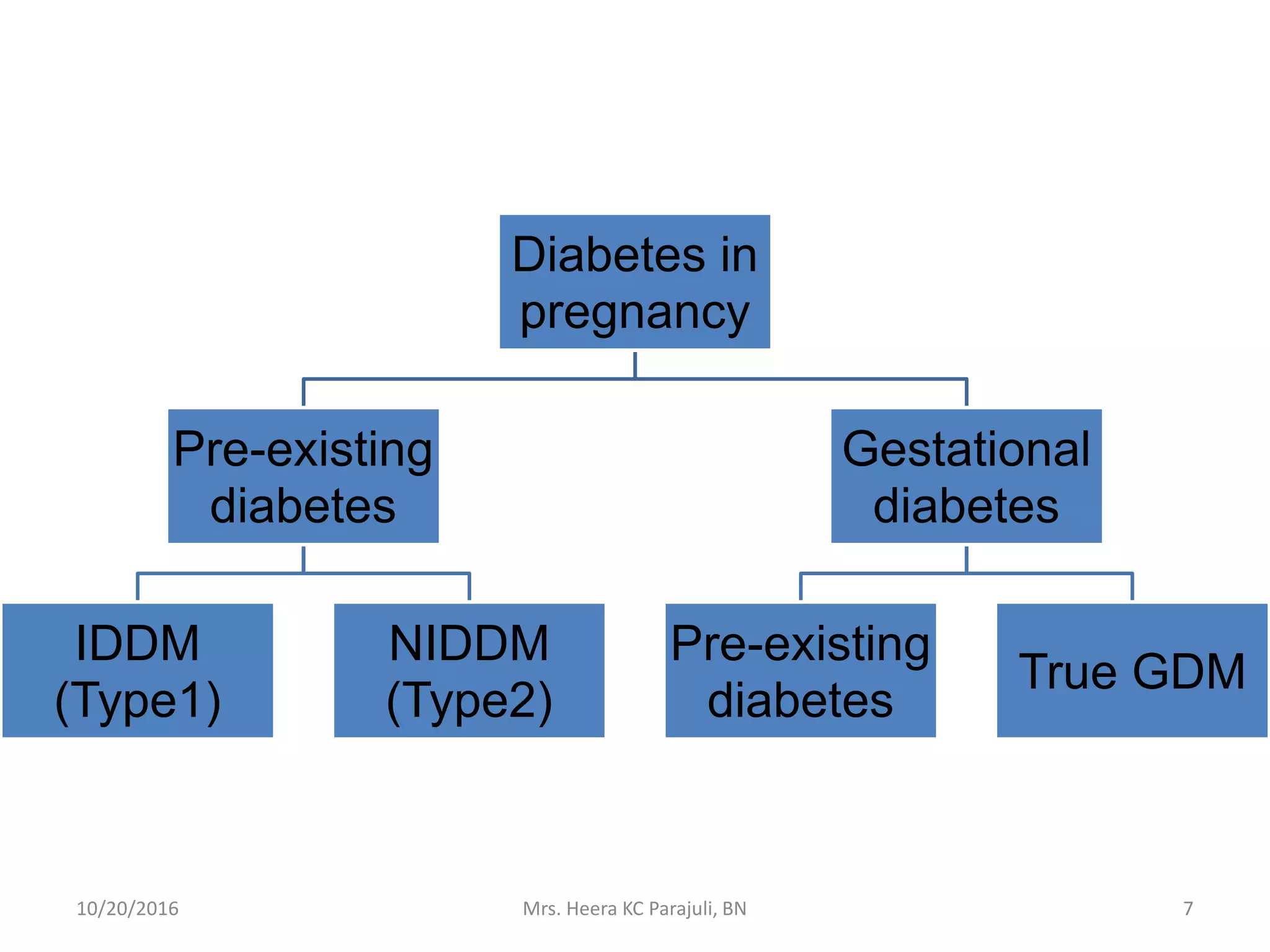
Diabetes in
pregnancy
Pre-existing
diabetes
IDDM
(Type1)
NIDDM
(Type2)
Gestational
diabetes
Pre-existing
diabetes
True GDM
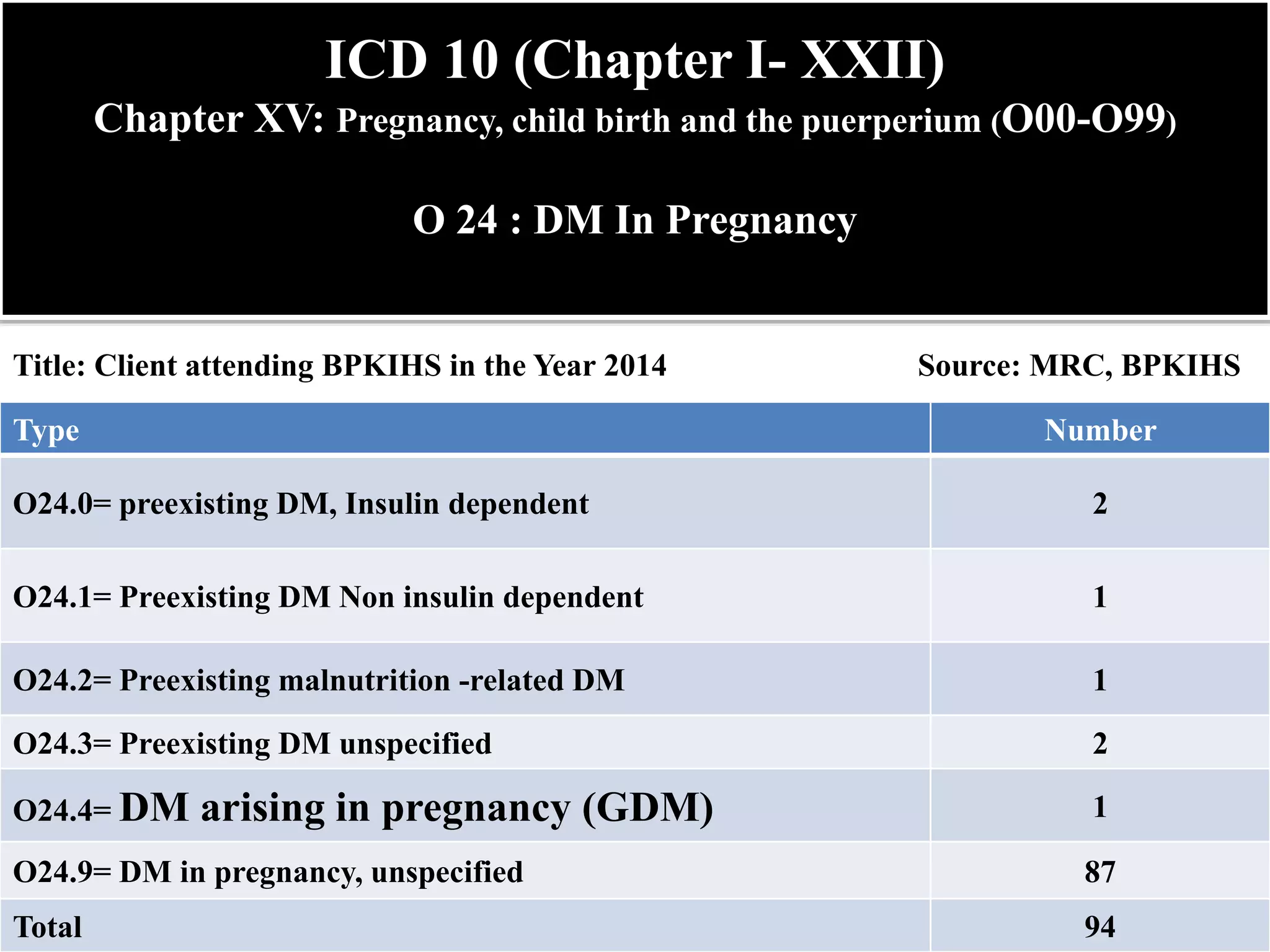
ICD 10 (Chapter I- XXII)
Chapter XV: Pregnancy, child birth and the puerperium (O00-O99)
O 24 : DM In Pregnancy
10/20/2016 8Mrs. Heera KC Parajuli, BN
Type Number
O24.0= preexisting DM, Insulin dependent 2
O24.1= Preexisting DM Non insulin dependent 1
O24.2= Preexisting malnutrition -related DM 1
O24.3= Preexisting DM unspecified 2
O24.4= DM arising in pregnancy (GDM) 1
O24.9= DM in pregnancy, unspecified 87
Total 94
Title: Client attending BPKIHS in the Year 2014 Source: MRC, BPKIHS
Types
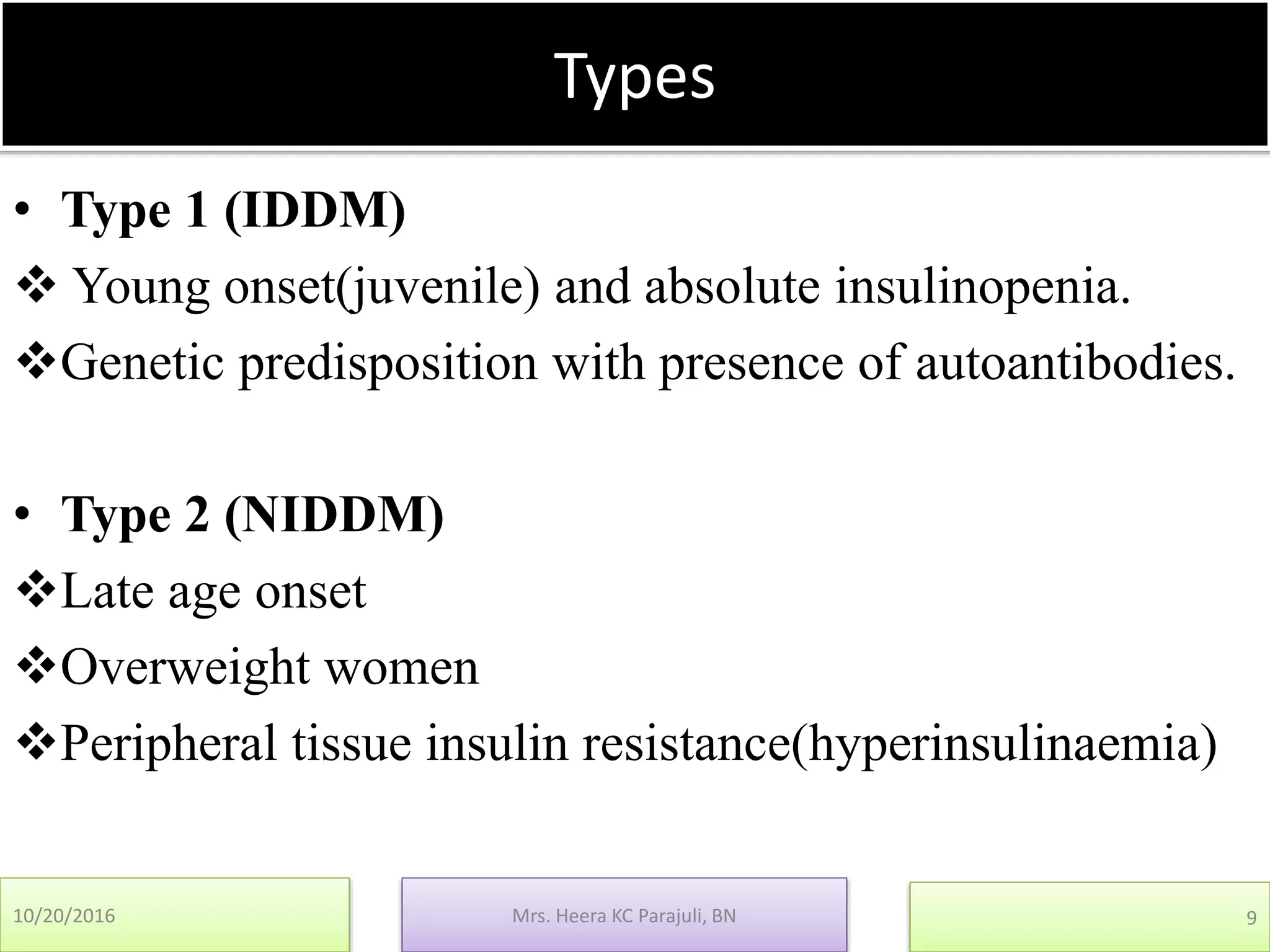
• Type 1 (IDDM)
 Young onset(juvenile) and absolute insulinopenia.
Genetic predisposition with presence of autoantibodies.
• Type 2 (NIDDM)
Late age onset
Overweight women
Peripheral tissue insulin resistance(hyperinsulinaemia)
10/20/2016 9Mrs. Heera KC Parajuli, BN
10/20/2016 Mrs. Heera KC Parajuli, BN 10
10/20/2016 Mrs. Heera KC Parajuli, BN 11
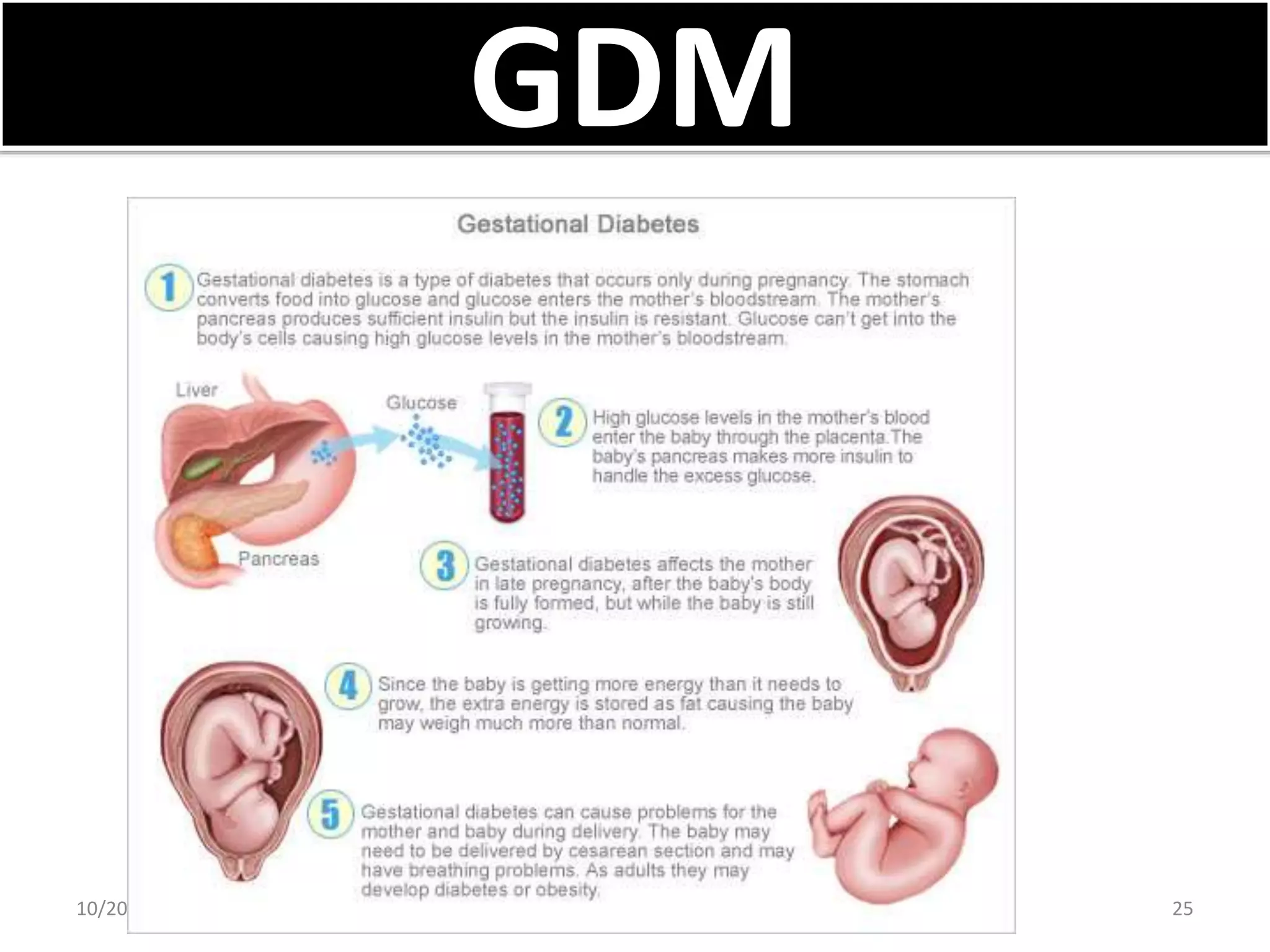
GESTATIONAL DIABETES MELLITUS
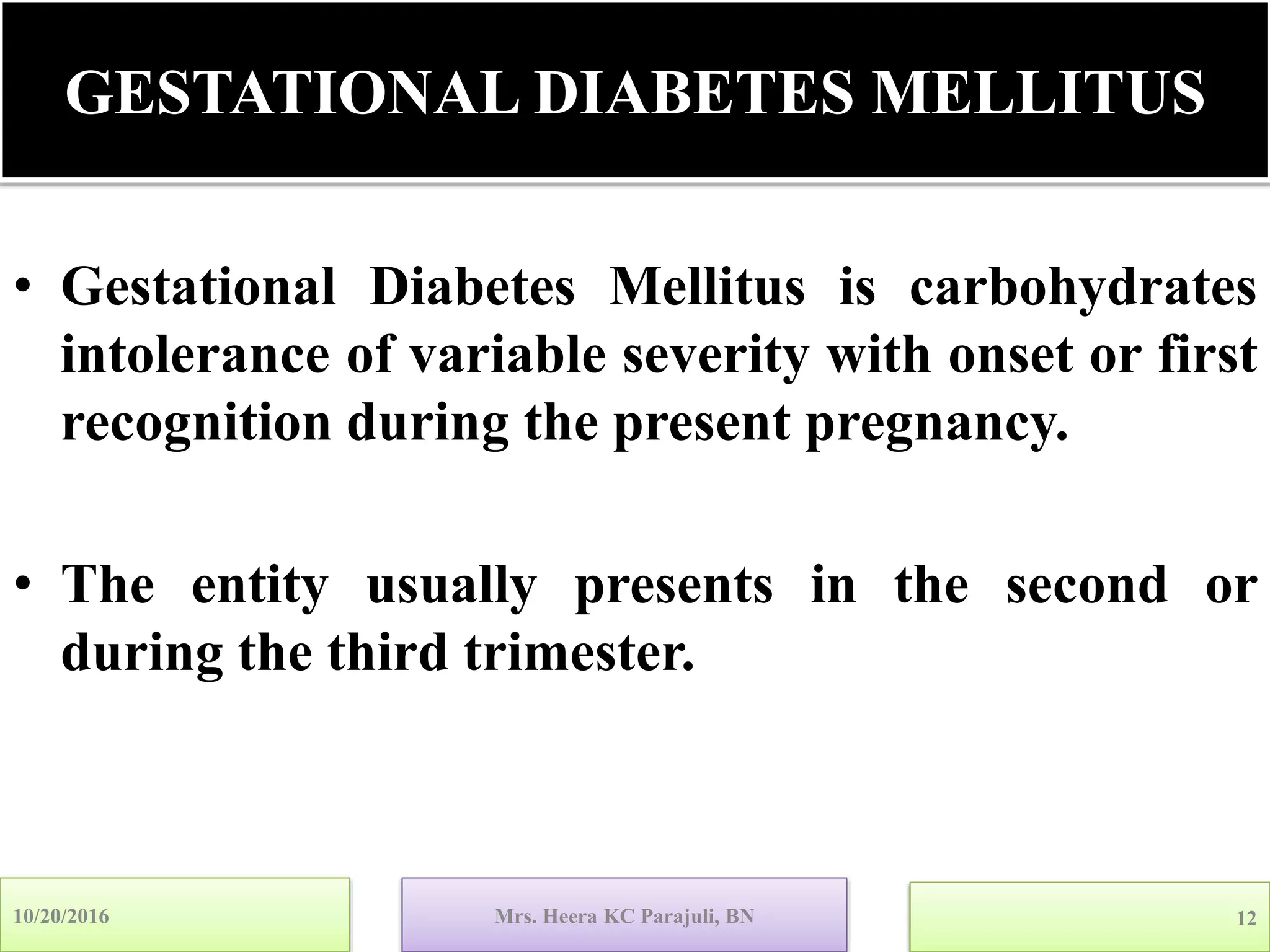
• Gestational Diabetes Mellitus is carbohydrates
intolerance of variable severity with onset or first
recognition during the present pregnancy.
• The entity usually presents in the second or
during the third trimester.
10/20/2016 12Mrs. Heera KC Parajuli, BN
OVERT DIABETES
• A patient with symptoms of Diabetes Mellitus
(polyuria, Polydipsia, weight loss) and random
plasma glucose concentration of 200 mg/dl or
more is overt diabetes.
• It may be detected for the first time in pregnancy.
• According to ADA, FBS >126mg/dl and
PP(75gm)> 200 mg/dl.
10/20/2016 13Mrs. Heera KC Parajuli, BN
EFFECT OF PREGNANCY ON DIABETES
 During pregnancy, due to altered carbohydrate
metabolism and an impaired insulin action, it is
difficult to stabilise the blood glucose.
The insulin antagonism is due to the combined
effect of HPL, estrogen, progesterone, free cortisol
and degradation of the insulin by the placenta.
10/20/2016 14Mrs. Heera KC Parajuli, BN
• The insulin requirement during pregnancy increases
as pregnancy advances.
• During pregnancy, renal threshold is diminished,
due to the combined effect of increased glomerular
filtration and impaired tubular reabsorption of
glucose. Glucose leaks out in the urine even though
the blood sugar level is well below 180mg/100 ml .
• Hence, repeated blood glucose test becomes
mandatory.
10/20/2016 15Mrs. Heera KC Parajuli, BN
• With the accelerated starvation, there is rapid
activation of lypolysis with short period of fasting.
• Ketoacidosis can be precipitated during
hyperemesis in early pregnancy, infections and
fasting of labor.
• It can be iatrogenically induced by certain drugs
like corticosteroids used in management of pre term
labor.
10/20/2016 16Mrs. Heera KC Parajuli, BN
• Insulin requirements fall significantly in
puerperium.
• Vascular changes, especially retinopathy,
nephropathy, CAD and neuropathy may be
worsened during pregnancy.
10/20/2016 17Mrs. Heera KC Parajuli, BN
Effect of diabetes on pregnancy
To the Mother
During pregnancy:
Abortion: recurrent spontaneous abortion may be
associated with uncontrolled DM.
Preterm labor(20%)- infection or polyhydramnious
Infection- UTI and vulvo vaginitis
Increased incidence of pre-eclampsia
Polyhydramnios (25-50%)
Maternal distress
10/20/2016 18Mrs. Heera KC Parajuli, BN
• Diabetic retinopathy
• Diabetic nephropathy
• ketoacidosis
10/20/2016 19Mrs. Heera KC Parajuli, BN
During Labor
Increase incidence of:
• Prolong labor due to big baby
• Shoulder dystocia
• Perineal injuries
• Postpartum haemorrhage
• Operative interferences
10/20/2016 20Mrs. Heera KC Parajuli, BN
Puerperium
• Puerperial sepsis
• Lactation failure
• PPH
10/20/2016 21Mrs. Heera KC Parajuli, BN
Fetal and Neonatal Hazards
FETAL MACROSOMIA:(30-40%)
10/20/2016 22Mrs. Heera KC Parajuli, BN
Elevation of
maternal
free fatty
acids
Maternal
hyperglycemia
• Congenital malformation(6-10%)
• Neonatal hypoglycaemia(<37mg/dl)
• Respiratory distress syndrome
• Hyperbillirubinaemia
• Polycythemia
• Hypocalcemia(<7mg/dl)
• cardiomyopathy
10/20/2016 23Mrs. Heera KC Parajuli, BN
Longterm effects:
• Childhood obesity
• Neuropsychological effects and diabetes
• Stillbirth
Perinatal mortality(2-3 times)
10/20/2016 24Mrs. Heera KC Parajuli, BN
GDM
10/20/2016 Mrs. Heera KC Parajuli, BN 25
WHO ARE THE POTENTIAL CANDIDATES ?
• Positive family history of diabetes (parents or
siblings).
• Previous birth of an overweight baby of 4 kg or
more
• Previous stillbirth with pancreatic disease..
• Unexplained perinatal loss.
• Presence of polyhydramnios or recurrent vaginal
candidiasis in present pregnancy.
10/20/2016 26Mrs. Heera KC Parajuli, BN
• Persistent glycosuria
• Age over 30 years
• Obesity
• Ethnic group (East Asian, Pacific Island
Ancestry)
10/20/2016 27Mrs. Heera KC Parajuli, BN
WHO ARE THE POTENTIAL CANDIDATES ?
Whom should you plan for screening for
GDM??
• Low risk- absence of any risk factors mentioned
above.
• Average risk- some risk factors
• High risk- blood glucose test as soon as feasible.
• (50gm oral glucose challenge test without regard to
time of day or last meal, between 24-28 weeks of
pregnancy.)
10/20/2016 28Mrs. Heera KC Parajuli, BN
Hazards of GDM
• Increased perinatal loss associated with fasting
hyperglycaemia .
• Increased incidence of macrosomia
• Polyhydramnios
• Birth trauma
• Reoccurence of GDM in subsequent pregnancy is
about 50 %.
10/20/2016 29Mrs. Heera KC Parajuli, BN
Management
Aim
Achieve maternal near normoglycemic
level to prevent adverse perinatal
outcomes
10/20/2016 Mrs. Heera KC Parajuli, BN 31
10/20/2016 Mrs. Heera KC Parajuli, BN 32
Management
• Close antenatal supervision.
• Periodic FBS/PP . FBS < than 90mg/dl.
• Maintenance of mean plasma blood glucose
between 105 and 110 mg/dl.
• Diet, exercise with or without insulin.
• Human Insulin should be started if FBS exceeds
90mg/dl and 2 hours postprandial value is
greater than 120 mg/dl(repetitive) even on diet
control.
10/20/2016 34Mrs. Heera KC Parajuli, BN
• Diet- normal woman (2000-2500kcal/day) and
restriction to 1200-1800 kcal/day for over weight
woman is recommended.
• Exercise (aerobic, brisk walking) programmes
are safe in pregnancy.
10/20/2016 35Mrs. Heera KC Parajuli, BN
Management con….
10/20/2016 Mrs. Heera KC Parajuli, BN 36
10/20/2016 Mrs. Heera KC Parajuli, BN 37
Obstetric management
Spontaneous labor for good glycaemic control.
Elective delivery for uncontrolled GDM, requiring
insulin or with complications (macrosomia) at
around 38 weeks.
10/20/2016 38Mrs. Heera KC Parajuli, BN
10/20/2016 Mrs. Heera KC Parajuli, BN 39
Thank You
0/20/2016 40Mrs. Heera KC Parajuli, BN

Gestational Diabetes Mellitus and Nursing Management

  • 1.
    CONTINUED NURSING EDUCATION PresentedBy Mrs. Heera KC Parajuli, BN Staff Nurse Post-natal ward, BPKIHS 10/20/2016 1Mrs. Heera KC Parajuli, BN DIABETES MELLITUS AND PREGNANCY
  • 2.
    • About 1-14% of all pregnancies are complicated by Diabetes mellitus and 90% of them are gestational Diabetes Mellitus. • Nearly 50% of women with GDM will become overt Diabetes over a period of 5 to 20 years. 10/20/2016 2Mrs. Heera KC Parajuli, BN Background Prevalence
  • 3.
    10/20/2016 Mrs. HeeraKC Parajuli, BN 3
  • 4.
    BRAINSTMORMING 10/20/2016 4Mrs. HeeraKC Parajuli, BN • Mrs, Sabita Devi Shah, 37 years old , G8P7AoL6Still birth 1 IUFD 1, SVD with Episiotomy done at 37 completed weeks. Her history reveals that at 20 weeks she had her fasting Blood glucose 200 mg/dl and PP 233 mg/dl. On subsequent check up also her blood sugar were found above normal that is FBS 150mg/dl and PP 287mg/dl. Urine test shows glycosuria. She had a positive history of Dm before pregnancy for which she took ayurvedic medicines as well. a) What would be her diagnosis?
  • 5.
    You got ahandover from OT about a case. • Mrs Sushma Bastola age 24 years, Emergency LSCS done at 38 weeks of gestation for prolonged labor with Gestational Dm. She gave a birth of a male baby weighing 4kg. Baby was born normal with no defects. ON medicines along with the antibiotics protocal Inj. GIK should be started as well.RBS should be monitored every 2 hourly and also of Babys’ RBS at 0. 2. 4, 6, 8, 12, to then 48 hours of life. a) What do you mean by GDM? b) Why the RBS is monitored frequently for both the baby’s and mother? 10/20/2016 Mrs. Heera KC Parajuli, BN 5
  • 6.
    Diabetes Mellitus • Diabetesmellitus is a chronic metabolic disorder due to either insulin deficiency (relative or absolute) or due to peripheral tissue resistance (decrease sensitivity) to the action of insulin. • The pathophysiology involved are:  Insulin resistance and  Inadequate secretion of insulin(B cell dysfunction) 10/20/2016 6Mrs. Heera KC Parajuli, BN
  • 7.
    10/20/2016 Mrs. HeeraKC Parajuli, BN 7 Diabetes in pregnancy Pre-existing diabetes IDDM (Type1) NIDDM (Type2) Gestational diabetes Pre-existing diabetes True GDM
  • 8.
    ICD 10 (ChapterI- XXII) Chapter XV: Pregnancy, child birth and the puerperium (O00-O99) O 24 : DM In Pregnancy 10/20/2016 8Mrs. Heera KC Parajuli, BN Type Number O24.0= preexisting DM, Insulin dependent 2 O24.1= Preexisting DM Non insulin dependent 1 O24.2= Preexisting malnutrition -related DM 1 O24.3= Preexisting DM unspecified 2 O24.4= DM arising in pregnancy (GDM) 1 O24.9= DM in pregnancy, unspecified 87 Total 94 Title: Client attending BPKIHS in the Year 2014 Source: MRC, BPKIHS
  • 9.
    Types • Type 1(IDDM)  Young onset(juvenile) and absolute insulinopenia. Genetic predisposition with presence of autoantibodies. • Type 2 (NIDDM) Late age onset Overweight women Peripheral tissue insulin resistance(hyperinsulinaemia) 10/20/2016 9Mrs. Heera KC Parajuli, BN
  • 10.
    10/20/2016 Mrs. HeeraKC Parajuli, BN 10
  • 11.
    10/20/2016 Mrs. HeeraKC Parajuli, BN 11
  • 12.
    GESTATIONAL DIABETES MELLITUS •Gestational Diabetes Mellitus is carbohydrates intolerance of variable severity with onset or first recognition during the present pregnancy. • The entity usually presents in the second or during the third trimester. 10/20/2016 12Mrs. Heera KC Parajuli, BN
  • 13.
    OVERT DIABETES • Apatient with symptoms of Diabetes Mellitus (polyuria, Polydipsia, weight loss) and random plasma glucose concentration of 200 mg/dl or more is overt diabetes. • It may be detected for the first time in pregnancy. • According to ADA, FBS >126mg/dl and PP(75gm)> 200 mg/dl. 10/20/2016 13Mrs. Heera KC Parajuli, BN
  • 14.
    EFFECT OF PREGNANCYON DIABETES  During pregnancy, due to altered carbohydrate metabolism and an impaired insulin action, it is difficult to stabilise the blood glucose. The insulin antagonism is due to the combined effect of HPL, estrogen, progesterone, free cortisol and degradation of the insulin by the placenta. 10/20/2016 14Mrs. Heera KC Parajuli, BN
  • 15.
    • The insulinrequirement during pregnancy increases as pregnancy advances. • During pregnancy, renal threshold is diminished, due to the combined effect of increased glomerular filtration and impaired tubular reabsorption of glucose. Glucose leaks out in the urine even though the blood sugar level is well below 180mg/100 ml . • Hence, repeated blood glucose test becomes mandatory. 10/20/2016 15Mrs. Heera KC Parajuli, BN
  • 16.
    • With theaccelerated starvation, there is rapid activation of lypolysis with short period of fasting. • Ketoacidosis can be precipitated during hyperemesis in early pregnancy, infections and fasting of labor. • It can be iatrogenically induced by certain drugs like corticosteroids used in management of pre term labor. 10/20/2016 16Mrs. Heera KC Parajuli, BN
  • 17.
    • Insulin requirementsfall significantly in puerperium. • Vascular changes, especially retinopathy, nephropathy, CAD and neuropathy may be worsened during pregnancy. 10/20/2016 17Mrs. Heera KC Parajuli, BN
  • 18.
    Effect of diabeteson pregnancy To the Mother During pregnancy: Abortion: recurrent spontaneous abortion may be associated with uncontrolled DM. Preterm labor(20%)- infection or polyhydramnious Infection- UTI and vulvo vaginitis Increased incidence of pre-eclampsia Polyhydramnios (25-50%) Maternal distress 10/20/2016 18Mrs. Heera KC Parajuli, BN
  • 19.
    • Diabetic retinopathy •Diabetic nephropathy • ketoacidosis 10/20/2016 19Mrs. Heera KC Parajuli, BN
  • 20.
    During Labor Increase incidenceof: • Prolong labor due to big baby • Shoulder dystocia • Perineal injuries • Postpartum haemorrhage • Operative interferences 10/20/2016 20Mrs. Heera KC Parajuli, BN
  • 21.
    Puerperium • Puerperial sepsis •Lactation failure • PPH 10/20/2016 21Mrs. Heera KC Parajuli, BN
  • 22.
    Fetal and NeonatalHazards FETAL MACROSOMIA:(30-40%) 10/20/2016 22Mrs. Heera KC Parajuli, BN Elevation of maternal free fatty acids Maternal hyperglycemia
  • 23.
    • Congenital malformation(6-10%) •Neonatal hypoglycaemia(<37mg/dl) • Respiratory distress syndrome • Hyperbillirubinaemia • Polycythemia • Hypocalcemia(<7mg/dl) • cardiomyopathy 10/20/2016 23Mrs. Heera KC Parajuli, BN
  • 24.
    Longterm effects: • Childhoodobesity • Neuropsychological effects and diabetes • Stillbirth Perinatal mortality(2-3 times) 10/20/2016 24Mrs. Heera KC Parajuli, BN
  • 25.
    GDM 10/20/2016 Mrs. HeeraKC Parajuli, BN 25
  • 26.
    WHO ARE THEPOTENTIAL CANDIDATES ? • Positive family history of diabetes (parents or siblings). • Previous birth of an overweight baby of 4 kg or more • Previous stillbirth with pancreatic disease.. • Unexplained perinatal loss. • Presence of polyhydramnios or recurrent vaginal candidiasis in present pregnancy. 10/20/2016 26Mrs. Heera KC Parajuli, BN
  • 27.
    • Persistent glycosuria •Age over 30 years • Obesity • Ethnic group (East Asian, Pacific Island Ancestry) 10/20/2016 27Mrs. Heera KC Parajuli, BN WHO ARE THE POTENTIAL CANDIDATES ?
  • 28.
    Whom should youplan for screening for GDM?? • Low risk- absence of any risk factors mentioned above. • Average risk- some risk factors • High risk- blood glucose test as soon as feasible. • (50gm oral glucose challenge test without regard to time of day or last meal, between 24-28 weeks of pregnancy.) 10/20/2016 28Mrs. Heera KC Parajuli, BN
  • 29.
    Hazards of GDM •Increased perinatal loss associated with fasting hyperglycaemia . • Increased incidence of macrosomia • Polyhydramnios • Birth trauma • Reoccurence of GDM in subsequent pregnancy is about 50 %. 10/20/2016 29Mrs. Heera KC Parajuli, BN
  • 30.
    Management Aim Achieve maternal nearnormoglycemic level to prevent adverse perinatal outcomes
  • 31.
    10/20/2016 Mrs. HeeraKC Parajuli, BN 31
  • 32.
    10/20/2016 Mrs. HeeraKC Parajuli, BN 32
  • 34.
    Management • Close antenatalsupervision. • Periodic FBS/PP . FBS < than 90mg/dl. • Maintenance of mean plasma blood glucose between 105 and 110 mg/dl. • Diet, exercise with or without insulin. • Human Insulin should be started if FBS exceeds 90mg/dl and 2 hours postprandial value is greater than 120 mg/dl(repetitive) even on diet control. 10/20/2016 34Mrs. Heera KC Parajuli, BN
  • 35.
    • Diet- normalwoman (2000-2500kcal/day) and restriction to 1200-1800 kcal/day for over weight woman is recommended. • Exercise (aerobic, brisk walking) programmes are safe in pregnancy. 10/20/2016 35Mrs. Heera KC Parajuli, BN Management con….
  • 36.
    10/20/2016 Mrs. HeeraKC Parajuli, BN 36
  • 37.
    10/20/2016 Mrs. HeeraKC Parajuli, BN 37
  • 38.
    Obstetric management Spontaneous laborfor good glycaemic control. Elective delivery for uncontrolled GDM, requiring insulin or with complications (macrosomia) at around 38 weeks. 10/20/2016 38Mrs. Heera KC Parajuli, BN
  • 39.
    10/20/2016 Mrs. HeeraKC Parajuli, BN 39
  • 40.
    Thank You 0/20/2016 40Mrs.Heera KC Parajuli, BN