Downloaded 74 times
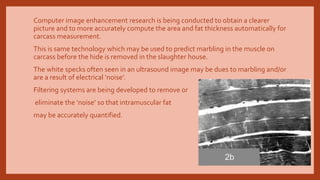
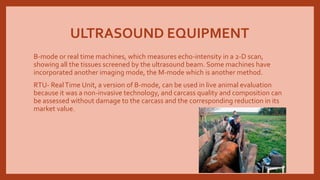
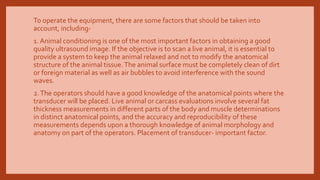


Ultrasound B-mode imaging uses high frequency sound waves produced by piezoelectric crystals in a transducer probe. The sound waves are injected into the skin and reflected back, where they are converted into electrical signals and displayed as images. Real-time or B-mode ultrasound provides cross-sectional images of animal carcasses almost instantaneously by recording how sound waves interact with tissue densities and properties. Ultrasound equipment uses these reflected signals to map greyscale images on a monitor. Applications of ultrasound include assessing backfat thickness, loin eye muscle area, lean percentage, carcass fat percentage, and intramuscular fat content.


