

REFRIGERATION
DEFINITION
Refrigeration is a process of moving heat from one location to another in controlled conditions. The work
of heat transport is traditionally driven by mechanical work, but can also be driven by
heat, magnetism, electricity, laser, or other means. Refrigeration has many applications, including, but not
limited to: household refrigerators, industrial freezers, cryogenics, and air conditioning. Heat pumps may
use the heat output of the refrigeration process, and also may be designed to be reversible, but are
otherwise similar to air conditioning units. Refrigeration has had a large impact on industry, lifestyle,
agriculture and settlement patterns.
PARTS OF REFRIGERATOR
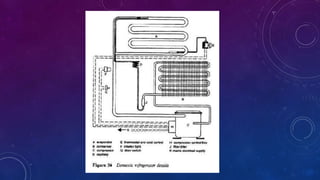
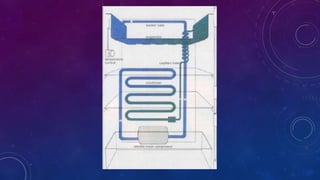
The refrigerator is used for storing all kinds of foods. The parts and their working can be
categorized into two categories:
• Internal parts
• External parts
INTERNAL PARTS
1. REFRIGERANT
The refrigerant flows through all the internal parts of the refrigerator. It is the refrigerant
that carries out the cooling effect in the evaporator. It absorbs the heat from the substance
to be cooled in the evaporator (chiller or freezer) and throws it to the atmosphere via
condenser. The refrigerant keeps on recirculating through all the internal parts of the
refrigerator in cycle.
2. COMPRESSOR
The compressor is located at the back of the refrigerator and in the bottom area. The
compressor sucks the refrigerant from the evaporator and discharges it at high pressure
and temperature. The compressor is driven by the electric motor and it is the major power
consuming devise of the refrigerator.
3. CONDENSER
The condenser is the thin coil of copper tubing located at the back of the refrigerator. The
refrigerant from the compressor enters the condenser where it is cooled by the atmospheric
air thus losing heat absorbed by it in the evaporator and the compressor. To increase the
heat transfer rate of the condenser, it is finned externally.
4. EXPANSIVE VALVE OR
CAPILLARY
The refrigerant leaving the condenser enters the expansion devise, which is the capillary
tube in case of the domestic refrigerators. The capillary is the thin copper tubing made up
of number of turns of the copper coil. When the refrigerant is passed through the capillary
its pressure and temperature drops down suddenly.
5. EVAPORATOR OR CHILLER
The refrigerant at very low pressure and temperature enters the evaporator or the freezer.
The evaporator is the heat exchanger made up of several turns of copper or aluminium
tubing. The refrigerant absorbs the heat from the substance to be cooled in the evaporator,
gets evaporated and it then sucked by the compressor. This cycle keeps on repeating.
6. THERMOSTAT
To control the temperature inside the refrigerator there is thermostat, whose sensor is
connected to the evaporator. The thermostat setting can be done by the round knob inside
the refrigerator compartment. When the set temperature is reached inside the refrigerator
the thermostat stops the electric supply to the compressor and compressor stops and when
the temperature falls below certain level it restarts the supply to the compressor.
7. DEFORST SYSTEM
The defrost system of the refrigerator helps removing the excess ice from the surface of the
evaporator. The defrost system can be operated manually by the thermostat button or there
is automatic system comprising of the electric heater and the timer.
EXTERNAL PARTS
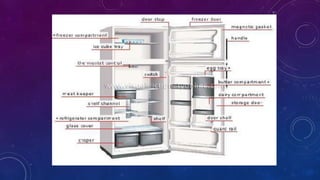
1. FREEZER COMPARTMENT
The food items that are to be kept at the freezing temperature are stored in the freezer
compartment. The temperature here is below zero degree Celsius so the water and many
other fluids freeze in this compartment. If you want to make ice cream, ice, freeze the food
etc. they have to be kept in the freezer compartment.
2. THERMOSTAT CONTROL
The thermostat control comprises of the round knob with the temperature scale that help
setting the required temperature inside the refrigerator. Proper setting of the thermostat as
per the requirements can help saving lots of refrigerator electricity bills.
3. REFRIGERATION COMPARTMENT
The refrigerator compartment is the biggest part of the refrigerator. Here all the food items
that are to be maintained at temperature above zero degree Celsius but in cooled condition
are kept. The refrigerator compartment can be divided into number of smaller shelves like
meat keeper, and others as per the requirement.
4. CRISPER
The highest temperature in the refrigerator compartment is maintained in the crisper. Here
one can keep the food items that can remain fresh even at the medium temperature like
fruits, vegetables, etc.
5. REFRIGERATION DOOR
COMPARTMENT
There are number of smaller subsections in the refrigerator main door compartment. Some
of these are egg compartment, butter, dairy, etc.
6. SWITCH
This is the small button that operates the small light inside the refrigerator. As soon the
door of the refrigerator opens, this switch supplies electricity to the bulb and it starts, while
when the door is closed the light from the bulb stops. This helps in starting the internal
bulb only when required.
Refrigeration

Refrigeration

  • 1.
  • 2.
    DEFINITION Refrigeration is aprocess of moving heat from one location to another in controlled conditions. The work of heat transport is traditionally driven by mechanical work, but can also be driven by heat, magnetism, electricity, laser, or other means. Refrigeration has many applications, including, but not limited to: household refrigerators, industrial freezers, cryogenics, and air conditioning. Heat pumps may use the heat output of the refrigeration process, and also may be designed to be reversible, but are otherwise similar to air conditioning units. Refrigeration has had a large impact on industry, lifestyle, agriculture and settlement patterns.
  • 3.
    PARTS OF REFRIGERATOR Therefrigerator is used for storing all kinds of foods. The parts and their working can be categorized into two categories: • Internal parts • External parts
  • 4.
  • 5.
    1. REFRIGERANT The refrigerantflows through all the internal parts of the refrigerator. It is the refrigerant that carries out the cooling effect in the evaporator. It absorbs the heat from the substance to be cooled in the evaporator (chiller or freezer) and throws it to the atmosphere via condenser. The refrigerant keeps on recirculating through all the internal parts of the refrigerator in cycle.
  • 6.
    2. COMPRESSOR The compressoris located at the back of the refrigerator and in the bottom area. The compressor sucks the refrigerant from the evaporator and discharges it at high pressure and temperature. The compressor is driven by the electric motor and it is the major power consuming devise of the refrigerator.
  • 7.
    3. CONDENSER The condenseris the thin coil of copper tubing located at the back of the refrigerator. The refrigerant from the compressor enters the condenser where it is cooled by the atmospheric air thus losing heat absorbed by it in the evaporator and the compressor. To increase the heat transfer rate of the condenser, it is finned externally.
  • 8.
    4. EXPANSIVE VALVEOR CAPILLARY The refrigerant leaving the condenser enters the expansion devise, which is the capillary tube in case of the domestic refrigerators. The capillary is the thin copper tubing made up of number of turns of the copper coil. When the refrigerant is passed through the capillary its pressure and temperature drops down suddenly.
  • 9.
    5. EVAPORATOR ORCHILLER The refrigerant at very low pressure and temperature enters the evaporator or the freezer. The evaporator is the heat exchanger made up of several turns of copper or aluminium tubing. The refrigerant absorbs the heat from the substance to be cooled in the evaporator, gets evaporated and it then sucked by the compressor. This cycle keeps on repeating.
  • 10.
    6. THERMOSTAT To controlthe temperature inside the refrigerator there is thermostat, whose sensor is connected to the evaporator. The thermostat setting can be done by the round knob inside the refrigerator compartment. When the set temperature is reached inside the refrigerator the thermostat stops the electric supply to the compressor and compressor stops and when the temperature falls below certain level it restarts the supply to the compressor.
  • 11.
    7. DEFORST SYSTEM Thedefrost system of the refrigerator helps removing the excess ice from the surface of the evaporator. The defrost system can be operated manually by the thermostat button or there is automatic system comprising of the electric heater and the timer.
  • 14.
  • 15.
    1. FREEZER COMPARTMENT Thefood items that are to be kept at the freezing temperature are stored in the freezer compartment. The temperature here is below zero degree Celsius so the water and many other fluids freeze in this compartment. If you want to make ice cream, ice, freeze the food etc. they have to be kept in the freezer compartment.
  • 16.
    2. THERMOSTAT CONTROL Thethermostat control comprises of the round knob with the temperature scale that help setting the required temperature inside the refrigerator. Proper setting of the thermostat as per the requirements can help saving lots of refrigerator electricity bills.
  • 17.
    3. REFRIGERATION COMPARTMENT Therefrigerator compartment is the biggest part of the refrigerator. Here all the food items that are to be maintained at temperature above zero degree Celsius but in cooled condition are kept. The refrigerator compartment can be divided into number of smaller shelves like meat keeper, and others as per the requirement.
  • 18.
    4. CRISPER The highesttemperature in the refrigerator compartment is maintained in the crisper. Here one can keep the food items that can remain fresh even at the medium temperature like fruits, vegetables, etc.
  • 19.
    5. REFRIGERATION DOOR COMPARTMENT Thereare number of smaller subsections in the refrigerator main door compartment. Some of these are egg compartment, butter, dairy, etc.
  • 20.
    6. SWITCH This isthe small button that operates the small light inside the refrigerator. As soon the door of the refrigerator opens, this switch supplies electricity to the bulb and it starts, while when the door is closed the light from the bulb stops. This helps in starting the internal bulb only when required.