Downloaded 700 times

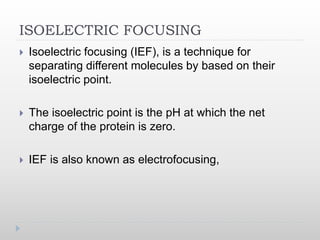

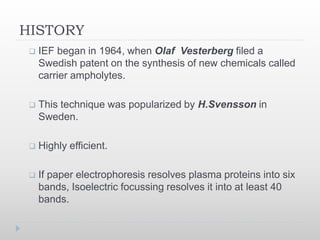

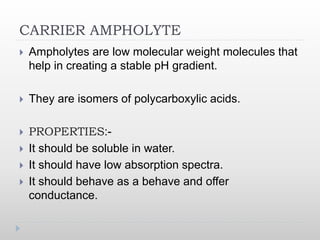
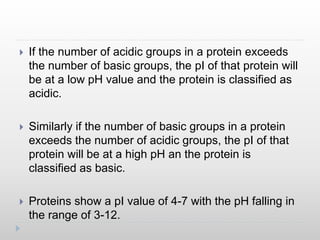
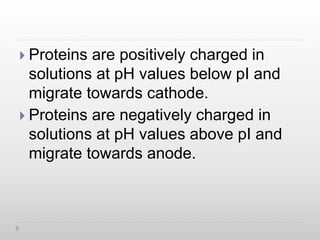

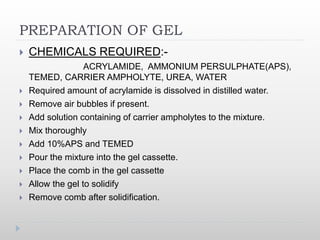
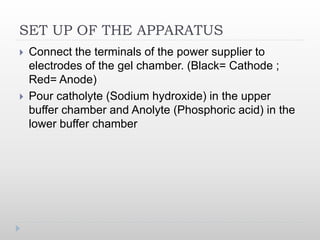
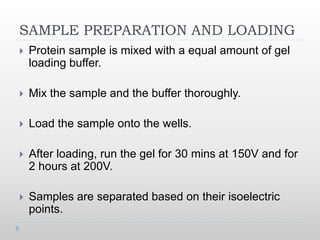
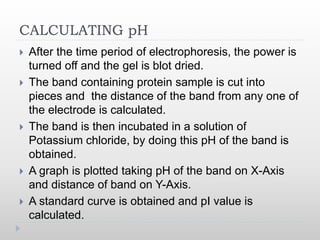


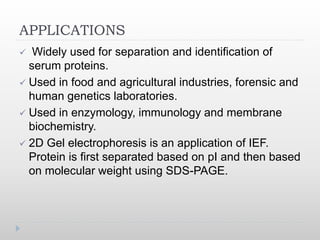



Isoelectric focusing is a technique that separates molecules like proteins based on their isoelectric point, which is the pH at which the molecule has no net charge. It was developed in the 1960s and allows for much better resolution than older techniques. The process involves creating an immobilized pH gradient using carrier ampholytes, loading protein samples, and applying an electric field to cause proteins to migrate to the point in the gradient matching their isoelectric point. The separated proteins can then be visualized through staining. Isoelectric focusing is useful for applications like identifying serum proteins and aiding in proteomics research.


![谷歌留痕技术 [ 𝙩𝙤𝙥 𝟮𝟯𝟯. 𝙘 𝙤𝙢 ]](https://cdn.slidesharecdn.com/ss_thumbnails/top233-260130174328-3833018c-thumbnail.jpg?width=640&height=640&fit=bounds)


