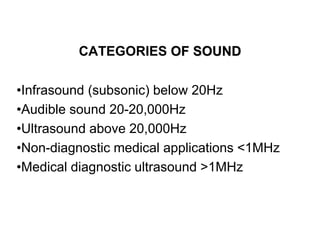
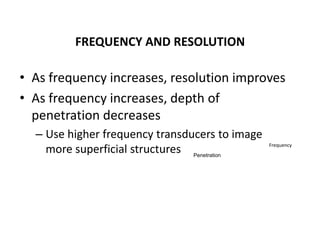

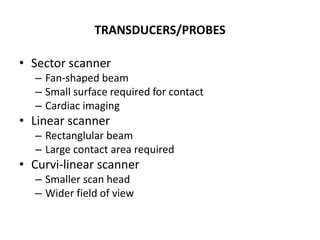
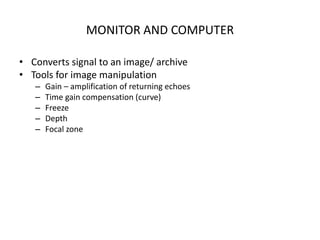
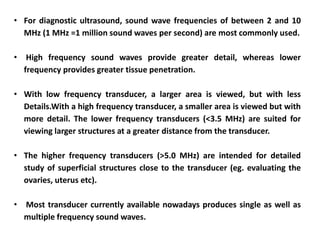





- Ultrasound uses high frequency sound waves between 1-20 MHz to create images of the inside of the body. Higher frequencies provide more detail while lower frequencies allow viewing of deeper structures. - The transducer transmits sound waves into the body which reflect off boundaries between tissues and organs. The reflections are converted into a real-time image on a monitor showing the location and characteristics of internal structures. - Common ultrasound modes include 2D brightness mode (B-mode) which shows a cross-sectional slice, motion mode (M-mode) for viewing heart walls, and Doppler modes for assessing blood flow. Proper patient positioning and use of ultrasound gel are required to obtain quality images.


