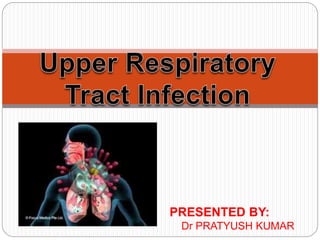
PRESENTED BY:
Dr PRATYUSH KUMAR
INTRODUCTION
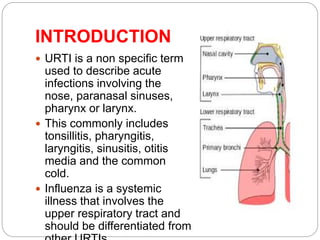
 URTI is a non specific term
used to describe acute
infections involving the
nose, paranasal sinuses,
pharynx or larynx.
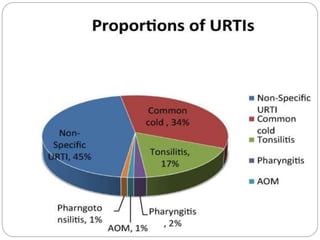
 This commonly includes
tonsillitis, pharyngitis,
laryngitis, sinusitis, otitis
media and the common
cold.
 Influenza is a systemic
illness that involves the
upper respiratory tract and
should be differentiated from
ORGANISMS
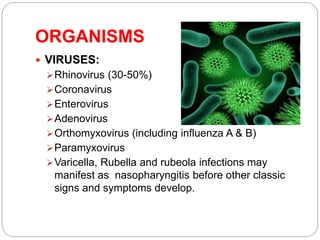
 VIRUSES:
Rhinovirus (30-50%)
Coronavirus
Enterovirus
Adenovirus
Orthomyxovirus (including influenza A & B)
Paramyxovirus
Varicella, Rubella and rubeola infections may
manifest as nasopharyngitis before other classic
signs and symptoms develop.
 BACTERIAS:
Group A beta hemolytic streptococci (15% of all
cases of pharyngitis)
Group C beta hemolytic streptococcus
Corynebacterium diptheriae
Neisseria gonorrhoea
Mycoplasma pneumoniae
Arcanobacterium hemolyticum
TRANSMISSION
 It occurs by aerosol droplet or direct hand-to-
hand contact with infected secretions with
subsequent passage to the nares or eyes.
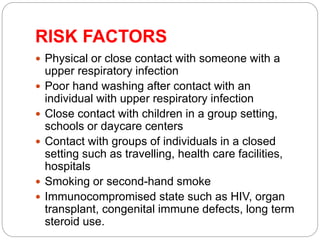
RISK FACTORS
 Physical or close contact with someone with a
upper respiratory infection
 Poor hand washing after contact with an
individual with upper respiratory infection
 Close contact with children in a group setting,
schools or daycare centers
 Contact with groups of individuals in a closed
setting such as travelling, health care facilities,
hospitals
 Smoking or second-hand smoke
 Immunocompromised state such as HIV, organ
transplant, congenital immune defects, long term
steroid use.
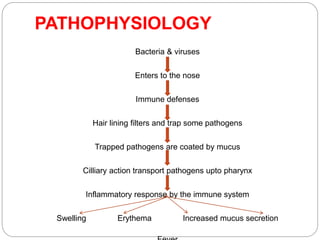
PATHOPHYSIOLOGY
Bacteria & viruses
Enters to the nose
Immune defenses
Hair lining filters and trap some pathogens
Trapped pathogens are coated by mucus
Cilliary action transport pathogens upto pharynx
Inflammatory response by the immune system
Swelling Erythema Increased mucus secretion
CLINICAL FEATURES
The Nasal cavity
 Pain and tenderness over sinuses
 Headache
 Mucopurulent nasal discharge
 Stuffy nose
 Facial pressure
 Fever
Sinusitis
 Specific for frontal sinus:
 Tender forehead
 Specific for maxillary
sinus:
 Aching upper jaw
 Aching teeth
 Tender cheeks
 Specific for ethmoid sinus:
 Swollen eyelids
 Pain between eyes
 Tenderness of sides of
nose
 Stuffy nose
 Specific for sphenoid
sinus:
 Earaches
Tonsillitis
 Pain in throat that may last
more than 48hrs and be
associated with difficulty in
swallowing.
 Tonsils are swollen and may
be coated or have white
spots on them.
 Fever
 Swollen lymphnodes under
the jaw and in neck.
 Headache
 Hoarseness of voice
Epiglottitis
 Sore throat
 Odynophagia or dysphagia
 Globus sensation of a lump in the
throat
 Muffled dysphonia or loss of voice
 Dry cough
 Dyspnoea
 Severe respiratory distress with
sternal and intercostal retractions,
nasal flaring, cyanosis and
tachycardia
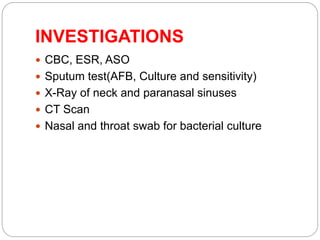
INVESTIGATIONS
 CBC, ESR, ASO
 Sputum test(AFB, Culture and sensitivity)
 X-Ray of neck and paranasal sinuses
 CT Scan
 Nasal and throat swab for bacterial culture
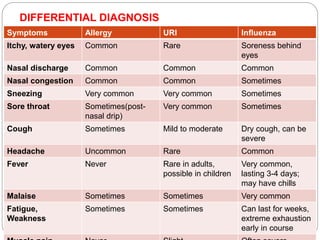
Symptoms Allergy URI Influenza
Itchy, watery eyes Common Rare Soreness behind
eyes
Nasal discharge Common Common Common
Nasal congestion Common Common Sometimes
Sneezing Very common Very common Sometimes
Sore throat Sometimes(post-
nasal drip)
Very common Sometimes
Cough Sometimes Mild to moderate Dry cough, can be
severe
Headache Uncommon Rare Common
Fever Never Rare in adults,
possible in children
Very common,
lasting 3-4 days;
may have chills
Malaise Sometimes Sometimes Very common
Fatigue,
Weakness
Sometimes Sometimes Can last for weeks,
extreme exhaustion
early in course
DIFFERENTIAL DIAGNOSIS
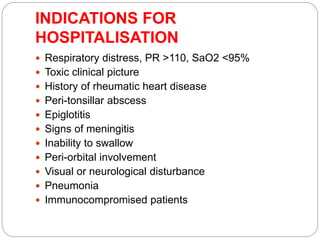
INDICATIONS FOR
HOSPITALISATION
 Respiratory distress, PR >110, SaO2 <95%
 Toxic clinical picture
 History of rheumatic heart disease
 Peri-tonsillar abscess
 Epiglotitis
 Signs of meningitis
 Inability to swallow
 Peri-orbital involvement
 Visual or neurological disturbance
 Pneumonia
 Immunocompromised patients
MANAGEMENT
 Patients should be encouraged to drink fluids to
prevent dehydration and to thin the respiratory
secretions.
 Use of vaporization may promote further thinning
and loosening of respiratory secretions.
 Rest is generally recommended to allow patients
to cope with their illness. Voice rest is important
for patients with hoarseness.
 Analgesics: Paracetamol 500mg QID for
 NSAID: Ibuprofen 400mg oral QID
 Nasal decongestant: Oxymetazoline
hydrochloride 2-3 drops each nostril TID for 3
days
 Antibiotics:
 Amoxicillin/Clavulanate 625mg TID for adults,
325mg TID for children
 Ciprofloxacin 500mg BD for adults, 150mg BD for
children
ACUTE SINUSITIS
 Initial therapy:
 Amoxicillin 500mg TID or
Amoxicillin/Clavulanate 500/125mg TID or
875/125mg BD
 Penicillin allergy:
 Doxycycline 100mg BD or
Clindamycin 300mg TID
 Penicillin resistant Pneumococcus:
 Moxifloxacin 400mg BD
ACUTE PHARYNGITIS
 Initial therapy:
 Penicillin G 1.2 million units IM or
Penicillin VK 250mg orally QID or 500mg orally BD
or
Amoxicillin 500mg orally BD for 10days.
 Penicillin resistant:
 Azithromycin 500mg orally QID for 5 days or
Clindamycin 300mg orally TID for 10days or
Cephalexin 500mg orally BD for 10days
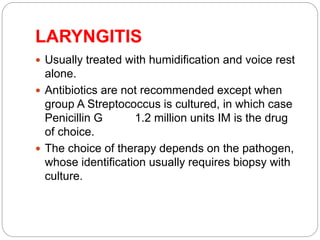
LARYNGITIS
 Usually treated with humidification and voice rest
alone.
 Antibiotics are not recommended except when
group A Streptococcus is cultured, in which case
Penicillin G 1.2 million units IM is the drug
of choice.
 The choice of therapy depends on the pathogen,
whose identification usually requires biopsy with
culture.
SURGICAL MANAGEMENT
 Rarely surgical procedures may be necessary in
cases of
 Complicated sinus infections
 Compressed airway with difficulty in breathing
 Peritonsillar abscess
 Mastoiditis etc
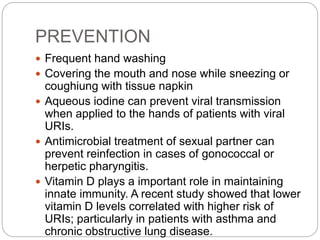
PREVENTION
 Frequent hand washing
 Covering the mouth and nose while sneezing or
coughiung with tissue napkin
 Aqueous iodine can prevent viral transmission
when applied to the hands of patients with viral
URIs.
 Antimicrobial treatment of sexual partner can
prevent reinfection in cases of gonococcal or
herpetic pharyngitis.
 Vitamin D plays a important role in maintaining
innate immunity. A recent study showed that lower
vitamin D levels correlated with higher risk of
URIs; particularly in patients with asthma and
chronic obstructive lung disease.
VACCINATION
 Center of Disease Control and Prevention(CDC)
recommends use of injectable influenza vaccines.
 Both Trivalent and Quadrivalent flu vaccines are
available.
 Vaccines available:
 Vaxigrib vaccine
 Fluzone vaccine
 Fluarix vaccine
SUMMARY
 Most URTIs are viral in origin.
 Diagnosis is mainly based on clinical manifestations.
 Adults with clinical findings suggestive of GABHS
pharyngitis should have a pharyngeal rapid
streptococcal antigen detection test before
considering antimicrobial therapy.
 Symptomatic treatment is the mainstay of treatment
for most URIs.
 Amoxicillin-clavulanate is the recommended first line
agent for treatment of suspected acute bacterial
rhinosinusitis.
 Antibiotics should be avoided in patients with a
common cold, mild acute rhinosinusitis but can be
given in cases of associated secondary bacterial
infection.
Urti

Urti

  • 1.
  • 2.
    INTRODUCTION  URTI isa non specific term used to describe acute infections involving the nose, paranasal sinuses, pharynx or larynx.  This commonly includes tonsillitis, pharyngitis, laryngitis, sinusitis, otitis media and the common cold.  Influenza is a systemic illness that involves the upper respiratory tract and should be differentiated from
  • 4.
    ORGANISMS  VIRUSES: Rhinovirus (30-50%) Coronavirus Enterovirus Adenovirus Orthomyxovirus(including influenza A & B) Paramyxovirus Varicella, Rubella and rubeola infections may manifest as nasopharyngitis before other classic signs and symptoms develop.
  • 5.
     BACTERIAS: Group Abeta hemolytic streptococci (15% of all cases of pharyngitis) Group C beta hemolytic streptococcus Corynebacterium diptheriae Neisseria gonorrhoea Mycoplasma pneumoniae Arcanobacterium hemolyticum
  • 6.
    TRANSMISSION  It occursby aerosol droplet or direct hand-to- hand contact with infected secretions with subsequent passage to the nares or eyes.
  • 7.
    RISK FACTORS  Physicalor close contact with someone with a upper respiratory infection  Poor hand washing after contact with an individual with upper respiratory infection  Close contact with children in a group setting, schools or daycare centers  Contact with groups of individuals in a closed setting such as travelling, health care facilities, hospitals  Smoking or second-hand smoke  Immunocompromised state such as HIV, organ transplant, congenital immune defects, long term steroid use.
  • 8.
    PATHOPHYSIOLOGY Bacteria & viruses Entersto the nose Immune defenses Hair lining filters and trap some pathogens Trapped pathogens are coated by mucus Cilliary action transport pathogens upto pharynx Inflammatory response by the immune system Swelling Erythema Increased mucus secretion
  • 9.
  • 10.
    The Nasal cavity Pain and tenderness over sinuses  Headache  Mucopurulent nasal discharge  Stuffy nose  Facial pressure  Fever
  • 11.
    Sinusitis  Specific forfrontal sinus:  Tender forehead  Specific for maxillary sinus:  Aching upper jaw  Aching teeth  Tender cheeks  Specific for ethmoid sinus:  Swollen eyelids  Pain between eyes  Tenderness of sides of nose  Stuffy nose  Specific for sphenoid sinus:  Earaches
  • 12.
    Tonsillitis  Pain inthroat that may last more than 48hrs and be associated with difficulty in swallowing.  Tonsils are swollen and may be coated or have white spots on them.  Fever  Swollen lymphnodes under the jaw and in neck.  Headache  Hoarseness of voice
  • 13.
    Epiglottitis  Sore throat Odynophagia or dysphagia  Globus sensation of a lump in the throat  Muffled dysphonia or loss of voice  Dry cough  Dyspnoea  Severe respiratory distress with sternal and intercostal retractions, nasal flaring, cyanosis and tachycardia
  • 14.
    INVESTIGATIONS  CBC, ESR,ASO  Sputum test(AFB, Culture and sensitivity)  X-Ray of neck and paranasal sinuses  CT Scan  Nasal and throat swab for bacterial culture
  • 15.
    Symptoms Allergy URIInfluenza Itchy, watery eyes Common Rare Soreness behind eyes Nasal discharge Common Common Common Nasal congestion Common Common Sometimes Sneezing Very common Very common Sometimes Sore throat Sometimes(post- nasal drip) Very common Sometimes Cough Sometimes Mild to moderate Dry cough, can be severe Headache Uncommon Rare Common Fever Never Rare in adults, possible in children Very common, lasting 3-4 days; may have chills Malaise Sometimes Sometimes Very common Fatigue, Weakness Sometimes Sometimes Can last for weeks, extreme exhaustion early in course DIFFERENTIAL DIAGNOSIS
  • 16.
    INDICATIONS FOR HOSPITALISATION  Respiratorydistress, PR >110, SaO2 <95%  Toxic clinical picture  History of rheumatic heart disease  Peri-tonsillar abscess  Epiglotitis  Signs of meningitis  Inability to swallow  Peri-orbital involvement  Visual or neurological disturbance  Pneumonia  Immunocompromised patients
  • 17.
    MANAGEMENT  Patients shouldbe encouraged to drink fluids to prevent dehydration and to thin the respiratory secretions.  Use of vaporization may promote further thinning and loosening of respiratory secretions.  Rest is generally recommended to allow patients to cope with their illness. Voice rest is important for patients with hoarseness.  Analgesics: Paracetamol 500mg QID for  NSAID: Ibuprofen 400mg oral QID
  • 18.
     Nasal decongestant:Oxymetazoline hydrochloride 2-3 drops each nostril TID for 3 days  Antibiotics:  Amoxicillin/Clavulanate 625mg TID for adults, 325mg TID for children  Ciprofloxacin 500mg BD for adults, 150mg BD for children
  • 19.
    ACUTE SINUSITIS  Initialtherapy:  Amoxicillin 500mg TID or Amoxicillin/Clavulanate 500/125mg TID or 875/125mg BD  Penicillin allergy:  Doxycycline 100mg BD or Clindamycin 300mg TID  Penicillin resistant Pneumococcus:  Moxifloxacin 400mg BD
  • 20.
    ACUTE PHARYNGITIS  Initialtherapy:  Penicillin G 1.2 million units IM or Penicillin VK 250mg orally QID or 500mg orally BD or Amoxicillin 500mg orally BD for 10days.  Penicillin resistant:  Azithromycin 500mg orally QID for 5 days or Clindamycin 300mg orally TID for 10days or Cephalexin 500mg orally BD for 10days
  • 21.
    LARYNGITIS  Usually treatedwith humidification and voice rest alone.  Antibiotics are not recommended except when group A Streptococcus is cultured, in which case Penicillin G 1.2 million units IM is the drug of choice.  The choice of therapy depends on the pathogen, whose identification usually requires biopsy with culture.
  • 22.
    SURGICAL MANAGEMENT  Rarelysurgical procedures may be necessary in cases of  Complicated sinus infections  Compressed airway with difficulty in breathing  Peritonsillar abscess  Mastoiditis etc
  • 23.
    PREVENTION  Frequent handwashing  Covering the mouth and nose while sneezing or coughiung with tissue napkin  Aqueous iodine can prevent viral transmission when applied to the hands of patients with viral URIs.  Antimicrobial treatment of sexual partner can prevent reinfection in cases of gonococcal or herpetic pharyngitis.  Vitamin D plays a important role in maintaining innate immunity. A recent study showed that lower vitamin D levels correlated with higher risk of URIs; particularly in patients with asthma and chronic obstructive lung disease.
  • 24.
    VACCINATION  Center ofDisease Control and Prevention(CDC) recommends use of injectable influenza vaccines.  Both Trivalent and Quadrivalent flu vaccines are available.  Vaccines available:  Vaxigrib vaccine  Fluzone vaccine  Fluarix vaccine
  • 25.
    SUMMARY  Most URTIsare viral in origin.  Diagnosis is mainly based on clinical manifestations.  Adults with clinical findings suggestive of GABHS pharyngitis should have a pharyngeal rapid streptococcal antigen detection test before considering antimicrobial therapy.  Symptomatic treatment is the mainstay of treatment for most URIs.  Amoxicillin-clavulanate is the recommended first line agent for treatment of suspected acute bacterial rhinosinusitis.  Antibiotics should be avoided in patients with a common cold, mild acute rhinosinusitis but can be given in cases of associated secondary bacterial infection.