A CASE PRESENTATION ON
CYSTITIS:
CASE NO: 7
CASE COLLECTED ON: 4.4.18
REG NO: 381610805
PRESENTED BY
M.ARUMUGAVIGNESH
PHARM D SECOND YEAR
BASED ON VIRUDHUNAGAR GOVERNMENT HEAD
HOSPITAL CASESHEET
2
PATIENT HISTORY:
Patient name: zzz
Ward: Female surgical ward
Age: 65 years
Sex: Female
I.P. no: 2817
Date of admission: 20/03/18 at 11.55 p.m
3
PROVISIONAL DIAGNOSIS:
• Cystitis
• Not a known case of hypertension, diabetes
mellitus and ischemic heart disease
• Known case of psychiatric illness
4
SUBJECTIVE EVIDENCES:
• Complaints of dysuresis
• Low abdominal pain
• Fever
• Pain
• Rarely bloody urine
Dysuresis is defined as urination difficulty along
with urinary retention.
5
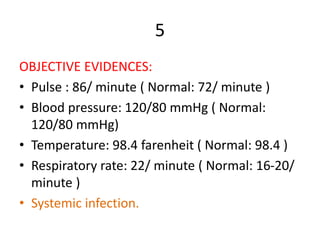
OBJECTIVE EVIDENCES:
• Pulse : 86/ minute ( Normal: 72/ minute )
• Blood pressure: 120/80 mmHg ( Normal:
120/80 mmHg)
• Temperature: 98.4 farenheit ( Normal: 98.4 )
• Respiratory rate: 22/ minute ( Normal: 16-20/
minute )
• Systemic infection.
6
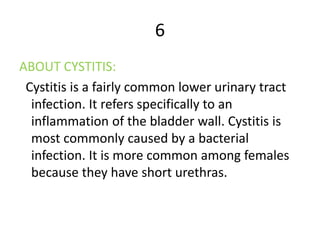
ABOUT CYSTITIS:
Cystitis is a fairly common lower urinary tract
infection. It refers specifically to an
inflammation of the bladder wall. Cystitis is
most commonly caused by a bacterial
infection. It is more common among females
because they have short urethras.
7
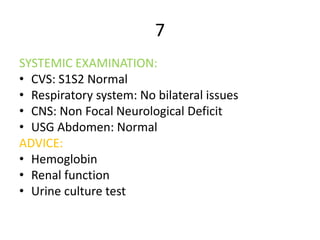
SYSTEMIC EXAMINATION:
• CVS: S1S2 Normal
• Respiratory system: No bilateral issues
• CNS: Non Focal Neurological Deficit
• USG Abdomen: Normal
ADVICE:
• Hemoglobin
• Renal function
• Urine culture test
8
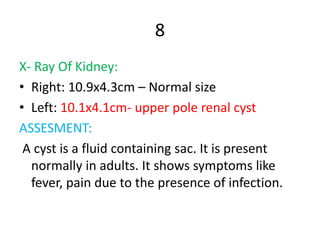
X- Ray Of Kidney:
• Right: 10.9x4.3cm – Normal size
• Left: 10.1x4.1cm- upper pole renal cyst
ASSESMENT:
A cyst is a fluid containing sac. It is present
normally in adults. It shows symptoms like
fever, pain due to the presence of infection.
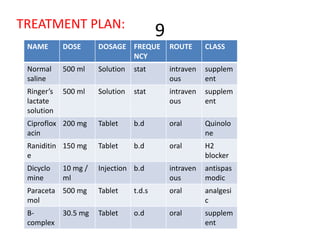
9TREATMENT PLAN:
NAME DOSE DOSAGE FREQUE
NCY
ROUTE CLASS
Normal
saline
500 ml Solution stat intraven
ous
supplem
ent
Ringer’s
lactate
solution
500 ml Solution stat intraven
ous
supplem
ent
Ciproflox
acin
200 mg Tablet b.d oral Quinolo
ne
Raniditin
e
150 mg Tablet b.d oral H2
blocker
Dicyclo
mine
10 mg /
ml
Injection b.d intraven
ous
antispas
modic
Paraceta
mol
500 mg Tablet t.d.s oral analgesi
c
B-
complex
30.5 mg Tablet o.d oral supplem
ent
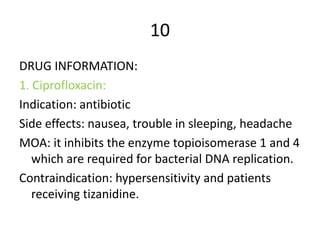
10
DRUG INFORMATION:
1. Ciprofloxacin:
Indication: antibiotic
Side effects: nausea, trouble in sleeping, headache
MOA: it inhibits the enzyme topioisomerase 1 and 4
which are required for bacterial DNA replication.
Contraindication: hypersensitivity and patients
receiving tizanidine.
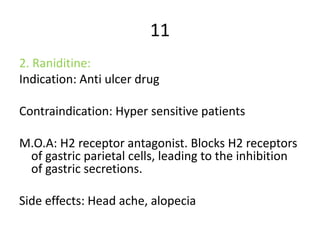
11
2. Raniditine:
Indication: Anti ulcer drug
Contraindication: Hyper sensitive patients
M.O.A: H2 receptor antagonist. Blocks H2 receptors
of gastric parietal cells, leading to the inhibition
of gastric secretions.
Side effects: Head ache, alopecia
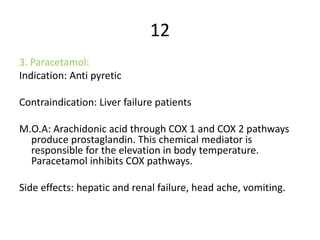
12
3. Paracetamol:
Indication: Anti pyretic
Contraindication: Liver failure patients
M.O.A: Arachidonic acid through COX 1 and COX 2 pathways
produce prostaglandin. This chemical mediator is
responsible for the elevation in body temperature.
Paracetamol inhibits COX pathways.
Side effects: hepatic and renal failure, head ache, vomiting.
13
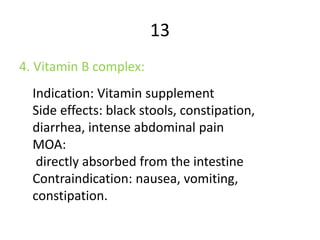
4. Vitamin B complex:
Indication: Vitamin supplement
Side effects: black stools, constipation,
diarrhea, intense abdominal pain
MOA:
directly absorbed from the intestine
Contraindication: nausea, vomiting,
constipation.
14
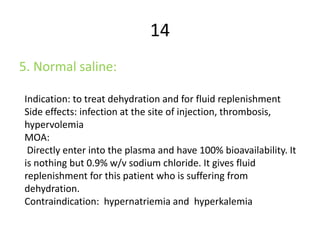
5. Normal saline:
Indication: to treat dehydration and for fluid replenishment
Side effects: infection at the site of injection, thrombosis,
hypervolemia
MOA:
Directly enter into the plasma and have 100% bioavailability. It
is nothing but 0.9% w/v sodium chloride. It gives fluid
replenishment for this patient who is suffering from
dehydration.
Contraindication: hypernatriemia and hyperkalemia
15
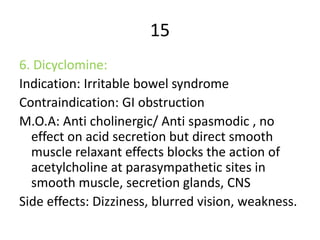
6. Dicyclomine:
Indication: Irritable bowel syndrome
Contraindication: GI obstruction
M.O.A: Anti cholinergic/ Anti spasmodic , no
effect on acid secretion but direct smooth
muscle relaxant effects blocks the action of
acetylcholine at parasympathetic sites in
smooth muscle, secretion glands, CNS
Side effects: Dizziness, blurred vision, weakness.
16
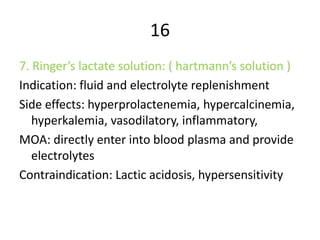
7. Ringer’s lactate solution: ( hartmann’s solution )
Indication: fluid and electrolyte replenishment
Side effects: hyperprolactenemia, hypercalcinemia,
hyperkalemia, vasodilatory, inflammatory,
MOA: directly enter into blood plasma and provide
electrolytes
Contraindication: Lactic acidosis, hypersensitivity
17
DRUG INTERACTIONS:
No drug- drug interactions are seen.
PHARMACIST INTERVENTION:
Raniditine and Vitamin B complex tablets are
recreational drugs.
The patient is suffering from psychiatric illness
but no step is taken to treat it.
Urine culture report is not well analysed.
18
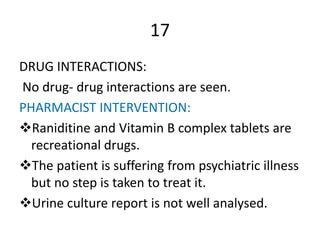
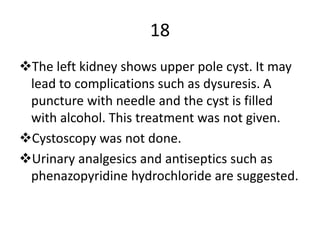
The left kidney shows upper pole cyst. It may
lead to complications such as dysuresis. A
puncture with needle and the cyst is filled
with alcohol. This treatment was not given.
Cystoscopy was not done.
Urinary analgesics and antiseptics such as
phenazopyridine hydrochloride are suggested.
19
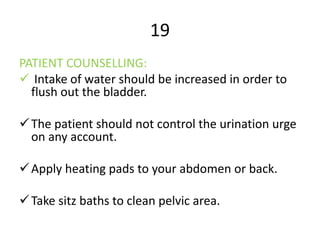
PATIENT COUNSELLING:
 Intake of water should be increased in order to
flush out the bladder.
The patient should not control the urination urge
on any account.
Apply heating pads to your abdomen or back.
Take sitz baths to clean pelvic area.
20
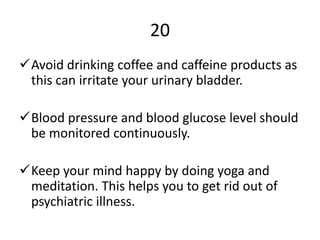
Avoid drinking coffee and caffeine products as
this can irritate your urinary bladder.
Blood pressure and blood glucose level should
be monitored continuously.
Keep your mind happy by doing yoga and
meditation. This helps you to get rid out of
psychiatric illness.

A case presentation on cystitis

  • 1.
    A CASE PRESENTATIONON CYSTITIS: CASE NO: 7 CASE COLLECTED ON: 4.4.18 REG NO: 381610805 PRESENTED BY M.ARUMUGAVIGNESH PHARM D SECOND YEAR BASED ON VIRUDHUNAGAR GOVERNMENT HEAD HOSPITAL CASESHEET
  • 2.
    2 PATIENT HISTORY: Patient name:zzz Ward: Female surgical ward Age: 65 years Sex: Female I.P. no: 2817 Date of admission: 20/03/18 at 11.55 p.m
  • 3.
    3 PROVISIONAL DIAGNOSIS: • Cystitis •Not a known case of hypertension, diabetes mellitus and ischemic heart disease • Known case of psychiatric illness
  • 4.
    4 SUBJECTIVE EVIDENCES: • Complaintsof dysuresis • Low abdominal pain • Fever • Pain • Rarely bloody urine Dysuresis is defined as urination difficulty along with urinary retention.
  • 5.
    5 OBJECTIVE EVIDENCES: • Pulse: 86/ minute ( Normal: 72/ minute ) • Blood pressure: 120/80 mmHg ( Normal: 120/80 mmHg) • Temperature: 98.4 farenheit ( Normal: 98.4 ) • Respiratory rate: 22/ minute ( Normal: 16-20/ minute ) • Systemic infection.
  • 6.
    6 ABOUT CYSTITIS: Cystitis isa fairly common lower urinary tract infection. It refers specifically to an inflammation of the bladder wall. Cystitis is most commonly caused by a bacterial infection. It is more common among females because they have short urethras.
  • 7.
    7 SYSTEMIC EXAMINATION: • CVS:S1S2 Normal • Respiratory system: No bilateral issues • CNS: Non Focal Neurological Deficit • USG Abdomen: Normal ADVICE: • Hemoglobin • Renal function • Urine culture test
  • 8.
    8 X- Ray OfKidney: • Right: 10.9x4.3cm – Normal size • Left: 10.1x4.1cm- upper pole renal cyst ASSESMENT: A cyst is a fluid containing sac. It is present normally in adults. It shows symptoms like fever, pain due to the presence of infection.
  • 9.
    9TREATMENT PLAN: NAME DOSEDOSAGE FREQUE NCY ROUTE CLASS Normal saline 500 ml Solution stat intraven ous supplem ent Ringer’s lactate solution 500 ml Solution stat intraven ous supplem ent Ciproflox acin 200 mg Tablet b.d oral Quinolo ne Raniditin e 150 mg Tablet b.d oral H2 blocker Dicyclo mine 10 mg / ml Injection b.d intraven ous antispas modic Paraceta mol 500 mg Tablet t.d.s oral analgesi c B- complex 30.5 mg Tablet o.d oral supplem ent
  • 10.
    10 DRUG INFORMATION: 1. Ciprofloxacin: Indication:antibiotic Side effects: nausea, trouble in sleeping, headache MOA: it inhibits the enzyme topioisomerase 1 and 4 which are required for bacterial DNA replication. Contraindication: hypersensitivity and patients receiving tizanidine.
  • 11.
    11 2. Raniditine: Indication: Antiulcer drug Contraindication: Hyper sensitive patients M.O.A: H2 receptor antagonist. Blocks H2 receptors of gastric parietal cells, leading to the inhibition of gastric secretions. Side effects: Head ache, alopecia
  • 12.
    12 3. Paracetamol: Indication: Antipyretic Contraindication: Liver failure patients M.O.A: Arachidonic acid through COX 1 and COX 2 pathways produce prostaglandin. This chemical mediator is responsible for the elevation in body temperature. Paracetamol inhibits COX pathways. Side effects: hepatic and renal failure, head ache, vomiting.
  • 13.
    13 4. Vitamin Bcomplex: Indication: Vitamin supplement Side effects: black stools, constipation, diarrhea, intense abdominal pain MOA: directly absorbed from the intestine Contraindication: nausea, vomiting, constipation.
  • 14.
    14 5. Normal saline: Indication:to treat dehydration and for fluid replenishment Side effects: infection at the site of injection, thrombosis, hypervolemia MOA: Directly enter into the plasma and have 100% bioavailability. It is nothing but 0.9% w/v sodium chloride. It gives fluid replenishment for this patient who is suffering from dehydration. Contraindication: hypernatriemia and hyperkalemia
  • 15.
    15 6. Dicyclomine: Indication: Irritablebowel syndrome Contraindication: GI obstruction M.O.A: Anti cholinergic/ Anti spasmodic , no effect on acid secretion but direct smooth muscle relaxant effects blocks the action of acetylcholine at parasympathetic sites in smooth muscle, secretion glands, CNS Side effects: Dizziness, blurred vision, weakness.
  • 16.
    16 7. Ringer’s lactatesolution: ( hartmann’s solution ) Indication: fluid and electrolyte replenishment Side effects: hyperprolactenemia, hypercalcinemia, hyperkalemia, vasodilatory, inflammatory, MOA: directly enter into blood plasma and provide electrolytes Contraindication: Lactic acidosis, hypersensitivity
  • 17.
    17 DRUG INTERACTIONS: No drug-drug interactions are seen. PHARMACIST INTERVENTION: Raniditine and Vitamin B complex tablets are recreational drugs. The patient is suffering from psychiatric illness but no step is taken to treat it. Urine culture report is not well analysed.
  • 18.
    18 The left kidneyshows upper pole cyst. It may lead to complications such as dysuresis. A puncture with needle and the cyst is filled with alcohol. This treatment was not given. Cystoscopy was not done. Urinary analgesics and antiseptics such as phenazopyridine hydrochloride are suggested.
  • 19.
    19 PATIENT COUNSELLING:  Intakeof water should be increased in order to flush out the bladder. The patient should not control the urination urge on any account. Apply heating pads to your abdomen or back. Take sitz baths to clean pelvic area.
  • 20.
    20 Avoid drinking coffeeand caffeine products as this can irritate your urinary bladder. Blood pressure and blood glucose level should be monitored continuously. Keep your mind happy by doing yoga and meditation. This helps you to get rid out of psychiatric illness.