TRANSMISSION BASED
PRECAUTIONS
BY: JITHIN RAJ
DEFINITION:
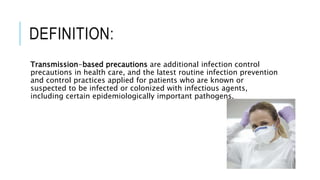
Transmission-based precautions are additional infection control
precautions in health care, and the latest routine infection prevention
and control practices applied for patients who are known or
suspected to be infected or colonized with infectious agents,
including certain epidemiologically important pathogens.
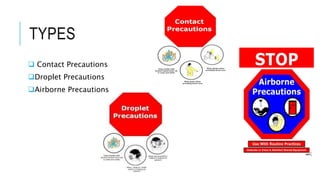
TYPES
 Contact Precautions
Droplet Precautions
Airborne Precautions
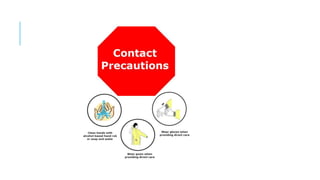
CONTACT PRECAUTIONS
Apply to patients with any of the following conditions and/or disease
•Presence of stool incontinence (may include patients with norovirus,
rotavirus, or Clostridium difficile)
•Draining wounds
•Uncontrolled secretions
•Pressure ulcers or presence of ostomy tubes and/or bags draining
body fluids
•MRSA
•Presence of generalized rash or exanthems
 Perform hand hygiene before touching patient and prior to wearing gloves
PPE use:
Wear gloves when touching the patient and the patient’s immediate environment or
belongings
Wear a gown if substantial contact with the patient or their environment is
anticipated
Perform hand hygiene after removal of PPE; note: use soap and water when hands
are visibly soiled (e.g., blood, body fluids), or after caring for patients with known
or suspected infectious diarrhea (e.g., Clostridium difficile, norovirus)
Clean/disinfect the room and surroundings
Donning PPE upon room entry and discarding before exiting the patient room is
done to contain pathogens, especially those that have been implicated in
transmission through environmental contamination (e.g., VRE, C. difficile,
noroviruses and other intestinal tract pathogens; RSV)
Provide a private room- if possible, otherwise In multi-patient rooms, >3 feet
spatial separation between beds is advised to reduce the opportunities for
inadvertent sharing of items between the infected/colonized patient and other
patients
DROPLET PRECAUTIONS
Apply to patients known or suspected to be infected with a
pathogen(more than 5 microns) that can be transmitted by droplet
route; these include, but are not limited to:
Respiratory viruses (e.g., influenza, parainfluenza virus, adenovirus,
respiratory syncytial virus, human metapneumovirus)
For first 24 hours of therapy: Neisseria meningitides, group A
streptococcus
A single patient room is preferred
When a single-patient room is not available, do cohorting (keeping the
patient with an existing roommate with a Spatial separation of more than 3
feet)
Healthcare personnel wear a mask (a respirator is not necessary) for close
contact with infectious patient; the mask is generally donned upon room
entry
Patients on Droplet Precautions who must be transported outside of the
room should wear a mask if tolerated and follow Respiratory
Hygiene/Cough Etiquette*. Minimize the patient transfer/ transportation
If substantial spraying of respiratory fluids is anticipated, gloves and
gown as well as goggles (or face shield in place of goggles) should be worn
Perform hand hygiene before and after touching the patient and after
contact with respiratory secretions and contaminated
objects/materials; note: use soap and water when hands are visibly soiled
(e.g., blood, body fluids)
Clean and disinfect the room
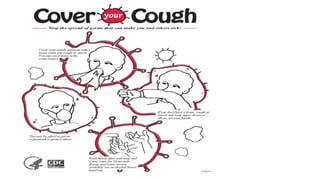
RESPIRATORY / COUGH ETIQUETTE
Cover your mouth and nose with a
tissue when coughing or sneezing;
Use in the nearest waste receptacle
to dispose of the tissue after use;
Perform hand hygiene (e.g., hand
washing with non-antimicrobial soap
and water, alcohol-based hand rub, or
antiseptic hand wash) after having
contact with respiratory secretions
and contaminated objects/materials.
AIRBORNE PRECAUTION
Apply to patients known or suspected to be infected with a pathogen
that can be transmitted by airborne route; these include, but are not
limited to:
Tuberculosis
Measles
Chickenpox (until lesions are crusted over)
Localized (in immunocompromised patient) or disseminated herpes
zoster (until lesions are crusted over)
Place the patient immediately in an airborne infection isolation room (AIIR)
PPE use:
Wear a fit-tested N-95 or higher level disposable respirator, if available, when
caring for the patient; the respirator should be donned prior to room entry and
removed after exiting room*
If substantial spraying of respiratory fluids is anticipated, gloves and gown as well
as goggles or face shield should be worn
Perform hand hygiene before and after touching the patient and after contact with
respiratory secretions and/or body fluids and contaminated
objects/materials; note: use soap and water when hands are visibly soiled (e.g.,
blood, body fluids)
Instruct patient to wear a facemask when exiting the exam room, avoid coming into
close contact with other patients , and practice respiratory hygiene and cough
etiquette
Once the patient leaves, the room should remain vacant for generally
one hour before anyone enters; however, adequate wait time may
vary depending on the ventilation rate of the room
If staff must enter the room during the wait time, they are required
to use respiratory protection
Minimize the patient transfer/ transport
Clean and disinfect the room accordingly
Whenever possible, non-immune HCWs should not care for patients
with vaccine-preventable airborne diseases (e.g., measles,
chickenpox, and smallpox)
RESPIRATOR SEAL CHECK
(HTTPS://YOUTU.BE/PGXIUYAOED8)
VIDEO
Transmission based precautions

Transmission based precautions

  • 1.
  • 2.
    DEFINITION: Transmission-based precautions areadditional infection control precautions in health care, and the latest routine infection prevention and control practices applied for patients who are known or suspected to be infected or colonized with infectious agents, including certain epidemiologically important pathogens.
  • 3.
    TYPES  Contact Precautions DropletPrecautions Airborne Precautions
  • 4.
    CONTACT PRECAUTIONS Apply topatients with any of the following conditions and/or disease •Presence of stool incontinence (may include patients with norovirus, rotavirus, or Clostridium difficile) •Draining wounds •Uncontrolled secretions •Pressure ulcers or presence of ostomy tubes and/or bags draining body fluids •MRSA •Presence of generalized rash or exanthems
  • 5.
     Perform handhygiene before touching patient and prior to wearing gloves PPE use: Wear gloves when touching the patient and the patient’s immediate environment or belongings Wear a gown if substantial contact with the patient or their environment is anticipated Perform hand hygiene after removal of PPE; note: use soap and water when hands are visibly soiled (e.g., blood, body fluids), or after caring for patients with known or suspected infectious diarrhea (e.g., Clostridium difficile, norovirus) Clean/disinfect the room and surroundings Donning PPE upon room entry and discarding before exiting the patient room is done to contain pathogens, especially those that have been implicated in transmission through environmental contamination (e.g., VRE, C. difficile, noroviruses and other intestinal tract pathogens; RSV) Provide a private room- if possible, otherwise In multi-patient rooms, >3 feet spatial separation between beds is advised to reduce the opportunities for inadvertent sharing of items between the infected/colonized patient and other patients
  • 7.
    DROPLET PRECAUTIONS Apply topatients known or suspected to be infected with a pathogen(more than 5 microns) that can be transmitted by droplet route; these include, but are not limited to: Respiratory viruses (e.g., influenza, parainfluenza virus, adenovirus, respiratory syncytial virus, human metapneumovirus) For first 24 hours of therapy: Neisseria meningitides, group A streptococcus
  • 8.
    A single patientroom is preferred When a single-patient room is not available, do cohorting (keeping the patient with an existing roommate with a Spatial separation of more than 3 feet) Healthcare personnel wear a mask (a respirator is not necessary) for close contact with infectious patient; the mask is generally donned upon room entry Patients on Droplet Precautions who must be transported outside of the room should wear a mask if tolerated and follow Respiratory Hygiene/Cough Etiquette*. Minimize the patient transfer/ transportation If substantial spraying of respiratory fluids is anticipated, gloves and gown as well as goggles (or face shield in place of goggles) should be worn Perform hand hygiene before and after touching the patient and after contact with respiratory secretions and contaminated objects/materials; note: use soap and water when hands are visibly soiled (e.g., blood, body fluids) Clean and disinfect the room
  • 9.
    RESPIRATORY / COUGHETIQUETTE Cover your mouth and nose with a tissue when coughing or sneezing; Use in the nearest waste receptacle to dispose of the tissue after use; Perform hand hygiene (e.g., hand washing with non-antimicrobial soap and water, alcohol-based hand rub, or antiseptic hand wash) after having contact with respiratory secretions and contaminated objects/materials.
  • 11.
    AIRBORNE PRECAUTION Apply topatients known or suspected to be infected with a pathogen that can be transmitted by airborne route; these include, but are not limited to: Tuberculosis Measles Chickenpox (until lesions are crusted over) Localized (in immunocompromised patient) or disseminated herpes zoster (until lesions are crusted over)
  • 12.
    Place the patientimmediately in an airborne infection isolation room (AIIR) PPE use: Wear a fit-tested N-95 or higher level disposable respirator, if available, when caring for the patient; the respirator should be donned prior to room entry and removed after exiting room* If substantial spraying of respiratory fluids is anticipated, gloves and gown as well as goggles or face shield should be worn Perform hand hygiene before and after touching the patient and after contact with respiratory secretions and/or body fluids and contaminated objects/materials; note: use soap and water when hands are visibly soiled (e.g., blood, body fluids) Instruct patient to wear a facemask when exiting the exam room, avoid coming into close contact with other patients , and practice respiratory hygiene and cough etiquette
  • 13.
    Once the patientleaves, the room should remain vacant for generally one hour before anyone enters; however, adequate wait time may vary depending on the ventilation rate of the room If staff must enter the room during the wait time, they are required to use respiratory protection Minimize the patient transfer/ transport Clean and disinfect the room accordingly Whenever possible, non-immune HCWs should not care for patients with vaccine-preventable airborne diseases (e.g., measles, chickenpox, and smallpox)
  • 14.
  • 16.