Transmission-based
Precaution Techniques
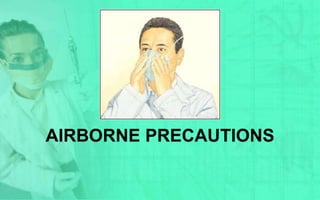
AIRBORNE PRECAUTIONS
• Designed to reduce the risk of
  airborne transmission of infectious
  agents through dissemination of
  small droplet nuclei >5 microns in
  size or small-particle residue of
  evaporated droplets that may
  remain suspended in the air for long
  periods or dust particles containing
  the infectious agent.
• Microorganisms carried in this
  manner can be dispersed widely by
  air currents and may become
  inhaled by or deposited on a
  susceptible host within the same
  room or over a longer distance from
  the source patient
  • Therefore, special air handling,
    filtration, and ventilation are required
• Examples:
  • measles, varicella (including
    disseminated zoster), TB

• Wear respiratory protection when
  entering the room of a patient with
  known or suspected PTB or any of
  the other known or suspected
  airborne-transmitted diseases
  • at least an N-95 respirator or PAPR
• Place the patient in a private room
  that has:
  • Monitored negative air pressure in
    relation to the surrounding areas.
  • At least 6 but preferably 12 air
    changes per hour.
  • Appropriate discharge of air
    outdoors or monitored high-
    efficiency filtration of room air before
    recirculation.
  • Door that is closed at all times with
    the patient in the room.
• Health care workers who are
  susceptible should not enter the
  rooms of patients known or
  suspected to have:
  • measles (rubeola) or chickenpox
    (varicella)
• If susceptible individuals must enter
  the room, they should wear a N-95
  or PAPR mask
• Persons immune to rubeola or
  varicella need not wear a mask
• Limit the transport of the patient
  from the room to essential purposes
  only.
  • Minimize patient dispersal of droplet
    nuclei by placing a surgical mask on the
    patient.
  • Notify the destination department about
    the patient and the patient's status so
    they can provide protection to their staff
    and other patients.
  • Minimize the time the patient is in the
    visiting department.
DROPLET PRECAUTIONS
• Designed for care of patients known
  or suspected to be infected with
  microorganisms transmitted by
  droplets (large particles) that can be
  generated by the patient when
  coughing, sneezing, talking, or
  during the performance of
  procedures.

• Wear a mask when working within 3
  feet (0.9 m) of the patient's mouth.
• Examples:
  • Invasive Haemophilus influenzae type b
    disease, including meningitis,
    pneumonia, epiglottitis, sepsis
  • Invasive N. meningitidis disease,
    including meningitis, pneumonia, sepsis
  • Diphtheria, mycoplasma pneumonia,
    pertussis, pneumonic plague,
    streptococcal pharyngitis, pneumonia,
    or scarlet fever in infants and young
    children
  • Adenovirus, influenza, mumps,
    parvovirus B19, rubella
• Place the patient in a private room.

  • When a private room is not
    available, place patients with the
    same microorganism together
    (cohorting).
  • If neither of these is possible,
    maintain spatial separation of at
    least 3 feet between the infected
    patient and other patients
• Special air handling and ventilation
  are not necessary, the door may
  remain open

• Limit the transport of the patient
  from the room to essential purposes
  only.
  • If transport is necessary, minimize
    dispersal of droplets by masking the
    patient.
CONTACT PRECAUTIONS
• Used for patients known or
  suspected to be infected or
  colonized with epidemiologically
  important microorganisms that can
  be transmitted by direct or indirect
  contact
• direct contact with the patient
   • skin-to-skin or patient's skin to staff's
     clothing as contact occurs when
     performing patient care activities
     that require touching the patient's
     skin
• indirect contact
   • touching with environmental
     surfaces or patient care items in the
     patient's environment.
• Examples :
  • Methicillin (oxacillin)-resistant
    Staphylococcus aureus (MRSA
    [ORSA])
  • Vancomycin-resistant Enterococcus.
  • Vancomycin-intermediate-resistant S.
    aureus, also known as glycopeptide-
    resistant S. aureus.
  • Clostridium difficile (when patient has
    diarrhea).
  • For diapered or incontinent patients,
    Escherichia coli 0157:H7, shigella,
    hepatitis A, rotavirus.
• Respiratory syncytial virus,
  parainfluenza virus, or enteroviral
  infections in young children; diphtheria;
  herpes simplex virus (primary cases).
• Impetigo, major (noncontained)
  abscesses, cellulitis, or decubiti.
• Pediculosis, scabies, staphylococcal
  furunculosis in infants and young
  children.
• Herpes zoster.
• Place the patient in a private room
  or in a room with a patient who has
  the same microorganism (cohorting)
• When possible, dedicate the use of
  noncritical patient care equipment to
  a single patient
  • Consider disposable equipment
    where possible.
• Thoroughly clean and disinfect
  reusable equipment before use for
  another patient.
• In addition to wearing gloves as
  outlined under Standard
  Precautions, everyone (including
  visitors) must wear gloves when
  entering the room.

  • Change gloves after contact with
    infective material, such as feces and
    wound drainage.
• Remove gloves before leaving the
  patient's environment and perform
  appropriate hand hygiene
  immediately with an antimicrobial
  soap or alcohol-based waterless
  antiseptic agent.

• After glove removal and hand
  hygiene, make sure that hands do
  not touch potentially contaminated
  environmental surfaces or items in
  the patient's room.
Transmission based precaution techniques

Transmission based precaution techniques

  • 1.
  • 2.
  • 3.
    • Designed toreduce the risk of airborne transmission of infectious agents through dissemination of small droplet nuclei >5 microns in size or small-particle residue of evaporated droplets that may remain suspended in the air for long periods or dust particles containing the infectious agent.
  • 4.
    • Microorganisms carriedin this manner can be dispersed widely by air currents and may become inhaled by or deposited on a susceptible host within the same room or over a longer distance from the source patient • Therefore, special air handling, filtration, and ventilation are required
  • 5.
    • Examples: • measles, varicella (including disseminated zoster), TB • Wear respiratory protection when entering the room of a patient with known or suspected PTB or any of the other known or suspected airborne-transmitted diseases • at least an N-95 respirator or PAPR
  • 6.
    • Place thepatient in a private room that has: • Monitored negative air pressure in relation to the surrounding areas. • At least 6 but preferably 12 air changes per hour. • Appropriate discharge of air outdoors or monitored high- efficiency filtration of room air before recirculation. • Door that is closed at all times with the patient in the room.
  • 7.
    • Health careworkers who are susceptible should not enter the rooms of patients known or suspected to have: • measles (rubeola) or chickenpox (varicella) • If susceptible individuals must enter the room, they should wear a N-95 or PAPR mask • Persons immune to rubeola or varicella need not wear a mask
  • 8.
    • Limit thetransport of the patient from the room to essential purposes only. • Minimize patient dispersal of droplet nuclei by placing a surgical mask on the patient. • Notify the destination department about the patient and the patient's status so they can provide protection to their staff and other patients. • Minimize the time the patient is in the visiting department.
  • 9.
  • 10.
    • Designed forcare of patients known or suspected to be infected with microorganisms transmitted by droplets (large particles) that can be generated by the patient when coughing, sneezing, talking, or during the performance of procedures. • Wear a mask when working within 3 feet (0.9 m) of the patient's mouth.
  • 11.
    • Examples: • Invasive Haemophilus influenzae type b disease, including meningitis, pneumonia, epiglottitis, sepsis • Invasive N. meningitidis disease, including meningitis, pneumonia, sepsis • Diphtheria, mycoplasma pneumonia, pertussis, pneumonic plague, streptococcal pharyngitis, pneumonia, or scarlet fever in infants and young children • Adenovirus, influenza, mumps, parvovirus B19, rubella
  • 12.
    • Place thepatient in a private room. • When a private room is not available, place patients with the same microorganism together (cohorting). • If neither of these is possible, maintain spatial separation of at least 3 feet between the infected patient and other patients
  • 13.
    • Special airhandling and ventilation are not necessary, the door may remain open • Limit the transport of the patient from the room to essential purposes only. • If transport is necessary, minimize dispersal of droplets by masking the patient.
  • 14.
  • 15.
    • Used forpatients known or suspected to be infected or colonized with epidemiologically important microorganisms that can be transmitted by direct or indirect contact
  • 16.
    • direct contactwith the patient • skin-to-skin or patient's skin to staff's clothing as contact occurs when performing patient care activities that require touching the patient's skin • indirect contact • touching with environmental surfaces or patient care items in the patient's environment.
  • 17.
    • Examples : • Methicillin (oxacillin)-resistant Staphylococcus aureus (MRSA [ORSA]) • Vancomycin-resistant Enterococcus. • Vancomycin-intermediate-resistant S. aureus, also known as glycopeptide- resistant S. aureus. • Clostridium difficile (when patient has diarrhea). • For diapered or incontinent patients, Escherichia coli 0157:H7, shigella, hepatitis A, rotavirus.
  • 18.
    • Respiratory syncytialvirus, parainfluenza virus, or enteroviral infections in young children; diphtheria; herpes simplex virus (primary cases). • Impetigo, major (noncontained) abscesses, cellulitis, or decubiti. • Pediculosis, scabies, staphylococcal furunculosis in infants and young children. • Herpes zoster.
  • 19.
    • Place thepatient in a private room or in a room with a patient who has the same microorganism (cohorting) • When possible, dedicate the use of noncritical patient care equipment to a single patient • Consider disposable equipment where possible. • Thoroughly clean and disinfect reusable equipment before use for another patient.
  • 20.
    • In additionto wearing gloves as outlined under Standard Precautions, everyone (including visitors) must wear gloves when entering the room. • Change gloves after contact with infective material, such as feces and wound drainage.
  • 21.
    • Remove glovesbefore leaving the patient's environment and perform appropriate hand hygiene immediately with an antimicrobial soap or alcohol-based waterless antiseptic agent. • After glove removal and hand hygiene, make sure that hands do not touch potentially contaminated environmental surfaces or items in the patient's room.