The separation of a person
with infectious disease
from contact with other
human beings for the
period of communicability
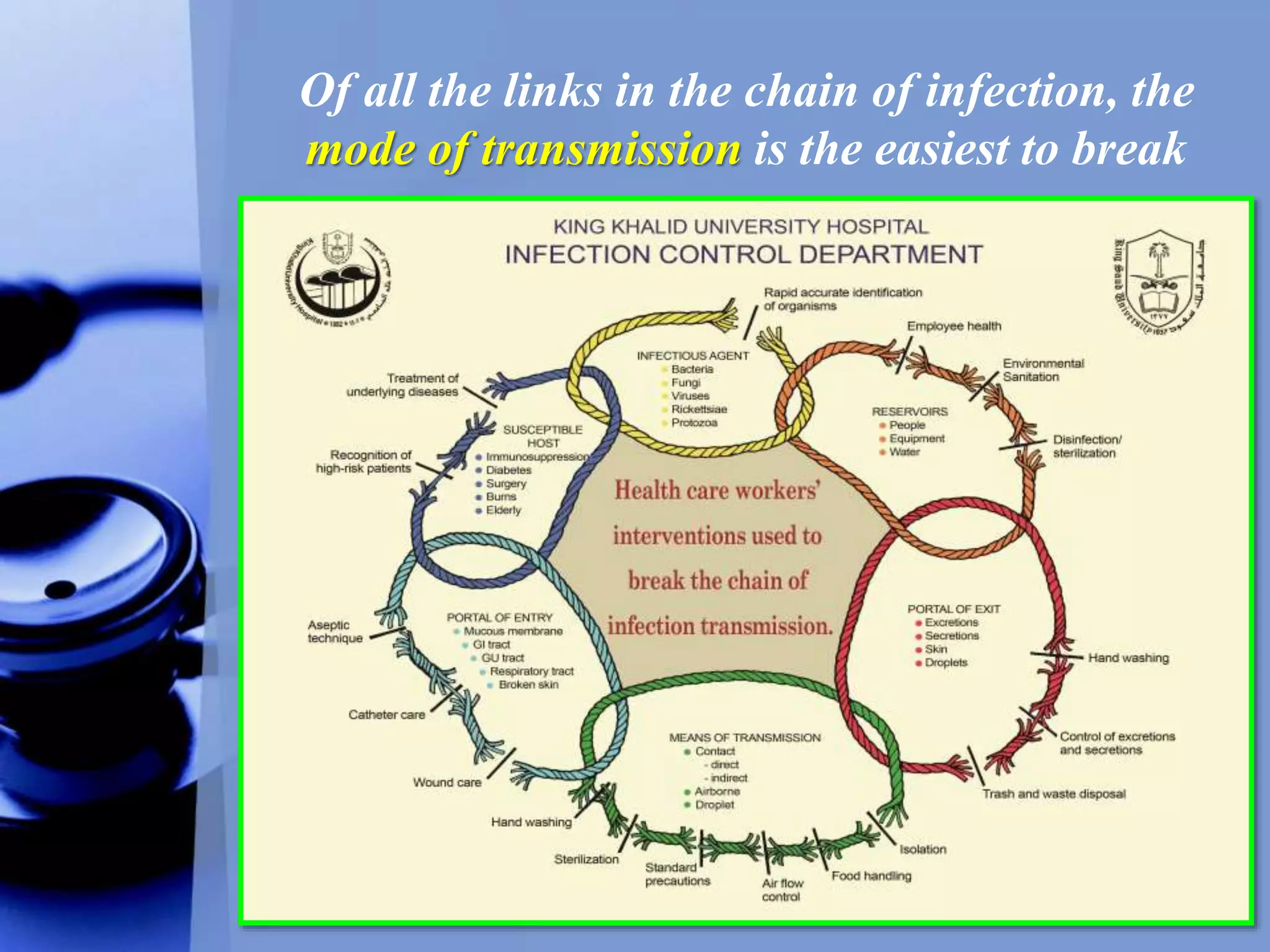
Of all the links in the chain of infection, the
mode of transmission is the easiest to break
Airborne Precautions
Droplet Precautions
Contact Precautions
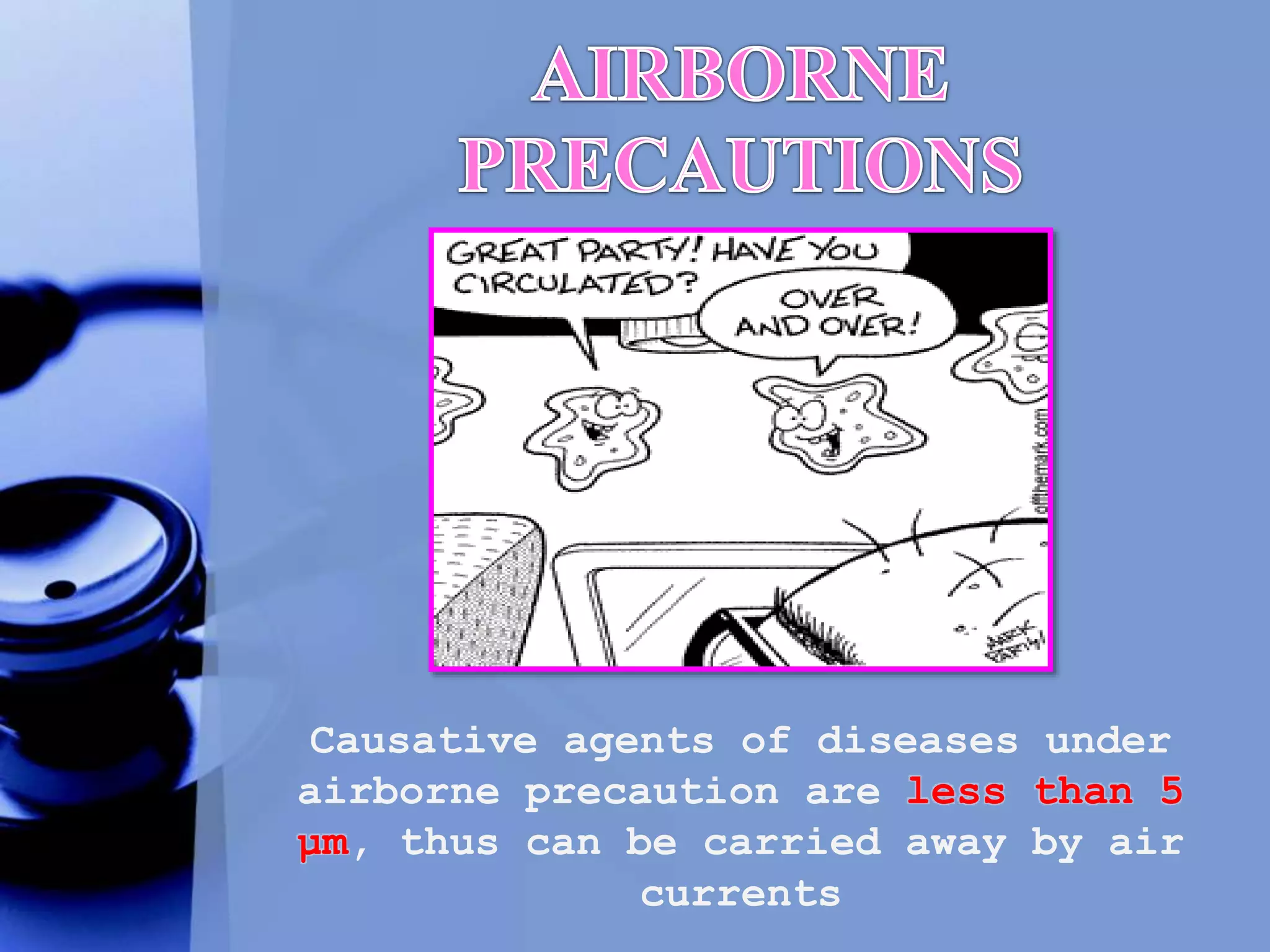
Causative agents of diseases under
airborne precaution are less than 5
μm, thus can be carried away by air
currents
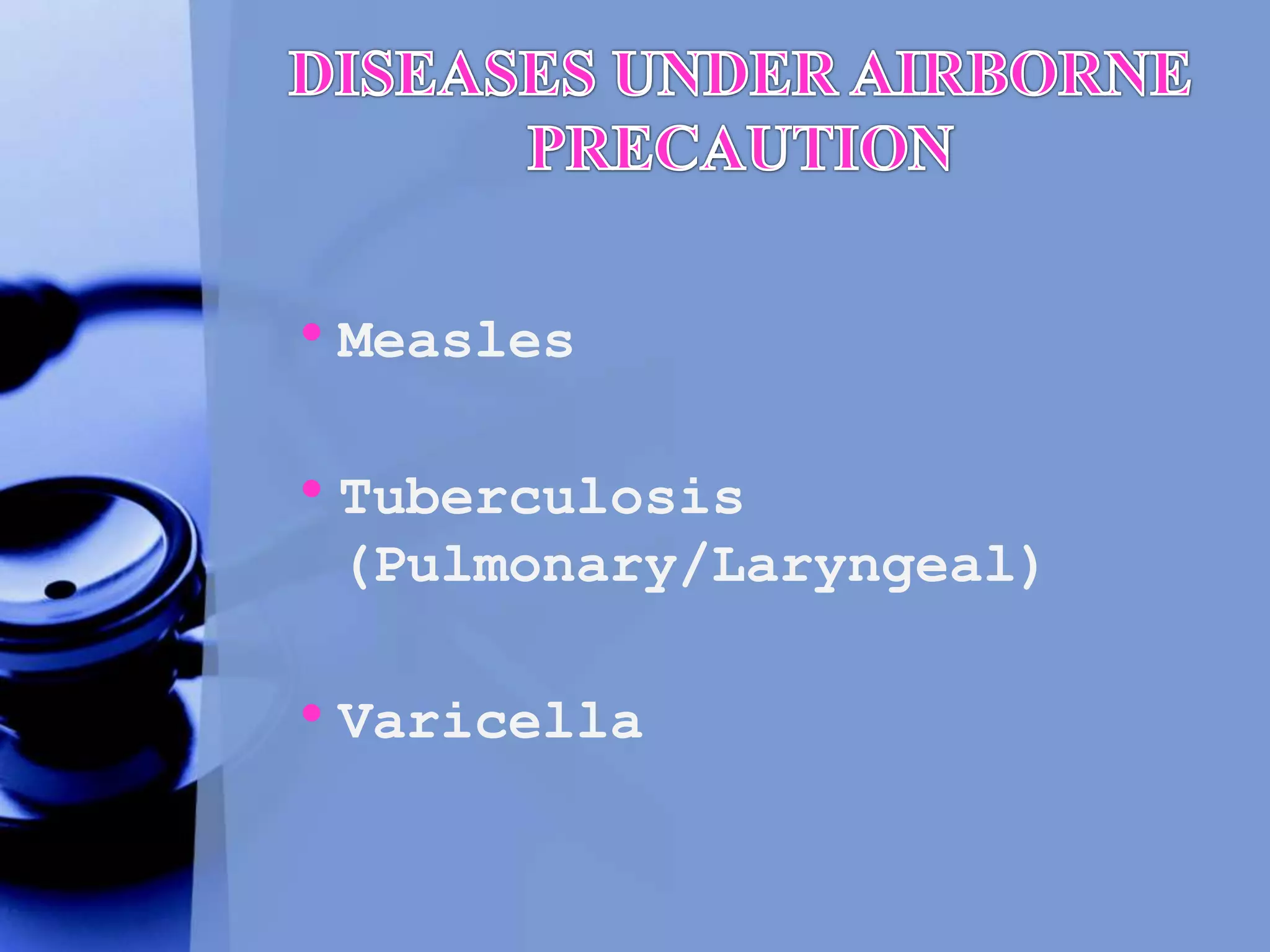
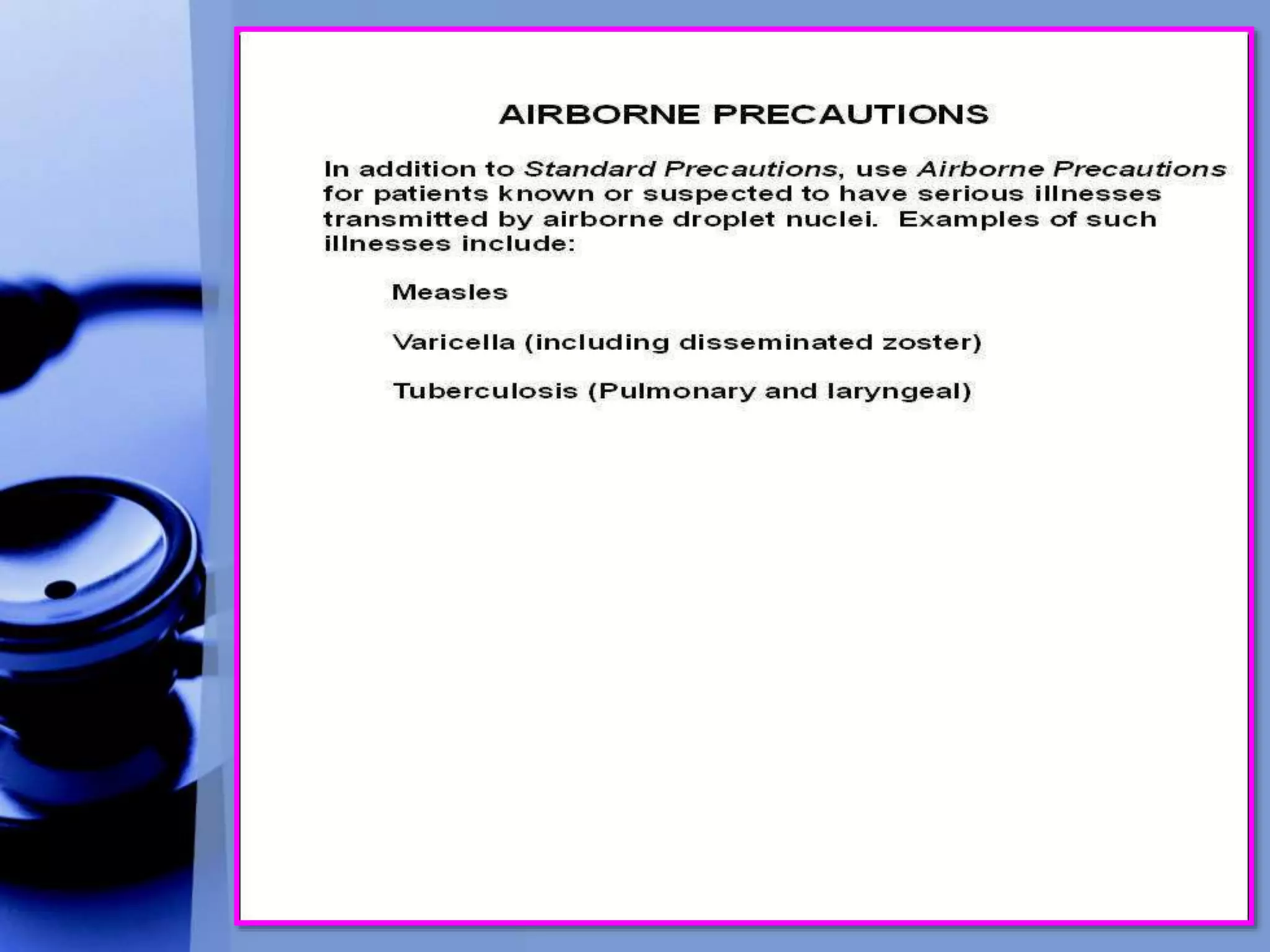
• Measles
• Tuberculosis
(Pulmonary/Laryngeal)
• Varicella
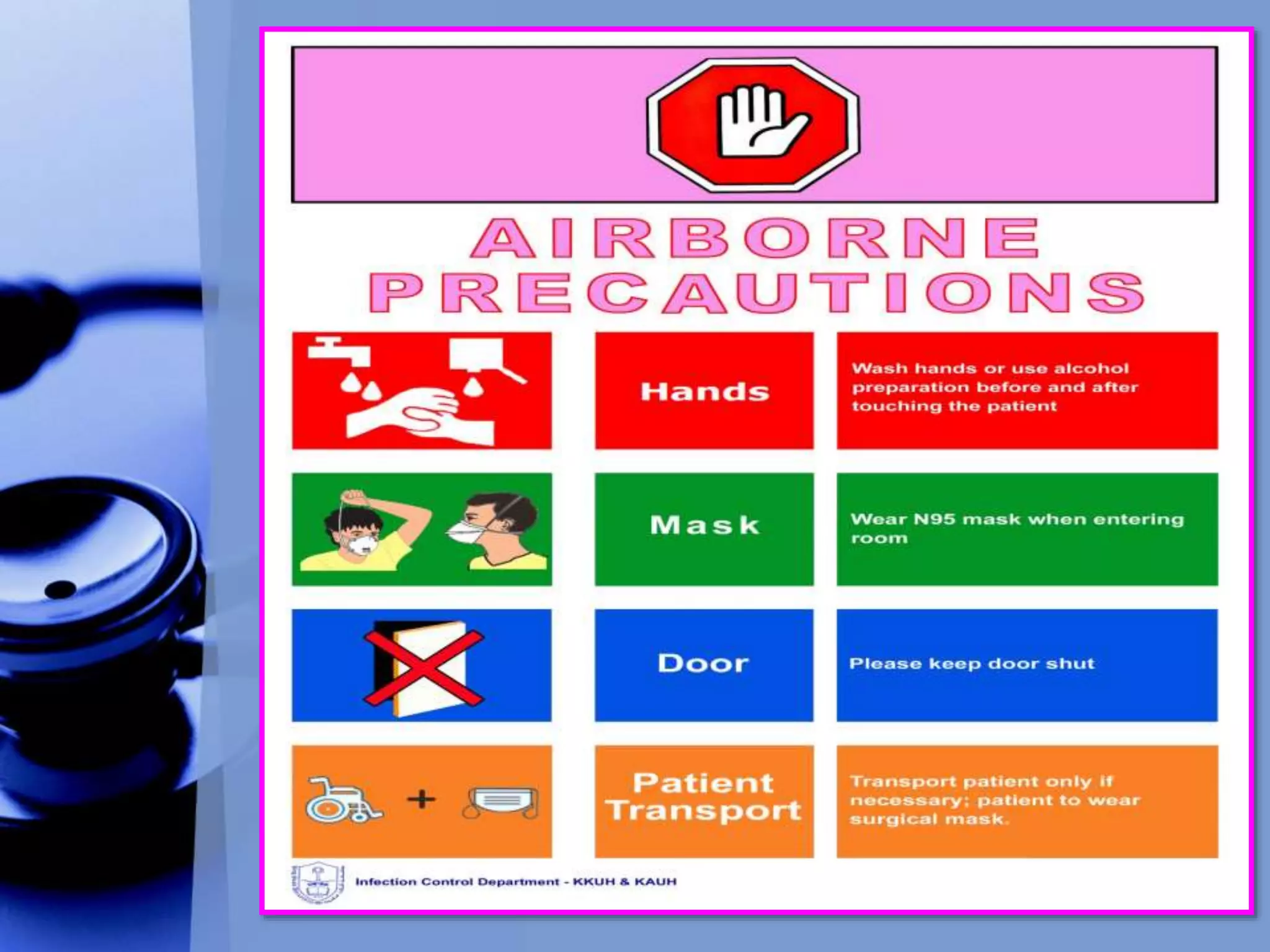
• Single room with negative
air pressure
• 6-12 air exchanges per
hour
• Room door closed
Testing Negative Pressure
•Automatic pressure monitors
The smoke tube
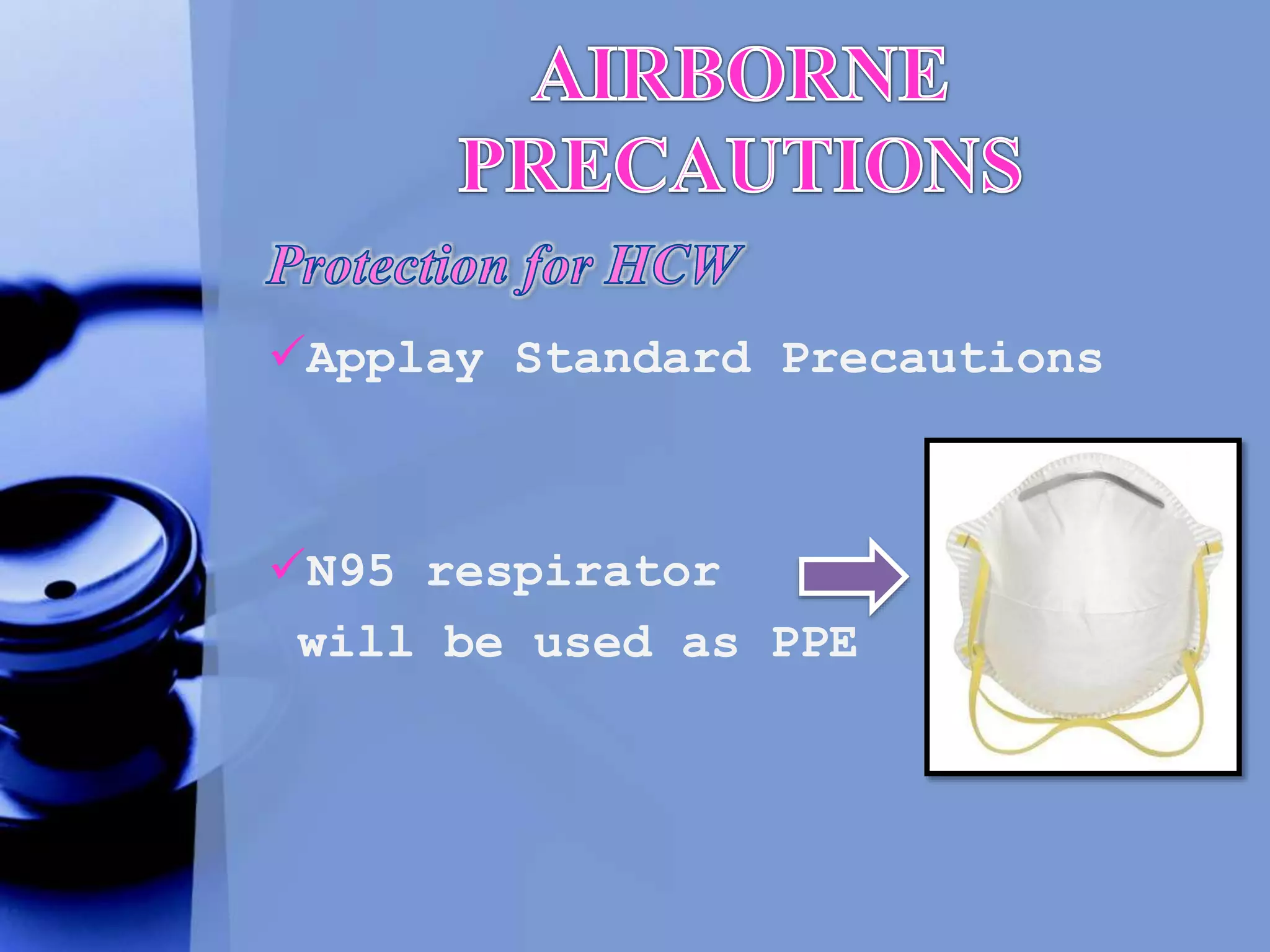
Applay Standard Precautions
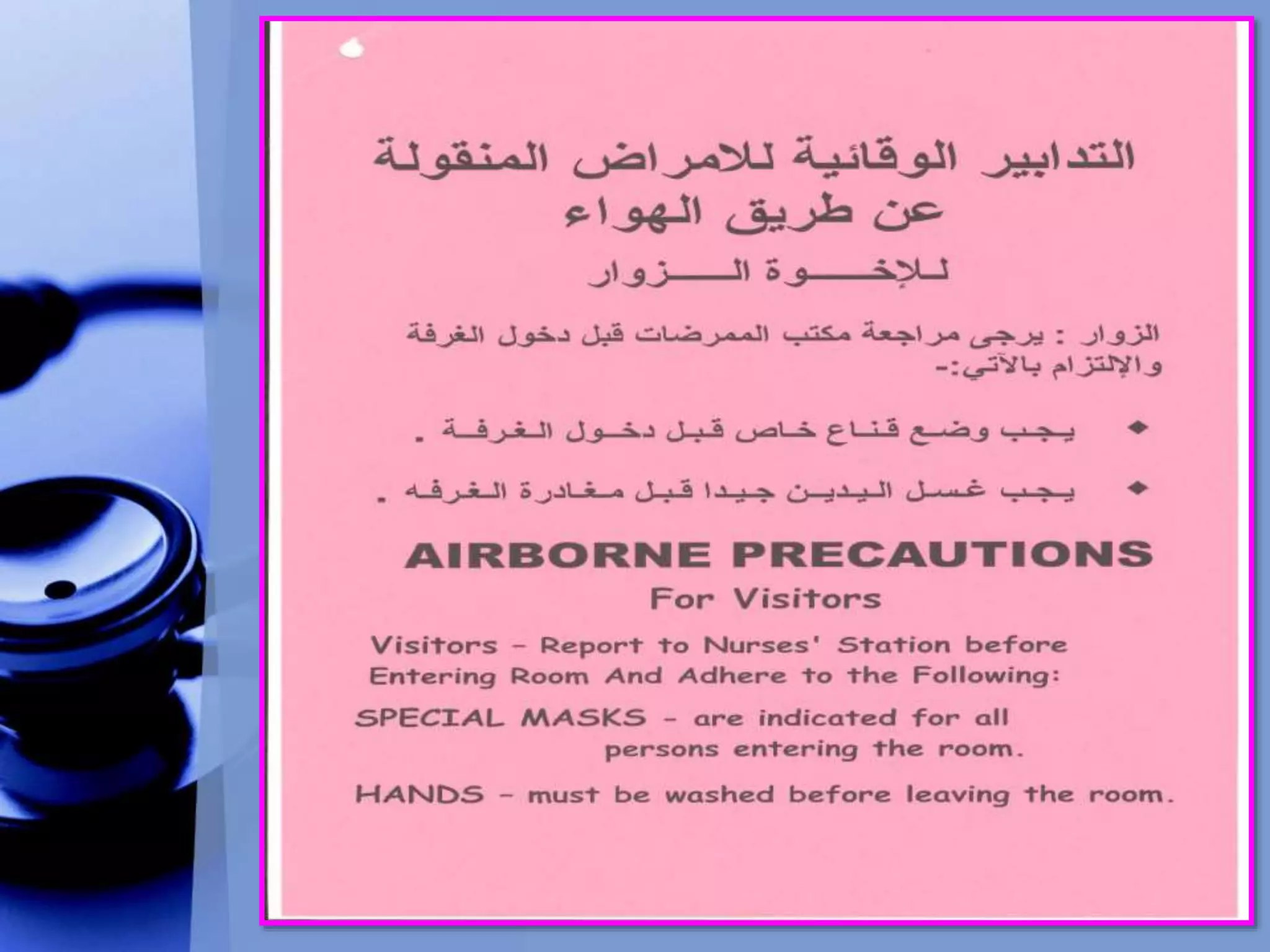
N95 respirator
will be used as PPE
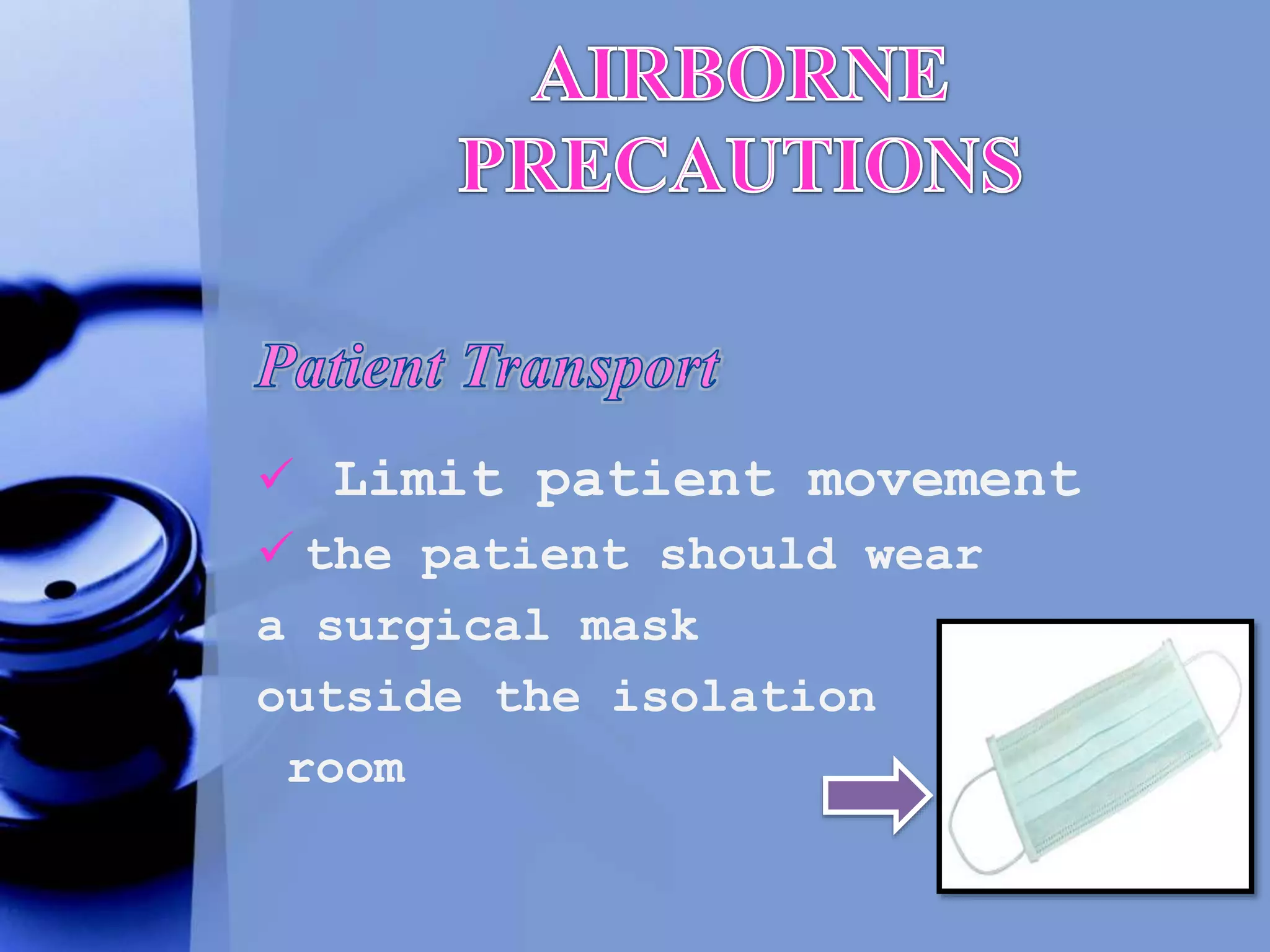
 Limit patient movement
 the patient should wear
a surgical mask
outside the isolation
room
SEAL CHECK
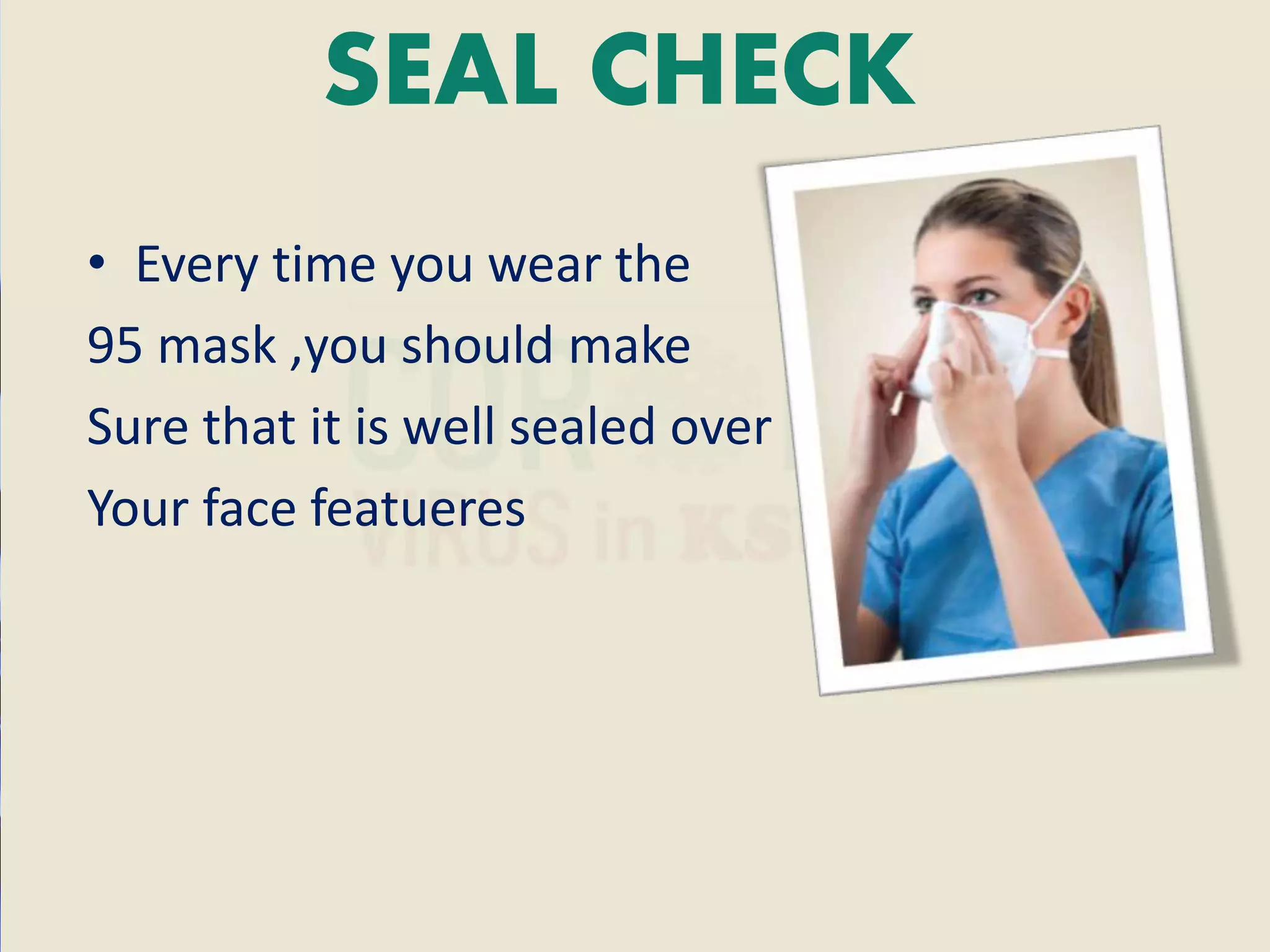
• Every time you wear the
95 mask ,you should make
Sure that it is well sealed over
Your face featueres
Sealed testing
Respiratory Protection
• N95 respirator
Airborne Precautions
TUBERCULOSIS
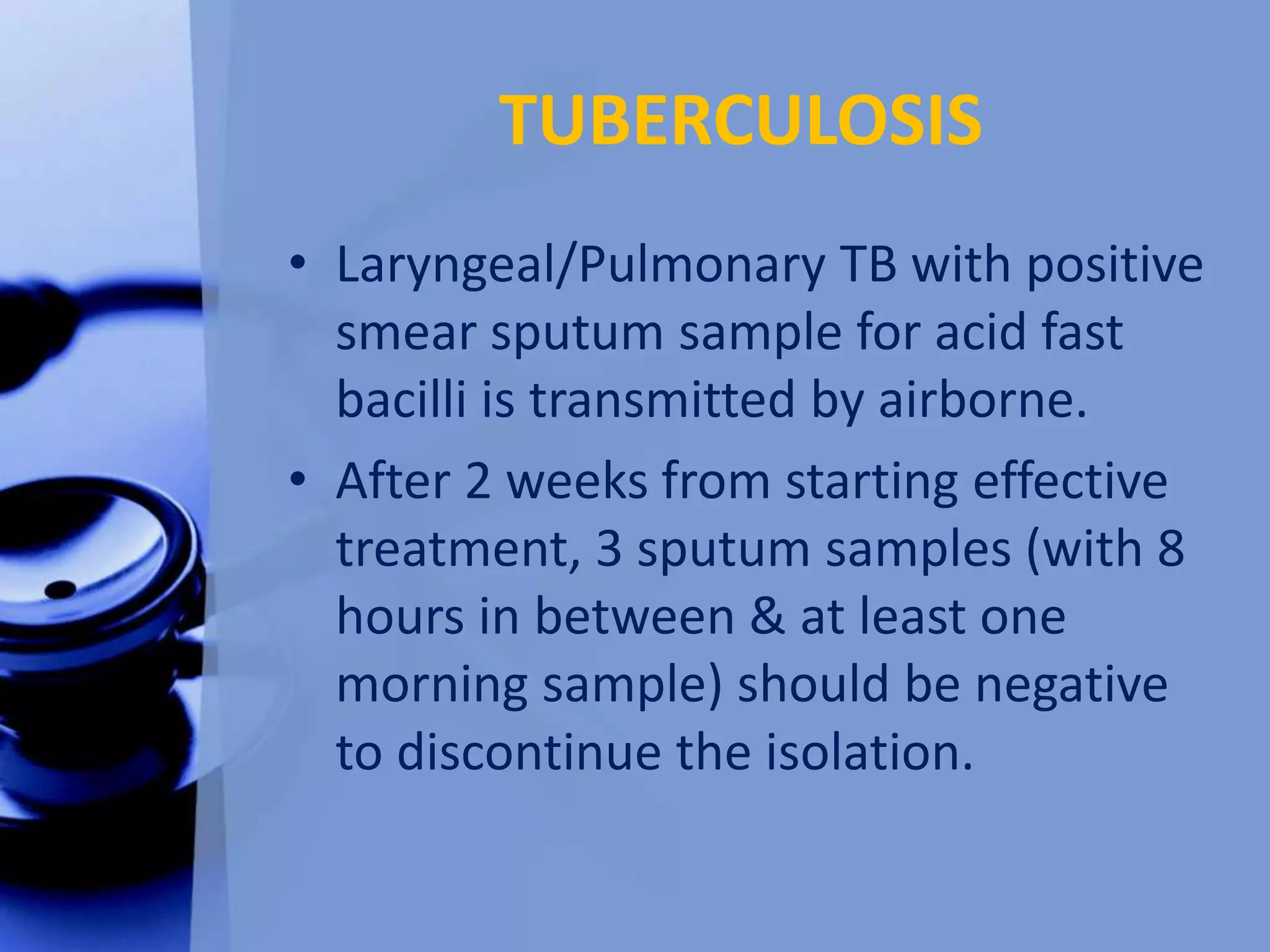
• Laryngeal/Pulmonary TB with positive
smear sputum sample for acid fast
bacilli is transmitted by airborne.

• After 2 weeks from starting effective
treatment, 3 sputum samples (with 8
hours in between & at least one
morning sample) should be negative
to discontinue the isolation.
MERS CoV
• Suspected or confirmed cases of
MERS-COV will be under AIRBORNE
and CONTACT PRECAUTION.
• For positive cases we can discontinue
isolation 48hrs after S/S
disappearance with at least one
negative lab result.
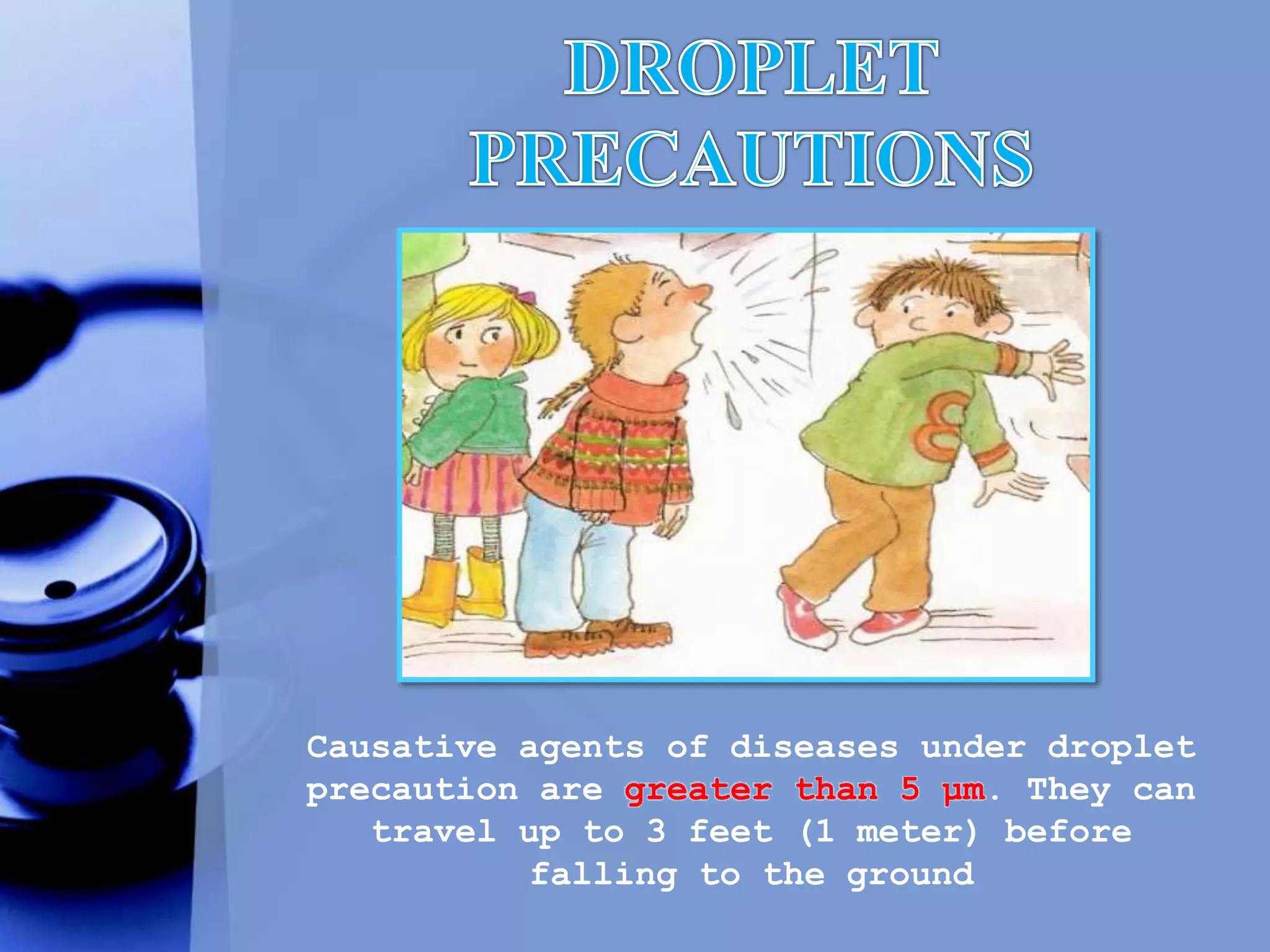
Causative agents of diseases under droplet
precaution are greater than 5 μm. They can
travel up to 3 feet (1 meter) before
falling to the ground
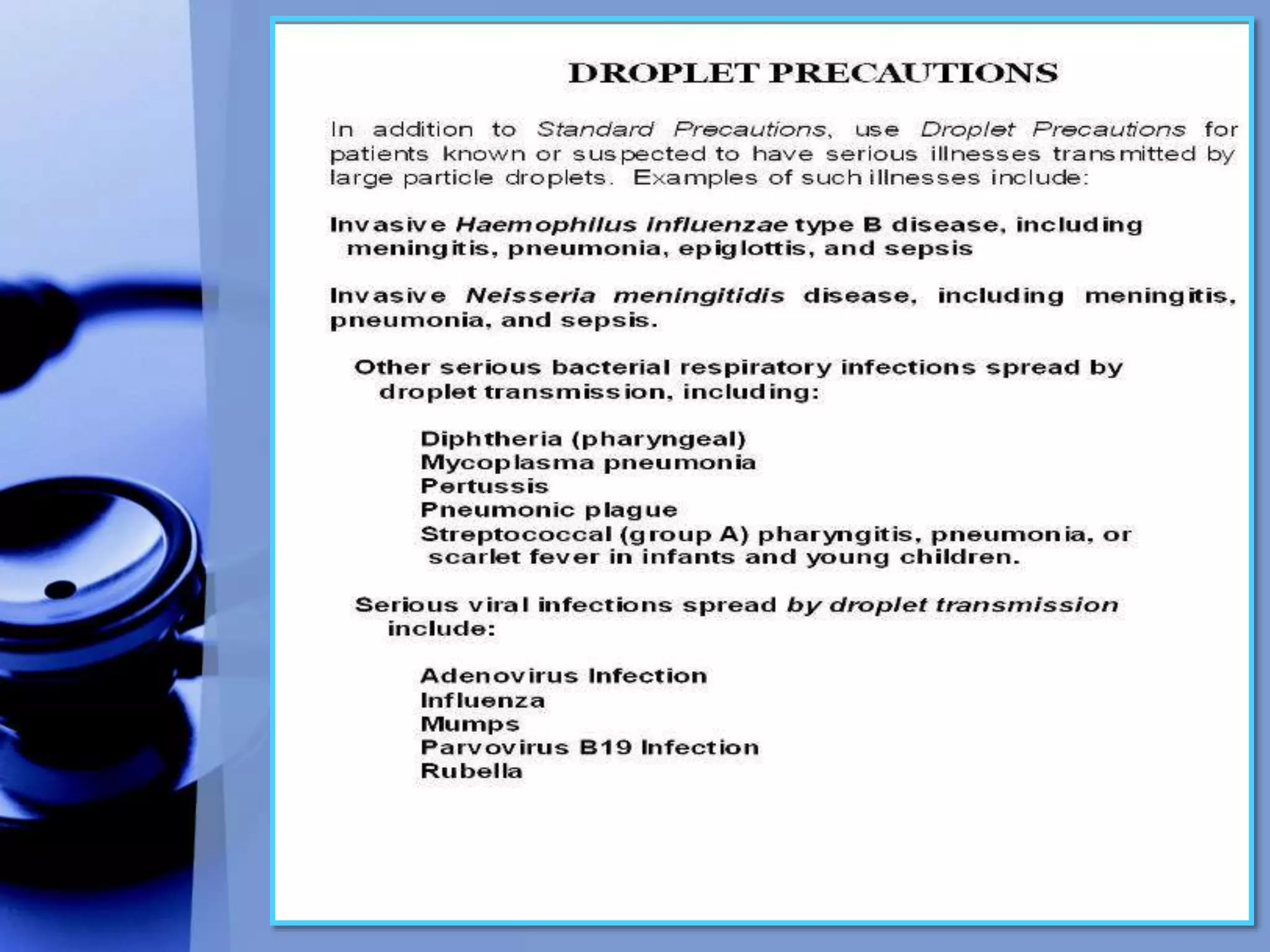
• Haemophilus influenzae type B
disease, including meningitis,
pneumonia, epiglottis and sepsis
• Streptococcal (group A)
pharyngitis, scarlet fever in
infants and young children
• Influenza, Mumps
Patient placement
•Private room
•Cohort nursing
•Maintain special
separation of at least 3
feet (1 meter) in between
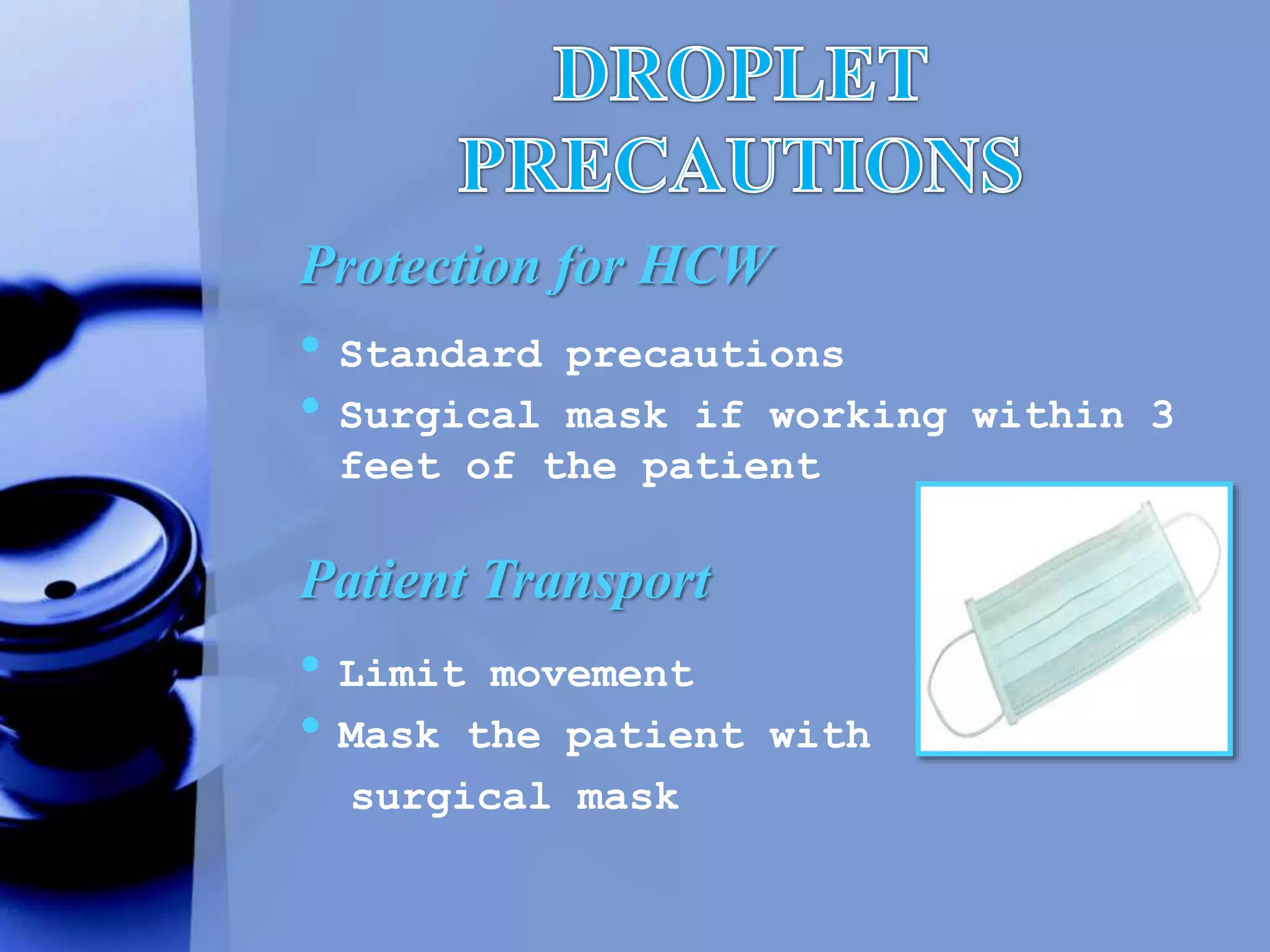
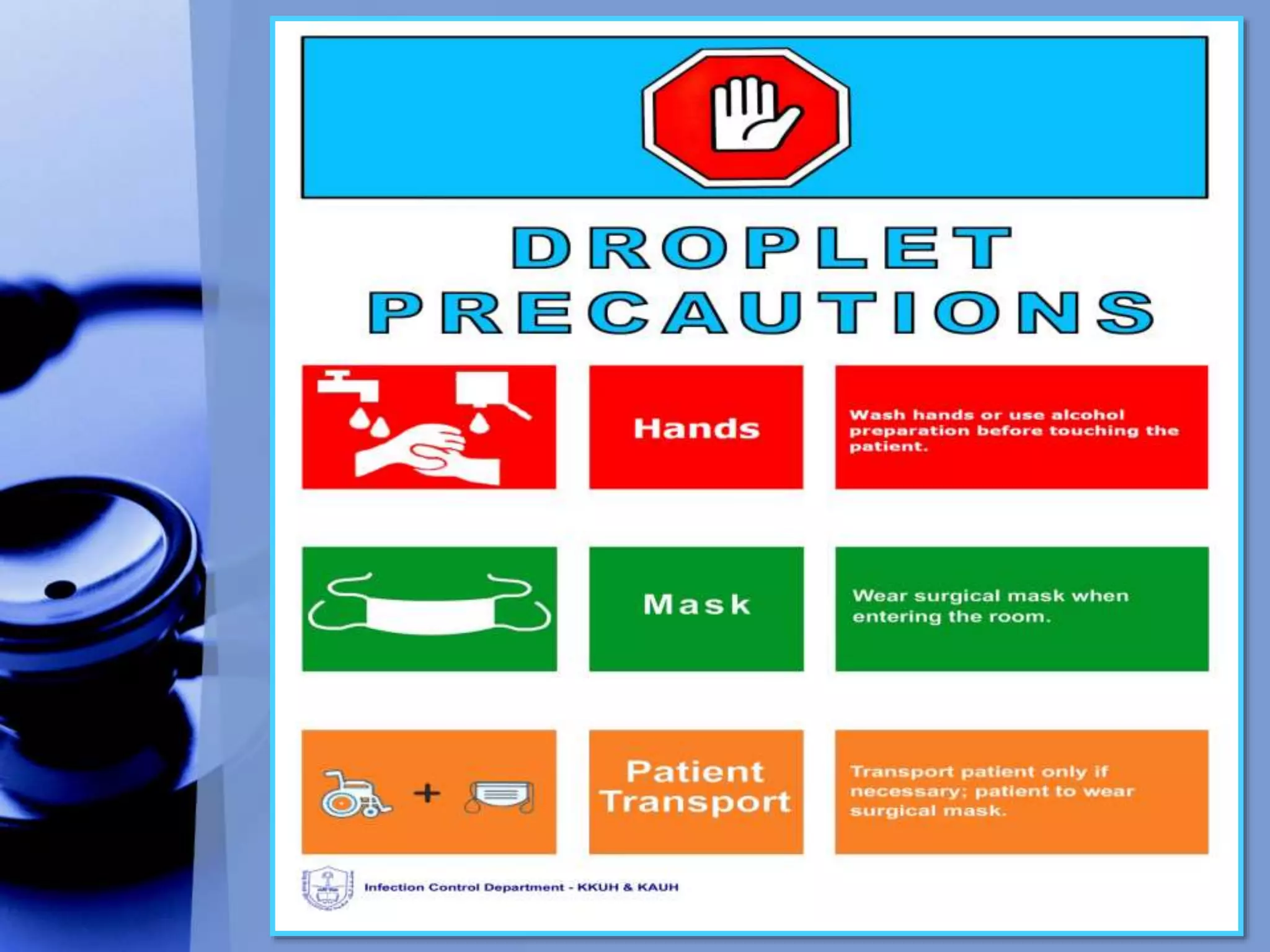
Protection for HCW
• Standard precautions
• Surgical mask if working within 3
feet of the patient
Patient Transport
• Limit movement
• Mask the patient with
surgical mask
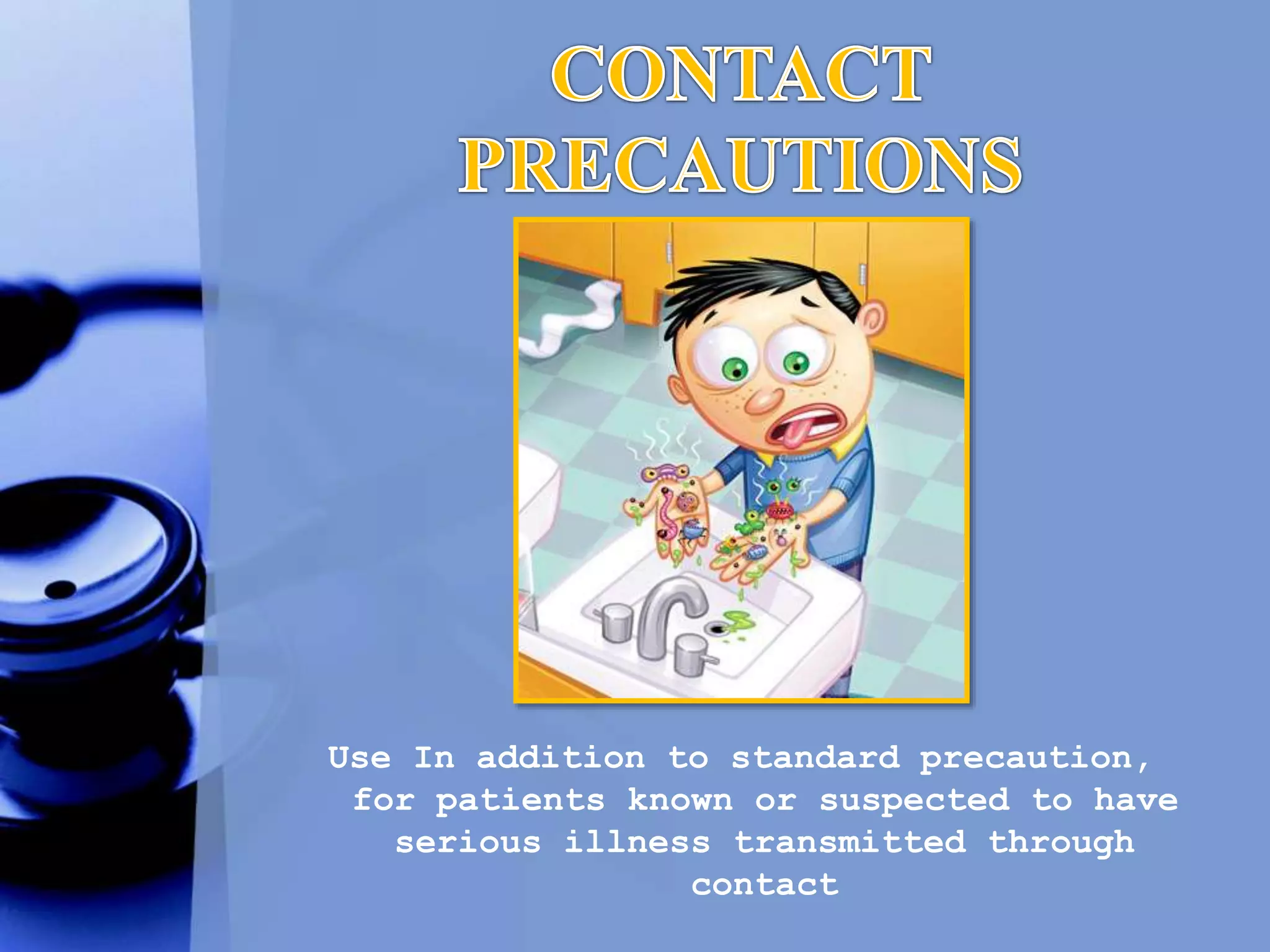
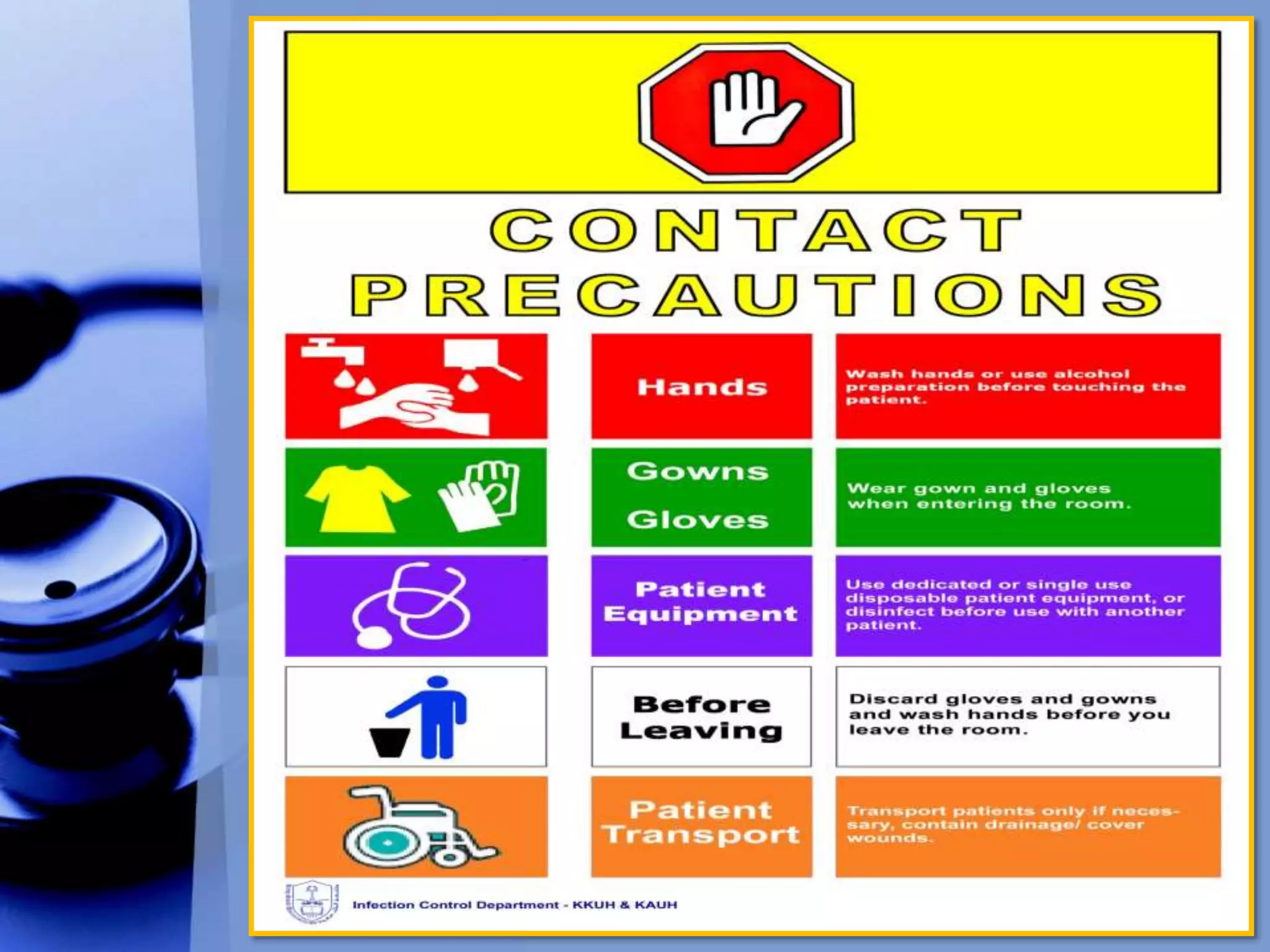
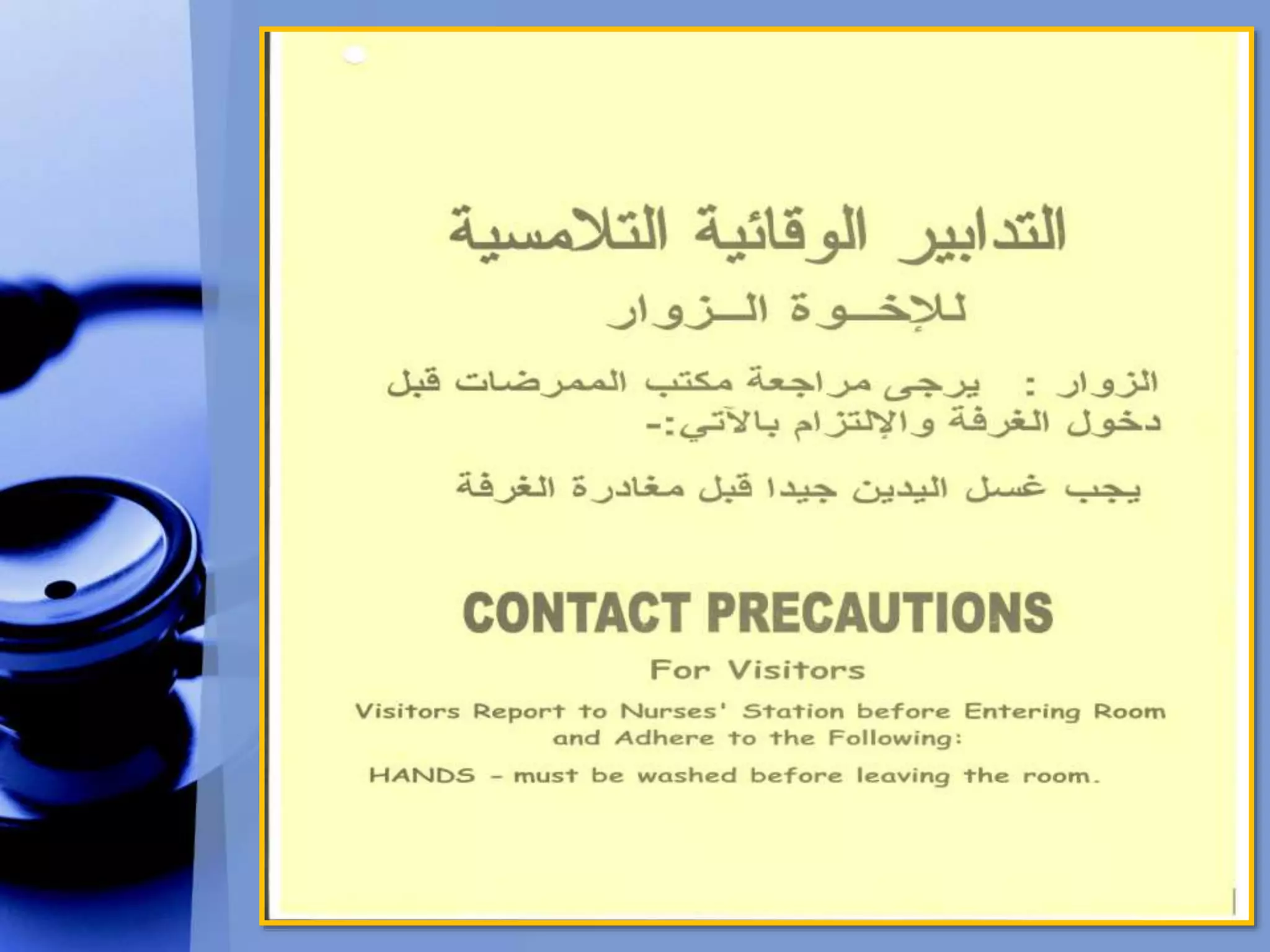
Use In addition to standard precaution,
for patients known or suspected to have
serious illness transmitted through
contact
Direct Contact
Transmission
In-Direct Contact
Transmission
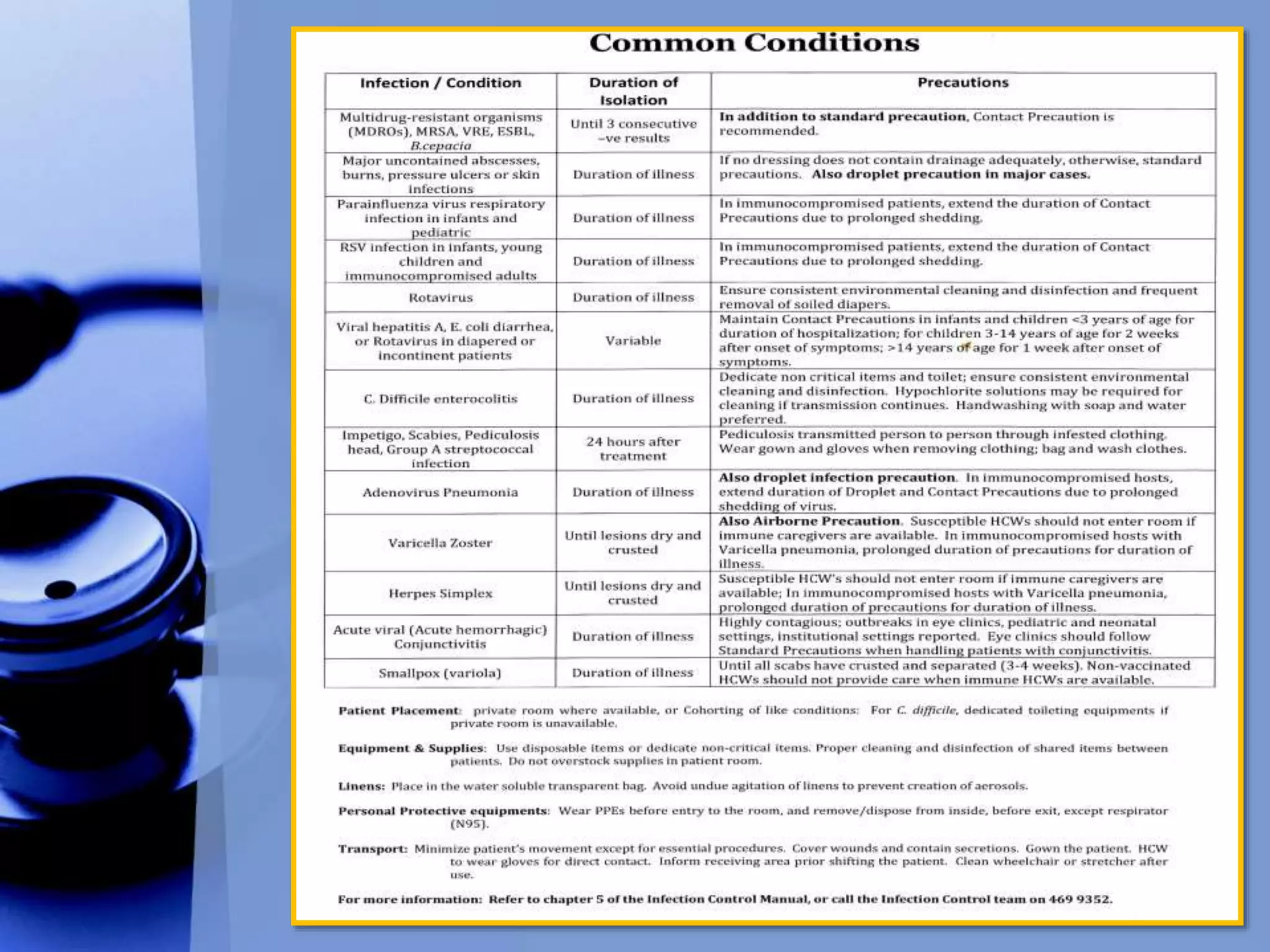
• Multi-drug resistant
microorganisms (MDRO’s), VRE,
MRSA, ESBL, B.cepacia
• RSV infection in infants, young
childrena nd immunocompromised
patients
• Clostridium defficile
enterocolitis
Patient placement
• Private room
• Cohort nursing
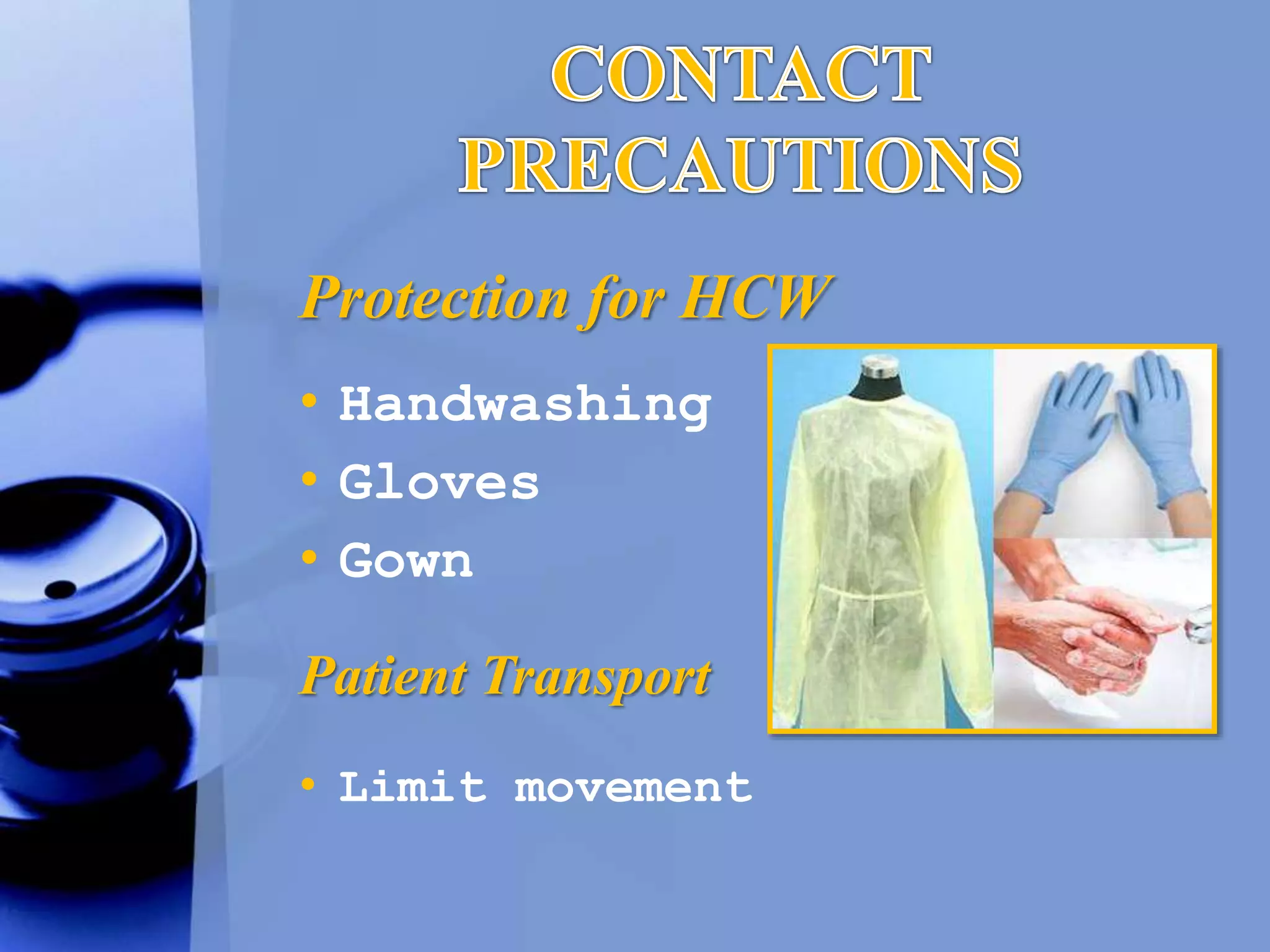
Protection for HCW
• Handwashing
• Gloves
• Gown
Patient Transport
• Limit movement
MDRO
• All Colonization/Infection patients
with MDRO should be under Contact
Isolation.
• Isolation can be discontinued after
receiving 3 negative lab result 48hrs
after antimicrobial discontinuation.
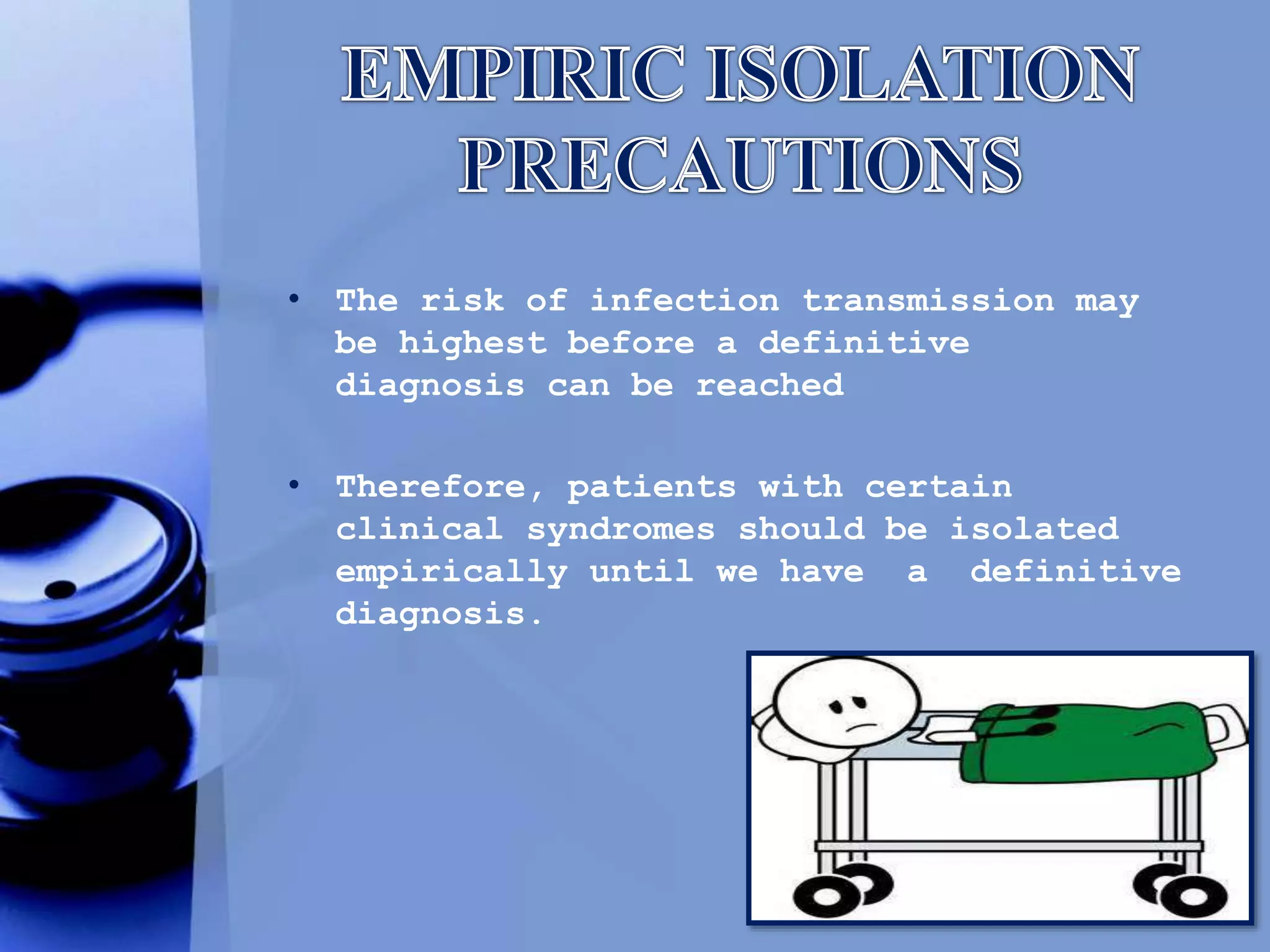
• The risk of infection transmission may
be highest before a definitive
diagnosis can be reached
• Therefore, patients with certain
clinical syndromes should be isolated
empirically until we have a definitive
diagnosis.
Example
Patient with chronic cough more than 2
weeks, fever, weight loss, and night sweat.
The patient should be under empiric
airborne Isolation until sputum sample AFB
lab result is received
If positive continu isolation. If 3 negative ,
D/C isolation
PROTECTIVE ISOLATION
• It is implemented for
immunocompromised patient.
• Patient is placed in positive pressure
room. With HEPA-FILTER for air
supply.
• Sick people are not allowed to visit
the patient.
• Pets and plants are also not allowed.
•CARD
 isolation

isolation